)

Monday, Nov 24, 2025

Sub-Neptune exoplanets tend to be much closer to their host star than Earth is to the Sun and are thought to have atmospheres made of steam over layers of an exotic phase of water that behaves like neither gas nor liquid. Image courtesy of Dr. Artem Aguichine.
At a Glance
|
In a recent SETI Live episode, host Beth Johnson spoke with UC Santa Cruz postdoctoral researcher Dr. Artem Aguichine about his work modeling the interiors and atmospheres of steam worlds, a class of water-rich exoplanets wrapped in thick, high-temperature water vapor. Thanks to new spectra from the James Webb Space Telescope (JWST), these once-theoretical worlds are rapidly becoming an observational reality.
What Makes a Steam World?
The term “steam world” is relatively new, emerging only in the last few years as researchers examined what happens to water-rich planets located close to their host stars. Unlike Earth, where water exists mostly as liquid on the surface, these planets receive enough stellar radiation to vaporize all surface water, producing a deep, hot steam atmosphere.
Crucially, steam worlds are not defined by size. Sub-Neptunes, mini-Neptunes, and super-Earths can all become steam worlds if their temperatures are high enough. In fact, Dr. Aguichine notes that if Earth were moved just 5% closer to the Sun, it too would develop a steam atmosphere. Likewise, Venus provides a Solar System analog: If Venus had formed with a large amount of water instead of being dominated by CO₂, it would have developed the same kind of high-temperature steam atmosphere we see on steam worlds
How Much Water Are We Talking About?
Dr. Aguichine emphasizes that, by planetary standards, Earth is extremely dry. Although 70% of Earth’s surface is covered by water, that water represents only 0.02% of Earth’s total mass.
Steam worlds, by contrast, may contain up to 50% of their mass in water, similar to comets or icy moons like Europa and Ganymede. Because the pressures and temperatures inside these planets are so intense, the water can’t exist as normal liquid or ice, but instead as deep layers of supercritical water and superionic ice occupying thousands of kilometers beneath the vapor atmosphere.
Water Under Extreme Conditions
Steam worlds offer natural laboratories for studying exotic phases of matter:
- Supercritical water is a state in which the boundary between liquid and vapor disappears. It behaves as neither, nor both, allowing for unusual chemical and thermodynamic processes.
- Superionic ice appears under extremely high pressures. In this state, oxygen atoms form a stable crystal lattice, while hydrogen atoms move freely through it, creating a material that behaves partly like a solid and partly like a fluid.
These phases likely exist within Uranus and Neptune, meaning steam-world research also enhances our understanding of planets in our own Solar System.
Modeling Planetary Interiors and Atmospheres
Dr. Aguichine’s latest research couples interior evolution with atmospheric structure, accounting for the massive amount of heat trapped inside planets after formation. Because atmospheres control how quickly internal heat escapes, steam worlds evolve differently depending on their atmospheric mass, opacity, and composition.
The model utilizes differential equations and high-pressure thermodynamic data to simulate the evolution of planets over millions to billions of years. These simulations enable researchers to compare predictions with telescope observations, a crucial step now that JWST can directly detect atmospheric steam.
JWST’s First Confirmed Steam World
The breakthrough moment came earlier this year with JWST observations of GJ 9827 d, a sub-Neptune whose density had long suggested it might be a steam world. JWST’s spectroscopy confirmed the presence of a water-dominated atmosphere, the first clear detection of its kind.
For Dr. Aguichine, the confirmation was a rare opportunity to see a theoretical prediction validated. Finding a second confirmed steam world will mark a shift from possibility to prevalence and reshape how scientists classify sub-Neptune planets.
Habitability and the Limits of Life
Steam worlds are far too hot to host life as we know it. Even extremophiles on Earth can survive only up to ~300°C under immense pressure, such as in hydrothermal vents. Steam-world surfaces far exceed these temperatures.
However, studying them helps scientists refine the boundaries of the habitable zone. Understanding where water transitions between liquid, vapor, and exotic high-pressure phases offers insight into planetary evolution and helps determine where habitable conditions could persist.
Dr. Aguichine also emphasizes the importance of recognizing that alternative chemistries or molecular arrangements may one day expand our understanding of habitability.
What Comes Next?
With JWST’s new data and existing theoretical models converging, the field is poised for rapid progress. Researchers will continue to search for additional steam worlds, build more comprehensive models, and evaluate a broader range of compositions.
Steam worlds may not host life, but they provide key insights into how planets form, evolve, and diversify. According to Dr. Aguichine, identifying the first steam world is only the beginning; finding a second will show whether these planets are uncommon or a regular part of the exoplanet population.
Watch the full conversation on SETI Live. Read Dr. Artem Aguichine’s paper and the UCSC press release.







News
Related News
Jul 17, 2026
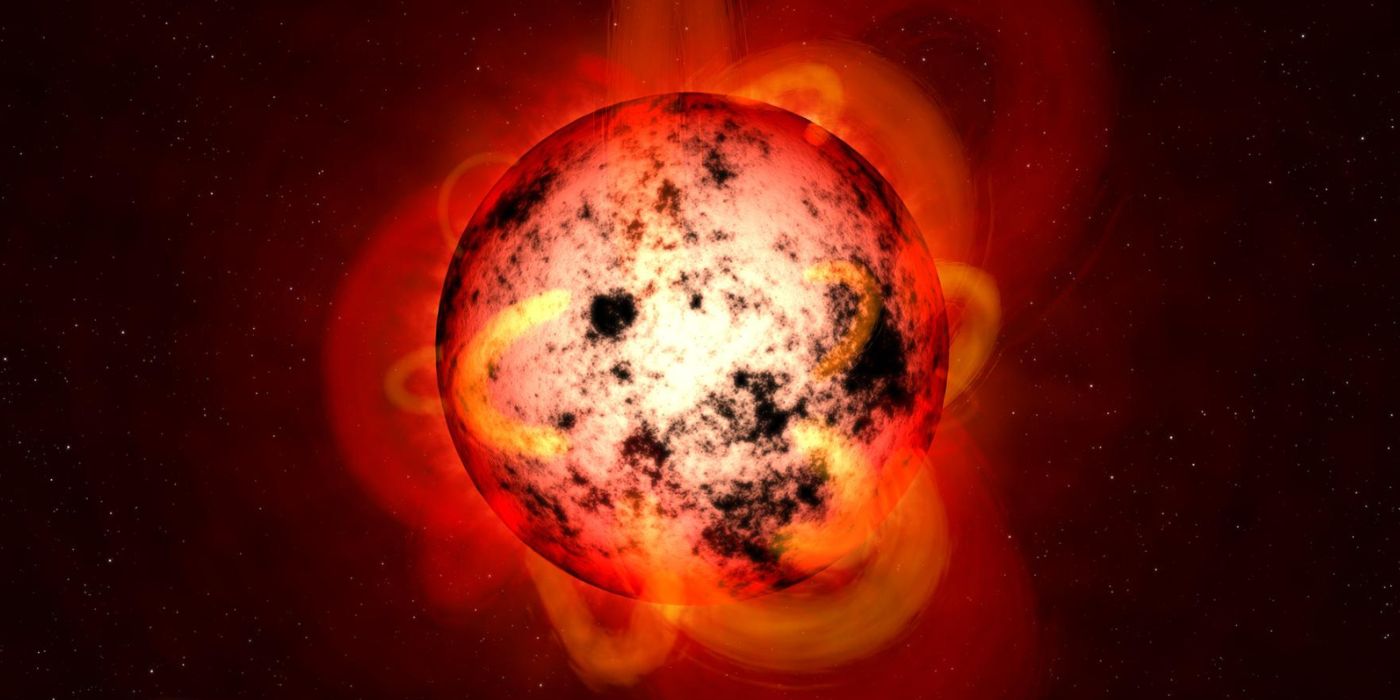
How Clouds Hide Alien Worlds—and How Astronomers See Through Them
#Blog #Moiya McTier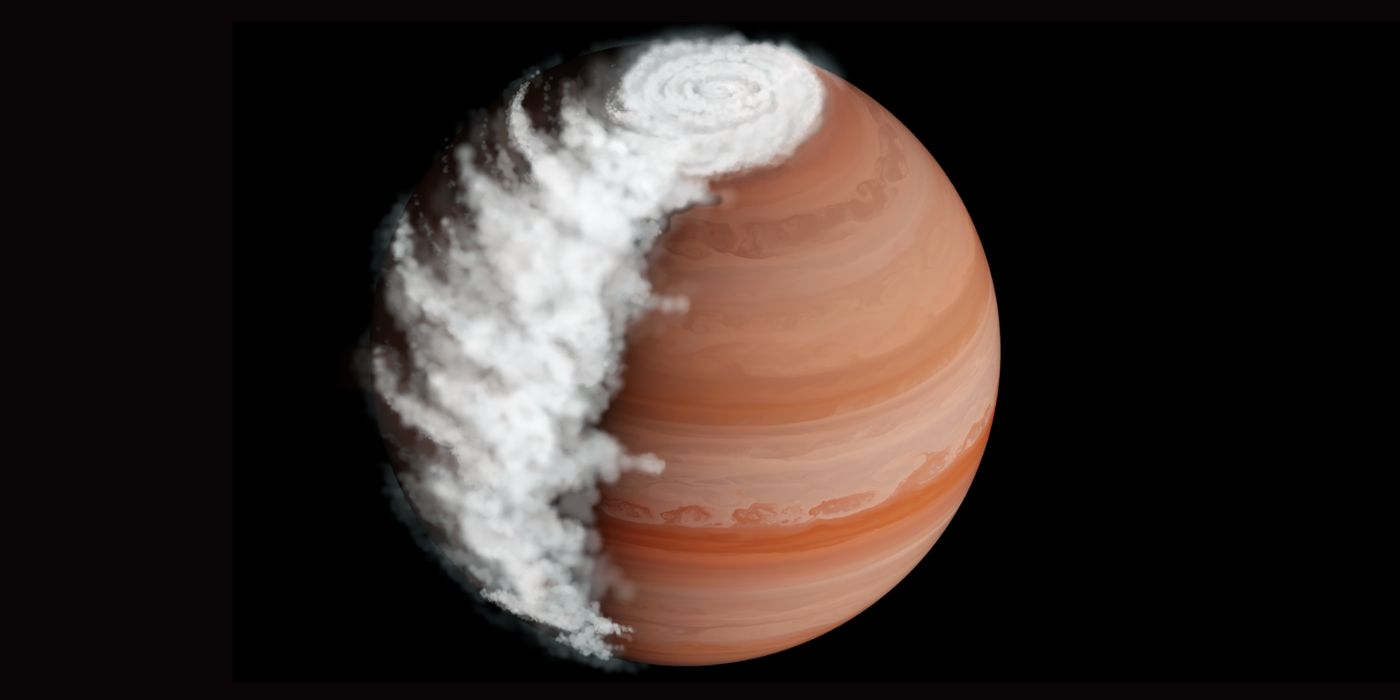
Jul 2, 2026
How Clouds Hide Alien Worlds—and How Astronomers See Through Them
#Blog #Lauren Sgro
Jun 29, 2026
Humanity's Plan for First Contact: Who Speaks for Earth?
#Blog #Lauren Sgro #Lucian Walkowicz #Chelsea Haramia #SETI #SETI Institute
Jun 26, 2026
What Juice Revealed About Interstellar Comet 3I/ATLAS
#Blog #3I/ATLAS #Franck Marchis #Juice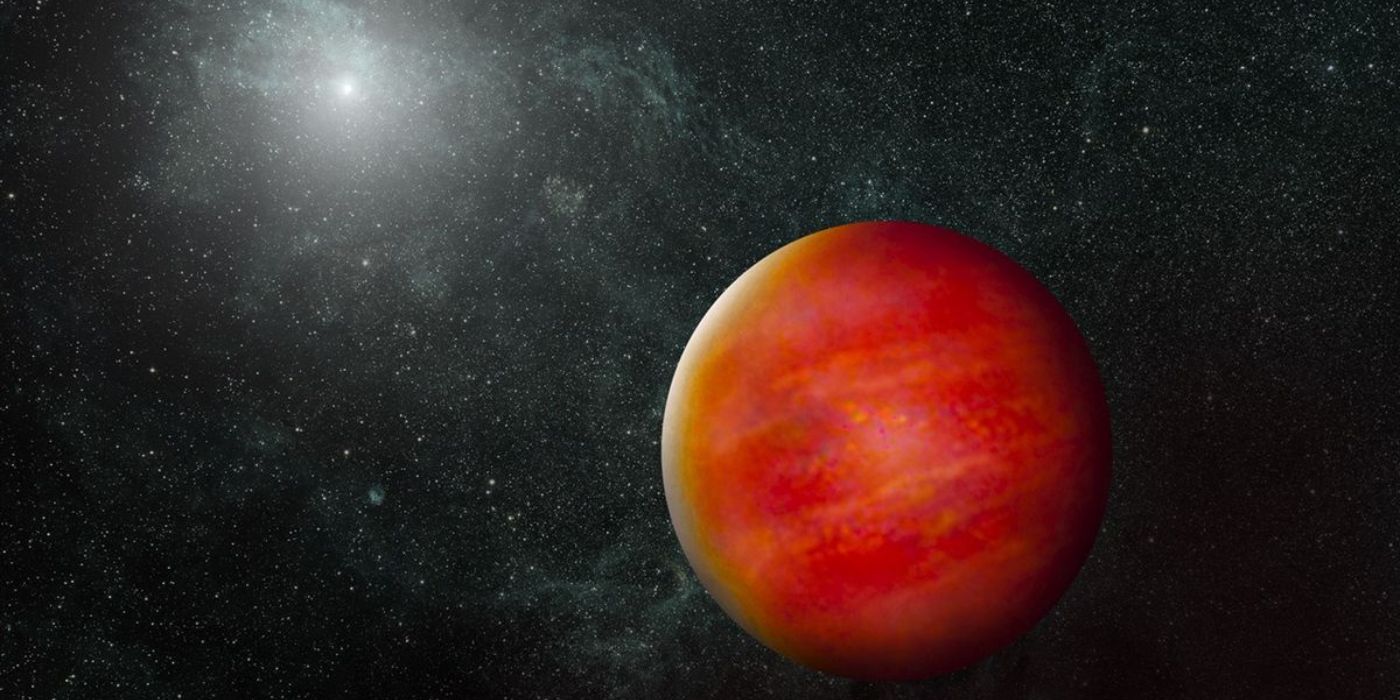
Jun 12, 2026
Not Planets, Not Stars: NASA Volunteers Doubled the Number of Known Brown Dwarfs
#Blog #Lauren Sgro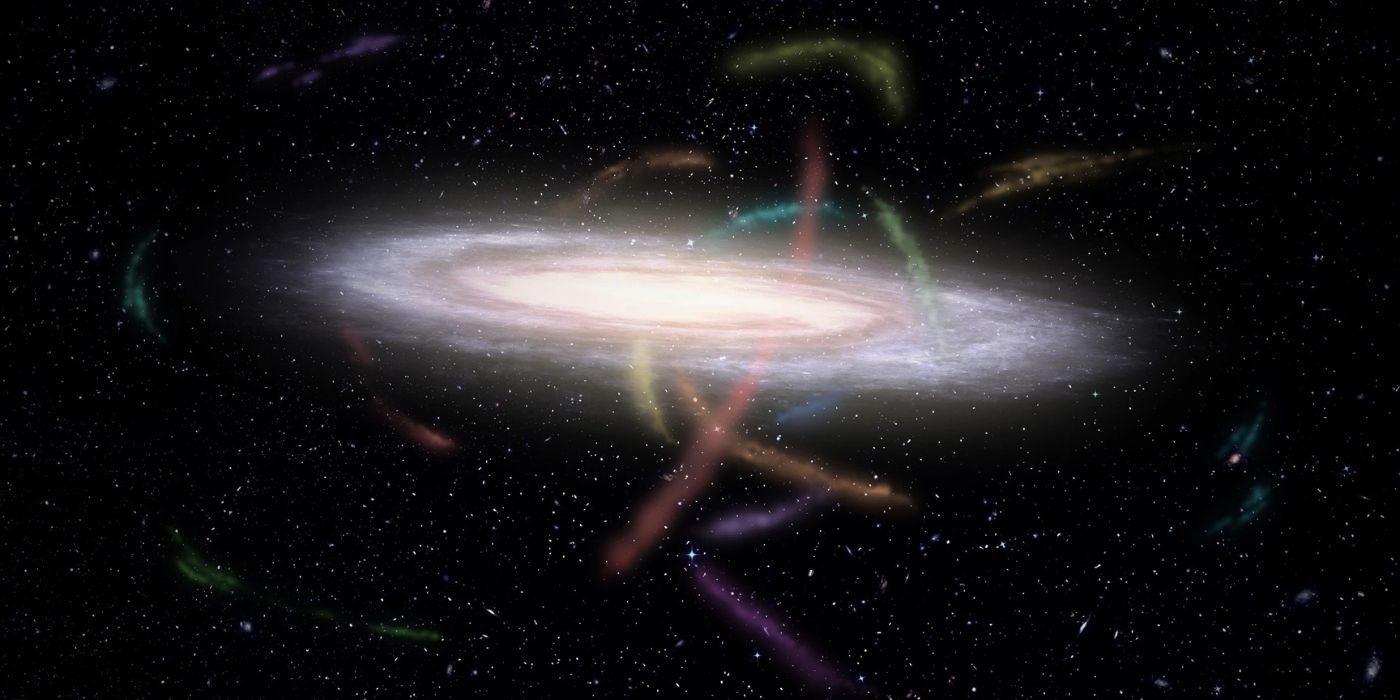
Jun 11, 2026
Life is But a Stream: Planetary Systems Along Stellar Streams
#Blog #Moiya McTier
Jul 17, 2026
#Blog
#Moiya McTier
Jul 2, 2026
#Blog
#Lauren Sgro
How Clouds Hide Alien Worlds—and How Astronomers See Through Them
Jun 29, 2026
#Blog
#Lauren Sgro
#Lucian Walkowicz
#Chelsea Haramia
#SETI
#SETI Institute
Humanity's Plan for First Contact: Who Speaks for Earth?
Jun 26, 2026
#Blog
#3I/ATLAS
#Franck Marchis
#Juice
What Juice Revealed About Interstellar Comet 3I/ATLAS
Jun 12, 2026
#Blog
#Lauren Sgro
Not Planets, Not Stars: NASA Volunteers Doubled the Number of Known Brown Dwarfs
Jun 11, 2026
#Blog
#Moiya McTier
Life is But a Stream: Planetary Systems Along Stellar Streams
Research
Related Projects

SkyMapper • SETI • Citizen Science • Astronomy
SkyMapper: Expanding Access to Real-time Astronomy Through a Global Astronomical Network
SkyMapper and the SETI Institute are connecting educators, students and the public to live astronomical observations through a distributed astronomical network. #SkyMapper #SETI #Citizen Science #Astronomy
VPL
Virtual Planetary Laboratory
How can we best assess whether an exoplanet supports life? #VPL
Discovery and Futures Lab
Discovery and Futures Lab
What happens if life beyond Earth is discovered? The Discovery and Futures Lab at the SETI Institute fosters novel and anticipatory research at the intersection of science, society, our planet, and the search for life beyond Earth. #Discovery and Futures Lab
May 17, 2026
SkyMapper: Expanding Access to Real-time Astronomy Through a Global Astronomical Network
SkyMapper and the SETI Institute are connecting educators, students and the public to live astronomical observations through a distributed astronomical network.
#SkyMapper
#SETI
#Citizen Science
#Astronomy
May 5, 2026
Virtual Planetary Laboratory
How can we best assess whether an exoplanet supports life?
#VPL
Apr 16, 2026
Discovery and Futures Lab
What happens if life beyond Earth is discovered? The Discovery and Futures Lab at the SETI Institute fosters novel and anticipatory research at the intersection of science, society, our planet, and the search for life beyond Earth.
#Discovery and Futures Lab
Support Us
Support the
SETI Institute
Scientists are getting closer in their search for life beyond earth. But with limited federal funding for the search for extraterrestrial intelligence, supporters are the reason cutting-edge scientists can keep their eyes on the sky.
