)

Thursday, Jun 11, 2026
At a Glance
Looking ahead: Future searches using data from TESS and Gaia could target the lower-density edges of stellar streams to locate intact planetary systems. |
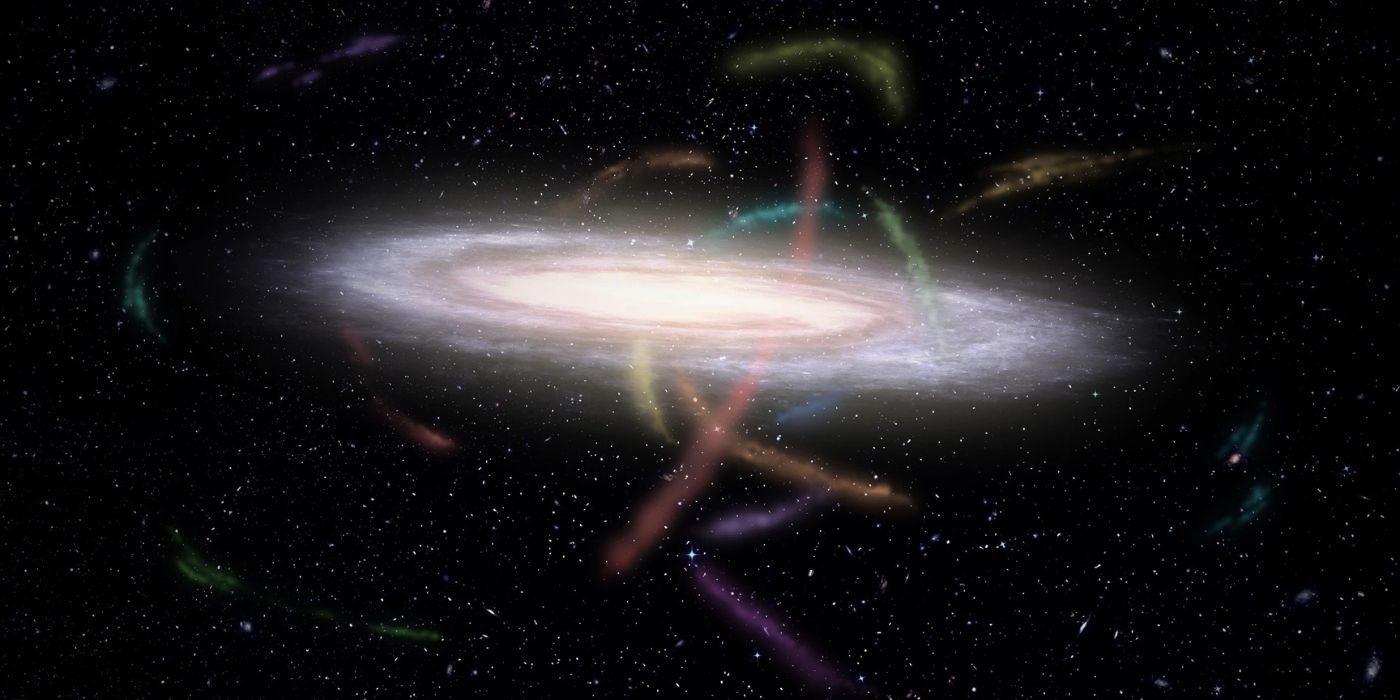
Astronomers have long focused their instruments on planets orbiting isolated, solitary stars. Yet, across the cosmos, stars rarely form in total isolation. In a recent SETI Live conversation, host and astrophysicist Dr. Moiya McTier sat down with York University astrophysicist Dr. Jeremy Webb to discuss a groundbreaking paper examining an entirely different cosmic context: the distribution of planetary systems along stellar streams.
The work explores how a star’s birthplace influences the long-term survival of its planets and whether stellar streams could become valuable targets in the search for exoplanets. The research also addresses a critical gap in our understanding of planetary evolution. While astronomers have confirmed thousands of exoplanets, fewer than one percent have been discovered inside dense star clusters.
This raised an important question: are planets genuinely rare in clusters, or are they simply more difficult to detect in these crowded environments? Webb’s work explores how cluster dynamics may influence planetary survival over billions of years.
The Formation of Stellar Streams
To understand the lifecycle of these systems, one must look to the very birthplaces of stars. Within the Milky Way, giant molecular clouds collapse to form star clusters, which are large, gravitationally bound groups of stars that orbit a common center of mass. Between 10% and 30% of all stars are born in these highly packed environments.
Over hundreds of millions to billions of years, external gravitational forces from the galaxy gradually pull stars away from their parent clusters. This ongoing tidal disruption stretches the cluster out into a stellar stream, an elongated, string-like structure of stars tracing a shared orbit around the galactic center.
The transition from cluster to stream offers an extraordinary opportunity for exoplanetary science. Inside a dense cluster, searching for exoplanets via the transit method, where a planet dims its host star’s light as it passes between the star and Earth, is incredibly difficult due to overcrowding.
A stellar stream provides a clearer view of these stars while preserving the history of their dynamic past.
Simulating Planetary Survival Across Gigayears
To investigate how planetary systems survive the journey from crowded star clusters into sprawling stellar streams, Webb and his team used computer simulations. Rather than attempting to model every star and planet simultaneously—a task that would be computationally prohibitive—they simulated the cluster first and then examined individual planetary systems in greater detail.
The virtual stars were given planetary systems with 14 worlds evenly spaced and extending far beyond the scale of our own solar system, making them especially vulnerable to gravitational nudges from nearby stars. The simulations revealed how these close encounters can reshape planetary systems as stars migrate through the galaxy.
The Secret to Survival: Location is Everything
The simulation results revealed a diverse spectrum of cosmic outcomes, demonstrating that a planet's survival is dictated almost entirely by its host star's initial birthplace and subsequent orbit within the cluster.
The Outskirts
Stars born in the lower-density outer regions of the cluster experienced very few close encounters. Because they resided on the periphery, they were typically the first stars to escape the cluster's pull and enter the stellar stream.
As a result, these systems suffered minimal disruption, successfully retaining all 14 planets on their original stable, circular orbits.
The Core
Conversely, stars that spent significant time within the dense inner core faced a relentless gauntlet of stellar flybys. Strong gravitational perturbations frequently stripped away outer worlds, transforming them into free-floating planets, which are worlds drifting through space without a host star. In the most severe cases, entire planetary architectures were completely demolished, leaving the host star entirely barren before it finally escaped into the stream.
Crucially, the simulation showed that the interior architecture of a system remains well-protected. Webb noted that if planets at Saturn-like distances survive, then planets in closer, potentially habitable orbits are likely to remain stable as well.
The opposite was true for the outermost regions of planetary systems. Webb explained that distant structures analogous to the Solar System’s Oort cloud were highly vulnerable to disruption and were often stripped away entirely.
The Stream Edge Hypothesis
This evolutionary process imprints a distinct signature onto the final stellar stream. The unperturbed stars from the cluster's outskirts escape first and populate the absolute edges of the stream. Conversely, the highly disrupted stars from the cluster's core escape last, settling into the stream's dense center.
Webb’s research presents a clear predictive strategy for observational astronomers. Future exoplanet surveys targeting stellar streams should optimize their search parameters by focusing primarily on the outer edges of these streams.
While the center of a stream holds a higher concentration of stars, its population has run the full gravitational gauntlet. The edges represent a pristine hunting ground for intact, stable planetary architectures.
Cosmic Vistas and the Long-Term Horizon
For an observer standing on a planet tucked inside a stellar stream, the night sky would look radically different from Earth's. Rather than a uniform distribution of constellations, the sky would be dominated by a brilliant, dense ribbon of co-moving stars tracing across the firmament.
During the discussion, Webb noted that planets inside dense star clusters could experience skies many times brighter than Earth’s full moon. Stellar streams would likely be less dramatic but still could feature a prominent band of co-moving stars across the sky.
Furthermore, because nearby stars within a stream or active cluster possess higher relative velocities, constellations would shift and change over a few human lifetimes rather than remaining static over millennia.
Looking forward, future observations from missions such as NASA's TESS and the European Space Agency's Gaia mission may help astronomers identify planetary systems with stellar streams and test these predictions observationally.
Webb's work suggests that planetary systems can act as cosmic fossils. The arrangement of planets around a star may preserve evidence of the star cluster where it was born, allowing astronomers to estimate what that long-vanished environment was like long after the cluster itself has dispersed.
Watch the full SETI Live conversation here. Read the published paper.
Final questions
1. Why are exoplanets so rarely found inside star clusters?
Dense star clusters contain many closely packed stars, making it difficult to detect planets using methods such as transits. In addition, frequent gravitational encounters between neighboring stars can disrupt planetary systems, potentially ejecting planets from their orbits or preventing the formation of stable planetary architectures.
2. What happens to planetary systems when a star cluster evolves into a stellar stream?
As a cluster gradually dissolves, its stars spread out into a lower-density stellar stream. Planetary systems around stars born in the cluster's outskirts often remain largely intact, while systems that spend significant time in the dense cluster core are more likely to lose outer planets due to repeated stellar encounters.
3. How could stellar streams help astronomers discover new exoplanets?
Stellar streams provide a less crowded observational environment than dense star clusters while preserving evidence of a star's dynamic history. Researchers predict that the edges of stellar streams are the most promising places to search for intact planetary systems, making them valuable targets for future surveys with data from missions such as TESS and Gaia.







News
Related News
Jul 17, 2026
How Clouds Hide Alien Worlds—and How Astronomers See Through Them
#Blog #Moiya McTier
Jul 2, 2026
How Clouds Hide Alien Worlds—and How Astronomers See Through Them
#Blog #Lauren Sgro
Jun 29, 2026
Humanity's Plan for First Contact: Who Speaks for Earth?
#Blog #Lauren Sgro #Lucian Walkowicz #Chelsea Haramia #SETI #SETI Institute
Jun 26, 2026
What Juice Revealed About Interstellar Comet 3I/ATLAS
#Blog #3I/ATLAS #Franck Marchis #Juice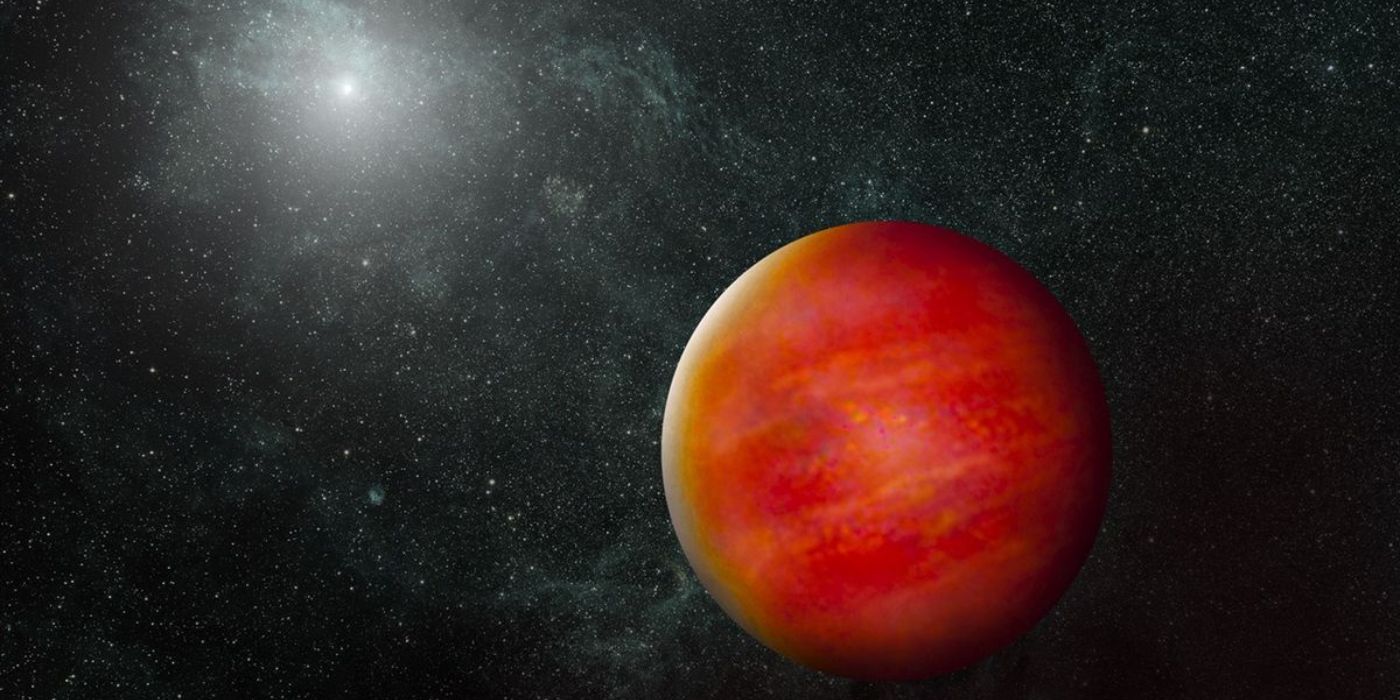
Jun 12, 2026
Not Planets, Not Stars: NASA Volunteers Doubled the Number of Known Brown Dwarfs
#Blog #Lauren Sgro
Jun 8, 2026
The Sounds of Intelligence: A Conversation with 2026 Drake Award Recipient Lori Marino
#Blog #Drake Awards #Lori Marino #SETI
Jul 17, 2026
#Blog
#Moiya McTier
Jul 2, 2026
#Blog
#Lauren Sgro
How Clouds Hide Alien Worlds—and How Astronomers See Through Them
Jun 29, 2026
#Blog
#Lauren Sgro
#Lucian Walkowicz
#Chelsea Haramia
#SETI
#SETI Institute
Humanity's Plan for First Contact: Who Speaks for Earth?
Jun 26, 2026
#Blog
#3I/ATLAS
#Franck Marchis
#Juice
What Juice Revealed About Interstellar Comet 3I/ATLAS
Jun 12, 2026
#Blog
#Lauren Sgro
Not Planets, Not Stars: NASA Volunteers Doubled the Number of Known Brown Dwarfs
Jun 8, 2026
#Blog
#Drake Awards
#Lori Marino
#SETI
The Sounds of Intelligence: A Conversation with 2026 Drake Award Recipient Lori Marino
Research
Related Projects

SkyMapper • SETI • Citizen Science • Astronomy
SkyMapper: Expanding Access to Real-time Astronomy Through a Global Astronomical Network
SkyMapper and the SETI Institute are connecting educators, students and the public to live astronomical observations through a distributed astronomical network. #SkyMapper #SETI #Citizen Science #Astronomy
VPL
Virtual Planetary Laboratory
How can we best assess whether an exoplanet supports life? #VPL
Discovery and Futures Lab
Discovery and Futures Lab
What happens if life beyond Earth is discovered? The Discovery and Futures Lab at the SETI Institute fosters novel and anticipatory research at the intersection of science, society, our planet, and the search for life beyond Earth. #Discovery and Futures Lab
May 17, 2026
SkyMapper: Expanding Access to Real-time Astronomy Through a Global Astronomical Network
SkyMapper and the SETI Institute are connecting educators, students and the public to live astronomical observations through a distributed astronomical network.
#SkyMapper
#SETI
#Citizen Science
#Astronomy
May 5, 2026
Virtual Planetary Laboratory
How can we best assess whether an exoplanet supports life?
#VPL
Apr 16, 2026
Discovery and Futures Lab
What happens if life beyond Earth is discovered? The Discovery and Futures Lab at the SETI Institute fosters novel and anticipatory research at the intersection of science, society, our planet, and the search for life beyond Earth.
#Discovery and Futures Lab
Support Us
Support the
SETI Institute
Scientists are getting closer in their search for life beyond earth. But with limited federal funding for the search for extraterrestrial intelligence, supporters are the reason cutting-edge scientists can keep their eyes on the sky.
