)

Friday, Jul 17, 2026
At a Glance
|
When astronomers observe distant exoplanets, they sometimes encounter a frustrating result: instead of revealing the chemical fingerprints of an atmosphere, the data appear almost completely flat. Those flat spectra can make it difficult to determine whether clouds or haze are obscuring the atmosphere being observed.
During a recent SETI Live conversation, host Dr. Moiya McTier spoke with University of Arizona graduate researcher Lori Huseby and Dr. Sarah Moran of NASA’s Goddard Space Flight Center about their new laboratory research aimed at solving that problem. Their study examines how ultraviolet (UV) radiation alters hazes in the atmospheres of candidate water-rich exoplanets and how those changes affect what telescopes like the James Webb Space Telescope (JWST) observe.
Rather than focusing solely on atmospheric chemistry, the discussion highlighted how laboratory astrophysics provides the foundation for interpreting observations of distant exoplanets. As Huseby explained, the team’s goal was not simply to measure the optical properties of laboratory-produced hazes, but to determine whether those measurements significantly change how astronomers interpret real observations of distant worlds.
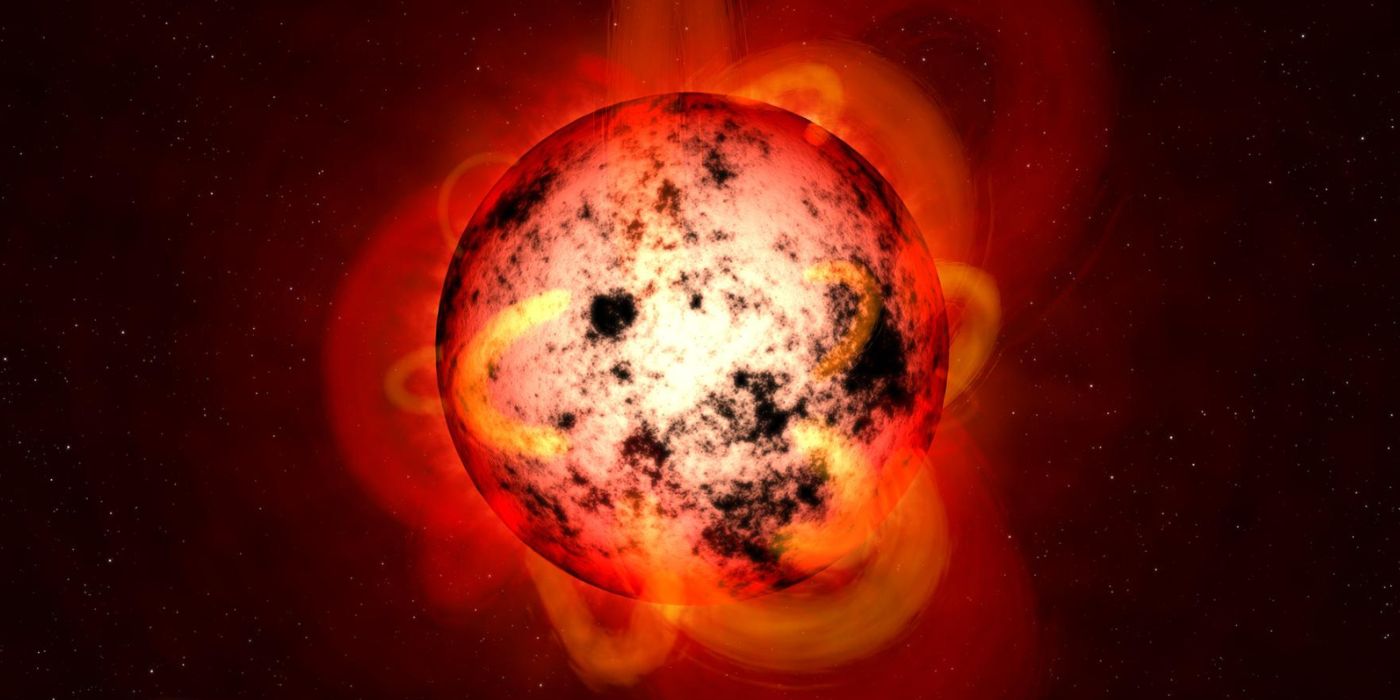
To investigate this question, the researchers focused on two candidate water worlds: GJ 1214 b and LHS 1140 b. These planets may possess water-rich atmospheres or even global oceans, making them valuable targets for studying atmospheric hazes. Both orbit red dwarf stars, which are among the most common stars in our galaxy. Although these stars are excellent targets for exoplanet searches because of their small size, they are also highly active and frequently emit intense ultraviolet radiation that can drive complex atmospheric chemistry.
Decoding the Chemistry of Alien Smog
One of the first questions Dr. Moiya asked was deceptively simple: aren't hazes just clouds?
As Huseby explained, the two are fundamentally different.
Clouds form through familiar physical processes in which gases condense into liquid droplets or ice crystals, then eventually evaporate again. Hazes, however, are created through photochemistry, a process in which ultraviolet radiation breaks apart atmospheric molecules, allowing them to recombine into entirely new, complex solid particles.
Dr. Moran compared the process to photochemical smog on Earth. Just as sunlight reacts with pollutants in Earth's atmosphere to produce suspended particles, ultraviolet radiation from an active star can transform gases in an exoplanet's atmosphere into thick organic hazes.
Understanding these hazes is especially important because they influence how astronomers interpret telescope observations. A dense haze layer can hide the chemical signatures scientists are trying to detect, making a planet appear very different from what its atmosphere actually contains.
From Laboratory Experiments to Planetary Models
To understand how hazes influence telescope observations, the researchers first needed to recreate them in the laboratory.
The work began at Johns Hopkins University, where researchers prepared gas mixtures designed to represent the atmospheres of candidate water-rich exoplanets. These mixtures contained combinations of water vapor, nitrogen, carbon dioxide, and either methane or carbon monoxide. Inside a specialized chamber, the gases were exposed to plasma, simulating the energetic conditions created by stellar activity and producing thin films of organic haze particles.
Those laboratory-produced hazes were then sent to the University of Arizona, where Huseby exposed them to ultraviolet radiation to simulate the long-term effects of an active host star. By measuring how the irradiated hazes absorbed and scattered light, the team calculated their optical constants—properties that describe how light interacts with a material.
As Huseby explained, obtaining these measurements was only the first step. The researchers then incorporated the laboratory results into atmospheric models to determine whether the new haze properties would noticeably change what telescopes observe.
Two complementary computer models made this possible:
Virga models how clouds and hazes form and behave in planetary atmospheres, using laboratory measurements to compute haze-layer properties.
Picasso then combines those haze properties with known characteristics of a planet—such as its size, temperature, and distance from its star—to simulate the transmission spectrum that astronomers would expect to observe.
Rather than relying on theoretical assumptions, this approach allows atmospheric models to incorporate laboratory measurements that more accurately represent the chemistry of the planets under study. By linking laboratory experiments with atmospheric models and telescope observations, researchers can interpret exoplanet spectra using experimentally measured data rather than assumptions based on other worlds.
Moving Beyond Titan
One of the central themes of the discussion was that astronomers have long relied on laboratory measurements from a very different world.
For decades, many atmospheric models used optical constants derived from Titan, Saturn's largest moon. Those experiments, pioneered by planetary scientists Bishun Khare and Carl Sagan in the 1980s, provided the best available measurements of organic hazes and became the standard reference for interpreting observations of many exoplanets.
As Dr. Sarah Moran explained, those Titan measurements have remained the default not because they perfectly represent every planetary atmosphere, but because comparable laboratory data for other atmospheric compositions simply did not exist.
The team's study addresses that gap by producing optical constants for water-rich atmospheres instead of Titan's methane-rich environment, and the difference became immediately apparent when the researchers applied the new data to atmospheric models.
When Titan-based measurements are applied to candidate water worlds, atmospheric models often predict nearly featureless spectra across the wavelengths observed by the Hubble Space Telescope. However, using the newly measured optical constants, the researchers found that important atmospheric features become visible rather than disappearing beneath a completely flat spectrum.
The results also showed that water does not prevent haze formation, as had sometimes been assumed. Water-rich atmospheres can produce substantial amounts of haze, but that haze interacts with light differently from Titan's haze.
For future JWST observations, these improved laboratory measurements will help astronomers determine whether they are observing atmospheric gases, clouds, or photochemical hazes. Using composition-specific laboratory data reduces the risk of misinterpreting the properties of distant exoplanets.
Prebiotic Chemistry and the Search for Biosignatures
Beyond improving atmospheric models, the researchers also discussed what these hazes might reveal about the chemical environments of distant worlds.
As part of the laboratory experiments, the team analyzed the composition of the haze particles they produced. They found that laboratory-produced hazes can contain a variety of complex organic molecules, including compounds related to amino acids, nucleobases, and sugars. While these molecules are not evidence of life, they are among the chemical building blocks that can participate in prebiotic chemistry.
Dr. Moran emphasized that understanding these materials is important because hazes do more than obscure observations. They may also influence the chemistry occurring within a planet's atmosphere, providing insight into environments that could support the chemical processes associated with the origins of life.
The discussion then turned closer to home. Huseby explained that the same laboratory techniques are now being applied to study early Earth. Billions of years ago, before Earth's atmosphere developed a protective ozone layer, ultraviolet radiation from the young Sun would have reached the planet's surface much more readily than it does today.
Researchers are recreating those ancient atmospheric conditions in the laboratory by mixing gases thought to have been present on early Earth and exposing them to ultraviolet radiation. The resulting measurements will help scientists understand how atmospheric hazes may have influenced Earth's climate, surface conditions, and prebiotic chemistry long before life became widespread.
Huseby and Dr. Moran both emphasized that this work illustrates how laboratory astrophysics connects multiple fields of research. The same measurements can improve interpretations of JWST observations, inform models of potentially habitable exoplanets, and provide new insights into our own planet's earliest history.
As more powerful telescopes continue to reveal increasingly detailed exoplanet atmospheres, laboratory measurements like these will become an essential part of understanding what those observations truly mean. Rather than relying on assumptions drawn from familiar worlds, astronomers are building the laboratory foundation needed to interpret the remarkable diversity of planets beyond our Solar System—bringing future discoveries from telescopes like JWST into much sharper focus.
Watch the full SETI Live conversation here. Read the published paper.
Final questions
1. Why do water-rich exoplanets develop hazes instead of an ozone layer like Earth?
Earth's ozone layer forms because ultraviolet radiation interacts with abundant atmospheric oxygen. Candidate water-rich exoplanets may have very different atmospheric compositions. Instead of producing ozone, ultraviolet radiation can trigger chemical reactions that create complex organic haze particles.
2. What is the difference between an atmospheric cloud and an atmospheric haze?
Clouds form when gases condense into liquid droplets or ice crystals through reversible physical processes. Haze forms through photochemical reactions, in which ultraviolet radiation breaks apart atmospheric molecules and creates entirely new solid particles.
3. Why are laboratory experiments important for studying exoplanets?
Telescopes observe how light passes through or reflects from a planet's atmosphere, but interpreting those observations requires accurate laboratory measurements of how atmospheric materials interact with light. Experiments like these provide the optical data needed to distinguish among gases, clouds, and hazes, allowing astronomers to interpret JWST observations and those from future missions more accurately.







News
Related News
Jul 2, 2026
How Clouds Hide Alien Worlds—and How Astronomers See Through Them
#Blog #Lauren Sgro
Jun 29, 2026
Humanity's Plan for First Contact: Who Speaks for Earth?
#Blog #Lauren Sgro #Lucian Walkowicz #Chelsea Haramia #SETI #SETI Institute
Jun 26, 2026
What Juice Revealed About Interstellar Comet 3I/ATLAS
#Blog #3I/ATLAS #Franck Marchis #Juice
Jun 12, 2026
Not Planets, Not Stars: NASA Volunteers Doubled the Number of Known Brown Dwarfs
#Blog #Lauren Sgro
Jun 11, 2026
Life is But a Stream: Planetary Systems Along Stellar Streams
#Blog #Moiya McTier
Jun 8, 2026
The Sounds of Intelligence: A Conversation with 2026 Drake Award Recipient Lori Marino
#Blog #Drake Awards #Lori Marino #SETI
Jul 2, 2026
#Blog
#Lauren Sgro
Jun 29, 2026
#Blog
#Lauren Sgro
#Lucian Walkowicz
#Chelsea Haramia
#SETI
#SETI Institute
Humanity's Plan for First Contact: Who Speaks for Earth?
Jun 26, 2026
#Blog
#3I/ATLAS
#Franck Marchis
#Juice
What Juice Revealed About Interstellar Comet 3I/ATLAS
Jun 12, 2026
#Blog
#Lauren Sgro
Not Planets, Not Stars: NASA Volunteers Doubled the Number of Known Brown Dwarfs
Jun 11, 2026
#Blog
#Moiya McTier
Life is But a Stream: Planetary Systems Along Stellar Streams
Jun 8, 2026
#Blog
#Drake Awards
#Lori Marino
#SETI
The Sounds of Intelligence: A Conversation with 2026 Drake Award Recipient Lori Marino
Research
Related Projects

SkyMapper • SETI • Citizen Science • Astronomy
SkyMapper: Expanding Access to Real-time Astronomy Through a Global Astronomical Network
SkyMapper and the SETI Institute are connecting educators, students and the public to live astronomical observations through a distributed astronomical network. #SkyMapper #SETI #Citizen Science #Astronomy
VPL
Virtual Planetary Laboratory
How can we best assess whether an exoplanet supports life? #VPL
Discovery and Futures Lab
Discovery and Futures Lab
What happens if life beyond Earth is discovered? The Discovery and Futures Lab at the SETI Institute fosters novel and anticipatory research at the intersection of science, society, our planet, and the search for life beyond Earth. #Discovery and Futures Lab
May 17, 2026
SkyMapper: Expanding Access to Real-time Astronomy Through a Global Astronomical Network
SkyMapper and the SETI Institute are connecting educators, students and the public to live astronomical observations through a distributed astronomical network.
#SkyMapper
#SETI
#Citizen Science
#Astronomy
May 5, 2026
Virtual Planetary Laboratory
How can we best assess whether an exoplanet supports life?
#VPL
Apr 16, 2026
Discovery and Futures Lab
What happens if life beyond Earth is discovered? The Discovery and Futures Lab at the SETI Institute fosters novel and anticipatory research at the intersection of science, society, our planet, and the search for life beyond Earth.
#Discovery and Futures Lab
Support Us
Support the
SETI Institute
Scientists are getting closer in their search for life beyond earth. But with limited federal funding for the search for extraterrestrial intelligence, supporters are the reason cutting-edge scientists can keep their eyes on the sky.
