)

Friday, Jun 26, 2026
At a Glance
Looking ahead: The campaign demonstrates how spacecraft, ground-based observatories, and international collaborations can work together to study future interstellar visitors. |
Looking ahead: The campaign demonstrates how spacecraft, ground-based observatories, and international collaborations can work together to study future interstellar visitors.
When astronomers discovered 3I/ATLAS in 2025, they realized they were witnessing only the third confirmed interstellar object ever detected passing through the Solar System. The discovery immediately sparked a global observing campaign, with telescopes around the world turning toward the rare visitor.
In a recent SETI Live conversation, SETI Institute planetary astronomer Dr. Franck Marchis spoke with planetary scientist Dr. Cecilia Tubiana about a unique opportunity to study this rare visitor. One of the most important phases of the comet's journey posed a challenge: during perihelion, the point at which 3I/ATLAS passed closest to the Sun, Earth-based observatories could not observe the object because Earth was effectively on the opposite side of the Sun.
Rather than relying solely on ground-based telescopes, scientists turned to the European Space Agency’s Jupiter Icy Moons Explorer (Juice) spacecraft, which is currently traveling toward Jupiter. Although Juice was never designed to study interstellar comets, its position in space placed it in an ideal location to observe 3I/ATLAS during this otherwise inaccessible stage of its journey.
Dr. Tubiana explained that the scientific team immediately recognized the opportunity to observe 3I/ATLAS from space, but the campaign faced significant logistical challenges. Observation campaigns for deep-space missions typically require around nine months of planning, yet this effort had to be organized within only a few months of the comet’s discovery. She described the campaign's eventual approval as evidence of strong scientific interest in studying material originating from another planetary system.
Dissecting the Chemistry of an Exocomet
The results discussed during the SETI Live conversation remain preliminary because the observations only recently arrived on Earth. Juice collected its observations between November 5 and November 25, 2025, but the spacecraft's distance meant the data required roughly three months to reach Earth. Scientists began analyzing the observations only in the second half of February 2026, and many aspects of the dataset are still being evaluated.
One of the primary goals was to measure the comet's water production rate. Using the MAJIS imaging spectrometer, researchers identified spectral signatures of water molecules in the comet's coma and used their intensities to estimate how much water vapor the comet was releasing.
Preliminary analysis indicates that the comet's water production rate is relatively high compared with some well-studied comets. It significantly exceeds that of the short-period comet 67P/Churyumov-Gerasimenko, the target of ESA's historic Rosetta mission, although it does not reach the extreme activity levels historically observed for Comet Halley.
Dr. Tubiana noted that while comet activity often correlates with nucleus size, there are important exceptions. She pointed to Comet Wirtanen as an example of a relatively small but "hyperactive" comet, demonstrating that size alone does not determine a comet's behavior.
A Familiar Comet from Another System
Beyond measuring water production, Juice used its Ultraviolet Spectrograph (UVS) to study how the comet interacted with solar radiation. Interestingly, NASA’s Europa Clipper spacecraft carries an identical UVS instrument, allowing both missions to conduct coordinated observations of 3I/ATLAS from different locations in space during November 2025.
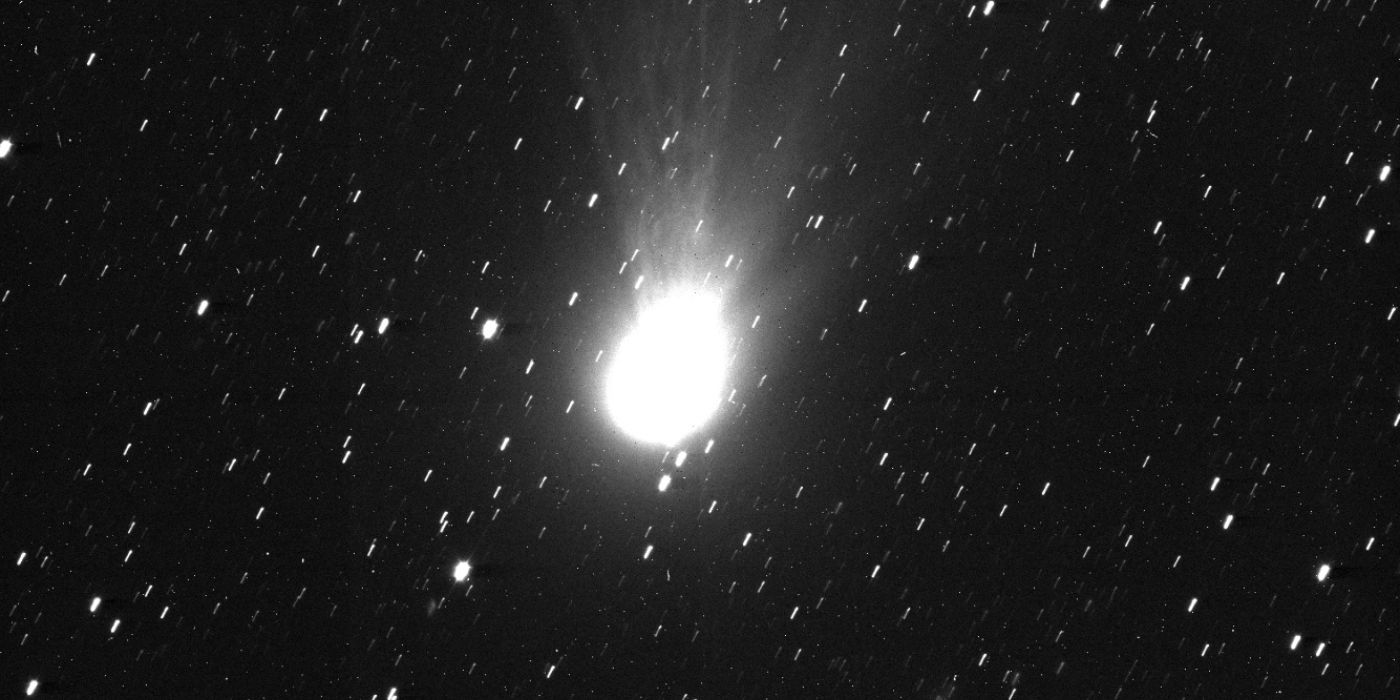
Images obtained during five observing windows showed the comet evolving in a familiar way. As 3I/ATLAS approached the Sun, its brightness increased, its coma expanded, and both dust and ion tails became more prominent.
Using specialized ultraviolet filters, the Janus camera team successfully mapped both a traditional dust tail and a distinct ion tail, created by ionized gases being swept away by the solar wind. Researchers also observed plasma interactions that visibly altered the ion tail's structure.
The observations suggest that 3I/ATLAS behaves much like comets found in our own Solar System, despite having formed around another star. Rather than revealing an entirely unfamiliar type of object, the findings indicate that many of the physical processes governing comet activity may be common across planetary systems. This similarity allows scientists to compare the formation and evolution of small bodies beyond our Solar System with those they already study closer to home.
For Dr. Tubiana, this similarity was one of the campaign's most important findings. In her words, the object is "different, but not exotic," sharing a core similarity with the comets astronomers already know.
Building an Interstellar Observation Network
While the Juice observations revealed that 3I/ATLAS behaves in many ways like comets found within our own Solar System, they also highlighted an important difference. Dr. Tubiana explained that measurements from the Atacama Large Millimeter/submillimeter Array (ALMA) and the James Webb Space Telescope indicate that the comet possesses an elevated deuterium-to-hydrogen (D/H) ratio. In simple terms, a larger fraction of the hydrogen in its water molecules is replaced by deuterium, a heavier isotope of hydrogen.
According to Dr. Tubiana, this elevated D/H ratio suggests that the comet likely formed in a colder environment than the one in which our own Solar System formed. She noted that this is the first interstellar object for which such a measurement has been possible, providing scientists with an important clue about the conditions that existed in another planetary system.
The discussion also highlighted how the study of interstellar objects has evolved over the past decade. When 1I/'Oumuamua was discovered in 2017, astronomers had very little time to organize coordinated observations, and many questions remained unanswered because of the object's rapid departure from the Solar System.
By the time 2I/Borisov arrived in 2019 and 3I/ATLAS in 2025, the scientific community had developed a far more coordinated approach. Researchers around the world now rapidly share data, submit joint observing proposals, and combine observations from spacecraft and ground-based facilities to maximize the scientific return from these rare visitors.
During the discussion, Dr. Marchis highlighted how quickly scientists formed an international observing community for 3I/ATLAS, sharing data, coordinating proposals, and combining observations from spacecraft and ground-based telescopes. This collaborative approach allowed researchers to maximize the scientific return during the comet's brief passage through the Solar System.
This collaborative approach is particularly important because interstellar objects spend only a short time within the Solar System before continuing on their journey through interstellar space. Every observation, therefore, represents a unique opportunity that cannot be repeated.
Looking ahead, Dr. Tubiana expressed confidence that future facilities such as the Vera C. Rubin Observatory will discover many more interstellar objects. As detection rates increase, scientists will be able to study a larger and more diverse population of visitors from other planetary systems rather than relying on only a handful of examples.
The 3I/ATLAS campaign demonstrates that spacecraft already operating in deep space can be rapidly repurposed to observe unexpected discoveries. Combined with coordinated observations from ground-based observatories and next-generation facilities, this strategy provides a powerful framework for studying material that formed around other stars and for better understanding how planetary systems form and evolve throughout the galaxy.
Watch the full SETI Live conversation here. Read the press release.
Final questions
1. How often do interstellar objects enter our Solar System?
While only a few interstellar objects have been confirmed so far, astronomers believe many more pass through the Solar System undetected. Improvements in survey technology and next-generation observatories are expected to dramatically increase the discovery rate in the coming years.
2. Why was observing 3I/ATLAS from Juice important?
Earth-based telescopes could not observe the comet during perihelion, since Earth was on the opposite side of the Sun from the object. Juice occupied a unique position in space, allowing scientists to study the comet during this otherwise inaccessible phase.
3. What can interstellar comets teach us about planetary systems beyond our own?
Interstellar comets preserve material from the early stages of planet formation around other stars. Studying their composition helps scientists compare how planets and small bodies form across different stellar environments throughout the galaxy.







News
Related News

Jul 10, 2026
A Remarkably Ancient Visitor: 3I/ATLAS
#3I/ATLAS #Comets, Meteors, and Asteroids #JWST
Jul 2, 2026
How Clouds Hide Alien Worlds—and How Astronomers See Through Them
#Blog #Lauren Sgro
Jun 29, 2026
Humanity's Plan for First Contact: Who Speaks for Earth?
#Blog #Lauren Sgro #Lucian Walkowicz #Chelsea Haramia #SETI #SETI Institute
Jun 12, 2026
Not Planets, Not Stars: NASA Volunteers Doubled the Number of Known Brown Dwarfs
#Blog #Lauren Sgro
Jun 11, 2026
Life is But a Stream: Planetary Systems Along Stellar Streams
#Blog #Moiya McTier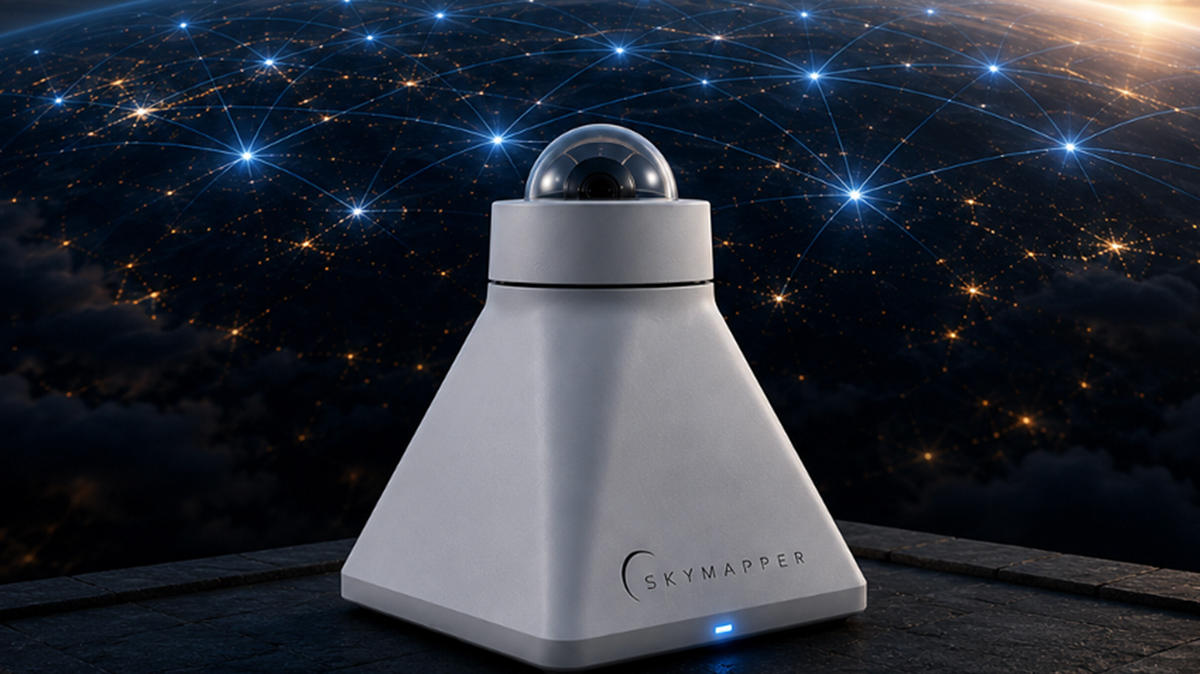
Jun 9, 2026
Disclosure Needs Data
#SkyMapper #Franck Marchis #SETI #citizen science
Jul 10, 2026
#3I/ATLAS
#Comets, Meteors, and Asteroids
#JWST
Jul 2, 2026
#Blog
#Lauren Sgro
How Clouds Hide Alien Worlds—and How Astronomers See Through Them
Jun 29, 2026
#Blog
#Lauren Sgro
#Lucian Walkowicz
#Chelsea Haramia
#SETI
#SETI Institute
Humanity's Plan for First Contact: Who Speaks for Earth?
Jun 12, 2026
#Blog
#Lauren Sgro
Not Planets, Not Stars: NASA Volunteers Doubled the Number of Known Brown Dwarfs
Jun 11, 2026
#Blog
#Moiya McTier
Life is But a Stream: Planetary Systems Along Stellar Streams
Jun 9, 2026
#SkyMapper
#Franck Marchis
#SETI
#citizen science
Disclosure Needs Data
Research
Related Projects

SkyMapper • SETI • Citizen Science • Astronomy
SkyMapper: Expanding Access to Real-time Astronomy Through a Global Astronomical Network
SkyMapper and the SETI Institute are connecting educators, students and the public to live astronomical observations through a distributed astronomical network. #SkyMapper #SETI #Citizen Science #Astronomy
VPL
Virtual Planetary Laboratory
How can we best assess whether an exoplanet supports life? #VPL
Discovery and Futures Lab
Discovery and Futures Lab
What happens if life beyond Earth is discovered? The Discovery and Futures Lab at the SETI Institute fosters novel and anticipatory research at the intersection of science, society, our planet, and the search for life beyond Earth. #Discovery and Futures Lab
May 17, 2026
SkyMapper: Expanding Access to Real-time Astronomy Through a Global Astronomical Network
SkyMapper and the SETI Institute are connecting educators, students and the public to live astronomical observations through a distributed astronomical network.
#SkyMapper
#SETI
#Citizen Science
#Astronomy
May 5, 2026
Virtual Planetary Laboratory
How can we best assess whether an exoplanet supports life?
#VPL
Apr 16, 2026
Discovery and Futures Lab
What happens if life beyond Earth is discovered? The Discovery and Futures Lab at the SETI Institute fosters novel and anticipatory research at the intersection of science, society, our planet, and the search for life beyond Earth.
#Discovery and Futures Lab
Support Us
Support the
SETI Institute
Scientists are getting closer in their search for life beyond earth. But with limited federal funding for the search for extraterrestrial intelligence, supporters are the reason cutting-edge scientists can keep their eyes on the sky.
