)

Monday, Jun 29, 2026

At a Glance
|
What happens if scientists find evidence of extraterrestrial intelligence?
That question was at the center of a recent SETI Live discussion about newly updated post-detection protocols and how researchers can prepare for the possibility of discovery.
Recently, the International Academy of Astronautics published an updated version of the SETI post-detection protocols, the first major revision in more than 15 years. These guidelines serve as a framework for scientists around the globe in the event that clear evidence of extraterrestrial intelligence is found.
To discuss these updates, SETI Institute research scientist Dr. Lauren Sgro hosted a special SETI Live session. The conversation featured the co-directors of the newly launched Discovery and Futures Lab - philosopher Dr. Chelsea Haramia and astronomer Dr. Lucian Walkowicz. Together, they discussed how scientists and society might respond to evidence of extraterrestrial intelligence, and why those conversations need to happen before any discovery is made.
Navigating a Fractured Information Landscape
A major reason for updating the protocols is the radically altered information ecosystem, alongside significant changes in the scientific and global landscape over the last 15 years. The previous iteration of the document was drafted in 2010, when social media was in its infancy, and artificial intelligence was not a mainstream tool.
Dr. Lucian Walkowicz emphasized that the way humanity consumes, shares, and interprets information has fundamentally changed. Today, any potential signal would immediately contend with a rapid media cycle, deepfakes, and AI-generated misinformation.
The updated protocols strike a critical balance between the public's right to know and researchers' professional safety. The revision process itself reflected the protocols' emphasis on transparency, incorporating feedback from an international and interdisciplinary community of researchers.
Dr. Chelsea Haramia noted that the new version is much more reciprocal. It includes specific clauses that grant scientists the right to decline ongoing media requests to protect their safety and professional bandwidth. This protection ensures that researchers can focus on the primary task of confirming the discovery without being overwhelmed by external pressure.
Expanding the Spectrum of Search
The protocols also reflect changes in the scientific landscape of SETI – and the SETI Institute itself. While early searches focused largely on radio astronomy, the updated language acknowledges a wider range of possible technosignatures.
Dr. Walkowicz noted that SETI researchers have long explored different ways an advanced civilization might be detectable, from radio transmissions to optical signals such as lasers.
Both guests emphasized that the document is intended to remain a living framework that can adapt as new technologies and search strategies develop.
Who Speaks for Earth?
One of the central ideas carried over into the updated protocols is that no single person, institution, or nation should decide on a response alone. The protocols reaffirm that any response should follow appropriate international consultation rather than unilateral action.
Dr. Haramia explained that executing a truly global discussion is logistically complex and presents unique ethical challenges. Any response could affect people far beyond those alive today. Furthermore, humans must act as responsible proxies for the entire terrestrial ecosystem, including non-human species.
While getting every nation or individual to agree is impossible, the guests agreed that unilateral action must be avoided. Dr. Walkowicz pointed out that because modern telescopes and observatories, such as the Vera C. Rubin Observatory, are massive international collaborations, the discovery process itself will inherently be a global undertaking.
Like a community agreement against littering, these protocols are not legally binding. However, they establish powerful global norms rooted in transparency and shared accountability.
Discovery May Not Be a Single Moment
Discovery is already a process, not a single event. New evidence may emerge gradually, requiring years of follow-up observations, debate, and attempts to rule out natural explanations.
Dr. Walkowicz explained that scientific discoveries rarely arrive as a single, universally accepted announcement. Instead, researchers often work through long periods of uncertainty, follow-up observations, and independent verification.
Dr. Haramia expanded on this idea, noting that future evidence of extraterrestrial life or intelligence could remain ambiguous for years, decades, or even generations. Rather than producing an immediate answer, a potential detection might begin a prolonged effort to determine whether a signal or observation can be explained by natural phenomena or something else.
Understanding how societies respond to uncertainty, incomplete information, and evolving evidence is one reason the Discovery and Futures Lab was created.
The Launch of the Discovery and Futures Lab
The Discovery and Futures Lab was created to study questions that extend beyond the technical search itself: how discoveries are communicated, how people respond to them, and how societies make decisions under uncertainty.
The initiative studies the discovery process itself, drawing on perspectives from the social sciences, humanities, law, and the arts. As Dr. Walkowicz explained, the lab is dedicated to "anticipatory research", examining how discoveries are communicated, interpreted, and understood before they occur.
Dr. Haramia again highlighted that discovery is highly likely to be a prolonged process of resolving data ambiguities. In some cases, scientists may encounter intriguing but inconclusive evidence that requires years or even generations of follow-up observations and analysis before its true nature can be understood.
The lab aims to cultivate global conversations and develop best practices for risk communication. This includes studying past scientific false alarms to understand how the public reacts to sensational headlines.
The discussion also challenged a common assumption about first contact: people often imagine any future signal would be directed at humanity. However, there is no guarantee that a detected communication would be intended for humans at all. Considering those possibilities requires researchers to think carefully about intelligence, communication, and humanity's place within a much broader cosmic context.
Importantly, the scope of the lab extends beyond SETI to include astrobiology and the search for microbial biosignatures.
Dr. Walkowicz also pointed to research on non-human intelligence on Earth as a useful point of comparison. Understanding how humans communicate with other intelligent species, and the challenges involved in interpreting minds that experience the world differently, may help researchers think more carefully about future encounters with forms of intelligence unlike our own.
Throughout the discussion, the updated protocols and the Discovery and Futures Lab were presented as parts of the same larger effort: preparing for discovery before it happens.
Whether evidence emerges through a dramatic detection or a decades-long investigative process, the guests contended that questions about communication, representation, transparency, and public understanding cannot wait until the moment of discovery. Those conversations need to begin now.
As Dr. Haramia noted, the challenge is not simply how humanity would respond to a discovery, but how we prepare for the possibility of one in the first place.
Watch the full SETI Live conversation here. Read the press release on the updated protocols here.
Read the press release on the Discovery and Futures Lab here.
Final questions
1. Does the update to the SETI protocols mean a discovery has already been made?
No. The update is a proactive measure to modernize guidelines that had not been revised since 2010. It reflects changes in technology, global communication, and scientific practice rather than any confirmed detection of extraterrestrial intelligence.
2. How does the search for alien microbes differ from searching for intelligent life?
Scientists searching for microbial life look for biosignatures, such as atmospheric chemicals that may indicate biological activity. The search for intelligent life focuses on technosignatures, including radio signals, laser emissions, or other evidence of technology. While these approaches are often discussed separately, researchers note that future discoveries could involve both kinds of evidence.
3. Are individual scientists legally bound by the "no reply" protocol?
No. The SETI post-detection protocols are not legally enforceable under international law. Instead, they function as widely recognized scientific guidelines that encourage transparency, international consultation, and responsible decision-making.







News
Related News

Jul 17, 2026
How Clouds Hide Alien Worlds—and How Astronomers See Through Them
#Blog #Moiya McTier
Jul 2, 2026
How Clouds Hide Alien Worlds—and How Astronomers See Through Them
#Blog #Lauren Sgro
Jun 26, 2026
What Juice Revealed About Interstellar Comet 3I/ATLAS
#Blog #3I/ATLAS #Franck Marchis #Juice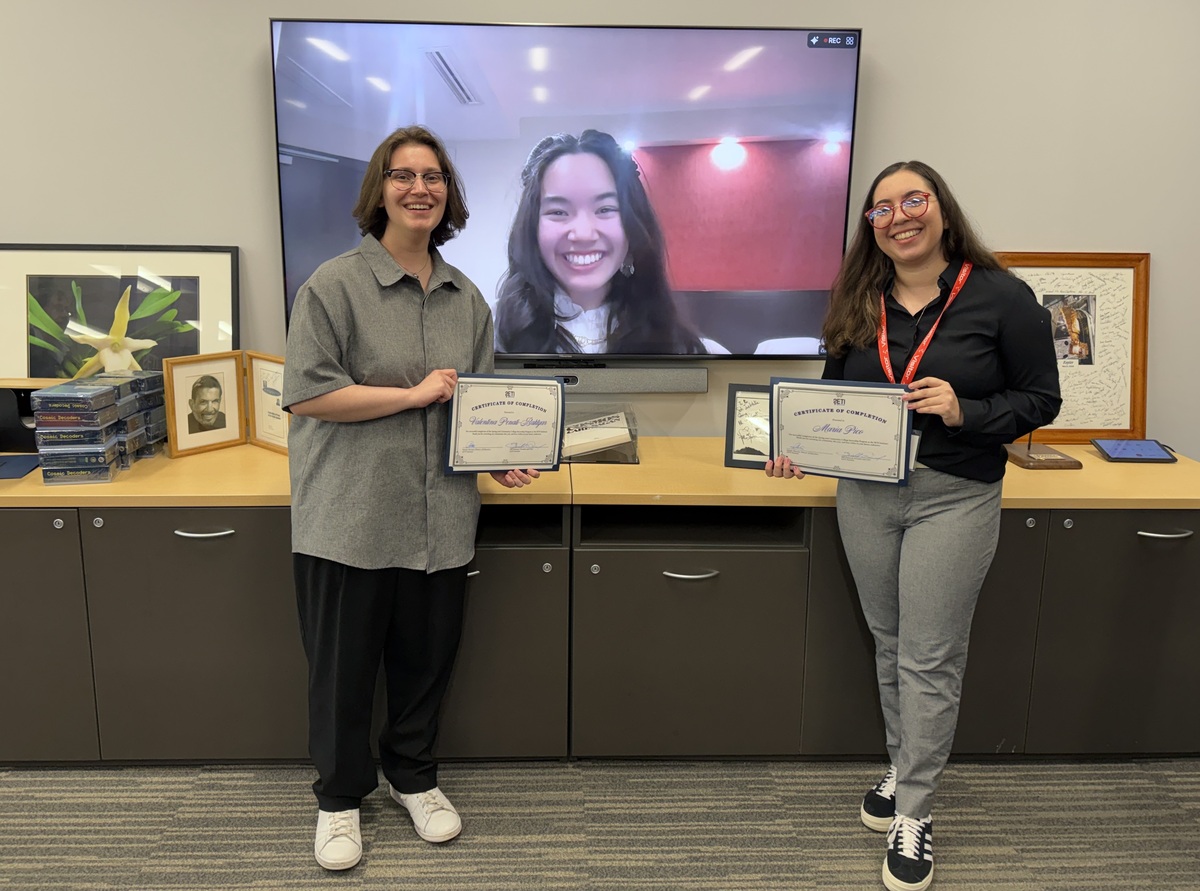
Jun 17, 2026
Community College Internship Program Celebrates Fourth Year of Student Research Achievement
#Community College Internship #Education #Lauren Sgro #Unistellar #Uma Gorti #Douglas Caldwell #Pamela Harman #Simon Steel
Jun 12, 2026
Not Planets, Not Stars: NASA Volunteers Doubled the Number of Known Brown Dwarfs
#Blog #Lauren Sgro
Jun 11, 2026
Life is But a Stream: Planetary Systems Along Stellar Streams
#Blog #Moiya McTier
Jul 17, 2026
#Blog
#Moiya McTier
Jul 2, 2026
#Blog
#Lauren Sgro
How Clouds Hide Alien Worlds—and How Astronomers See Through Them
Jun 26, 2026
#Blog
#3I/ATLAS
#Franck Marchis
#Juice
What Juice Revealed About Interstellar Comet 3I/ATLAS
Jun 17, 2026
#Community College Internship
#Education
#Lauren Sgro
#Unistellar
#Uma Gorti
#Douglas Caldwell
#Pamela Harman
#Simon Steel
Community College Internship Program Celebrates Fourth Year of Student Research Achievement
Jun 12, 2026
#Blog
#Lauren Sgro
Not Planets, Not Stars: NASA Volunteers Doubled the Number of Known Brown Dwarfs
Jun 11, 2026
#Blog
#Moiya McTier
Life is But a Stream: Planetary Systems Along Stellar Streams
Research
Related Projects

SkyMapper • SETI • Citizen Science • Astronomy
SkyMapper: Expanding Access to Real-time Astronomy Through a Global Astronomical Network
SkyMapper and the SETI Institute are connecting educators, students and the public to live astronomical observations through a distributed astronomical network. #SkyMapper #SETI #Citizen Science #Astronomy
VPL
Virtual Planetary Laboratory
How can we best assess whether an exoplanet supports life? #VPL
Discovery and Futures Lab
Discovery and Futures Lab
What happens if life beyond Earth is discovered? The Discovery and Futures Lab at the SETI Institute fosters novel and anticipatory research at the intersection of science, society, our planet, and the search for life beyond Earth. #Discovery and Futures Lab
May 17, 2026
SkyMapper: Expanding Access to Real-time Astronomy Through a Global Astronomical Network
SkyMapper and the SETI Institute are connecting educators, students and the public to live astronomical observations through a distributed astronomical network.
#SkyMapper
#SETI
#Citizen Science
#Astronomy
May 5, 2026
Virtual Planetary Laboratory
How can we best assess whether an exoplanet supports life?
#VPL
Apr 16, 2026
Discovery and Futures Lab
What happens if life beyond Earth is discovered? The Discovery and Futures Lab at the SETI Institute fosters novel and anticipatory research at the intersection of science, society, our planet, and the search for life beyond Earth.
#Discovery and Futures Lab
Support Us
Support the
SETI Institute
Scientists are getting closer in their search for life beyond earth. But with limited federal funding for the search for extraterrestrial intelligence, supporters are the reason cutting-edge scientists can keep their eyes on the sky.
