)

Thursday, Jul 02, 2026
At a Glance
|
During a recent SETI Live conversation, SETI Institute research scientist Dr. Lauren Sgro sat down with Arizona State University postdoctoral fellow Dr. Sagnick Mukherjee to discuss a problem that has frustrated exoplanet astronomers for years: clouds. While telescopes like the James Webb Space Telescope (JWST) can detect the chemical fingerprints of distant atmospheres, clouds often hide the very signals researchers are trying to measure.
Dr. Mukherjee explained that in a recent study, his team used a technique called transmission spectroscopy to observe cloud cycles. As a planet passes - transits - in front of its star, a small portion of the starlight filters through the planet's atmosphere before reaching Earth. Different gases absorb specific wavelengths of light, allowing astronomers to infer what is present in the atmosphere. Clouds complicate that picture by attenuating absorption signals, making it difficult to tell whether a weak feature is due to low gas abundance or to clouds obscuring the view.
Mapping Weather Cycles on a Hot Jupiter
The team's goal was to move beyond the traditional assumption that an exoplanet’s atmosphere behaves the same way everywhere. Instead, they wanted to investigate whether different regions of the planet could have very different weather conditions.
The study focused on WASP-94A b, a hot Jupiter that is larger than Jupiter but only about half as massive. Dr. Mukherjee described it as a "puffy" planet, making it easier to observe than many other exoplanets. The planet is also likely tidally locked, meaning one side permanently faces its star while the other remains in darkness. According to Dr. Mukherjee, the temperature difference between the day and night sides drives powerful winds throughout the atmosphere.
Strong atmospheric winds transport heat across the globe, creating distinct morning and evening geographical zones. He detailed how these dynamic conditions drive complex weather cycles and cloud formation.
What surprised the team was how different the two sides of the atmosphere appeared. Using JWST observations, they found that the planet's morning limb – the first edge of the planet’s disk to pass before its star – was heavily obscured by aerosols, while the evening limb was comparatively clear. He also noted that the two spectra looked like they belonged to two completely different planets.
He described the process as a planetary weather cycle driven by the planet's permanent day and night sides. Hot gas from the dayside is carried toward the cooler nightside by strong winds. As the gas cools, materials such as silicates and iron can condense into cloud particles.
Those clouds are then transported toward the morning limb, creating the cloudy conditions observed. By the time the material reaches the hotter dayside again, the clouds either evaporate or sink deeper into the atmosphere.
A New Methodology for Atmospheric Analysis
One reason the result is important is that exoplanet atmospheres are often treated as uniform everywhere. The JWST observations showed that this assumption can be misleading, as they revealed significant variations between the morning and evening sides of WASP-94A b due to shifting cloud patterns that alter the absorption lines in the planet’s spectrum.
The result also demonstrated that weather patterns can strongly influence how astronomers interpret atmospheric measurements.
This methodology relies on matching observed data with advanced three-dimensional climate models. To understand the observations, the team compared the JWST data with atmospheric models that simulate winds, temperatures, and cloud formation across the planet.
One of the broader implications involves atmospheric composition measurements. Dr. Mukherjee noted that if the team had ignored the weather-driven differences across the planet, they would have concluded that the atmosphere contained roughly 100 times as much oxygen as the Sun. Once the weather patterns were taken into account, the estimate dropped dramatically. For him, that was a clear example of how weather can influence conclusions about a planet's composition and history.
Understanding the weather was therefore essential for accurately determining what the atmosphere is actually made of.
Future Horizons with Next-Generation Telescopes
During the discussion, Dr. Mukherjee emphasized that the work is only beginning. His team has already identified similar weather patterns on several other hot Jupiters, suggesting that cloudy mornings and clear evenings may not be unique to WASP-94A b.
One of his other research interests is understanding sub-Neptunes, a class of planets that remains surprisingly mysterious despite being common throughout the galaxy. Many sub-Neptunes observed appear to be covered by high-altitude global hazes.
Unlike clouds, which are the result of liquids condensing into solids, hazes consist of larger molecules created in the atmosphere as a result of photochemistry, or reactions with higher-energy radiation from a star, such as ultraviolet and X-rays. According to Dr. Mukherjee, hazes make it difficult to determine what these sub-Neptune planets are made of and what their atmospheres are actually like. Applying multi-dimensional weather models will be crucial to breaking through these hazy barriers.
One of the next questions is determining exactly what the clouds are made of. Dr. Mukherjee noted that the JWST observations revealed the presence of clouds but could not identify their composition. To investigate further, the team planned follow-up observations with the Gemini telescope.
The team has also been awarded roughly 180 hours of JWST observing time to study planets spanning temperatures from about 300 to 2,000 Kelvin. By comparing weather patterns across many different worlds, Dr. Mukherjee hopes to answer a larger question raised throughout the discussion: how common are cloudy mornings and clear evenings on exoplanets?
Watch the full SETI Live conversation here. Read the press release. Read the published paper.
Final questions
1. What are exoplanet clouds made of?
Dr. Mukherjee explained that the clouds likely form from materials that remain gaseous at extremely high temperatures. During the interview, he specifically mentioned silicates and iron as possible cloud-forming materials on WASP-94A b. Determining the exact composition remains an open question.
2. What makes sub-Neptunes particularly difficult to study?
Dr. Mukherjee explained that many sub-Neptunes appear to be covered by hazes, making atmospheric measurements difficult. One of his current research goals is to understand what these planets are made of and how weather affects how astronomers interpret their atmospheres.
3. How does the James Webb Space Telescope see through clouds?
According to Dr. Mukherjee, JWST's improved precision, stability, and broader wavelength coverage allow astronomers to study different regions of a planet's atmosphere in far greater detail than was possible with earlier observatories such as Hubble. That capability helped the team distinguish between the cloudy morning side and the clearer evening side of WASP-94A b.







News
Related News

Jul 17, 2026
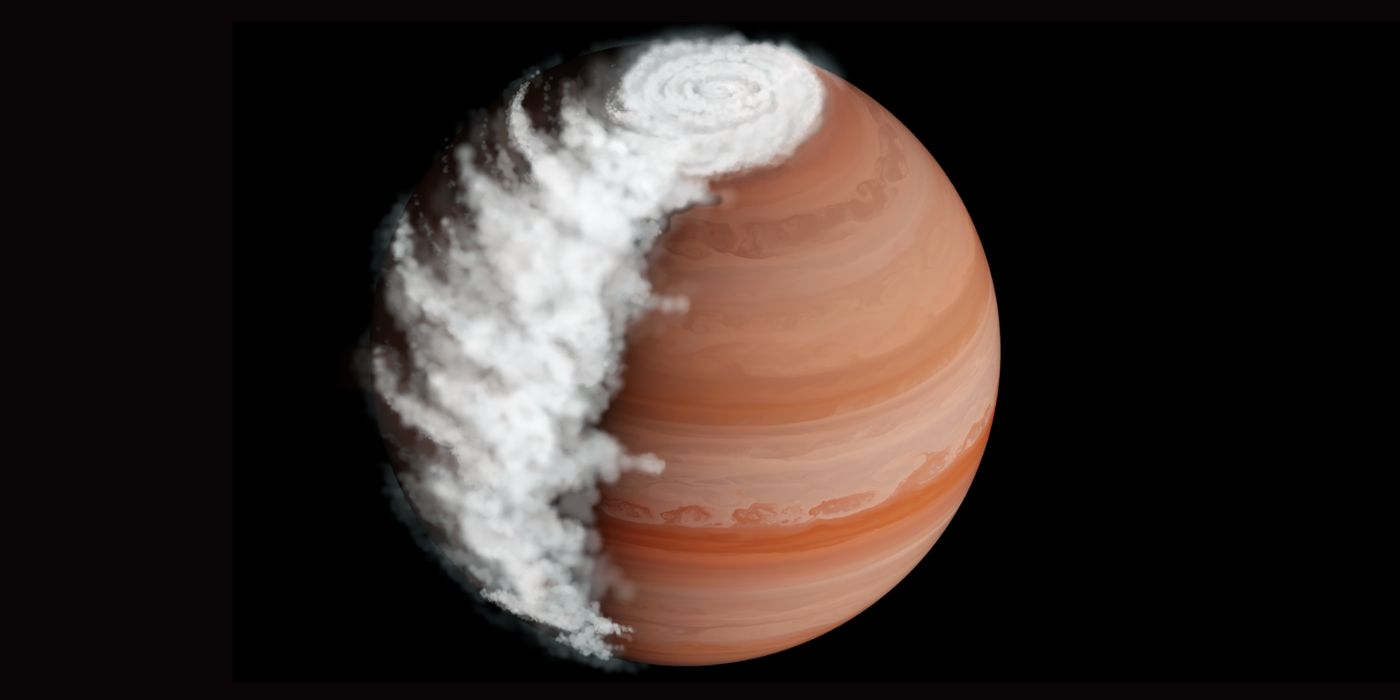
How Clouds Hide Alien Worlds—and How Astronomers See Through Them
#Blog #Moiya McTier
Jun 29, 2026
Humanity's Plan for First Contact: Who Speaks for Earth?
#Blog #Lauren Sgro #Lucian Walkowicz #Chelsea Haramia #SETI #SETI Institute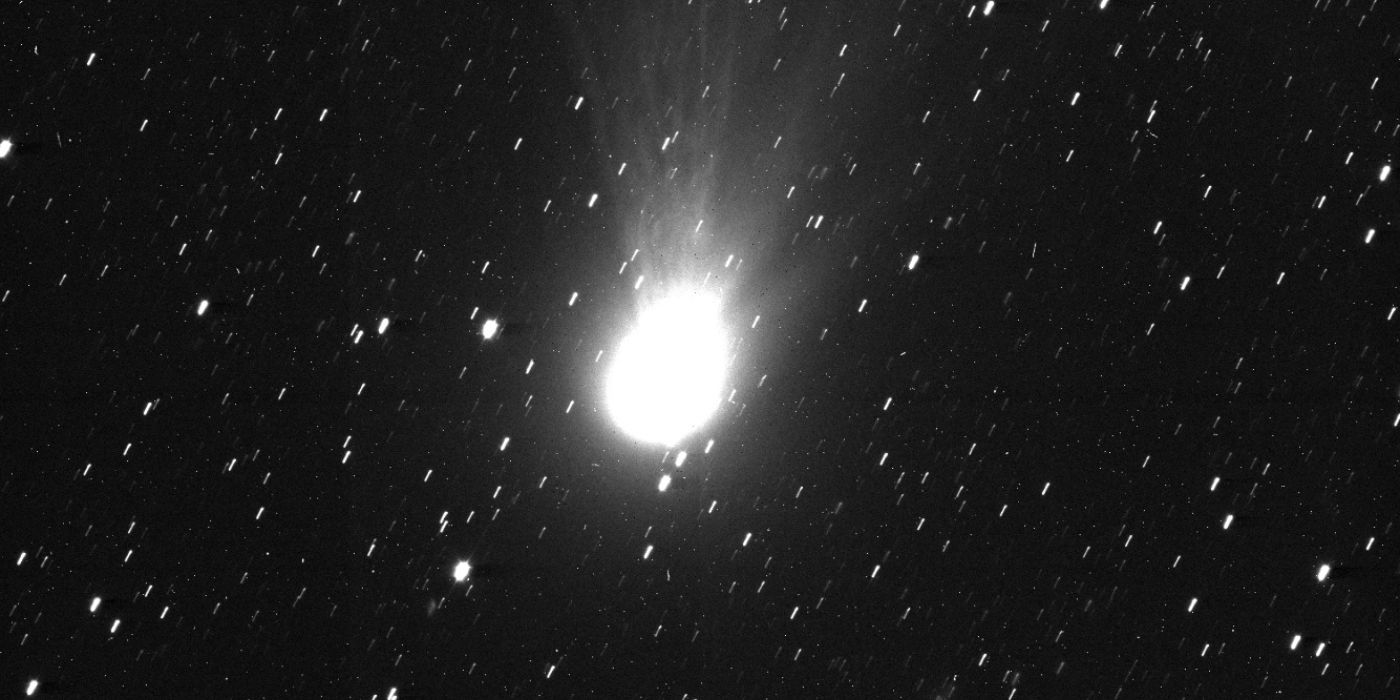
Jun 26, 2026
What Juice Revealed About Interstellar Comet 3I/ATLAS
#Blog #3I/ATLAS #Franck Marchis #Juice
Jun 17, 2026
Community College Internship Program Celebrates Fourth Year of Student Research Achievement
#Community College Internship #Education #Lauren Sgro #Unistellar #Uma Gorti #Douglas Caldwell #Pamela Harman #Simon Steel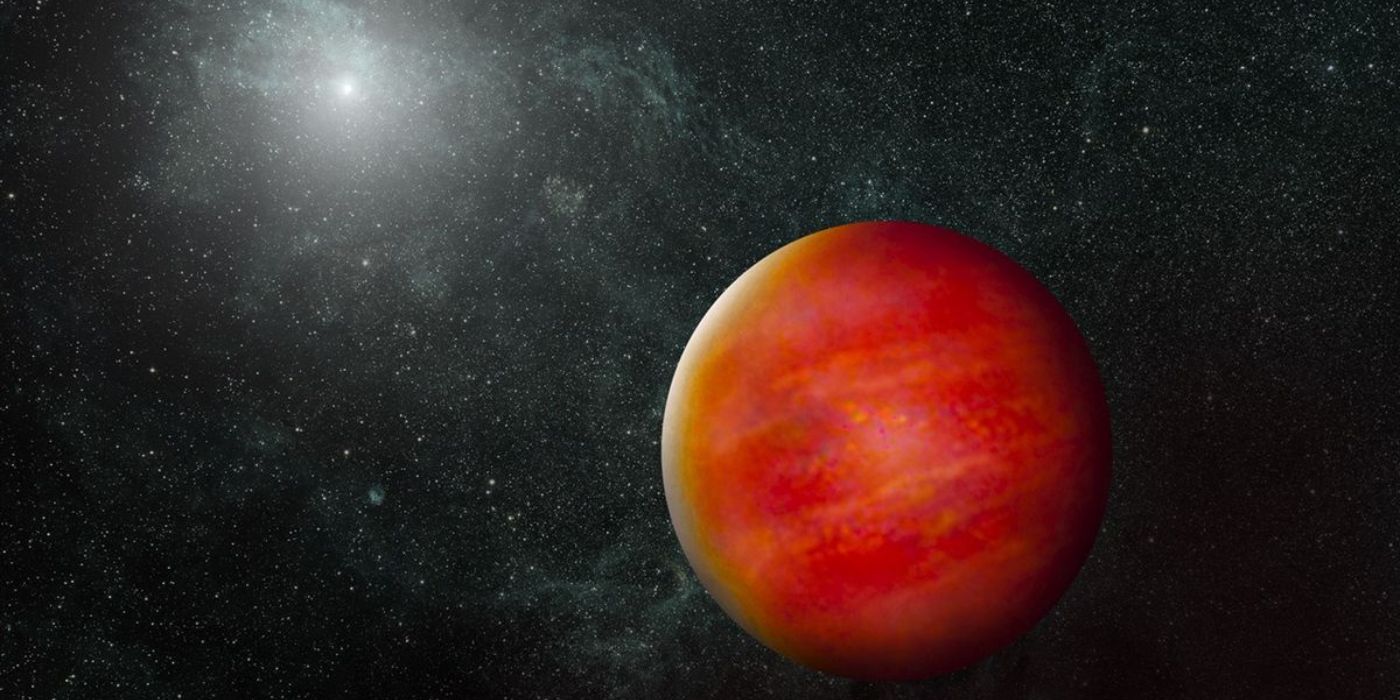
Jun 12, 2026
Not Planets, Not Stars: NASA Volunteers Doubled the Number of Known Brown Dwarfs
#Blog #Lauren Sgro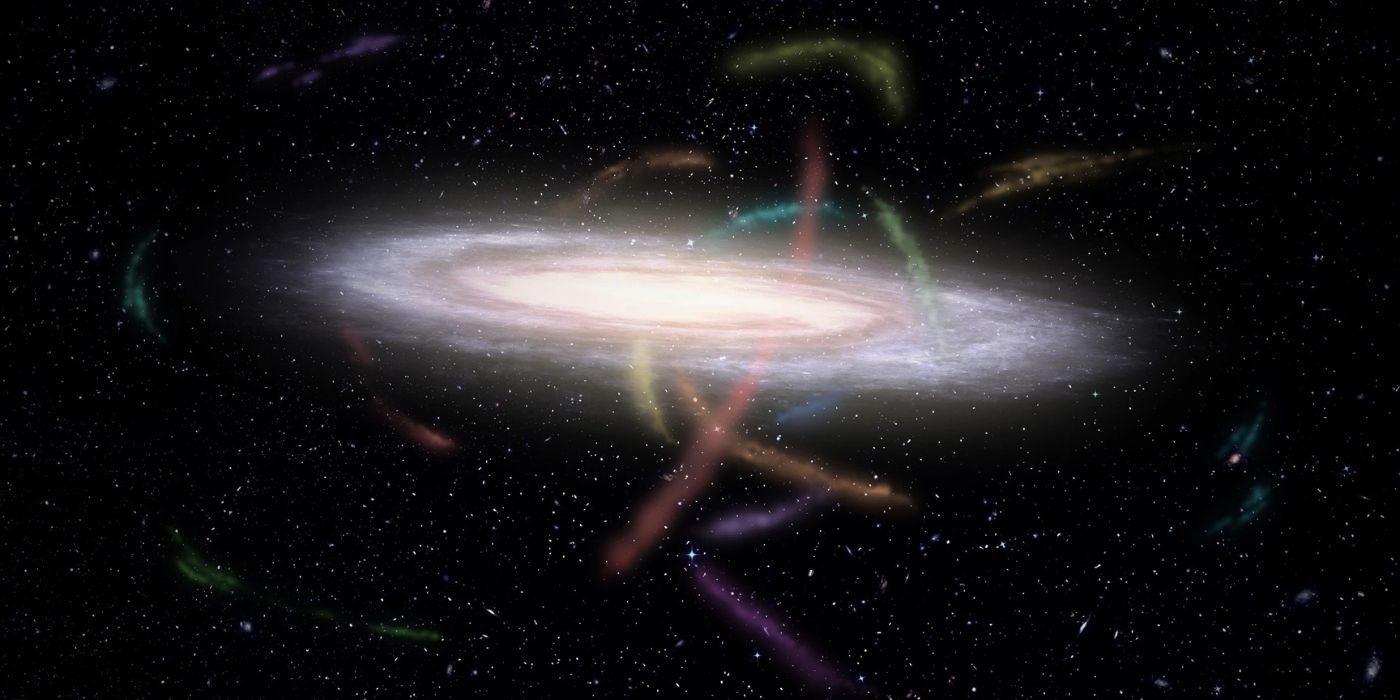
Jun 11, 2026
Life is But a Stream: Planetary Systems Along Stellar Streams
#Blog #Moiya McTier
Jul 17, 2026
#Blog
#Moiya McTier
Jun 29, 2026
#Blog
#Lauren Sgro
#Lucian Walkowicz
#Chelsea Haramia
#SETI
#SETI Institute
Humanity's Plan for First Contact: Who Speaks for Earth?
Jun 26, 2026
#Blog
#3I/ATLAS
#Franck Marchis
#Juice
What Juice Revealed About Interstellar Comet 3I/ATLAS
Jun 17, 2026
#Community College Internship
#Education
#Lauren Sgro
#Unistellar
#Uma Gorti
#Douglas Caldwell
#Pamela Harman
#Simon Steel
Community College Internship Program Celebrates Fourth Year of Student Research Achievement
Jun 12, 2026
#Blog
#Lauren Sgro
Not Planets, Not Stars: NASA Volunteers Doubled the Number of Known Brown Dwarfs
Jun 11, 2026
#Blog
#Moiya McTier
Life is But a Stream: Planetary Systems Along Stellar Streams
Research
Related Projects

SkyMapper • SETI • Citizen Science • Astronomy
SkyMapper: Expanding Access to Real-time Astronomy Through a Global Astronomical Network
SkyMapper and the SETI Institute are connecting educators, students and the public to live astronomical observations through a distributed astronomical network. #SkyMapper #SETI #Citizen Science #Astronomy
VPL
Virtual Planetary Laboratory
How can we best assess whether an exoplanet supports life? #VPL
Discovery and Futures Lab
Discovery and Futures Lab
What happens if life beyond Earth is discovered? The Discovery and Futures Lab at the SETI Institute fosters novel and anticipatory research at the intersection of science, society, our planet, and the search for life beyond Earth. #Discovery and Futures Lab
May 17, 2026
SkyMapper: Expanding Access to Real-time Astronomy Through a Global Astronomical Network
SkyMapper and the SETI Institute are connecting educators, students and the public to live astronomical observations through a distributed astronomical network.
#SkyMapper
#SETI
#Citizen Science
#Astronomy
May 5, 2026
Virtual Planetary Laboratory
How can we best assess whether an exoplanet supports life?
#VPL
Apr 16, 2026
Discovery and Futures Lab
What happens if life beyond Earth is discovered? The Discovery and Futures Lab at the SETI Institute fosters novel and anticipatory research at the intersection of science, society, our planet, and the search for life beyond Earth.
#Discovery and Futures Lab
Support Us
Support the
SETI Institute
Scientists are getting closer in their search for life beyond earth. But with limited federal funding for the search for extraterrestrial intelligence, supporters are the reason cutting-edge scientists can keep their eyes on the sky.
