)

Friday, Jun 12, 2026
At a Glance
Looking ahead: The project is expanding with new initiatives, including "Backyard Worlds: Cool Neighbors" and "Backyard Worlds: Binaries," to utilize machine learning alongside human analysis and to identify binary systems. |
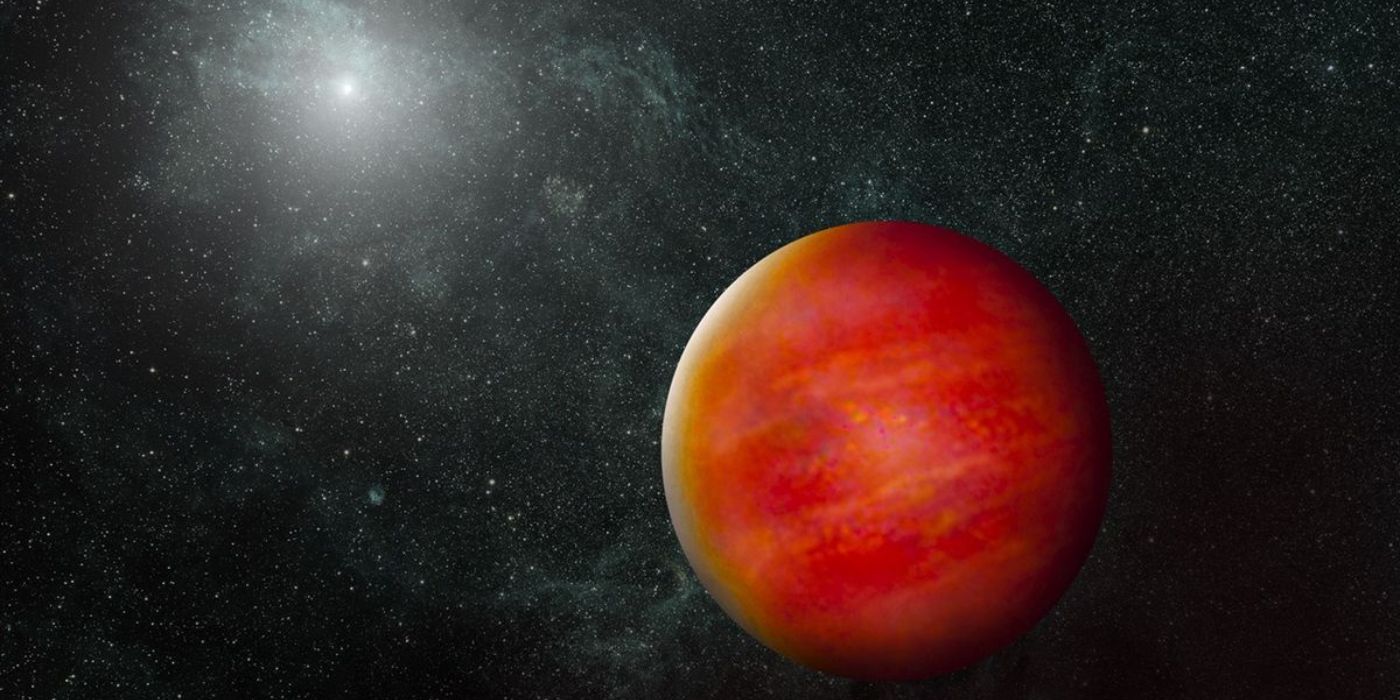
Astronomers have long struggled to map the objects that occupy the dim, ambiguous boundary between the lowest-mass stars and the largest gas giant planets. These celestial bodies are known as brown dwarfs, often referred to as galactic oddballs because they form out of collapsing clouds of gas and dust like stars, but never accumulate enough mass to ignite the hydrogen fusion that powers a typical star. Lacking an internal energy source, brown dwarfs spend their lives cooling and fading into obscurity.
In a recent SETI Live conversation, host and SETI Institute research scientist Dr. Lauren Sgro sat down with U.S. Naval Observatory astronomer Dr. Adam C. Schneider to discuss a groundbreaking milestone. Through the citizen science platform Backyard Worlds: Planet 9, hundreds of thousands of volunteers have identified more than 3,000 motion-confirmed brown dwarf candidates.
What makes the result particularly surprising is that astronomers thought they had already found most of the nearby brown dwarfs before Backyard Worlds launched. Schneider explained that earlier searches had already uncovered many promising candidates, leading researchers to believe the local census was largely complete. Instead, volunteers continued uncovering thousands of additional objects, revealing that the solar neighborhood still held far more brown dwarfs than expected.
The newly published catalog effectively doubles the known population of nearby brown dwarfs and highlights the power of citizen scientists to make discoveries that professional astronomers might otherwise miss.
Understanding the Spectral Sequence: L, T, and Y Dwarfs
To understand the significance of these discoveries, it helps to look at how astronomers classify stars by spectral type, a system that categorizes stars by temperature and the unique chemical signatures in their light. The traditional sequence ranges from O stars, the hottest and most massive, to M stars, the coolest and most common.
In the late 1990s and early 2000s, observations revealed objects even colder than M dwarfs, requiring astronomers to extend the spectral sequence to include L, T, and Y classes. While some early L dwarfs are technically very low-mass stars, most L dwarfs and all T and Y dwarfs are classified as substellar brown dwarfs.
Y dwarfs represent the absolute coldest tier, with atmospheric temperatures sometimes plunging to 300 Kelvin, roughly equivalent to room temperature on Earth.
Why Mapping Our Backyard Matters
Brown dwarfs may be elusive, but they are surprisingly common close to home. Dr. Schneider noted that while Alpha Centauri and Barnard's Star are often recognized as our nearest stellar neighbors, the third and fourth closest known systems to the Sun are both brown dwarfs: WISE 1049-5319 and WISE 0855-0714 at 6.5 light-years and 7.4 light-years away, respectively.
Neither was discovered until the early 2010s because they are so faint. Their late discovery underscores how incomplete our map of the local cosmic neighborhood remains and why finding additional nearby brown dwarfs is scientifically important. Determining the exact count of nearby brown dwarfs is critical for answering fundamental questions about astrophysical processes.
When a giant molecular cloud collapses to form a new stellar cluster, the initial mass function, which is the relative distribution of stellar masses formed within a single generation, dictates how many high-mass O stars form relative to mid-sized G stars like our Sun or low-mass M dwarfs.
While current physics models align well in predicting the distribution of standard stars, they diverge sharply in predicting the distribution of brown dwarfs. Accurately counting local brown dwarfs provides the data necessary to test which star-formation models are correct.
Brown dwarfs can range anywhere from five to 80 times the mass of Jupiter, placing the smallest variants squarely within the planetary mass regime. Because they float freely through the cosmos without a parent star, they lack the blinding stellar glare that makes traditional exoplanets incredibly difficult to observe. However, because they are so cool, they are also difficult to find.
Once found, scientists can analyze the isolated atmospheres and chemistry of these low-mass brown dwarfs and apply those insights directly to giant exoplanets.
Schneider also emphasized that brown dwarfs occupy an important middle ground between planets and stars, making them valuable laboratories for understanding both planetary atmospheres and stellar formation.
Humans and AI Working Together
The data powering Backyard Worlds comes from NASA’s Wide-field Infrared Survey Explorer (WISE), an infrared space telescope that has mapped the entire sky multiple times over a ten-year baseline. Because brown dwarfs emit very little visible light but glow in the infrared, they show up clearly in these datasets.
Volunteers review "flipbooks", which are short, looping animations displaying the same patch of sky captured years apart. Distant galaxies and background stars appear stationary, but nearby brown dwarfs visibly shift across the frame due to their proper motion, that is, their apparent movement across the sky relative to more distant background objects. After these objects are “motion-confirmed” in this way, their colors are inspected to verify their brown dwarf nature.
While machine learning is becoming increasingly important in astronomy, Schneider emphasized that the future is not a choice between human volunteers and artificial intelligence. Instead, newer projects combine the strengths of both.
One example is Backyard Worlds: Cool Neighbors, which uses machine learning algorithms to identify promising candidates before presenting them to volunteers for review. Citizen scientists then help determine whether those candidates are genuine astronomical objects or false positives.
By combining automated searches with human inspection, researchers can process larger datasets while maintaining confidence in the results. Rather than replacing volunteers, machine learning allows researchers to focus human attention on the most promising discoveries hidden within enormous datasets.
The Volunteers Behind the Discoveries
Backyard Worlds has attracted hundreds of thousands of participants since its launch, making it one of the largest citizen science efforts focused on brown dwarfs. Volunteers search through infrared images collected by WISE, looking for subtle moving objects that could be nearby brown dwarfs.
Schneider emphasized that the project is built around collaboration between professional astronomers and volunteers. The team hosts regular meetings where scientists and citizen scientists discuss candidate objects, ask questions, and share discoveries.
Over the years, volunteers have become deeply involved in the scientific process, with some even developing tools that help researchers analyze data more effectively.
The recently published catalog reflects that collaborative approach. Schneider noted that approximately 60 citizen scientists were included as co-authors on the paper, making it one of the largest groups of citizen-scientist authors associated with the project.
One reason for publishing the catalog now was to ensure volunteers received recognition for the objects they helped discover before upcoming observatories and surveys begin identifying many of the same targets.
The conversation highlighted that citizen scientists are not simply assisting professional astronomers. They are making genuine scientific contributions that have expanded our understanding of the solar neighborhood.
Uncovering Cosmic Duos
Among the thousands of newly cataloged objects, Dr. Schneider highlighted several rare, co-moving binary systems. These include systems where a brown dwarf orbits a higher-mass star, as well as exceptionally rare instances where a brown dwarf orbits another brown dwarf.
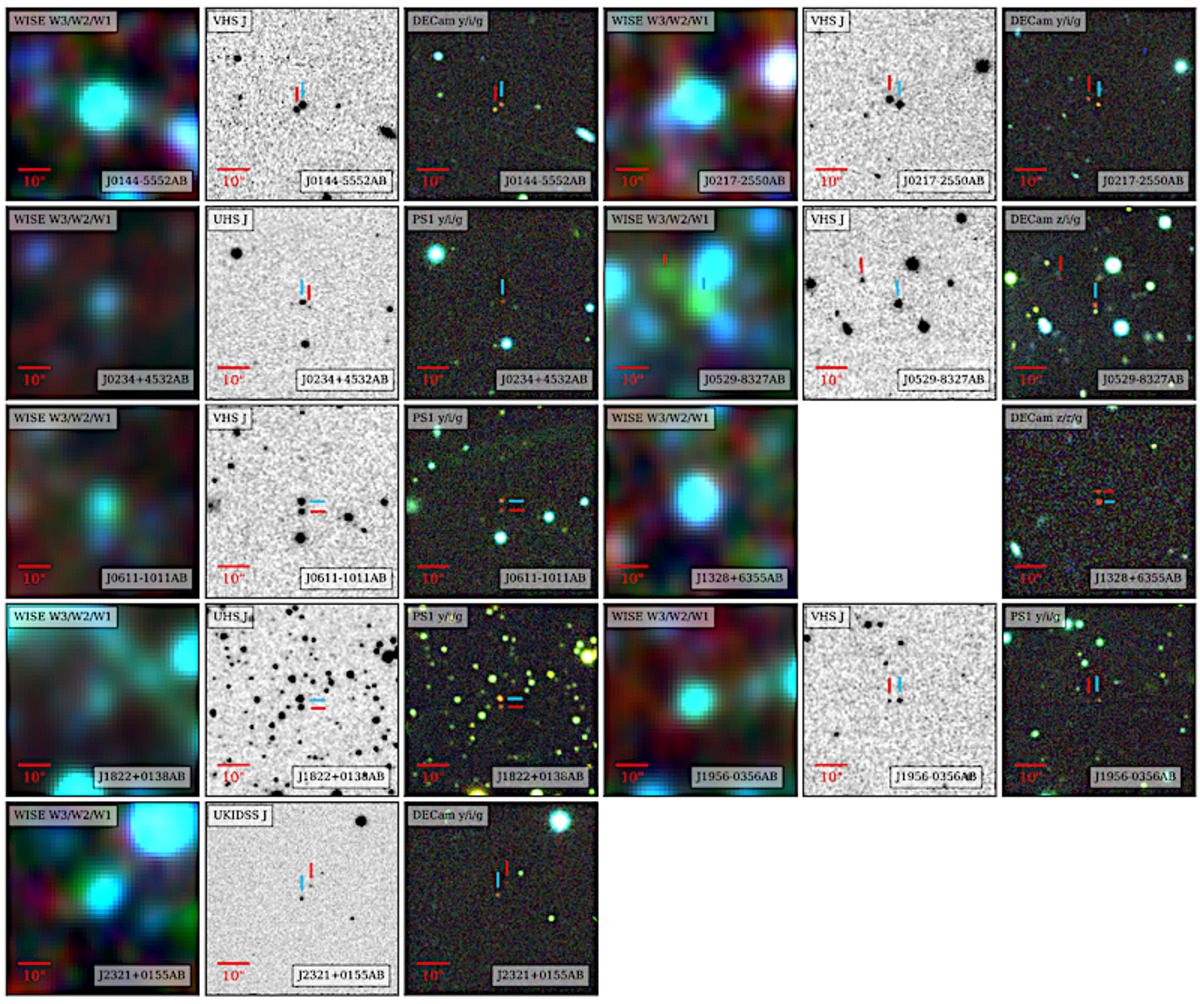
WISE, near-infrared, and optical images of all ultracool wide binary candidates. Optical images either come from Pan-STARRS (PS1; K. C. Chambers et al. 2016) or DECam images obtained through the Astro Data Lab image cutout service (M. J. Fitzpatrick et al. 2014; R. Nikutta et al. 2020). Primaries are marked with light blue lines while candidate ultracool companions are marked with red lines in all images where the components are resolved. Neither component of the CWISE J132836.50+635527.7AB system is detected in any available near-infrared imaging. North is up and East is left in all images.
Binary systems are prized benchmarks. When a brown dwarf is paired with a well-studied star, astronomers can infer the brown dwarf's distance, age, and chemical composition from its companion.
These systems provide important opportunities to test models of brown dwarf formation and evolution because measurements of one object can help constrain the properties of the other.
What's Next for Backyard Worlds
Rather than slowing down, the effort is expanding. Backyard Worlds: Cool Neighbors combines machine learning with volunteer review to identify new brown dwarf candidates, while the upcoming Backyard Worlds: Binaries project will focus on finding companion systems around known moving stars.
Together, these initiatives continue the model that helped produce the current catalog: professional astronomers and citizen scientists working side by side to explore our cosmic backyard.
Future surveys will likely discover many additional brown dwarfs, but Schneider noted that citizen scientists will continue to play a key role in identifying unusual and scientifically valuable objects within increasingly large datasets.
Watch the full SETI Live conversation here. Read the press release and the published paper.
Final questions
1. How are brown dwarfs different from exoplanets?
Brown dwarfs form similarly to stars through the collapse of gas and dust clouds, whereas most exoplanets form within disks of material surrounding young stars. Although some brown dwarfs can have masses comparable to giant planets, their origins and evolutionary histories are fundamentally different.
2. Can brown dwarfs support planets of their own?
Yes. Astronomers have discovered planets orbiting certain brown dwarfs. These systems provide valuable opportunities to study planetary formation in environments very different from those around traditional stars.
3. How do brown dwarfs help scientists study giant exoplanets?
Unlike most exoplanets, brown dwarfs can often be observed directly without interference from a bright host star. This allows scientists to examine their atmospheres in detail and gain insights that can be applied to the study of giant exoplanets.







News
Related News
Jul 17, 2026
How Clouds Hide Alien Worlds—and How Astronomers See Through Them
#Blog #Moiya McTier
Jul 2, 2026
How Clouds Hide Alien Worlds—and How Astronomers See Through Them
#Blog #Lauren Sgro
Jun 29, 2026
Humanity's Plan for First Contact: Who Speaks for Earth?
#Blog #Lauren Sgro #Lucian Walkowicz #Chelsea Haramia #SETI #SETI Institute
Jun 26, 2026
What Juice Revealed About Interstellar Comet 3I/ATLAS
#Blog #3I/ATLAS #Franck Marchis #Juice
Jun 17, 2026
Community College Internship Program Celebrates Fourth Year of Student Research Achievement
#Community College Internship #Education #Lauren Sgro #Unistellar #Uma Gorti #Douglas Caldwell #Pamela Harman #Simon Steel
Jun 11, 2026
Life is But a Stream: Planetary Systems Along Stellar Streams
#Blog #Moiya McTier
Jul 17, 2026
#Blog
#Moiya McTier
Jul 2, 2026
#Blog
#Lauren Sgro
How Clouds Hide Alien Worlds—and How Astronomers See Through Them
Jun 29, 2026
#Blog
#Lauren Sgro
#Lucian Walkowicz
#Chelsea Haramia
#SETI
#SETI Institute
Humanity's Plan for First Contact: Who Speaks for Earth?
Jun 26, 2026
#Blog
#3I/ATLAS
#Franck Marchis
#Juice
What Juice Revealed About Interstellar Comet 3I/ATLAS
Jun 17, 2026
#Community College Internship
#Education
#Lauren Sgro
#Unistellar
#Uma Gorti
#Douglas Caldwell
#Pamela Harman
#Simon Steel
Community College Internship Program Celebrates Fourth Year of Student Research Achievement
Jun 11, 2026
#Blog
#Moiya McTier
Life is But a Stream: Planetary Systems Along Stellar Streams
Research
Related Projects

SkyMapper • SETI • Citizen Science • Astronomy
SkyMapper: Expanding Access to Real-time Astronomy Through a Global Astronomical Network
SkyMapper and the SETI Institute are connecting educators, students and the public to live astronomical observations through a distributed astronomical network. #SkyMapper #SETI #Citizen Science #Astronomy
VPL
Virtual Planetary Laboratory
How can we best assess whether an exoplanet supports life? #VPL
Discovery and Futures Lab
Discovery and Futures Lab
What happens if life beyond Earth is discovered? The Discovery and Futures Lab at the SETI Institute fosters novel and anticipatory research at the intersection of science, society, our planet, and the search for life beyond Earth. #Discovery and Futures Lab
May 17, 2026
SkyMapper: Expanding Access to Real-time Astronomy Through a Global Astronomical Network
SkyMapper and the SETI Institute are connecting educators, students and the public to live astronomical observations through a distributed astronomical network.
#SkyMapper
#SETI
#Citizen Science
#Astronomy
May 5, 2026
Virtual Planetary Laboratory
How can we best assess whether an exoplanet supports life?
#VPL
Apr 16, 2026
Discovery and Futures Lab
What happens if life beyond Earth is discovered? The Discovery and Futures Lab at the SETI Institute fosters novel and anticipatory research at the intersection of science, society, our planet, and the search for life beyond Earth.
#Discovery and Futures Lab
Support Us
Support the
SETI Institute
Scientists are getting closer in their search for life beyond earth. But with limited federal funding for the search for extraterrestrial intelligence, supporters are the reason cutting-edge scientists can keep their eyes on the sky.
