)

Tuesday, Jan 13, 2026

At a Glance
|
2026 is shaping up to be a notable year for space science. Long-planned missions are entering active phases, new approaches to lunar and deep-space explorations are taking form, and observational capabilities are becoming increasingly interconnected. Together, these developments reflect a shift towards time-sensitive, coordinated science across the solar system and beyond.
In a recent SETI Live conversation, SETI Institute Communications Specialist Beth Johnson and SETI Institute Senior Planetary Astronomer Dr. Franck Marchis discussed the missions, milestones, and observations that define space science in 2026. Their discussion placed individual missions within a broader scientific framework focused on planetary systems, cosmic environments, and humanity’s place in the universe.
What the Interstellar Visitor 3I/ATLAS Taught Us
The scientific momentum entering 2026 was shaped by the discovery of interstellar comet 3I/ATLAS in mid-2025. Detected by the ATLAS survey, the object was identified as interstellar based on its hyperbolic orbit, an open trajectory indicating it originated outside the Sun’s gravitational influence.
Follow-up observations showed clear cometary activity, leading to its classification as an exocomet. Measurements of gas-to-dust ratios using spectroscopy showed chemical behavior distinct from most Solar System comets, consistent with formation in a different stellar environment.
SETI Institute researchers used the Allen Telescope Array to conduct rapid radio observations in search of technosignatures. No technosignatures were detected, but the observations established a framework for rapid-response radio studies of future interstellar objects.
Artemis II and the Return to the Moon
NASA’s Artemis II mission represents a major milestone in 2026. The mission will send four astronauts on a roughly ten-day journey around the moon and back to Earth using the Space Launch System (SLS) and Orion spacecraft.
Artemis II does not include a lunar landing. Its primary objective is to validate spacecraft systems and life-support operations, and to navigate beyond low Earth orbit in preparation for future crewed lunar landings. This mission reflects the need for rebuilding deep-space human exploration capabilities using modern technologies and operational standards.
Alongside government-led exploration, commercial companies are preparing robotic lunar landers designed to carry scientific instruments to measure surface vibrations, categorize local payloads, and study the lunar dust environment. Although in their early stages, these landers represent important test cases for commercial participation in reliable lunar science and exploration.
Asteroids as Scientific Targets
Asteroid exploration remains a central scientific priority in 2026.
-
China’s Tianwen-2 mission is expected to target the near-Earth asteroid Kamoʻoalewa, a small body believed to be a Moon fragment. Studying such objects provides constraints on impact processes and planetary surface evolution.
-
Japan’s Hayabusa2 spacecraft will conduct a high-speed flyby of asteroid Torifune during its extended mission. Coordinated ground-based observations will help constrain the asteroid’s size, shape, and rotation ahead of the encounter.
-
The European Space Agency’s Hera mission will revisit the Didymos–Dimorphos system to examine the impact site created by NASA’s DART mission. Observations of crater formation and structural changes will inform future asteroid deflection strategies.
Mercury Under Extreme Conditions
After a seven-year journey, the ESA–JAXA BepiColombo mission will enter orbit around Mercury in 2026. The mission consists of two orbiters: one focused on surface mapping and the other on Mercury’s magnetosphere.
Mercury’s proximity to the Sun makes it an extreme environment. Observations will focus on sun–planet interactions, surface composition, and magnetic field dynamics, building on data collected by the earlier MESSENGER mission.
A New Era of Observatories
Several major observatories reach key milestones in 2026. NASA’s Nancy Grace Roman Space Telescope may launch earlier than planned, carrying a coronagraph that enables direct measurement of planetary environments that cannot be obtained through indirect detection methods. On the ground, the Vera C. Rubin Observatory will begin full science operations. Its wide field of view and rapid survey cadence support time-domain astronomy, enabling large-scale detection of supernovae, near-Earth asteroids, and other transient phenomena.
SETI Institute Research in 2026
At the SETI Institute, several observing and analysis programs advanced significantly in 2026.
LaserSETI continues deploying its optical detection stations, expanding coverage across much of the northern sky. The project searches for brief laser pulses that could indicate technosignatures.
SkyMapper scales into a global network of coordinated telescopes capable of rapid response to transient alerts, including asteroids, comets, and novae identified by wide-field surveys.
In radio astronomy, a new partnership with NVIDIA supports real-time data processing at the Allen Telescope Array. The upgraded system reduces analysis times from days to minutes, improving responsiveness during short observational windows.
Not all of 2026’s notable events require spacecraft. A total solar eclipse will be visible from parts of Greenland, Iceland, and Spain in August 2026, and a lunar eclipse will occur in February 2026. These predictable events provide accessible opportunities to observe celestial mechanics directly from Earth.
Looking Ahead
As 2026 unfolds, several scientific priorities come into focus. Continued monitoring of interstellar comet 3I/ATLAS aims to isolate the nucleus from the comet’s emissions as activity decreases. Lunar exploration efforts will assess the performance of Artemis II and commercial landers. The operational ramp-up of the Vera C. Rubin Observatory will drive a sustained increase in transient detections, requiring rapid follow-up from coordinated networks such as SkyMapper.
Together, these developments reflect a shift toward interconnected, time-sensitive space science, where discovery and characterization increasingly occur in parallel.
Watch the full conversation here.







News
Related News
Jul 10, 2026
A Remarkably Ancient Visitor: 3I/ATLAS
#3I/ATLAS #Comets, Meteors, and Asteroids #JWST
Jul 2, 2026
How Clouds Hide Alien Worlds—and How Astronomers See Through Them
#Blog #Lauren Sgro
Jun 29, 2026
Humanity's Plan for First Contact: Who Speaks for Earth?
#Blog #Lauren Sgro #Lucian Walkowicz #Chelsea Haramia #SETI #SETI Institute
Jun 26, 2026
What Juice Revealed About Interstellar Comet 3I/ATLAS
#Blog #3I/ATLAS #Franck Marchis #Juice
Jun 12, 2026
Not Planets, Not Stars: NASA Volunteers Doubled the Number of Known Brown Dwarfs
#Blog #Lauren Sgro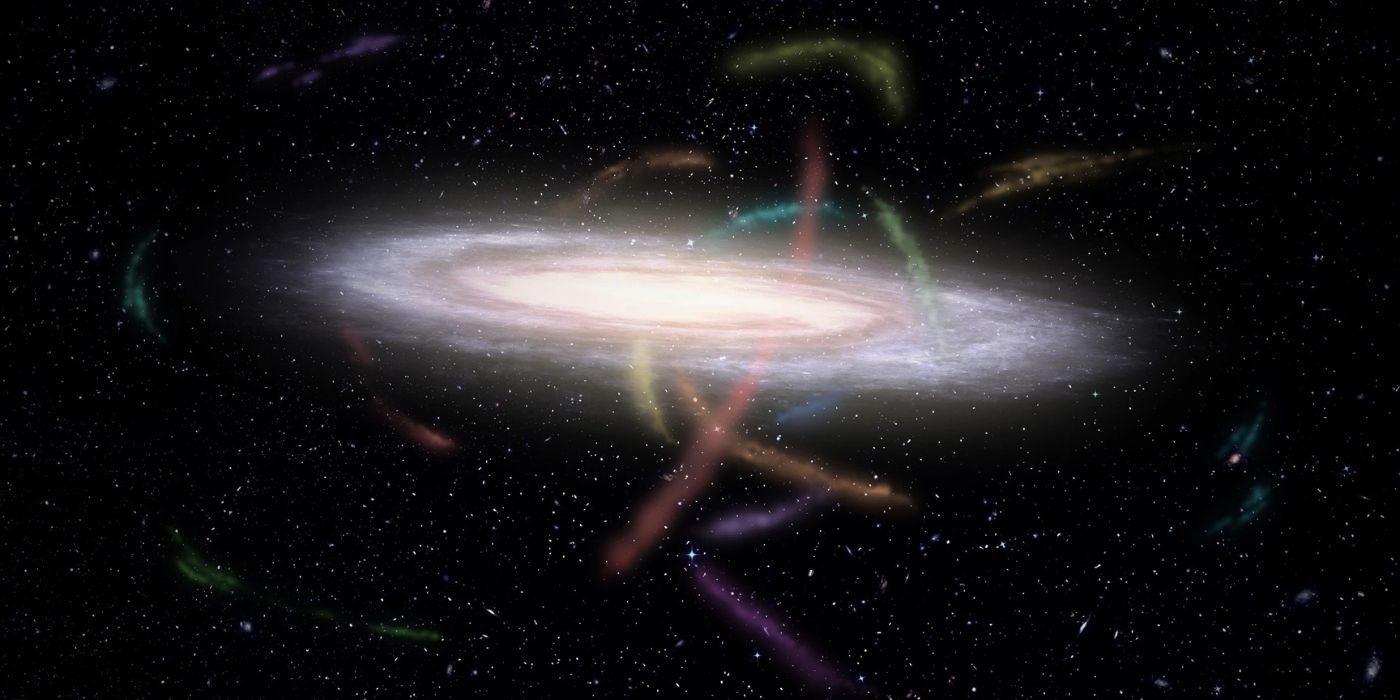
Jun 11, 2026
Life is But a Stream: Planetary Systems Along Stellar Streams
#Blog #Moiya McTier
Jul 10, 2026
#3I/ATLAS
#Comets, Meteors, and Asteroids
#JWST
Jul 2, 2026
#Blog
#Lauren Sgro
How Clouds Hide Alien Worlds—and How Astronomers See Through Them
Jun 29, 2026
#Blog
#Lauren Sgro
#Lucian Walkowicz
#Chelsea Haramia
#SETI
#SETI Institute
Humanity's Plan for First Contact: Who Speaks for Earth?
Jun 26, 2026
#Blog
#3I/ATLAS
#Franck Marchis
#Juice
What Juice Revealed About Interstellar Comet 3I/ATLAS
Jun 12, 2026
#Blog
#Lauren Sgro
Not Planets, Not Stars: NASA Volunteers Doubled the Number of Known Brown Dwarfs
Jun 11, 2026
#Blog
#Moiya McTier
Life is But a Stream: Planetary Systems Along Stellar Streams
Research
Related Projects

SkyMapper • SETI • Citizen Science • Astronomy
SkyMapper: Expanding Access to Real-time Astronomy Through a Global Astronomical Network
SkyMapper and the SETI Institute are connecting educators, students and the public to live astronomical observations through a distributed astronomical network. #SkyMapper #SETI #Citizen Science #Astronomy
VPL
Virtual Planetary Laboratory
How can we best assess whether an exoplanet supports life? #VPL
Discovery and Futures Lab
Discovery and Futures Lab
What happens if life beyond Earth is discovered? The Discovery and Futures Lab at the SETI Institute fosters novel and anticipatory research at the intersection of science, society, our planet, and the search for life beyond Earth. #Discovery and Futures Lab
May 17, 2026
SkyMapper: Expanding Access to Real-time Astronomy Through a Global Astronomical Network
SkyMapper and the SETI Institute are connecting educators, students and the public to live astronomical observations through a distributed astronomical network.
#SkyMapper
#SETI
#Citizen Science
#Astronomy
May 5, 2026
Virtual Planetary Laboratory
How can we best assess whether an exoplanet supports life?
#VPL
Apr 16, 2026
Discovery and Futures Lab
What happens if life beyond Earth is discovered? The Discovery and Futures Lab at the SETI Institute fosters novel and anticipatory research at the intersection of science, society, our planet, and the search for life beyond Earth.
#Discovery and Futures Lab
Support Us
Support the
SETI Institute
Scientists are getting closer in their search for life beyond earth. But with limited federal funding for the search for extraterrestrial intelligence, supporters are the reason cutting-edge scientists can keep their eyes on the sky.
