)

Monday, Dec 15, 2025

An artistic rendering of a dust and gas disk encircling the young exoplanet, CT Cha b, 625 light-years from Earth. Spectroscopic data from NASA’s JWST suggest the disk contains the raw materials for moon formation: diacetylene, hydrogen cyanide, propyne, acetylene, ethane, carbon dioxide, and benzene. The planet appears at lower right, while its host star and surrounding circumstellar disk are visible in the background. Illustration: NASA, ESA, CSA, STScI, Gabriele Cugno (University of Zu00fcrich, NCCR PlanetS), Sierra Grant (Carnegie Institution for Science), Joseph Olmsted (STScI), Leah Hustak (STScI)
At a Glance
|
The James Webb Space Telescope (JWST) has delivered one of the most detailed looks yet at how moons form around young planetary bodies. In a recent SETI Live conversation, host Dr. Moiya McTier spoke with University of Zürich research fellow Dr. Gabriele Cugno and Carnegie Institution for Science postdoctoral fellow Dr. Sierra L. Grant about their analysis of CT Cha b – a distant, planetary-mass companion surrounded by a compact moon-forming disk. Located roughly 625 light-years away, the system reveals complex carbon-rich chemistry in a circumplanetary environment. The discovery provides critical data to understand how satellite systems form, how young planets accumulate material, and how chemically diverse environments develop across planetary systems.
Circumplanetary disks are rare observational targets. They are cold, faint, and easily overshadowed by their host stars, making them difficult to detect. Yet these disks are essential: they are the environments in which moons form and the reservoirs of material that continue to shape the growing planet itself. JWST’s sensitivity in the mid-infrared has now made it possible to examine these systems in unprecedented detail.
What Is a Moon-Forming Disk?
A circumplanetary disk is a structure of gas and dust encircling a young planet. Similar to the way circumstellar disks form planets, circumplanetary disks serve as nurseries where satellites can accrete. In our Solar System, the Galilean moons of Jupiter are the clearest example of this process. However, those disks dissipated billions of years ago.
Studying moon-forming disks beyond the Solar System offers a direct view of satellite formation as it occurs. As Dr. Grant notes, disks around planets differ from circumstellar disks in key physical ways: they are smaller, colder, and shaped by weaker radiation fields. These conditions influence how dust grains grow, how gas chemistry evolves, and how satellite systems emerge.
CT Cha b: A Young, Dynamic System
The CT Cha system consists of a Sun-like star, a circumstellar disk, and a distant companion, CT Cha b, located nearly 500 astronomical units away. With a mass between 15 and 20 Jupiter masses, CT Cha b sits near the boundary between giant planets and brown dwarfs.
Because of its distance from the host star, the system provides a rare observational advantage. The companion’s disk can be separated from the bright stellar environment using high-contrast imaging and spectral cross-correlation. This technique compares the JWST signal to model spectra to isolate faint molecular features.
Detecting Carbon-Rich Chemistry
This study marks the first detection of molecular emission from a circumplanetary disk. The team identified seven carbon-bearing species, including hydrocarbons such as acetylene and benzene, as well as the isotopologue ^13CCH₂. An isotopologue is a molecule containing an isotope – here, carbon-13 instead of carbon-12 – which is intrinsically rare. Detecting it indicates extremely high molecular abundances.
The disk also contains CO₂, but oxygen-bearing species are otherwise scarce. This carbon-dominant chemistry is consistent with what researchers observe in disks surrounding low-mass stars and brown dwarfs. As Dr. Grant explains, this finding strengthens an emerging pattern: smaller and cooler central objects tend to host more carbon-rich environments.
What makes CT Cha especially compelling is that the system contains both a circumstellar disk and a circumplanetary disk. The circumstellar disk shows only oxygen-bearing molecules, while the circumplanetary disk is strongly carbon-enriched. Because both disks formed from the same original cloud, this divergence must result from rapid chemical evolution over the system’s short lifetime – roughly one to two million years.
How JWST Disentangles Atmospheres and Disks
JWST does not spatially resolve the planet from its disk; both appear within a handful of pixels. Instead, the distinction comes from their spectral signatures. Planetary atmospheres imprint absorption features, while disks emit molecular emission lines. By matching spectral templates to each component, the researchers can determine which wavelengths trace the planet and which trace the disk, even though they overlap spatially.
The result is a clean detection of the disk’s chemical fingerprints – something no previous observatory could achieve.
What This Means for Moon Formation
With abundant carbon-bearing molecules and evidence of growing dust grains, the disk around CT Cha b appears to contain the raw materials for satellite formation. Gas giants throughout the Solar System host extensive moon systems, and Dr. Cugno emphasizes that the mechanisms that formed those moons should operate here as well.
Researchers may not have to wait millions of years to find evidence. As Dr. Grant notes, the search for exomoons is accelerating, and young systems like CT Cha b may offer the best opportunity for early detection while disks are still active.
What Comes Next
Future JWST observations will target additional circumplanetary disks using optimized settings informed by four years of operational experience. These datasets should allow researchers to characterize dust composition – an essential step for understanding how material accretes onto both planets and moons.
CT Cha b is only the beginning. As more of these elusive disks are identified, astronomers will be able to compare systems, refine models of moon formation, and better understand the diversity of environments where habitable worlds might ultimately emerge.
Explore these findings in depth on the SETI Live episode, read the research paper, and the press release.







News
Related News
Jul 17, 2026
How Clouds Hide Alien Worlds—and How Astronomers See Through Them
#Blog #Moiya McTier
Jul 2, 2026
How Clouds Hide Alien Worlds—and How Astronomers See Through Them
#Blog #Lauren Sgro
Jun 29, 2026
Humanity's Plan for First Contact: Who Speaks for Earth?
#Blog #Lauren Sgro #Lucian Walkowicz #Chelsea Haramia #SETI #SETI Institute
Jun 26, 2026
What Juice Revealed About Interstellar Comet 3I/ATLAS
#Blog #3I/ATLAS #Franck Marchis #Juice
Jun 12, 2026
Not Planets, Not Stars: NASA Volunteers Doubled the Number of Known Brown Dwarfs
#Blog #Lauren Sgro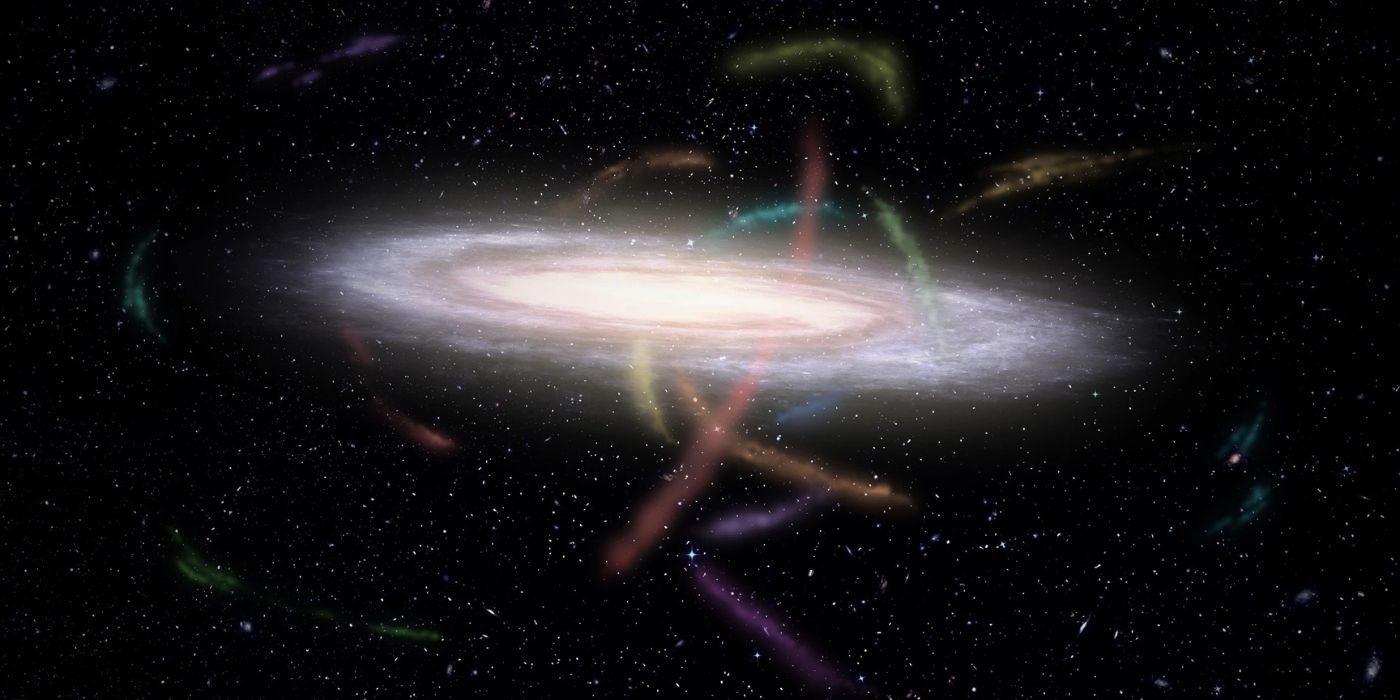
Jun 11, 2026
Life is But a Stream: Planetary Systems Along Stellar Streams
#Blog #Moiya McTier
Jul 17, 2026
#Blog
#Moiya McTier
Jul 2, 2026
#Blog
#Lauren Sgro
How Clouds Hide Alien Worlds—and How Astronomers See Through Them
Jun 29, 2026
#Blog
#Lauren Sgro
#Lucian Walkowicz
#Chelsea Haramia
#SETI
#SETI Institute
Humanity's Plan for First Contact: Who Speaks for Earth?
Jun 26, 2026
#Blog
#3I/ATLAS
#Franck Marchis
#Juice
What Juice Revealed About Interstellar Comet 3I/ATLAS
Jun 12, 2026
#Blog
#Lauren Sgro
Not Planets, Not Stars: NASA Volunteers Doubled the Number of Known Brown Dwarfs
Jun 11, 2026
#Blog
#Moiya McTier
Life is But a Stream: Planetary Systems Along Stellar Streams
Research
Related Projects

SkyMapper • SETI • Citizen Science • Astronomy
SkyMapper: Expanding Access to Real-time Astronomy Through a Global Astronomical Network
SkyMapper and the SETI Institute are connecting educators, students and the public to live astronomical observations through a distributed astronomical network. #SkyMapper #SETI #Citizen Science #Astronomy
VPL
Virtual Planetary Laboratory
How can we best assess whether an exoplanet supports life? #VPL
Discovery and Futures Lab
Discovery and Futures Lab
What happens if life beyond Earth is discovered? The Discovery and Futures Lab at the SETI Institute fosters novel and anticipatory research at the intersection of science, society, our planet, and the search for life beyond Earth. #Discovery and Futures Lab
May 17, 2026
SkyMapper: Expanding Access to Real-time Astronomy Through a Global Astronomical Network
SkyMapper and the SETI Institute are connecting educators, students and the public to live astronomical observations through a distributed astronomical network.
#SkyMapper
#SETI
#Citizen Science
#Astronomy
May 5, 2026
Virtual Planetary Laboratory
How can we best assess whether an exoplanet supports life?
#VPL
Apr 16, 2026
Discovery and Futures Lab
What happens if life beyond Earth is discovered? The Discovery and Futures Lab at the SETI Institute fosters novel and anticipatory research at the intersection of science, society, our planet, and the search for life beyond Earth.
#Discovery and Futures Lab
Support Us
Support the
SETI Institute
Scientists are getting closer in their search for life beyond earth. But with limited federal funding for the search for extraterrestrial intelligence, supporters are the reason cutting-edge scientists can keep their eyes on the sky.
