)

Friday, Sep 26, 2025

With advanced observatories like the Vera Rubin Telescope coming online, scientists are planning for the discovery of alien intelligence and how humanity should prepare for the news.
At a Glance
|
On this episode of SETI Live, planetary astronomer Dr. Franck Marchis hosts Dr. Martin Dominik of the University of St Andrews to examine what happens after the detection of life beyond Earth. Professor Dominik is a physicist and astronomer and a co-author of the recent white paper SETI Post-Detection: Future Directions for Technosignature Research and Readiness. The discussion focuses on how scientists, governments, and the public can prepare for the confirmation of extraterrestrial life — a discovery that could profoundly reshape human society.
Why Planning for Post-Detection Matters
Professor Dominik emphasizes that the question is not if but when humanity encounters evidence of life elsewhere. He notes that science already faces frequent claims of life beyond Earth that later prove unfounded. Developing strategies for both confirmed detections and false positives is therefore critical.
Detection methods are evolving. Advances in AI and increased computing power allow researchers to analyze vast datasets from radio telescopes and optical surveys with unprecedented sensitivity. These tools will enable the search for technosignatures and biosignatures, which are chemical or physical evidence of biological processes.
Expanding the Definition of Life
The white paper calls for a shift away from an anthropocentric perspective. Scientists must consider forms of intelligence and life that may not resemble terrestrial biology. Professor Dominik highlights the concept of “other minds,” which examines non-human intelligence on Earth, such as whales, to broaden the framework for recognizing alien life.
Fundamentally, he argues, any living system requires inheritance, a mechanism for transmitting information. Whether chemical or not, such a system would display a code of communication analogous to language. Understanding this principle guides the search for signals that convey information, whether they originate from a biological organism or not.
Communicating a Discovery
Clear, accurate communication is essential once a detection occurs. Professor Dominik warns that the discovery of life will rarely be a single, decisive event. Instead, evidence will accumulate, and scientists must explain how each step advances knowledge while acknowledging remaining uncertainties.
He emphasizes the importance of dialogue over one-way announcements. Public concerns and questions must be addressed directly, and communication should avoid exaggeration or premature conclusions. Lessons from the COVID-19 pandemic, where inconsistent messaging fueled misinformation, demonstrate the need for transparency and engagement.
The SETI Post-Detection Hub
To coordinate these efforts, the University of St Andrews established the SETI Post-Detection Hub. This international collaboration brings together researchers from the natural sciences, social sciences, and policy. The Hub develops toolkits to simulate detection scenarios and test responses across cultures.
These simulations reveal how reactions vary across different regions and communities. Insights gained from such exercises can help refine communication strategies and anticipate challenges, ranging from geopolitical tensions to the spread of misinformation through social media.
Anticipating Societal Impact
Confirmation of extraterrestrial life will not produce a single global reaction. Some communities may see the discovery as unifying, while others may experience division or fear. Historical precedents suggest that such discoveries have profound effects on human perspective. For example, the first images of Earth from space inspired modern environmental movements by highlighting the planet’s fragility.
Professor Dominik cautions that social media echo chambers amplify misinformation and political manipulation. Algorithms that reinforce existing preferences hinder exposure to diverse viewpoints, complicating efforts to share accurate scientific information.
Because any discovery belongs to all humanity, Professor Dominik advocates for international governance guided by the Outer Space Treaty and the Universal Declaration of Human Rights, which call for space exploration to benefit all nations. He stresses that no single country should claim authority over a detection. Instead, global institutions such as the United Nations must coordinate responses and ensure transparency.
Next Steps in Research and Policy
The white paper outlines priorities for future work:
- Broaden international participation, including researchers from China, India, and Africa
- Develop unified policy frameworks for global science communication
- Conduct more scenario-based exercises with diverse communities to refine post-detection strategies
Projects like A Sign in Space, an international experiment that simulated receiving and decoding an extraterrestrial message, demonstrate the complexity of interpretation, even when the signal originates from humans. Such initiatives highlight the decades of effort that a real alien transmission might require.
Learn More
Watch the full SETI Live discussion with Professor Martin Dominik.
Read the full white paper, SETI Post-Detection: Future Directions for Technosignature Research and Readiness.







News
Related News

Jul 2, 2026
How Clouds Hide Alien Worlds—and How Astronomers See Through Them
#Blog #Lauren Sgro
Jun 29, 2026
Humanity's Plan for First Contact: Who Speaks for Earth?
#Blog #Lauren Sgro #Lucian Walkowicz #Chelsea Haramia #SETI #SETI Institute
Jun 26, 2026
What Juice Revealed About Interstellar Comet 3I/ATLAS
#Blog #3I/ATLAS #Franck Marchis #Juice
Jun 12, 2026
Not Planets, Not Stars: NASA Volunteers Doubled the Number of Known Brown Dwarfs
#Blog #Lauren Sgro
Jun 11, 2026
Life is But a Stream: Planetary Systems Along Stellar Streams
#Blog #Moiya McTier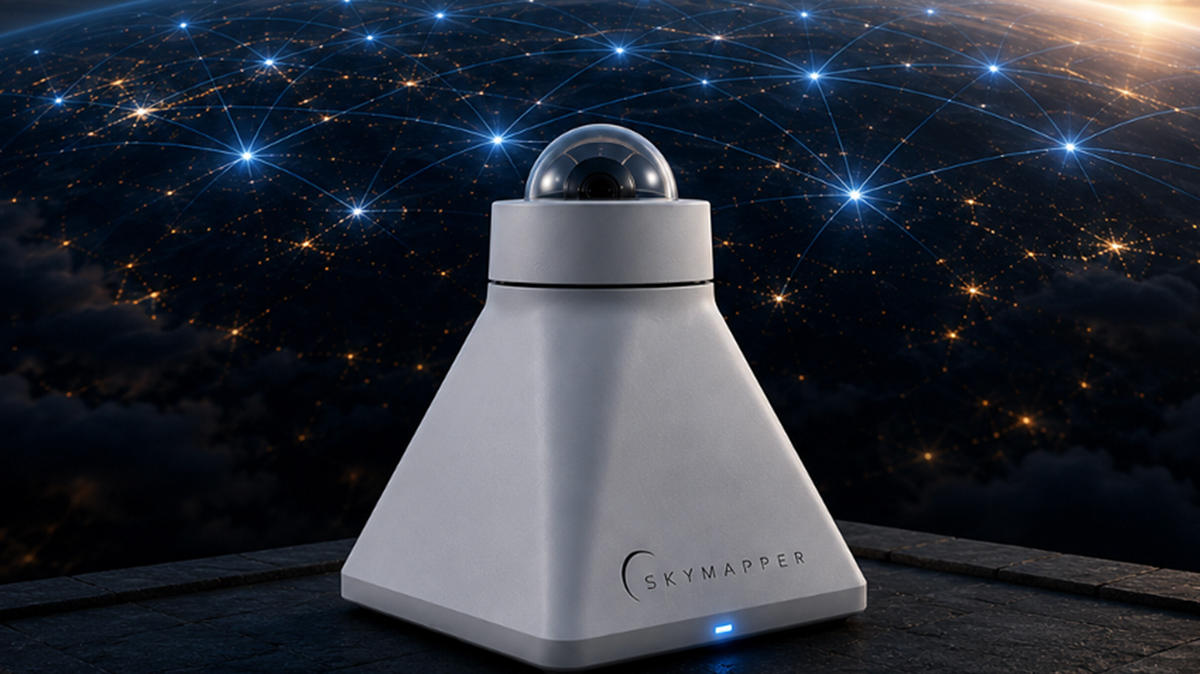
Jun 9, 2026
Disclosure Needs Data
#SkyMapper #Franck Marchis #SETI #citizen science
Jul 2, 2026
#Blog
#Lauren Sgro
Jun 29, 2026
#Blog
#Lauren Sgro
#Lucian Walkowicz
#Chelsea Haramia
#SETI
#SETI Institute
Humanity's Plan for First Contact: Who Speaks for Earth?
Jun 26, 2026
#Blog
#3I/ATLAS
#Franck Marchis
#Juice
What Juice Revealed About Interstellar Comet 3I/ATLAS
Jun 12, 2026
#Blog
#Lauren Sgro
Not Planets, Not Stars: NASA Volunteers Doubled the Number of Known Brown Dwarfs
Jun 11, 2026
#Blog
#Moiya McTier
Life is But a Stream: Planetary Systems Along Stellar Streams
Jun 9, 2026
#SkyMapper
#Franck Marchis
#SETI
#citizen science
Disclosure Needs Data
Research
Related Projects

SkyMapper • SETI • Citizen Science • Astronomy
SkyMapper: Expanding Access to Real-time Astronomy Through a Global Astronomical Network
SkyMapper and the SETI Institute are connecting educators, students and the public to live astronomical observations through a distributed astronomical network. #SkyMapper #SETI #Citizen Science #Astronomy
VPL
Virtual Planetary Laboratory
How can we best assess whether an exoplanet supports life? #VPL
Discovery and Futures Lab
Discovery and Futures Lab
What happens if life beyond Earth is discovered? The Discovery and Futures Lab at the SETI Institute fosters novel and anticipatory research at the intersection of science, society, our planet, and the search for life beyond Earth. #Discovery and Futures Lab
May 17, 2026
SkyMapper: Expanding Access to Real-time Astronomy Through a Global Astronomical Network
SkyMapper and the SETI Institute are connecting educators, students and the public to live astronomical observations through a distributed astronomical network.
#SkyMapper
#SETI
#Citizen Science
#Astronomy
May 5, 2026
Virtual Planetary Laboratory
How can we best assess whether an exoplanet supports life?
#VPL
Apr 16, 2026
Discovery and Futures Lab
What happens if life beyond Earth is discovered? The Discovery and Futures Lab at the SETI Institute fosters novel and anticipatory research at the intersection of science, society, our planet, and the search for life beyond Earth.
#Discovery and Futures Lab
Support Us
Support the
SETI Institute
Scientists are getting closer in their search for life beyond earth. But with limited federal funding for the search for extraterrestrial intelligence, supporters are the reason cutting-edge scientists can keep their eyes on the sky.
