)

Tuesday, Nov 11, 2025

At a Glance
|
SETI Institute communications specialist Beth Johnson welcomed Professor Dagomar Degroot, environmental historian at Georgetown University, for a discussion on his new book Ripples on the Cosmic Ocean, released October 28, 2025. The book reframes the solar system as a dynamic network of interacting environments—a system in which planetary, solar, and cosmic processes continuously influence Earth’s history and humanity’s trajectory.
Professor Degroot, known for his acclaimed podcast The Climate Chronicles, has spent nearly two decades examining how cosmic mechanisms – including changes in Earth’s axial tilt, orbital eccentricity, and solar irradiance – shape the planet’s climate. His work situates humanity within a broader environmental continuum, one that transcends the boundaries of Earth’s atmosphere.
“When we study the climate before industrialization,” he explains, “we find that it’s deeply influenced by processes in the solar system – from the Sun’s fluctuating energy output to volcanic eruptions that alter atmospheric chemistry.”
Seeing Earth as a Cosmic Environment
In Ripples on the Cosmic Ocean, Prof. Degroot advances a planetary framework inspired by the Gaia hypothesis – the idea that life and the environment form a self-regulating system. He extends this concept to the entire solar system, where celestial bodies exchange matter and energy in ways that ultimately affect life on Earth.
Even subtle fluctuations in solar output can shift global temperature averages. Significant volcanic eruptions, by injecting sulfuric aerosols into the stratosphere, can reflect incoming sunlight and cool the planet for years. Such feedback, he argues, has profoundly influenced agriculture, migration, and the stability of civilizations across human history.
“The Earth,” Prof. Degroot observes, “is not isolated. It’s part of a larger cosmic environment that has shaped human history for millennia.”
From Climate Chronicles to Existential Risk
Professor Degroot's earlier work traced how climate change influenced human evolution long before the advent of industrialization. Ripples on the Cosmic Ocean builds on this foundation while expanding its scope to explore how humanity now alters the environments beyond Earth.
Initially conceived as an optimistic story about human expansion into space, the book evolved into a study of existential risk – forces that could limit or end humanity’s future. These include both cosmic hazards, such as asteroid impacts, and self-generated threats, including climate change, nuclear winter, and even artificial intelligence.
Prof. Degroot draws inspiration from philosopher Toby Ord’s concept of the precipice – a period in which humanity’s technological power exceeds its wisdom to manage it. Yet he emphasizes that many existential risks were discovered through astronomy and planetary science. As he put it, space science doesn’t distract from Earth’s problems. It reveals them.
The SETI Connection: Learning from the Search
In Ripples on the Cosmic Ocean, Prof. Degroot traces five centuries of imagined extraterrestrial discoveries – from 18th-century astronomers mistaking lunar craters for artificial cities to 19th-century observers interpreting Martian dust storms as evidence of a dying civilization. These historical misreadings, he argues, shaped early concepts of planetary ecology.
He explained that when people thought Mars was drying out, they began questioning whether Earth might be on the same path. Some of the first ideas about conserving global environments actually came from the search for life elsewhere.
By connecting historical astronomy to environmental thought, Prof. Degroot demonstrates that SETI encourages long-term thinking about sustainability and technological risk – key components of understanding what allows civilizations to endure.
Lessons from the Past: The Year Without a Summer
Among the historical episodes discussed in the book is the 1815 eruption of Mount Tambora, the most powerful volcanic event of the last millennium. It injected vast quantities of sulfur dioxide into the stratosphere, producing global cooling of more than one degree Celsius and triggering widespread crop failures. The following year became known as the Year Without a Summer.
For Prof. Degroot, this event exemplifies the fragility of planetary systems and the interconnectedness of cosmic and terrestrial processes. He explains that the eruption of Tambora underscores the need to prepare not only for global warming, but also for large-scale volcanic or impact events that could disrupt Earth’s climate in the opposite direction.
Understanding and Reducing Risk
A striking episode from Prof. Degroot’s research involves a 1964 NASA meeting where officials debated the possibility that lunar microbes might return to Earth aboard the upcoming Apollo missions. They concluded that such organisms, if they existed, could devastate Earth’s biosphere. The risk was quietly accepted with minimal efforts to mitigate, underscoring humanity’s recurring tendency to underestimate global hazards.
Despite these sobering histories, Prof. Degroot identifies clear progress. Humanity has repeatedly demonstrated the ability to confront existential risks once they are understood:
- Programs like the Montreal Protocol and NASA Ozone Watch successfully halted ozone depletion
- Planetary defense initiatives now monitor over a million asteroid orbits
- Urban climate adaptation plans like the UNEP Climate Adaptation Gap Report are advancing globally
In each case, he emphasizes, knowledge reduces risk. By studying the cosmic factors that shape Earth, scientists can identify threats earlier and respond more effectively.
A Broader View of the Cosmic Environment
Prof. Degroot emphasizes that the division between Earth and the rest of the solar system is, in part, an illusion. Through Ripples on the Cosmic Ocean, he invites readers to see humanity as part of a vast, interlinked system of environmental exchange – where the boundaries between planetary science, climate history, and space exploration dissolve.
Ripples on the Cosmic Ocean is now available to purchase. Watch the full conversation with Professor Dagomar Degroot on SETI Live.







News
Related News
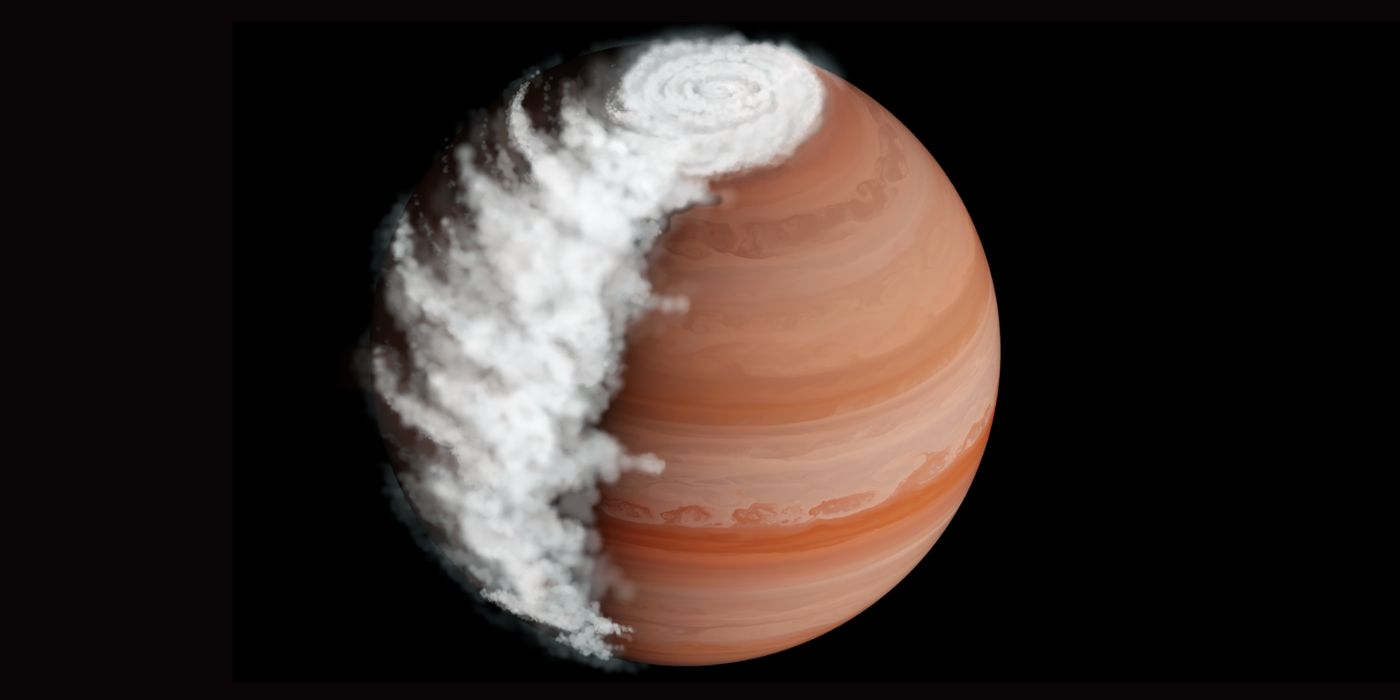
Jul 2, 2026
How Clouds Hide Alien Worlds—and How Astronomers See Through Them
#Blog #Lauren Sgro
Jun 29, 2026
Humanity's Plan for First Contact: Who Speaks for Earth?
#Blog #Lauren Sgro #Lucian Walkowicz #Chelsea Haramia #SETI #SETI Institute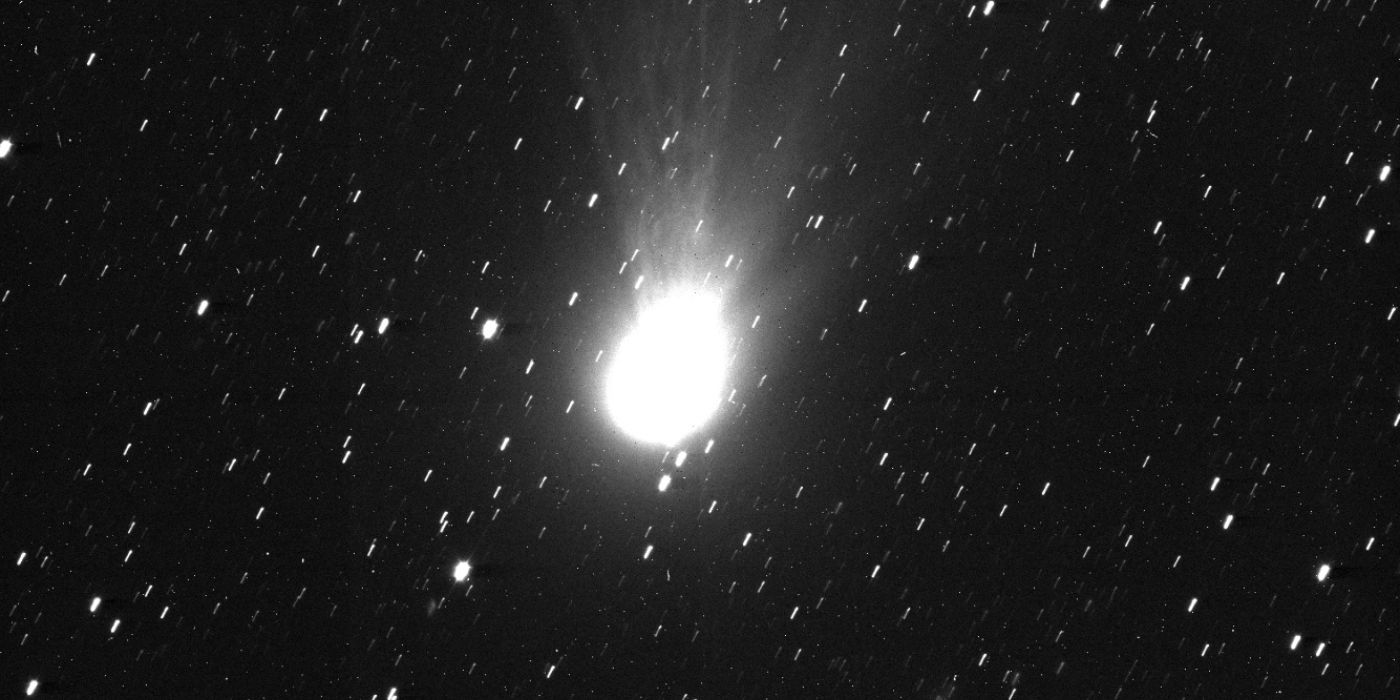
Jun 26, 2026
What Juice Revealed About Interstellar Comet 3I/ATLAS
#Blog #3I/ATLAS #Franck Marchis #Juice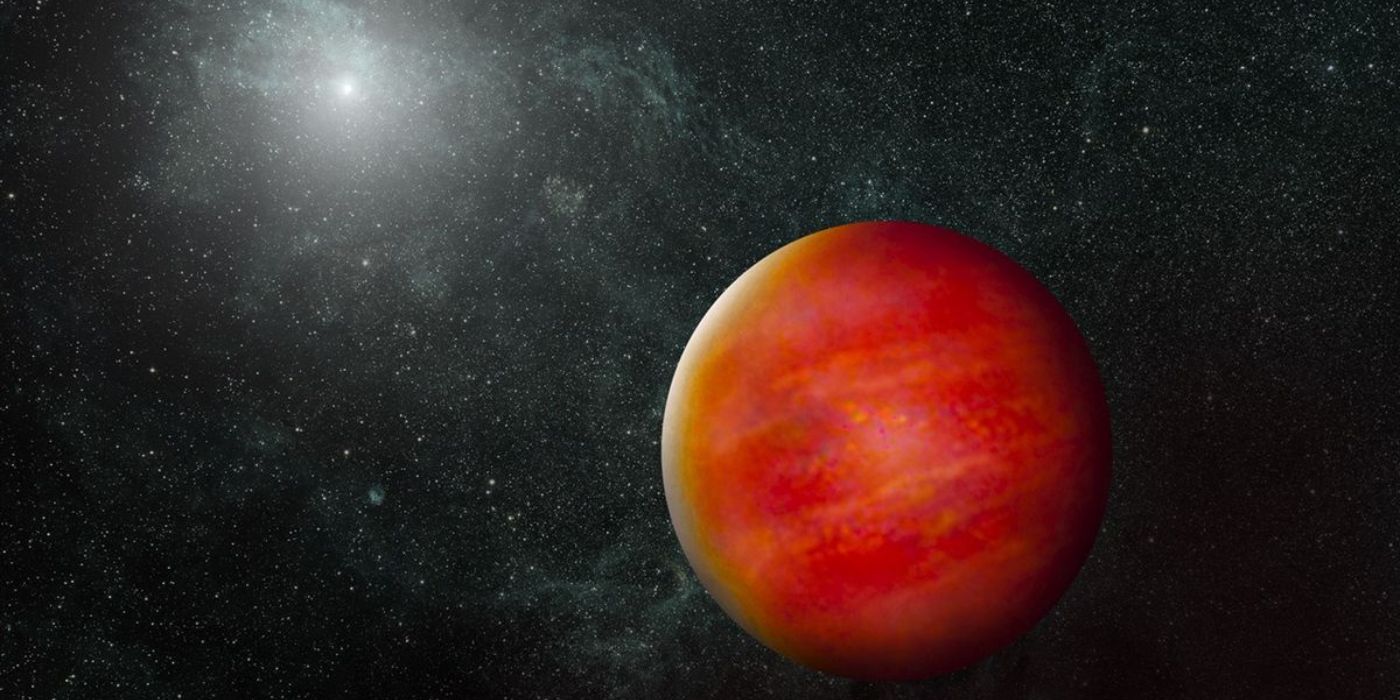
Jun 12, 2026
Not Planets, Not Stars: NASA Volunteers Doubled the Number of Known Brown Dwarfs
#Blog #Lauren Sgro
Jun 11, 2026
Life is But a Stream: Planetary Systems Along Stellar Streams
#Blog #Moiya McTier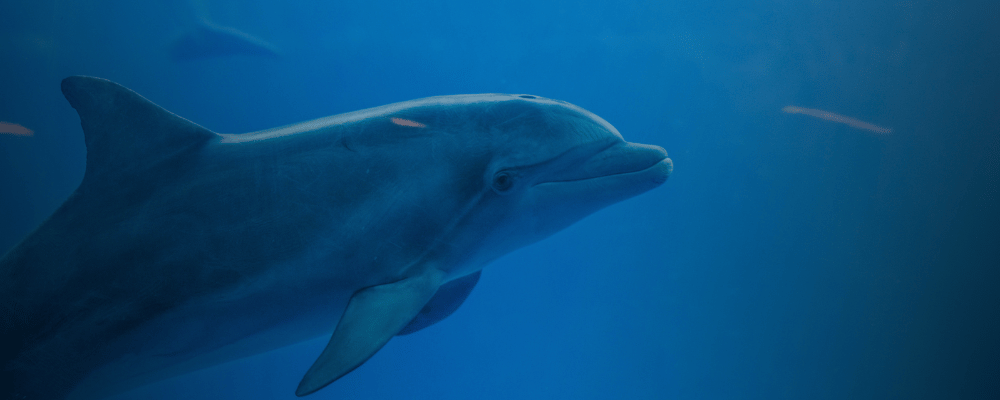
Jun 8, 2026
The Sounds of Intelligence: A Conversation with 2026 Drake Award Recipient Lori Marino
#Blog #Drake Awards #Lori Marino #SETI
Jul 2, 2026
#Blog
#Lauren Sgro
Jun 29, 2026
#Blog
#Lauren Sgro
#Lucian Walkowicz
#Chelsea Haramia
#SETI
#SETI Institute
Humanity's Plan for First Contact: Who Speaks for Earth?
Jun 26, 2026
#Blog
#3I/ATLAS
#Franck Marchis
#Juice
What Juice Revealed About Interstellar Comet 3I/ATLAS
Jun 12, 2026
#Blog
#Lauren Sgro
Not Planets, Not Stars: NASA Volunteers Doubled the Number of Known Brown Dwarfs
Jun 11, 2026
#Blog
#Moiya McTier
Life is But a Stream: Planetary Systems Along Stellar Streams
Jun 8, 2026
#Blog
#Drake Awards
#Lori Marino
#SETI
The Sounds of Intelligence: A Conversation with 2026 Drake Award Recipient Lori Marino
Research
Related Projects

SkyMapper • SETI • Citizen Science • Astronomy
SkyMapper: Expanding Access to Real-time Astronomy Through a Global Astronomical Network
SkyMapper and the SETI Institute are connecting educators, students and the public to live astronomical observations through a distributed astronomical network. #SkyMapper #SETI #Citizen Science #Astronomy
VPL
Virtual Planetary Laboratory
How can we best assess whether an exoplanet supports life? #VPL
Discovery and Futures Lab
Discovery and Futures Lab
What happens if life beyond Earth is discovered? The Discovery and Futures Lab at the SETI Institute fosters novel and anticipatory research at the intersection of science, society, our planet, and the search for life beyond Earth. #Discovery and Futures Lab
May 17, 2026
SkyMapper: Expanding Access to Real-time Astronomy Through a Global Astronomical Network
SkyMapper and the SETI Institute are connecting educators, students and the public to live astronomical observations through a distributed astronomical network.
#SkyMapper
#SETI
#Citizen Science
#Astronomy
May 5, 2026
Virtual Planetary Laboratory
How can we best assess whether an exoplanet supports life?
#VPL
Apr 16, 2026
Discovery and Futures Lab
What happens if life beyond Earth is discovered? The Discovery and Futures Lab at the SETI Institute fosters novel and anticipatory research at the intersection of science, society, our planet, and the search for life beyond Earth.
#Discovery and Futures Lab
Support Us
Support the
SETI Institute
Scientists are getting closer in their search for life beyond earth. But with limited federal funding for the search for extraterrestrial intelligence, supporters are the reason cutting-edge scientists can keep their eyes on the sky.
