)

Tuesday, Mar 10, 2026
At a Glance
|
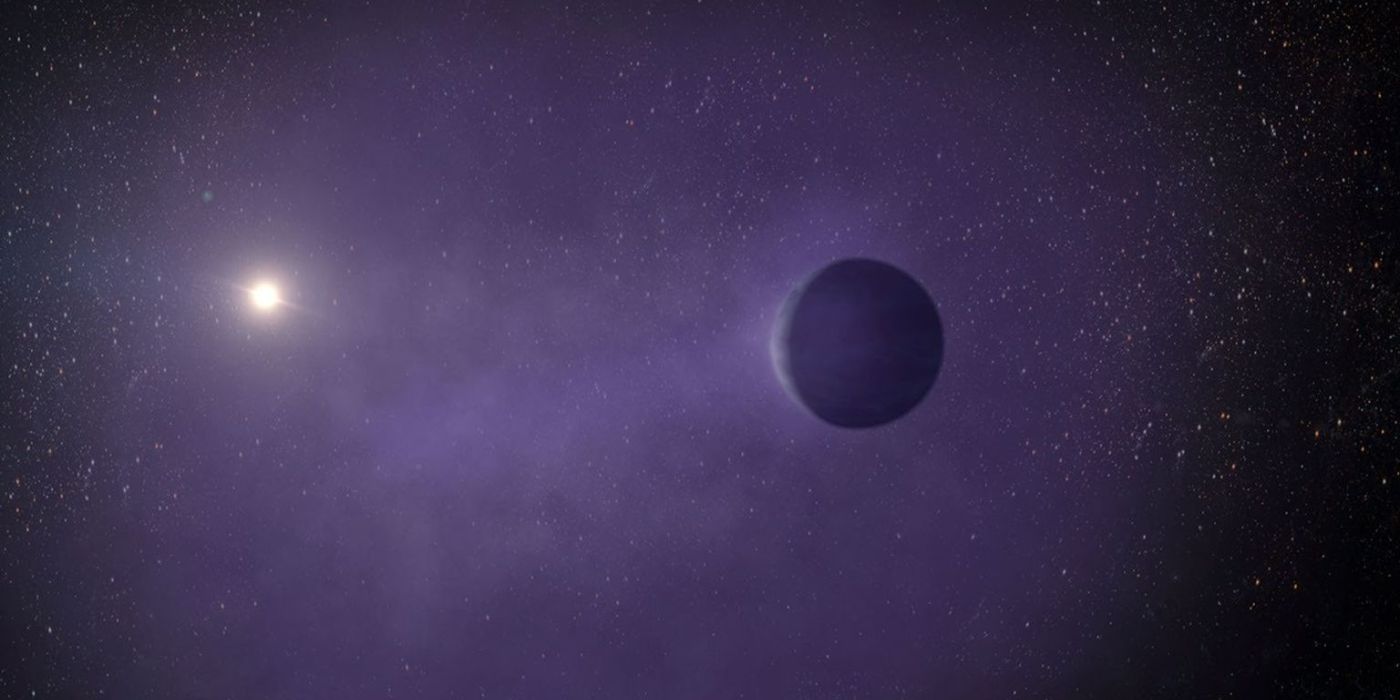
The Milky Way is filled with planetary systems unlike the Solar System. Data from NASA’s Kepler mission revealed that planets between Earth and Neptune in size, particularly compact systems of closely packed worlds, are extraordinarily common. Yet the Solar System contains none.
Explaining how these intermediate-sized planets form, and why they dominate the galaxy, has been one of the central challenges in exoplanet science.
In a recent SETI Live conversation, SETI Live host Moiya McTier spoke with exoplanet scientist Dr. John H. Livingston of the Astrobiology Center in Tokyo about a newly characterized young planetary system that may represent the long-sought evolutionary bridge.
The Radius Gap and the Missing Evolutionary Link
Data from NASA’s Kepler mission revealed a striking pattern in planetary sizes. Small rocky super-Earths cluster below roughly 1.8 Earth radii. Larger sub-Neptunes cluster above roughly 2 Earth radii, often possessing thick gaseous envelopes. Between them lies a relative scarcity of planets, a feature known as the radius gap.
These planets typically orbit extremely close to their stars, often all within the orbital distance of Mercury. Such compact architectures are common across the galaxy but absent from the Solar System, reinforcing how atypical our planetary arrangement may be.
The newly characterized system around young star V1298 Tau shares this compact configuration. All four planets orbit their star closely and interact gravitationally, causing measurable deviations in their transit timings.
Measuring Mass with Gravitational Clocks
Determining a planet’s radius from transits is straightforward–analyze the transit depth, which is the percentage decrease in the star's brightness, and compare that with the radius of the host star. Measuring that same planet’s mass is far more difficult, especially for young systems.
The host star in this system is highly active and rapidly rotating. Such stellar activity prevents reliable radial velocity measurements, which are typically used to determine planetary masses.
Instead, Dr. Livingston’s team relied on transit timing variations (TTVs). In multi-planet systems, gravitational interactions cause planets to transit slightly earlier or later than predicted by a purely Keplerian orbit. Over many years, these deviations trace patterns that encode planetary masses and orbital dynamics.
Interpreting TTVs requires careful modeling. A known complication is the mass-eccentricity degeneracy: a more massive planet on a circular orbit can sometimes mimic the signal of a lower-mass planet on a slightly eccentric orbit. The precise orbital configuration, particularly proximity to orbital resonance, determines whether this degeneracy can be broken. Orbital resonance is when two or more bodies have orbital periods that are simple integer ratios, such as 2:1 (one body orbits twice for every single orbit of the other).
In this system, the outermost planet lies near a 2:1 orbital resonance with its neighbor. That resonance strengthened the TTV signal and helped constrain the masses.
To determine the system’s properties, the researchers ran detailed computer simulations that calculated how the objects gravitationally tug on one another and checked whether those interactions would keep the system stable over millions of years. The breakthrough came when the team successfully recovered the orbital period of the outermost planet, which had only transited once in the original Kepler data. By combining TESS observations, ground-based follow-up, and extensive simulations, Dr. Livingston predicted its next transit and detected it on the first attempt.
With that orbital period secured, the mass measurements became possible.
Puffy Beginnings and Atmospheric Loss
Despite radii approaching those of Saturn, the planets have surprisingly low masses. Their low densities imply substantial gaseous envelopes.
Young planets begin hot and inflated. As they cool, they contract. Close-in planets also experience intense stellar radiation, which drives photoevaporation, stripping atmospheric gas over tens to hundreds of millions of years.
Another mechanism, core-powered mass loss, occurs as residual heat from planetary interiors drives further atmospheric escape over longer timescales.
A key structural parameter is the envelope mass fraction, the fraction of a planet’s mass contained in its gaseous atmosphere. Even a small mass fraction in an envelope can produce a large increase in radius. As these envelopes erode, planets shrink dramatically.
Running the Clock Backward and Forward
By combining observed masses, radii, stellar ages, and irradiation levels, the team reconstructed the planets’ evolutionary trajectories.
With a 20-million-year-old star, atmospheric loss has already begun for its planets. The innermost are smaller than the outermost, reflecting stronger irradiation. Over the next ~100 million years, photoevaporation will continue sculpting their atmospheres. Over ~1 billion years, core-powered mass loss and cooling will further reshape them. By 2–5 billion years, typical ages of mature Kepler systems, they will stabilize as compact sub-Neptunes or, in some cases, super-Earths stripped of their atmospheres.
The host star’s rapid rotation adds another layer of uncertainty. As it spins down over time, its high-energy radiation output will decline, also affecting how much atmosphere the planets ultimately lose. Modeling this stellar evolution is essential for predicting final planet sizes.
Implications for Planet Formation
Systems at this precise evolutionary stage are exceedingly rare. Without the favorable gravitational configuration that enabled TTV measurements, mass determination would have been impossible. Radial velocities were unusable. The resonant architecture provided what Dr. Livingston described as a “gift from nature.”
Currently, this is the only known system, roughly 20 million years old, with masses measured to this precision.
Finding similar systems at intermediate ages, such as 40 million and 80 million years, would help map planetary evolution in finer detail.
The Next Phase: Atmospheric Chemistry
The James Webb Space Telescope has already observed the atmospheres of these planets. Early results from one planet have been published, with additional analyses underway.
Because the planets formed from the same protoplanetary disk but occupy different orbital distances, they provide a powerful comparative laboratory. Differences in temperature and irradiation may reveal how atmospheric chemistry evolves among sibling worlds.
This system does not merely add another entry to the exoplanet catalog. It provides a dynamic, time-resolved view of planetary transformation, a missing link between young inflated worlds and the compact sub-Neptunes that populate the galaxy.
Watch the full SETI Live conversation here. Read the press release and the published paper.







News
Related News
Jul 2, 2026
How Clouds Hide Alien Worlds—and How Astronomers See Through Them
#Blog #Lauren Sgro
Jun 29, 2026
Humanity's Plan for First Contact: Who Speaks for Earth?
#Blog #Lauren Sgro #Lucian Walkowicz #Chelsea Haramia #SETI #SETI Institute
Jun 26, 2026
What Juice Revealed About Interstellar Comet 3I/ATLAS
#Blog #3I/ATLAS #Franck Marchis #Juice
Jun 12, 2026
Not Planets, Not Stars: NASA Volunteers Doubled the Number of Known Brown Dwarfs
#Blog #Lauren Sgro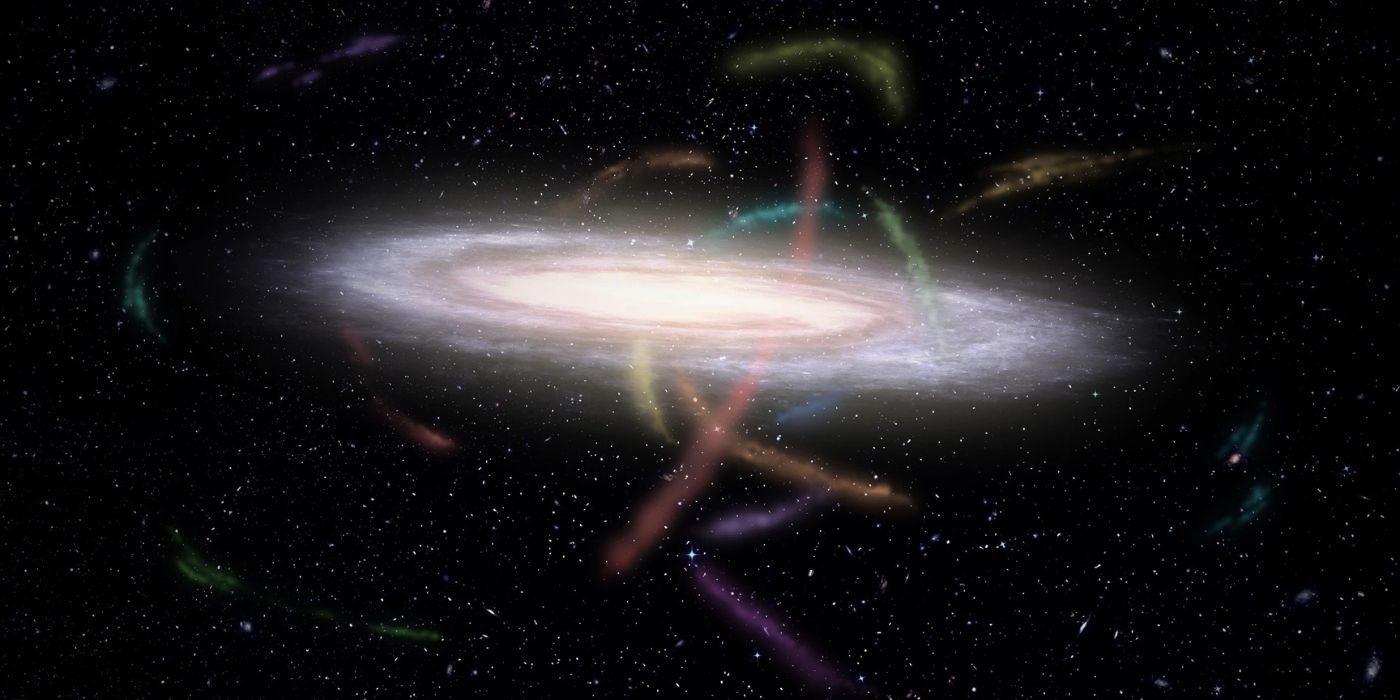
Jun 11, 2026
Life is But a Stream: Planetary Systems Along Stellar Streams
#Blog #Moiya McTier
Jun 8, 2026
The Sounds of Intelligence: A Conversation with 2026 Drake Award Recipient Lori Marino
#Blog #Drake Awards #Lori Marino #SETI
Jul 2, 2026
#Blog
#Lauren Sgro
Jun 29, 2026
#Blog
#Lauren Sgro
#Lucian Walkowicz
#Chelsea Haramia
#SETI
#SETI Institute
Humanity's Plan for First Contact: Who Speaks for Earth?
Jun 26, 2026
#Blog
#3I/ATLAS
#Franck Marchis
#Juice
What Juice Revealed About Interstellar Comet 3I/ATLAS
Jun 12, 2026
#Blog
#Lauren Sgro
Not Planets, Not Stars: NASA Volunteers Doubled the Number of Known Brown Dwarfs
Jun 11, 2026
#Blog
#Moiya McTier
Life is But a Stream: Planetary Systems Along Stellar Streams
Jun 8, 2026
#Blog
#Drake Awards
#Lori Marino
#SETI
The Sounds of Intelligence: A Conversation with 2026 Drake Award Recipient Lori Marino
Research
Related Projects

SkyMapper • SETI • Citizen Science • Astronomy
SkyMapper: Expanding Access to Real-time Astronomy Through a Global Astronomical Network
SkyMapper and the SETI Institute are connecting educators, students and the public to live astronomical observations through a distributed astronomical network. #SkyMapper #SETI #Citizen Science #Astronomy
VPL
Virtual Planetary Laboratory
How can we best assess whether an exoplanet supports life? #VPL
Discovery and Futures Lab
Discovery and Futures Lab
What happens if life beyond Earth is discovered? The Discovery and Futures Lab at the SETI Institute fosters novel and anticipatory research at the intersection of science, society, our planet, and the search for life beyond Earth. #Discovery and Futures Lab
May 17, 2026
SkyMapper: Expanding Access to Real-time Astronomy Through a Global Astronomical Network
SkyMapper and the SETI Institute are connecting educators, students and the public to live astronomical observations through a distributed astronomical network.
#SkyMapper
#SETI
#Citizen Science
#Astronomy
May 5, 2026
Virtual Planetary Laboratory
How can we best assess whether an exoplanet supports life?
#VPL
Apr 16, 2026
Discovery and Futures Lab
What happens if life beyond Earth is discovered? The Discovery and Futures Lab at the SETI Institute fosters novel and anticipatory research at the intersection of science, society, our planet, and the search for life beyond Earth.
#Discovery and Futures Lab
Support Us
Support the
SETI Institute
Scientists are getting closer in their search for life beyond earth. But with limited federal funding for the search for extraterrestrial intelligence, supporters are the reason cutting-edge scientists can keep their eyes on the sky.
