)

Friday, Oct 03, 2025

The range of possible locations – represented by yellow points – of 2024 YR4 on Dec. 22, 2032. The range decreased from April to June as we gained more data and improved our certainty of the asteroid’s position. Earth is close to the center of the white circle, which represents the Moon’s orbital path. NASA/JPL Center for Near-Earth Object Studies.
At a Glance
|
SETI Institute astronomer Dr. Franck Marchis spoke with planetary astronomer Dr. Andy Rivkin of the Johns Hopkins University Applied Physics Laboratory about Asteroid 2024 YR4, a near-Earth object discovered in late December 2024. Initial observations raised concerns when its orbit suggested the small probability of an Earth impact. Continued tracking now confirms that there is no danger to Earth, but updated calculations indicate a roughly 4% chance that the asteroid could strike the Moon on December 22, 2032.
Discovery and Early Analysis
The asteroid’s provisional designation encodes its discovery date: “2024 Y” signals objects found between December 16 and 31, 2024, and “R4” identifies it as the 117th object discovered in that time period. When first detected, astronomers could only measure a point of light. Without knowing its albedo, the reflectivity of its surface, they estimated a size between 40 and 90 meters. That range represented anything from a dark, charcoal-like body to a bright, highly reflective rock.
Because early orbital data suggested a potential Earth encounter, observatories worldwide contributed follow-up observations. Probabilities briefly climbed to approximately 3% for an Earth impact before additional measurements ruled that out. Attention then shifted to the Moon, where a small but non-zero risk remains.
Precision from Space-Based Infrared
To refine both the orbit and size of the asteroid, researchers used the James Webb Space Telescope (JWST). Unlike ground-based telescopes, JWST operates outside Earth’s atmosphere from its location at the Sun–Earth L2 Lagrange point and can capture infrared radiation, which is the heat emitted by an object rather than the sunlight it reflects. Measuring the asteroid’s thermal emission yields a more accurate measurement of the diameter than early estimations.
JWST measured asteroid 2024 YR4 to be approximately 60 meters in diameter. Telescopes on Earth tracked how quickly it spins—once every 20 minutes—which helped JWST get a steady brightness reading. Because JWST can watch it longer than Earth-based observatories, it provided a clearer picture of the asteroid’s path and the slight chance it could hit the Moon.
Potential Lunar Impact
If 2024 YR4 does collide with the Moon, models predict:
- Creation of a crater roughly 1 kilometer wide on the southern near side.
- Ejection of debris into lunar orbit and possibly into Earth’s gravitational influence, creating a temporary meteor shower.
- Localized hazards for lunar satellites, future crewed bases, and planned infrastructure, such as NASA’s Gateway.
The moon has endured impacts of this scale many times over geologic history, but none have been observed in real time with modern instruments. For comparison, similar-sized asteroids are expected to strike the Moon once every 4,000–5,000 years.
Scientific Opportunity
A well-monitored impact would offer rare data:
- Seismology – New seismometers could probe the Moon’s interior structure and core size by recording impact-generated moonquakes
- Surface evolution – Observing fresh ejecta over time would calibrate models of space weathering, the chemical and spectral changes caused by solar wind and micrometeorite bombardment
- Impact physics – Comparing the incoming asteroid’s measured shape, mass, and velocity with the resulting crater would test current impact-formation models, much as NASA’s DART mission did on the asteroid Dimorphos.
Composition and Structure
Spectroscopy performed from ground-based telescopes identifies 2024 YR4 as an S-type asteroid, composed of ordinary chondrite rock similar to the targets of past missions such as JAXA’s Hayabusa to Itokawa. JWST data show it is cooler than expected, suggesting a coherent rocky body rather than a loose rubble pile.
Preparing for 2032 and Beyond
A 4% chance of impact may sound small, but it’s enough for space experts to start planning just in case. By 2032, we could have moon bases and stations orbiting nearby. To protect them—and satellites around the Moon—we need to carefully model how debris might fly off and spread if an asteroid were to hit.
Future JWST observations scheduled for early 2026 will further refine the orbit and may reduce the impact probability. Regardless of the outcome, this case illustrates how next-generation survey telescopes and infrared assets, such as JWST, transform planetary defense from an Earth-only effort to a whole Earth–Moon system strategy.
Watch the full SETI Live conversation with Dr. Franck Marchis and Dr. Andy Rivkin to explore how planetary defense research is expanding to protect our nearest neighbor.







News
Related News
Jul 2, 2026
How Clouds Hide Alien Worlds—and How Astronomers See Through Them
#Blog #Lauren Sgro
Jun 29, 2026
Humanity's Plan for First Contact: Who Speaks for Earth?
#Blog #Lauren Sgro #Lucian Walkowicz #Chelsea Haramia #SETI #SETI Institute
Jun 26, 2026
What Juice Revealed About Interstellar Comet 3I/ATLAS
#Blog #3I/ATLAS #Franck Marchis #Juice
Jun 12, 2026
Not Planets, Not Stars: NASA Volunteers Doubled the Number of Known Brown Dwarfs
#Blog #Lauren Sgro
Jun 11, 2026
Life is But a Stream: Planetary Systems Along Stellar Streams
#Blog #Moiya McTier
Jun 9, 2026
Disclosure Needs Data
#SkyMapper #Franck Marchis #SETI #citizen science
Jul 2, 2026
#Blog
#Lauren Sgro
Jun 29, 2026
#Blog
#Lauren Sgro
#Lucian Walkowicz
#Chelsea Haramia
#SETI
#SETI Institute
Humanity's Plan for First Contact: Who Speaks for Earth?
Jun 26, 2026
#Blog
#3I/ATLAS
#Franck Marchis
#Juice
What Juice Revealed About Interstellar Comet 3I/ATLAS
Jun 12, 2026
#Blog
#Lauren Sgro
Not Planets, Not Stars: NASA Volunteers Doubled the Number of Known Brown Dwarfs
Jun 11, 2026
#Blog
#Moiya McTier
Life is But a Stream: Planetary Systems Along Stellar Streams
Jun 9, 2026
#SkyMapper
#Franck Marchis
#SETI
#citizen science
Disclosure Needs Data
Research
Related Projects

SkyMapper • SETI • Citizen Science • Astronomy
SkyMapper: Expanding Access to Real-time Astronomy Through a Global Astronomical Network
SkyMapper and the SETI Institute are connecting educators, students and the public to live astronomical observations through a distributed astronomical network. #SkyMapper #SETI #Citizen Science #Astronomy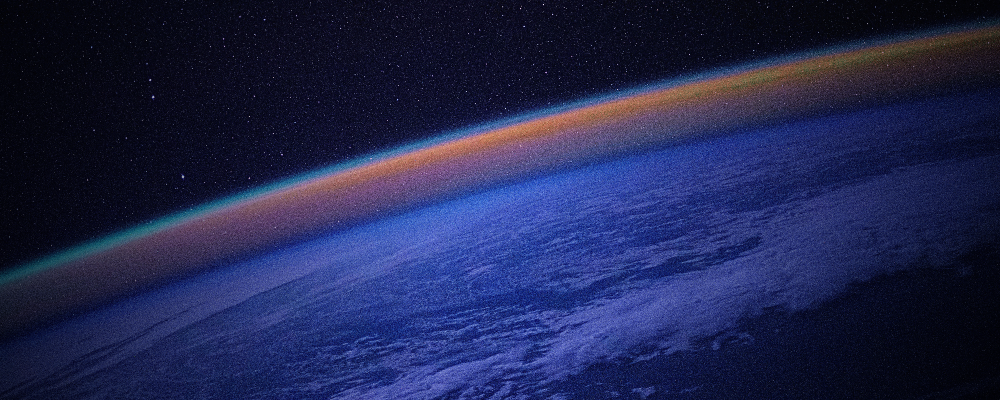
VPL
Virtual Planetary Laboratory
How can we best assess whether an exoplanet supports life? #VPL
Discovery and Futures Lab
Discovery and Futures Lab
What happens if life beyond Earth is discovered? The Discovery and Futures Lab at the SETI Institute fosters novel and anticipatory research at the intersection of science, society, our planet, and the search for life beyond Earth. #Discovery and Futures Lab
May 17, 2026
SkyMapper: Expanding Access to Real-time Astronomy Through a Global Astronomical Network
SkyMapper and the SETI Institute are connecting educators, students and the public to live astronomical observations through a distributed astronomical network.
#SkyMapper
#SETI
#Citizen Science
#Astronomy
May 5, 2026
Virtual Planetary Laboratory
How can we best assess whether an exoplanet supports life?
#VPL
Apr 16, 2026
Discovery and Futures Lab
What happens if life beyond Earth is discovered? The Discovery and Futures Lab at the SETI Institute fosters novel and anticipatory research at the intersection of science, society, our planet, and the search for life beyond Earth.
#Discovery and Futures Lab
Support Us
Support the
SETI Institute
Scientists are getting closer in their search for life beyond earth. But with limited federal funding for the search for extraterrestrial intelligence, supporters are the reason cutting-edge scientists can keep their eyes on the sky.
