)

Author: Nathalie Cabrol
Tuesday, Oct 07, 2025

Image Credit: NASA/ESA/STScI. Hubble Space Telescope's Wide Field Camera on July 21, 2025.
Interstellar Visitor #3
|
| Listen to this article read by AI: |
Every once in a while, our solar system receives a fleeting visitor from the depths of our galaxy. On July 1, 2025, NASA’s ATLAS telescope in Chile discovered Comet 3I/ATLAS, the third known interstellar object ever detected, following ʻOumuamua in 2017 and 2I/Borisov in 2019.
What makes it interstellar? Its orbit is hyperbolic, meaning it doesn’t loop back around the Sun but instead cuts straight through the solar system on a one-way journey. In other words: It’s just passing through. It’s also traveling far too fast ever to be caught by the Sun’s gravity. The object’s trajectory and speed tell us that this comet was born under another star.
Our visitor offers a rare scientific opportunity. 3I/ATLAS is special not only because it’s rare, but because it’s a time capsule from another star system. As it moves closer to the Sun, its frozen ices warm up and release gas and dust. By studying this material, astronomers can probe the chemistry of distant stellar nurseries. Already they’ve found its coma, the glowing cloud around its nucleus, to be unusually rich in carbon dioxide, suggesting it formed in colder regions of its home system. The comet will make its closest pass to the Sun in late October 2025, just inside the orbit of Mars. After disappearing behind the Sun, it will re-emerge in December, giving astronomers a second window to study its composition and behavior.
Some thoughts to set the record straight. Whenever an object like this appears, speculation tends to outrun evidence. Early on, 3I/ATLAS showed only a faint hint of dust, which led to theories ranging from the exotic to the extraordinary. Some wondered whether it could even be artificial, which led to another ʻOumuamua-style “alien spacecraft” story. But here’s what the science says:
It behaves like a comet. It has a solid nucleus that sheds dust and gas as it warms, creating a natural coma and tail.
There are no signs of technology. Astronomers have not detected any signals, nor have they observed any propulsion or structures. In short, they haven’t observed any of the hallmarks of an engineered object.
Natural variations. Not all comets behave the same. Different birthplaces in the galaxy produce different chemistries. The faint early activity of 3I/ATLAS is unusual, but not beyond the range of natural possibilities.
The simplest explanation fits. Occam’s Razor reminds us to favor the explanation that requires the fewest assumptions. For 3I/ATLAS, that means it’s a comet, not a spaceship.
Why does it matter? Comet 3I/ATLAS is not a threat to Earth, nor a messenger from extraterrestrial civilizations, but its importance is no less profound because it gives us a rare chance to remotely study material from another star system with our own telescopes. Each molecule detected tells us something about how worlds form across our galaxy, and that’s fascinating enough.







News
Related News
Jul 21, 2026
Celebrating 25 Years of Exoplanet Astrobiology: Welcoming the Virtual Planetary Laboratory to its New Home at the SETI Institute
#VPL #Astrobiology #SETI Institute #Victoria Meadows #Andrew Lincowski #Eric Wolf #Nicholas Wogan #Kimberly Bott #Hannah Dawson
Jul 20, 2026
SETI Institute In the News: June Roundup 2026
Throughout June 2026, SETI Institute scientists, affiliates, and collaborators contributed to discussions spanning interstellar visitors, planetary science, technosignature searches, animal cognition, and the scientific process guiding the search for life beyond Earth. #SETI Institute in the News #SETI Institute #Community #Eduardo Bendek #Optical SETI #SETI #3I/ATLAS #ATA #Comets, Meteors, and Asteroids #Solar System #Franck Marchis #Ariel Graykowski #Jill Tarter #Vishal Gajjar #Radio Astronomy #Bill Diamond #Lori Marino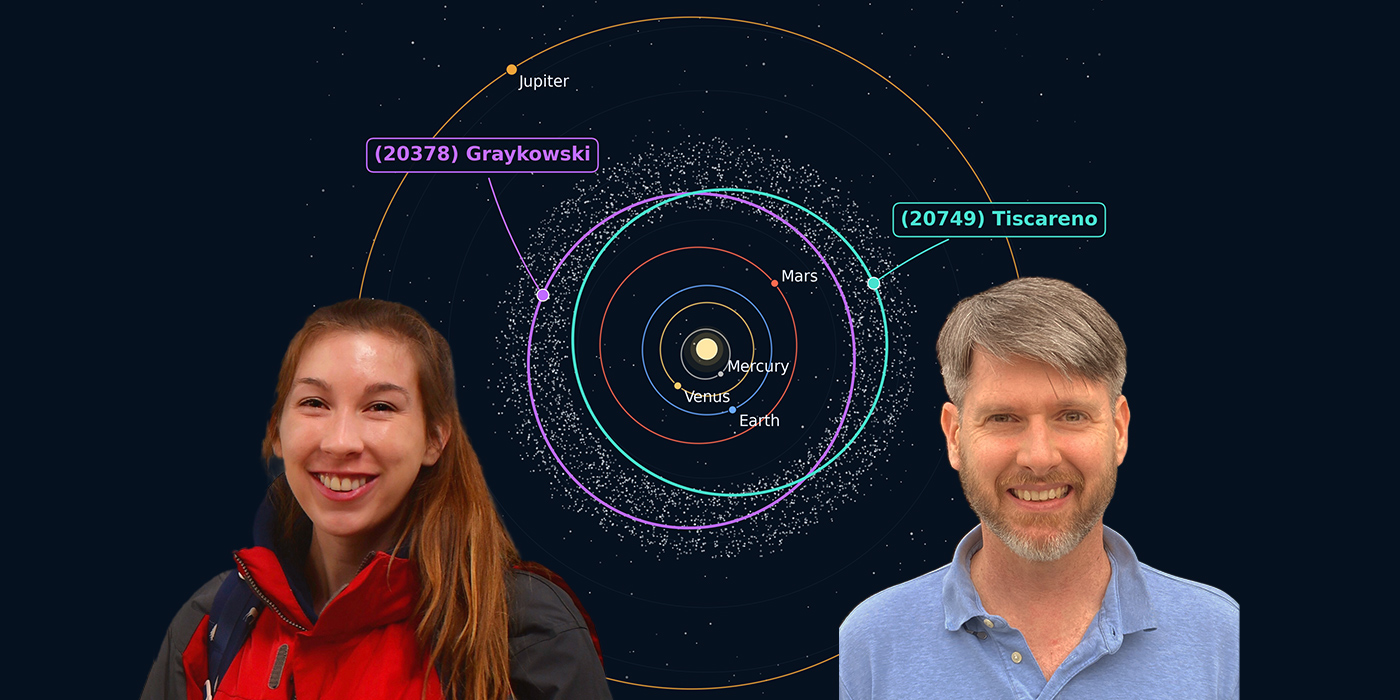
Jul 17, 2026
Two SETI Institute Scientists Honored with Asteroids Bearing Their Names
#Comets, Meteors, and Asteroids #Ariel Graykowski #Matthew Tiscareno #Planetary Astronomy #Solar System #Saturn
Jul 10, 2026
A Remarkably Ancient Visitor: 3I/ATLAS
#3I/ATLAS #Comets, Meteors, and Asteroids #JWST
Jun 29, 2026
Humanity's Plan for First Contact: Who Speaks for Earth?
#Blog #Lauren Sgro #Lucian Walkowicz #Chelsea Haramia #SETI #SETI Institute
Jun 26, 2026
What Juice Revealed About Interstellar Comet 3I/ATLAS
#Blog #3I/ATLAS #Franck Marchis #Juice
Jul 21, 2026
#VPL
#Astrobiology
#SETI Institute
#Victoria Meadows
#Andrew Lincowski
#Eric Wolf
#Nicholas Wogan
#Kimberly Bott
#Hannah Dawson
Jul 20, 2026
SETI Institute In the News: June Roundup 2026
Throughout June 2026, SETI Institute scientists, affiliates, and collaborators contributed to discussions spanning interstellar visitors, planetary science, technosignature searches, animal cognition, and the scientific process guiding the search for life beyond Earth.
#SETI Institute in the News
#SETI Institute
#Community
#Eduardo Bendek
#Optical SETI
#SETI
#3I/ATLAS
#ATA
#Comets, Meteors, and Asteroids
#Solar System
#Franck Marchis
#Ariel Graykowski
#Jill Tarter
#Vishal Gajjar
#Radio Astronomy
#Bill Diamond
#Lori Marino
Jul 17, 2026
#Comets, Meteors, and Asteroids
#Ariel Graykowski
#Matthew Tiscareno
#Planetary Astronomy
#Solar System
#Saturn
Two SETI Institute Scientists Honored with Asteroids Bearing Their Names
Jul 10, 2026
#3I/ATLAS
#Comets, Meteors, and Asteroids
#JWST
A Remarkably Ancient Visitor: 3I/ATLAS
Jun 29, 2026
#Blog
#Lauren Sgro
#Lucian Walkowicz
#Chelsea Haramia
#SETI
#SETI Institute
Humanity's Plan for First Contact: Who Speaks for Earth?
Jun 26, 2026
#Blog
#3I/ATLAS
#Franck Marchis
#Juice
What Juice Revealed About Interstellar Comet 3I/ATLAS
Research
Related Projects

SkyMapper • SETI • Citizen Science • Astronomy
SkyMapper: Expanding Access to Real-time Astronomy Through a Global Astronomical Network
SkyMapper and the SETI Institute are connecting educators, students and the public to live astronomical observations through a distributed astronomical network. #SkyMapper #SETI #Citizen Science #Astronomy
VPL
Virtual Planetary Laboratory
How can we best assess whether an exoplanet supports life? #VPL
Discovery and Futures Lab
Discovery and Futures Lab
What happens if life beyond Earth is discovered? The Discovery and Futures Lab at the SETI Institute fosters novel and anticipatory research at the intersection of science, society, our planet, and the search for life beyond Earth. #Discovery and Futures Lab
May 17, 2026
SkyMapper: Expanding Access to Real-time Astronomy Through a Global Astronomical Network
SkyMapper and the SETI Institute are connecting educators, students and the public to live astronomical observations through a distributed astronomical network.
#SkyMapper
#SETI
#Citizen Science
#Astronomy
May 5, 2026
Virtual Planetary Laboratory
How can we best assess whether an exoplanet supports life?
#VPL
Apr 16, 2026
Discovery and Futures Lab
What happens if life beyond Earth is discovered? The Discovery and Futures Lab at the SETI Institute fosters novel and anticipatory research at the intersection of science, society, our planet, and the search for life beyond Earth.
#Discovery and Futures Lab
Support Us
Support the
SETI Institute
Scientists are getting closer in their search for life beyond earth. But with limited federal funding for the search for extraterrestrial intelligence, supporters are the reason cutting-edge scientists can keep their eyes on the sky.
