)

Tuesday, Mar 24, 2026

At a Glance
|
Saturn’s moon system is one of the most dynamically complex in the solar system, and Titan, its largest moon, is central to understanding its evolution. Larger than Mercury, wrapped in a nitrogen-rich atmosphere thicker than Earth's, and covered in lakes of liquid methane, Titan has long defied simple explanation.
With most of the system’s mass concentrated in a single body, Titan exerts a dominant gravitational influence on surrounding moons and orbital dynamics. Yet key observations from the Cassini mission reveal that Titan is not in a stable, long-term configuration. Its orbit is expanding rapidly, and its interactions with neighboring moons point to a relatively recent disruption in the system.
In a SETI Live conversation, SETI Institute communications specialist Beth Johnson spoke with SETI Institute planetary dynamicist Dr. Matija Ćuk about a new model that connects these observations. The hypothesis proposes that Titan formed through the merger of two earlier moons following a dynamical instability, an event that may also explain the origin of Hyperion, the structure of Saturn’s inner moons, and the formation of its rings.
A Missing Moon
The research is motivated by two results from NASA’s Cassini mission.
First, radio-tracking data revealed that Titan's orbit is expanding at an unexpectedly rapid rate. This tidal migration is driven by gravitational interactions between Titan and Saturn, but not through classical tidal friction alone. Instead, Saturn appears to respond strongly at specific resonant frequencies, amplifying the effect and accelerating Titan’s outward movement.
Working backward from this rate, researchers determined that Hyperion, an irregular, tumbling moon just outside Titan's orbit, could only have been locked in its current orbital resonance with Titan for approximately 400 million years. This implies that Hyperion is much younger than the Saturn system itself.
Second, Cassini's final close passes revealed that Saturn’s axial precession is no longer synchronized with the orbital precession of Neptune. That resonance appears to have been broken relatively recently.
Together, these results suggest a recent dynamical disruption. Dr. Ćuk’s model explains both observations through a single event: the destabilization and loss of an additional moon, referred to as Proto-Hyperion.
Designing a Lost Moon
To reproduce the observed system, Proto-Hyperion must have occupied a specific orbit and mass range. Its influence on Saturn’s precession depends on distance, with more distant moons exerting stronger torque.
The model places Proto-Hyperion just outside Titan’s orbit, in a 2:1 orbital resonance, where Titan orbits Saturn two times for every single orbit of the proto-moon. This configuration avoids destabilizing another nearby moon, Iapetus, while still producing the required gravitational effects.
From these constraints, Proto-Hyperion is estimated to have had about 6 percent of Titan’s mass. Simulations show that such a moon would most often collide with Titan, though in some cases it could be ejected from the system.
How a Moon Is Lost
As Titan migrated outward, it entered a chaotic resonance with Proto-Hyperion. Unlike stable resonances, chaotic resonances involve multiple competing gravitational interactions. These interactions increase eccentricity (orbital shape) and inclination (the angle relative to the equatorial plane).
Proto-Hyperion, being less massive, experienced the strongest effects. Its orbit became increasingly elongated and tilted over time.
These interactions also influenced Iapetus. Simulations reproduce a range of orbital tilts consistent with Iapetus’s present inclination, suggesting that its orbit preserves evidence of this earlier instability.
Eventually, Proto-Hyperion’s orbit crossed Titan’s path. Once the resonance broke down, the system evolved rapidly. Simulations indicate that in most cases, Proto-Hyperion collides with Titan.
The Collision and Its Aftermath
The collision would have reshaped Titan without completely melting or vaporizing it. The icy outer layers would have been most affected, while the interior remained largely intact.
This scenario is consistent with observations. Titan’s surface appears relatively young, lacking craters older than a few hundred million years. A large-scale resurfacing event could explain this.
Debris from the collision likely formed Hyperion. Its irregular shape and low density suggest it is a rubble-pile object, an aggregate of fragments rather than a single solid body.
Rings, Inner Moons, and a Chain of Consequences
Following the merger, Titan continued migrating outward. As it encountered resonances with inner moons – Mimas, Enceladus, Tethys, Dione, and Rhea – it destabilized their orbits.
These interactions likely led to collisions among the inner moons. Material stripped from their icy mantles may have formed Saturn's rings.
Crater distributions on these moons support this scenario. The size distribution does not match impacts from comets, suggesting that local debris from collisions played a dominant role.
A System Still in Motion
Titan's outward migration continues today. Future resonances could destabilize additional moons, including Iapetus.
At the same time, Saturn’s rings are gradually fading. Over long timescales, the system may lose structure rather than gain it.
Saturn’s moons are not static remnants of formation. They are part of an evolving system shaped by gravitational interactions over hundreds of millions of years.
What Comes Next
Ongoing research aims to reconstruct the full history of Saturn’s inner moons and test whether this model can reproduce their present configurations.
Future missions may provide critical constraints. NASA’s Dragonfly mission to Titan could reveal details about its surface and interior, offering new ways to evaluate whether a past merger occurred.
Watch the full SETI Live conversation here. Read the full press release and the published paper.
Final Questions
1. Can NASA’s Dragonfly mission reveal Titan’s early history?
Dragonfly is not specifically designed to test this hypothesis, but it could provide valuable constraints. Data on Titan’s surface composition, geology, and interior structure may help determine whether a large-scale merger occurred.
If Titan’s internal structure is inconsistent with a past collision, the model would be challenged. However, any confirmation will likely come from combining multiple lines of evidence rather than a single observation.
2. Could moon mergers like this happen around Jupiter or in exoplanetary systems?
There is no clear evidence for similar mergers at Jupiter or Uranus. Neptune’s moon Triton likely formed through a different process involving the capture and disruption of smaller moons.
However, the mechanism driving Titan’s evolution, resonant tidal interactions, may also occur in other planetary systems. This suggests that moon–moon collisions could be possible around exoplanets, depending on the planet’s internal structure and orbital dynamics.
3. Is Saturn’s moon system still evolving today?
Yes. Titan continues to migrate outward, reshaping the system over time. Future resonances could destabilize moons such as Iapetus.
Saturn’s rings are also gradually fading, and the system may lose structure over billions of years. Overall, Saturn’s moons remain part of an active and evolving system.







News
Related News

Jul 24, 2026
A New Way to Search for Alien Civilizations
#Blog #Lauren Sgro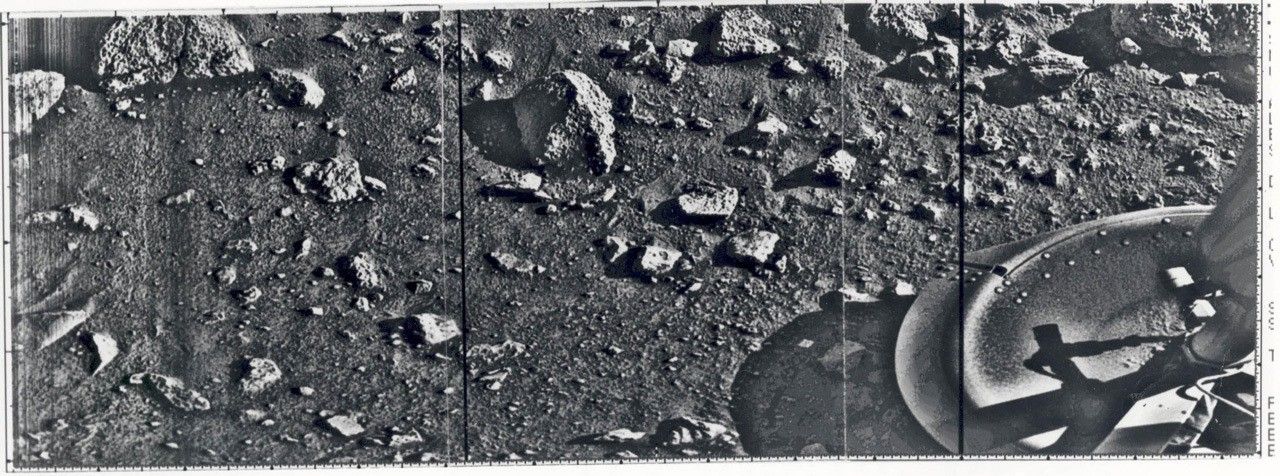
Jul 20, 2026
50 Years After Viking 1: The Mission That Changed the Search for Life on Mars
Half a century after the first successful Mars landing, Viking's greatest legacy may be the questions it taught us to ask. #Mars #NASA Missions and Observatories #Anniversary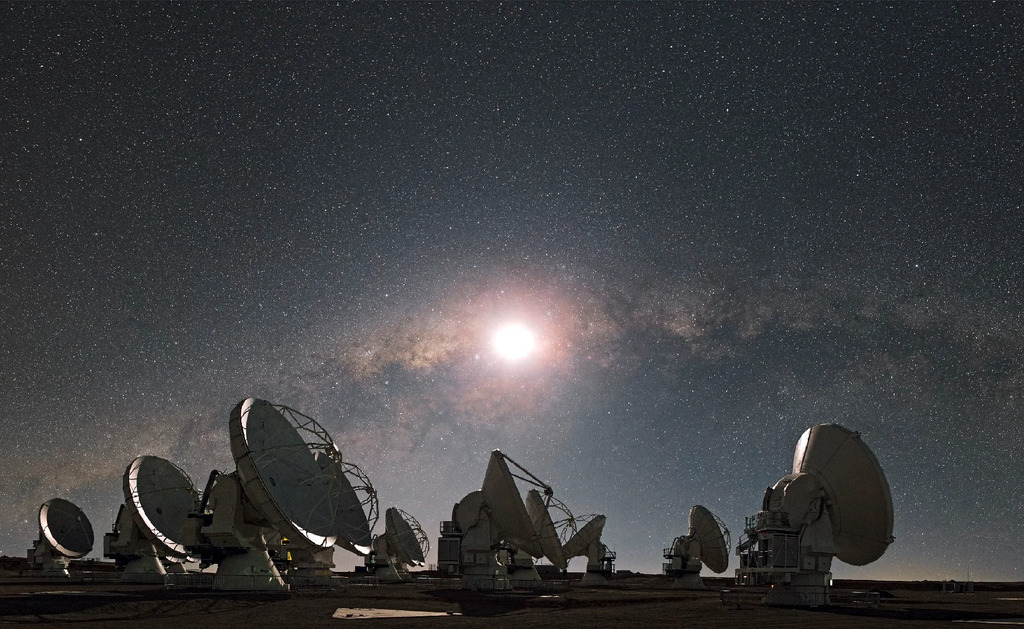
Jul 20, 2026
SETI Institute In the News: June Roundup 2026
Throughout June 2026, SETI Institute scientists, affiliates, and collaborators contributed to discussions spanning interstellar visitors, planetary science, technosignature searches, animal cognition, and the scientific process guiding the search for life beyond Earth. #SETI Institute in the News #SETI Institute #Community #Eduardo Bendek #Optical SETI #SETI #3I/ATLAS #ATA #Comets, Meteors, and Asteroids #Solar System #Franck Marchis #Ariel Graykowski #Jill Tarter #Vishal Gajjar #Radio Astronomy #Bill Diamond #Lori Marino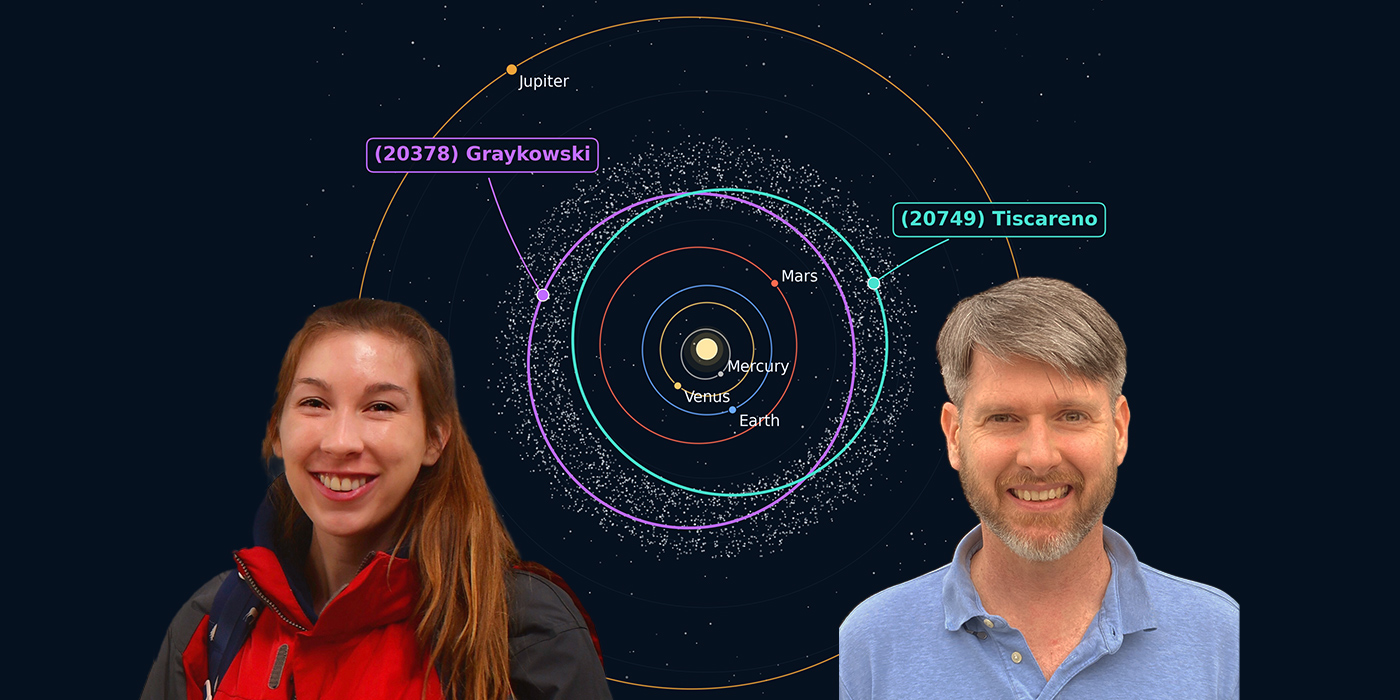
Jul 17, 2026
Two SETI Institute Scientists Honored with Asteroids Bearing Their Names
#Comets, Meteors, and Asteroids #Ariel Graykowski #Matthew Tiscareno #Planetary Astronomy #Solar System #Saturn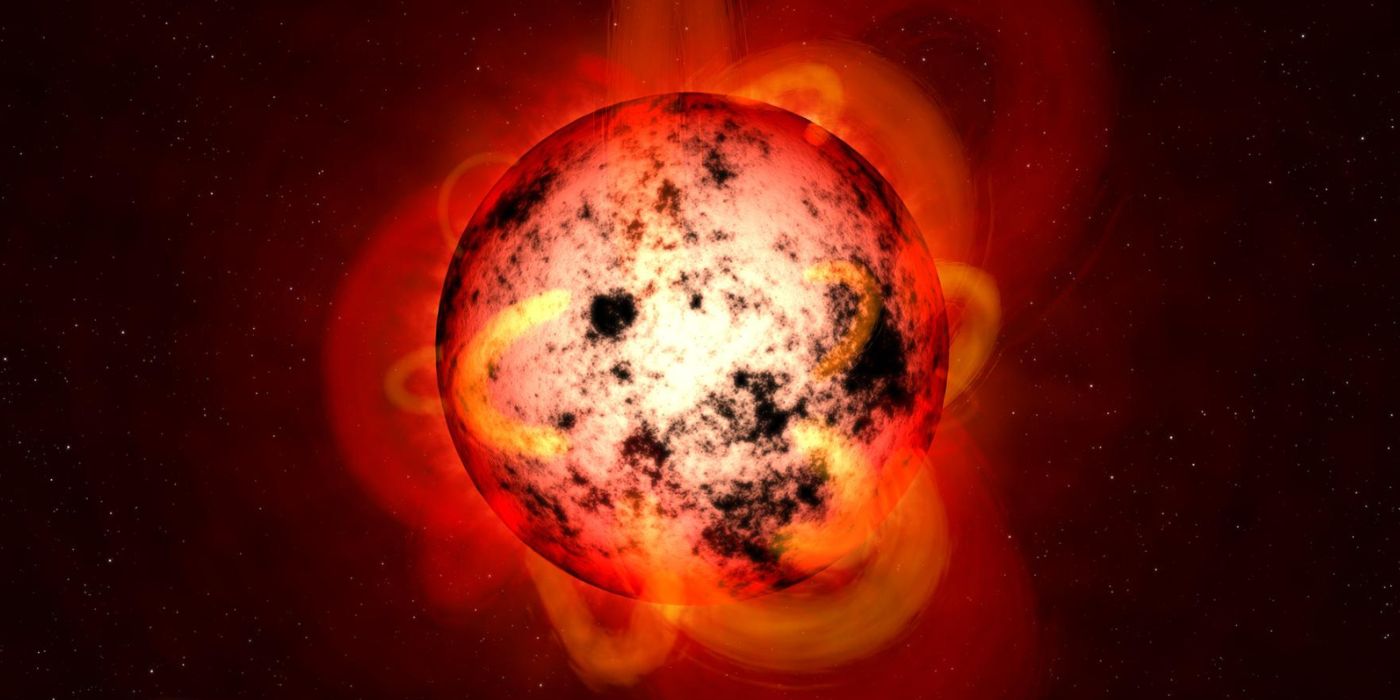
Jul 17, 2026
How Clouds Hide Alien Worlds—and How Astronomers See Through Them
#Blog #Moiya McTier
Jul 2, 2026
How Clouds Hide Alien Worlds—and How Astronomers See Through Them
#Blog #Lauren Sgro
Jul 24, 2026
#Blog
#Lauren Sgro
Jul 20, 2026
50 Years After Viking 1: The Mission That Changed the Search for Life on Mars
Half a century after the first successful Mars landing, Viking's greatest legacy may be the questions it taught us to ask.
#Mars
#NASA Missions and Observatories
#Anniversary
Jul 20, 2026
SETI Institute In the News: June Roundup 2026
Throughout June 2026, SETI Institute scientists, affiliates, and collaborators contributed to discussions spanning interstellar visitors, planetary science, technosignature searches, animal cognition, and the scientific process guiding the search for life beyond Earth.
#SETI Institute in the News
#SETI Institute
#Community
#Eduardo Bendek
#Optical SETI
#SETI
#3I/ATLAS
#ATA
#Comets, Meteors, and Asteroids
#Solar System
#Franck Marchis
#Ariel Graykowski
#Jill Tarter
#Vishal Gajjar
#Radio Astronomy
#Bill Diamond
#Lori Marino
Jul 17, 2026
#Comets, Meteors, and Asteroids
#Ariel Graykowski
#Matthew Tiscareno
#Planetary Astronomy
#Solar System
#Saturn
Two SETI Institute Scientists Honored with Asteroids Bearing Their Names
Jul 17, 2026
#Blog
#Moiya McTier
How Clouds Hide Alien Worlds—and How Astronomers See Through Them
Jul 2, 2026
#Blog
#Lauren Sgro
How Clouds Hide Alien Worlds—and How Astronomers See Through Them
Research
Related Projects

SkyMapper • SETI • Citizen Science • Astronomy
SkyMapper: Expanding Access to Real-time Astronomy Through a Global Astronomical Network
SkyMapper and the SETI Institute are connecting educators, students and the public to live astronomical observations through a distributed astronomical network. #SkyMapper #SETI #Citizen Science #Astronomy
VPL
Virtual Planetary Laboratory
How can we best assess whether an exoplanet supports life? #VPL
Discovery and Futures Lab
Discovery and Futures Lab
What happens if life beyond Earth is discovered? The Discovery and Futures Lab at the SETI Institute fosters novel and anticipatory research at the intersection of science, society, our planet, and the search for life beyond Earth. #Discovery and Futures Lab
May 17, 2026
SkyMapper: Expanding Access to Real-time Astronomy Through a Global Astronomical Network
SkyMapper and the SETI Institute are connecting educators, students and the public to live astronomical observations through a distributed astronomical network.
#SkyMapper
#SETI
#Citizen Science
#Astronomy
May 5, 2026
Virtual Planetary Laboratory
How can we best assess whether an exoplanet supports life?
#VPL
Apr 16, 2026
Discovery and Futures Lab
What happens if life beyond Earth is discovered? The Discovery and Futures Lab at the SETI Institute fosters novel and anticipatory research at the intersection of science, society, our planet, and the search for life beyond Earth.
#Discovery and Futures Lab
Support Us
Support the
SETI Institute
Scientists are getting closer in their search for life beyond earth. But with limited federal funding for the search for extraterrestrial intelligence, supporters are the reason cutting-edge scientists can keep their eyes on the sky.
