








Wednesday, Jan 07, 2026

At A Glance

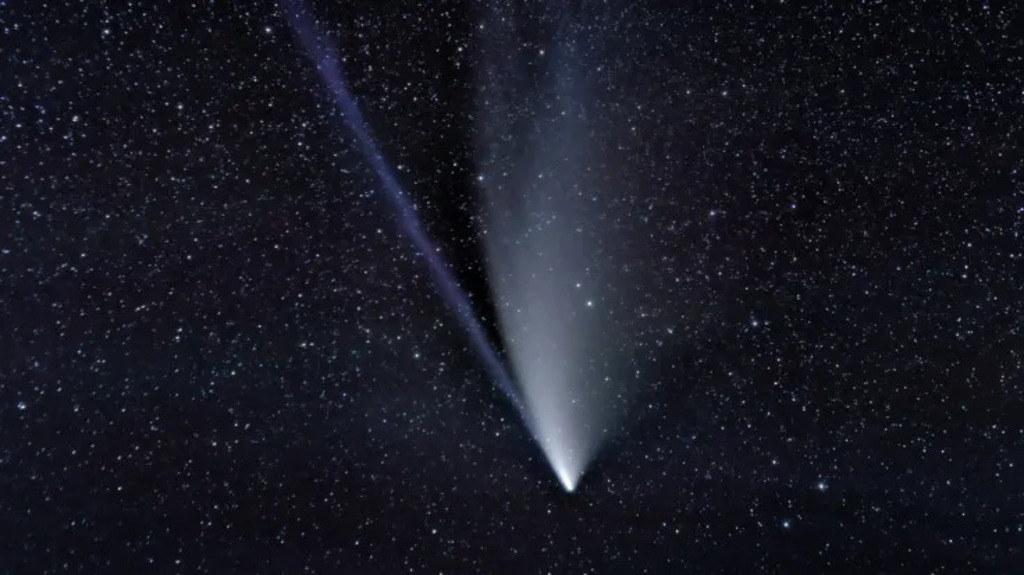
  • 3I/ATLAS: Could an Interstellar “Gardener” Have Seeded Life on Earth?: Sofia Sheikh led efforts to evaluate claims about 3I/ATLAS by conducting targeted technosignature searches, finding no credible artificial signals and reinforcing its classification as a natural comet.
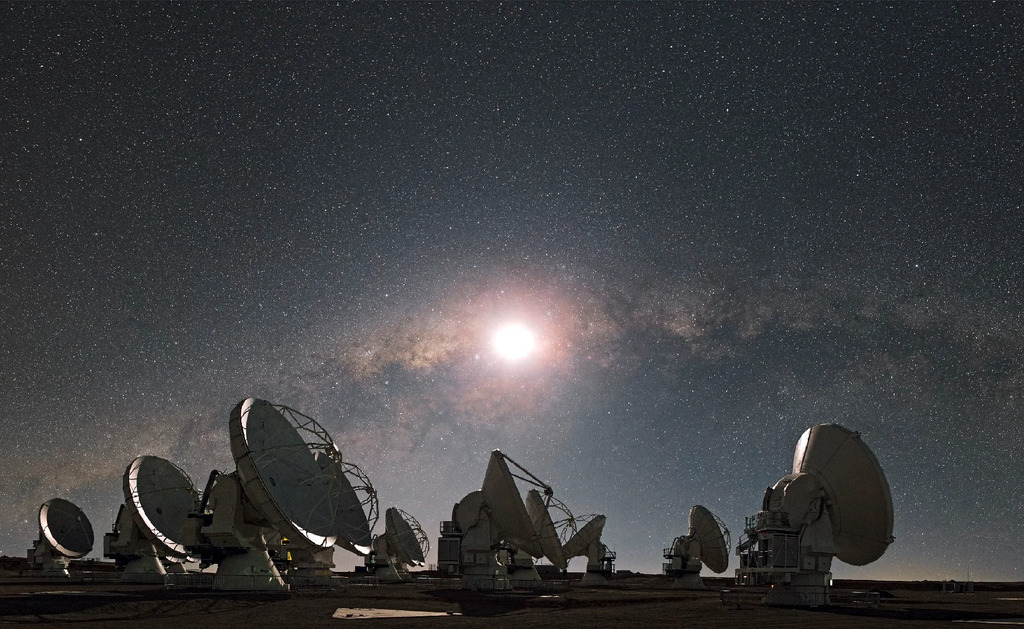
  • 5 Places Where Aliens Might Actually Exist: A broad overview of environments considered promising for life, including Mars, icy ocean worlds, dwarf planets, and exoplanets, features Nathalie Cabrol, Director of the Carl Sagan Center at the SETI Institute, highlighting SETI’s combined biosignature and technosignature approach.
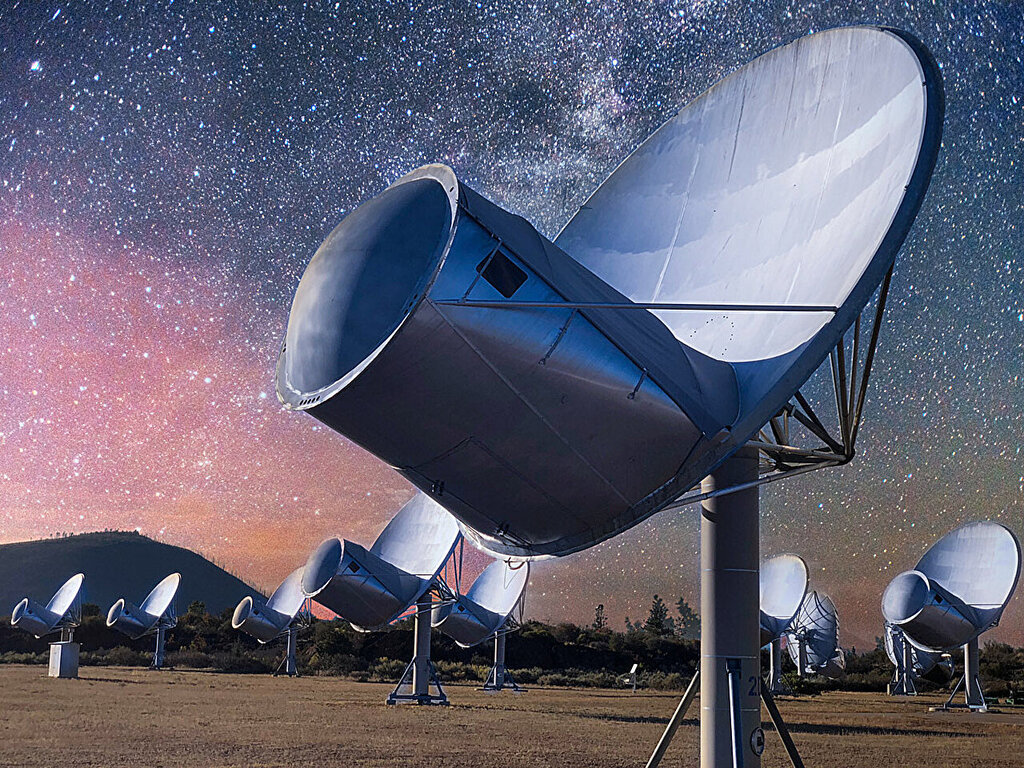
  • Slow changes in radio scintillation can nudge pulsar timing by billionths of a second: A SETI Institute–led study using the Allen Telescope Array shows that slow, large-scale scintillation effects can introduce nanosecond-scale timing shifts in pulsar observations, improving precision for pulsar timing experiments and helping distinguish natural signals from radio interference. 
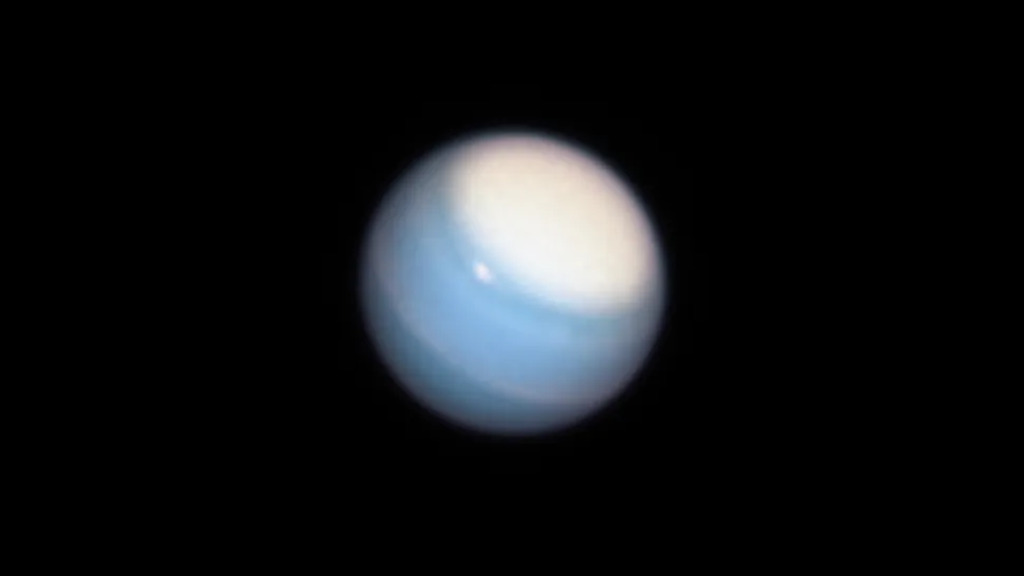
  • Uranus's small moons are dark, red, and water-poor: James Webb observations show Uranus’s inner moons are darker, redder, and water-poor compared to outer satellites, with orbital offsets revealing a dynamically complex system; Matija Ćuk of the SETI Institute notes these findings offer insight into moon–ring interactions.

This month’s highlights range from careful scientific evaluation of speculation surrounding interstellar comet 3I/ATLAS to broader discussions of where life might exist beyond Earth, informed by SETI’s integrated approach to biosignatures and technosignatures. Other features examine advances in radio astronomy that improve the precision of pulsar timing and new observations from the James Webb Space Telescope revealing the complex and evolving system of Uranus’s small moons. Together, these stories underscore the SETI Institute’s commitment to rigorous methods, open data, and thoughtful exploration of the universe.

3I/ATLAS: Could an Interstellar “Gardener” Have Seeded Life on Earth?

The arrival of object 3I/ATLAS has reignited debate over whether such visitors are purely natural or could represent extraterrestrial technology. Harvard astrophysicist Avi Loeb has argued that certain features of 3I/ATLAS, such as its trajectory and reported rhythmic brightening, could be consistent with “directed panspermia.”

However, the prevailing scientific consensus, including analyses by NASA and independent astronomers, including from the SETI Institute, continues to classify 3I/ATLAS as a natural interstellar comet, citing its dust production, gas emissions, and overall cometary behavior. Many researchers emphasize that extraordinary claims require extraordinary evidence.

Sofia Sheikh, a technosignature researcher at the SETI Institute, explains how SETI Institute scientists search for evidence of technology by analyzing narrowband radio signals, while rigorously filtering out terrestrial interference. To date, no credible artificial signals have been detected from 3I/ATLAS. This episode underscores the value of open data, careful skepticism, and coordinated observations when evaluating rare interstellar visitors.

Read the full article by IBTimes UK3I/ATLAS: Harvard Scientist Says Alien 'Interstellar Gardener' Seeded Life on Earth

Are We Alone? Scientists Map the Most Promising Places for Alien Life

The question of whether humanity is alone in the universe remains central to modern science, and the SETI Institute continues to address it through a broad, interdisciplinary approach. Dr. Nathalie Cabrol, Director of the Carl Sagan Center at the SETI Institute, emphasizes the Institute’s end-to-end perspective on life in the cosmos. “SETI is the only Institute in the world that is searching for life in the universe, from its origin and nature to the search for extraterrestrial intelligence,” she explains. “We go from beginning to end.”

From icy ocean worlds to distant exoplanets, SETI Institute scientists examine where life might arise and how it could persist, while grappling with the enduring Fermi paradox. Mars remains a prime target, with NASA’s Perseverance and Curiosity rovers probing its ancient environments. Beyond Mars, ocean worlds such as Europa, Enceladus, Titan, along with dwarf planets like Ceres and Pluto, offer compelling possibilities. Looking farther still, missions including James Webb, TESS, and ESA’s Ariel survey exoplanets for signs of habitability or technology.

Read the full story by Fodor’s Travel: Places in the Galaxy Where Aliens Might Exist

Slow Radio Scintillation Can Subtly Shift Pulsar Timing

A SETI Institute–led study has shown that slow changes in radio scintillation, the “twinkling” of radio signals caused by interstellar gas, can shift pulsar timing by billionths of a second. Over ten months, researchers monitored pulsar PSR J0332+5434 using the Allen Telescope Array, tracking how its radio pulses scattered across frequencies between 900 and 1,956 MHz. Published in The Astrophysical Journal, the study found that evolving scintillation patterns can introduce timing delays of tens of nanoseconds, a small but significant effect for ultra-precise pulsar experiments.

Project lead Grayce Brown notes that understanding and correcting these delays is essential for studies ranging from gravitational-wave detection to SETI. Co-author Dr. Sofia Sheikh highlights that the ATA’s wide bandwidth and long-term observing capability help distinguish natural cosmic signals from human-made radio interference.

Read the full article by Phys.org: Slow changes in radio scintillation can nudge pulsar timing by billionths of a second

Uranus’s Small Moons Are Dark, Red, and Water-Poor

New infrared observations from James Webb Space Telescope reveal that Uranus’s small inner moons are significantly darker, redder, and more depleted in water ice than the planet’s larger outer satellites. The study led by Matt Hedman used February 2025 data to characterize several tiny moons and identify a new candidate moon, S/2025 U1, near Uranus's epsilon ring. Lead author Jacob Herman reports that while inner moons share similar surface properties, Mab stands out as bluer and more water-rich, resembling the nearby major moon Miranda.

By comparing current positions to Voyager 2 predictions, researchers found that several moons, particularly Perdita and Cupid, are offset from their expected orbits, highlighting the system’s dynamical complexity. Matija Ćuk of the SETI Institute notes that these discrepancies provide valuable insights into the interactions between Uranus’s moons and rings.

Read the full article by Space.com: Uranus’s small moons are dark, red, and water-poor

News

Related News

Featured Image
Jun 5, 2026
Beyond Disclosure Day: The Real-World Protocols
#Press Releases #SETI #Astronomy #Bill Diamond #SETI Institute
Featured Image
Jun 4, 2026
SETI Institute In the News: May Roundup 2026
#SETI Institute in the News #SETI Institute #Community #Solar System #Matija Ćuk #Neptune #SETI #Bill Diamond #UAPs #Drake Awards #Lori Marino #Matthew Tiscareno #Outreach #Exoplanets #Carl Sagan Center
Featured Image
May 28, 2026
Celebrating Frank Drake
#Frank Drake #SETI #Project Ozma #Drake Equation #SETI Institute
Featured Image
May 7, 2026
SETI Institute In the News: April Roundup 2026
#SETI Institute in the News #SETI Institute #Community #SETI #Discovery and Futures Lab #Lucian Walkowicz #Chelsea Haramia #NASA Missions and Observatories #Pascal Lee #Mars #Janice Bishop #Mark Showalter #JWST #Uranus #Bill Diamond #UAPs
Featured Image
May 5, 2026
Atlanta Science Festival Exploration Expo and the Arecibo Message
#Community #SETI Institute #Outreach #Education #Lauren Sgro
Featured Image
May 4, 2026
SETI Institute Announces Nominees for the Speculative Life BioArt Residency
Six international artists shortlisted for a new residency at the intersection of art, astrobiology, and biotechnology #AIR #SETI Institute #Speculative Life #Astrobiology #Danielle Siembieda #Nathalie Cabrol
Research

Related Projects

Featured Image
SkyMapper • SETI • Citizen Science • Astronomy
SkyMapper: Expanding Access to Real-time Astronomy Through a Global Astronomical Network
SkyMapper and the SETI Institute are connecting educators, students and the public to live astronomical observations through a distributed astronomical network. #SkyMapper #SETI #Citizen Science #Astronomy
Featured Image
VPL
Virtual Planetary Laboratory
How can we best assess whether an exoplanet supports life? #VPL
Featured Image
Discovery and Futures Lab
What happens if life beyond Earth is discovered? The Discovery and Futures Lab at the SETI Institute fosters novel and anticipatory research at the intersection of science, society, our planet, and the search for life beyond Earth.  #Discovery and Futures Lab
Support Us

Support the
SETI Institute

Scientists are getting closer in their search for life beyond earth. But with limited federal funding for the search for extraterrestrial intelligence, supporters are the reason cutting-edge scientists can keep their eyes on the sky.