








At A Glance
|
From Martian rocks that may hold traces of past life, to fragile asteroids that explode in Earth’s atmosphere, to bold ideas about AI-driven “astronauts,” SETI Institute scientists are at the forefront of discoveries shaping planetary science and humanity’s future in space.
In a Rock on Mars, NASA Sees ‘Clearest Sign of Life’ So Far
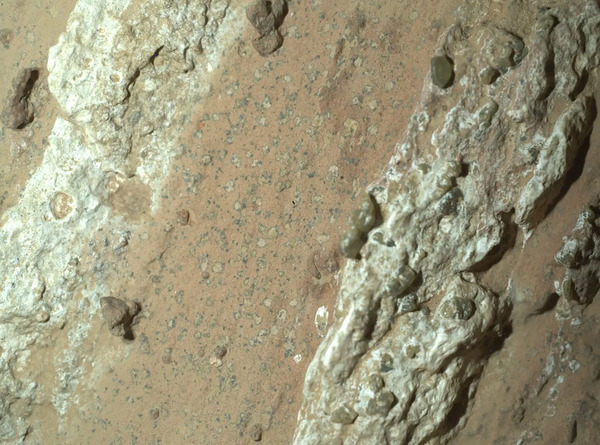
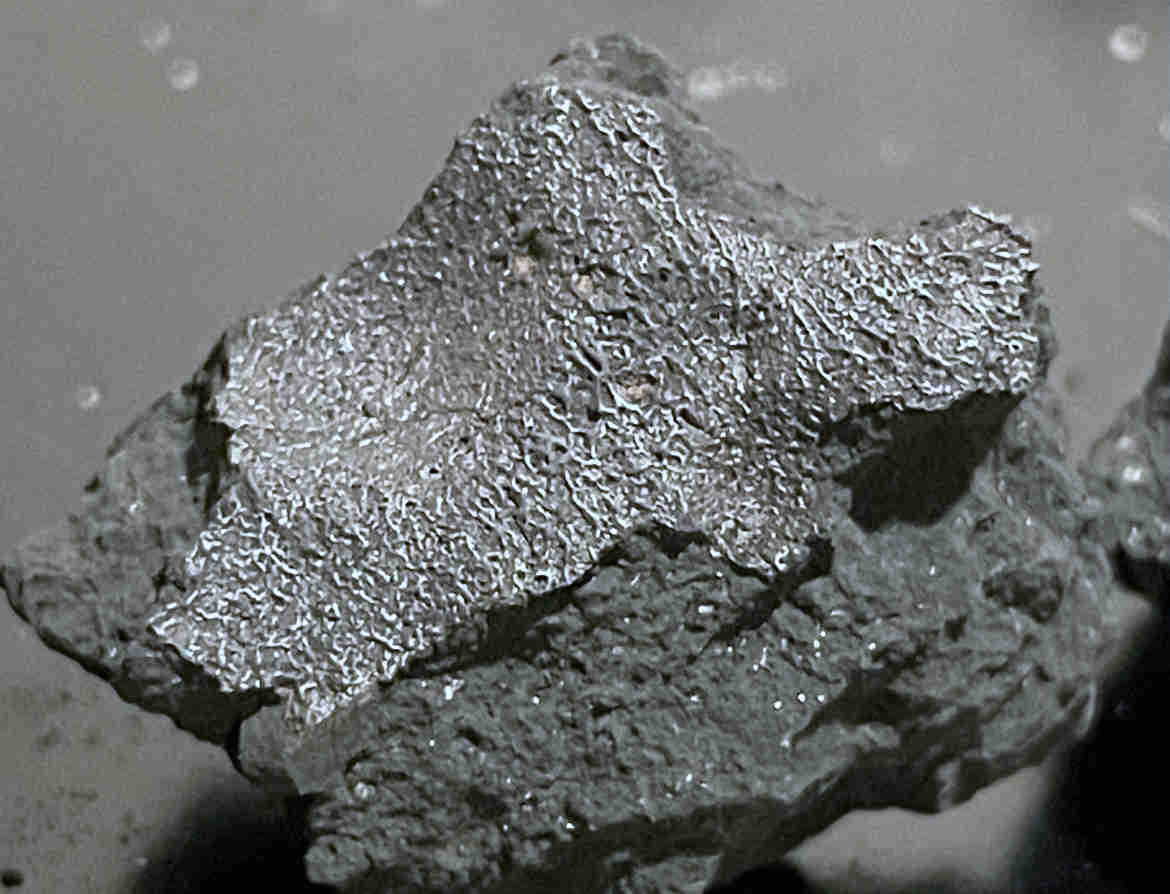
NASA’s Perseverance rover has identified minerals in a Martian rock that may be the clearest signs of past life yet. The specimen, Cheyava Falls, shows features consistent with microbially influenced minerals found on Earth. While not definitive proof, researchers say the findings are highly compelling. SETI Institute senior scientist Dr. Janice Bishop, co-author of a commentary in Nature, called the results “super exciting,” noting they highlight Mars’ past habitability. Future sample return missions will be critical to determine whether these patterns are truly biological in origin.
Read the full story by the New York Times here: In a Rock on Mars, NASA Sees ‘Clearest Sign of Life’ So Far
Best Evidence Yet for Past Life on Mars?
NASA’s Perseverance rover has discovered minerals in a Martian rock that could be the strongest evidence yet of past microbial life. SETI Institute planetary scientist Nathalie Cabrol told Sky & Telescope that the findings are “probably the most compelling evidence we have so far” of Mars’ potential habitability. While the minerals may also have non-biological origins, Nathalie Cabrol highlighted the rock’s habitable environment, its chemical signatures, and microbe-like shapes as reasons for cautious excitement.
Read the full story by Sky & Telescope: Best Evidence Yet for Past Life on Mars?
This Otherworldly Object Is Shedding Debris.
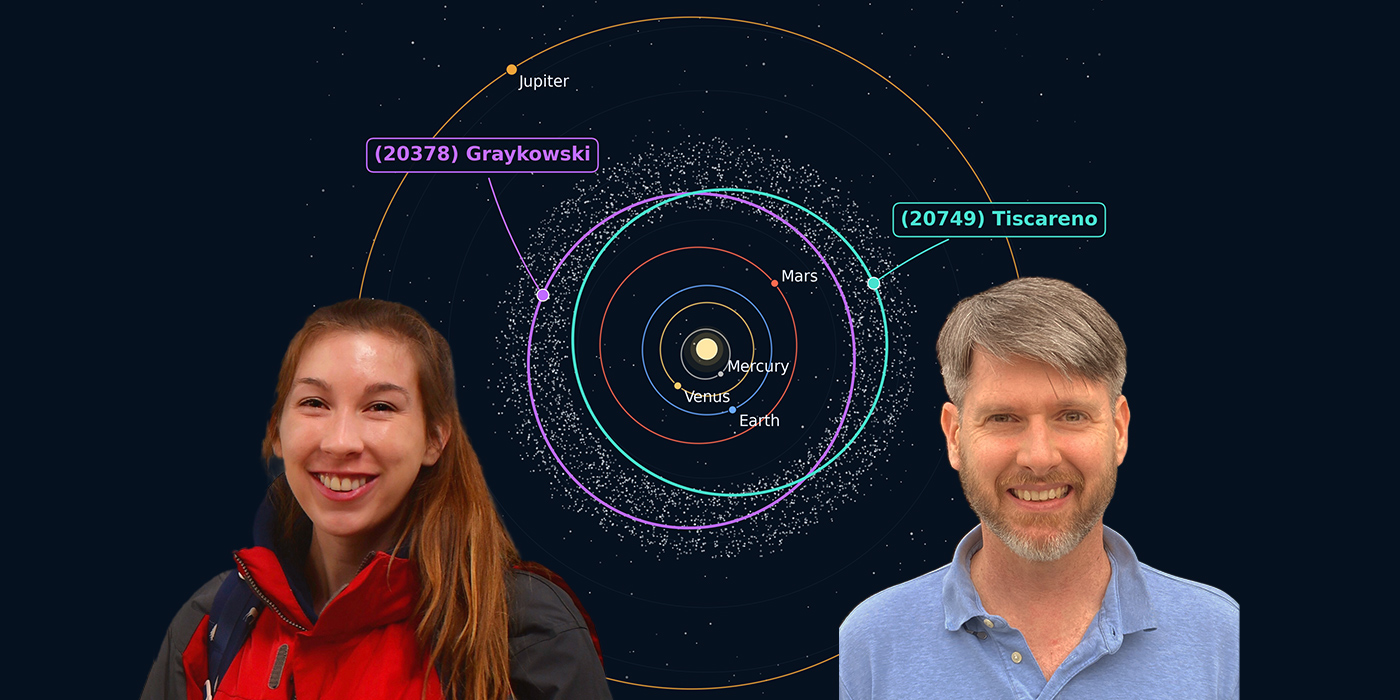
The interstellar comet 3I/ATLAS is offering astronomers a rare chance to study material from beyond our solar system. In Popular Mechanics, SETI Institute planetary astronomer Dr. Ariel Graykowski explained how her team, working with citizen scientists and Unistellar, is investigating whether interstellar comets might carry isotopic or structural signatures distinct from solar system comets. Such differences could reveal new insights into how planetary systems form around other stars, and whether interstellar debris might one day bring direct evidence of alien worlds to Earth.
Find out more about this feature by Popular Mechanics: This Otherworldly Object Is Shedding Debris.
Some small asteroids can abruptly explode
A new study in Nature Astronomy reveals that small asteroids like 2023 CX1 can suddenly disintegrate during atmospheric entry, releasing nearly all their energy in a single blast. SETI Institute astronomer Dr. Peter Jenniskens, played a central role in the discovery, alerting observers just hours before impact, guiding the recovery of meteorite fragments in Normandy, and leading analysis of the event. The findings identify a population of fragile, L-type asteroids with higher-than-expected risks, underscoring the importance of planetary defense research.
Read the full story on Phys.org: Some small asteroids can abruptly explode
'Artificial super astronauts': How AI and robotics could help humanity settle Mars
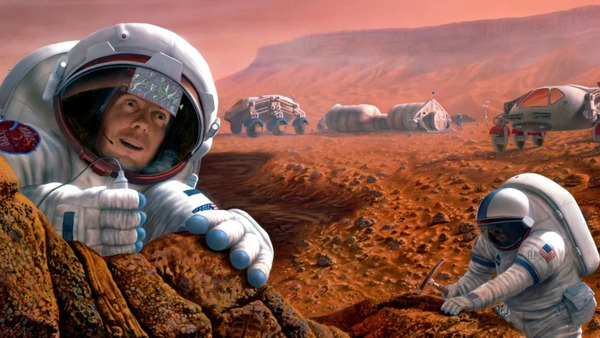
SETI Institute planetary scientist Dr. Pascal Lee argues that advances in robotics and AI could reshape human missions to Mars. Speaking at a recent Space Robotics Workshop, Lee outlined how “artificial astronauts”: androids with human-like traits and intelligence, may one day accompany or even replace humans on deep space expeditions. Looking further ahead, he envisions “artificial super astronauts” capable of interstellar travel, carrying human DNA to distant worlds.
Read more on Space.com: 'Artificial super astronauts': How AI and robotics could help humanity settle Mars
News
Related News
Beyond Disclosure Day: The Real-World Protocols
#Press Releases #SETI #Astronomy #Bill Diamond #SETI Institute
SETI Institute In the News: May Roundup 2026
#SETI Institute in the News #SETI Institute #Community #Solar System #Matija Ćuk #Neptune #SETI #Bill Diamond #UAPs #Drake Awards #Lori Marino #Matthew Tiscareno #Outreach #Exoplanets #Carl Sagan Center
Celebrating Frank Drake
#Frank Drake #SETI #Project Ozma #Drake Equation #SETI Institute
SETI Institute to Honor Dr. Matthew Tiscareno with 2026 Carl Sagan Center Director’s Award
The Drake Awards event will also recognize SETI Forward and SETI Institute REU student award recipients. #Press Releases #Drake Awards #Frank Drake #SETI #Awards #Planetary Astronomy #Astrobiology #SETI Forward #Education #Carl Sagan Center #Matthew Tiscareno #Nathalie Cabrol #REU
SETI Institute In the News: April Roundup 2026
#SETI Institute in the News #SETI Institute #Community #SETI #Discovery and Futures Lab #Lucian Walkowicz #Chelsea Haramia #NASA Missions and Observatories #Pascal Lee #Mars #Janice Bishop #Mark Showalter #JWST #Uranus #Bill Diamond #UAPs
Atlanta Science Festival Exploration Expo and the Arecibo Message
#Community #SETI Institute #Outreach #Education #Lauren SgroResearch
Related Projects
SkyMapper: Expanding Access to Real-time Astronomy Through a Global Astronomical Network
SkyMapper and the SETI Institute are connecting educators, students and the public to live astronomical observations through a distributed astronomical network. #SkyMapper #SETI #Citizen Science #Astronomy
Virtual Planetary Laboratory
How can we best assess whether an exoplanet supports life? #VPL
Discovery and Futures Lab
What happens if life beyond Earth is discovered? The Discovery and Futures Lab at the SETI Institute fosters novel and anticipatory research at the intersection of science, society, our planet, and the search for life beyond Earth. #Discovery and Futures LabSupport the
SETI Institute
Scientists are getting closer in their search for life beyond earth. But with limited federal funding for the search for extraterrestrial intelligence, supporters are the reason cutting-edge scientists can keep their eyes on the sky.