February 14, 2020, Mountain View, CA – The SETI Institute and the National Radio Astronomy Observatory (NRAO) are announcing a collaboration to bring a state-of-the-art search for extraterrestrial intelligence (SETI) instrument to the Very Large Array (VLA) for the first time. Thanks to a new, cost-effective Ethernet interface, it will be possible to employ the VLA to search for technosignatures 24 hours a day - 7 days a week, as well as explore other natural astrophysical phenomena in novel ways. The new system is called the Commensal Open-Source Multimode Interferometer Cluster Search for Extraterrestrial Intelligence (COSMIC SETI).
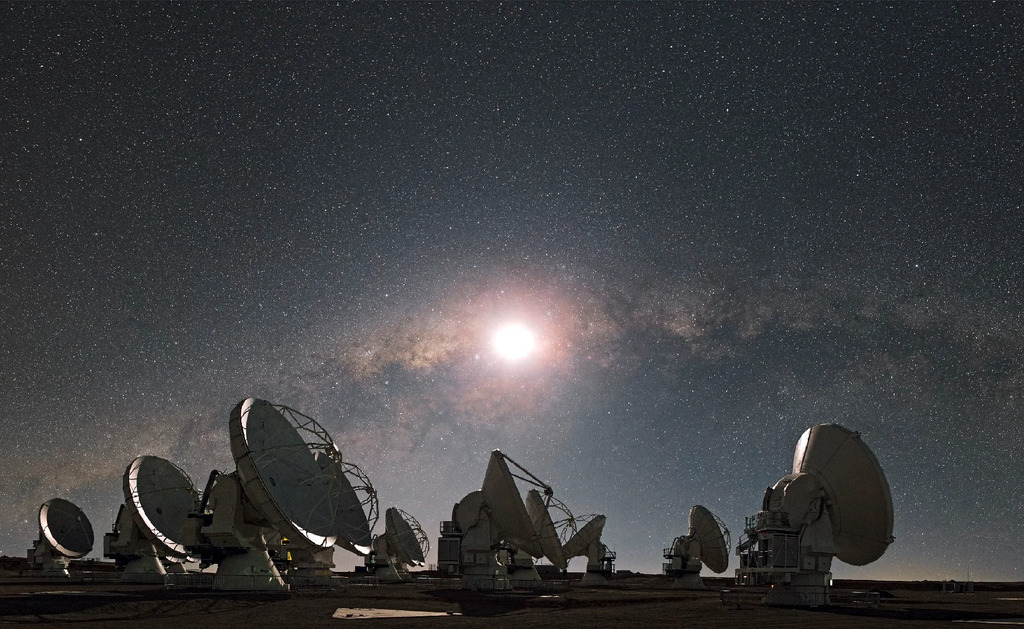
Located in New Mexico, the VLA is the most productive radio telescope in the world, consisting of twenty-seven 25-meter telescopes that are used by astronomers to observe black holes, conduct research about the formation of the universe and study young stars to understand how planets form. Despite being prominently featured in the 1997 film Contact, featuring Jodie Foster as an astronomer searching for signs of extraterrestrial intelligence, the VLA has never before hosted a dedicated SETI instrument.
"The SETI Institute will develop and install an interface on the VLA permitting unprecedented access to the rich data stream continuously produced by the telescope as it scans the sky,“ said Andrew Siemion, Bernard M. Oliver Chair for SETI at the SETI Institute and Principal Investigator for the Breakthrough Listen Initiative at the University of California, Berkeley. “This interface will allow us to conduct a powerful, wide-area SETI survey that will be vastly more complete than any previous such search,"
"As the VLA conducts standard observations, this new system will allow for an additional and important use for the data we're already collecting," added NRAO Director Tony Beasley. “Determining whether we are alone in the universe as technologically capable life is among the most compelling questions in science, and NRAO telescopes can play a major role in answering it,” Beasley continued.
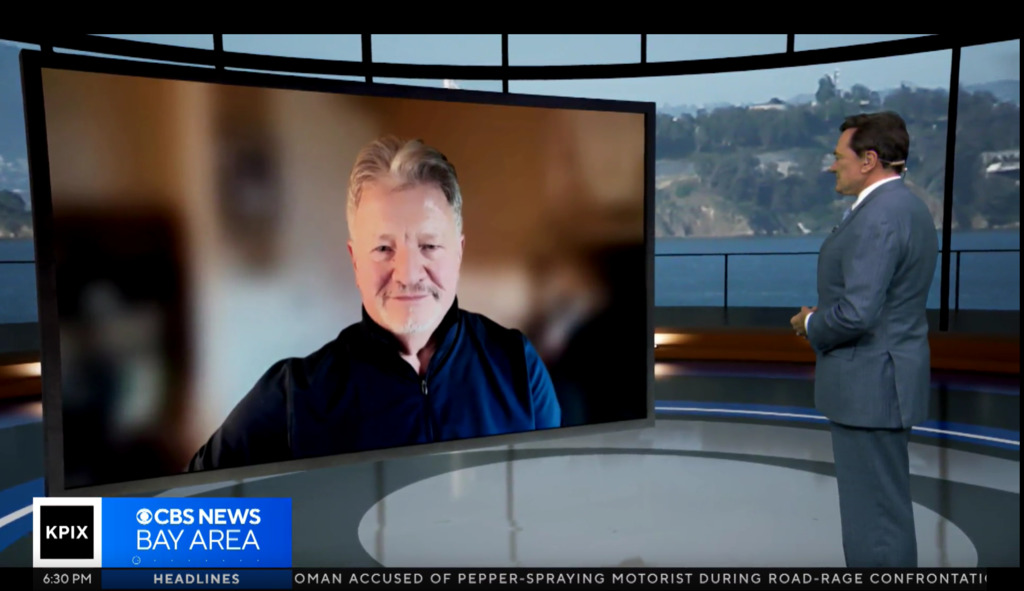
“Having access to the most sensitive radio telescope in the northern hemisphere for SETI observations is perhaps the most transformative opportunity yet in the history of SETI programs,” said Bill Diamond, President and CEO of the SETI Institute. “We are delighted to have this opportunity to partner with NRAO, especially as we now understand the candidate pool of relevant planets numbers in the billions.”
The new ethernet interface will be able to access raw data from each antenna, routing it through new, more flexible signal processing software to search for technosignatures in real-time. A technosignature is considered by SETI scientists to be a proxy for the existence of a technologically advanced, extraterrestrial civilization. The software will also be able to detect Fast Radio Bursts (FRBs), another possible type of technosignature. This research will be part of the VLA's 5-year Sky Survey, which encompasses 75% of the entire sky, everything that is viewable from the VLA location.
Dr. Jack Hickish (SETI Institute / Real-Time Radio Systems Ltd.), who is leading the development of the COSMIC interface said “When the VLA digital instrumentation was originally conceived, the idea that astronomers could be provided with access to every bit of the data flowing through the system was laughable. Once the COSMIC interface is complete, the door opens to perform new types of signal analysis, helping to further cement the VLA's history as one of the world's most productive, powerful, and versatile radio telescopes.”
John Giannandrea, a trustee of the SETI Institute, funded the development of the COSMIC interface with a generous philanthropic gift, along with his wife, Carol. While NASA and the National Science Foundation (NSF) fund much of the scientific research conducted by the SETI Institute, SETI science receives virtually no government funding.
Testing of the COSMIC Ethernet interface is already underway. The SETI Institute and NRAO hope to begin work on building the digital search system, for which they are seeking additional funding, and be ready when the VLA begins the 2nd epoch of its Sky Survey in 2021.
About National Radio Astronomy Observatory
The NRAO is a federally-funded research facility of the National Science Foundation (NSF), and is operated by Associated Universities, Inc. NRAO operates the VLA, the Very Long Baseline Array (VLBA), and is the North American executive for the Atacama Large Millimeter/submillimeter Array (ALMA) in Chile, on behalf of the NSF. The NRAO enables cutting-edge research in the study of the Universe at radio wavelengths, helps train future scientists and engineers, and stimulates public interest in science and astronomy.
The National Radio Astronomy Observatory is a facility of the National Science Foundation, operated under cooperative agreement by Associated Universities, Inc.
About the SETI Institute
Founded in 1984, the SETI Institute is a non-profit, multi-disciplinary research and education organization whose mission is to lead humanity’s quest to understand the origins and prevalence of life and intelligence in the Universe and to share that knowledge with the world. Our research encompasses the physical and biological sciences and leverages expertise in data analytics, machine learning and advanced signal detection technologies. The SETI Institute is a distinguished research partner for industry, academia and government agencies, including NASA and NSF.
Contact information
Rebecca McDonald
Director of Communications
SETI Institute
189 Bernardo Ave, Suite 200
Mountain View, CA 94043
USA
E-mail: [email protected]
Tel: 650-960-4526
Download Full Press Release
)