Wednesday, Jul 08, 2026

Credit: NASA/JPL-Caltech/University of Arizona

Monday, 29 June 2026

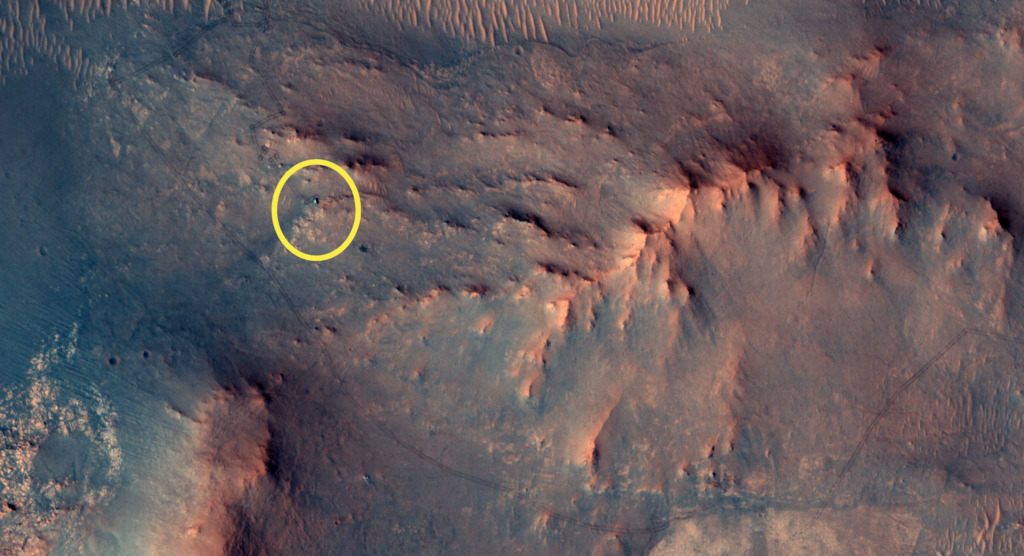
HiRISE Captures Perseverance

NASA’s Perseverance rover appears as a green speck on the Martian surface on June 13, 2026, a day before the robotic explorer marked a distance milestone, having traveled a full marathon (26.2 miles, or 42.195 kilometers) on the Red Planet. Perseverance reached that distance after five years and four months of driving — on the 1,890th Martian day, or sol, of its mission; the previous record holder, NASA’s Opportunity rover, took 11 years and two months to reach the same milestone.

This image was taken by NASA’s Mars Reconnaissance Orbiter (MRO) using its High-Resolution Imaging Science Experiment (HiRISE) camera. The rover’s tracks can be seen tracing the surface. The rover is in an area west of Jezero Crater that the science team is calling “Arbot.”

Credit: NASA Earth Observatory/Lauren Dauphin

Tuesday, 30 June 2026

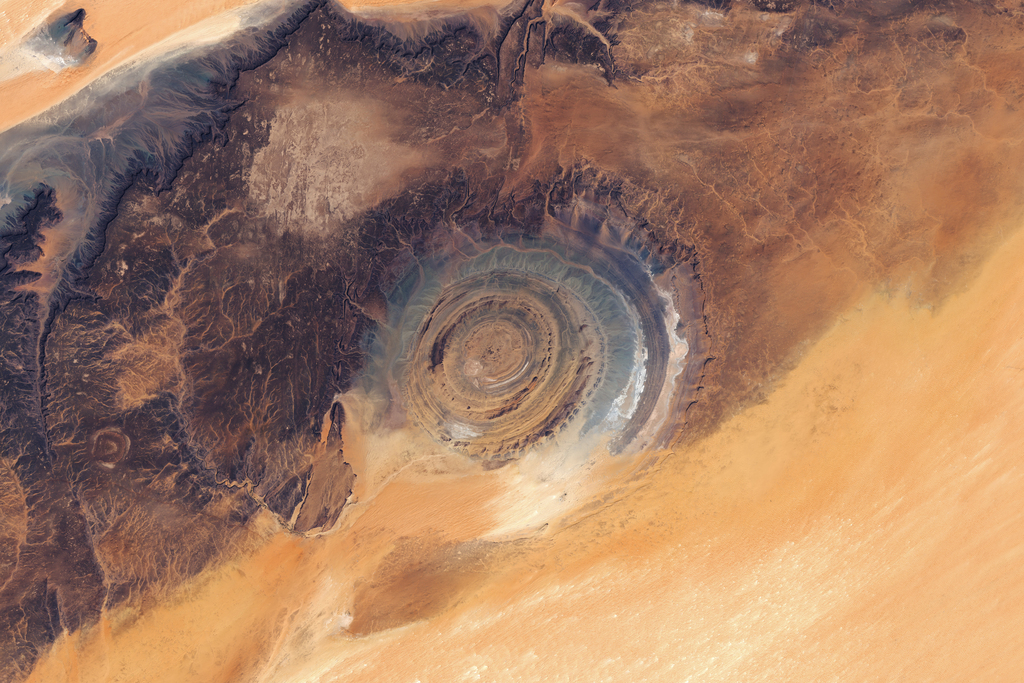
Eyeing the Richat Structure

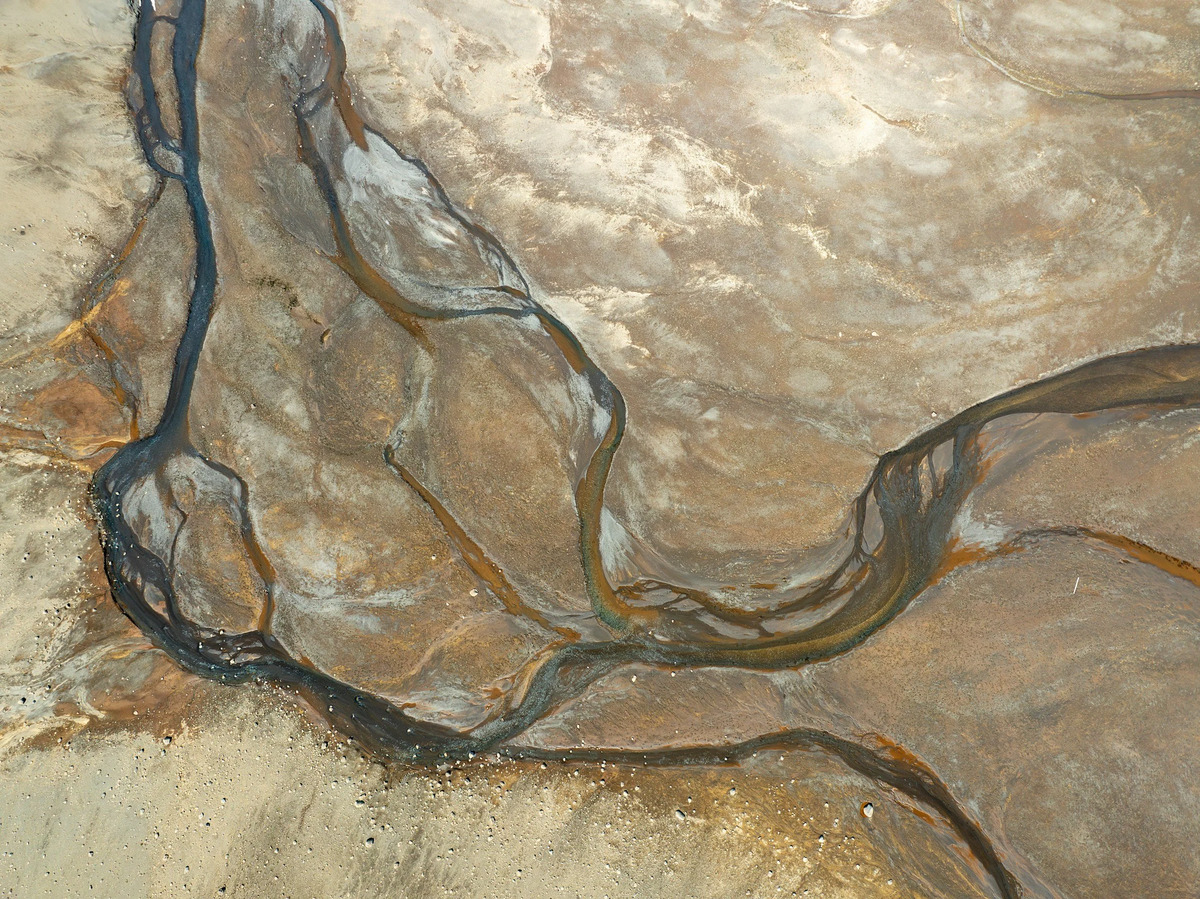
In a remote part of northern Mauritania, on the Adrar Plateau, lies a desert landscape that appears to be shaped primarily by natural forces. The region's most eye-catching feature when seen from above is the Richat Structure—a large geologic formation made of concentric ridges on the eastern side of the plateau.

The 40-kilometer-wide structure was initially thought to be an impact crater. However, researchers later showed that it is actually a deeply eroded geologic dome formed by the uplift of rock above an underground igneous intrusion. Over time, differing erosion rates among rock types in the exposed upper dome led to the development of circular ridges known as cuestas. The orange and gray colors reflect differences in sedimentary and igneous rock types across the structure and the surrounding landscape.

Credit: JAXA

Wednesday, 1 July 2026

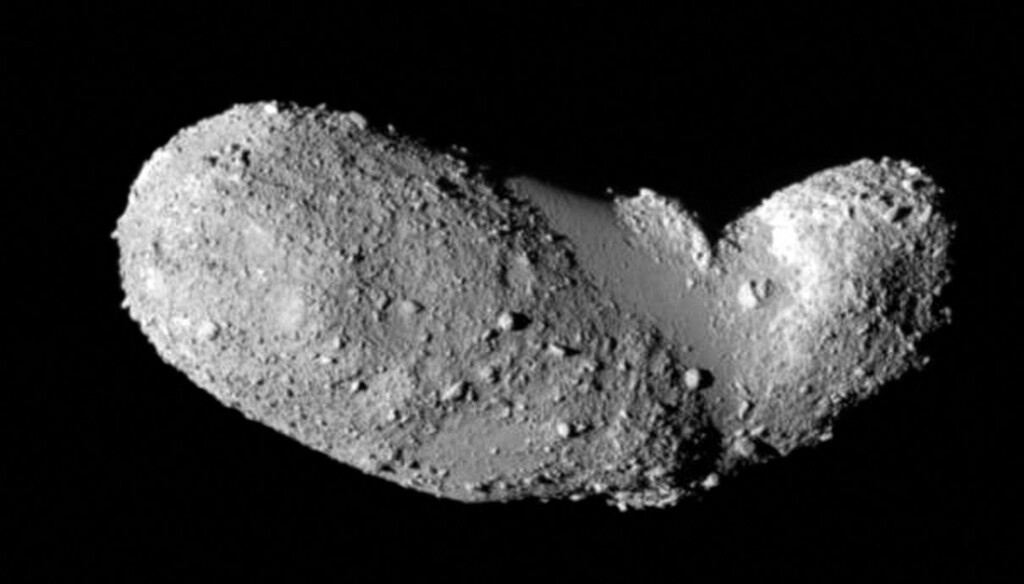
Asteroid (25143) Itokawa

Taken by the Japanese spacecraft Hayabusa during its close approach in 2005, this very detailed view shows the strange peanut-shaped asteroid Itokawa. The 500-meter "rubble pile" asteroid features distinct smooth surface regions, such as the MUSES Sea. These areas are formed by seismic jostling that causes size segregation and erodes impact craters. By making exquisitely precise timing measurements using ESO’s New Technology Telescope, a team of astronomers has found that different parts of this asteroid have different densities.

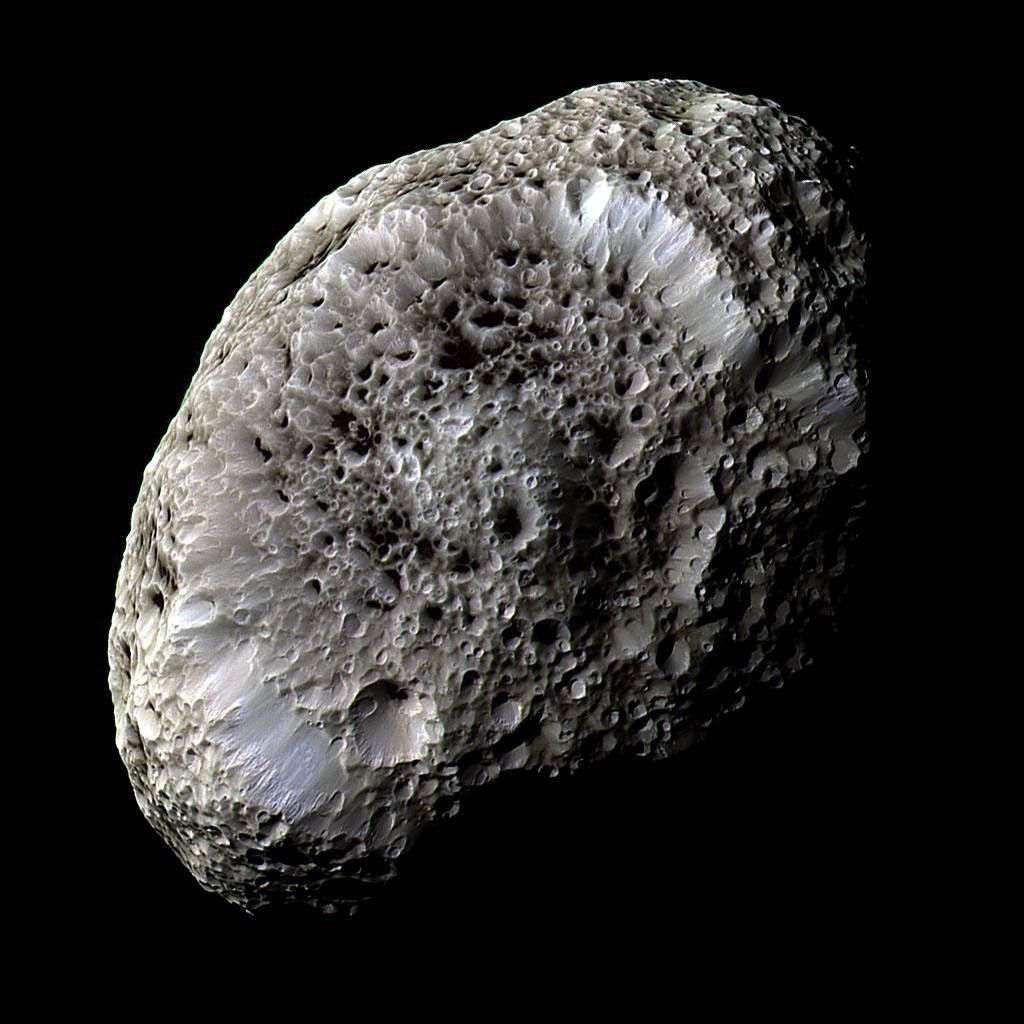
Credit: NASA/JPL-Caltech/Space Science Institute/CICLOPS

Thursday, 2 July 2026

Hyperion

This stunning false-color view of Saturn's moon Hyperion reveals crisp details across the strange, tumbling moon's surface. Color differences could indicate variations in the composition of surface materials. The view was obtained during Cassini's close flyby on Sept. 26, 2005.

Hyperion has a notably reddish tint when viewed in natural color. The red color was toned down in this false-color view, and the other hues were enhanced, in order to make more subtle color variations across Hyperion's surface more apparent.

Cassini scientists think that Hyperion’s unusual appearance can be attributed to its unusually low density for such a large object, which gives it weak surface gravity and high porosity. These characteristics help preserve the original shapes of Hyperion’s craters by limiting the amount of impact ejecta coating the moon’s surface. Impactors tend to make craters by compressing the surface material, rather than blasting it out. Further, Hyperion’s weak gravity and correspondingly low escape velocity mean that what little ejecta is produced has a good chance of escaping the moon altogether.

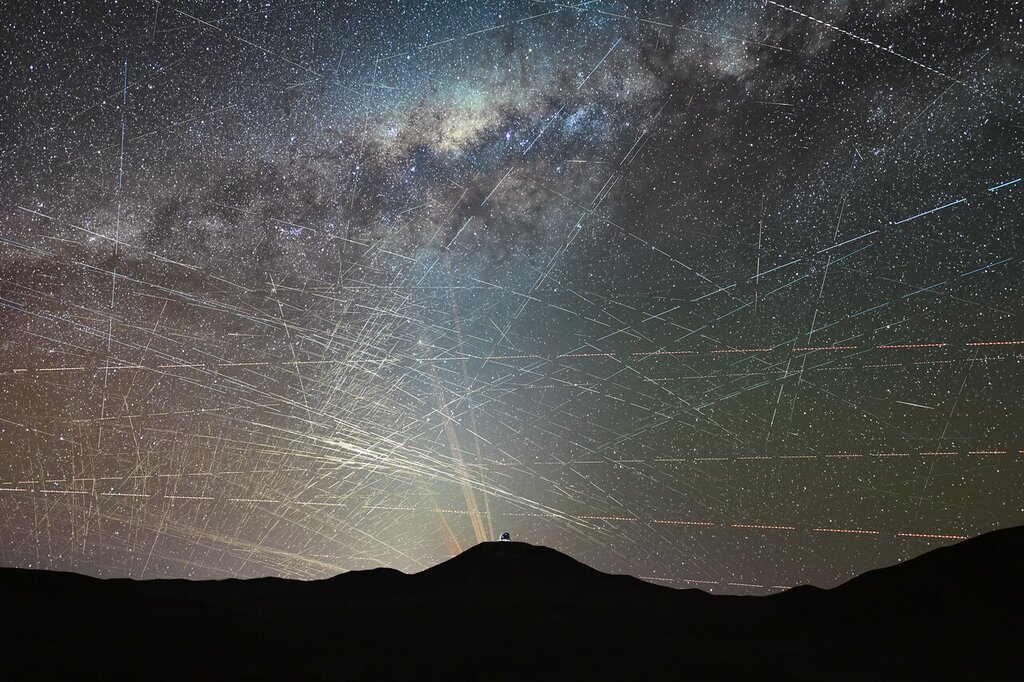
Credit: F. Kamphues, ESO/M. Kornmesser

Friday, 12 December 2025

Earth from Tianwen-2

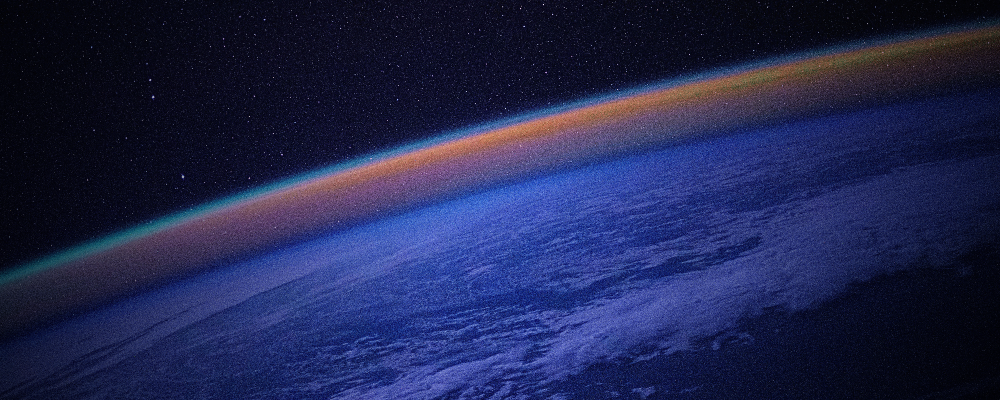
This image, released by the China National Space Administration (CNSA), shows a view of the Earth captured by the Tianwen-2 probe on May 30, 2025, and post-processed by scientific researchers.

The CNSA said that the narrow-field-of-view navigation sensor equipped on the probe recently captured the images of Earth and the moon, demonstrating good functional performance.

The images released include a photograph of Earth obtained by Tianwen-2 when it was approximately 590,000 kilometers away from the planet.

News

Related News

Featured Image
Jul 1, 2026
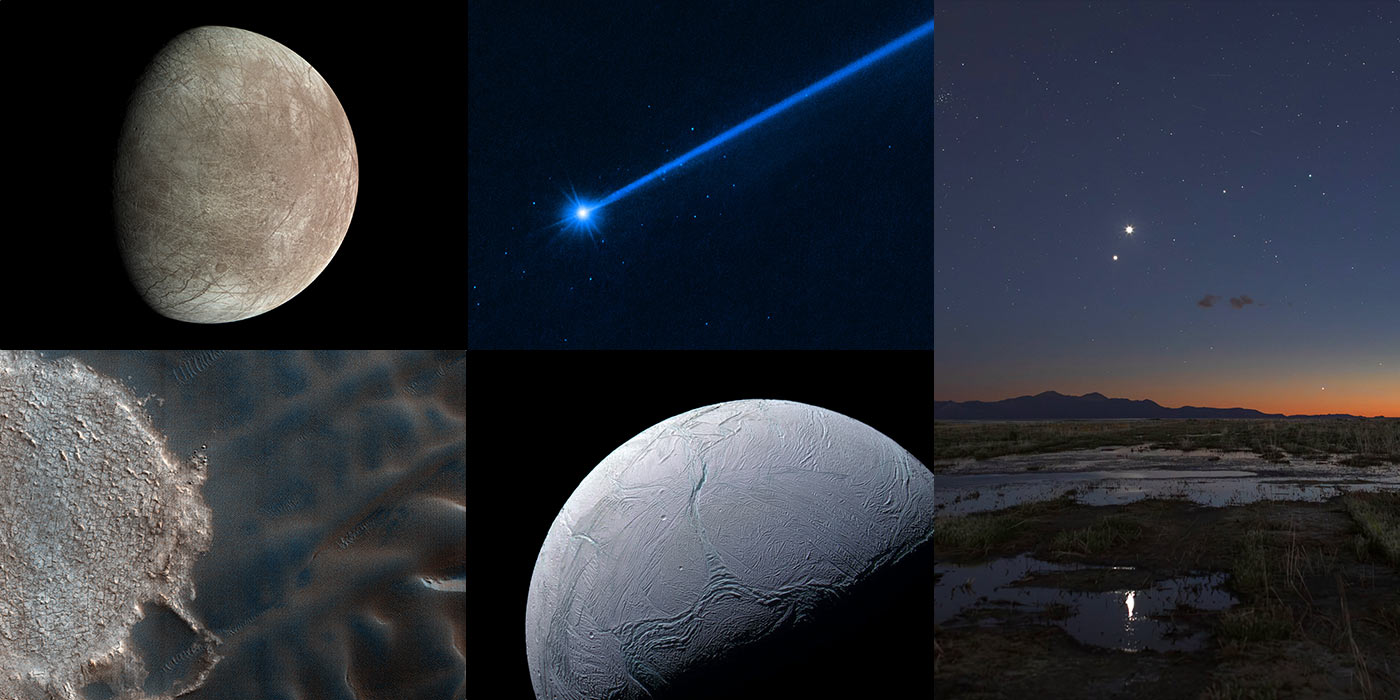
Planetary Picture of the Day - Week of June 22, 2026
From asteroid fragments drifting through space to icy moons orbiting distant planets, this collection highlights the dynamic and ever-changing nature of our solar system. The images capture everything from a beautiful planetary conjunction in Earth’s skies to active wind-shaped landscapes on Mars, revealing how impacts, gravity, and weather continue to shape worlds both near and far. #PPOD
Featured Image
Jun 24, 2026
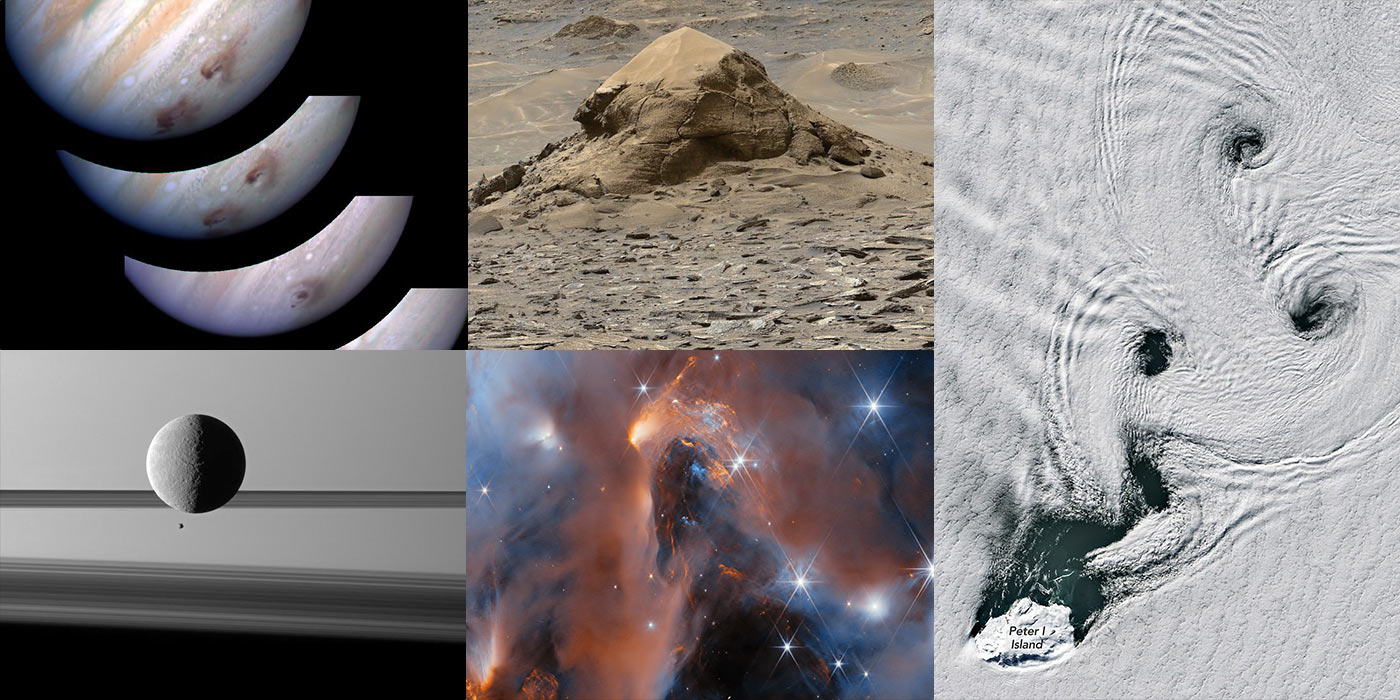
Planetary Picture of the Day - Week of June 15, 2026
This collection showcases a solar system in motion, from Saturn’s moons playing tricks on perspective and a comet’s dramatic collision with Jupiter to winds swirling across Earth’s southern oceans and ancient landscapes on Mars. Together, these images reveal the forces that shape worlds over time—erosion, impacts, atmospheric currents, and planetary evolution—while capturing moments of beauty, violence, and wonder across the cosmos. #PPOD
Featured Image
Jun 16, 2026
Planetary Picture of the Day - Week of June 8, 2026
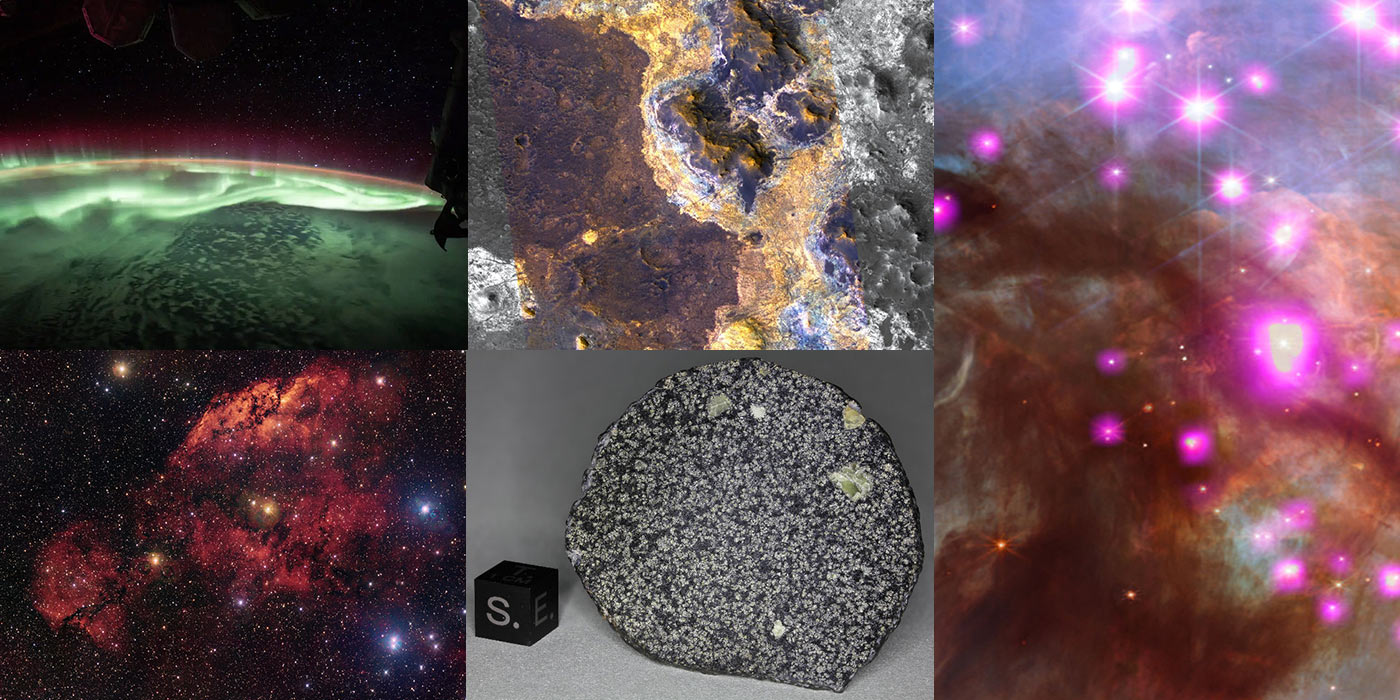
Ancient Martian landscapes, glowing auroras, and stellar nurseries come together in this week’s PPOD collection, highlighting worlds and phenomena shaped by billions of years of cosmic history. From a rare meteorite born in the earliest days of the solar system to colorful nebulae where new stars are forming today, these images offer a remarkable look at both our origins and the ongoing evolution of the universe. #PPOD
Featured Image
Jun 10, 2026
Planetary Picture of the Day - Week of June 1, 2026
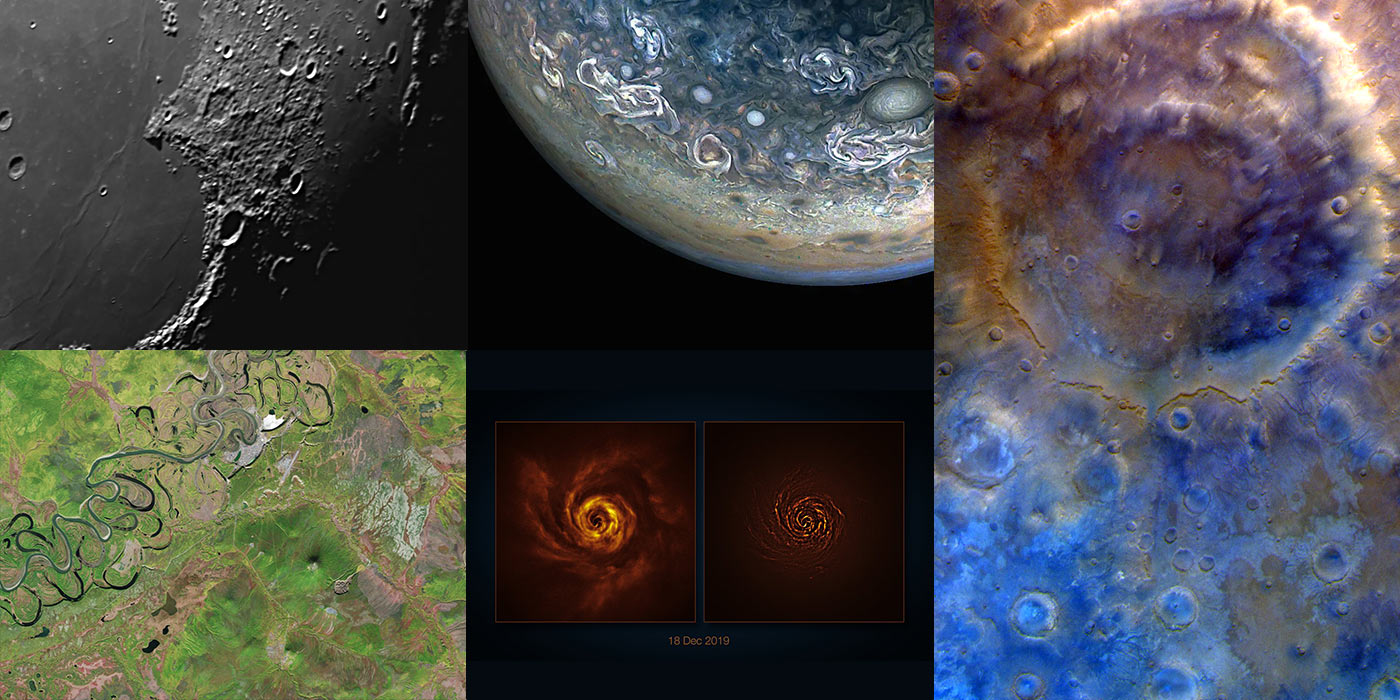
Our solar system contains dynamic worlds near and far, and our cameras capture amazing images of them every day, from a close-up flyby of Mars and the Moon’s beautiful Bay of Rainbows to the swirling storms of Jupiter. We also explore landscapes shaped by change, including Siberia’s expanding Batagaika mega-slump and a young star’s planet-forming disk, offering a glimpse of both Earth’s evolving surface and the processes that build new worlds. #PPOD
Featured Image
Jun 3, 2026
Planetary Picture of the Day - Week of May 25, 2026
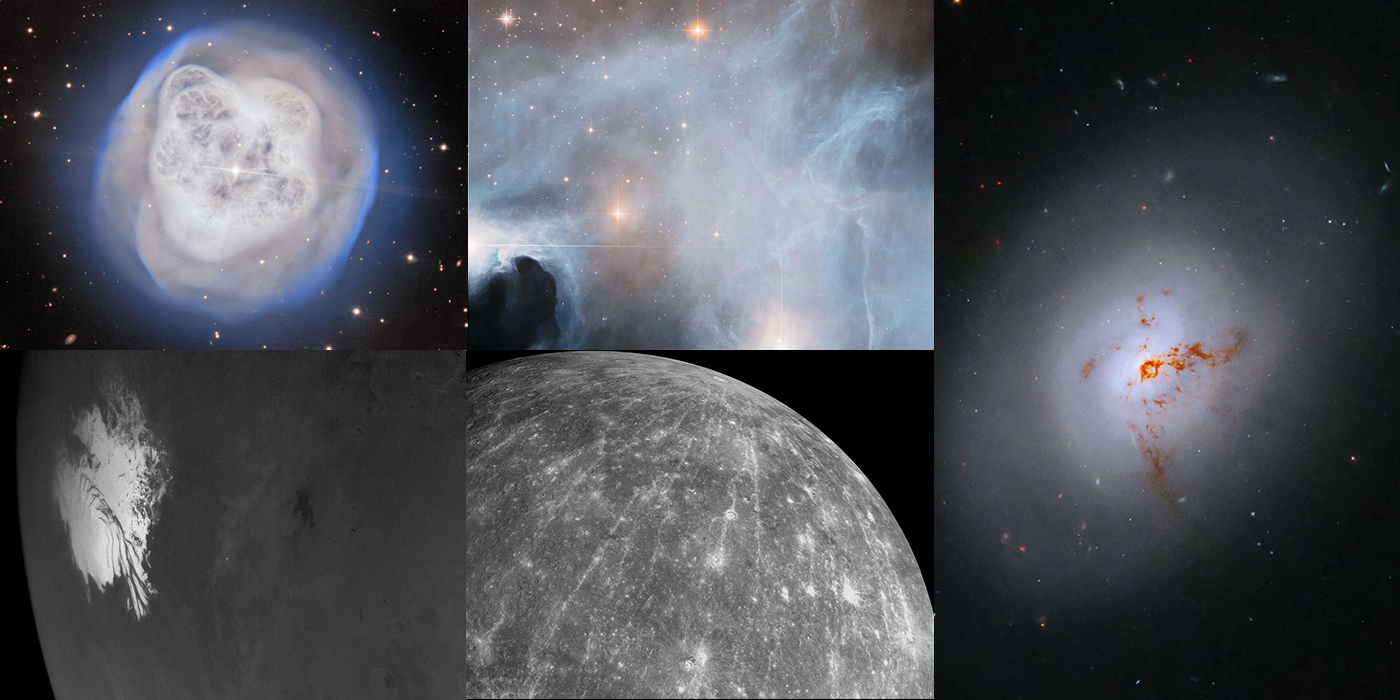
This week's images journeyed from the shimmering Crystal Ball Nebula to the icy south pole of Mars, highlighting beauty and change across our solar system and beyond. The collection also captured stars being born in a ghostly nebula, the dramatic rays of Mercury’s Hokusai Crater, and a distant galaxy caught in transition—offering a striking look at cosmic evolution across space and time. #PPOD
Featured Image
May 27, 2026
Planetary Picture of the Day - Week of May 18, 2026
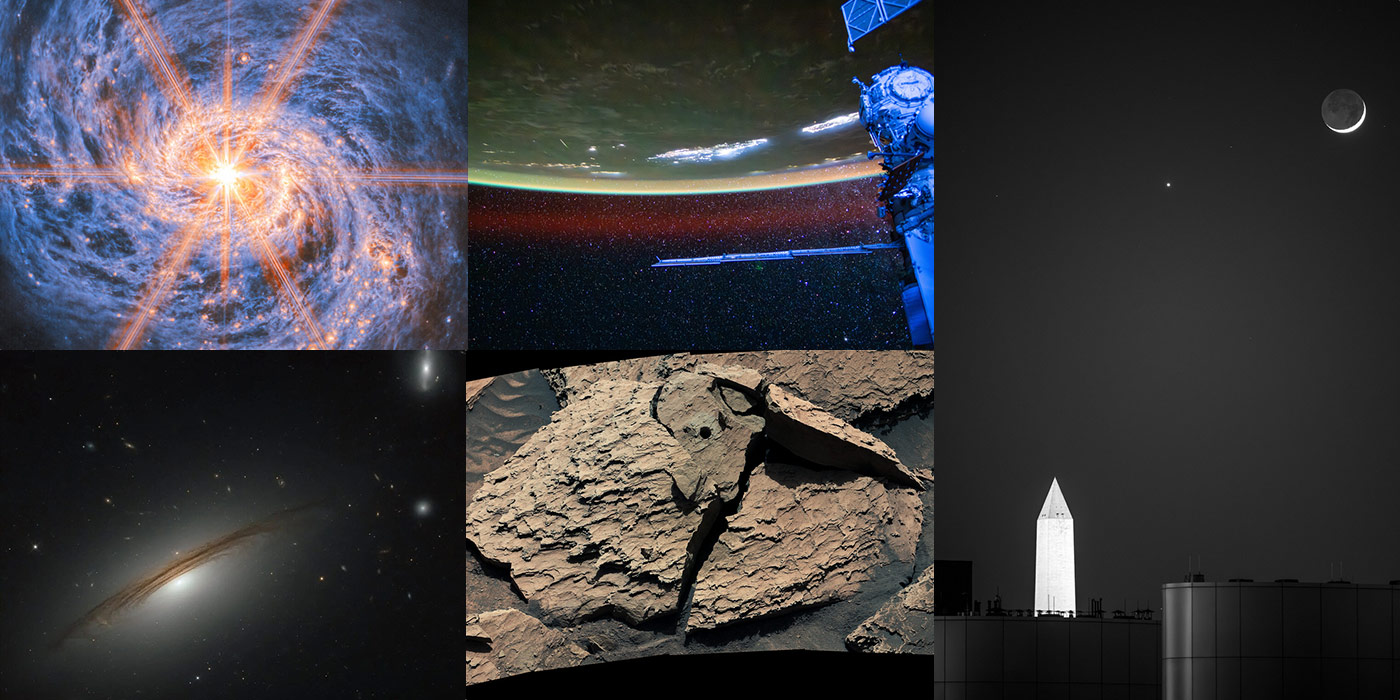
Moments both fleeting and immense—from a Moon–Venus conjunction over Washington, D.C. to a meteor streaking through Earth’s atmosphere as seen from the International Space Station. These images also spanned the cosmic scale, featuring a massive hybrid galaxy, a stubborn rock sampled by the Curiosity rover on Mars, and a stunning mid-infrared view of Messier 77 from JWST. #PPOD
Research

Related Projects

Featured Image
SkyMapper • SETI • Citizen Science • Astronomy
SkyMapper: Expanding Access to Real-time Astronomy Through a Global Astronomical Network
SkyMapper and the SETI Institute are connecting educators, students and the public to live astronomical observations through a distributed astronomical network. #SkyMapper #SETI #Citizen Science #Astronomy
Featured Image
VPL
Virtual Planetary Laboratory
How can we best assess whether an exoplanet supports life? #VPL
Featured Image
Discovery and Futures Lab
What happens if life beyond Earth is discovered? The Discovery and Futures Lab at the SETI Institute fosters novel and anticipatory research at the intersection of science, society, our planet, and the search for life beyond Earth.  #Discovery and Futures Lab
Support Us

Support the
SETI Institute

Scientists are getting closer in their search for life beyond earth. But with limited federal funding for the search for extraterrestrial intelligence, supporters are the reason cutting-edge scientists can keep their eyes on the sky.