




Monday, 15 June 2026
Big and Small Before Rings
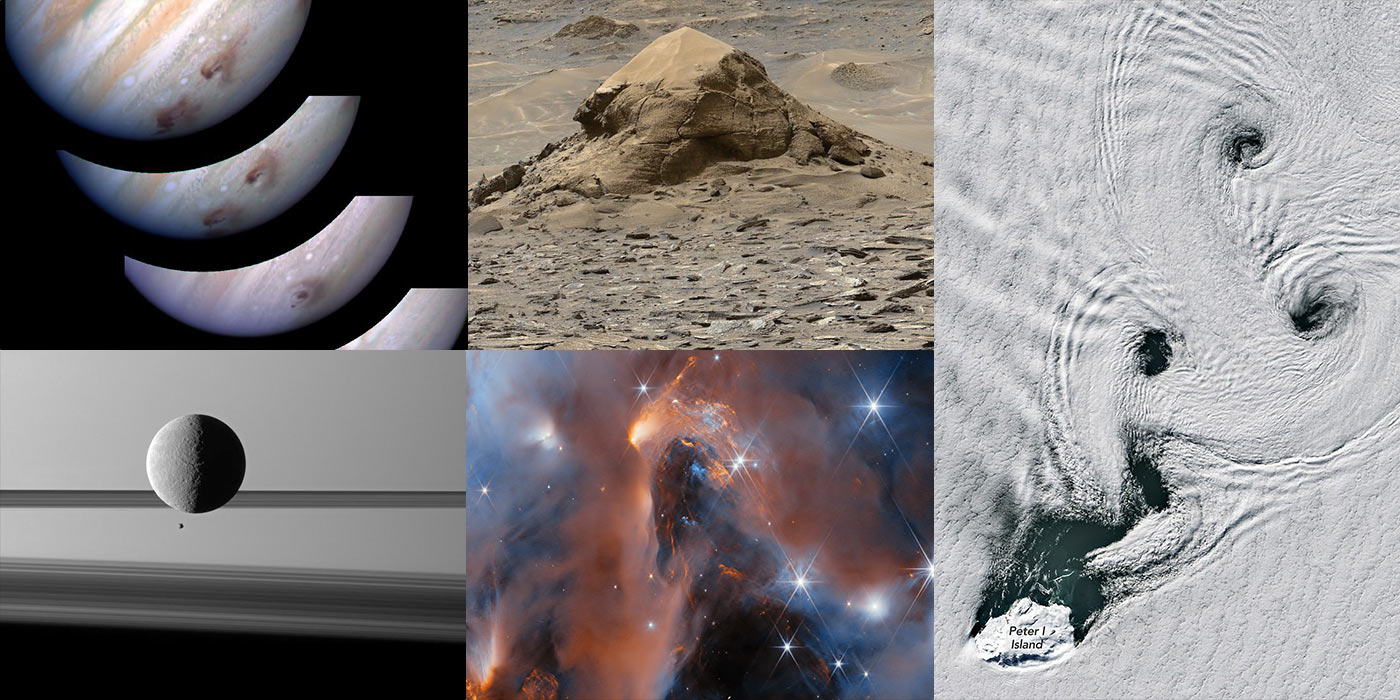
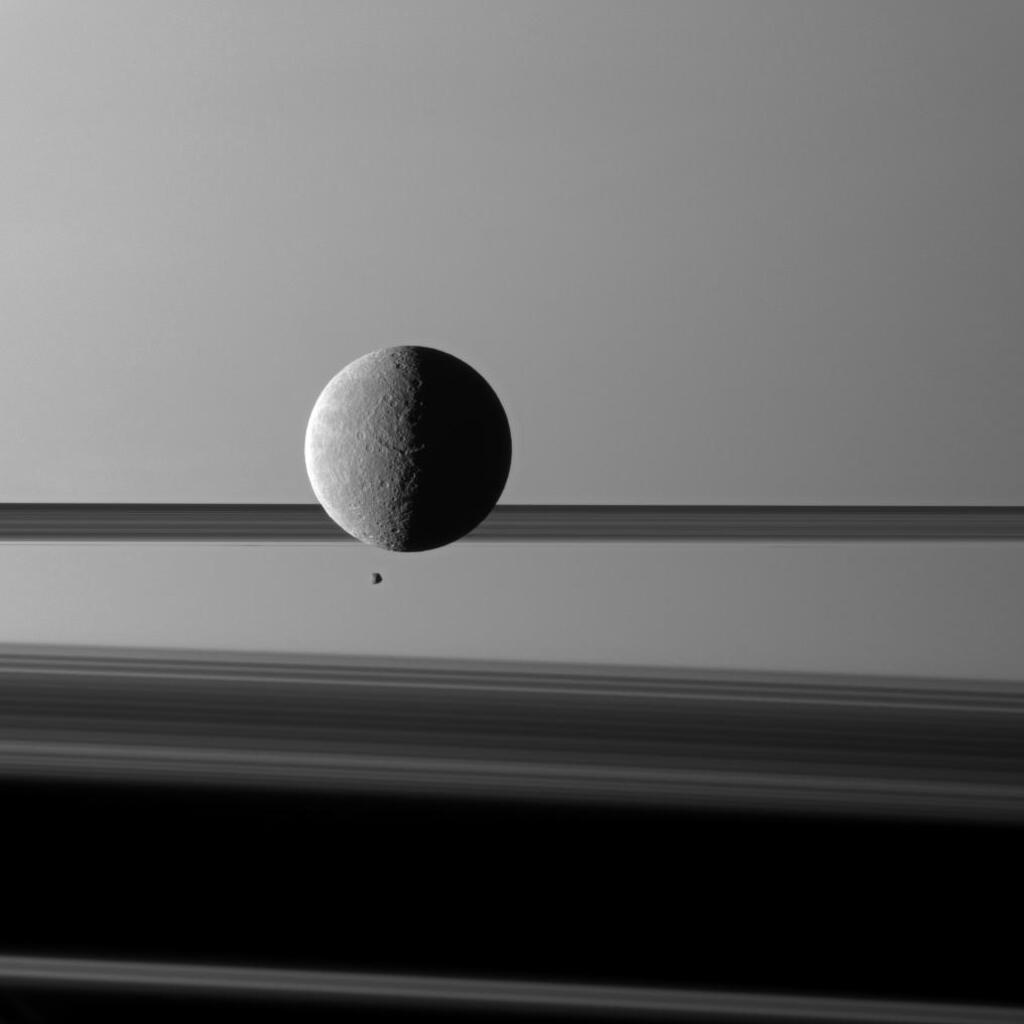
At first glance, it looks as though Saturn's icy moon Rhea towers over tiny Epimetheus against a breathtaking backdrop of rings and cloud tops. In reality, the two worlds are separated by hundreds of thousands of kilometers, creating a celestial illusion captured by the Cassini spacecraft in 2010.
Tuesday, 16 June 2026
A Sea of Spinning Clouds
Over the Southern Ocean surrounding Antarctica, winds can whip around the globe relatively unimpeded by land. Intrepid sailors termed these southern latitudes the Roaring Forties, Furious Fifties, and Screaming Sixties on account of the strong prevailing winds.
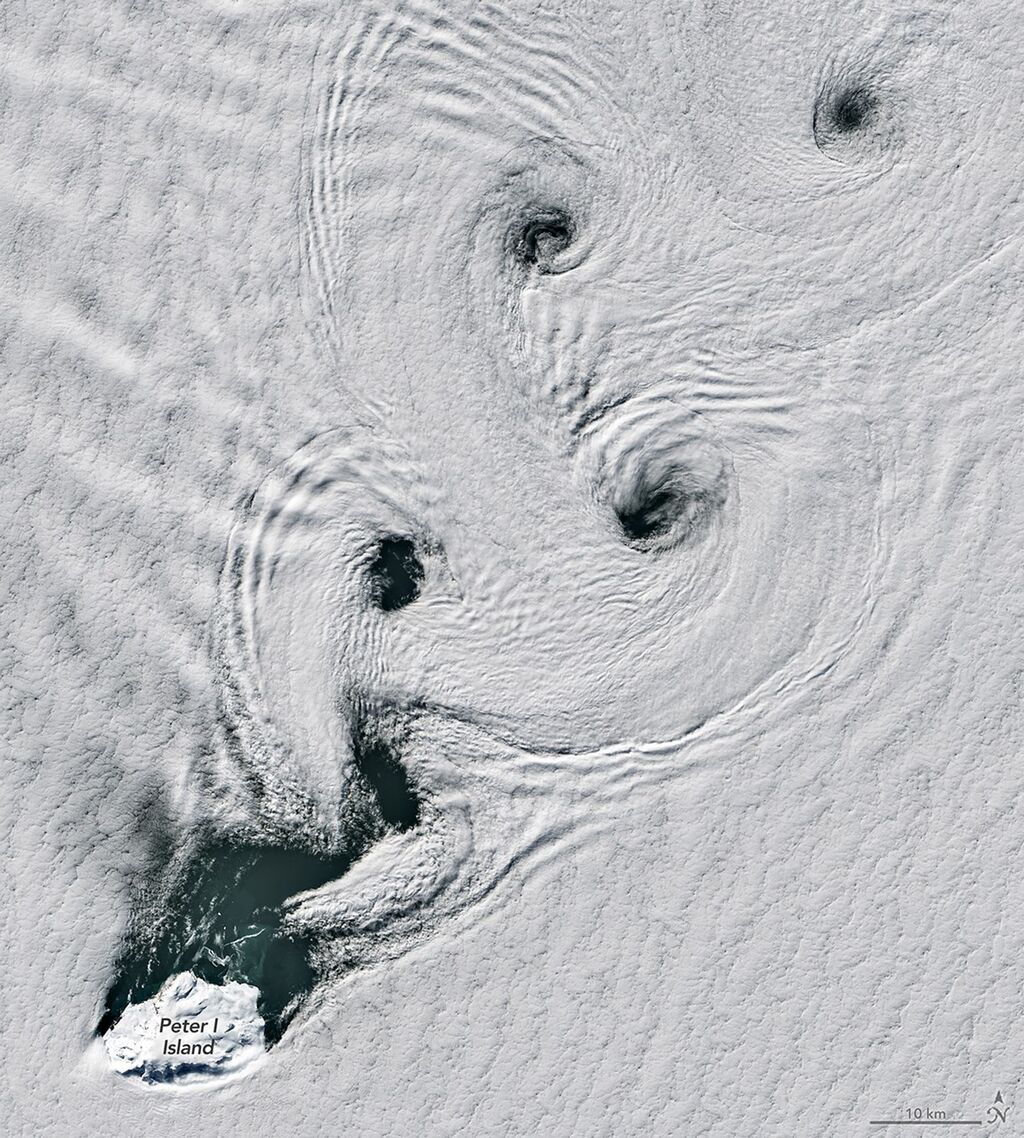
When those winds encounter a barrier like an island, the disruption in airflow can be beautiful. One impediment, shown here, is remote Peter I Island. This ice-cloaked volcano lies at 68.86 degrees south latitude in the Bellingshausen Sea, some 400 kilometers off the coast of West Antarctica and more than 1,800 kilometers from Cape Horn, Chile.
On an austral summer day in 2026, the Landsat 8 satellite captured this image of von Kármán vortex streets downwind of the island. These counterrotating spirals form as flowing air is deflected, slows, and spins into eddies.
Wednesday, 17 June 2026
Mira Flores
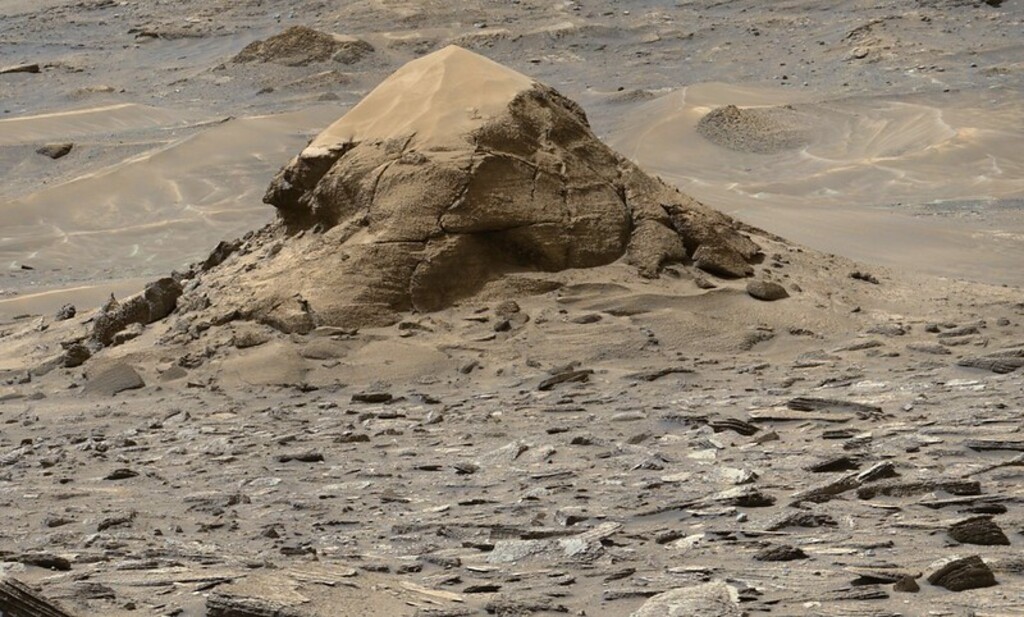
View of “Mira Flores,” a small erosional outlier on Mars imaged by NASA’s Curiosity rover while driving south toward the Yardang Unit on Mount Sharp, Gale Crater. The butte exposes layered sedimentary bedrock partly covered by wind-blown sand, a small but striking remnant of Mars’ long history of deposition and erosion. (And as Nathalie Cabrol said: Look! A turtle!)
Thursday, 18 June 2026
Comet Fragment Slams into Jupiter
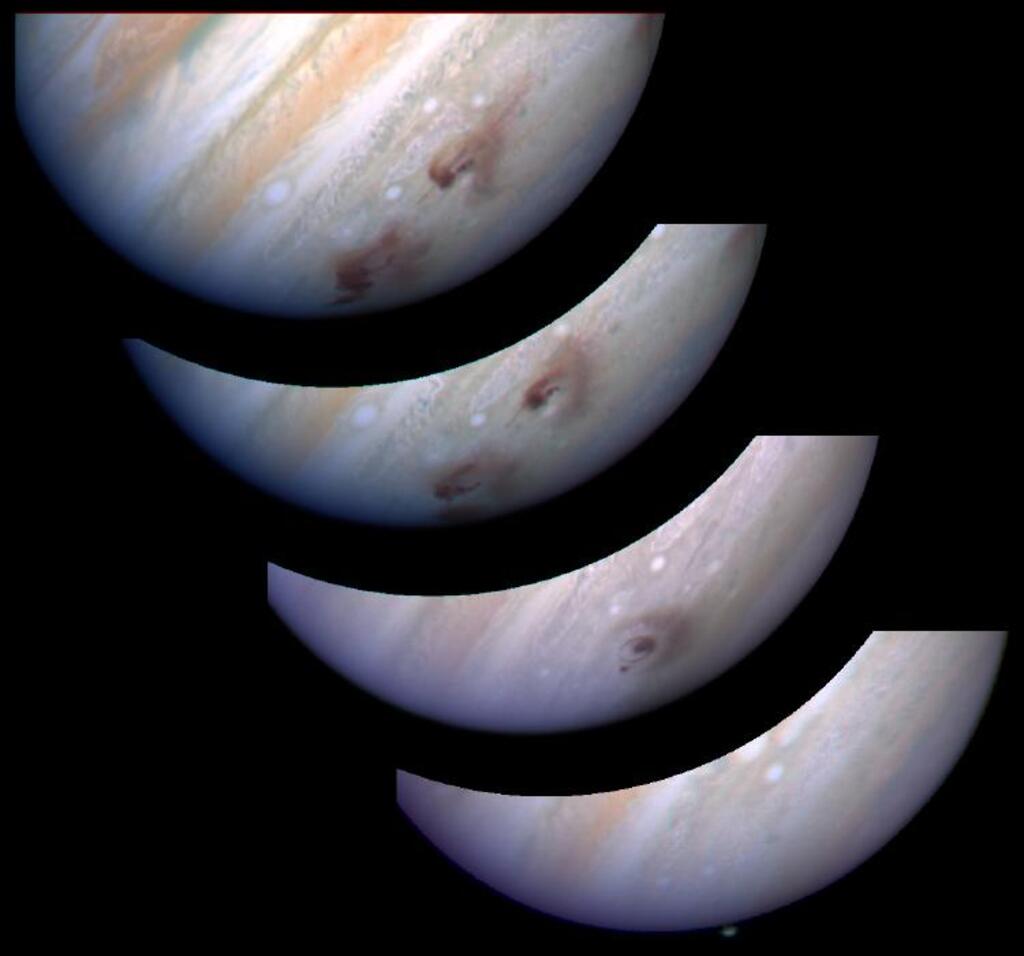
In July 1994, 21 chunks of comet Shoemaker-Levy 9, which had broken apart a year earlier, slammed into Jupiter. The Hubble telescope recorded this spectacular event.
These images, beginning at the lower right, chronicle the results of one such collision. Hubble began snapping pictures of the impact area just five minutes after the collision. Nothing can be seen. Less than two hours later, a plume of dark debris is visible [bull's-eye pattern, image second from bottom]. Two impact sites are visible in the next picture, taken a few days later. The final snapshot shows three impact sites, the newest near the bull's-eye-shaped region.
This event remains one of the most profound, generation-defining astronomical events ever witnessed, beautifully cataloged by Hubble, revealing the volatile, ever-changing nature of our solar system.
Friday, 19 June 2026
A Starry View
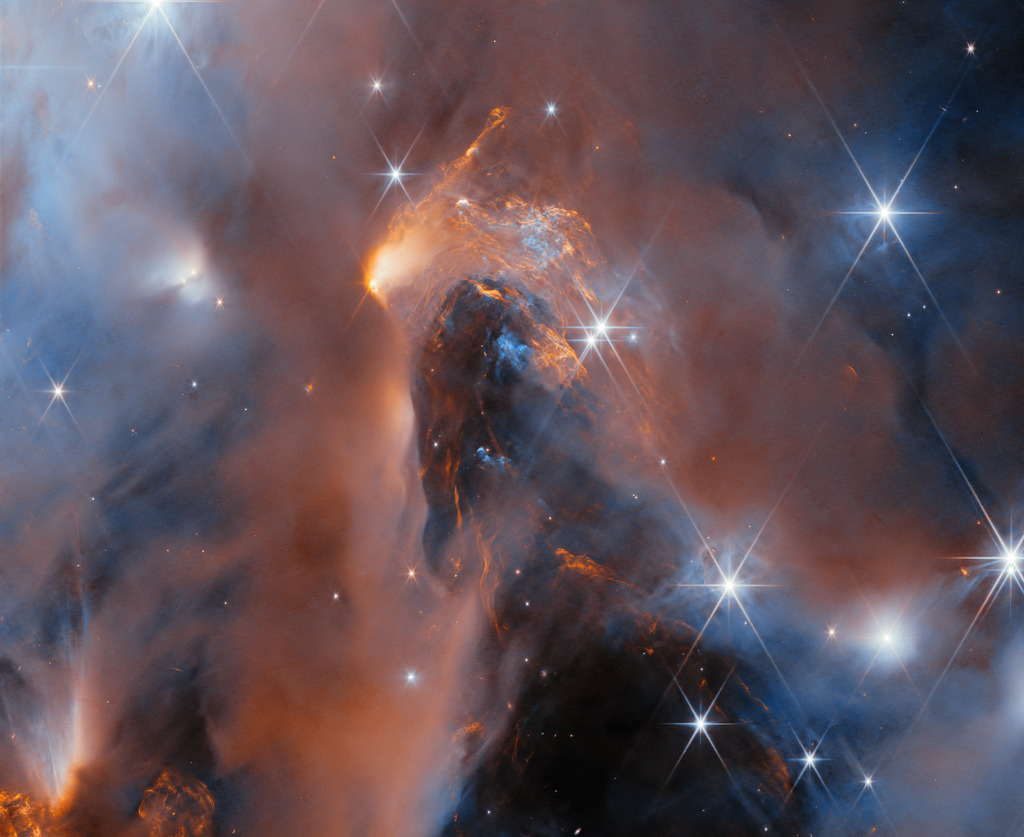
NASA’s JWST has infrared vision that lets us peer through the dusty veil of the nearby star-forming region NGC 1333. We can see planetary mass objects, newborn stars, and brown dwarfs; some of the faintest ‘stars’ in this mosaic image are in fact newly born free-floating brown dwarfs with masses comparable to those of giant planets. The images were captured as part of a JWST observation program to survey a large portion of NGC 1333. These data constitute the first deep spectroscopic survey of the young cluster.
News
Related News
Planetary Picture of the Day - Week of June 8, 2026
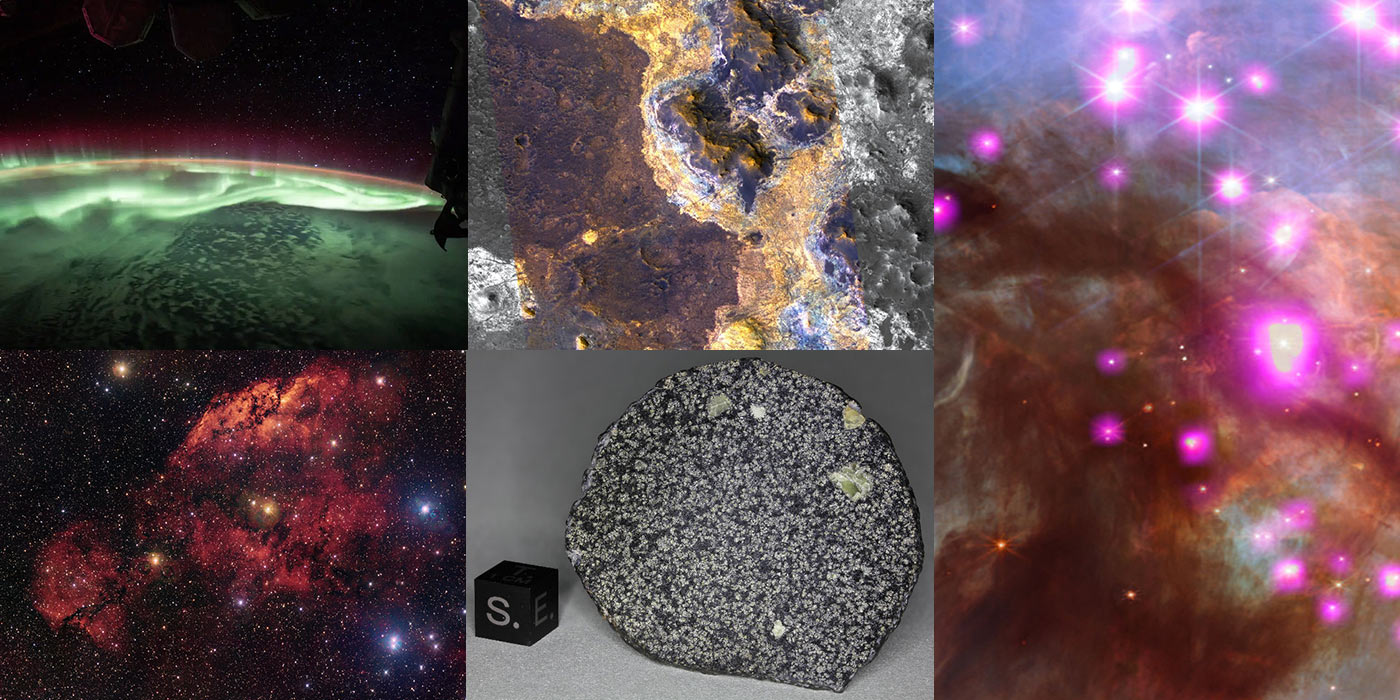
Ancient Martian landscapes, glowing auroras, and stellar nurseries come together in this week’s PPOD collection, highlighting worlds and phenomena shaped by billions of years of cosmic history. From a rare meteorite born in the earliest days of the solar system to colorful nebulae where new stars are forming today, these images offer a remarkable look at both our origins and the ongoing evolution of the universe. #PPOD
Planetary Picture of the Day - Week of June 1, 2026
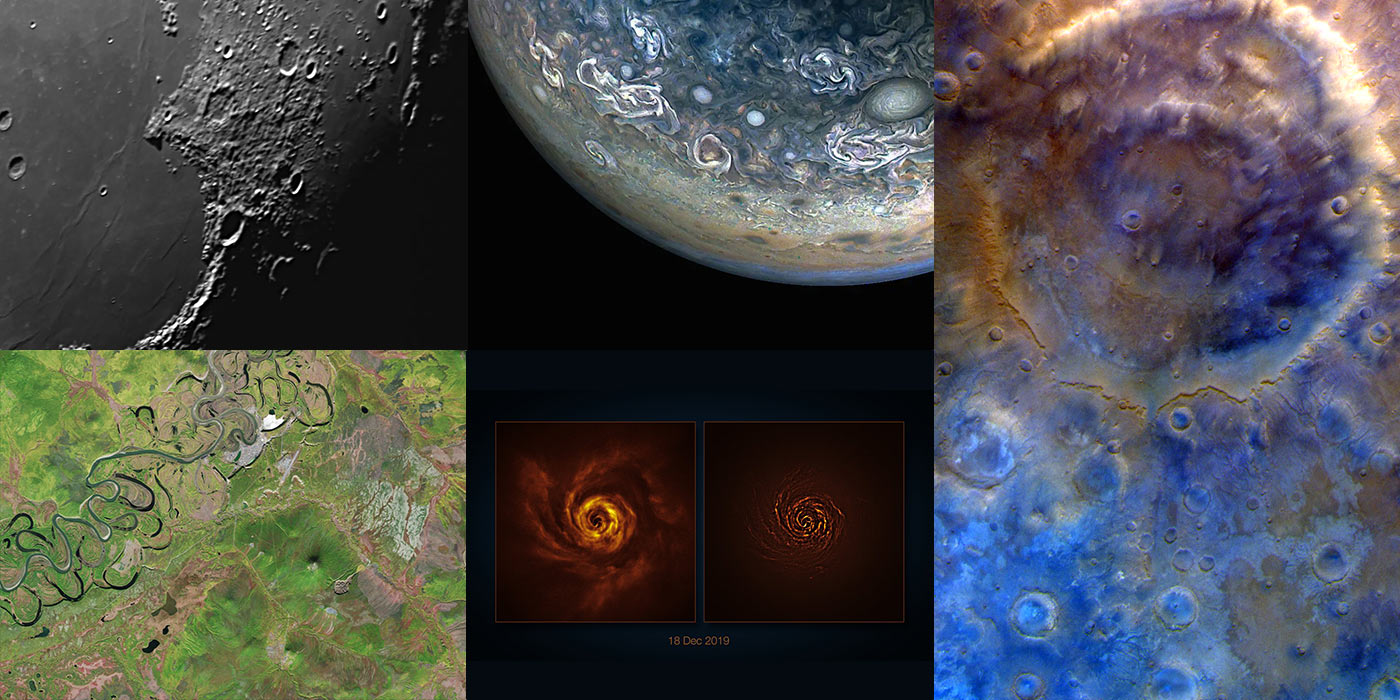
Our solar system contains dynamic worlds near and far, and our cameras capture amazing images of them every day, from a close-up flyby of Mars and the Moon’s beautiful Bay of Rainbows to the swirling storms of Jupiter. We also explore landscapes shaped by change, including Siberia’s expanding Batagaika mega-slump and a young star’s planet-forming disk, offering a glimpse of both Earth’s evolving surface and the processes that build new worlds. #PPOD
Planetary Picture of the Day - Week of May 25, 2026
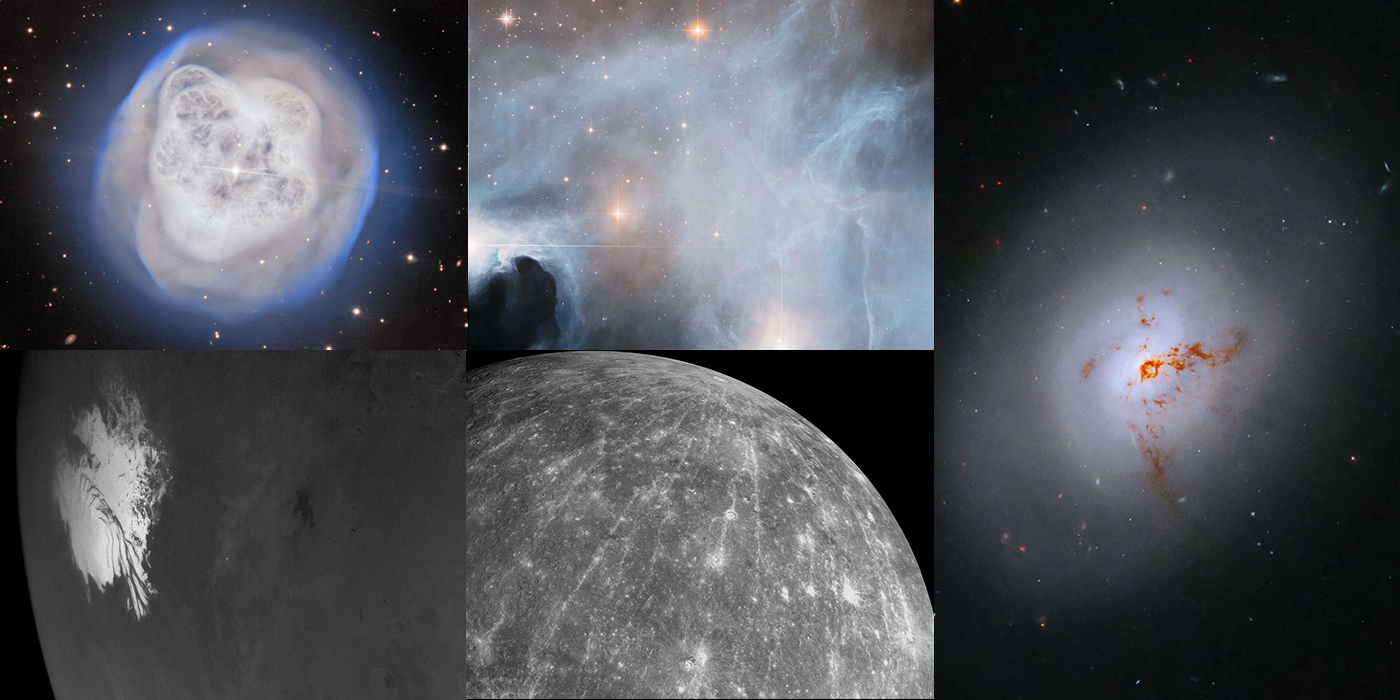
This week's images journeyed from the shimmering Crystal Ball Nebula to the icy south pole of Mars, highlighting beauty and change across our solar system and beyond. The collection also captured stars being born in a ghostly nebula, the dramatic rays of Mercury’s Hokusai Crater, and a distant galaxy caught in transition—offering a striking look at cosmic evolution across space and time. #PPOD
Planetary Picture of the Day - Week of May 18, 2026
Moments both fleeting and immense—from a Moon–Venus conjunction over Washington, D.C. to a meteor streaking through Earth’s atmosphere as seen from the International Space Station. These images also spanned the cosmic scale, featuring a massive hybrid galaxy, a stubborn rock sampled by the Curiosity rover on Mars, and a stunning mid-infrared view of Messier 77 from JWST. #PPOD
Planetary Picture of the Day - Week of May 11, 2026
Where the round things are: From spherical boulders and circular radio telescope dishes to the curve of our blue marble, distant Mars, and far-away spiral galaxies, the universe comes back to circles. #PPOD
Planetary Picture of the Day - Week of May 04, 2026
From blooming tulip fields in the Netherlands to the glowing shell of the Bubble Nebula, last week’s PPOD images celebrated color and contrast across Earth, the Moon, and deep space. The collection also highlighted exploration and change—from unusual rocks studied by Perseverance rover on Mars to dramatic lunar shadows captured by Artemis II and the soft glow of May’s Flower Moon. #PPODResearch
Related Projects
SkyMapper: Expanding Access to Real-time Astronomy Through a Global Astronomical Network
SkyMapper and the SETI Institute are connecting educators, students and the public to live astronomical observations through a distributed astronomical network. #SkyMapper #SETI #Citizen Science #Astronomy
Virtual Planetary Laboratory
How can we best assess whether an exoplanet supports life? #VPL
Discovery and Futures Lab
What happens if life beyond Earth is discovered? The Discovery and Futures Lab at the SETI Institute fosters novel and anticipatory research at the intersection of science, society, our planet, and the search for life beyond Earth. #Discovery and Futures LabSupport the
SETI Institute
Scientists are getting closer in their search for life beyond earth. But with limited federal funding for the search for extraterrestrial intelligence, supporters are the reason cutting-edge scientists can keep their eyes on the sky.