




Monday, 22 June 2026
Boulders Escaping Asteroid Dimorphos
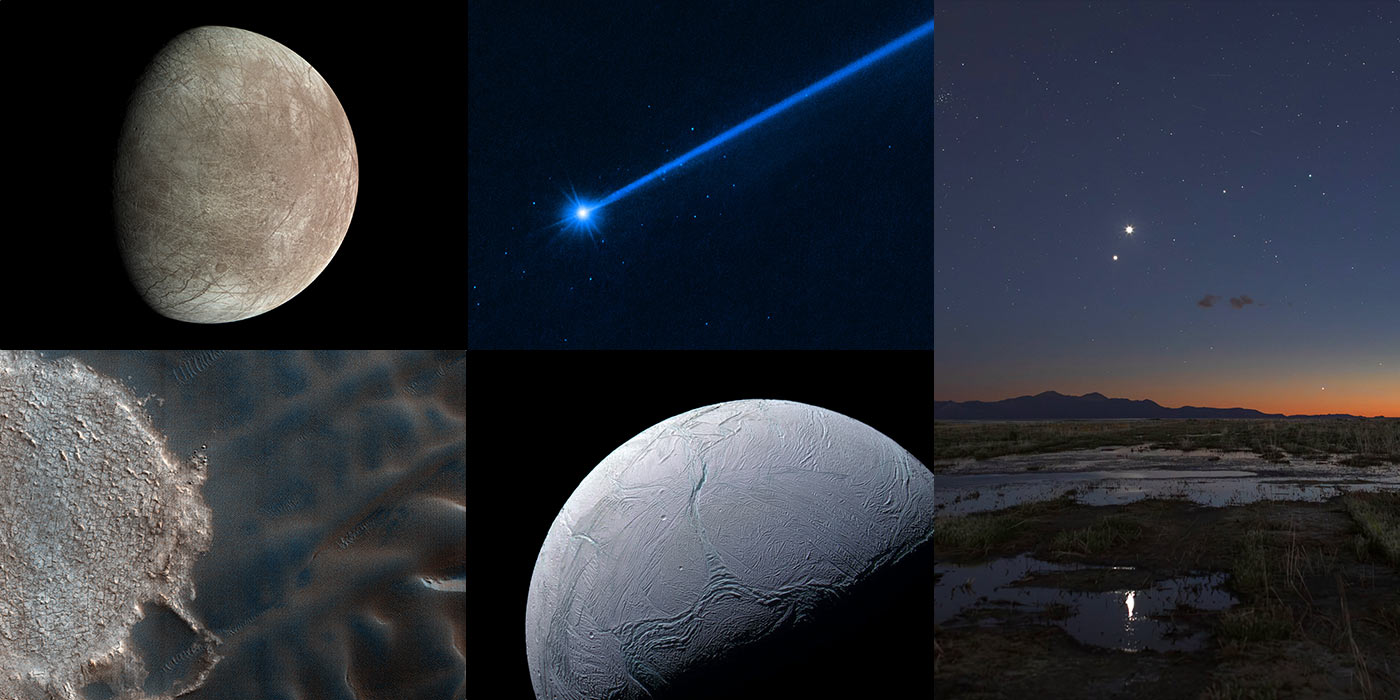
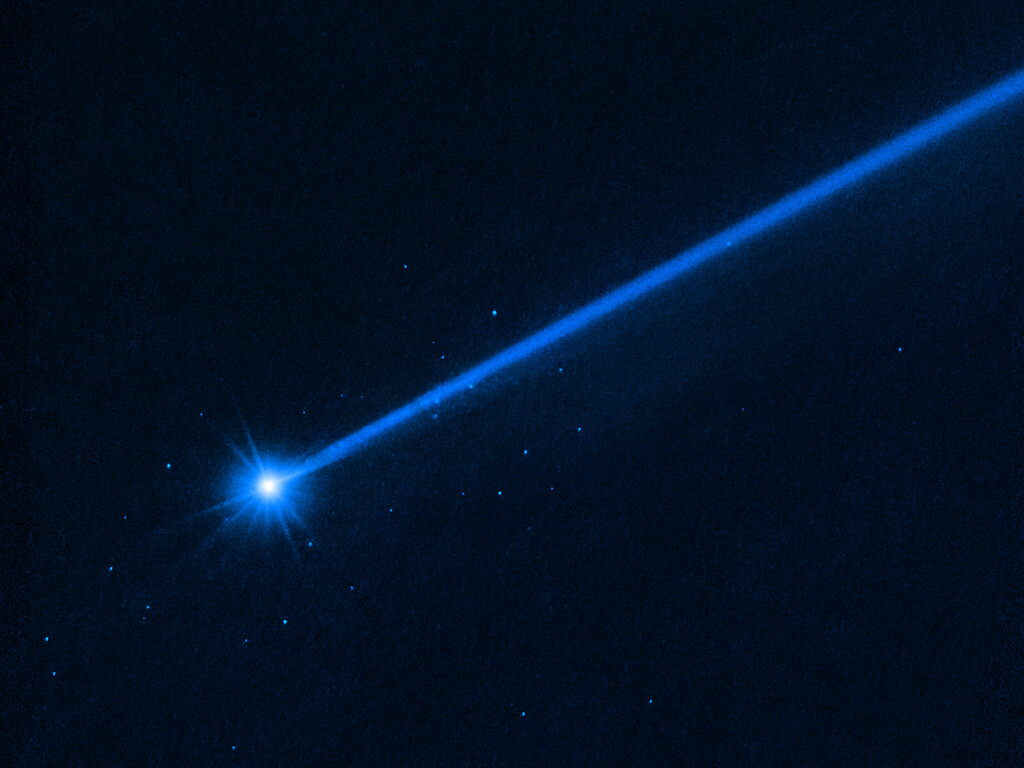
This NASA/ESA Hubble Space Telescope image of the asteroid Dimorphos was taken on 19 December 2022, nearly four months after the asteroid was impacted by NASA’s DART (Double Asteroid Redirection Test) mission. Hubble’s sensitivity reveals a few dozen boulders knocked off the asteroid by the force of the collision. These are among the faintest objects Hubble has ever photographed inside the Solar System.
The ejected boulders range in size from 1 meter to 6.7 meters across, based on Hubble photometry. They are drifting away from the asteroid at around a kilometer per hour. The discovery yields invaluable insights into the behavior of a small asteroid when struck by a projectile, altering its trajectory.
Tuesday, 23 June 2026
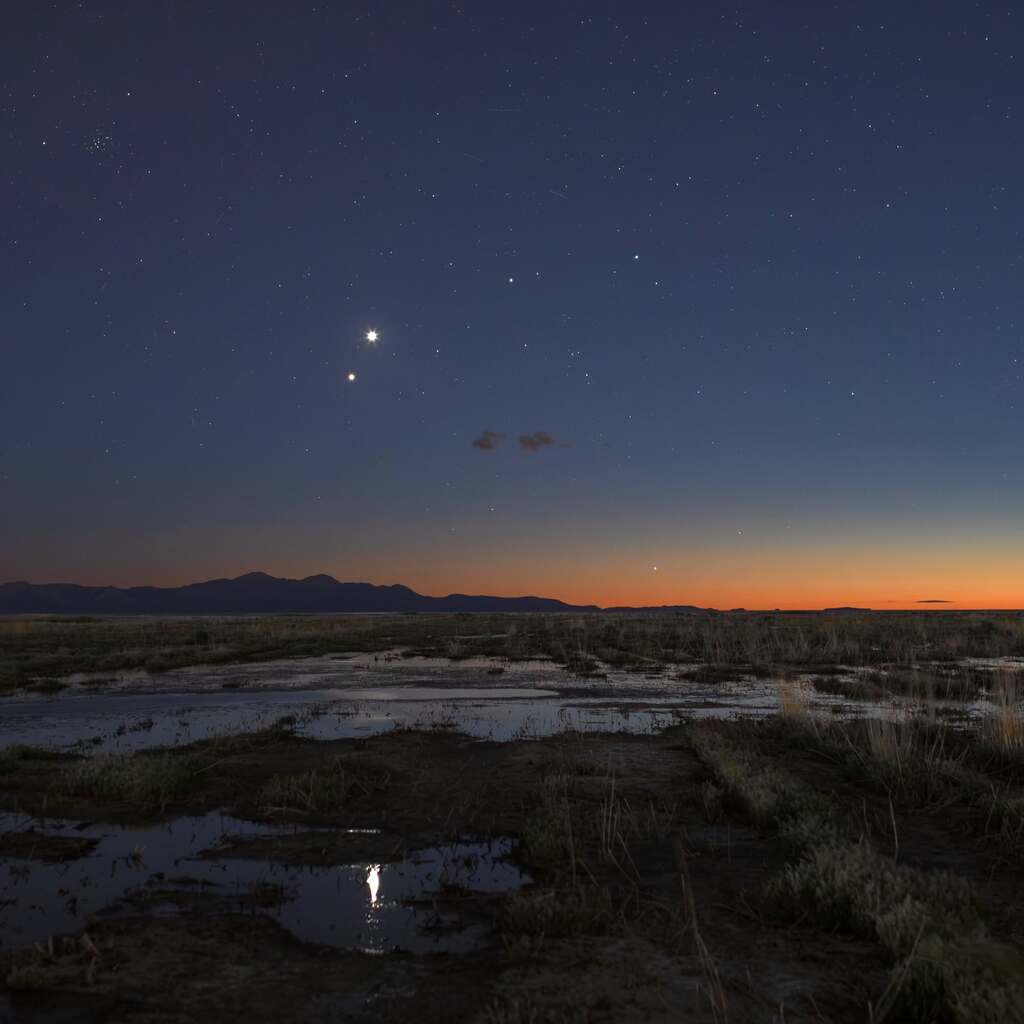
Jupiter and Venus Conjunction
Did you miss the conjunction of Jupiter and Venus earlier this month? In case you did, check out this view from the Great Salt Lake in Utah on June 9th, and see if you can spot Mercury near the horizon as well.
Wednesday, 24 June 2026
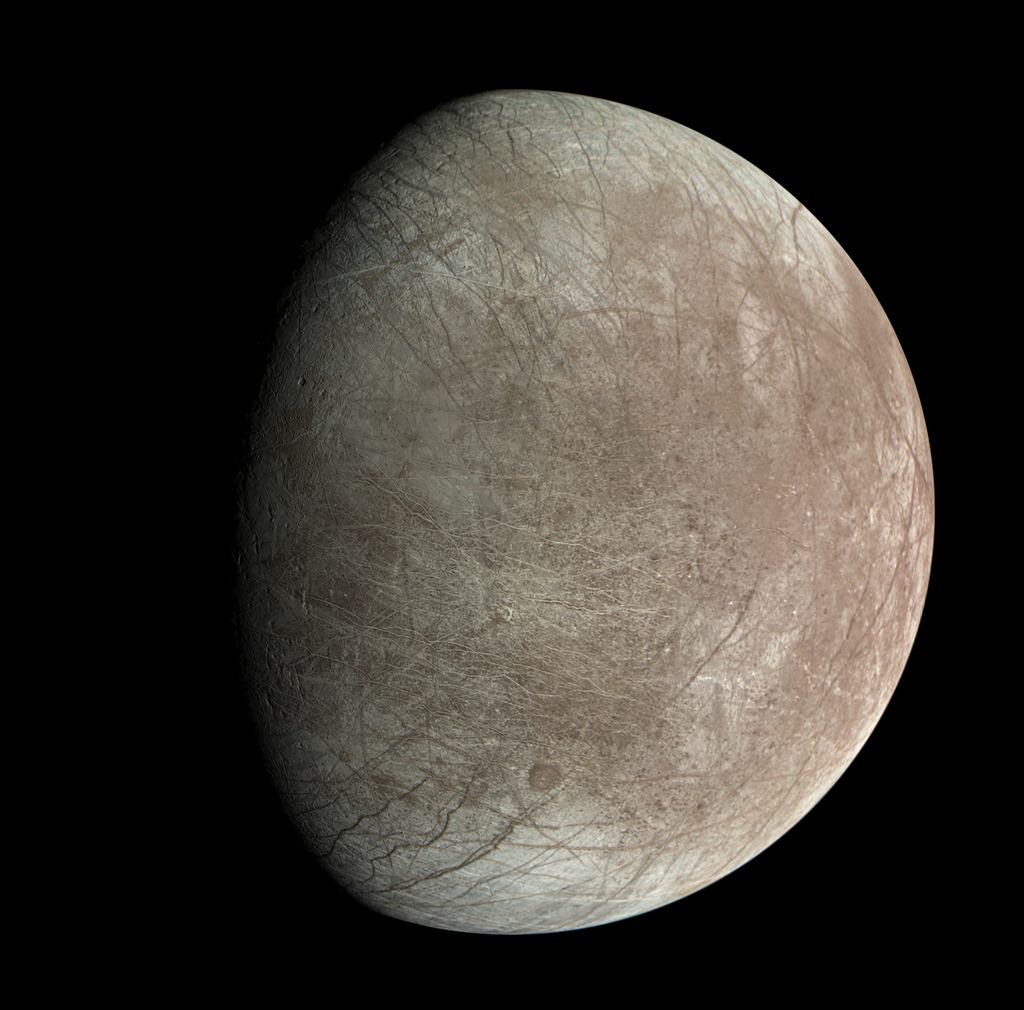
A JunoCam View of Europa
Jupiter's moon Europa was captured by the JunoCam instrument aboard NASA's Juno spacecraft during the mission's close flyby on Sept. 29, 2022. As with our Moon and Earth, one side of Europa always faces Jupiter, and that is the side of Europa visible here. Europa's surface is crisscrossed by fractures, ridges, and bands, which have erased terrain older than about 90 million years.
Thursday, 25 June 2026
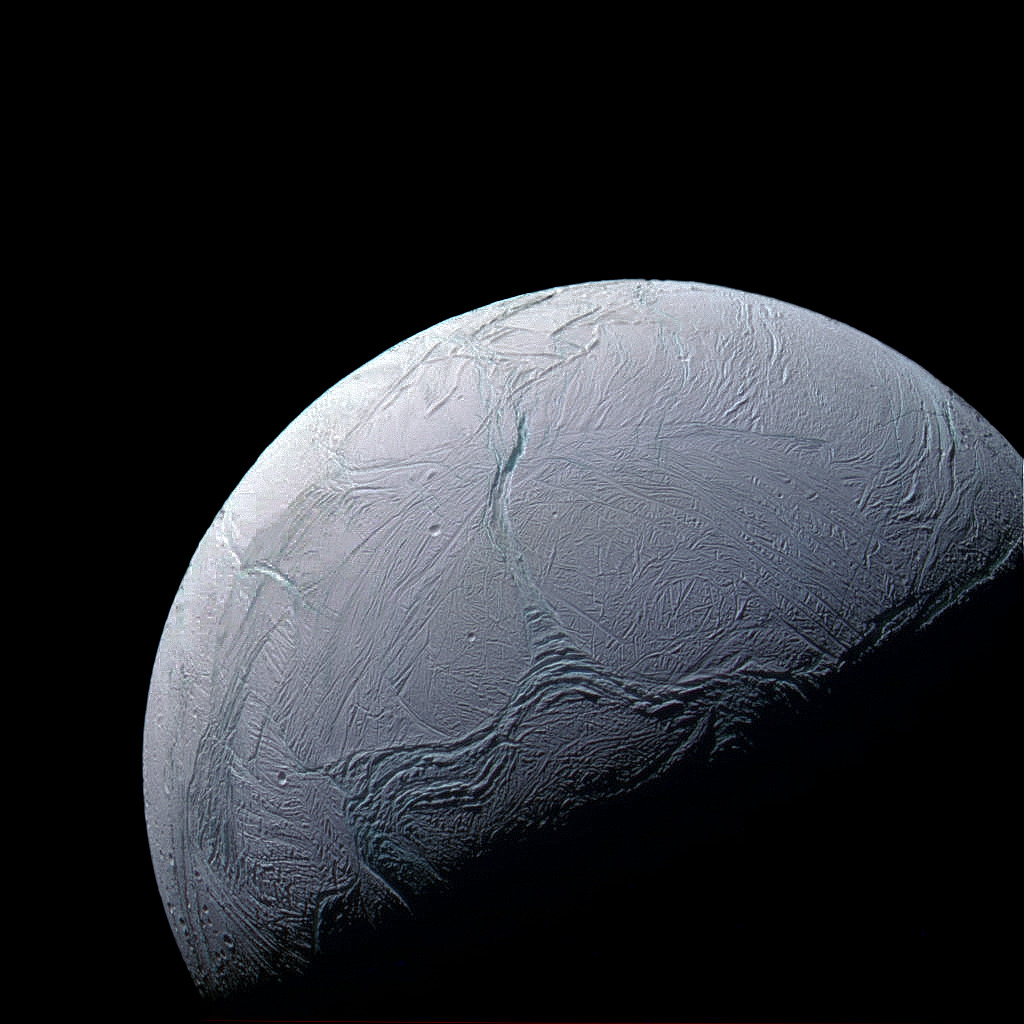
Enceladus, February 15, 2016
This image was taken during Cassini's final close flyby of Enceladus. It captures Enceladus' heavily fractured southern hemisphere from a distance of about 83,000 kilometers. Running left to right near the terminator is Cashmere Sulcus, and extending north towards the limb is Labtayt Sulcus. Mosul Sulcus is near the left limb. The moon's south pole is in winter night.
Friday, 26 June 2026
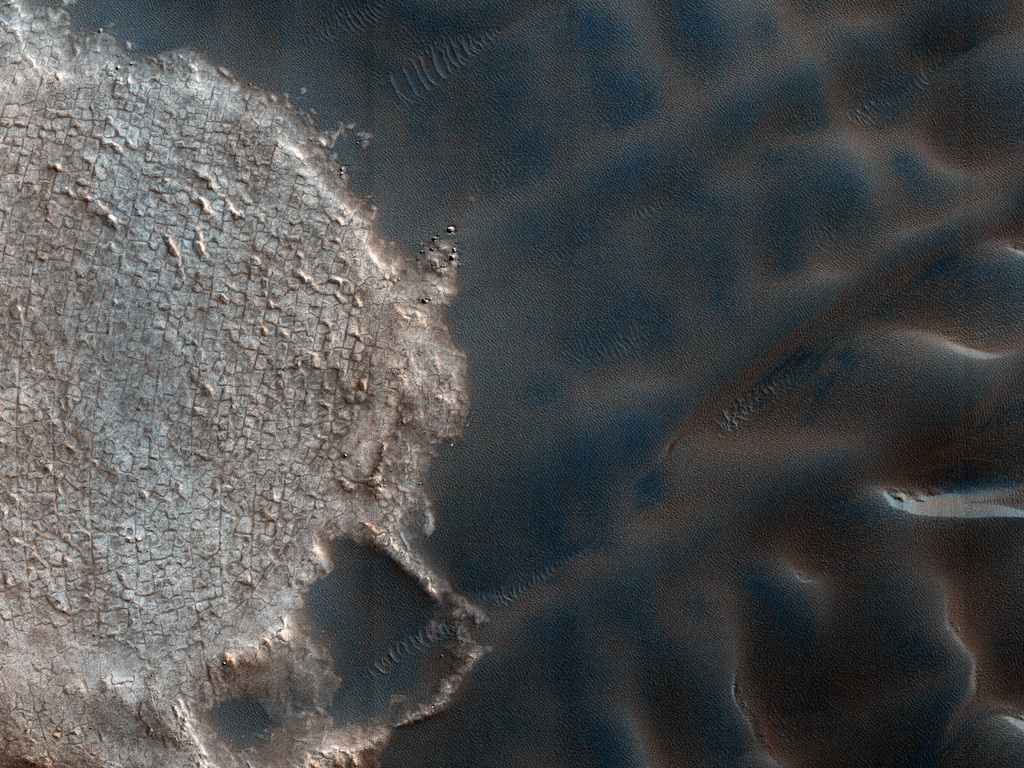
Marvelous Martian Mega-Ripples
Mega-ripples are distinct wind-driven formations that occur on the surface of Earth and Mars, often with sizes between those of smaller ripples and larger dunes. Based on their shapes and examples of fractured crests in some areas, mega-ripples are thought to be largely inactive relics of past climates. Thanks to repeat coverage by HiRISE, we can tell that some mega-ripple fields are active and migrating alongside dunes and ripples.
From this downwind perspective, we can see mega-ripples forming along the flanks of the dark sand dunes near the North Polar deposits.
Landforms across these North Polar latitudes become ice-cemented when wintertime carbon dioxide ice buries dunes. Then the ice sublimates through the northern spring until dunes and mega-ripples become “frost-free” and mobile by summer. It is these summertime seasonal winds that drive the enhanced activity of migrating mega-ripples of the North Polar region.
News
Related News
Planetary Picture of the Day - Week of June 15, 2026
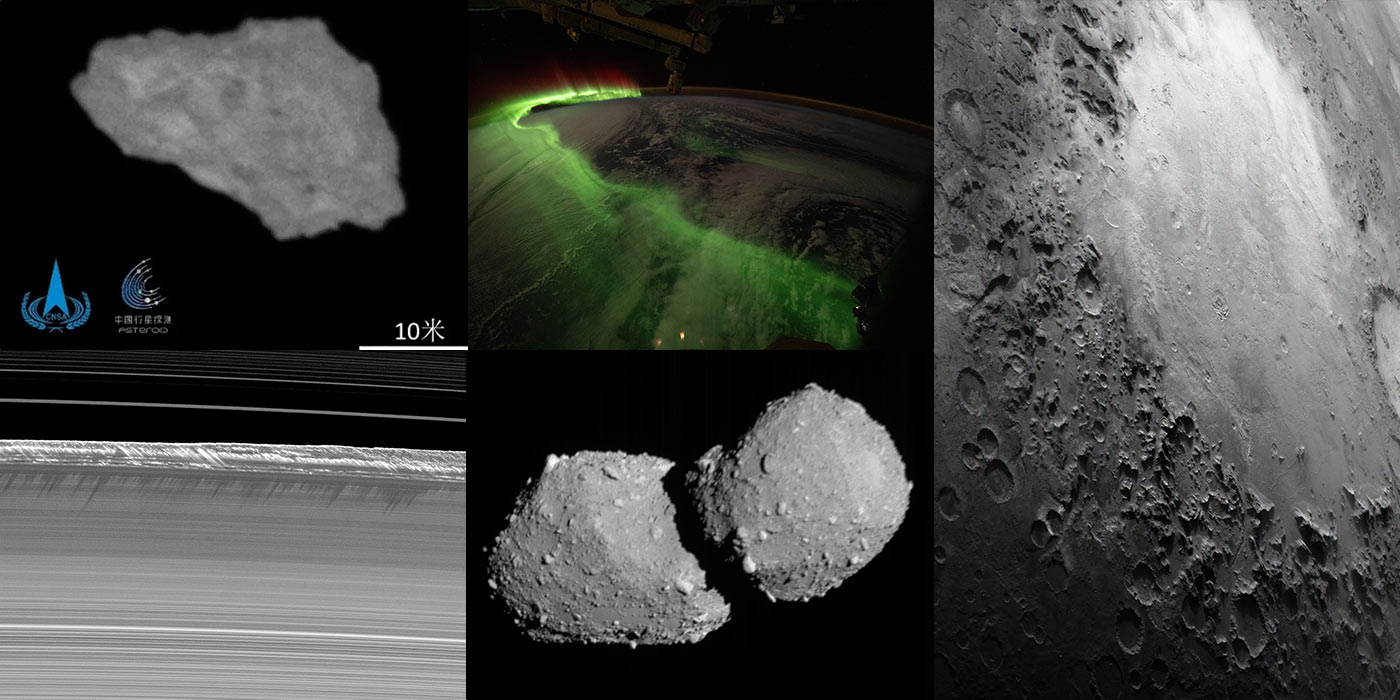
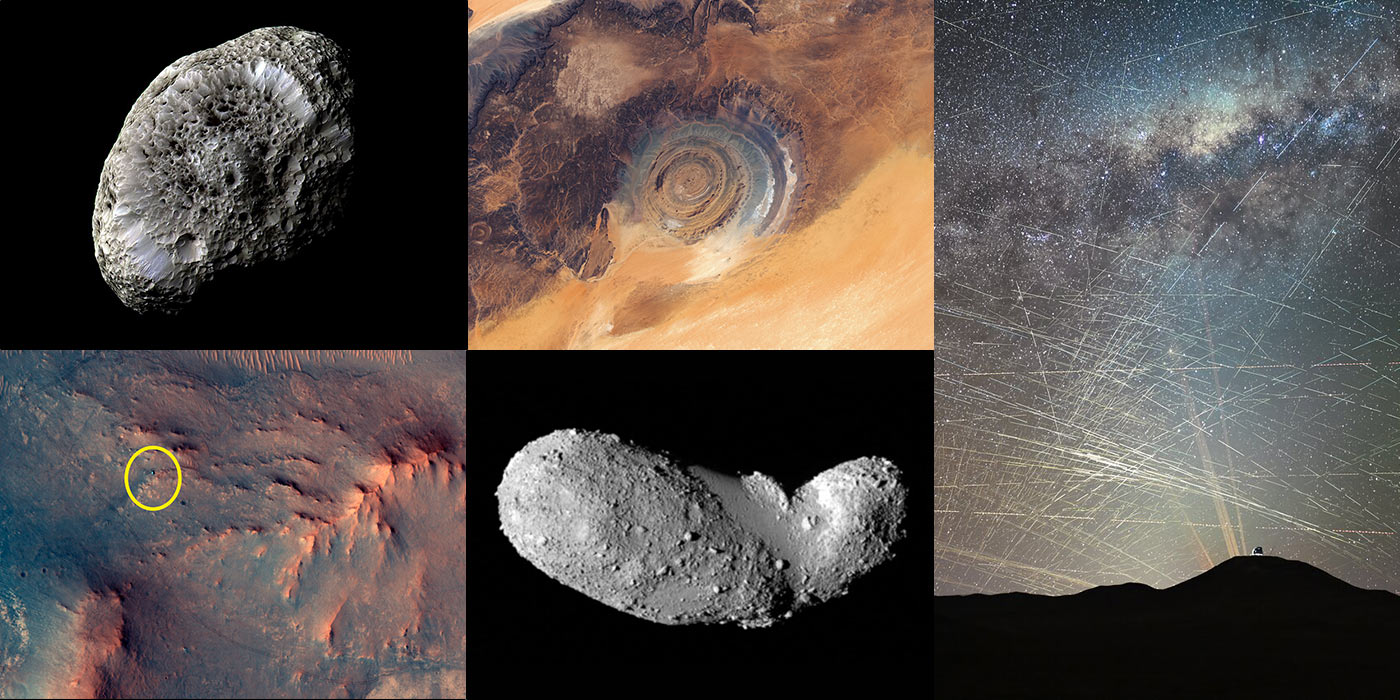
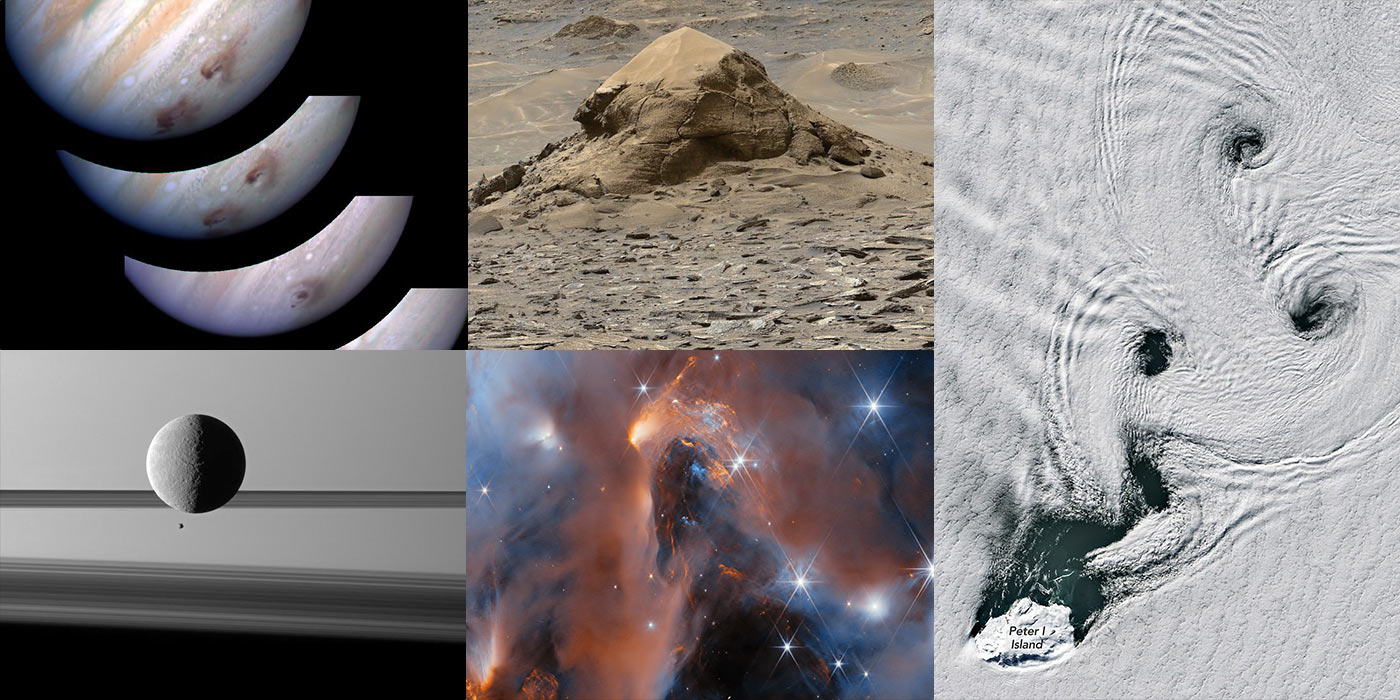
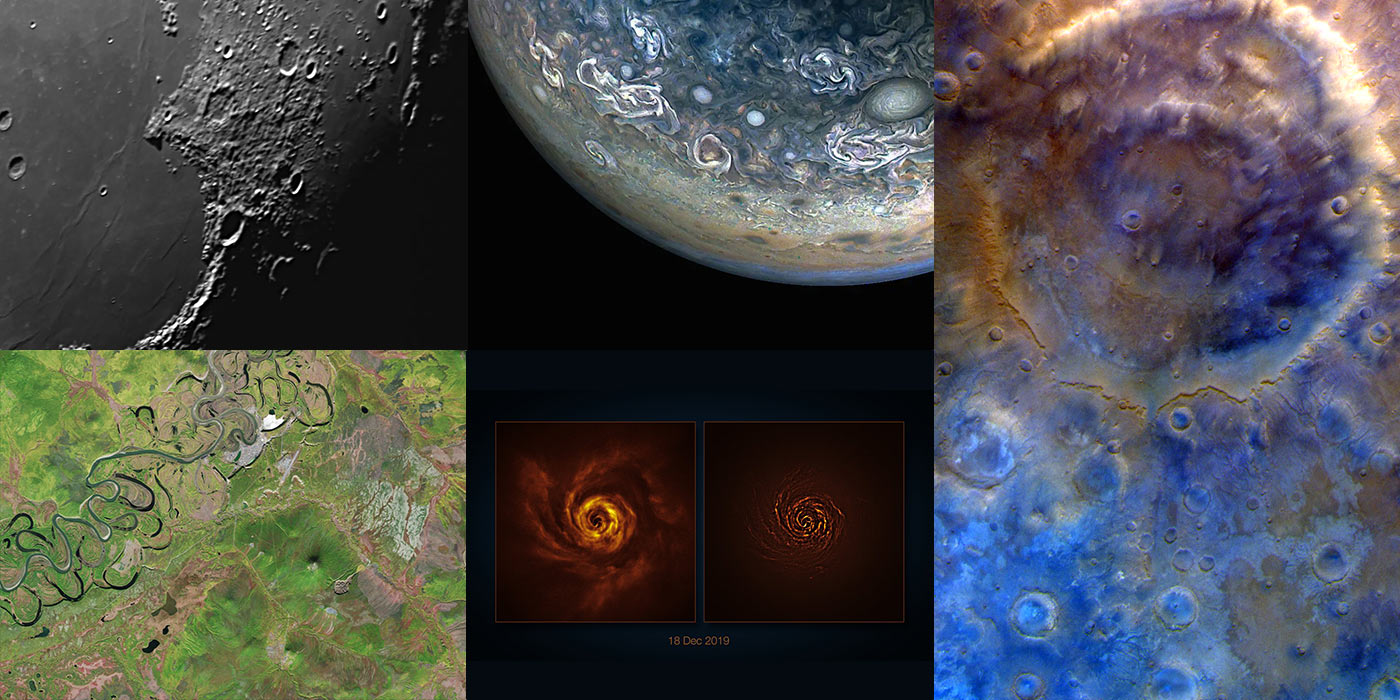
This collection showcases a solar system in motion, from Saturn’s moons playing tricks on perspective and a comet’s dramatic collision with Jupiter to winds swirling across Earth’s southern oceans and ancient landscapes on Mars. Together, these images reveal the forces that shape worlds over time—erosion, impacts, atmospheric currents, and planetary evolution—while capturing moments of beauty, violence, and wonder across the cosmos. #PPOD
Planetary Picture of the Day - Week of June 8, 2026
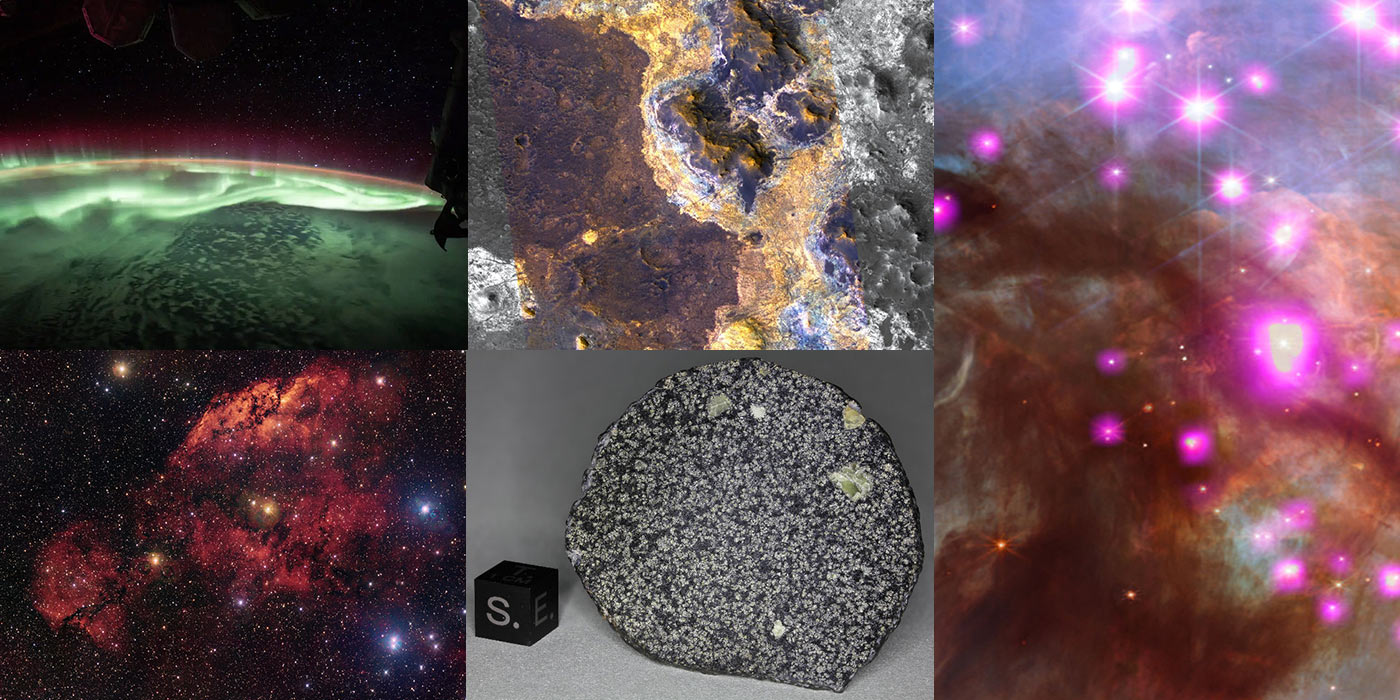
Ancient Martian landscapes, glowing auroras, and stellar nurseries come together in this week’s PPOD collection, highlighting worlds and phenomena shaped by billions of years of cosmic history. From a rare meteorite born in the earliest days of the solar system to colorful nebulae where new stars are forming today, these images offer a remarkable look at both our origins and the ongoing evolution of the universe. #PPOD
Planetary Picture of the Day - Week of June 1, 2026
Our solar system contains dynamic worlds near and far, and our cameras capture amazing images of them every day, from a close-up flyby of Mars and the Moon’s beautiful Bay of Rainbows to the swirling storms of Jupiter. We also explore landscapes shaped by change, including Siberia’s expanding Batagaika mega-slump and a young star’s planet-forming disk, offering a glimpse of both Earth’s evolving surface and the processes that build new worlds. #PPOD
Planetary Picture of the Day - Week of May 25, 2026
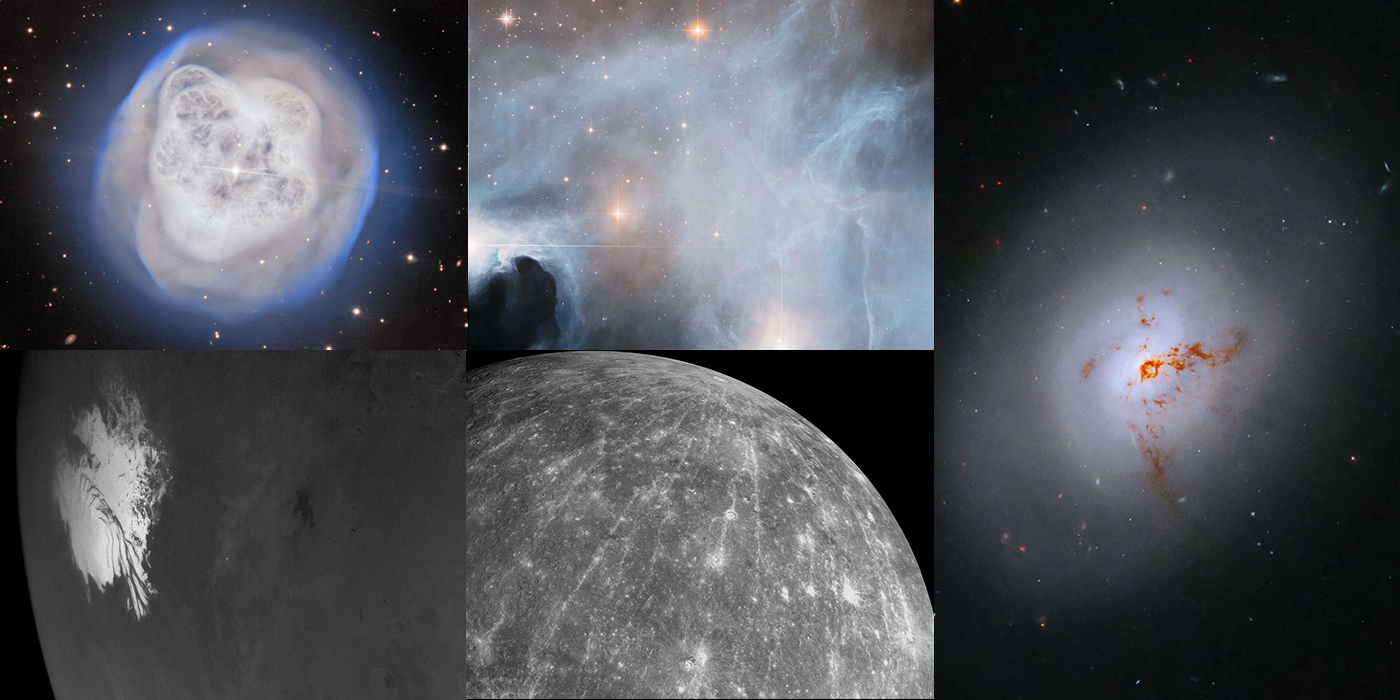
This week's images journeyed from the shimmering Crystal Ball Nebula to the icy south pole of Mars, highlighting beauty and change across our solar system and beyond. The collection also captured stars being born in a ghostly nebula, the dramatic rays of Mercury’s Hokusai Crater, and a distant galaxy caught in transition—offering a striking look at cosmic evolution across space and time. #PPOD
Planetary Picture of the Day - Week of May 18, 2026
Moments both fleeting and immense—from a Moon–Venus conjunction over Washington, D.C. to a meteor streaking through Earth’s atmosphere as seen from the International Space Station. These images also spanned the cosmic scale, featuring a massive hybrid galaxy, a stubborn rock sampled by the Curiosity rover on Mars, and a stunning mid-infrared view of Messier 77 from JWST. #PPOD
Planetary Picture of the Day - Week of May 11, 2026
Where the round things are: From spherical boulders and circular radio telescope dishes to the curve of our blue marble, distant Mars, and far-away spiral galaxies, the universe comes back to circles. #PPODResearch
Related Projects
SkyMapper: Expanding Access to Real-time Astronomy Through a Global Astronomical Network
SkyMapper and the SETI Institute are connecting educators, students and the public to live astronomical observations through a distributed astronomical network. #SkyMapper #SETI #Citizen Science #Astronomy
Virtual Planetary Laboratory
How can we best assess whether an exoplanet supports life? #VPL
Discovery and Futures Lab
What happens if life beyond Earth is discovered? The Discovery and Futures Lab at the SETI Institute fosters novel and anticipatory research at the intersection of science, society, our planet, and the search for life beyond Earth. #Discovery and Futures LabSupport the
SETI Institute
Scientists are getting closer in their search for life beyond earth. But with limited federal funding for the search for extraterrestrial intelligence, supporters are the reason cutting-edge scientists can keep their eyes on the sky.