




Wednesday, Jun 10, 2026

Credit: NASA/JPL-Caltech/ASU

Monday, 1 June 2026

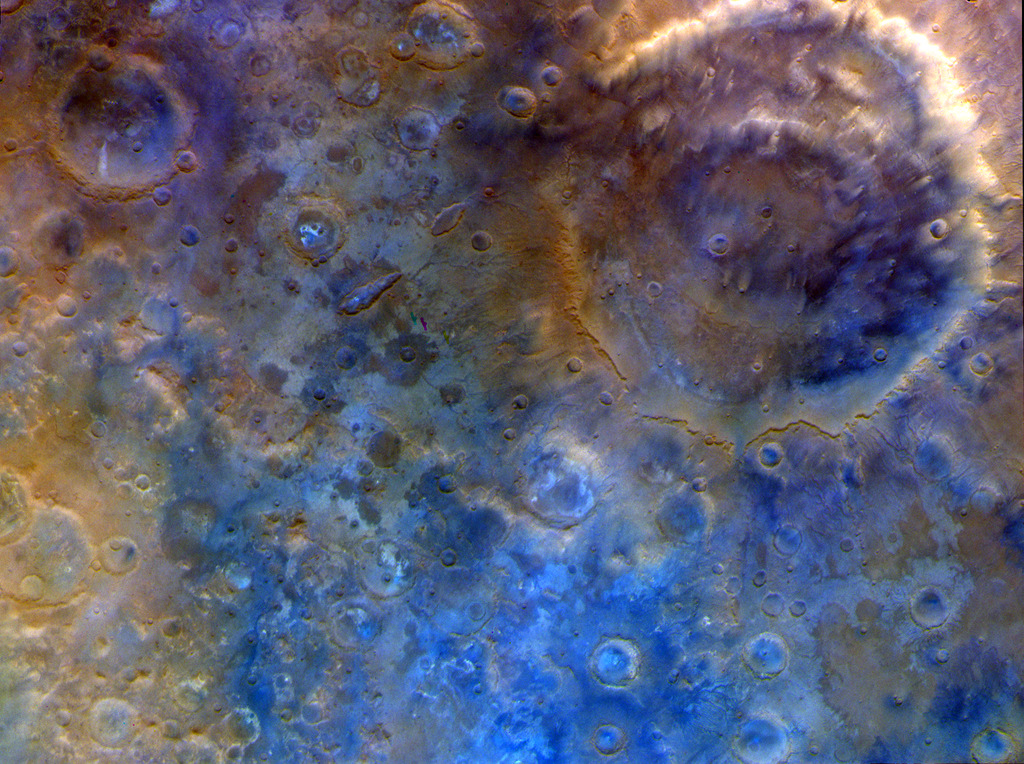
More Mars Flyby

NASA’s Psyche spacecraft completed its close approach of Mars on May 15, coming within 2,864 miles (4,609 kilometers) of the planet’s surface. During the flyby, it took this image and others. This representative color image, captured by Psyche’s multispectral imager instrument, features the double-ring crater Huygens and the surrounding heavily cratered southern highlands.

Credit: Godfather_Astro (Threads/TikTok)

Tuesday, 2 June 2026

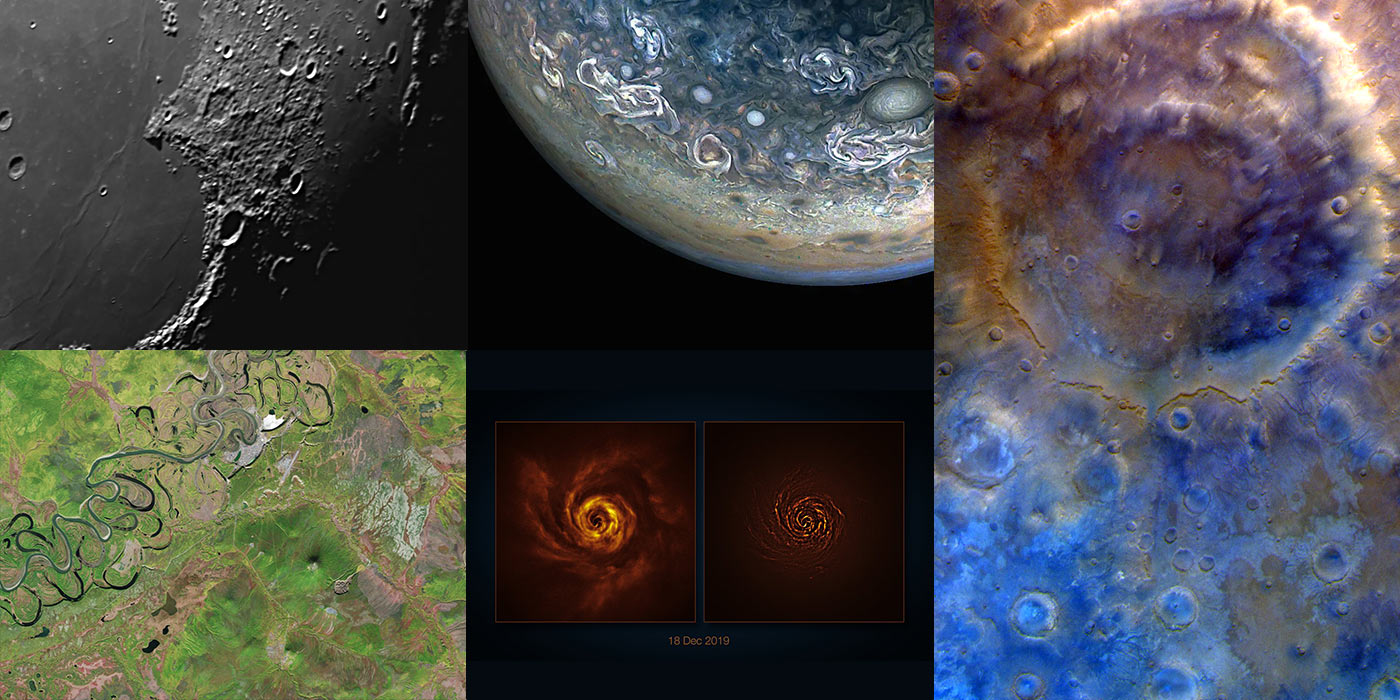
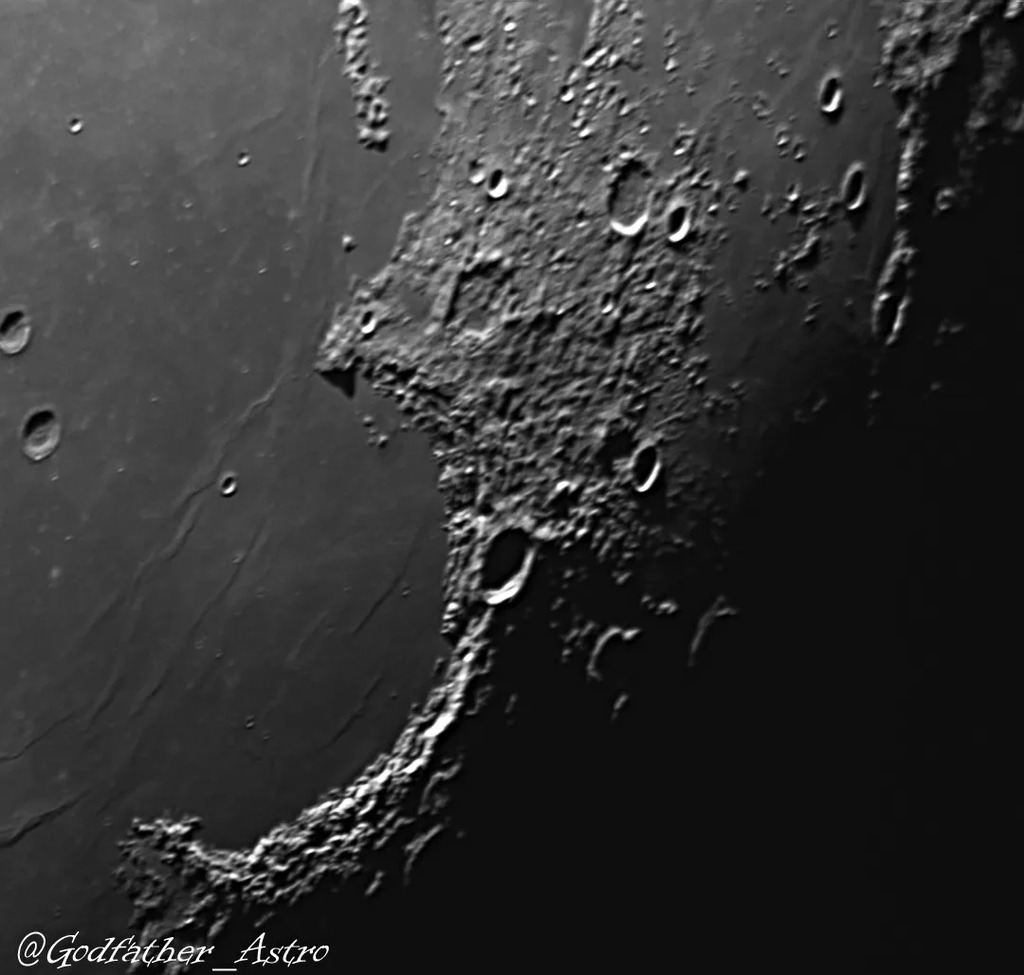
Bay of Rainbows

Sinus Iridum, or the “Bay of Rainbows,” is a striking lava-flooded plain along the Moon’s Mare Imbrium. Framed by the curved Montes Jura mountain range—the remains of an ancient impact crater—it is considered one of the Moon’s most beautiful and recognizable features.

When sunlight strikes the region just right around 10–11 days after new moon, the illuminated Montes Jura can appear as a bright arc at the lunar terminator—an effect nicknamed the “Golden Handle.”

Credit: contains modified Copernicus Sentinel data (2025), processed by ESA

Wednesday, 3 June 2026

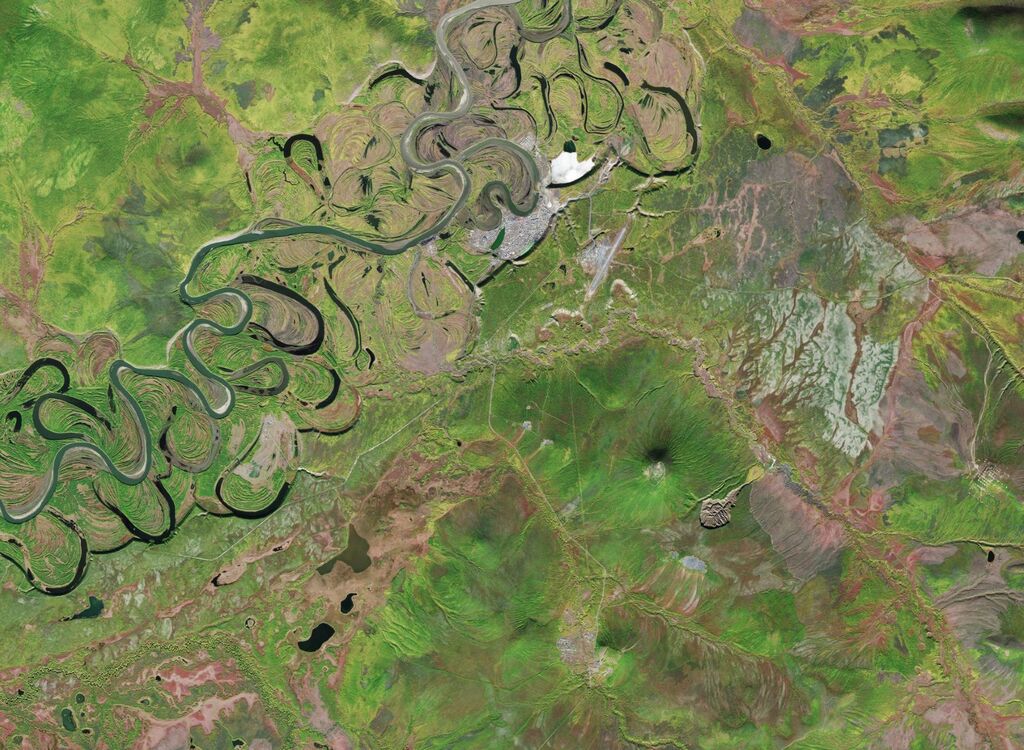
Batagaika Crater

This Copernicus Sentinel-2 image features the Batagaika Crater in Siberia. This is the biggest permafrost crater in the world, caused by melting permafrost and also known as a ‘mega-slump’.

From above, the collapsed terrain resembles a tadpole or a stingray, with near-symmetrical ‘fins’ and a ‘tail’ pointing northeast. The crater – seen in the lower-right-hand side of this image – is roughly 100 m deep and 1 km long but is growing at a rate of around 30 m a year. According to scientists, this rapid expansion began a few decades ago and is the result of deforestation and warmer temperatures. These conditions cause the ice in the crater to melt, then evaporate or drain away, leaving residual sediments that subside.

Credit: ESO/A. Boccaletti et al.

Thursday, 4 June 2026

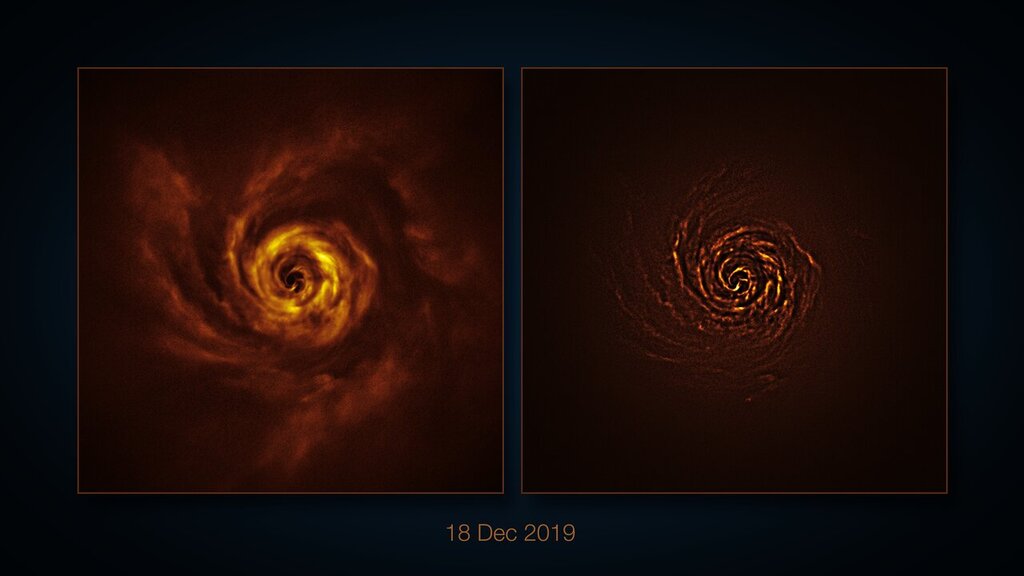
AB Aurigae's Protoplanetary Disc

This image, taken with the SPHERE instrument on ESO’s Very Large Telescope (VLT), shows a disc of material around the young star AB Aurigae, where planets might be forming. Similar observations over four years show the disc rotating around the star. The image to the right has been processed to highlight certain features of the disc, such as spiral arms and radial shadows cast by dense clumps of material.

Credit: NASA/JPL-Caltech/SwRI/MSSS; Processing: Gary Eason

Friday, 5 June 2026

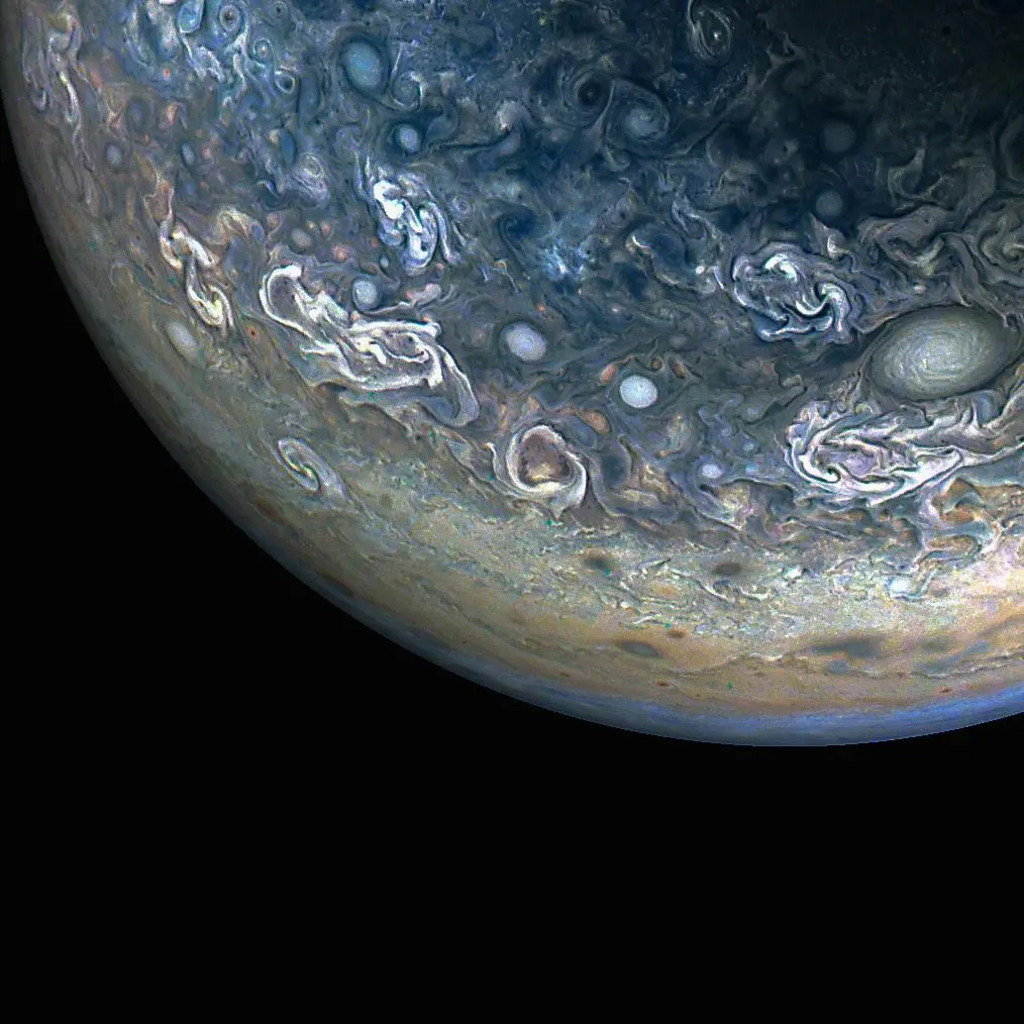
Colorful, Chaotic Jupiter

NASA’s Juno spacecraft captured this color-enhanced view of Jupiter’s northern hemisphere during its 61st close flyby of the giant planet on May 12, 2024.

Citizen scientist Gary Eason made this image using raw data from the JunoCam instrument, applying digital processing techniques to enhance color and clarity. It provides a detailed view of chaotic clouds and cyclonic storms in an area known to scientists as a folded filamentary region. In these regions, the zonal jets that create the familiar banded patterns in Jupiter’s clouds break down, leading to turbulent patterns and cloud structures that rapidly evolve over the course of only a few days.

News

Related News

Featured Image
Jun 3, 2026
Planetary Picture of the Day - Week of May 25, 2026
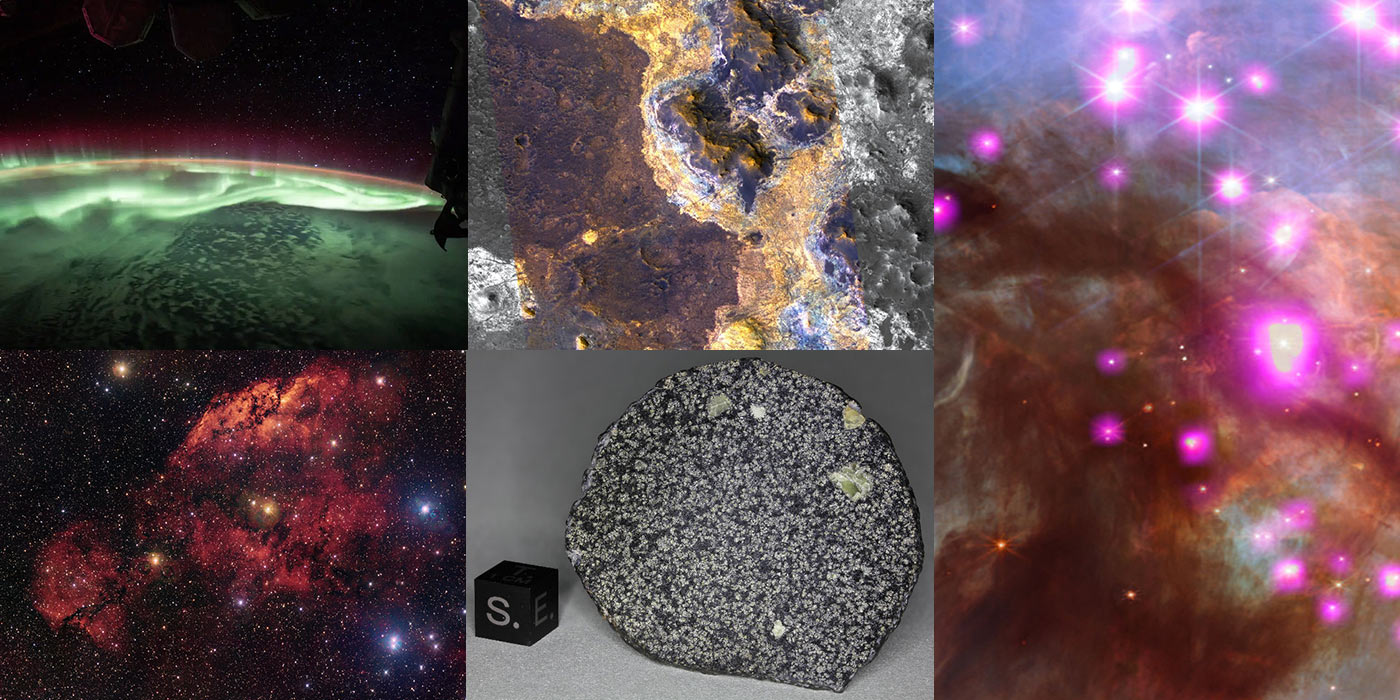
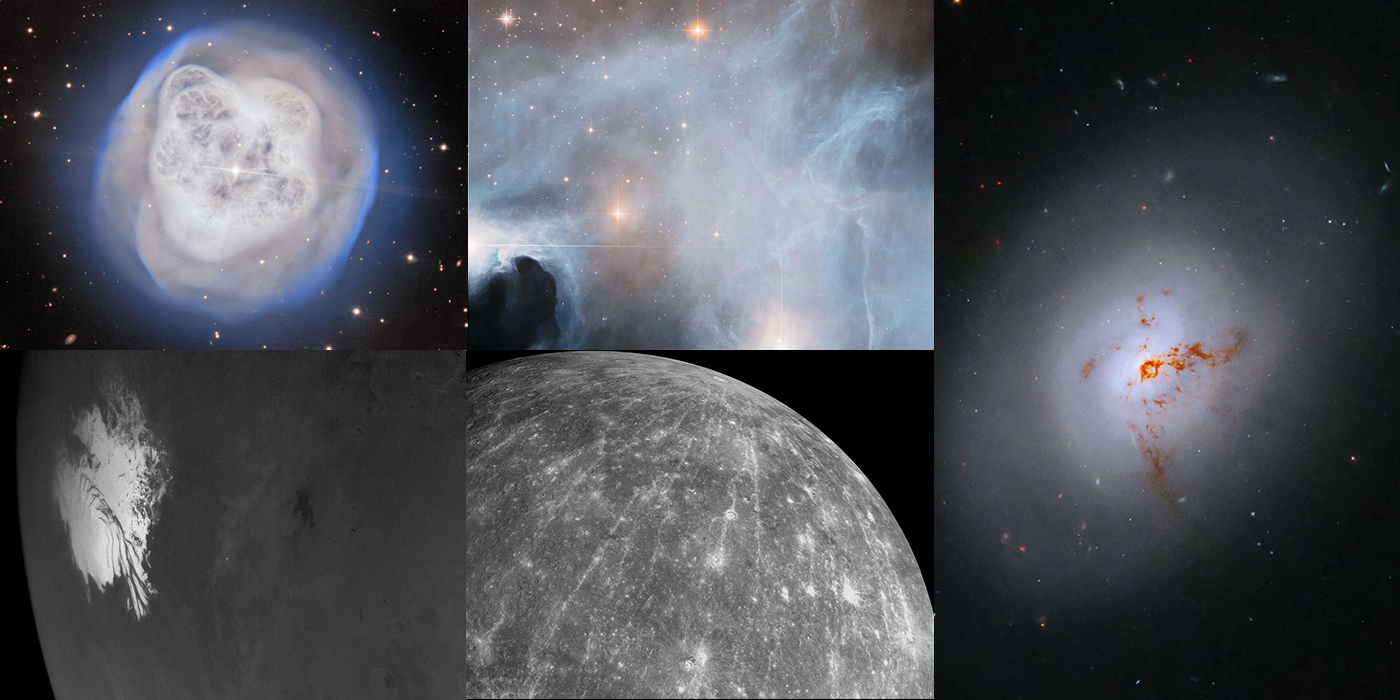
This week's images journeyed from the shimmering Crystal Ball Nebula to the icy south pole of Mars, highlighting beauty and change across our solar system and beyond. The collection also captured stars being born in a ghostly nebula, the dramatic rays of Mercury’s Hokusai Crater, and a distant galaxy caught in transition—offering a striking look at cosmic evolution across space and time. #PPOD
Featured Image
May 27, 2026
Planetary Picture of the Day - Week of May 18, 2026
Moments both fleeting and immense—from a Moon–Venus conjunction over Washington, D.C. to a meteor streaking through Earth’s atmosphere as seen from the International Space Station. These images also spanned the cosmic scale, featuring a massive hybrid galaxy, a stubborn rock sampled by the Curiosity rover on Mars, and a stunning mid-infrared view of Messier 77 from JWST. #PPOD
Featured Image
May 21, 2026
Planetary Picture of the Day - Week of May 11, 2026
Where the round things are: From spherical boulders and circular radio telescope dishes to the curve of our blue marble, distant Mars, and far-away spiral galaxies, the universe comes back to circles. #PPOD
Featured Image
May 13, 2026
Planetary Picture of the Day - Week of May 04, 2026
From blooming tulip fields in the Netherlands to the glowing shell of the Bubble Nebula, last week’s PPOD images celebrated color and contrast across Earth, the Moon, and deep space. The collection also highlighted exploration and change—from unusual rocks studied by Perseverance rover on Mars to dramatic lunar shadows captured by Artemis II and the soft glow of May’s Flower Moon. #PPOD
Featured Image
May 6, 2026
Planetary Picture of the Day - Week of April 27, 2026
Dark and light play together in this week's photos, as we examine ash spreading across Mars over decades, night and day on the Moon, and the interplay of colors in a distant nebula. #PPOD
Featured Image
Apr 29, 2026
Planetary Picture of the Day - Week of April 20, 2026
This week's planetary images took us from the fractured ice of Europa and the shadowed edge of the Moon to a fiery-looking sunset cloud glowing above Earth, captured from the International Space Station. They also revisited landmark discoveries and changing worlds, from the first images revealing Charon to dark volcanic ash slowly spreading across Mars's surface. #PPOD
Research

Related Projects

Featured Image
SkyMapper • SETI • Citizen Science • Astronomy
SkyMapper: Expanding Access to Real-time Astronomy Through a Global Astronomical Network
SkyMapper and the SETI Institute are connecting educators, students and the public to live astronomical observations through a distributed astronomical network. #SkyMapper #SETI #Citizen Science #Astronomy
Featured Image
VPL
Virtual Planetary Laboratory
How can we best assess whether an exoplanet supports life? #VPL
Featured Image
Discovery and Futures Lab
What happens if life beyond Earth is discovered? The Discovery and Futures Lab at the SETI Institute fosters novel and anticipatory research at the intersection of science, society, our planet, and the search for life beyond Earth.  #Discovery and Futures Lab
Support Us

Support the
SETI Institute

Scientists are getting closer in their search for life beyond earth. But with limited federal funding for the search for extraterrestrial intelligence, supporters are the reason cutting-edge scientists can keep their eyes on the sky.