




Monday, 18 May 2026
Moon-Venus Conjunction
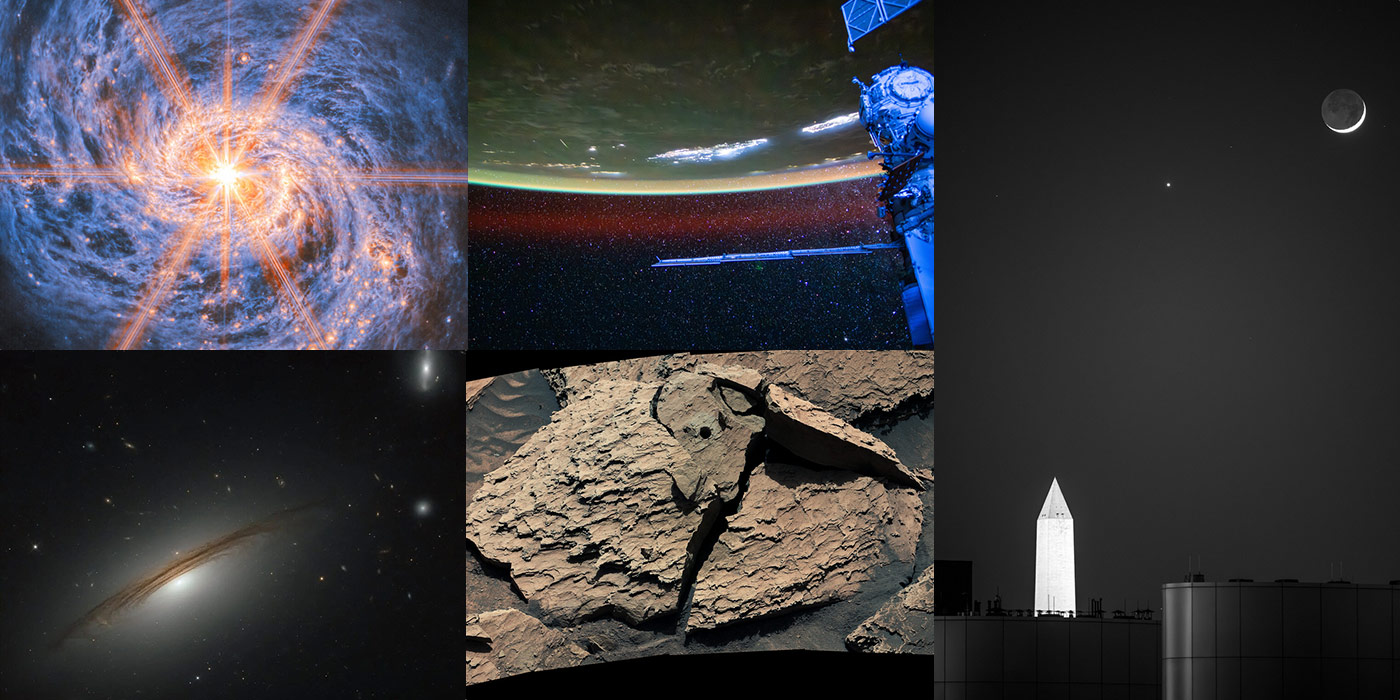
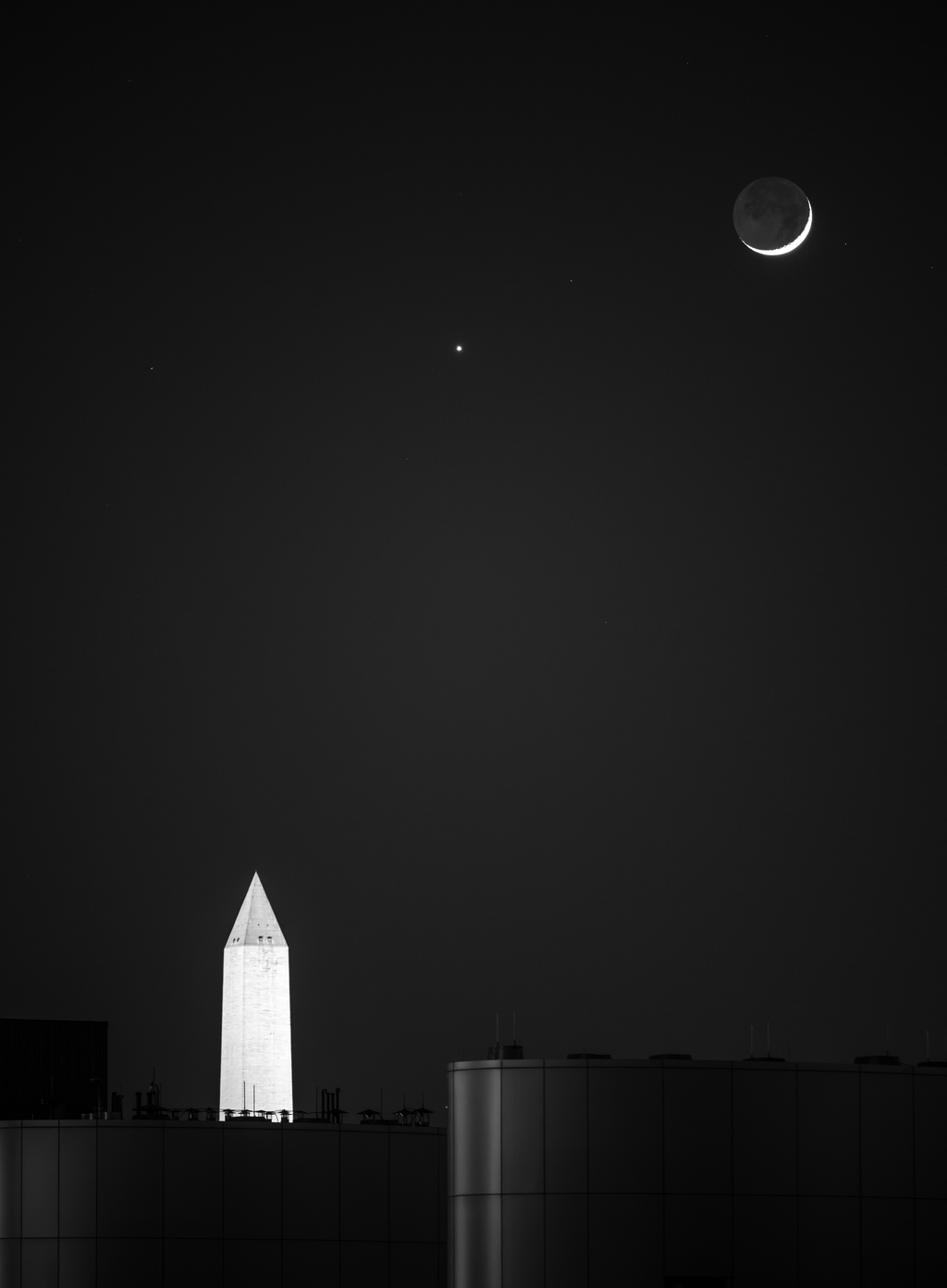
The Moon and Venus, center, are seen in conjunction above the Washington Monument, Monday, May 18, 2026, as viewed from the Mary W. Jackson NASA Headquarters Building in Washington.
The Moon and Venus look close together because they line up from our point of view on Earth. In reality, they are separated by millions of miles in space.
Tuesday, 19 May 2026
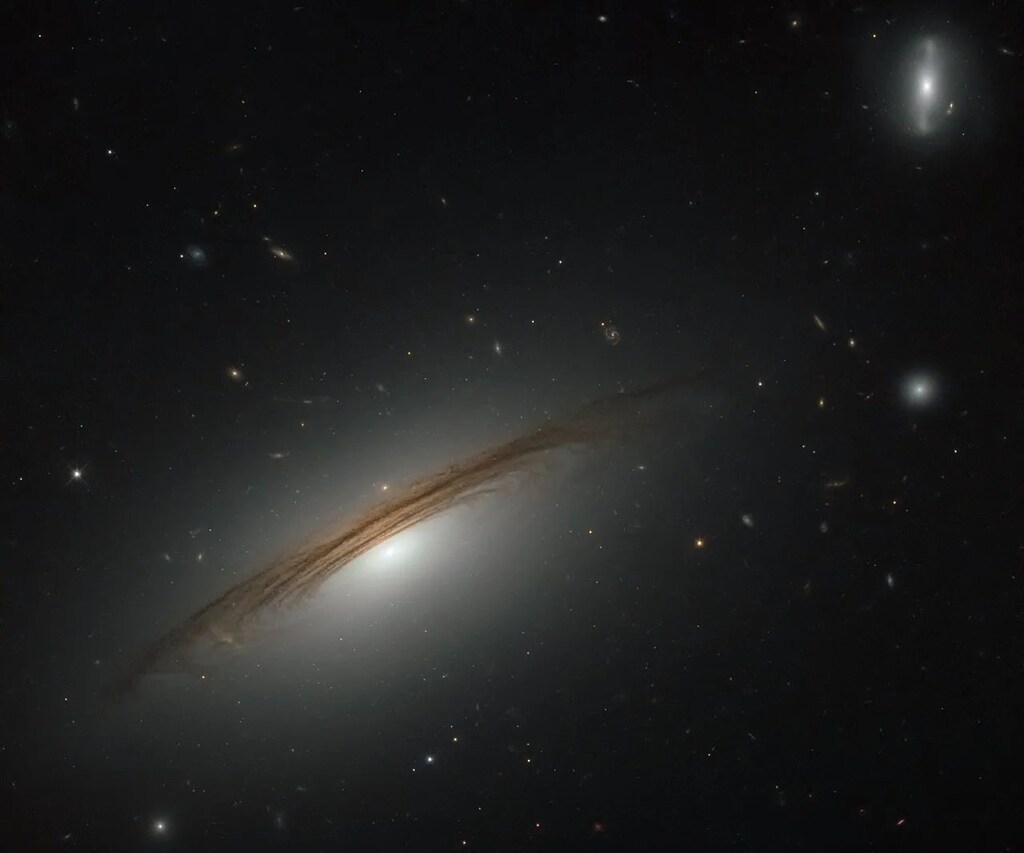
A Galactic Hybrid
This NASA/ESA Hubble Space Telescope image showcases the remarkable galaxy UGC 12591. UGC 12591 sits somewhere between a lenticular and a spiral. It lies just under 400 million light-years away from us in the westernmost region of the Pisces–Perseus Supercluster, a long chain of galaxy clusters that stretches out for hundreds of millions of light-years — one of the largest known structures in the cosmos.
The galaxy itself is also extraordinary: it is incredibly massive. The galaxy and its halo together contain several hundred billion times the mass of the sun, four times the mass of the Milky Way. It also whirls around extremely quickly, rotating at speeds of up to 1.8 million kilometers per hour.
Observations with Hubble are helping astronomers determine the mass of UGC 12591 and whether the galaxy formed and grew slowly over time or grew unusually massive by colliding and merging with another large galaxy at some point in its past.
Wednesday, 20 May 2026
Curiosity Shakes Loose a Pesky Rock
After NASA’s Curiosity #Mars rover drilled a sample from this rock on April 25, 2026, it withdrew its robotic arm and pulled the entire rock off the surface with it. Engineers spent several days repositioning the arm and vibrating the drill to try to loosen the rock. When it finally detached on May 1, the rock broke into pieces.
This close-up image of the rock was produced by Curiosity’s Mast Camera, or Mastcam, on May 6. Nicknamed “Atacama,” the rock is estimated to be 1.5 feet in diameter at its base and 6 inches thick. It would weigh roughly 28.6 pounds on Earth (and about a third of that on Mars). The circular hole produced by Curiosity’s drill is visible in the rock.
Thursday, 21 May 2026
A Lyrid From Orbit
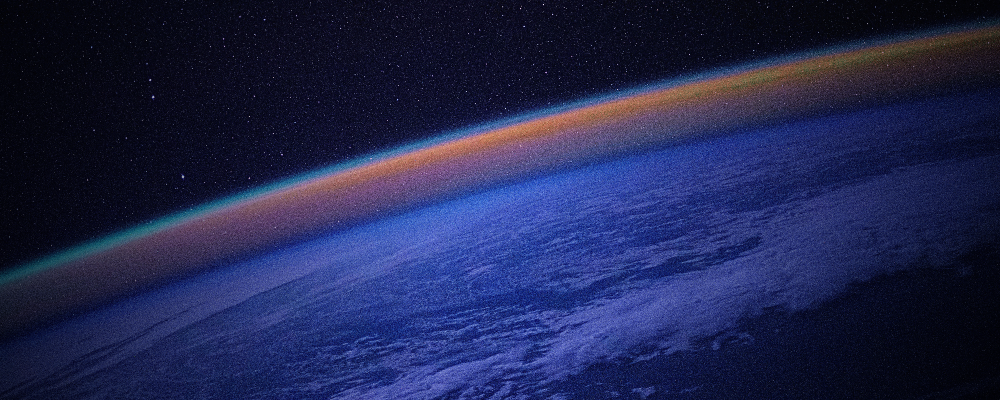
The Expedition 74 crew on the International Space Station turned into meteor chasers as Earth passed through a cloud of dust and small debris left behind by comet Thatcher in 1861.
ESA astronaut Sophie Adenot set up a camera to automatically record thousands of images in the hope of catching a shooting star, an elusive event that often lasts only a fraction of a second.
“In scientific terms, a shooting star is actually a meteor: a tiny fragment of rock or dust from space that disintegrates as it enters Earth’s atmosphere, after traveling astronomical distances. For those with their heads full of dreams, seeing a shooting star often feels like the perfect moment to make a wish… just in case!” says Sophie.
Friday, 22 May 2026
Messier 77 from JWST
Messier 77, also known as the Squid Galaxy, was imaged by the NASA/ESA/CSA James Webb Space Telescope in the mid-infrared. The six orange lines emanating from the center of the image are an effect of the telescope's optics, while the bright region at the center of the galaxy marks where material is falling around a supermassive black hole.
News
Related News
Planetary Picture of the Day - Week of June 8, 2026
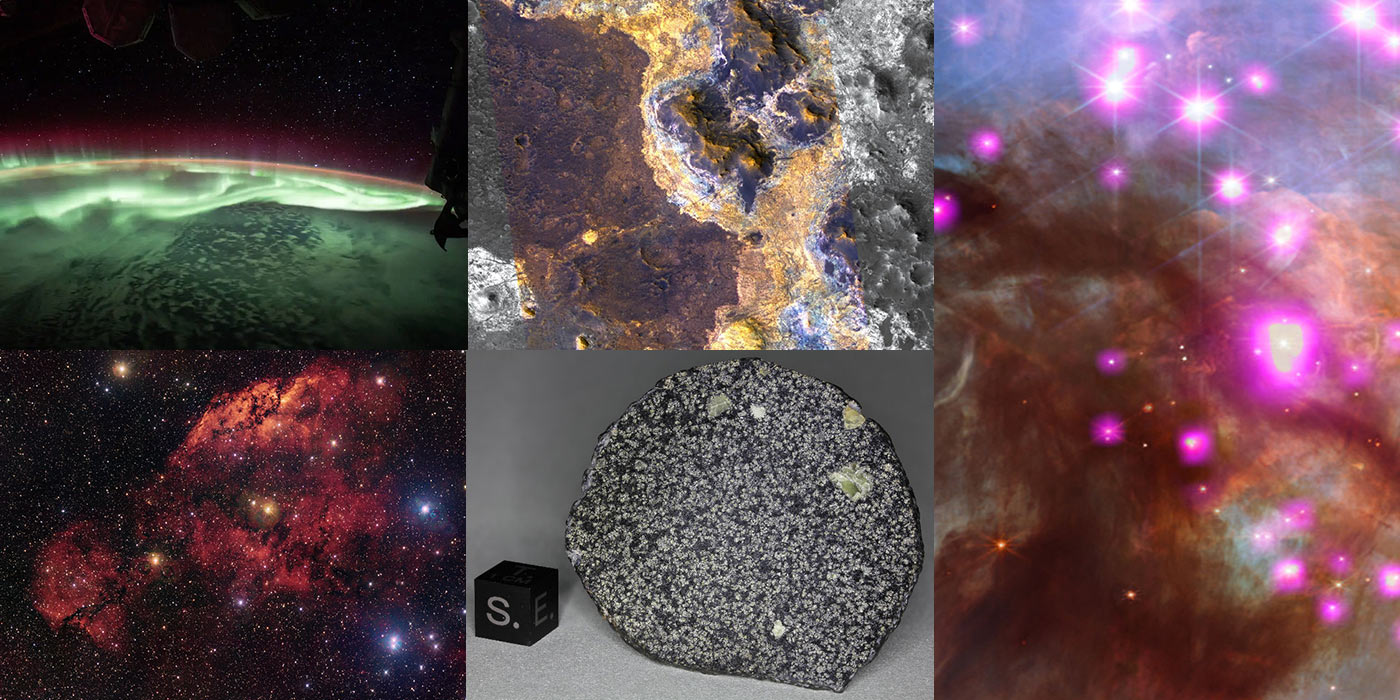
Ancient Martian landscapes, glowing auroras, and stellar nurseries come together in this week’s PPOD collection, highlighting worlds and phenomena shaped by billions of years of cosmic history. From a rare meteorite born in the earliest days of the solar system to colorful nebulae where new stars are forming today, these images offer a remarkable look at both our origins and the ongoing evolution of the universe. #PPOD
Planetary Picture of the Day - Week of June 1, 2026
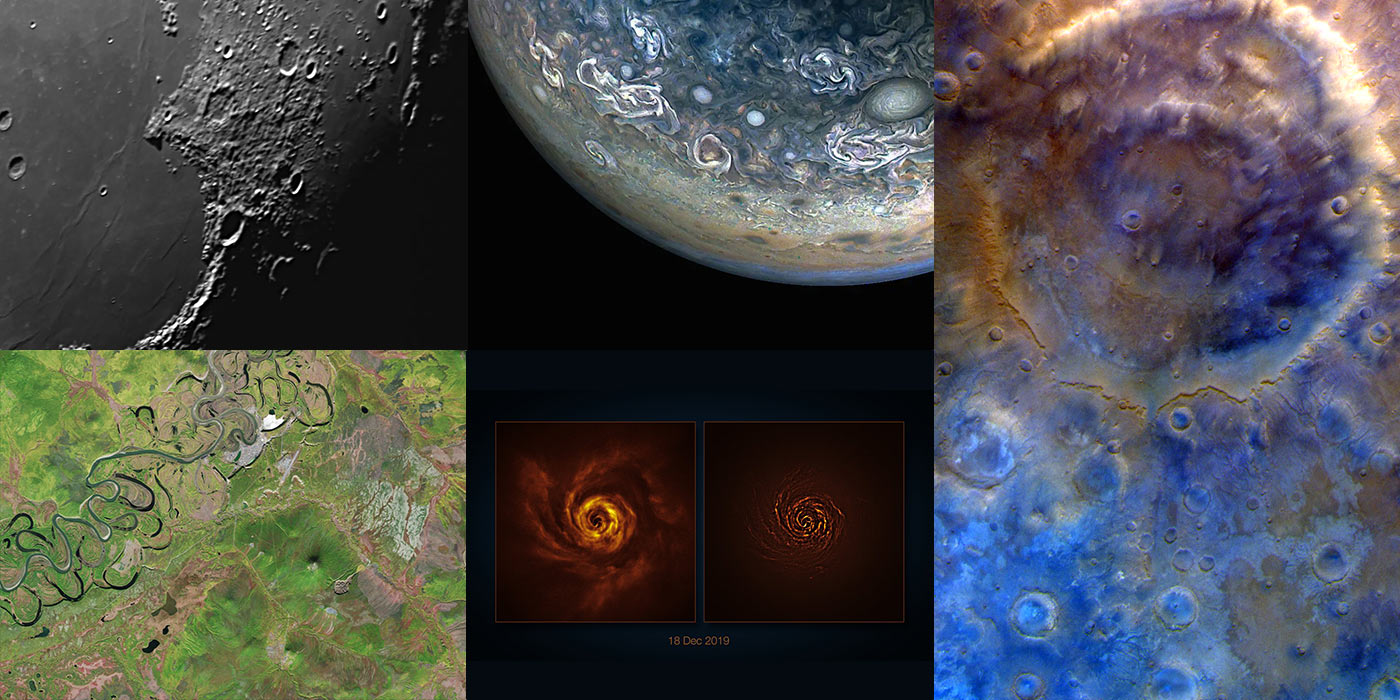
Our solar system contains dynamic worlds near and far, and our cameras capture amazing images of them every day, from a close-up flyby of Mars and the Moon’s beautiful Bay of Rainbows to the swirling storms of Jupiter. We also explore landscapes shaped by change, including Siberia’s expanding Batagaika mega-slump and a young star’s planet-forming disk, offering a glimpse of both Earth’s evolving surface and the processes that build new worlds. #PPOD
Planetary Picture of the Day - Week of May 25, 2026
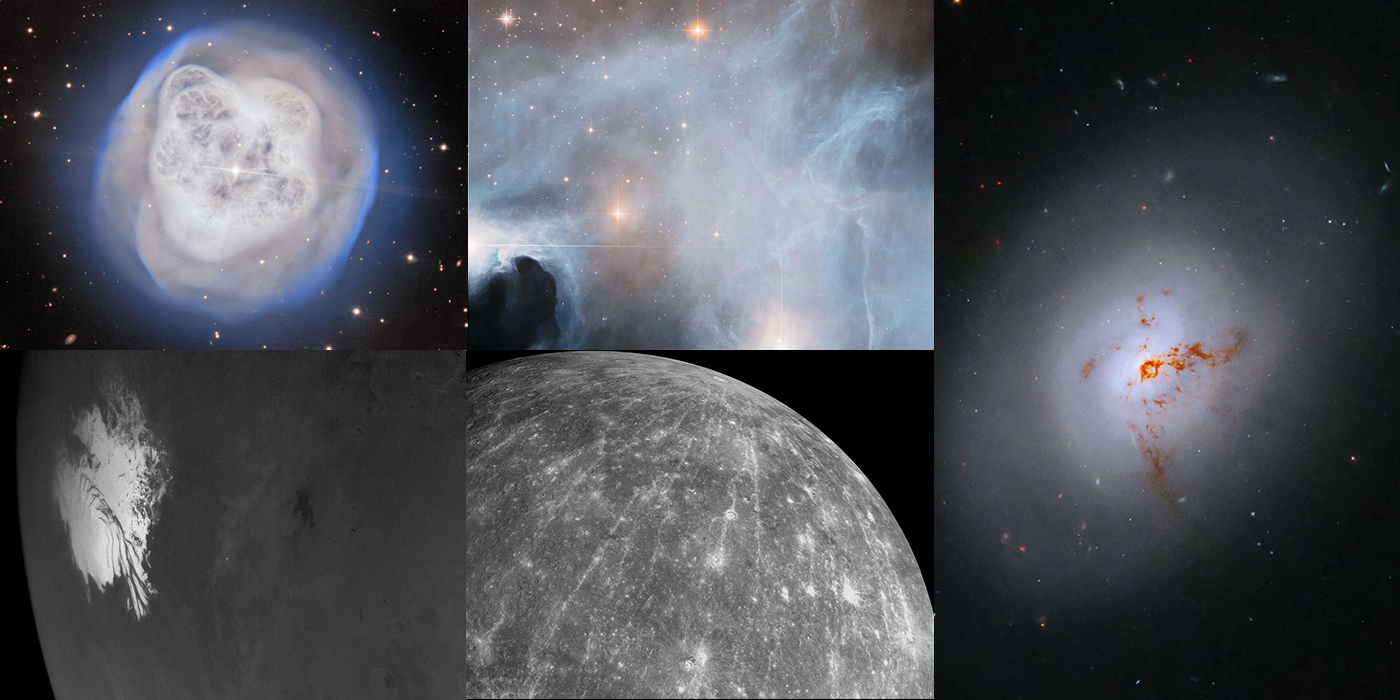
This week's images journeyed from the shimmering Crystal Ball Nebula to the icy south pole of Mars, highlighting beauty and change across our solar system and beyond. The collection also captured stars being born in a ghostly nebula, the dramatic rays of Mercury’s Hokusai Crater, and a distant galaxy caught in transition—offering a striking look at cosmic evolution across space and time. #PPOD
Planetary Picture of the Day - Week of May 11, 2026
Where the round things are: From spherical boulders and circular radio telescope dishes to the curve of our blue marble, distant Mars, and far-away spiral galaxies, the universe comes back to circles. #PPOD
Planetary Picture of the Day - Week of May 04, 2026
From blooming tulip fields in the Netherlands to the glowing shell of the Bubble Nebula, last week’s PPOD images celebrated color and contrast across Earth, the Moon, and deep space. The collection also highlighted exploration and change—from unusual rocks studied by Perseverance rover on Mars to dramatic lunar shadows captured by Artemis II and the soft glow of May’s Flower Moon. #PPOD
Planetary Picture of the Day - Week of April 27, 2026
Dark and light play together in this week's photos, as we examine ash spreading across Mars over decades, night and day on the Moon, and the interplay of colors in a distant nebula. #PPODResearch
Related Projects
SkyMapper: Expanding Access to Real-time Astronomy Through a Global Astronomical Network
SkyMapper and the SETI Institute are connecting educators, students and the public to live astronomical observations through a distributed astronomical network. #SkyMapper #SETI #Citizen Science #Astronomy
Virtual Planetary Laboratory
How can we best assess whether an exoplanet supports life? #VPL
Discovery and Futures Lab
What happens if life beyond Earth is discovered? The Discovery and Futures Lab at the SETI Institute fosters novel and anticipatory research at the intersection of science, society, our planet, and the search for life beyond Earth. #Discovery and Futures LabSupport the
SETI Institute
Scientists are getting closer in their search for life beyond earth. But with limited federal funding for the search for extraterrestrial intelligence, supporters are the reason cutting-edge scientists can keep their eyes on the sky.