



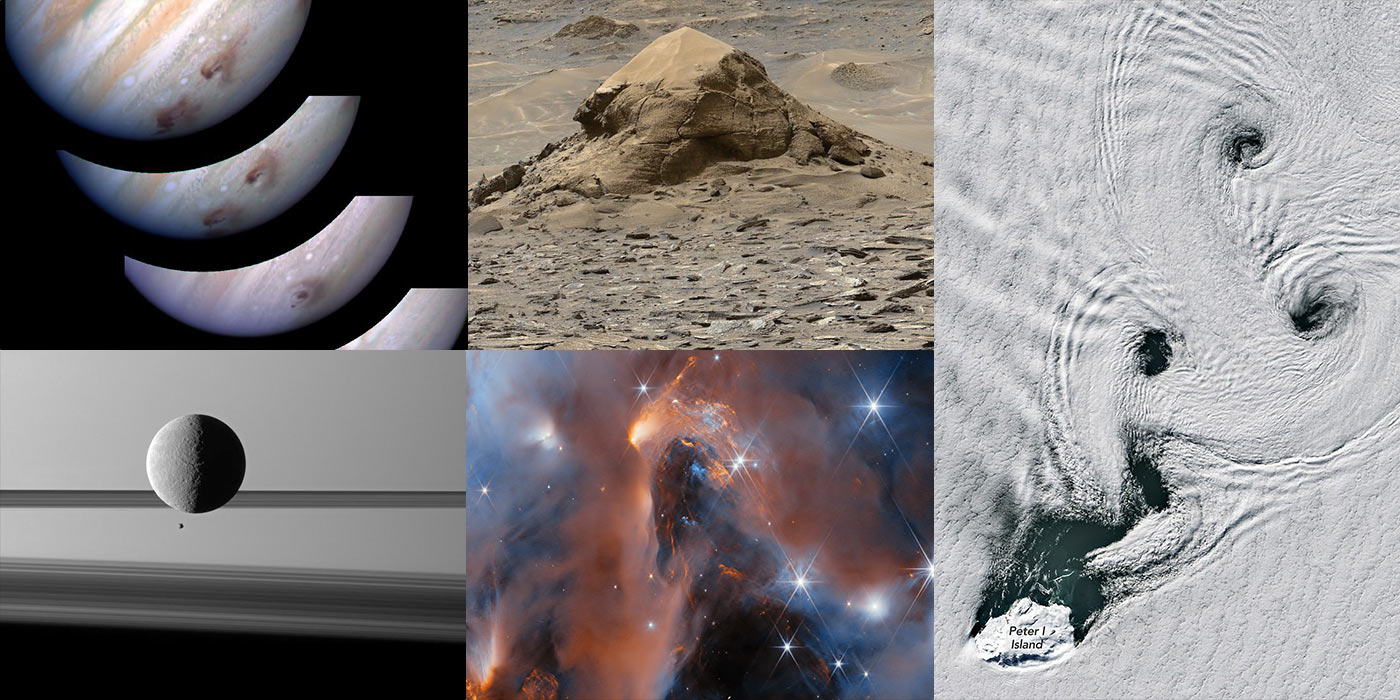
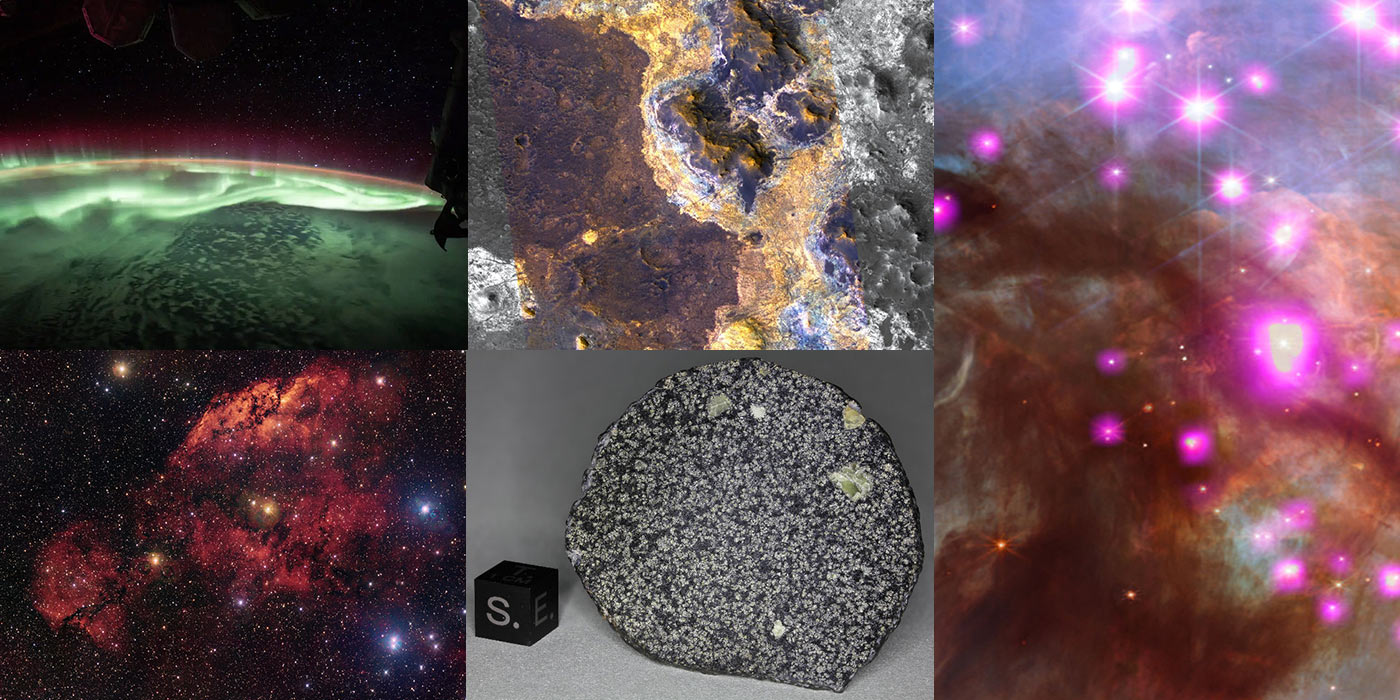
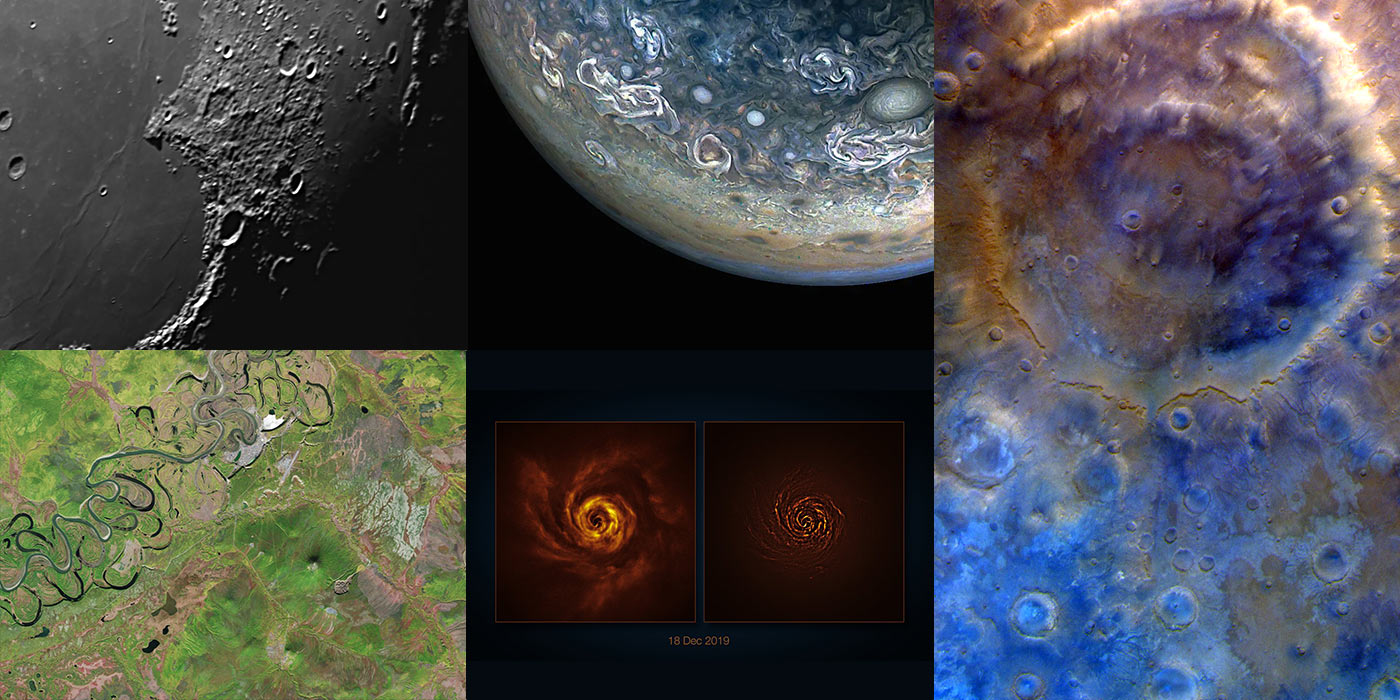
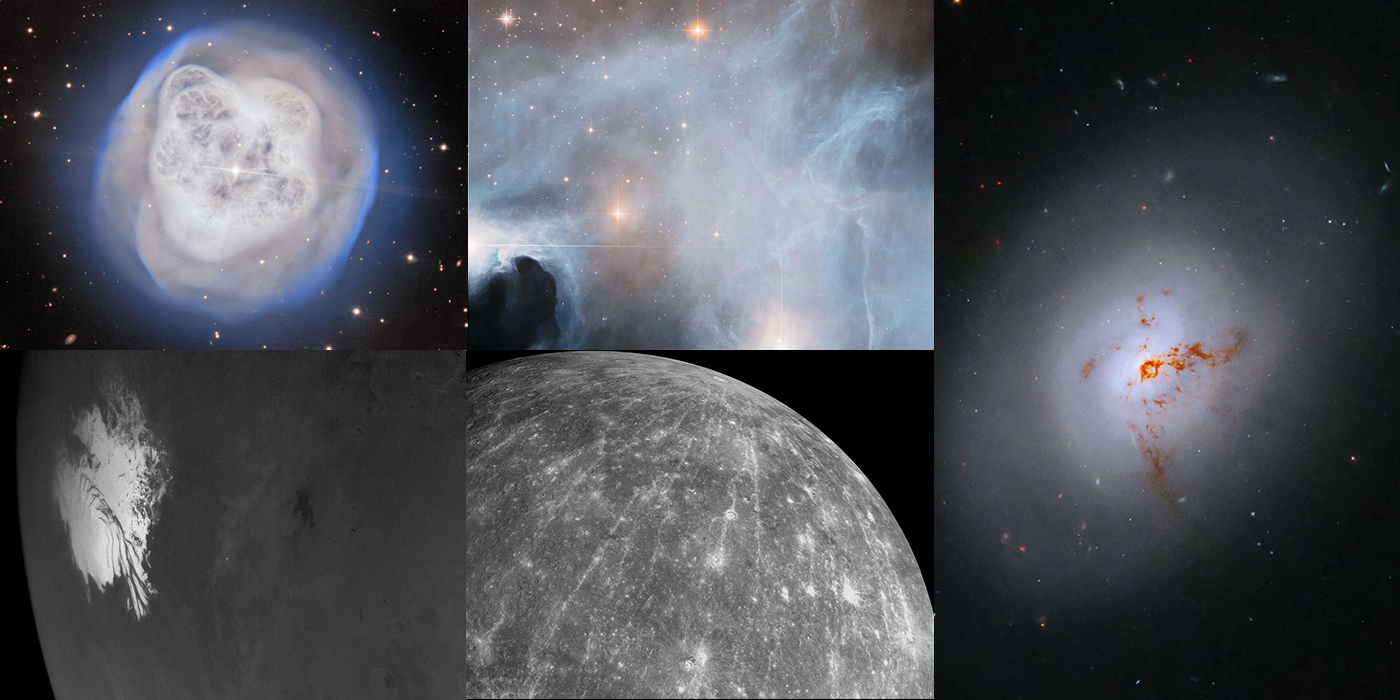
Science is fantastic, and this week showcases wonders both planetary and astrophysical. We start with new images from the VLT and JWST of a supernova remnant and a nebula, respectively. Then, we examine a striking structure on Mars and the birth of a distant planetary system. Finally, we present a short video of the closest images ever taken of the Sun.
Monday, 14 July 2025
Double-Detonation Supernova
This image, taken with ESO’s Very Large Telescope (VLT), shows the supernova remnant SNR 0509-67.5. These are the expanding remains of a star that exploded hundreds of years ago in a double-detonation – the first photographic evidence that stars can die with two blasts.
The data were captured with the Multi-Unit Spectroscopic Explorer (MUSE) instrument at the VLT. MUSE allows astronomers to map the distribution of different chemical elements, displayed here in different colours. Calcium is shown in blue, and it is arranged in two concentric shells. These two layers indicate that the now-dead star exploded with a double-detonation. Hydrogen (H alpha) is shown in orange.
Tuesday, 15 July 2025
Cat's Paw
NASA’s JWST team released this image of the Cat’s Paw Nebula on July 10, 2025, in honor of the telescope’s third anniversary. JWST's NIRCam (Near-Infrared Camera) revealed never-before-seen structural details and features: Massive young stars carve away at nearby gas and dust. At the same time, their bright starlight produces a bright nebulous glow represented in blue. As a consequence of these massive stars’ lively behavior, the local star formation process will eventually come to a stop.
Wednesday, 16 July 2025
Hebes Chasma Mesa
The details of the central mesa inside Hebes Chasma on Mars are seen in close-up detail in this perspective view taken using ESA's Mars Express. A horseshoe-shaped chunk has been removed from one side of the mound (left in this image); the material has slumped down onto the valley floor below. A dark patch appears to pool like spilled ink across the debris. It is most likely loose material that has slid down from an intermediate layer onto the walls. Melted ice could have played a role in weakening the rocks, creating a flow-like appearance.
Along the side of the mound, fine horizontal layering is seen. The layers likely comprise a mix of wind-blown dust and ancient lake sediments, along with remnants of the older plateau.
Thursday, 17 July 2025
Dawn of a New Stellar System
This is HOPS-315, a baby star where astronomers have observed evidence for the earliest stages of planet formation. The image was taken with the Atacama Large Millimeter/submillimeter Array (ALMA). Together with data from JWST, these observations show that hot minerals are beginning to solidify.
In orange, we see the distribution of carbon monoxide, blowing away from the star in a butterfly-shaped wind. In blue, we see a narrow jet of silicon monoxide, also beaming away from the star. These gaseous winds and jets are common around baby stars like HOPS-315.
Together, the ALMA and JWST observations indicate that, in addition to these features, there is also a disc of gaseous silicon monoxide around the star that is condensing into solid silicates– the first stages of planetary formation.
Credit: NASA/Johns Hopkins APL/Naval Research Lab
Friday, 18 July 2025
Closest-Ever Images to Sun
This video, made from images taken by Parker Solar Probe’s WISPR instrument during its record-breaking flyby of the Sun on Dec. 25, 2024, shows the solar wind racing out from the Sun’s outer atmosphere, the corona.
News
Related News
Planetary Picture of the Day - Week of June 29, 2026
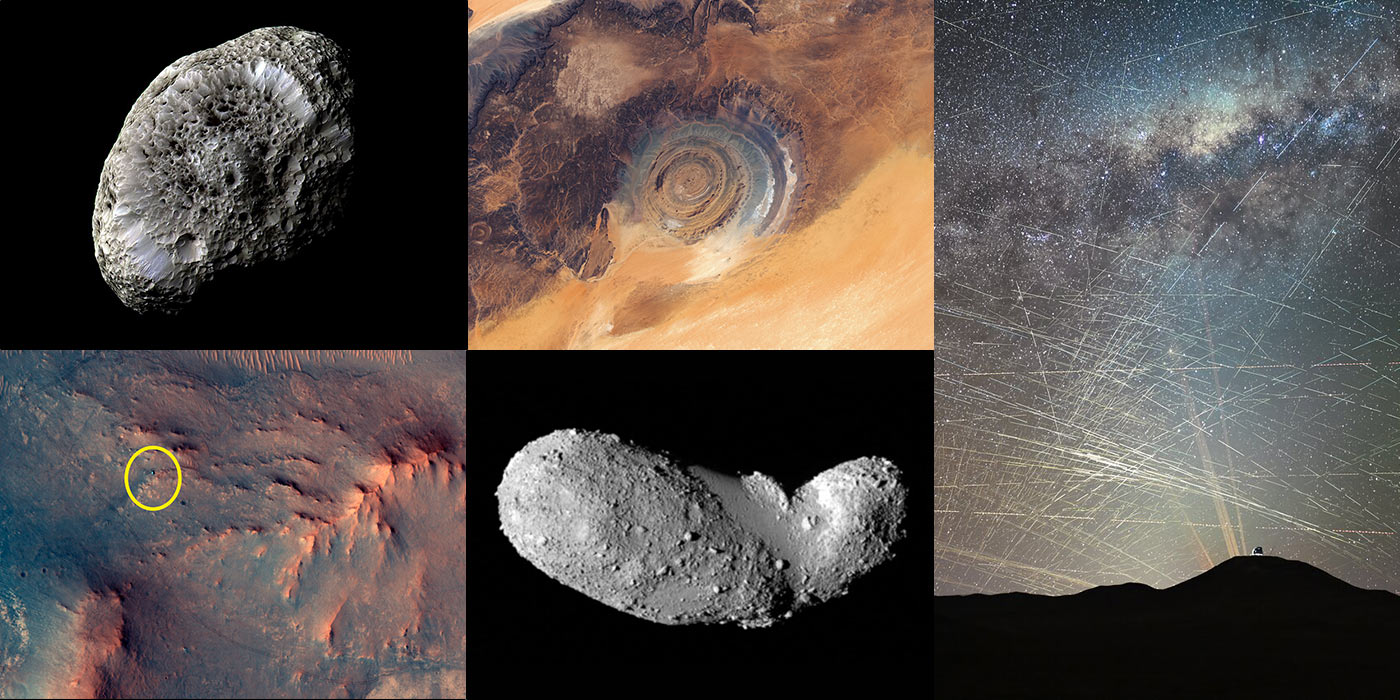
From a marathon milestone on Mars to a sky filled with satellite trails above Chile’s deserts, this week’s collection highlights humanity’s growing exploration of both Earth and space. The images also showcase some of the solar system’s most unusual worlds, including the rubble-pile asteroid Itokawa, the sponge-like moon Hyperion, and the striking Richat Structure—a geologic wonder so distinctive it can be spotted from orbit. #PPOD
Planetary Picture of the Day - Week of June 22, 2026
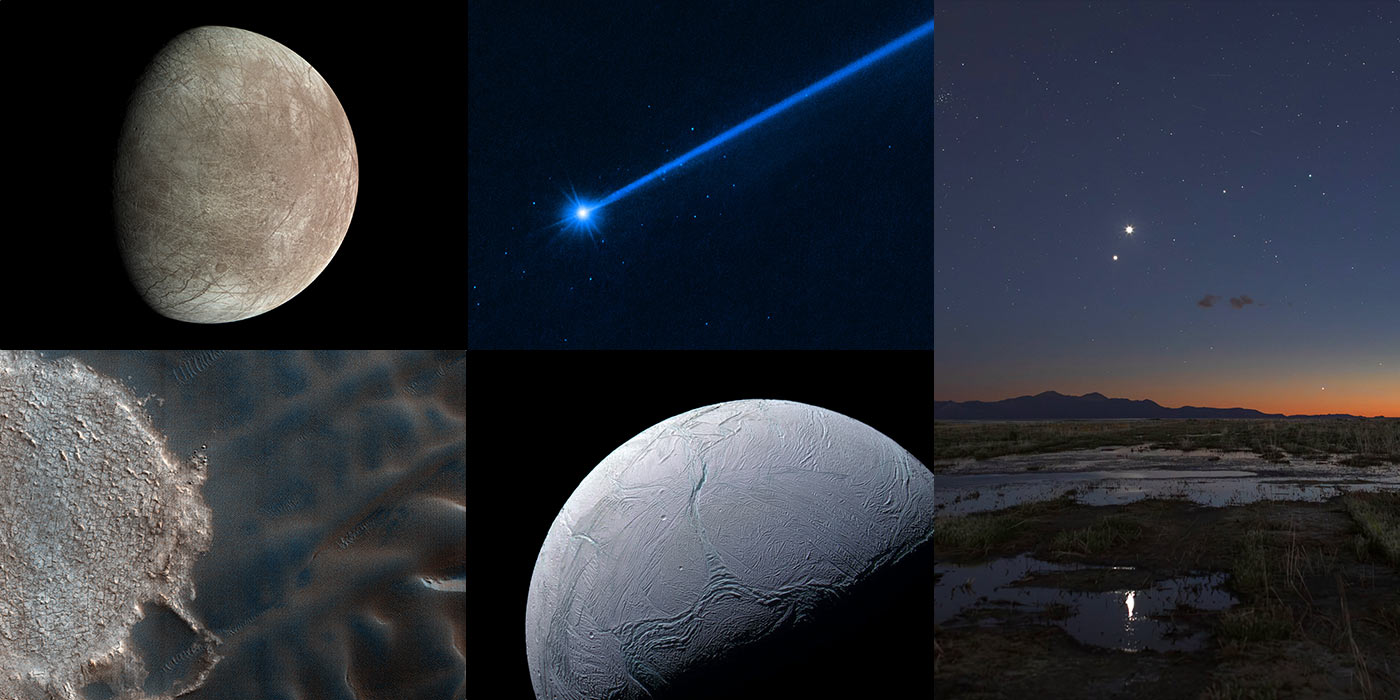
From asteroid fragments drifting through space to icy moons orbiting distant planets, this collection highlights the dynamic and ever-changing nature of our solar system. The images capture everything from a beautiful planetary conjunction in Earth’s skies to active wind-shaped landscapes on Mars, revealing how impacts, gravity, and weather continue to shape worlds both near and far. #PPOD
Planetary Picture of the Day - Week of June 15, 2026
This collection showcases a solar system in motion, from Saturn’s moons playing tricks on perspective and a comet’s dramatic collision with Jupiter to winds swirling across Earth’s southern oceans and ancient landscapes on Mars. Together, these images reveal the forces that shape worlds over time—erosion, impacts, atmospheric currents, and planetary evolution—while capturing moments of beauty, violence, and wonder across the cosmos. #PPOD
Planetary Picture of the Day - Week of June 8, 2026
Ancient Martian landscapes, glowing auroras, and stellar nurseries come together in this week’s PPOD collection, highlighting worlds and phenomena shaped by billions of years of cosmic history. From a rare meteorite born in the earliest days of the solar system to colorful nebulae where new stars are forming today, these images offer a remarkable look at both our origins and the ongoing evolution of the universe. #PPOD
Planetary Picture of the Day - Week of June 1, 2026
Our solar system contains dynamic worlds near and far, and our cameras capture amazing images of them every day, from a close-up flyby of Mars and the Moon’s beautiful Bay of Rainbows to the swirling storms of Jupiter. We also explore landscapes shaped by change, including Siberia’s expanding Batagaika mega-slump and a young star’s planet-forming disk, offering a glimpse of both Earth’s evolving surface and the processes that build new worlds. #PPOD
Planetary Picture of the Day - Week of May 25, 2026
This week's images journeyed from the shimmering Crystal Ball Nebula to the icy south pole of Mars, highlighting beauty and change across our solar system and beyond. The collection also captured stars being born in a ghostly nebula, the dramatic rays of Mercury’s Hokusai Crater, and a distant galaxy caught in transition—offering a striking look at cosmic evolution across space and time. #PPODResearch
Related Projects
SkyMapper: Expanding Access to Real-time Astronomy Through a Global Astronomical Network
SkyMapper and the SETI Institute are connecting educators, students and the public to live astronomical observations through a distributed astronomical network. #SkyMapper #SETI #Citizen Science #Astronomy
Virtual Planetary Laboratory
How can we best assess whether an exoplanet supports life? #VPL
Discovery and Futures Lab
What happens if life beyond Earth is discovered? The Discovery and Futures Lab at the SETI Institute fosters novel and anticipatory research at the intersection of science, society, our planet, and the search for life beyond Earth. #Discovery and Futures LabSupport the
SETI Institute
Scientists are getting closer in their search for life beyond earth. But with limited federal funding for the search for extraterrestrial intelligence, supporters are the reason cutting-edge scientists can keep their eyes on the sky.