Monday, 8 December 2025
Revisiting an Interstellar Comet
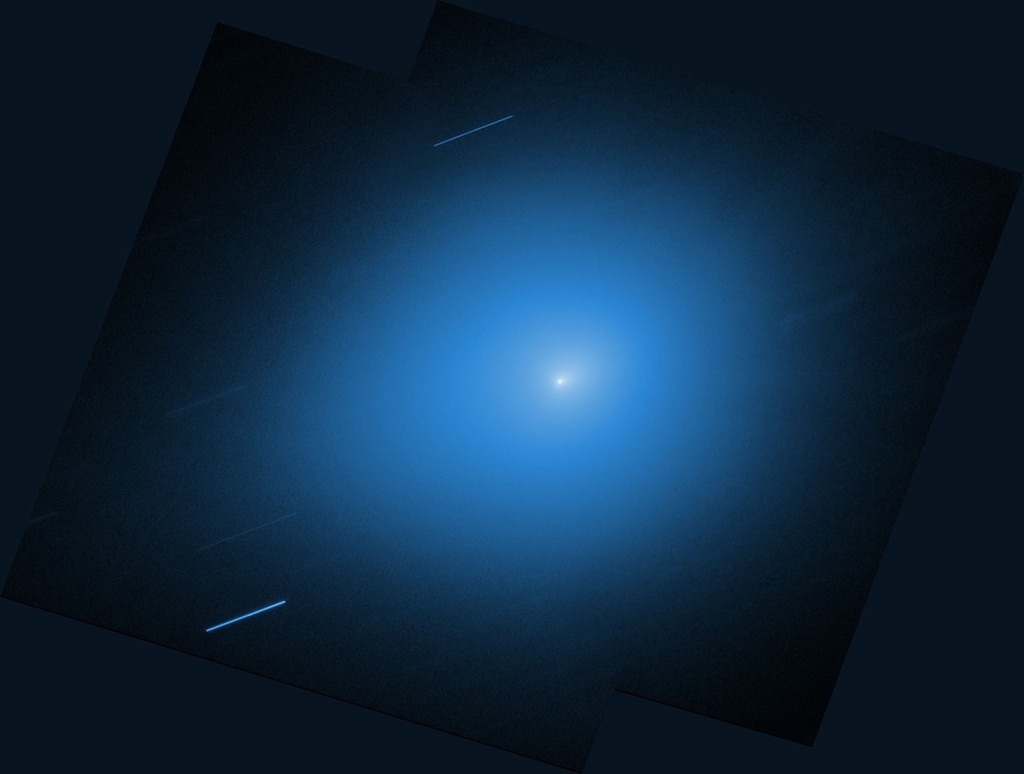
NASA’s Hubble Space Telescope reobserved interstellar comet 3I/ATLAS on Nov. 30, with its Wide Field Camera 3 instrument. At the time, the comet was about 178 million miles (286 million kilometers) from Earth. Hubble tracked the comet as it moved across the sky. As a result, background stars appear as streaks of light.
Hubble previously observed 3I/ATLAS in July, shortly after its discovery, and several NASA missions have since studied the comet. Observations are expected to continue for several more months as 3I/ATLAS heads out of the solar system.
Tuesday, 9 December 2025
A Butterfly Crater
Is it an insect? A strange fossil? An otherworldly eye, or even a walnut? No, it’s an intriguing kind of martian butterfly spotted by ESA’s Mars Express.
Insects aren’t commonplace on Mars, so it’s no surprise that this is no butterfly as we know it. It’s actually a kind of crater, formed as a space rock hurtled towards the Red Planet and collided with its red-brown surface.
The collision caused two distinct lobes of material to be flung outwards to the crater’s north and south, creating two outstretched ‘wings’ of raised ground. The wings of this particular butterfly crater are rather undefined and irregular. Still, they can be seen extending to the lower left and upper right of the main walnut-esque crater shown here.
This crater measures roughly 20 km east-west and 15 km north-south. It lies in the Idaeus Fossae region of Mars, in the planet’s northern lowlands.
Wednesday, 10 December 2025
Satellite Footprints
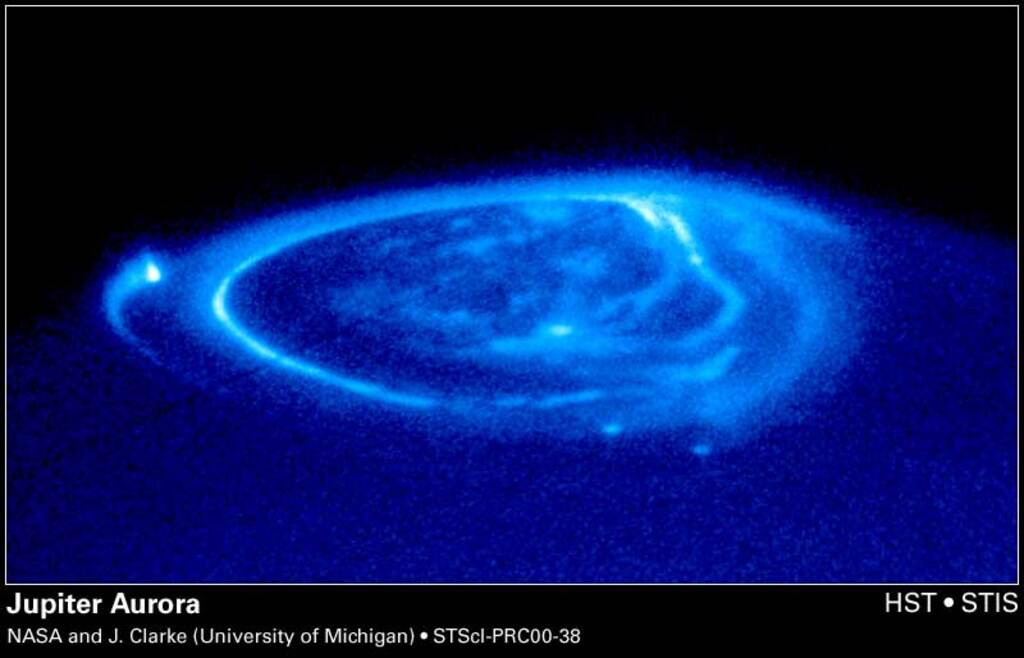
This is a spectacular NASA Hubble Space Telescope close-up view of an electric-blue aurora that is eerily glowing one half billion miles away on the giant planet Jupiter. Auroras are curtains of light resulting from high-energy electrons racing along the planet's magnetic field into the upper atmosphere. The electrons excite atmospheric gases, causing them to glow. The image shows the main oval of the aurora, which is centered on the magnetic north pole, plus more diffuse emissions inside the polar cap.
Though the aurora resembles the same phenomenon that crowns Earth's polar regions, the Hubble image shows unique emissions from the magnetic "footprints" of three of Jupiter's largest moons. (These points are reached by following Jupiter's magnetic field from each satellite down to the planet.)
Auroral footprints can be seen in this image from Io (along the left-hand limb), Ganymede (near the center), and Europa (just below and to the right of Ganymede's auroral footprint). These emissions, produced by electric currents generated by the satellites, flow along Jupiter's magnetic field, bouncing in and out of the upper atmosphere. They are unlike anything seen on Earth.
This ultraviolet image of Jupiter was taken with the Hubble Space Telescope Imaging Spectrograph (STIS) on November 26, 1998. In this ultraviolet view, the aurora stands out clearly, but Jupiter's cloud structure is masked by haze.
Thursday, 11 December 2025
Titan's Surface
The atmosphere of Titan, one of Saturn’s moons, appears similar to that on Earth about 3.5 billion years ago, before life appeared.
After a seven-year journey on board the Cassini spacecraft, ESA’s Huygens probe reached Titan’s surface, marking the most distant landing ever achieved by a spacecraft. During the descent, its cameras collected data on the dense atmosphere and took the first-ever images of the surface.
These revealed an extraordinary world with lakes, islands, and erosion features similar to those that shape our planet, confirming that liquid methane once flowed there. Methane on Titan is found in liquid form, not as a gas, due to the intense pressure and cold temperatures, about –180° C.
Friday, 12 December 2025
Earth from Tianwen-2
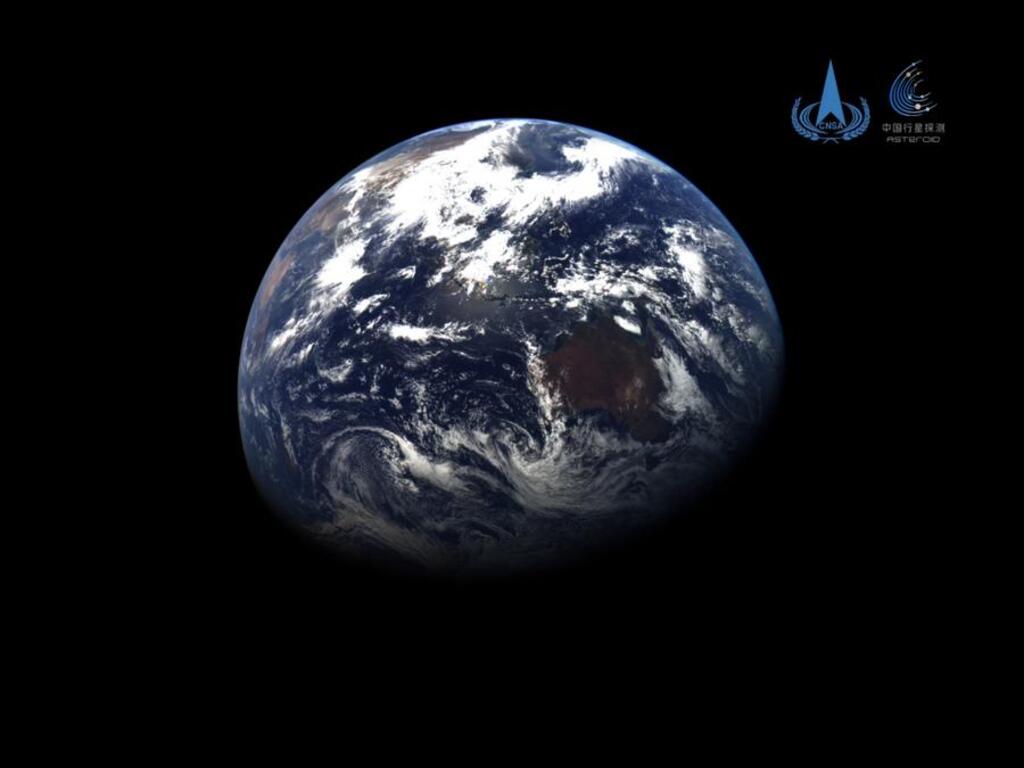
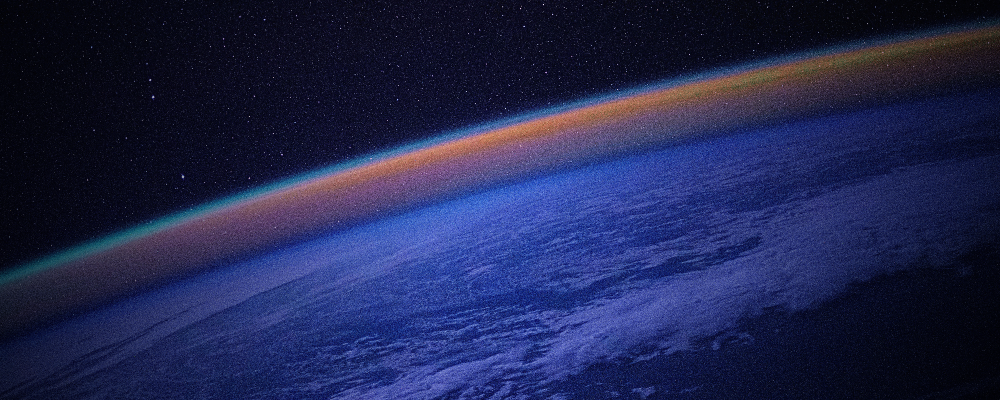
This image, released by the China National Space Administration (CNSA), shows a view of the Earth captured by the Tianwen-2 probe on May 30, 2025, and post-processed by scientific researchers.
The CNSA said that the narrow-field-of-view navigation sensor equipped on the probe recently captured the images of Earth and the moon, demonstrating good functional performance.
The images released include a photograph of Earth obtained by Tianwen-2 when it was approximately 590,000 kilometers away from the planet.
News
Related News
Planetary Picture of the Day - Week of July 6, 2026
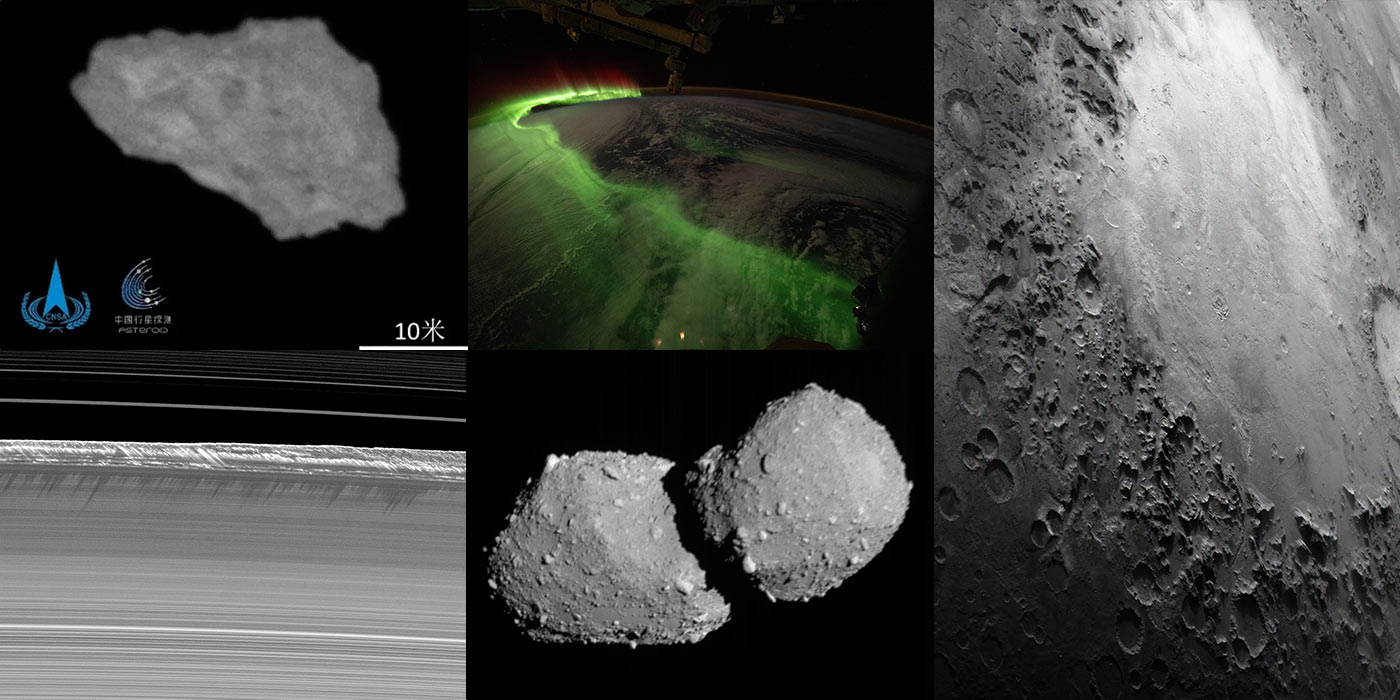
Enjoy fifty years of planetary exploration, from a classic Viking view of Mars’ immense Argyre Basin to new asteroid encounters by the Tianwen-2 and Hayabusa2 missions. The images also capture the beauty and dynamism of our cosmic neighborhood, including a brilliant aurora seen from orbit and towering structures rising from Saturn’s rings, shaped by the hidden influence of embedded moonlets. #PPOD
Planetary Picture of the Day - Week of June 29, 2026
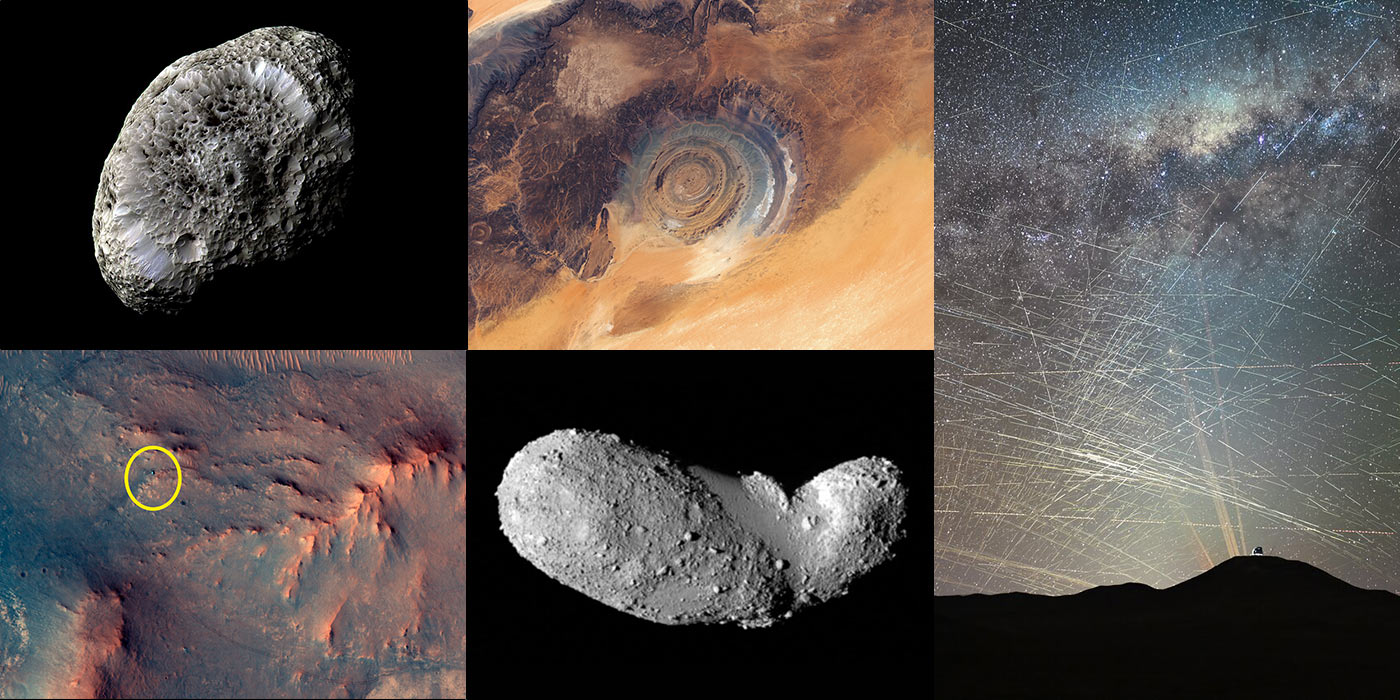
From a marathon milestone on Mars to a sky filled with satellite trails above Chile’s deserts, this week’s collection highlights humanity’s growing exploration of both Earth and space. The images also showcase some of the solar system’s most unusual worlds, including the rubble-pile asteroid Itokawa, the sponge-like moon Hyperion, and the striking Richat Structure—a geologic wonder so distinctive it can be spotted from orbit. #PPOD
Planetary Picture of the Day - Week of June 22, 2026
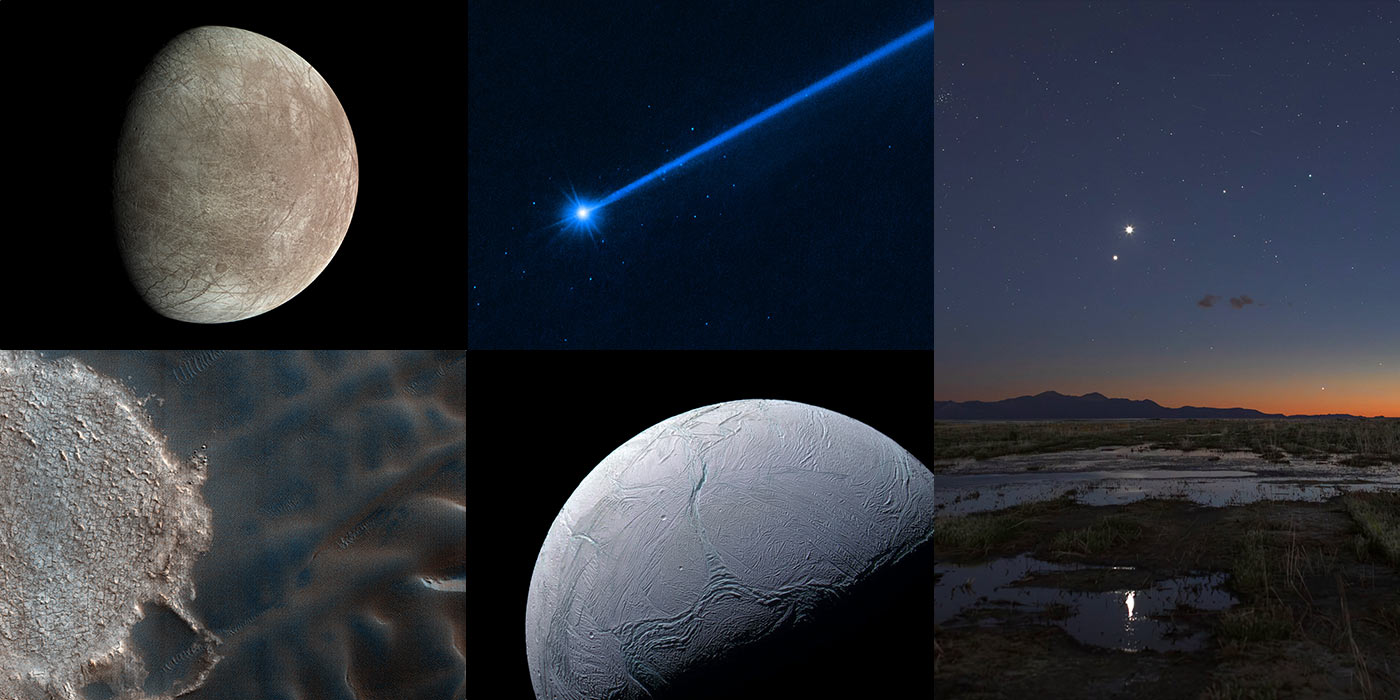
From asteroid fragments drifting through space to icy moons orbiting distant planets, this collection highlights the dynamic and ever-changing nature of our solar system. The images capture everything from a beautiful planetary conjunction in Earth’s skies to active wind-shaped landscapes on Mars, revealing how impacts, gravity, and weather continue to shape worlds both near and far. #PPOD
Planetary Picture of the Day - Week of June 15, 2026
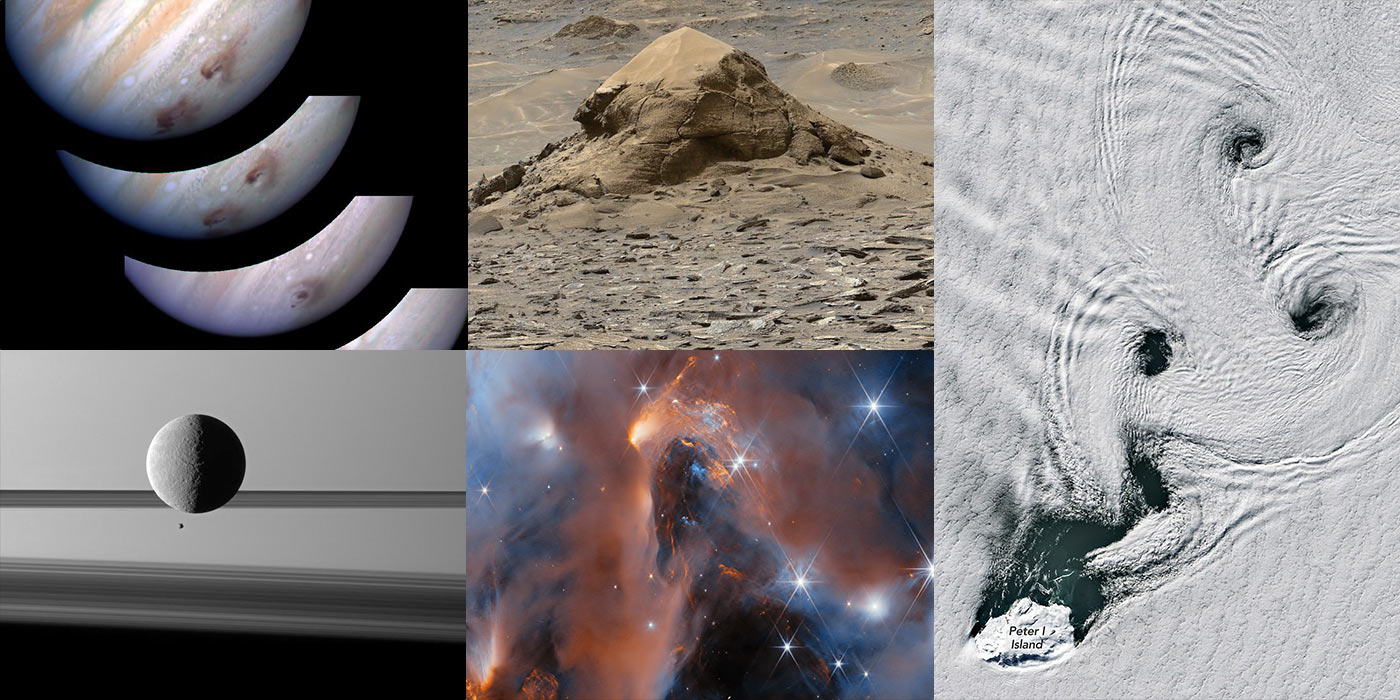
This collection showcases a solar system in motion, from Saturn’s moons playing tricks on perspective and a comet’s dramatic collision with Jupiter to winds swirling across Earth’s southern oceans and ancient landscapes on Mars. Together, these images reveal the forces that shape worlds over time—erosion, impacts, atmospheric currents, and planetary evolution—while capturing moments of beauty, violence, and wonder across the cosmos. #PPOD
Planetary Picture of the Day - Week of June 8, 2026
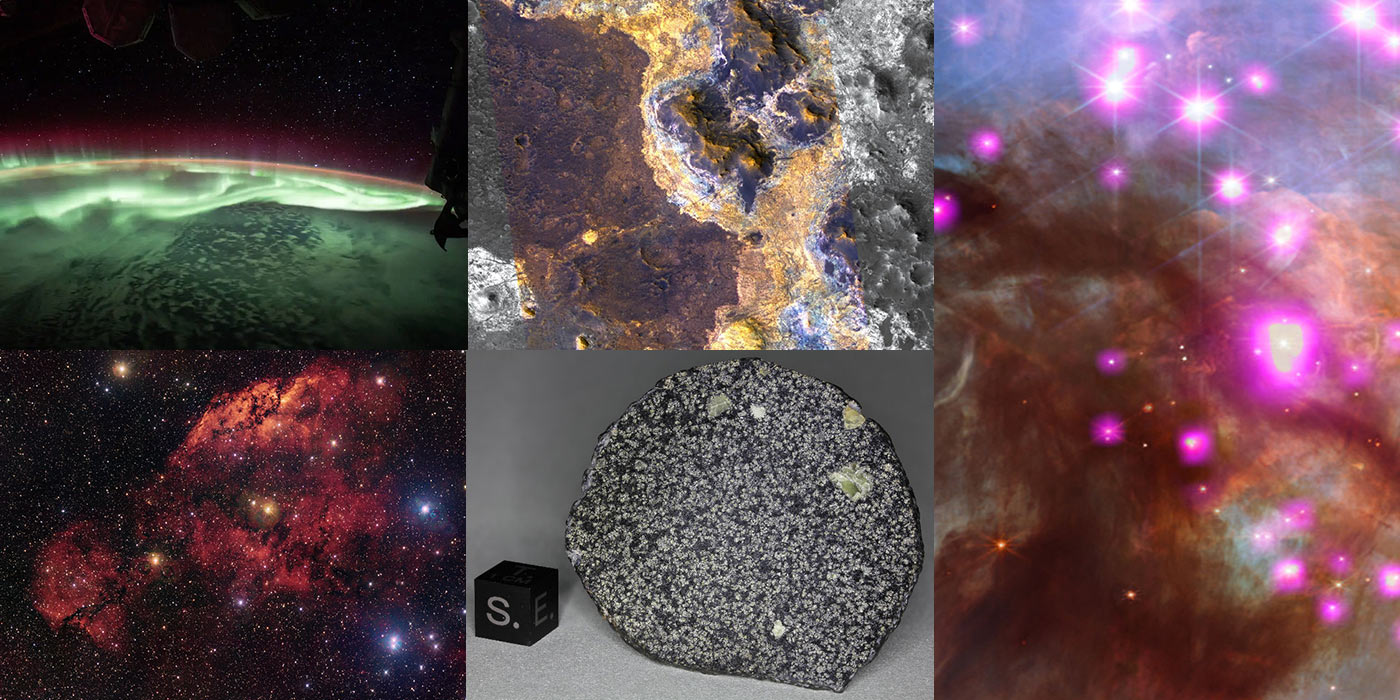
Ancient Martian landscapes, glowing auroras, and stellar nurseries come together in this week’s PPOD collection, highlighting worlds and phenomena shaped by billions of years of cosmic history. From a rare meteorite born in the earliest days of the solar system to colorful nebulae where new stars are forming today, these images offer a remarkable look at both our origins and the ongoing evolution of the universe. #PPOD
Planetary Picture of the Day - Week of June 1, 2026
Our solar system contains dynamic worlds near and far, and our cameras capture amazing images of them every day, from a close-up flyby of Mars and the Moon’s beautiful Bay of Rainbows to the swirling storms of Jupiter. We also explore landscapes shaped by change, including Siberia’s expanding Batagaika mega-slump and a young star’s planet-forming disk, offering a glimpse of both Earth’s evolving surface and the processes that build new worlds. #PPODResearch
Related Projects
SkyMapper: Expanding Access to Real-time Astronomy Through a Global Astronomical Network
SkyMapper and the SETI Institute are connecting educators, students and the public to live astronomical observations through a distributed astronomical network. #SkyMapper #SETI #Citizen Science #Astronomy
Virtual Planetary Laboratory
How can we best assess whether an exoplanet supports life? #VPL
Discovery and Futures Lab
What happens if life beyond Earth is discovered? The Discovery and Futures Lab at the SETI Institute fosters novel and anticipatory research at the intersection of science, society, our planet, and the search for life beyond Earth. #Discovery and Futures LabSupport the
SETI Institute
Scientists are getting closer in their search for life beyond earth. But with limited federal funding for the search for extraterrestrial intelligence, supporters are the reason cutting-edge scientists can keep their eyes on the sky.