Monday, 13 April 2026
Lava Flow on Réunion Island
This Copernicus Sentinel-2 image captures an active lava flow on the Piton de la Fournaise volcano on Réunion Island.
Located in the western Indian Ocean, the island of Réunion is a French overseas department about 680 km east of Madagascar. Réunion's volcanic origins make its landscape particularly rugged in places and lushly vegetated in others. Cultivated land and cities, visible as grey-white clusters, are concentrated on the coastal lowlands. The capital and largest city is Saint-Denis, on the northern coast, mostly covered by clouds in the image.
The center of the island shelters three vast cirques, or calderas, created by huge collapses. Together they form the dormant shield volcano and the island's highest peak, Piton des Neiges (3069 m), which peeps out in brown from beneath the clouds near the center of the image.
Although Réunion hosts multiple volcanoes, only one is currently active: the Piton de la Fournaise shield volcano, one of the most active on Earth, which dominates the southeastern part of the island. This image, from 21 March 2026, shows a lava flow on its western flank, following an eruption that began in mid-February.
Tuesday, 14 April 2026
Fissure near Cerberus Fossae, Mars
The linearity of the volcanic vent shown in this HiRISE image, in conjunction with evidence of lava flow from the vent, suggests control by combined volcano-tectonic processes. The details of this vent, obtained by HiRISE, should provide insight into volcano-tectonic processes along the Cerberus Fossae fissures in two ways.
The nature of both the volcanic products along this fissure and the geometries of the linear vent will permit comparison with similar, non-volcanic fissures at Cerberus. The results from these comparisons will provide insight into the orientation of the underlying dike system that may have controlled the ascent of water to the surface in the Cerberus region.
Wednesday, 15 April 2026
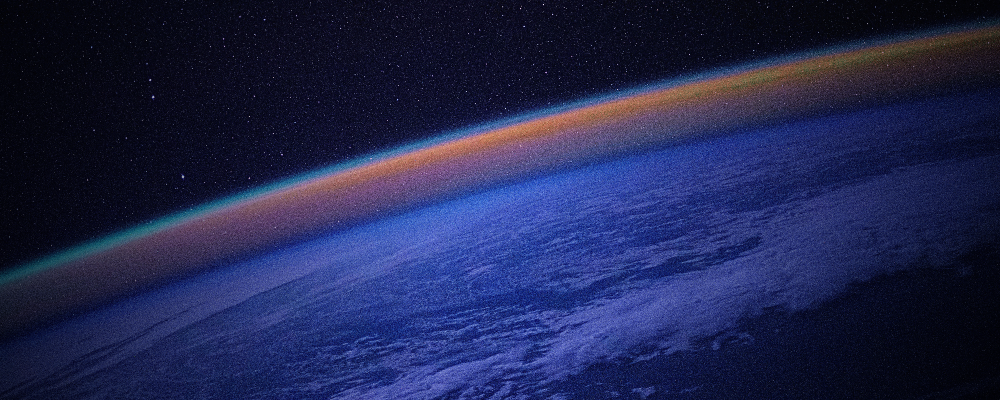
Earthset
The Artemis II crew captured this view of Earth setting on April 6, 2026. As the astronauts flew over the Moon’s far side, the crew photographed and described terrain features, including impact craters, ancient lava flows, and surface cracks and ridges formed as the Moon slowly evolved. They also noted differences in color, brightness, and texture, which provide clues that help scientists understand the composition and history of the lunar surface.
The image is reminiscent of the iconic Earthrise image taken by astronaut Bill Anders 58 years earlier as the Apollo 8 crew flew around the Moon. The Apollo 8 mission was the first crewed spacecraft to circumnavigate the Moon.
Thursday, 16 April 2026
A Fiery Final Act
Discovered on January 13, 2026, in Chile’s Atacama Desert, Comet C/2026 A1 (MAPS) was part of the Kreutz family of “sungrazers”—comets that dive dangerously close to the Sun. The image was captured in infrared light by JWST's Mid-Infrared Instrument (MIRI) on February 7, 2026, by a team led by Qicheng Zhang and was then processed by Melina Thévenot.
On April 4, it made its dramatic close approach, passing just 161,000 km (100,000 miles) above the Sun’s surface. As it neared, sunlight scattering briefly made it shine brighter—but the intense glare made it nearly impossible to spot. Then came the finale: about 6 hours before its closest approach, the comet reached a brightness of magnitude –0.6, and shortly after, it broke apart.
A spectacular (and short-lived) reminder of just how extreme our solar system can be.
Friday, 17 April 2026
The Sun’s Inner Corona
The Sun’s inner corona, the hottest part of our star's atmosphere, appears faint yellow in this image taken by the ASPIICS coronagraph aboard Proba-3. The image combines data from Proba-3’s ASPIICS coronagraph (inner solar corona in yellow) and from the Atmospheric Imaging Assembly (AIA) aboard NASA’s Solar Dynamics Observatory (solar disc in dark orange).
Seen at the 11 o'clock and 5 o'clock points are structures made of relatively cold plasma, known as prominences, although they are still around 10,000 degrees Celsius. Prominences can expand outwards from the Sun and ‘erupt’, breaking up and sending plasma in different directions. The eruptions were captured in the spectral line emitted by helium atoms, showing the solar atmosphere as a human eye would see it during a total eclipse through a yellow ASPIICS filter. The AIA image shows emission from another helium spectral line.
The remaining faint yellow glow of the corona is a result of the scattering of visible light from the Sun's surface on coronal electrons.
News
Related News
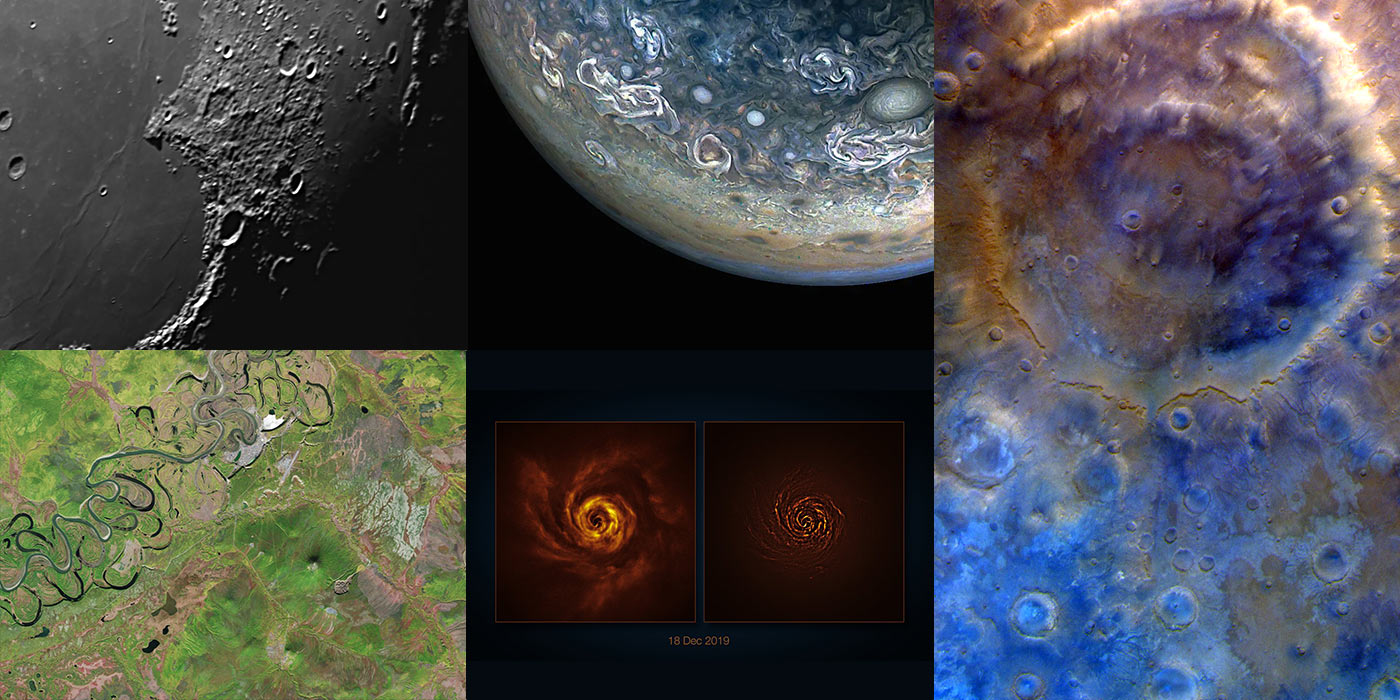
Planetary Picture of the Day - Week of June 29, 2026
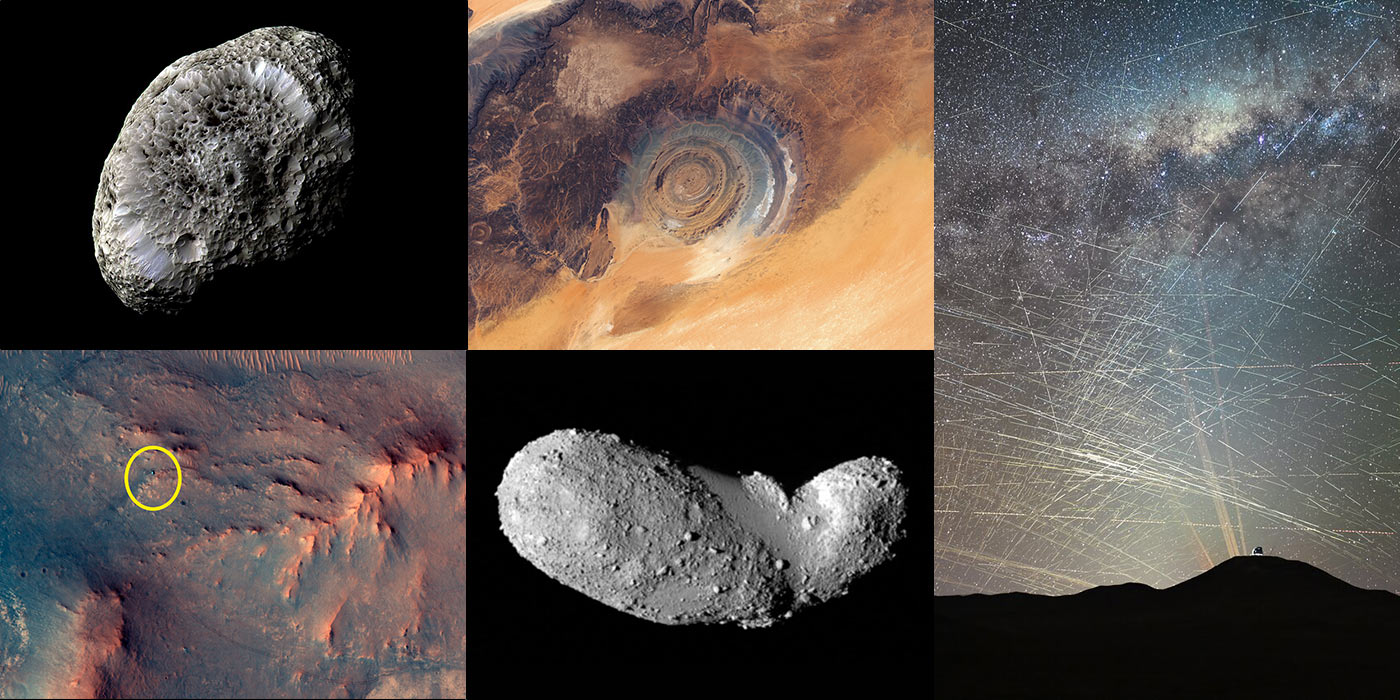
From a marathon milestone on Mars to a sky filled with satellite trails above Chile’s deserts, this week’s collection highlights humanity’s growing exploration of both Earth and space. The images also showcase some of the solar system’s most unusual worlds, including the rubble-pile asteroid Itokawa, the sponge-like moon Hyperion, and the striking Richat Structure—a geologic wonder so distinctive it can be spotted from orbit. #PPOD
Planetary Picture of the Day - Week of June 22, 2026
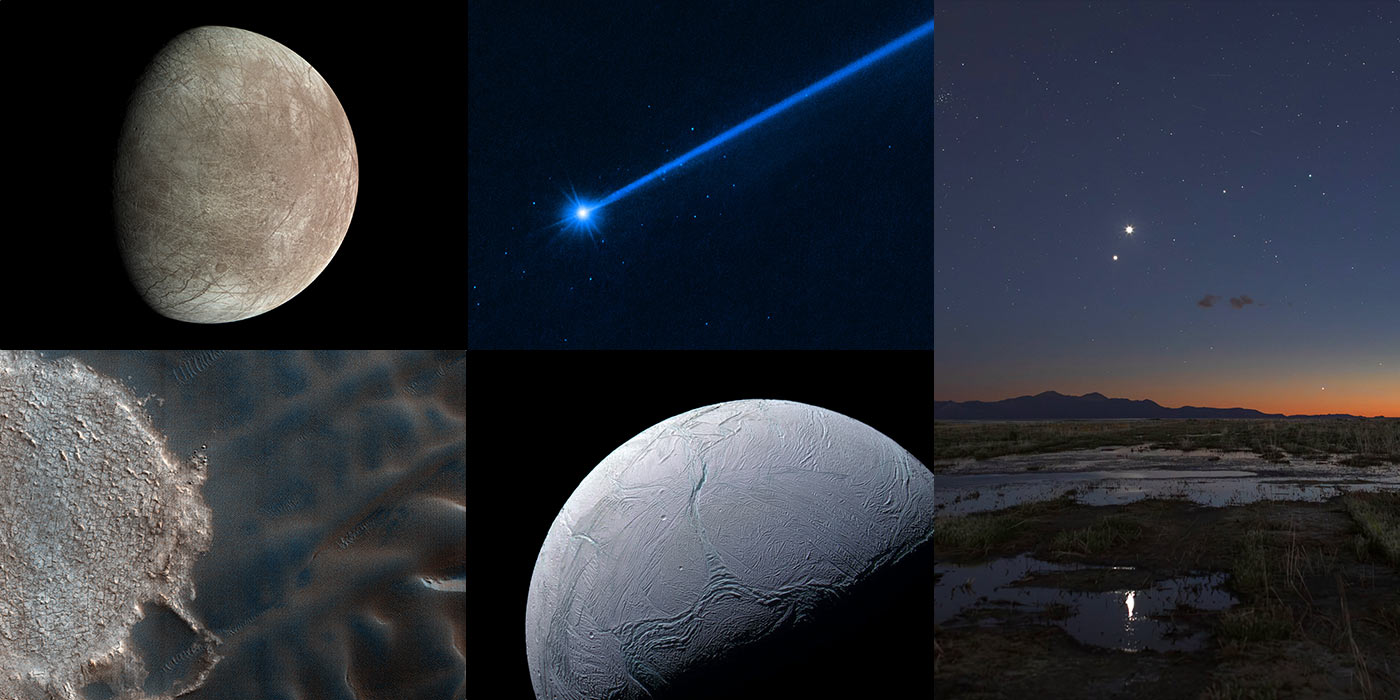
From asteroid fragments drifting through space to icy moons orbiting distant planets, this collection highlights the dynamic and ever-changing nature of our solar system. The images capture everything from a beautiful planetary conjunction in Earth’s skies to active wind-shaped landscapes on Mars, revealing how impacts, gravity, and weather continue to shape worlds both near and far. #PPOD
Planetary Picture of the Day - Week of June 15, 2026
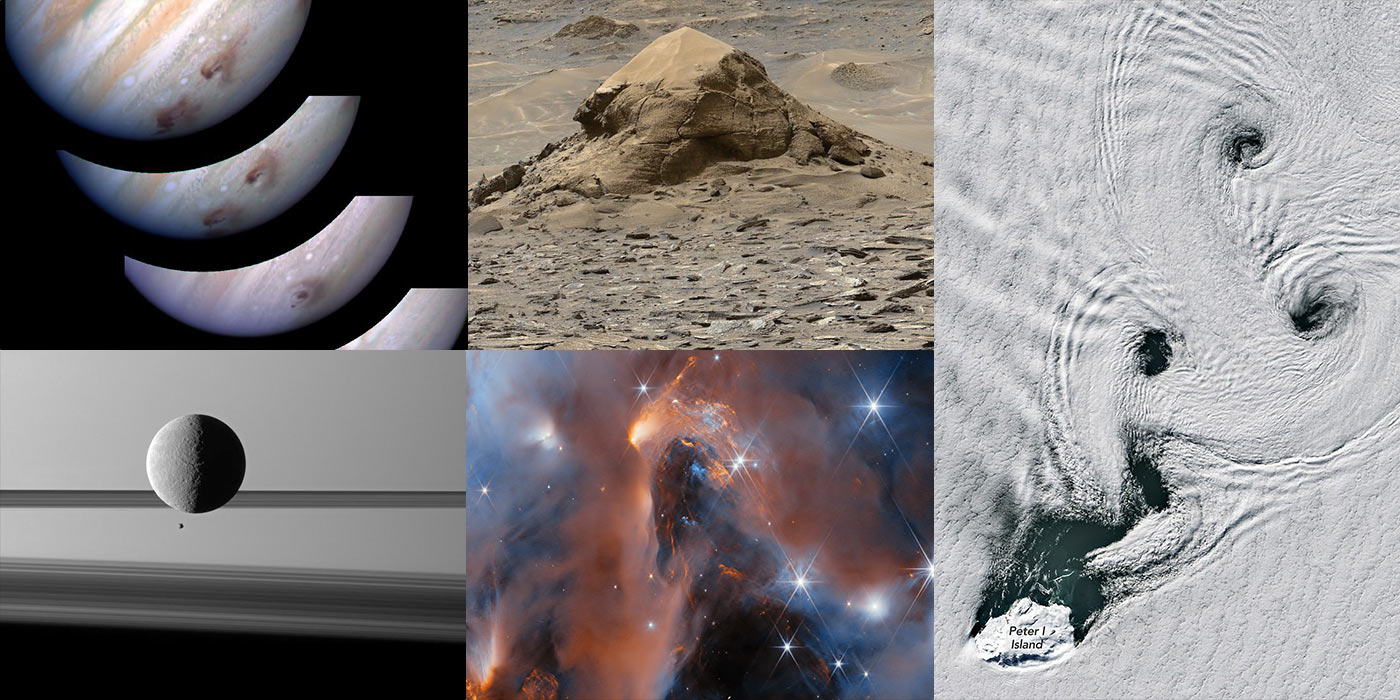
This collection showcases a solar system in motion, from Saturn’s moons playing tricks on perspective and a comet’s dramatic collision with Jupiter to winds swirling across Earth’s southern oceans and ancient landscapes on Mars. Together, these images reveal the forces that shape worlds over time—erosion, impacts, atmospheric currents, and planetary evolution—while capturing moments of beauty, violence, and wonder across the cosmos. #PPOD
Planetary Picture of the Day - Week of June 8, 2026
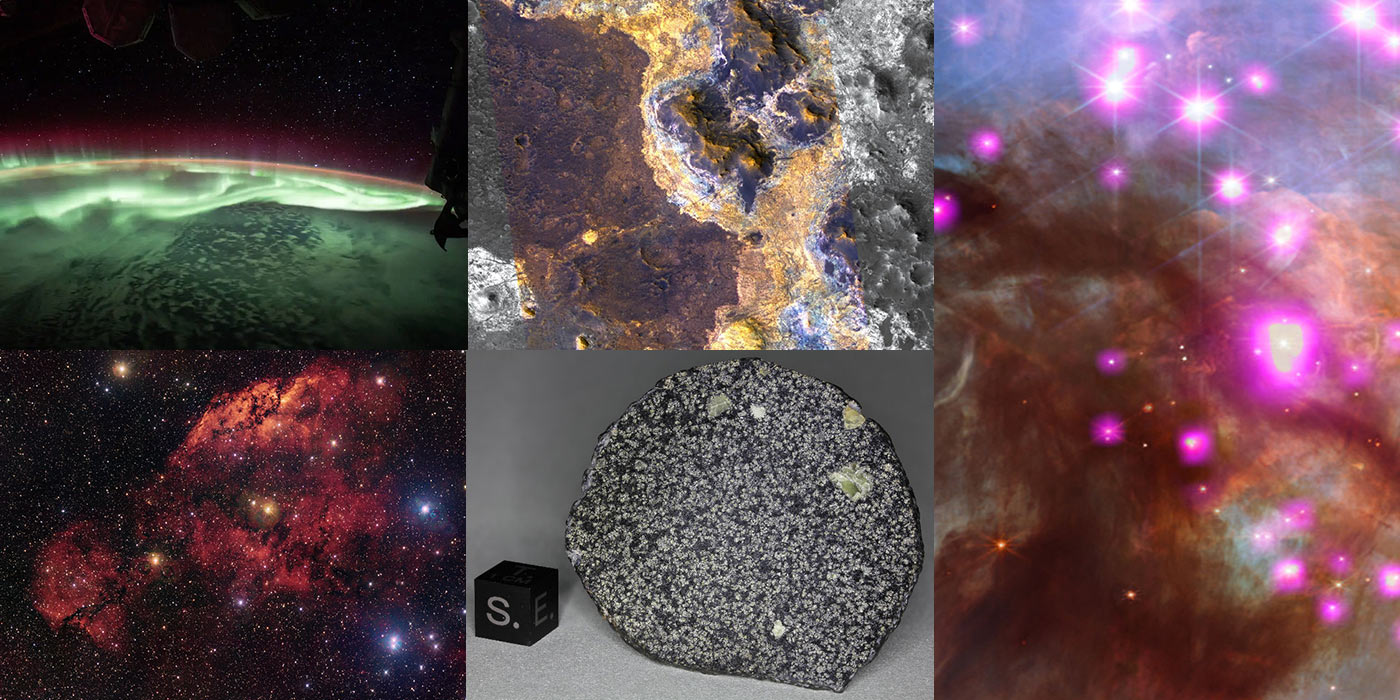
Ancient Martian landscapes, glowing auroras, and stellar nurseries come together in this week’s PPOD collection, highlighting worlds and phenomena shaped by billions of years of cosmic history. From a rare meteorite born in the earliest days of the solar system to colorful nebulae where new stars are forming today, these images offer a remarkable look at both our origins and the ongoing evolution of the universe. #PPOD
Planetary Picture of the Day - Week of June 1, 2026
Our solar system contains dynamic worlds near and far, and our cameras capture amazing images of them every day, from a close-up flyby of Mars and the Moon’s beautiful Bay of Rainbows to the swirling storms of Jupiter. We also explore landscapes shaped by change, including Siberia’s expanding Batagaika mega-slump and a young star’s planet-forming disk, offering a glimpse of both Earth’s evolving surface and the processes that build new worlds. #PPOD
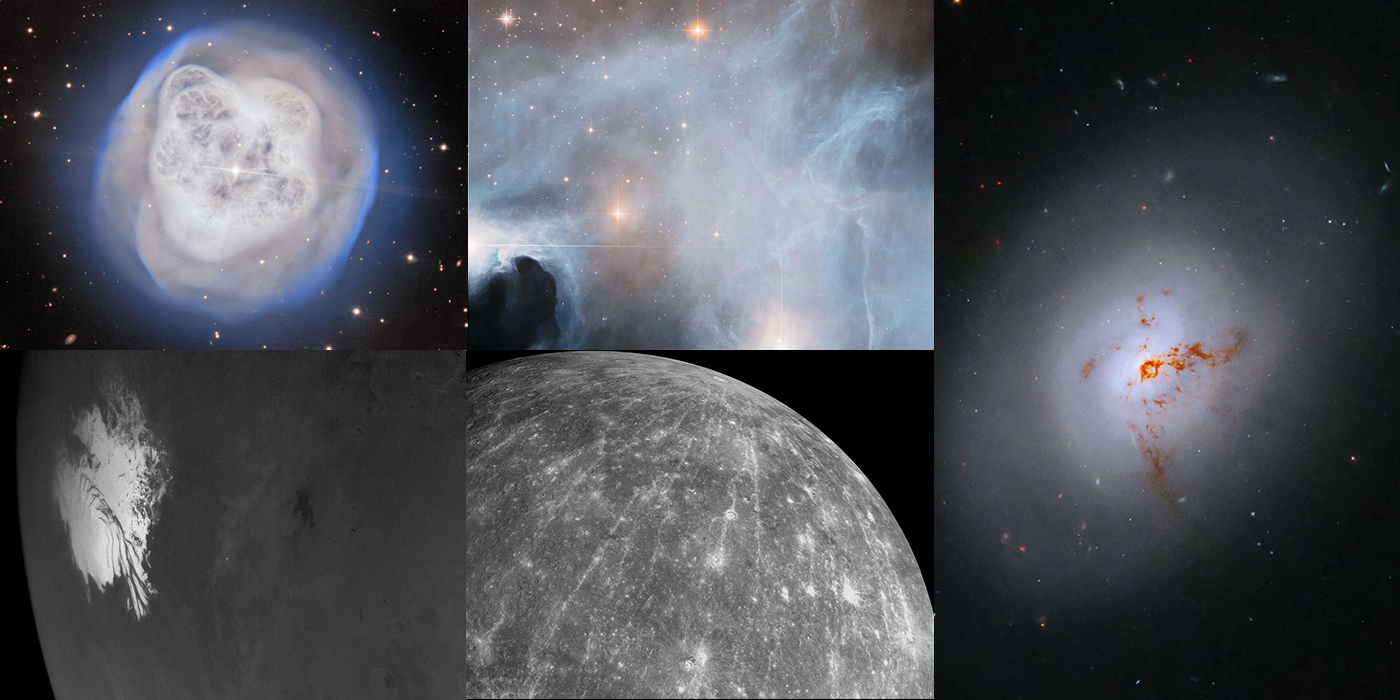
Planetary Picture of the Day - Week of May 25, 2026
This week's images journeyed from the shimmering Crystal Ball Nebula to the icy south pole of Mars, highlighting beauty and change across our solar system and beyond. The collection also captured stars being born in a ghostly nebula, the dramatic rays of Mercury’s Hokusai Crater, and a distant galaxy caught in transition—offering a striking look at cosmic evolution across space and time. #PPODResearch
Related Projects
SkyMapper: Expanding Access to Real-time Astronomy Through a Global Astronomical Network
SkyMapper and the SETI Institute are connecting educators, students and the public to live astronomical observations through a distributed astronomical network. #SkyMapper #SETI #Citizen Science #Astronomy
Virtual Planetary Laboratory
How can we best assess whether an exoplanet supports life? #VPL
Discovery and Futures Lab
What happens if life beyond Earth is discovered? The Discovery and Futures Lab at the SETI Institute fosters novel and anticipatory research at the intersection of science, society, our planet, and the search for life beyond Earth. #Discovery and Futures LabSupport the
SETI Institute
Scientists are getting closer in their search for life beyond earth. But with limited federal funding for the search for extraterrestrial intelligence, supporters are the reason cutting-edge scientists can keep their eyes on the sky.