)

Author: Nathalie Cabrol
Wednesday, Feb 25, 2026

Gale crater: These pea-sized nodules were formed by minerals left behind as groundwater was drying out on Mars billions of years ago. (Credit: NASA/JPL-Caltech/MSSS)
Listen to this article read by AI:
At a Glance:New Discoveries on Mars and What They Say About Habitability and Life Two NASA rovers have strengthened the case that ancient Mars may have supported life.
Why it matters: |
Mars dominates the planetary news with exciting reports. Two NASA rovers, working nearly 3,700 kilometers apart, made discoveries that addressed the question: how far did Mars come toward conditions that, on Earth, supported life?
On one side of the planet, new studies confirm last summer’s hint that Curiosity detected the largest organic molecules yet identified on Mars. These include decane, undecane, and dodecane found in the ancient Cumberland mudstone of Gale Crater. These C10–C12 carbon chains are consistent with the kinds of fragments you might expect from fatty acids, which are molecules that, on Earth, sit close to biology because they are basic building blocks of membranes and metabolic chemistry. But it now seems that these compounds were in sediments later modified by groundwater-driven diagenesis (when sediments turn into rocks), documented by Curiosity’s mineralogical and geochemical measurements. On the other side, Perseverance has identified silica-rich rocks in Jezero Crater, including opal/chalcedony and, critically, well-crystallized quartz, detected with SuperCam spectroscopy. Why does it matter? Silica-rich phases on Earth are famously good at preserving biosignatures, from molecular residues to microtextures. And we just learned that Perseverance also identified kaolinite in altered igneous rocks on the crater floor. This comes from combined SuperCam infrared spectroscopy and PIXL elemental chemistry, consistent with a feldspar-to-kaolinite transformation under sustained water activity. If both findings are mineralogical firsts, they are also a lot more than that. They point to abundant ancient groundwater–rock interaction and likely hydrothermal processes.
Taken together, these are not “We discovered life on Mars” headlines. They are subtler and, in many ways, more important. This is a strengthening of the case that ancient Mars had both (i) an organic carbon inventory and (ii) environments capable of concentrating, processing, and preserving chemical traces – and these environments were diverse and long-lasting, and that’s good news for the search for life on Mars.
Organic Molecules and Ancient Groundwater at Gale
The findings at Gale are exciting because they push Martian organic chemistry into a higher tier of complexity. Long carbon chains do not automatically mean biology, but they do mean that Mars can make, or at least retain, molecules that are closer to the chemical scaffolding of life than the simple organics we often discuss. On Earth, fatty acids are associated with life, but they are not exclusive to it. Abiotic pathways exist, including hydrothermal synthesis and Fischer–Tropsch-type reactions (chemical reactions on hot mineral surfaces that can build organic molecules capable of supporting life). Mars has the rocks, the heat sources (past and still some today), the CO/CO₂ and H₂ chemistry, and time, lots of it.
What now makes the Cumberlands organics particularly compelling is their geological context. Curiosity has shown that these mudstones underwent multiple episodes of groundwater circulation after burial. These episodes have been recorded in mineral veins, diagenetic textures, and chemical redistribution measured by CheMin and APXS. The organics detected by SAM therefore reside in rocks that remained chemically open systems for extended periods. That matters a lot because groundwater does more than wet rocks. It transports carbon, redistributes redox couples (paired chemicals that exchange electrons), and creates microenvironments where organic molecules can be synthesized, altered, concentrated, or shielded from oxidation. Subsurface aqueous systems are also among the most stable habitable niches on Earth, persisting long after surface environments become hostile. In Gale, this implies that potential habitable conditions did not end with the lake that deposited the mudstone but continued underground, in circulating water, for geologically meaningful timescales.
What nudged this discovery into deeper interest is not the mere detection of the molecules, but the attempt to ask whether known non-biological sources plausibly account for their abundance. A follow-on analysis reported by NASA describes a study arguing that the non-biological sources they evaluated (for example, delivery by meteorites) could not fully explain the measured abundance, making it “reasonable to hypothesize” that biology could have contributed, while stressing that this remains unresolved.
Jezero: Hot Springs, Clay, and Life-Friendly Environments
The Jezero quartz story is exciting for different reasons. It is less about “life ingredients” and more about environmental opportunity. Quartz and its silica cousins (opal, chalcedony) typically form under conditions that mobilize silica in water and precipitate it, often in hydrothermal settings. The Jezero detections are interpreted as part of a common hydrothermal system, potentially triggered by the impact that formed Jezero, with different silica phases representing precipitation at different depths and temperatures. Why does that matter with respect to habitability? Because hydrothermal systems are among the most compelling natural laboratories for prebiotic chemistry and microbial ecosystems. They supply heat, chemical gradients, and mineral surfaces that can drive synthesis and catalysis. And if life ever gained a foothold, hydrothermal circulation can both sustain it and entomb its traces. Silica-rich deposits are also preservation jackpots. On Earth, cherts and other siliceous rocks can lock away molecular organics and microscopic structures over immense timescales. The Jezero team explicitly frames these silica-rich rocks, especially opaline silica, as key targets for sampling and return, precisely because of their preservation potential.
That, in itself, is already a tremendous finding, but there is more. The identification of kaolinite announced a few days ago now expands the picture from hydrothermal pulses to prolonged water alteration. Kaolinite typically forms when feldspar-rich igneous rocks interact with liquid water over extended periods under relatively moderate temperatures and pH conditions. Its presence in Jezero’s altered crust indicates sustained water-rock interaction. Critically, Perseverance observes kaolinite spatially associated with silica-bearing alteration zones. Together, these minerals outline a continuum of water environments, from hydrothermal circulation to longer-lived alteration in percolating or standing waters. This kind of mineralogical diversity is exactly what on Earth correlates with habitable geochemical gradients and long-term fluid activity.

NASA's Perseverance rover discovers bleached kaolinite rocks on Mars, revealing clues of ancient climate conditions in Jezero Crater.
What Makes a Biosignature?
Here is the key: neither discovery stands alone. Organic molecules, by themselves, are not proof of life. Quartz, by itself, is not proof of life. Even both together are not proof of life. But they add weight to an accumulating argument that ancient Mars wasn’t merely “wet once,” or “chemically interesting in theory.” It was active, carbon cycling through environments, water moving through rocks, hydrothermal systems likely operating, and complex organics being produced, delivered, preserved, or all the above. The addition of groundwater-altered sediments at Gale and clay-forming alteration at Jezero further suggests that habitable conditions were not confined to short-lived surface lakes or impact events but extended into subsurface and long-duration aqueous systems across different regions of the planet. This is why astrobiology relies so heavily on context and the ladder of life-detection principles. The same molecule means different things in different rocks. The same mineral means different things in different settings. A signature of life is convincing only when it cannot be explained by the environment alone. What is not helping either is that we still do not have a universal definition of life that can be cleanly adopted for alien worlds. We recognize life on Earth because Earth is saturated with it and because we understand its biochemistry here. On Mars, we are forced to adopt a more cautious approach, inferring possibilities and building confidence only when multiple independent clues converge.
The Significance of these Discoveries
Gale’s organics grow the chemical inventory. Gale’s groundwater history and Jezero’s kaolinite now extend both inventories in time and environmental range, indicating that water activity and alteration persisted beyond the initial lake and impact phases, and occurred in multiple geochemical regimes. Together, they help narrow the space of plausible histories for Mars, histories in which complex carbon chemistry had time and place to unfold, and in which traces of life, if they ever existed, might still be readable. Ancient Mars, increasingly, looks less like a planet that was briefly habitable and more like one that sustained habitable settings in different places, at different depths, and for much longer than once thought. These findings do not tell us that life was present on Mars, but they tell us the question remains scientifically… alive and increasingly testable. And in Mars exploration, that is a very big deal.







News
Related News

Jun 1, 2026
SETI Institute Awards $1 Million in STRIDE Grants to Advance Astrobiology, Exoplanet Science, and Public Engagement
#Press Releases #STRIDE #Research #Carl Sagan Center #Spectroscopy #Solar System #SETI #Climate and Bioscience #Astronomy #Astrobiology #Exoplanets #Data Science #Education #Outreach #Hat Creek Radio Observatory #Unistellar #SkyMapper
May 13, 2026
SETI Institute to Honor Dr. Matthew Tiscareno with 2026 Carl Sagan Center Director’s Award
The Drake Awards event will also recognize SETI Forward and SETI Institute REU student award recipients. #Press Releases #Drake Awards #Frank Drake #SETI #Awards #Planetary Astronomy #Astrobiology #SETI Forward #Education #Carl Sagan Center #Matthew Tiscareno #Nathalie Cabrol #REU
May 7, 2026
SETI Institute In the News: April Roundup 2026
#SETI Institute in the News #SETI Institute #Community #SETI #Discovery and Futures Lab #Lucian Walkowicz #Chelsea Haramia #NASA Missions and Observatories #Pascal Lee #Mars #Janice Bishop #Mark Showalter #JWST #Uranus #Bill Diamond #UAPs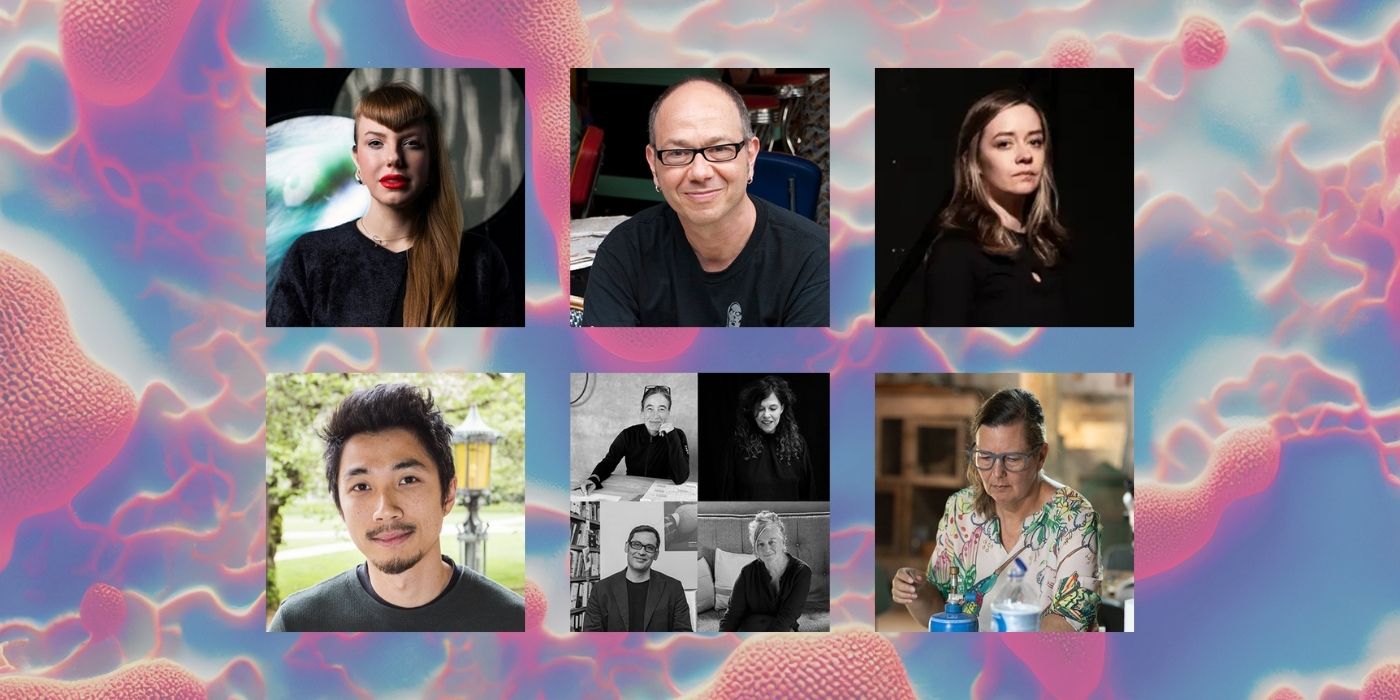
May 4, 2026
SETI Institute Announces Nominees for the Speculative Life BioArt Residency
Six international artists shortlisted for a new residency at the intersection of art, astrobiology, and biotechnology #AIR #SETI Institute #Speculative Life #Astrobiology #Danielle Siembieda #Nathalie Cabrol
Apr 30, 2026
Narrowing the Search: The 45 Best Targets for Alien Life
#Blog #Astronomy #JWST #NASA Missions and Observatories #Trappist-1 #LaserSETI #ATA #Franck Marchis
Apr 27, 2026
Rethinking Organics on Mars
By Nathalie A. Cabrol, Director of the Carl Sagan Center for Research, SETI Institute #Mars #Astrobiology #Solar System #Curiosity Rover #NASA Missions and Observatories #Nathalie Cabrol
Jun 1, 2026
#Press Releases
#STRIDE
#Research
#Carl Sagan Center
#Spectroscopy
#Solar System
#SETI
#Climate and Bioscience
#Astronomy
#Astrobiology
#Exoplanets
#Data Science
#Education
#Outreach
#Hat Creek Radio Observatory
#Unistellar
#SkyMapper
May 13, 2026
SETI Institute to Honor Dr. Matthew Tiscareno with 2026 Carl Sagan Center Director’s Award
The Drake Awards event will also recognize SETI Forward and SETI Institute REU student award recipients.
#Press Releases
#Drake Awards
#Frank Drake
#SETI
#Awards
#Planetary Astronomy
#Astrobiology
#SETI Forward
#Education
#Carl Sagan Center
#Matthew Tiscareno
#Nathalie Cabrol
#REU
May 7, 2026
#SETI Institute in the News
#SETI Institute
#Community
#SETI
#Discovery and Futures Lab
#Lucian Walkowicz
#Chelsea Haramia
#NASA Missions and Observatories
#Pascal Lee
#Mars
#Janice Bishop
#Mark Showalter
#JWST
#Uranus
#Bill Diamond
#UAPs
SETI Institute In the News: April Roundup 2026
May 4, 2026
SETI Institute Announces Nominees for the Speculative Life BioArt Residency
Six international artists shortlisted for a new residency at the intersection of art, astrobiology, and biotechnology
#AIR
#SETI Institute
#Speculative Life
#Astrobiology
#Danielle Siembieda
#Nathalie Cabrol
Apr 30, 2026
#Blog
#Astronomy
#JWST
#NASA Missions and Observatories
#Trappist-1
#LaserSETI
#ATA
#Franck Marchis
Narrowing the Search: The 45 Best Targets for Alien Life
Apr 27, 2026
Rethinking Organics on Mars
By Nathalie A. Cabrol, Director of the Carl Sagan Center for Research, SETI Institute
#Mars
#Astrobiology
#Solar System
#Curiosity Rover
#NASA Missions and Observatories
#Nathalie Cabrol
Research
Related Projects

SkyMapper • SETI • Citizen Science • Astronomy
SkyMapper: Expanding Access to Real-time Astronomy Through a Global Astronomical Network
SkyMapper and the SETI Institute are connecting educators, students and the public to live astronomical observations through a distributed astronomical network. #SkyMapper #SETI #Citizen Science #Astronomy
VPL
Virtual Planetary Laboratory
How can we best assess whether an exoplanet supports life? #VPL
Discovery and Futures Lab
Discovery and Futures Lab
What happens if life beyond Earth is discovered? The Discovery and Futures Lab at the SETI Institute fosters novel and anticipatory research at the intersection of science, society, our planet, and the search for life beyond Earth. #Discovery and Futures Lab
May 17, 2026
SkyMapper: Expanding Access to Real-time Astronomy Through a Global Astronomical Network
SkyMapper and the SETI Institute are connecting educators, students and the public to live astronomical observations through a distributed astronomical network.
#SkyMapper
#SETI
#Citizen Science
#Astronomy
May 5, 2026
Virtual Planetary Laboratory
How can we best assess whether an exoplanet supports life?
#VPL
Apr 16, 2026
Discovery and Futures Lab
What happens if life beyond Earth is discovered? The Discovery and Futures Lab at the SETI Institute fosters novel and anticipatory research at the intersection of science, society, our planet, and the search for life beyond Earth.
#Discovery and Futures Lab
Support Us
Support the
SETI Institute
Scientists are getting closer in their search for life beyond earth. But with limited federal funding for the search for extraterrestrial intelligence, supporters are the reason cutting-edge scientists can keep their eyes on the sky.
