)

Thursday, Apr 30, 2026

At a Glance
|
The search for life beyond our solar system has entered a new phase, with a focus on prioritizing observational targets. While astronomers have confirmed nearly 6,000 exoplanets, the challenge now is determining which of these planets are high-priority targets for observation with our most powerful telescopes.
In a recent SETI Live conversation, SETI Institute astronomer Dr. Franck Marchis spoke with Cornell University astronomer Abigail Bohl and the Director of Cornell’s Carl Sagan Institute, Dr. Lisa Kaltenegger, about a study identifying 45 specific worlds as the most promising targets for studying planetary habitability. Rather than searching for ‘Earth 2.0,’ the study focuses on habitability – the ability of a planet to support conditions suitable for life.
By analyzing stellar data from the European Space Agency's Gaia mission, which mapped approximately 1.7 billion stars, the team calculated how much energy each planet receives from its host star. Combined with the estimate that roughly one in five stars may host a potentially habitable planet, this highlights the scale of possible habitable environments.
Probing the Edges of the Habitable Zone
The habitable zone is commonly defined as the region around a star where liquid water could exist on a planet's surface. This study’s primary contribution lies in its emphasis on the boundaries of this zone.
- Inner boundary: Planets may experience runaway greenhouse effects, analogous to Venus, leading to the loss of surface water.
- Outer boundary: Planets risk global glaciation, as observed on Mars, where surface water becomes permanently frozen.
As Bohl explains, observations of these boundary worlds allow scientists to move beyond theoretical models and directly test where habitability begins and ends. Understanding these extremes helps refine models of planetary climate and atmospheric stability.
This approach also provides insights into Earth’s long-term future, as stars gradually increase in luminosity over billions of years.
The M-Dwarf Advantage
A significant portion of the 45-planet shortlist consists of worlds orbiting red dwarfs – small, cool stars also known as M-dwarfs. While we naturally look for stars like our Sun, red dwarfs are far more common, making up approximately 80% of the stars in our galaxy.
These stars offer observational advantages:
- Smaller stars produce stronger detectable signals when planets transit
- Habitable zones are closer to the star
- Planets orbit faster, allowing repeated observations over shorter timescales
One notable example is the TRAPPIST-1 system, located 40 light-years away. It contains seven Earth-sized planets, four of which lie within the habitable zone. These closely packed planets provide a unique opportunity to study multiple habitable environments within a single system.
Detecting Life Through Atmospheric Chemistry
The next step is the search for biosignatures – chemical indicators of past or present life – in the planetary atmospheres. This is done using spectroscopy, the study of how matter interacts with light, in which telescopes analyze starlight passing through a planet's atmosphere to identify its chemical composition.
Scientists look for combinations of gases that are difficult to explain through non-biological processes. Oxygen alone is not sufficient, as it can be produced through abiotic mechanisms. However, the simultaneous presence of oxygen and methane is particularly compelling because these gases react with each other and would not persist together without continuous replenishment.
A Coordinated Search for Life
This target list provides a framework for both atmospheric and technosignature searches.
SETI Institute planetary astronomer Dr. Franck Marchis highlighted that these 45 worlds represent strong candidates for targeted technosignature searches, including radio and optical observations. Instruments such as the Allen Telescope Array and LaserSETI can complement atmospheric studies by searching for signals from advanced technology.
This reflects a broader principle emphasized in the discussion: the search for life is a collaborative, multi-wavelength effort. Observations across infrared, optical, and radio regimes increase the likelihood of detecting meaningful signals.
Future observatories like the Habitable Worlds Observatory aim to expand these capabilities and enable the detection of potential biological signatures, including unexpected ones such as pigments adapted to different stellar environments.
From Discovery to Direction
The study represents a shift from discovery to direction, providing a practical roadmap for identifying and studying worlds most likely to yield detectable signs of life.
By narrowing the search to a focused set of targets, astronomers can make more effective use of current and future observatories.
Watch the full SETI Live conversation here.
Final questions
1. Why is it important to study planets at the edges of the habitable zone instead of just Earth-like ones?
Studying boundary planets helps scientists test the limits of habitability. Observing worlds that are nearly too hot or too cold improves climate models and shows how small changes in a star’s energy can affect a planet’s ability to support life.
2. How will future discoveries change the shortlist of 45 planets?
The list is not fixed. It will evolve as new exoplanets are found and better data becomes available. Advances in telescopes and atmospheric models may add or remove candidates over time.
3. How does stellar activity from red dwarf stars affect the chances of life?
Red dwarfs produce strong flares that can strip atmospheres or expose planets to radiation. However, planets with thick atmospheres or strong magnetic fields may still be able to support life.







News
Related News

Jul 24, 2026
A New Way to Search for Alien Civilizations
#Blog #Lauren Sgro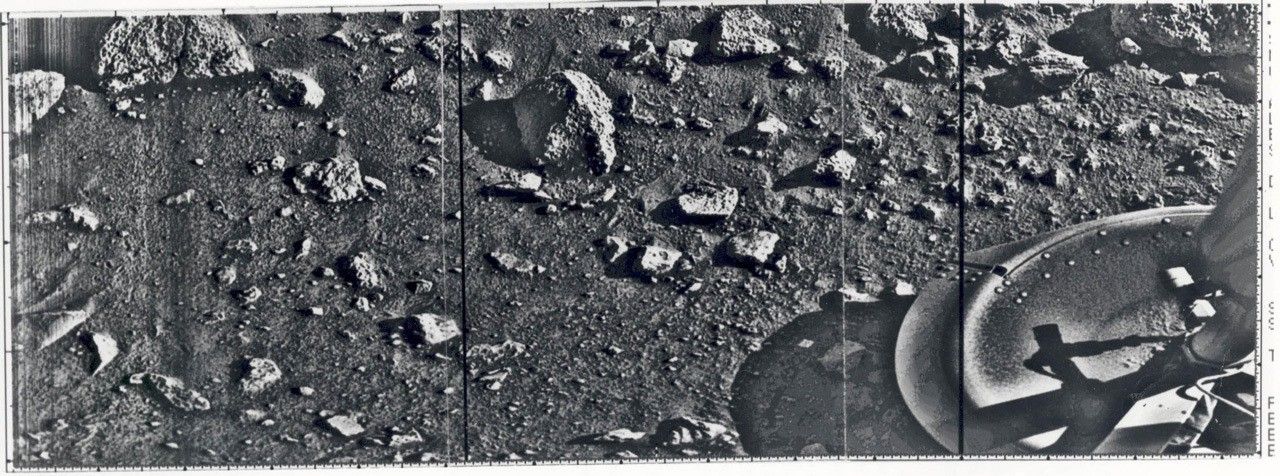
Jul 20, 2026
50 Years After Viking 1: The Mission That Changed the Search for Life on Mars
Half a century after the first successful Mars landing, Viking's greatest legacy may be the questions it taught us to ask. #Mars #NASA Missions and Observatories #Anniversary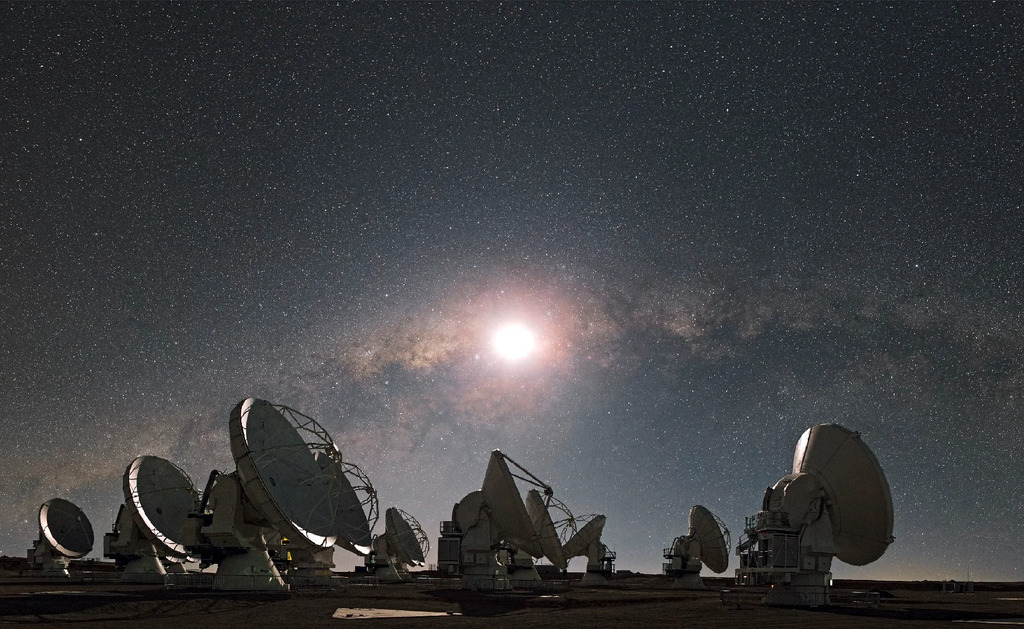
Jul 20, 2026
SETI Institute In the News: June Roundup 2026
Throughout June 2026, SETI Institute scientists, affiliates, and collaborators contributed to discussions spanning interstellar visitors, planetary science, technosignature searches, animal cognition, and the scientific process guiding the search for life beyond Earth. #SETI Institute in the News #SETI Institute #Community #Eduardo Bendek #Optical SETI #SETI #3I/ATLAS #ATA #Comets, Meteors, and Asteroids #Solar System #Franck Marchis #Ariel Graykowski #Jill Tarter #Vishal Gajjar #Radio Astronomy #Bill Diamond #Lori Marino
Jul 17, 2026
How Clouds Hide Alien Worlds—and How Astronomers See Through Them
#Blog #Moiya McTier
Jul 10, 2026
A Remarkably Ancient Visitor: 3I/ATLAS
#3I/ATLAS #Comets, Meteors, and Asteroids #JWST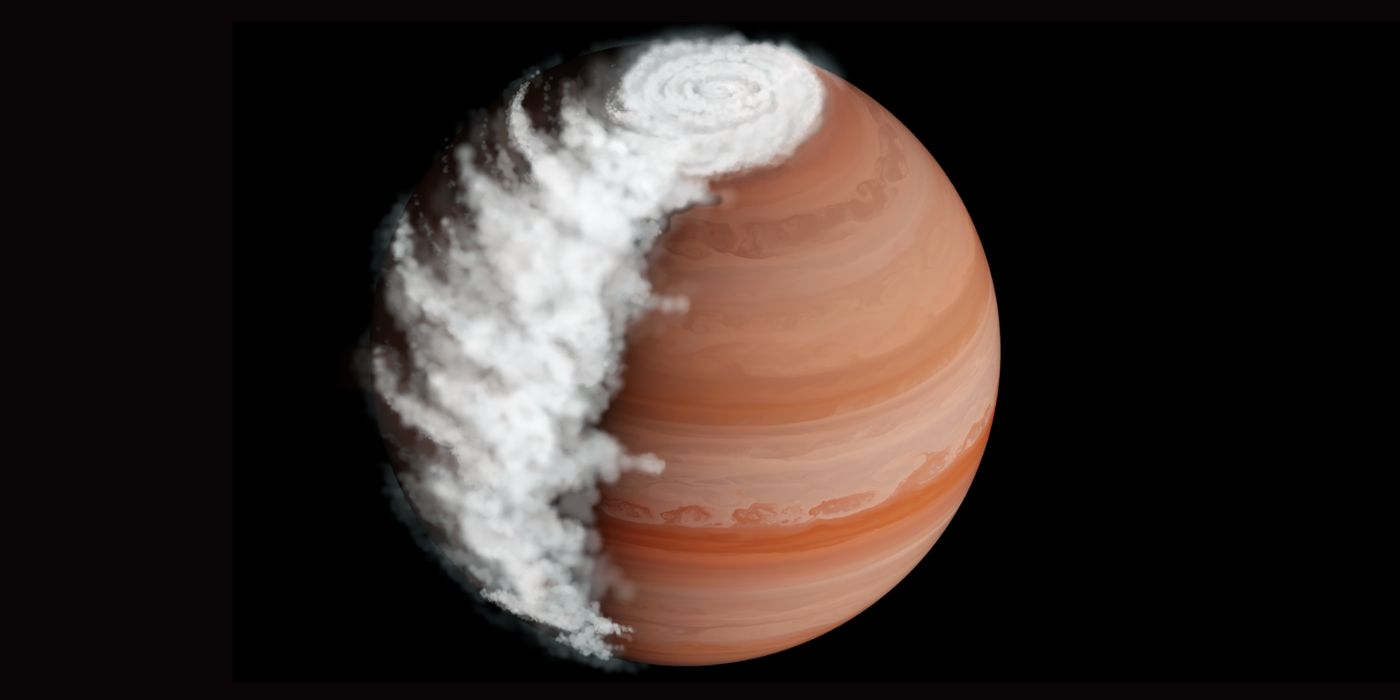
Jul 2, 2026
How Clouds Hide Alien Worlds—and How Astronomers See Through Them
#Blog #Lauren Sgro
Jul 24, 2026
#Blog
#Lauren Sgro
Jul 20, 2026
50 Years After Viking 1: The Mission That Changed the Search for Life on Mars
Half a century after the first successful Mars landing, Viking's greatest legacy may be the questions it taught us to ask.
#Mars
#NASA Missions and Observatories
#Anniversary
Jul 20, 2026
SETI Institute In the News: June Roundup 2026
Throughout June 2026, SETI Institute scientists, affiliates, and collaborators contributed to discussions spanning interstellar visitors, planetary science, technosignature searches, animal cognition, and the scientific process guiding the search for life beyond Earth.
#SETI Institute in the News
#SETI Institute
#Community
#Eduardo Bendek
#Optical SETI
#SETI
#3I/ATLAS
#ATA
#Comets, Meteors, and Asteroids
#Solar System
#Franck Marchis
#Ariel Graykowski
#Jill Tarter
#Vishal Gajjar
#Radio Astronomy
#Bill Diamond
#Lori Marino
Jul 17, 2026
#Blog
#Moiya McTier
How Clouds Hide Alien Worlds—and How Astronomers See Through Them
Jul 10, 2026
#3I/ATLAS
#Comets, Meteors, and Asteroids
#JWST
A Remarkably Ancient Visitor: 3I/ATLAS
Jul 2, 2026
#Blog
#Lauren Sgro
How Clouds Hide Alien Worlds—and How Astronomers See Through Them
Research
Related Projects

SkyMapper • SETI • Citizen Science • Astronomy
SkyMapper: Expanding Access to Real-time Astronomy Through a Global Astronomical Network
SkyMapper and the SETI Institute are connecting educators, students and the public to live astronomical observations through a distributed astronomical network. #SkyMapper #SETI #Citizen Science #Astronomy
VPL
Virtual Planetary Laboratory
How can we best assess whether an exoplanet supports life? #VPL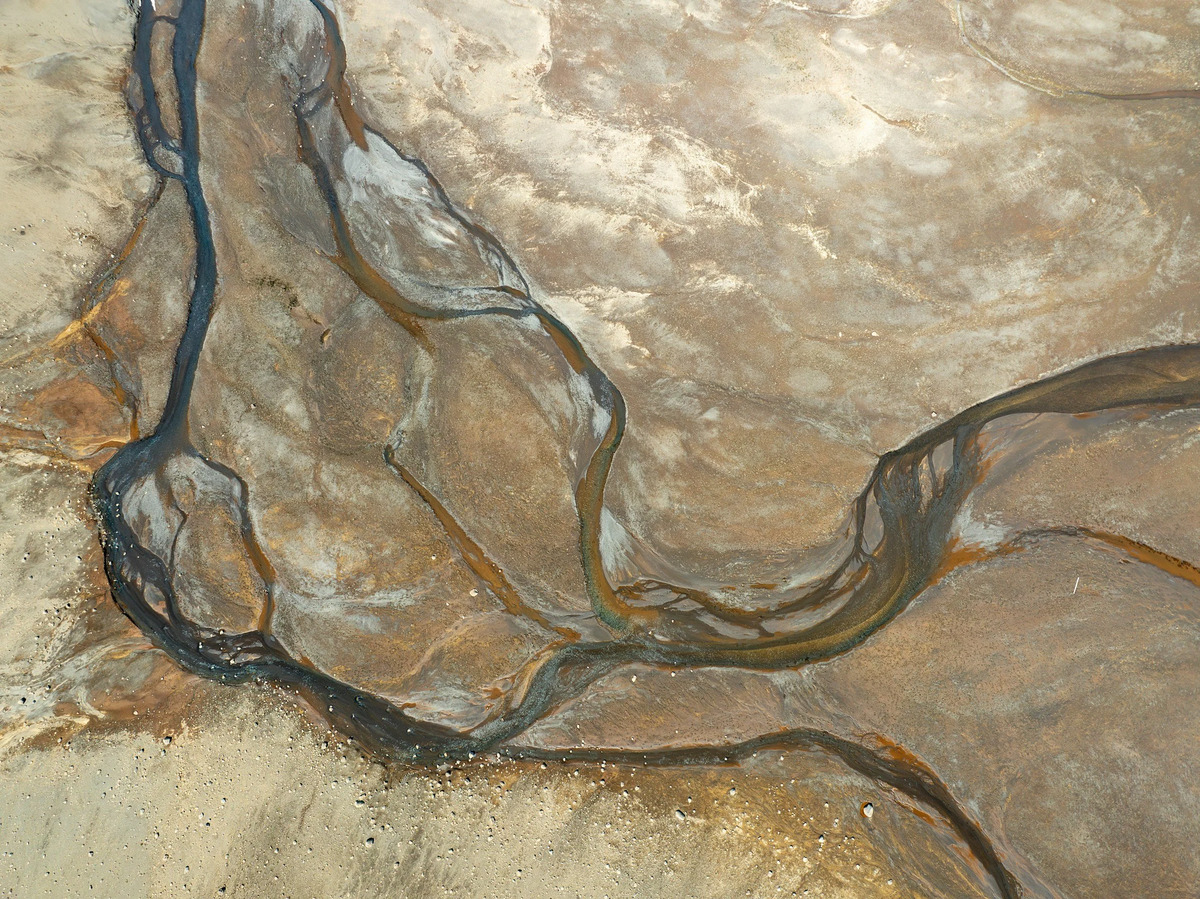
Discovery and Futures Lab
Discovery and Futures Lab
What happens if life beyond Earth is discovered? The Discovery and Futures Lab at the SETI Institute fosters novel and anticipatory research at the intersection of science, society, our planet, and the search for life beyond Earth. #Discovery and Futures Lab
May 17, 2026
SkyMapper: Expanding Access to Real-time Astronomy Through a Global Astronomical Network
SkyMapper and the SETI Institute are connecting educators, students and the public to live astronomical observations through a distributed astronomical network.
#SkyMapper
#SETI
#Citizen Science
#Astronomy
May 5, 2026
Virtual Planetary Laboratory
How can we best assess whether an exoplanet supports life?
#VPL
Apr 16, 2026
Discovery and Futures Lab
What happens if life beyond Earth is discovered? The Discovery and Futures Lab at the SETI Institute fosters novel and anticipatory research at the intersection of science, society, our planet, and the search for life beyond Earth.
#Discovery and Futures Lab
Support Us
Support the
SETI Institute
Scientists are getting closer in their search for life beyond earth. But with limited federal funding for the search for extraterrestrial intelligence, supporters are the reason cutting-edge scientists can keep their eyes on the sky.
