Thursday, May 07, 2026

At A Glance

  • SETI Institute Unveils Discovery and Futures Lab to Investigate Human Aspects of Life Beyond Earth: The SETI Institute launches an interdisciplinary initiative led by  Lucian Walkowicz and Chelsea Haramia to study the societal, ethical, and scientific implications of discovering life beyond Earth.
  • Artemis: Mars as the Next Frontier: Pascal Lee discusses Mars exploration, highlighting the role of robotics and artificial intelligence in searching for potential subsurface life.
  • Organic Compounds on Mars: Findings from Curiosity rover reveal over 20 organic molecules in ancient rocks, with Janice Bishop noting their relevance to prebiotic chemistry.
  • Meet Orpheus—A hopper mission built to hunt for life in Martian volcanoes: Pascal Lee and collaborators propose a hopper mission to explore volcanic subsurface environments on Mars in search of biosignatures.
  • Uranus's two outer rings show starkly different origins: New observations using James Webb Space Telescope and other facilities reveal distinct origins for Uranus’s outer rings, with insights from Mark Showalter.
  • SETI Institute President and CEO Bill Diamond to Speak at the National Space Society’s ISDC Conference: Bill Diamond will speak at the International Space Development Conference 2026, contributing to global discussions on space exploration and astrobiology.
  • As Trump Orders UFO Data Released, a Question Hangs: If Aliens Exist, What Would They Think of Us?: Bill Diamond emphasizes that unidentified aerial phenomena remain unexplained but are not evidence of extraterrestrial life, reinforcing a scientific approach to the search for intelligence beyond Earth.

In April 2026, the SETI Institute’s work spanned both scientific research and broader questions about how discoveries are understood and communicated. From advancing new mission concepts for exploring Mars to contributing to studies of planetary systems and organic chemistry, researchers continued to refine strategies for detecting signs of life beyond Earth. At the same time, new initiatives such as the Discovery and Futures Lab reflect an expanded focus on the human dimensions of discovery, including how scientific findings are interpreted, communicated, and integrated into society.

Recent coverage also highlights the range of questions shaping this field. Studies of organic molecules on Mars and proposed missions to subsurface environments point to new approaches in the search for biosignatures, while observations of Uranus’s rings contribute to understanding planetary formation and evolution. Alongside these developments, public discussions around UFOs and extraterrestrial life continue to underscore the importance of distinguishing speculation from evidence. Together, these stories illustrate the breadth of SETI Institute research and its role in advancing a careful, evidence-based exploration of life in the universe.

SETI Institute Unveils Discovery and Futures Lab to Investigate Human Aspects of Life Beyond Earth

The SETI Institute has launched the Discovery and Futures Lab, a new interdisciplinary initiative exploring how humanity might understand and respond to the discovery of life beyond Earth. Led in part by Lucian Walkowicz and Chelsea Haramia, the Lab brings together expertise from astrobiology, ethics, law, and communication to study not just the science of discovery, but its broader societal implications.

By examining how such discoveries unfold over time, and how they are interpreted, communicated, and understood, the initiative reflects the SETI Institute’s expanding role in preparing for the human dimension of one of science’s most profound questions.

Read the full news by ScienmagSETI Institute Unveils Discovery and Futures Lab to Investigate Human Aspects of Life Beyond Earth

Is Mars the next frontier of space exploration? | Jesse Weber Live

Artemis: Mars as the Next Frontier

Pascal Lee, SETI Institute’s Senior Planetary Scientist, discusses the scientific motivations and challenges of future Mars exploration, emphasizing the planet’s potential to host primitive forms of life beneath its surface. Rather than focusing solely on human missions, the conversation highlights how advances in artificial intelligence and robotics could transform exploration, with intelligent robotic systems acting as partners, or even precursors, to human astronauts in harsh Martian environments.

The discussion underscores how the search for life beyond Earth, a core focus of SETI Institute research, continues to shape strategies for exploring Mars while driving technological innovation with broader benefits for space science and society.

Watch the full video by NewsNation: Artemis: Mars as the Next Frontier

Source: © NASA/JPL-Caltech/MSSS. Nasa’s Curiosity Mars rover took this selfie at a location named Mary Anning after the 19th century British palaeontologist. This was the site of the chemical experiment uncovering diverse organic molecules on Mars, which scientists believe was a site where ancient conditions would have been favorable to supporting life, if it was ever present.

Organic Compounds on Mars

Scientists have identified more than 20 organic compounds in ancient Martian rocks using data from Curiosity rover, offering new evidence that the building blocks of life may have once existed on Mars. Commenting on the findings, Janice Bishop noted that the detection of complex organic molecules, including nitrogen-bearing compounds, is significant because such chemistry can lead to the formation of amino acids and nucleic acids. While the results do not confirm past life, they strengthen the case that Mars once had conditions suitable for prebiotic chemistry, underscoring the importance of continued exploration and future missions searching for biosignatures beyond Earth.

Read the full news by Chemistry World: More than 20 organic compounds found on Mars – many for the first time

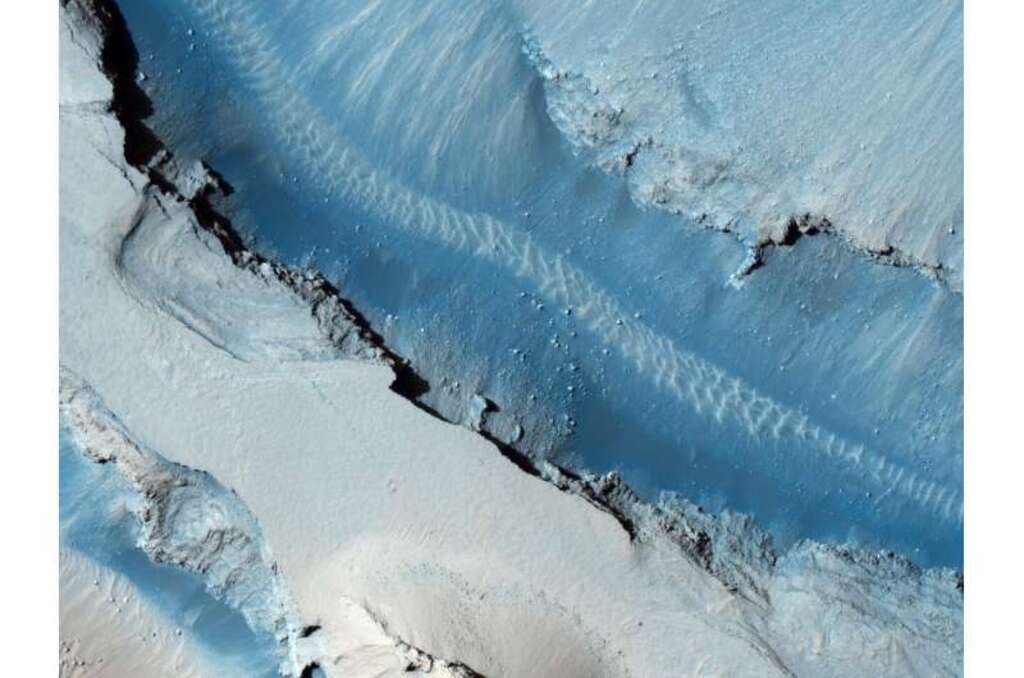
Image of part of Cerberus Fossae near the Athabasca Valles taken by the Mars Reconnaissance Orbiter. Credit - NASA / JPL-Caltech / University of Arizona

Meet Orpheus - A Hopper Mission Built To Hunt For Life In Martian Volcanoes

A proposed Mars mission concept, Orpheus, developed by Pascal Lee and collaborators, aims to explore volcanic pits and cave systems in the Cerberus Fossae region – environments that may be more favorable for preserving or sustaining life than the planet’s surface. Designed as a vertical takeoff and landing (VTOL) hopper, the mission would access terrain beyond the reach of traditional rovers, using specialized instruments to search for biosignatures and study Mars’s geological history.

The concept reflects ongoing efforts by the SETI Institute to identify new strategies for detecting extant life on Mars by targeting protected subsurface environments where water, heat, and chemical activity may intersect.

Read the full news by Universe Today: Meet Orpheus - A Hopper Mission Built To Hunt For Life In Martian Volcanoes

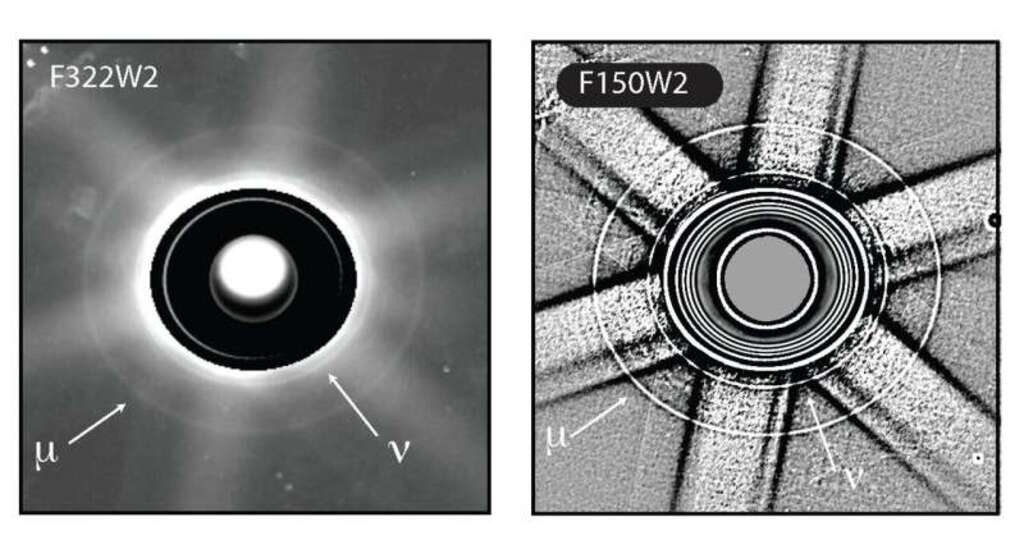
Uranus outer ring system as imaged with JWST on February 2, 2025 in broadband filters centered at 3.2 mm (left) and 1.5 mm (right). Both m and n rings are indicated by arrows. Left: Image F322W2: to visualize the entire system, Uranus and its main ring system intensity is diminished by a factor of 100. Right: Image F150W2: In order to see the m and n rings above the scattered light from Uranus and the main rings, this image has gone through a high-pass filter. Credit: NASA, ESA, Image processing: Imke de Pater, Matt Hedman

Uranus's Two Outer Rings Show Starkly Different Origins

New observations combining data from the James Webb Space Telescope, Hubble Space Telescope, and the W. M. Keck Observatory reveals that Uranus’s outer μ and ν rings have distinctly different compositions and origins – one dominated by water ice and the other by rocky, carbon-rich material. Commenting on the findings, Mark Showalter noted that resolving these differences may ultimately require close-up observations from a future mission to Uranus. 

The study highlights how continued analysis of planetary ring systems contributes to a broader understanding of how planets and their satellite systems form and evolve across the solar system.

Read the full news by Phys.orgUranus's two outer rings show starkly different origins

SETI Institute President and CEO Bill Diamond to Speak at the National Space Society’s ISDC Conference

Bill Diamond

Bill Diamond will deliver a keynote address at the International Space Development Conference 2026, highlighting the role of interdisciplinary science in advancing space exploration and the search for life beyond Earth. Hosted by the National Space Society, the conference brings together global leaders across science, industry, and policy. Diamond’s participation reflects the SETI Institute’s continued engagement in shaping conversations around humanity’s future in space and the broader scientific quest to understand our place in the universe.

Read the press release by APNewsSETI Institute President and CEO Bill Diamond to Speak at the National Space Society’s ISDC Conference

As Trump Orders UFO Data Released, a Question Hangs: If Aliens Exist, What Would They Think of Us?

As Trump Orders UFO Data Released, a Question Hangs: If Aliens Exist, What Would They Think of Us?

Amid renewed public interest following government discussions around UFO data, Bill Diamond emphasized the distinction between unidentified aerial phenomena and evidence of extraterrestrial life. While acknowledging that many sightings remain unexplained, he noted that none have been confirmed as alien in origin and highlighted the role of scientific investigation in interpreting such observations. Diamond also pointed to the broader human perspective driving these questions, noting that curiosity about extraterrestrial life reflects a fundamental desire to understand whether we are alone in the universe – an inquiry central to the mission of the SETI Institute.

Read the full news by NewsMax: As Trump Orders UFO Data Released, a Question Hangs: If Aliens Exist, What Would They Think of Us?

News

Related News

Featured Image
Jun 9, 2026
Disclosure Needs Data
#SkyMapper #Franck Marchis #SETI #citizen science
Featured Image
Jun 5, 2026
Beyond Disclosure Day: The Real-World Protocols
#Press Releases #SETI #Astronomy #Bill Diamond #SETI Institute
Featured Image
Jun 4, 2026
SETI Institute In the News: May Roundup 2026
#SETI Institute in the News #SETI Institute #Community #Solar System #Matija Ćuk #Neptune #SETI #Bill Diamond #UAPs #Drake Awards #Lori Marino #Matthew Tiscareno #Outreach #Exoplanets #Carl Sagan Center
Featured Image
Jun 3, 2026
SETI Institute Looks for Signs of Technology in Interstellar Visitor 3I/ATLAS
Observations with the Allen Telescope Array set new limits on possible signals from extraterrestrial transmitters. #Press Releases #ATA #3I/ATLAS #Hat Creek Radio Observatory #Radio Astronomy #SETI
Featured Image
Jun 1, 2026
SETI Institute Awards $1 Million in STRIDE Grants to Advance Astrobiology, Exoplanet Science, and Public Engagement
#Press Releases #STRIDE #Research #Carl Sagan Center #Spectroscopy #Solar System #SETI #Climate and Bioscience #Astronomy #Astrobiology #Exoplanets #Data Science #Education #Outreach #Hat Creek Radio Observatory #Unistellar #SkyMapper
Research

Related Projects

Featured Image
SkyMapper • SETI • Citizen Science • Astronomy
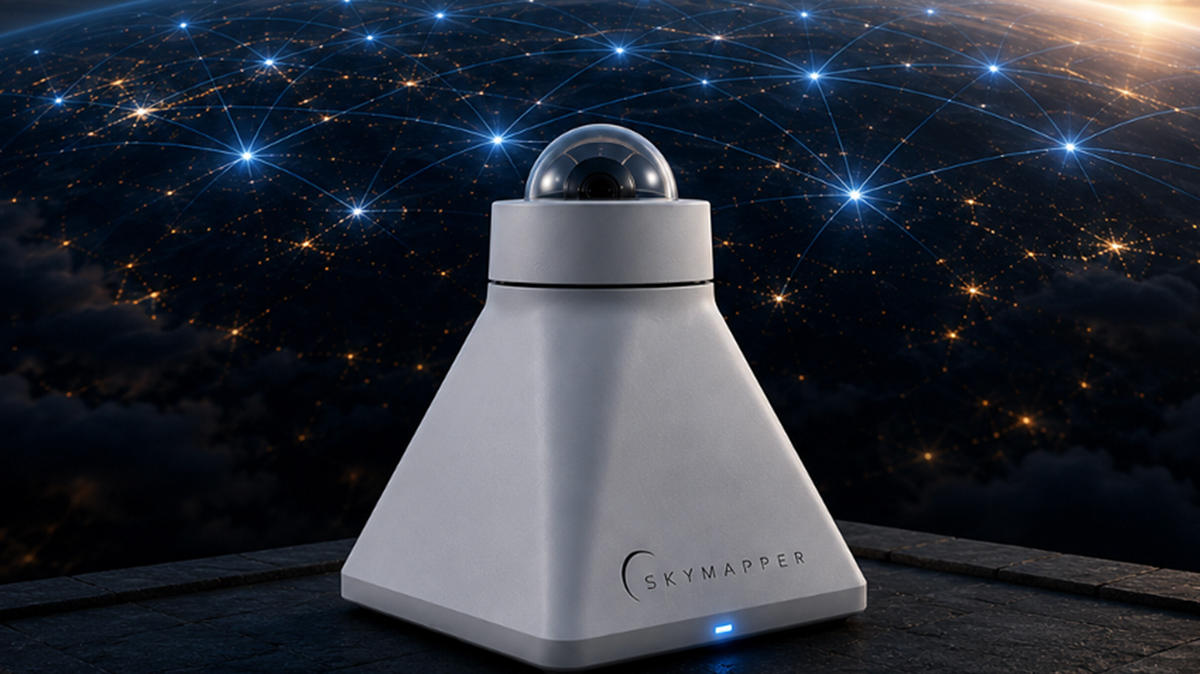
SkyMapper: Expanding Access to Real-time Astronomy Through a Global Astronomical Network
SkyMapper and the SETI Institute are connecting educators, students and the public to live astronomical observations through a distributed astronomical network. #SkyMapper #SETI #Citizen Science #Astronomy
Featured Image
VPL
Virtual Planetary Laboratory
How can we best assess whether an exoplanet supports life? #VPL
Featured Image
Discovery and Futures Lab
What happens if life beyond Earth is discovered? The Discovery and Futures Lab at the SETI Institute fosters novel and anticipatory research at the intersection of science, society, our planet, and the search for life beyond Earth.  #Discovery and Futures Lab
Support Us

Support the
SETI Institute

Scientists are getting closer in their search for life beyond earth. But with limited federal funding for the search for extraterrestrial intelligence, supporters are the reason cutting-edge scientists can keep their eyes on the sky.