)

Author: Nathalie Cabrol
Monday, Apr 27, 2026

Gale Crater on Mars captured by NASA's Curiosity Rover. Credit: NASA.
Listen to this article read by Beth Johnson:
At a Glance:
|
A team of scientists using the NASA Curiosity rover recently performed the first successful wet-chemistry experiment on Mars, and their paper has just been published in Nature Communications. They used the Sample Analysis at Mars (SAM) instrument to analyze a 3.5 billion-year-old clay-bearing sandstone in Gale Crater and identified a diverse set of ancient organic molecules. Again, might you say? Well, this time, these results are a bit different. They don’t change what we knew, but they certainly open a window into a part of Martian chemistry that had remained mostly out of reach.
A new approach to detecting organics
Until now, SAM had relied primarily on pyrolysis, a technique that heats samples to break down compounds for analysis. It is a proven method, but it has its limits. For instance, heat can alter or destroy fragile and complex molecules, therefore masking what the complete chemical record truly is. To prevent this, the scientists who performed the analysis chose a different path. They used a chemical reagent called tetramethylammonium hydroxide (TMAH), which breaks apart carbon-bearing materials in different ways. This type of wet-chemistry approach reveals compounds that pyrolysis alone might miss. The decision to use it was critical because the rover Curiosity carries only two sealed cups of TMAH in its entire inventory, making this experiment exceptionally rare. As a result, the team waited years to find what they considered to be ideal, high-value locations. They found them in the Mary Anning and Nevado Sajama sites, both characterized by rich clay mineral content, which is optimal for trapping and preserving ancient organic materials. And their decision paid off.
What Curiosity found
Over twenty organic molecules were identified, including some never before identified on Mars. Aromatic, sulfur-bearing, oxygen-bearing, and nitrogen-bearing compounds point to something beyond a simple inventory of small molecules. They suggest that at least part of the carbon is preserved in a more complex, possibly macromolecular form. What we are seeing today may actually be fragments of a larger organic framework rather than isolated pieces, and this is where the story takes a twist. This distinction matters because small organic molecules can form through abiotic pathways, such as water–rock interactions or delivery by meteorites. On the other hand, although they may not be solely biological, larger structures tend to retain more information about their origins and evolution. The fact that they survived for billions of years also speaks to the conditions themselves. At the sites visited by Curiosity, an environment rich in clay sediment protected organic material from degradation. Moreover, the chemical signatures detected by the experiment show that wet chemistry was successfully carried out on Mars. Several compounds align with laboratory analogs and could be identified with confidence, and the geological context is consistent with preservation. Taken together, these elements support the authors’ central conclusion.
We also need to remember that organic molecules do not imply biological origin; some peaks in the study could not be assigned, and some compounds might have been altered during analysis. That’s part of it, and the strength of the study certainly lies in any specific individual molecules rather than in the broader conclusion. In particular, it says something really important about preservation in a way that could well shift our perception. We’ve long considered Mars to be this nasty place where radiation and oxidation would erase organic compounds relatively quickly. Although you still don’t want them to be sitting on the surface, these results appear to show that, under the right conditions, the planet appears capable of retaining a chemically informative record over very long timescales. And that’s very good news. For the search for life, this is a necessary step, and although this study does not provide evidence of past life, it strengthens the case that such evidence, if it ever existed, might still be accessible.
What comes next?
What does that tell us for the path forward? More detection of the same might not be evidence to build our case. What is needed are measurements that discriminate, larger and better-characterized molecules, repeated observations across varied geological settings, and tighter links between chemistry and environment. Ultimately, the most decisive progress will likely come from isotopic analyses, high-resolution structural data, the study of returned samples, and the investment in research and development of planetary capabilities capable of performing state-of-the-art lab work in situ as we expand our search for life into the depths of the outer solar system.
This study is outstanding for its results and because it doesn’t make any dramatic claims. Science stands on its own, and it is spectacular. In addition to the organic molecules, including possible macromolecules, this work offers a new way of looking at Mars and shifts the boundary of what we can reasonably infer. As we continue to explore it, Mars is increasingly moving away from the image of a chemically barren world. Instead, it emerges as a planet that once hosted, and may still preserve, a complex organic chemistry. That, in itself, is a meaningful result.







News
Related News
Jul 17, 2026
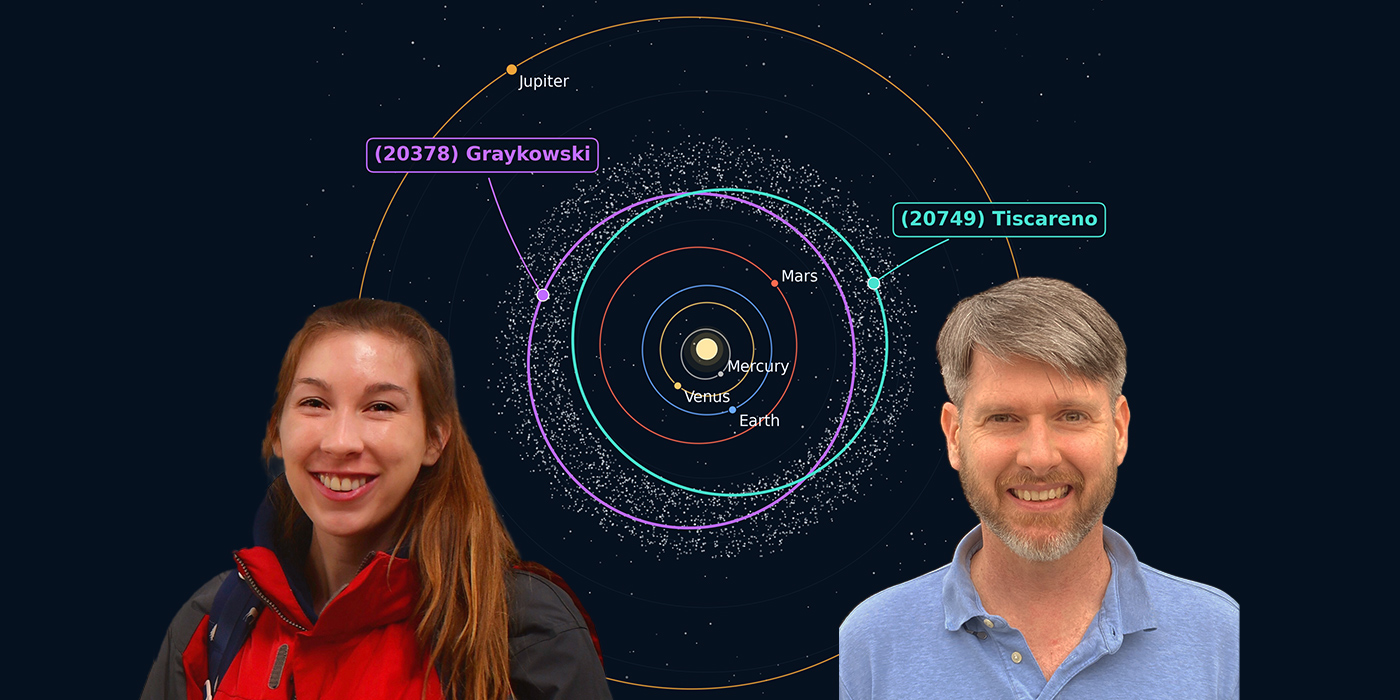
Two SETI Institute Scientists Honored with Asteroids Bearing Their Names
#Comets, Meteors, and Asteroids #Ariel Graykowski #Matthew Tiscareno #Planetary Astronomy #Solar System #Saturn
Jun 4, 2026
SETI Institute In the News: May Roundup 2026
#SETI Institute in the News #SETI Institute #Community #Solar System #Matija Ćuk #Neptune #SETI #Bill Diamond #UAPs #Drake Awards #Lori Marino #Matthew Tiscareno #Outreach #Exoplanets #Carl Sagan Center
Jun 1, 2026
SETI Institute Awards $1 Million in STRIDE Grants to Advance Astrobiology, Exoplanet Science, and Public Engagement
#Press Releases #STRIDE #Research #Carl Sagan Center #Spectroscopy #Solar System #SETI #Climate and Bioscience #Astronomy #Astrobiology #Exoplanets #Data Science #Education #Outreach #Hat Creek Radio Observatory #Unistellar #SkyMapper
May 13, 2026
SETI Institute to Honor Dr. Matthew Tiscareno with 2026 Carl Sagan Center Director’s Award
The Drake Awards event will also recognize SETI Forward and SETI Institute REU student award recipients. #Press Releases #Drake Awards #Frank Drake #SETI #Awards #Planetary Astronomy #Astrobiology #SETI Forward #Education #Carl Sagan Center #Matthew Tiscareno #Nathalie Cabrol #REU
May 7, 2026
SETI Institute In the News: April Roundup 2026
#SETI Institute in the News #SETI Institute #Community #SETI #Discovery and Futures Lab #Lucian Walkowicz #Chelsea Haramia #NASA Missions and Observatories #Pascal Lee #Mars #Janice Bishop #Mark Showalter #JWST #Uranus #Bill Diamond #UAPs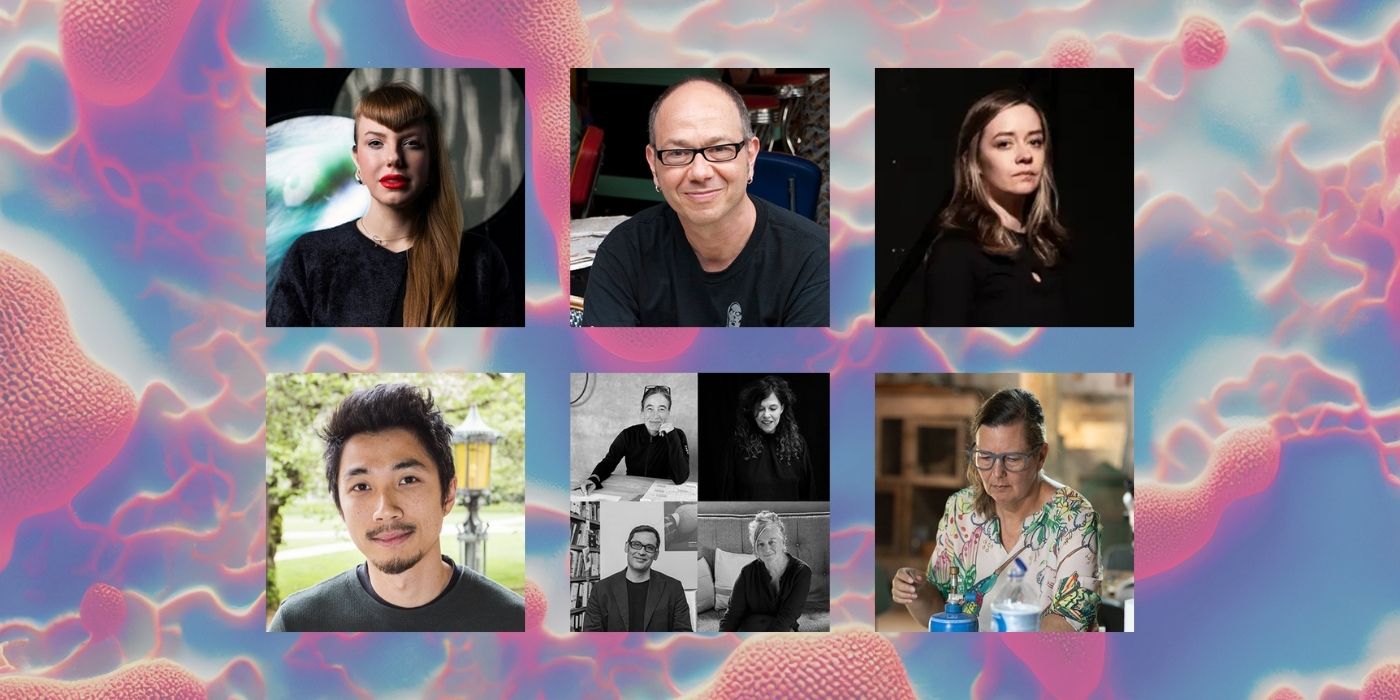
May 4, 2026
SETI Institute Announces Nominees for the Speculative Life BioArt Residency
Six international artists shortlisted for a new residency at the intersection of art, astrobiology, and biotechnology #AIR #SETI Institute #Speculative Life #Astrobiology #Danielle Siembieda #Nathalie Cabrol
Jul 17, 2026
#Comets, Meteors, and Asteroids
#Ariel Graykowski
#Matthew Tiscareno
#Planetary Astronomy
#Solar System
#Saturn
Jun 4, 2026
#SETI Institute in the News
#SETI Institute
#Community
#Solar System
#Matija Ćuk
#Neptune
#SETI
#Bill Diamond
#UAPs
#Drake Awards
#Lori Marino
#Matthew Tiscareno
#Outreach
#Exoplanets
#Carl Sagan Center
SETI Institute In the News: May Roundup 2026
Jun 1, 2026
#Press Releases
#STRIDE
#Research
#Carl Sagan Center
#Spectroscopy
#Solar System
#SETI
#Climate and Bioscience
#Astronomy
#Astrobiology
#Exoplanets
#Data Science
#Education
#Outreach
#Hat Creek Radio Observatory
#Unistellar
#SkyMapper
SETI Institute Awards $1 Million in STRIDE Grants to Advance Astrobiology, Exoplanet Science, and Public Engagement
May 13, 2026
SETI Institute to Honor Dr. Matthew Tiscareno with 2026 Carl Sagan Center Director’s Award
The Drake Awards event will also recognize SETI Forward and SETI Institute REU student award recipients.
#Press Releases
#Drake Awards
#Frank Drake
#SETI
#Awards
#Planetary Astronomy
#Astrobiology
#SETI Forward
#Education
#Carl Sagan Center
#Matthew Tiscareno
#Nathalie Cabrol
#REU
May 7, 2026
#SETI Institute in the News
#SETI Institute
#Community
#SETI
#Discovery and Futures Lab
#Lucian Walkowicz
#Chelsea Haramia
#NASA Missions and Observatories
#Pascal Lee
#Mars
#Janice Bishop
#Mark Showalter
#JWST
#Uranus
#Bill Diamond
#UAPs
SETI Institute In the News: April Roundup 2026
May 4, 2026
SETI Institute Announces Nominees for the Speculative Life BioArt Residency
Six international artists shortlisted for a new residency at the intersection of art, astrobiology, and biotechnology
#AIR
#SETI Institute
#Speculative Life
#Astrobiology
#Danielle Siembieda
#Nathalie Cabrol
Research
Related Projects

SkyMapper • SETI • Citizen Science • Astronomy
SkyMapper: Expanding Access to Real-time Astronomy Through a Global Astronomical Network
SkyMapper and the SETI Institute are connecting educators, students and the public to live astronomical observations through a distributed astronomical network. #SkyMapper #SETI #Citizen Science #Astronomy
VPL
Virtual Planetary Laboratory
How can we best assess whether an exoplanet supports life? #VPL
Discovery and Futures Lab
Discovery and Futures Lab
What happens if life beyond Earth is discovered? The Discovery and Futures Lab at the SETI Institute fosters novel and anticipatory research at the intersection of science, society, our planet, and the search for life beyond Earth. #Discovery and Futures Lab
May 17, 2026
SkyMapper: Expanding Access to Real-time Astronomy Through a Global Astronomical Network
SkyMapper and the SETI Institute are connecting educators, students and the public to live astronomical observations through a distributed astronomical network.
#SkyMapper
#SETI
#Citizen Science
#Astronomy
May 5, 2026
Virtual Planetary Laboratory
How can we best assess whether an exoplanet supports life?
#VPL
Apr 16, 2026
Discovery and Futures Lab
What happens if life beyond Earth is discovered? The Discovery and Futures Lab at the SETI Institute fosters novel and anticipatory research at the intersection of science, society, our planet, and the search for life beyond Earth.
#Discovery and Futures Lab
Support Us
Support the
SETI Institute
Scientists are getting closer in their search for life beyond earth. But with limited federal funding for the search for extraterrestrial intelligence, supporters are the reason cutting-edge scientists can keep their eyes on the sky.
