)

Wednesday, May 13, 2026

Credit: Matthew Tiscareno. View full portrait here.
At a Glance:
|
Carl Sagan Center Director’s Award
May 13, 2026, Mountain View, CA – Dr. Matthew Tiscareno will receive the 2026 Carl Sagan Center Director’s Award in recognition of his scientific leadership and dedication to advancing planetary science at the SETI Institute. As director of the SETI Institute REU (Research Experience for Undergraduates) internship program and manager of the PDS Ring-Moon Systems Node, he mentors emerging scientists and leads a team working to ensure outer planets data are preserved and accessible worldwide.
The Carl Sagan Center Director’s Award honors SETI Institute scientists for outstanding achievements in astrobiology, technology and the exploration of life in the universe. In addition to scientific excellence, awardees demonstrate a commitment to mentoring and educating the next generation of scientists, and to sharing the excitement of exploration and discovery with the public.
The SETI Institute’s Science Council selects the recipient, who is recognized annually during the Drake Awards celebration. This year’s event will take place on May 14 at the Computer History Museum in Mountain View, California.
The award recognizes the legacy of Carl Sagan, a former SETI Institute Board member whose work in space science continues to inspire scientists and the public.
Tiscareno’s research has advanced the understanding of solar system orbital dynamics and planetary rings. As a Cassini Imaging Team associate, he planned key observations of Saturn’s rings, identified “propeller” moons embedded in the rings, and observed impact ejecta clouds. His discoveries have reshaped knowledge of ring dynamics and small-body interactions. He also helped demonstrate that Saturn’s moon Enceladus has a global subsurface ocean, a breakthrough for astrobiology.
Tiscareno has also provided significant leadership to the scientific community, including chairing a division of the American Astronomical Society and editing a definitive scholarly work on planetary rings. He continues to apply his expertise to the study of giant planets and ring systems through groundbreaking missions.
This award recognizes both Tiscareno’s scientific achievements and his vital role in mentoring future scientists.
“It’s a great honor to receive this award,” said Tiscareno. “The SETI Institute is a workplace that values both excellence and community, and I love working with my colleagues every day to pursue those ideals.”
"Dr. Matt Tiscareno’s work has profoundly expanded our understanding of planetary ring systems, ocean worlds, and the dynamical processes that shape our solar system,” said Dr. Nathalie Cabrol, Director of the Carl Sagan Center at the SETI Institute. “Through both his scientific leadership and his deep commitment to mentoring the next generation of researchers, Matt embodies the spirit of the SETI Institute Carl Sagan Center Director’s Award, and we are honored to recognize his extraordinary contributions.”
SETI Institute Board member Elizebeth Varghese and Matthew Veedon are the sponsors of this year’s Carl Sagan Center Director’s Award.
Recognizing Emerging Scientists
Building on the recognition of established leaders like Dr. Tiscareno, the Drake Awards event also honors emerging scientific talent. This year, undergraduate students will receive the SETI Forward Award and the SETI Institute REU Award of Excellence. In addition, Dr. Lori Marino will receive this year’s Drake Award in recognition of her pioneering work on the evolution of intelligence on Earth and beyond.
SETI Forward Award
The SETI Forward Award is presented to undergraduate researchers in recognition of outstanding research. This year’s recipients, Maria Calderon-Marrero and Matti Weiss, are honored for their research projects: Calderon-Marrero explored extremophiles in hydrothermal environments, while Weiss assessed stellar populations within radio-telescope fields of view, both of which contributed valuable insights to SETI and astrobiology.
Established by Lew Levy, SETI Forward committee founder and member of the SETI Institute’s Council of Advisors, the award supports promising young scientists by connecting them with opportunities that foster their passion for SETI and astrobiology and guide them toward impactful scientific careers.
Maria Calderon-Marrero, Cornell University
Life at the Extremes
Maria studies microbial communities in the extreme hydrothermal environments of El Tatio geysers. She developed culturing strategies for thermophiles, trained in hydrothermal sampling, collected water and microbial mat samples in the field, and assisted with in situ DNA sequencing. She is now culturing samples and preparing for DNA sequencing to compare communities across geyser systems. Her work explores how life adapts to extreme conditions and how biosignatures are preserved, informing the search for life in similar environments beyond Earth.
“Astrobiology is a field I’ve wanted to pursue since childhood, so I’m incredibly grateful to the SETI committee and my mentor, Dr. Carolina Muñoz-Saez, for their support and belief in me as a researcher,” said Calderon-Marrero. “I’m fascinated by how extremophiles push the boundaries of what we consider life and what they may reveal about life beyond Earth.”

Credit: Maria Calderon Marrero
Matti Weiss, City University of New York, Queens College
What's Actually Out There?
Matti’s research focused on beam by-catch in SETI observations, quantifying stellar populations within a radio telescope’s field of view. At Breakthrough Listen, they developed BEAMSETI, a Python tool that integrates Gaia DR3 and NED with population models. They resolved a key issue by replacing a linearized redshift with a proper luminosity-distance calculation, enabling the detection of distant sources. They also applied adaptive redshift clustering to avoid over-counting galaxies. This approach improves estimates of survey completeness and sensitivity, and provides the SETI community with tools to better constrain the prevalence of extraterrestrial transmitters.
“I believe the most challenging experiences are often the most rewarding,” said Weiss.

Credit: Matti Weiss
SETI Institute REU Award of Excellence
Blayne Griffin, University of Central Arkansas
The Research Experience for Undergraduates Award of Excellence is presented to an outstanding participant in the SETI Institute’s REU program. This year, Blayne Griffin is honored for contributions to the Breakthrough Listen “Exotica” catalog, which explores targets beyond Earth-like worlds under the mentorship of Dr. Sofia Sheikh.
“We all look up to the skies in awe and wonder about our place in the universe,” said Griffin. “I’m passionate about making scientific exploration accessible to everyone and pursuing those questions through astrophysics.”

Credit: Blayne Griffin
More information about the Drake Awards can be found here: https://www.seti.org/research/drake-award/
About the SETI Institute
Founded in 1984, the SETI Institute is a non-profit, multi-disciplinary research and education organization whose mission is to lead humanity’s quest to understand the origins and prevalence of life and intelligence in the Universe and to share that knowledge with the world. Our research encompasses the physical and biological sciences and leverages expertise in data analytics, machine learning and advanced signal detection technologies. The SETI Institute is a distinguished research partner for industry, academia and government agencies, including NASA and NSF.
Contact information
Rebecca McDonald
Director of Communications
SETI Institute
[email protected]








News
Related News
Jul 10, 2026
SETI Institute Achievements: Q1 2026 Activity Report
#Activity Reports #Carl Sagan Center #Outreach #Education #AIR #Community #Research
Jun 29, 2026
Humanity's Plan for First Contact: Who Speaks for Earth?
#Blog #Lauren Sgro #Lucian Walkowicz #Chelsea Haramia #SETI #SETI Institute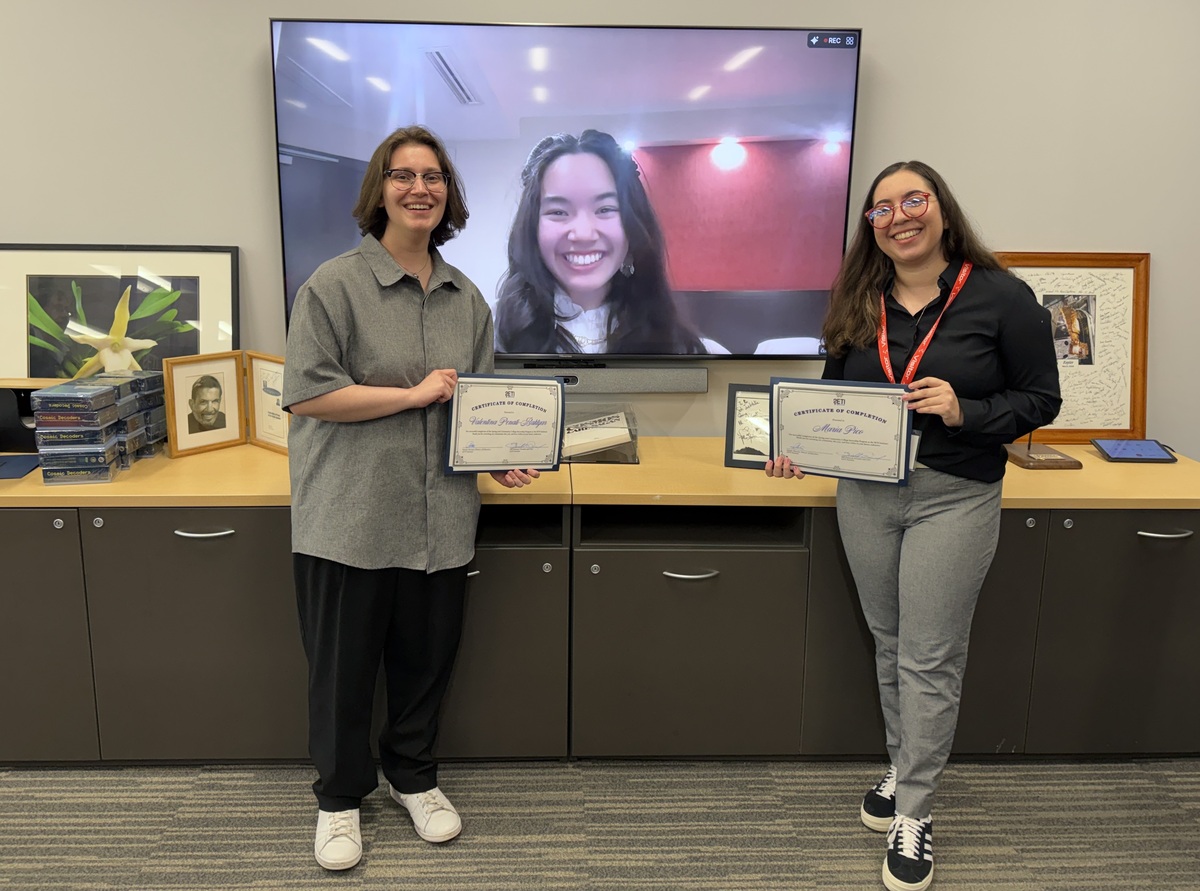
Jun 17, 2026
Community College Internship Program Celebrates Fourth Year of Student Research Achievement
#Community College Internship #Education #Lauren Sgro #Unistellar #Uma Gorti #Douglas Caldwell #Pamela Harman #Simon Steel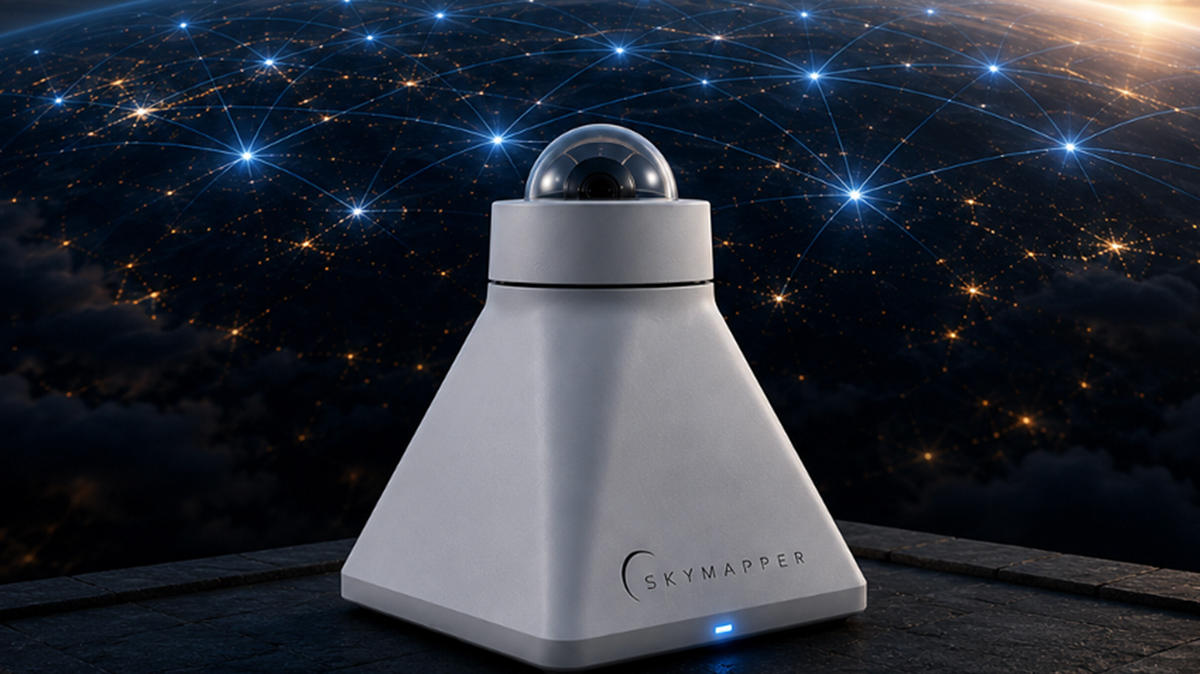
Jun 9, 2026
Disclosure Needs Data
#SkyMapper #Franck Marchis #SETI #citizen science
Jun 8, 2026
The Sounds of Intelligence: A Conversation with 2026 Drake Award Recipient Lori Marino
#Blog #Drake Awards #Lori Marino #SETI
Jun 5, 2026
Beyond Disclosure Day: The Real-World Protocols
#Press Releases #SETI #Astronomy #Bill Diamond #SETI Institute
Jul 10, 2026
#Activity Reports
#Carl Sagan Center
#Outreach
#Education
#AIR
#Community
#Research
Jun 29, 2026
#Blog
#Lauren Sgro
#Lucian Walkowicz
#Chelsea Haramia
#SETI
#SETI Institute
Humanity's Plan for First Contact: Who Speaks for Earth?
Jun 17, 2026
#Community College Internship
#Education
#Lauren Sgro
#Unistellar
#Uma Gorti
#Douglas Caldwell
#Pamela Harman
#Simon Steel
Community College Internship Program Celebrates Fourth Year of Student Research Achievement
Jun 9, 2026
#SkyMapper
#Franck Marchis
#SETI
#citizen science
Disclosure Needs Data
Jun 8, 2026
#Blog
#Drake Awards
#Lori Marino
#SETI
The Sounds of Intelligence: A Conversation with 2026 Drake Award Recipient Lori Marino
Jun 5, 2026
#Press Releases
#SETI
#Astronomy
#Bill Diamond
#SETI Institute
Beyond Disclosure Day: The Real-World Protocols
Research
Related Projects

SkyMapper • SETI • Citizen Science • Astronomy
SkyMapper: Expanding Access to Real-time Astronomy Through a Global Astronomical Network
SkyMapper and the SETI Institute are connecting educators, students and the public to live astronomical observations through a distributed astronomical network. #SkyMapper #SETI #Citizen Science #Astronomy
VPL
Virtual Planetary Laboratory
How can we best assess whether an exoplanet supports life? #VPL
Discovery and Futures Lab
Discovery and Futures Lab
What happens if life beyond Earth is discovered? The Discovery and Futures Lab at the SETI Institute fosters novel and anticipatory research at the intersection of science, society, our planet, and the search for life beyond Earth. #Discovery and Futures Lab
May 17, 2026
SkyMapper: Expanding Access to Real-time Astronomy Through a Global Astronomical Network
SkyMapper and the SETI Institute are connecting educators, students and the public to live astronomical observations through a distributed astronomical network.
#SkyMapper
#SETI
#Citizen Science
#Astronomy
May 5, 2026
Virtual Planetary Laboratory
How can we best assess whether an exoplanet supports life?
#VPL
Apr 16, 2026
Discovery and Futures Lab
What happens if life beyond Earth is discovered? The Discovery and Futures Lab at the SETI Institute fosters novel and anticipatory research at the intersection of science, society, our planet, and the search for life beyond Earth.
#Discovery and Futures Lab
Support Us
Support the
SETI Institute
Scientists are getting closer in their search for life beyond earth. But with limited federal funding for the search for extraterrestrial intelligence, supporters are the reason cutting-edge scientists can keep their eyes on the sky.
