)

Author: Nathalie Cabrol
Tuesday, Apr 12, 2022
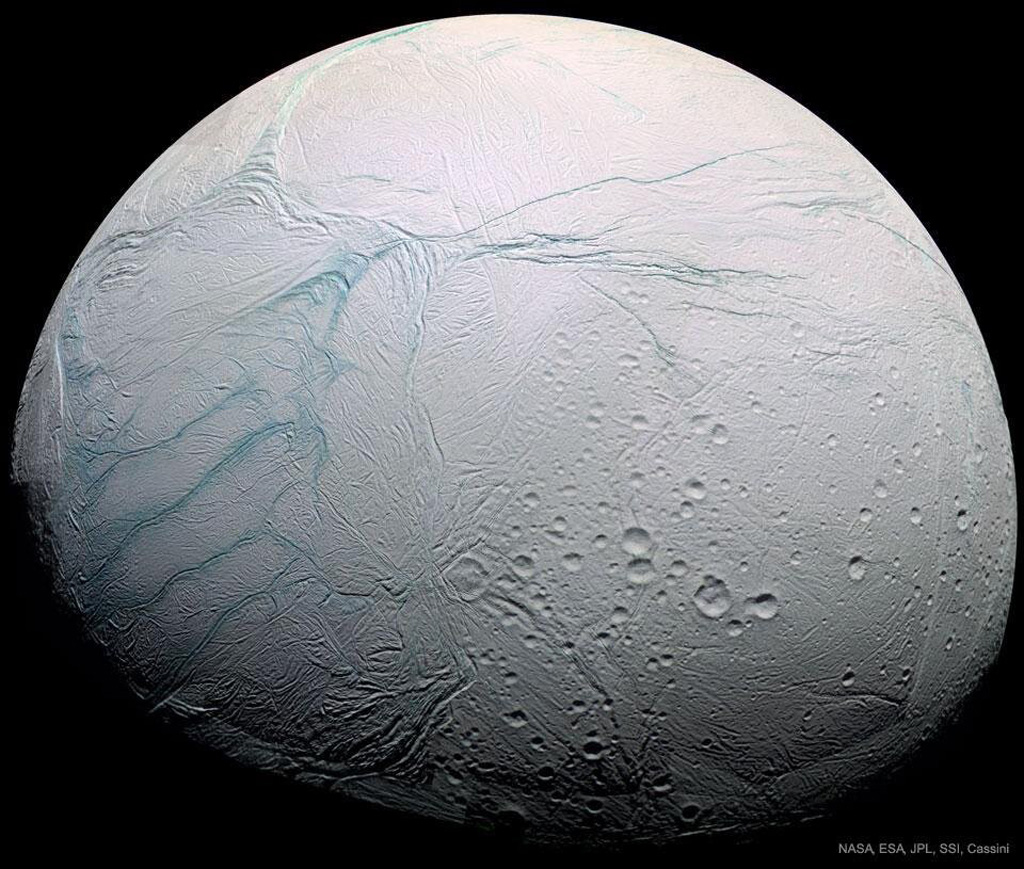
IMAGE: Enceladus, with its “tiger stripes” lined in false-color blue. CREDIT: NASA/ESA/JPL/SSI/Cassini Imaging Team
A new study was released in Geophysical Research Letters detailing a possible answer for how Saturn’s ocean moon, Enceladus, may have gotten its tiger stripes and how the geysers erupting from those stripes work. The team used a physics-based model to map out the various conditions responsible for the eruptions, and what they found were cycles of warming and cooling that thin and thicken the moon’s ice shell.
During a cooling period, as the ice shell thickens, it presses down on the subsurface ocean, creating pressure within the waters. That same pressure causes stress in the ice itself, which can lead to cracks and fissures. Those cracks and fissures then become 20–30 kilometer pathways for the icy water to follow to the surface.
However, while these models support the hypothesis that the pressure is high enough to make the tiger stripes, it doesn’t seem to be enough to actually cause the waters to geyser out. That process may occur because, as the water hits the cracks, it gets exposed to the vacuum of space since Enceladus doesn’t have an atmosphere. And then it spontaneously boils and erupts through the cracks.
And if you’re wondering about Jupiter’s ocean moon, Europa, it’s possible that there are similar eruptions happening there, but we won’t know that for certain until NASA’s Europa Clipper arrives in the system. The spacecraft is being assembled and is scheduled for launch in October 2024. We’ll bring you coverage of that launch when it happens.
More Information
AGU press release
“Cooling Crusts Create Concomitant Cryovolcanic Cracks,” Maxwell L. Rudolph, Michael Manga, Matthew Walker, and Alyssa R. Rhoden, 2022 February 21
This story was written for the Daily Space podcast/YouTube series. Want more news from myself, Dr. Pamela Gay, and Erik Madaus? Check out DailySpace.org.
This article was originally published by Beth Johnson on medium.com.







News
Related News
Jul 17, 2026
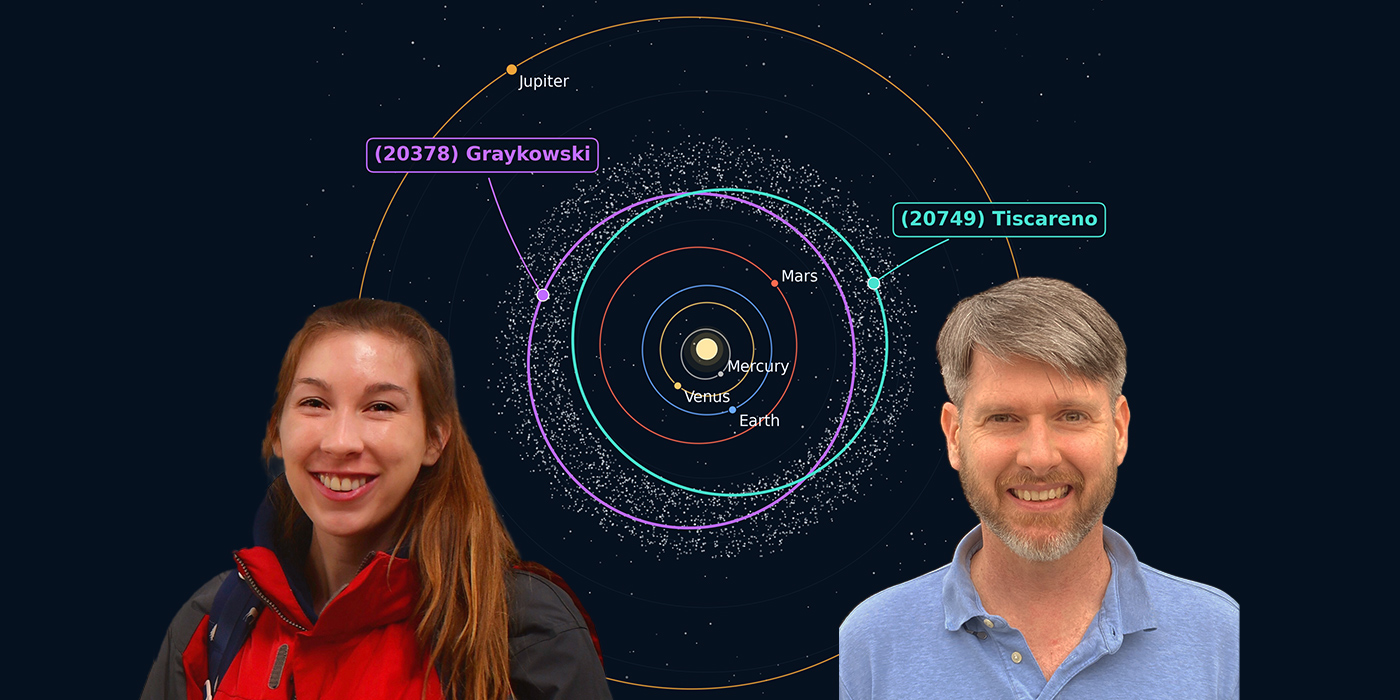
Two SETI Institute Scientists Honored with Asteroids Bearing Their Names
#Comets, Meteors, and Asteroids #Ariel Graykowski #Matthew Tiscareno #Planetary Astronomy #Solar System #Saturn
Jun 4, 2026
SETI Institute In the News: May Roundup 2026
#SETI Institute in the News #SETI Institute #Community #Solar System #Matija Ćuk #Neptune #SETI #Bill Diamond #UAPs #Drake Awards #Lori Marino #Matthew Tiscareno #Outreach #Exoplanets #Carl Sagan Center
Jun 1, 2026
SETI Institute Awards $1 Million in STRIDE Grants to Advance Astrobiology, Exoplanet Science, and Public Engagement
#Press Releases #STRIDE #Research #Carl Sagan Center #Spectroscopy #Solar System #SETI #Climate and Bioscience #Astronomy #Astrobiology #Exoplanets #Data Science #Education #Outreach #Hat Creek Radio Observatory #Unistellar #SkyMapper
Apr 27, 2026
Rethinking Organics on Mars
By Nathalie A. Cabrol, Director of the Carl Sagan Center for Research, SETI Institute #Mars #Astrobiology #Solar System #Curiosity Rover #NASA Missions and Observatories #Nathalie Cabrol
Mar 24, 2026
The Titan Impact: Saturn’s Moon System May Have Had a Catastrophic Past
#Blog #Matija Ćuk #Solar System #Cassini #Saturn #Dragonfly #NASA Missions and Observatories
Mar 6, 2026
SETI Institute In the News: February Roundup 2026
#SETI Institute in the News #SETI Institute #Community #Bill Diamond #SETI #Karen Perez #Matija Ćuk #Lewis Pinault #Saturn #NASA Missions and Observatories #UAPs #Solar System #JWST #Matthew Tiscareno #Franck Marchis #Ariel Graykowski #Astronomy #Education #AAA #Pamela Harman #Dana Backman #Coral Clark
Jul 17, 2026
#Comets, Meteors, and Asteroids
#Ariel Graykowski
#Matthew Tiscareno
#Planetary Astronomy
#Solar System
#Saturn
Jun 4, 2026
#SETI Institute in the News
#SETI Institute
#Community
#Solar System
#Matija Ćuk
#Neptune
#SETI
#Bill Diamond
#UAPs
#Drake Awards
#Lori Marino
#Matthew Tiscareno
#Outreach
#Exoplanets
#Carl Sagan Center
SETI Institute In the News: May Roundup 2026
Jun 1, 2026
#Press Releases
#STRIDE
#Research
#Carl Sagan Center
#Spectroscopy
#Solar System
#SETI
#Climate and Bioscience
#Astronomy
#Astrobiology
#Exoplanets
#Data Science
#Education
#Outreach
#Hat Creek Radio Observatory
#Unistellar
#SkyMapper
SETI Institute Awards $1 Million in STRIDE Grants to Advance Astrobiology, Exoplanet Science, and Public Engagement
Apr 27, 2026
Rethinking Organics on Mars
By Nathalie A. Cabrol, Director of the Carl Sagan Center for Research, SETI Institute
#Mars
#Astrobiology
#Solar System
#Curiosity Rover
#NASA Missions and Observatories
#Nathalie Cabrol
Mar 24, 2026
#Blog
#Matija Ćuk
#Solar System
#Cassini
#Saturn
#Dragonfly
#NASA Missions and Observatories
The Titan Impact: Saturn’s Moon System May Have Had a Catastrophic Past
Mar 6, 2026
#SETI Institute in the News
#SETI Institute
#Community
#Bill Diamond
#SETI
#Karen Perez
#Matija Ćuk
#Lewis Pinault
#Saturn
#NASA Missions and Observatories
#UAPs
#Solar System
#JWST
#Matthew Tiscareno
#Franck Marchis
#Ariel Graykowski
#Astronomy
#Education
#AAA
#Pamela Harman
#Dana Backman
#Coral Clark
SETI Institute In the News: February Roundup 2026
Research
Related Projects

SkyMapper • SETI • Citizen Science • Astronomy
SkyMapper: Expanding Access to Real-time Astronomy Through a Global Astronomical Network
SkyMapper and the SETI Institute are connecting educators, students and the public to live astronomical observations through a distributed astronomical network. #SkyMapper #SETI #Citizen Science #Astronomy
VPL
Virtual Planetary Laboratory
How can we best assess whether an exoplanet supports life? #VPL
Discovery and Futures Lab
Discovery and Futures Lab
What happens if life beyond Earth is discovered? The Discovery and Futures Lab at the SETI Institute fosters novel and anticipatory research at the intersection of science, society, our planet, and the search for life beyond Earth. #Discovery and Futures Lab
May 17, 2026
SkyMapper: Expanding Access to Real-time Astronomy Through a Global Astronomical Network
SkyMapper and the SETI Institute are connecting educators, students and the public to live astronomical observations through a distributed astronomical network.
#SkyMapper
#SETI
#Citizen Science
#Astronomy
May 5, 2026
Virtual Planetary Laboratory
How can we best assess whether an exoplanet supports life?
#VPL
Apr 16, 2026
Discovery and Futures Lab
What happens if life beyond Earth is discovered? The Discovery and Futures Lab at the SETI Institute fosters novel and anticipatory research at the intersection of science, society, our planet, and the search for life beyond Earth.
#Discovery and Futures Lab
Support Us
Support the
SETI Institute
Scientists are getting closer in their search for life beyond earth. But with limited federal funding for the search for extraterrestrial intelligence, supporters are the reason cutting-edge scientists can keep their eyes on the sky.
