At A Glance
|
Recent media coverage highlights the wide range of research, education, and scientific perspectives emerging from the SETI Institute community. From teacher training programs that connect educators with observatories and cultural perspectives, to new theories about Saturn’s moons, pulsar discoveries near the Milky Way’s center, and fresh insights into Uranus’s atmosphere, these stories demonstrate the many ways SETI scientists contribute to understanding our universe.
This month’s roundup also explores how researchers are investigating the early history of lunar exploration, advancing the scientific search for extraterrestrial life, and sharing the wonder of celestial objects such as comets with the public. Together, these highlights illustrate the breadth of work across planetary science, astronomy, and astrobiology that continues to shape conversations about our place in the cosmos.
Trump’s order to release evidence for aliens obscures the scientific search for extraterrestrial life
A new directive from U.S. President Donald Trump to release government files related to UFOs and unidentified anomalous phenomena has renewed public interest in extraterrestrial life, even as scientists emphasize that no evidence of alien visitation to Earth exists.
In the discussion, Bill Diamond, president and CEO of the SETI Institute, noted that while the statistical probability of life elsewhere in the universe is extremely high, credible scientific evidence of extraterrestrials visiting Earth has not been found. The announcement highlights the contrast between political rhetoric and the careful, long-term scientific search for technosignatures and other signs of life beyond our planet.
Read the full article by Scientific American: Trump’s order to release evidence for aliens obscures the scientific search for extraterrestrial life
The Milky Way may be hiding a big secret at its heart: an extremely magnetic dead star
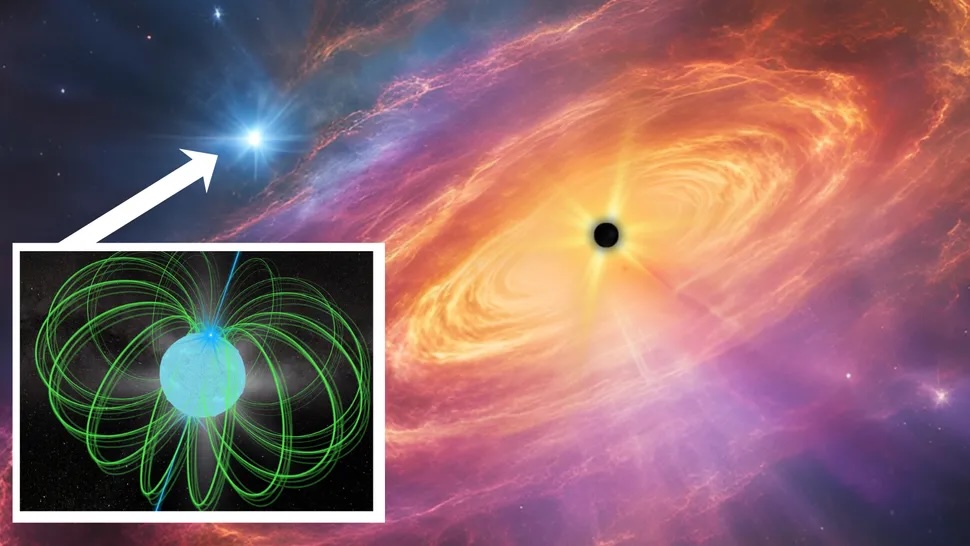
Researchers with the Breakthrough Listen project, including Karen Perez of the SETI Institute, have identified a candidate pulsar near the Milky Way’s central supermassive black hole, Sagittarius A*. Using observations from the Green Bank Telescope, the team detected a rapidly rotating neutron star candidate spinning about 122 times per second.
“Our survey is one of the most sensitive ever conducted toward the Galactic Center,” Perez said. Despite this sensitivity, the team detected only a single candidate, dubbed the Breakthrough Listen Pulsar (BLPSR), which remains under investigation.
If confirmed, the discovery could help scientists probe the extreme environment near Sagittarius A* and test predictions of Einstein’s theory of general relativity.
Read the full article by Space.com: The Milky Way may be hiding a big secret at its heart: an extremely magnetic dead star
Astronomers Say They Have Solved One of Saturn’s Greatest Mysteries
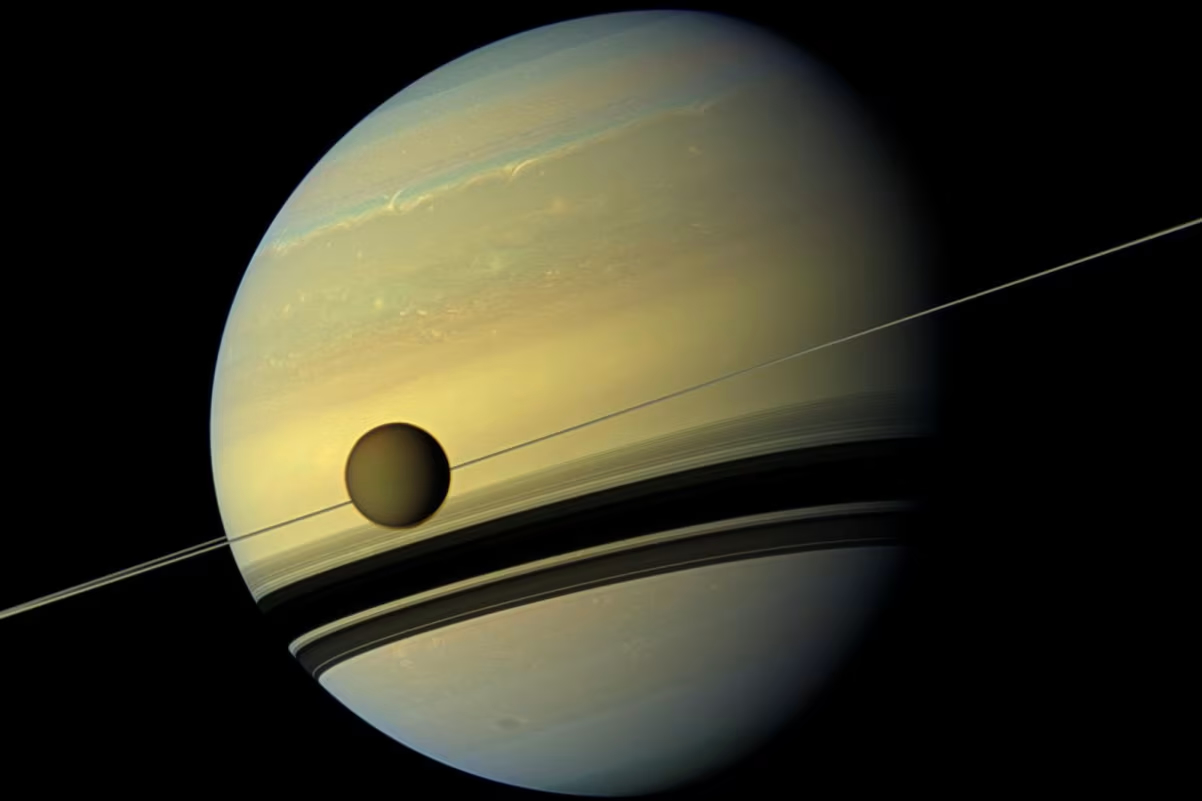
New research led by Matija Ćuk of the SETI Institute proposes a new origin story for Saturn’s largest moon, Titan, and the planet’s iconic rings. By combining Cassini spacecraft data with computer simulations, the study suggests that an ancient collision between Titan and a now-lost moon reshaped the Saturnian system.
“In this paper, I tried to put all these things together, and I propose that there was an extra moon about half a billion years ago that collided with Titan, that actually became part of Titan,” said Ćuk, a research scientist at the SETI Institute.
The impact could explain Titan’s outward migration, the unusual orbit of Saturn’s moon Hyperion, and the formation of Saturn’s rings hundreds of millions of years later.
Read the full story by CNN: Astronomers Say They Have Solved One of Saturn’s Greatest Mysteries
Lost Soviet Moon Lander May Have Been Found
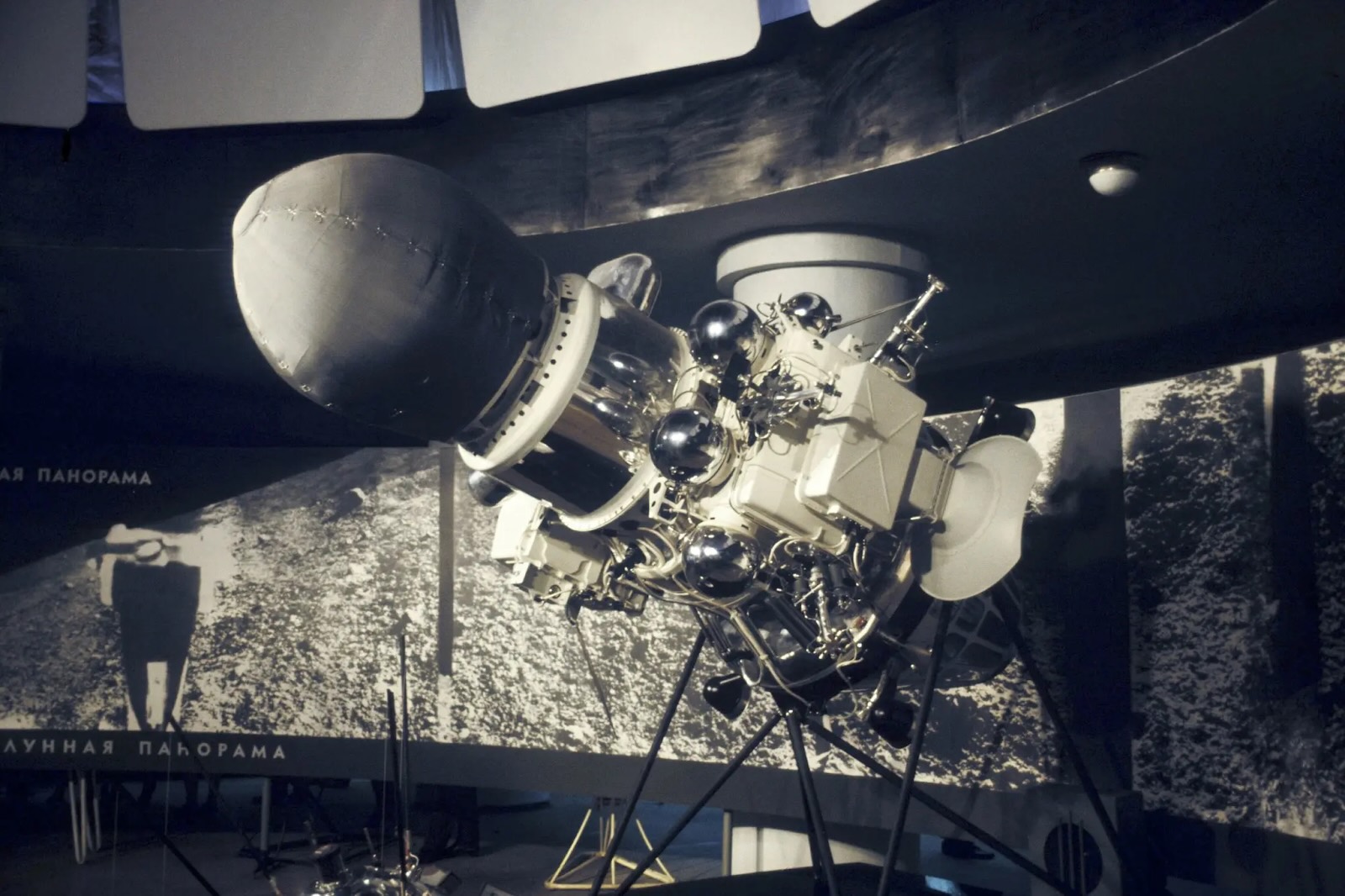
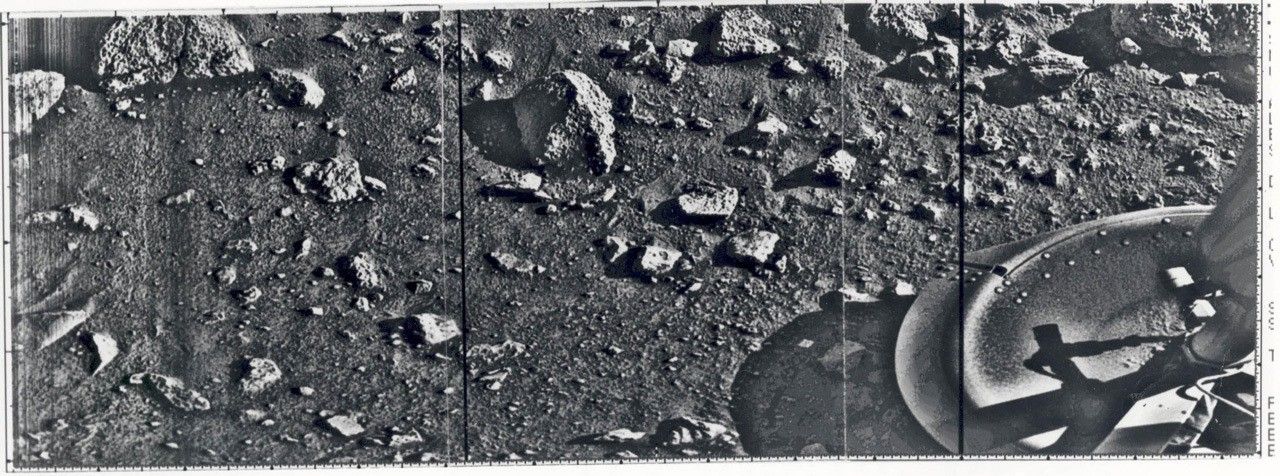
Two research teams have proposed possible locations for Luna 9, the Soviet spacecraft that became the first human-made object to achieve a soft landing on the Moon in 1966. One of the studies, led by Lewis Pinault, an affiliate scientist at the SETI Institute, used a machine-learning algorithm trained to identify spacecraft artifacts in lunar imagery. The system flagged several candidate sites in images from NASA’s Lunar Reconnaissance Orbiter, including one that may correspond to the long-lost lander and components of its landing system. If confirmed with higher-resolution observations, the discovery could help resolve a long-standing mystery from the early days of lunar exploration.
Read the full article by The New York Times: Lost Soviet Moon Lander May Have Been Found
See Uranus Like Never Before! Scientists Capture Incredible 3D View of the Planet
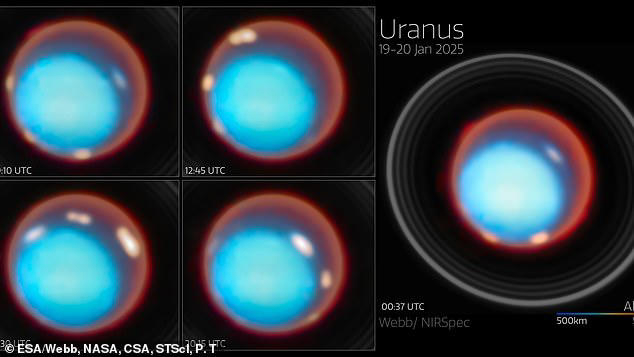
Using observations from the James Webb Space Telescope, astronomers have created the first detailed three-dimensional map of Uranus’s upper atmosphere, revealing new insights into how energy flows through the planet and where its auroras form. Led by Paola Tiranti of Northumbria University, the study mapped the temperature and density of charged particles thousands of kilometers above the planet’s cloud tops.
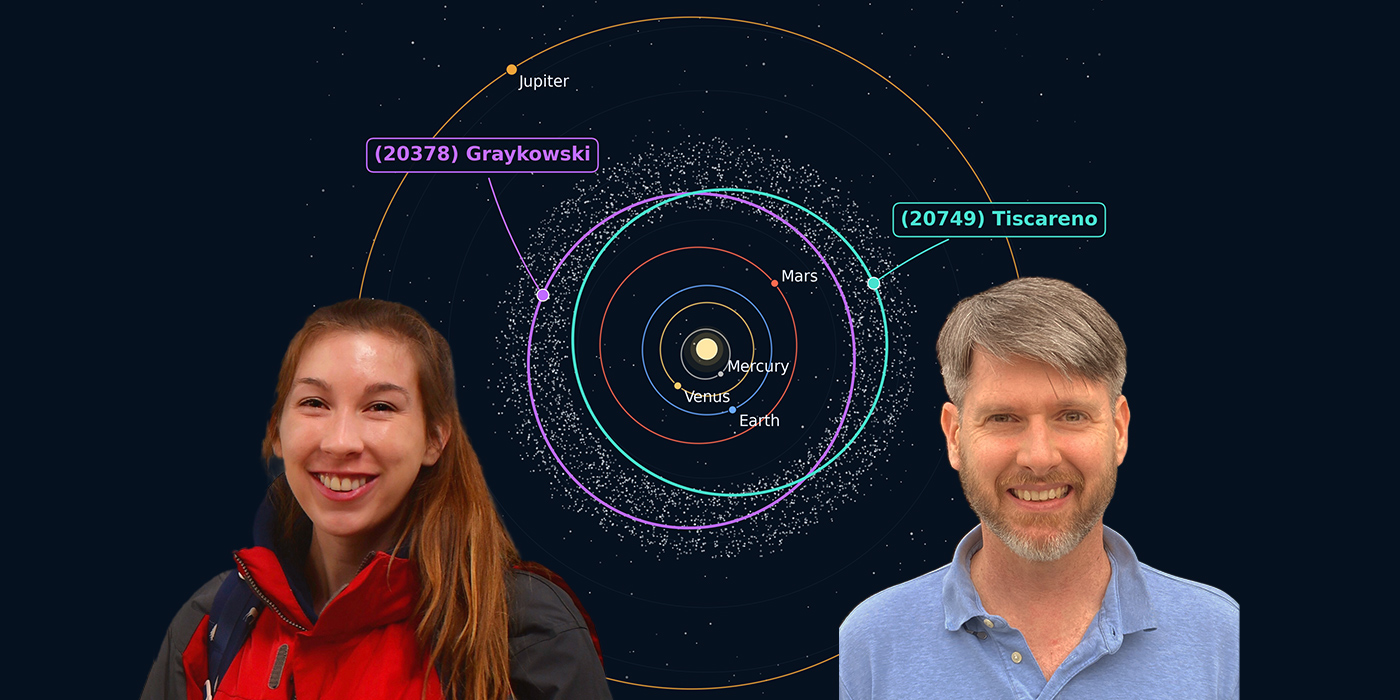
Matthew Tiscareno of the SETI Institute, who was part of the research team, noted the complexity of the Uranian system: “No other planet has as many small inner moons as Uranus, and their complex interrelationships with the rings hint at a chaotic history that blurs the boundary between a ring system and a system of moons.”
Read the full article by MSN: See Uranus Like Never Before! Scientists Capture Incredible 3D View of the Planet
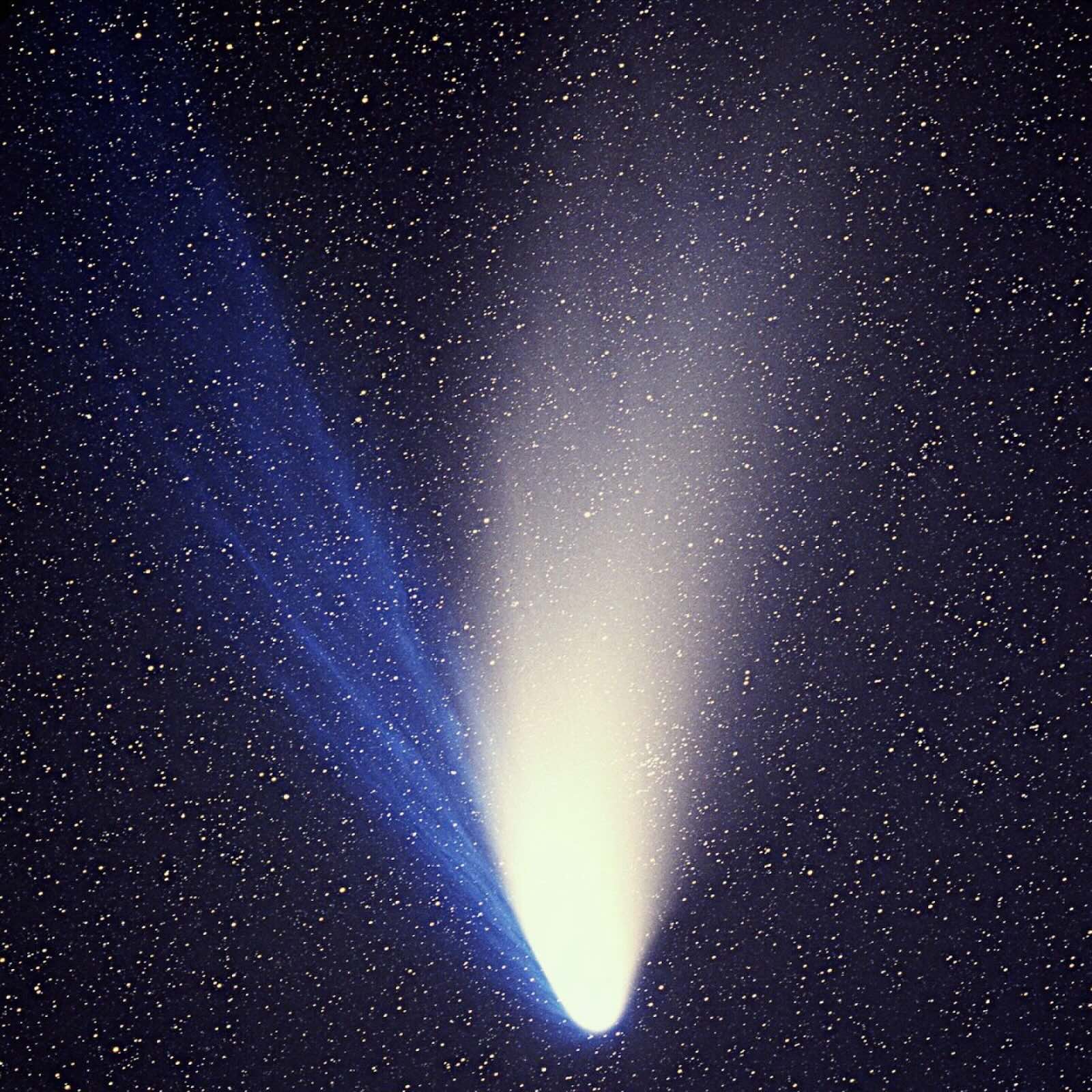
Blue Dot: Sky ghosts of the cosmos: Comets
SETI Institute scientists Franck Marchis and Ariel Graykowski joined host Dave Schlom on the Blue Dot science program to discuss the fascinating nature of comets. Often visible as glowing streaks across the night sky, comets are remnants from the early solar system that provide valuable clues about its formation and evolution. In the conversation, Marchis and Graykowski explained how comets form, how their icy material interacts with sunlight as they approach the Sun, and why these celestial visitors remain a subject of deep interest for planetary scientists and skywatchers alike.
Listen to the full interview on North State Public Radio: Blue Dot: Sky ghosts of the cosmos: Comets
Astronomy Activation Ambassadors: Embracing Multiple Perspectives
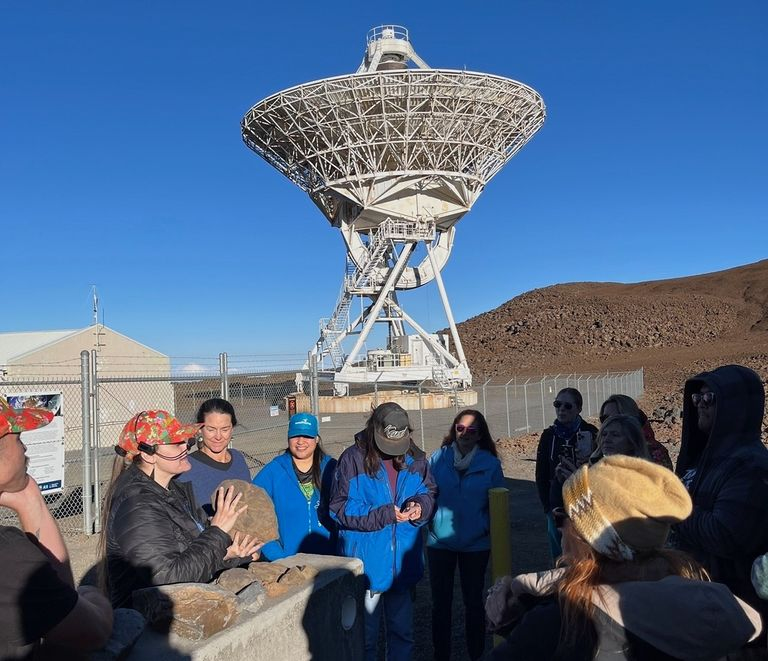
The Astronomy Activation Ambassadors (AAA) program, part of NASA’s Science Activation initiative and led by the SETI Institute, supports STEM engagement by providing professional development for middle school, high school, and community college educators. Guided by SETI Institute scientists and educators including Pamela Harman, Dana Backman, and Coral Clark, the program connects teachers with astronomy research, NASA resources, and immersive observatory experiences.
Recent workshops at Maunakea in Hawai‘i and Kitt Peak National Observatory in Arizona combined hands-on astronomy training with cultural and historical perspectives connected to these sites. Through these experiences, educators gain new tools to bring astronomy and planetary science into their classrooms and communities.
Read the full article by NASA: Astronomy Activation Ambassadors: Embracing Multiple Perspectives
News
Related News
Beyond Disclosure Day: The Real-World Protocols
#Press Releases #SETI #Astronomy #Bill Diamond #SETI Institute
SETI Institute In the News: May Roundup 2026
#SETI Institute in the News #SETI Institute #Community #Solar System #Matija Ćuk #Neptune #SETI #Bill Diamond #UAPs #Drake Awards #Lori Marino #Matthew Tiscareno #Outreach #Exoplanets #Carl Sagan Center
SETI Institute Looks for Signs of Technology in Interstellar Visitor 3I/ATLAS
Observations with the Allen Telescope Array set new limits on possible signals from extraterrestrial transmitters. #Press Releases #ATA #3I/ATLAS #Hat Creek Radio Observatory #Radio Astronomy #SETI
SETI Institute Awards $1 Million in STRIDE Grants to Advance Astrobiology, Exoplanet Science, and Public Engagement
#Press Releases #STRIDE #Research #Carl Sagan Center #Spectroscopy #Solar System #SETI #Climate and Bioscience #Astronomy #Astrobiology #Exoplanets #Data Science #Education #Outreach #Hat Creek Radio Observatory #Unistellar #SkyMapper
Celebrating Frank Drake
#Frank Drake #SETI #Project Ozma #Drake Equation #SETI Institute
SETI Institute to Honor Dr. Matthew Tiscareno with 2026 Carl Sagan Center Director’s Award
The Drake Awards event will also recognize SETI Forward and SETI Institute REU student award recipients. #Press Releases #Drake Awards #Frank Drake #SETI #Awards #Planetary Astronomy #Astrobiology #SETI Forward #Education #Carl Sagan Center #Matthew Tiscareno #Nathalie Cabrol #REUResearch
Related Projects
SkyMapper: Expanding Access to Real-time Astronomy Through a Global Astronomical Network
SkyMapper and the SETI Institute are connecting educators, students and the public to live astronomical observations through a distributed astronomical network. #SkyMapper #SETI #Citizen Science #Astronomy
Virtual Planetary Laboratory
How can we best assess whether an exoplanet supports life? #VPL
Discovery and Futures Lab
What happens if life beyond Earth is discovered? The Discovery and Futures Lab at the SETI Institute fosters novel and anticipatory research at the intersection of science, society, our planet, and the search for life beyond Earth. #Discovery and Futures LabSupport the
SETI Institute
Scientists are getting closer in their search for life beyond earth. But with limited federal funding for the search for extraterrestrial intelligence, supporters are the reason cutting-edge scientists can keep their eyes on the sky.