)

Friday, Dec 19, 2025

At a Glance
|
Intelligent life may be far more uncommon than once assumed. In a recent SETI Live discussion, Deputy Director of the Carl Sagan Center Dr. Simon Steel spoke with Dr. Manuel Scherf and Dr. Helmut Lammer of the Austrian Academy of Sciences to examine new models of planetary habitability. Their analysis revisits what “Earth-like” actually means, incorporating atmospheric chemistry, stellar radiation, and long-term planetary evolution. The results point to a narrow set of conditions that significantly restrict the number of planets capable of sustaining complex or technological life.
Earth’s Atmospheric Balance Is Not Typical
One of the core findings from the team’s work centers on Earth’s distinctive atmospheric composition. As Dr. Scherf explained, the combination of nitrogen, oxygen, and low CO₂ levels is unusually stable and highly favorable for complex life. Oxygen, a strong metabolic electron acceptor, supports large, energy-intensive organisms. Partial pressures above roughly 100 millibars are necessary to maintain life forms with the size and energy demands required for tool use or technology. Below that threshold, organisms are likely restricted to microbial scales.
Dr. Lammer emphasized that this balance is the outcome of co-evolution between life and the atmosphere. The rise of oxygen, the recycling of nitrogen, and the operation of the carbon-silicate cycle all contributed to climate and atmospheric stability over billions of years. Too much CO₂ becomes toxic for complex organisms; too little destabilizes the upper atmosphere. Likewise, oxygen levels above roughly 300 millibars pose a pervasive combustion risk. These limits define a narrow region of atmospheric stability rarely matched by other planets.
Red Dwarfs Are Not Promising Hosts
A large fraction of known rocky exoplanets orbit M-dwarf stars (also known as red dwarfs) because these small stars dominate the Galaxy and are more easily observed. But the researchers noted that these systems present significant challenges for atmospheric retention and long-term habitability.
M-dwarfs are highly active in ultraviolet and X-ray wavelengths. This radiation heats the upper atmospheres of planets, driving rapid atmospheric escape. Even CO₂-dominated atmospheres – normally efficient coolants in the upper atmosphere – struggle under these conditions. Nitrogen-oxygen atmospheres fare even worse.
Recent observations using the James Webb Space Telescope strengthen this concern. For several TRAPPIST-1 planets, no atmosphere has yet been detected. Even if one or two planets retain thin atmospheres, other issues remain:
- Persistent stellar flares
- Tidal locking, resulting in a permanent day and night side
- Atmospheric freeze-out on the night side
- Lack of large, stable moons
Given these constraints, Dr. Scherf and Dr. Lammer emphasized that G-type stars, though less common, remain significantly more promising for Earth-like evolution.
How Many Earth-Like Habitats Might Exist?
To estimate the number of planets capable of sustaining Earth-like conditions, researchers developed a constrained variant of the Drake Equation. They incorporated only parameters that can be quantified today, such as the frequency of rocky planets in the habitable zone, the stability of atmospheric gases, and the location within the galactic habitable zone.
Even under optimistic assumptions, their model suggests the Milky Way may host only 60,000 to 250,000 planets with Earth-like atmospheres.
This count already assumes generous conditions and does not account for additional filters required for abiogenesis, the emergence of complex multicellular life, or the development of technology. When those factors are included, the number of coexisting technological civilizations may fall to only a handful. In practical terms, this could mean vast distances between civilizations or significant differences in their evolutionary ages.
What Future Observations Could Reveal
Both researchers highlighted the next steps in testing these hypotheses. Future surveys will aim to identify:
- Rocky planets that have retained primordial hydrogen-helium atmospheres
- Planets with CO₂-dominated atmospheres as a result of incomplete outgassing or stalled geological cycles
- Rocky planets around quieter K- and G-type stars
- Directly imaged Earth-sized planets using next-generation telescopes
NASA’s proposed Habitable Worlds Observatory and Europe’s candidate LIFE mission would be the first to directly image rocky exoplanets around Sun-like stars and resolve key atmospheric features such as water vapor, oxygen, and nitrogen. These data will provide the strongest tests to date of whether Earth-like atmospheres are rare or whether we have simply lacked the tools to find them.
A New Framework for SETI
This emerging research reframes how we evaluate the potential for complex life across the galaxy. Rather than assuming a broad distribution of Earth analogs, SETI scientists are developing observational strategies that reflect a more selective and physically grounded view of planetary habitability.
Watch the full conversation on SETI Live, and read their paper here.







News
Related News

Jun 26, 2026
What Juice Revealed About Interstellar Comet 3I/ATLAS
#Blog #3I/ATLAS #Franck Marchis #Juice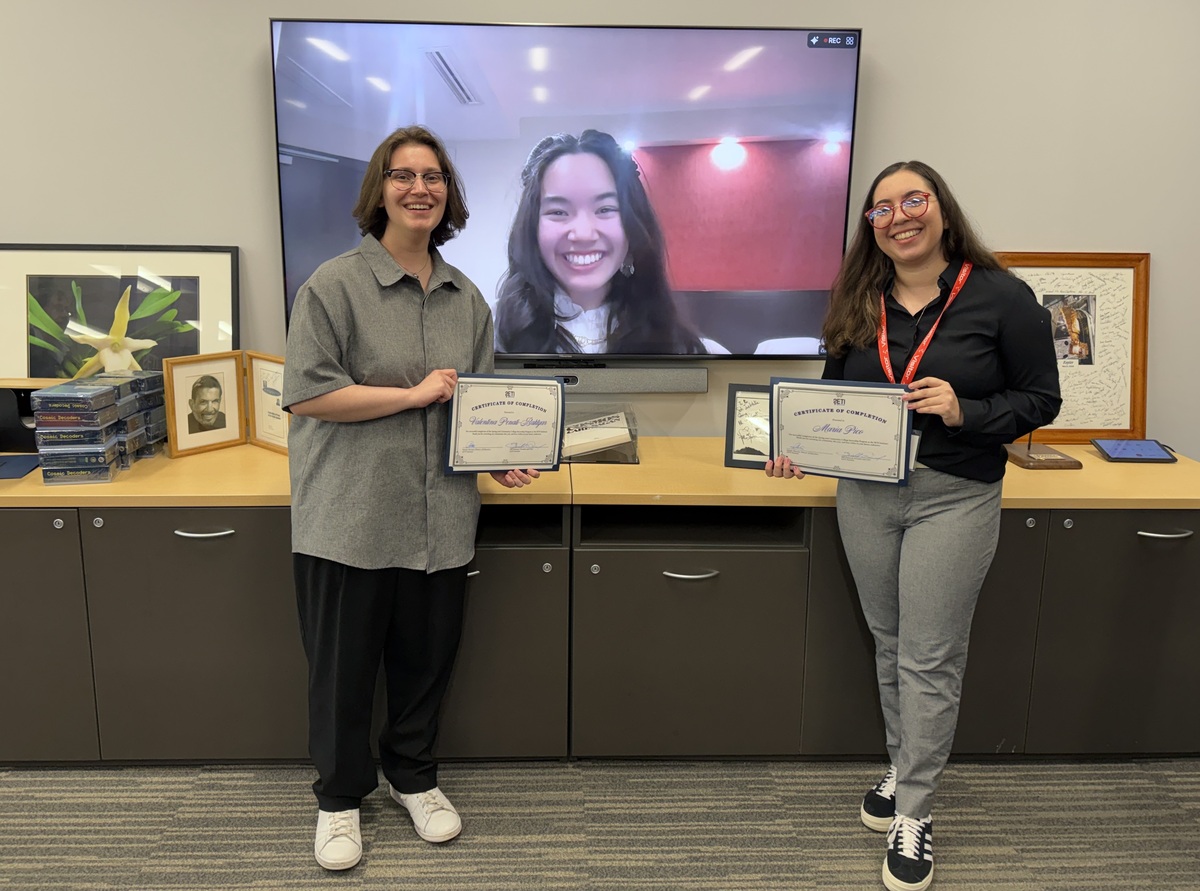
Jun 17, 2026
Community College Internship Program Celebrates Fourth Year of Student Research Achievement
#Community College Internship #Education #Lauren Sgro #Unistellar #Uma Gorti #Douglas Caldwell #Pamela Harman #Simon Steel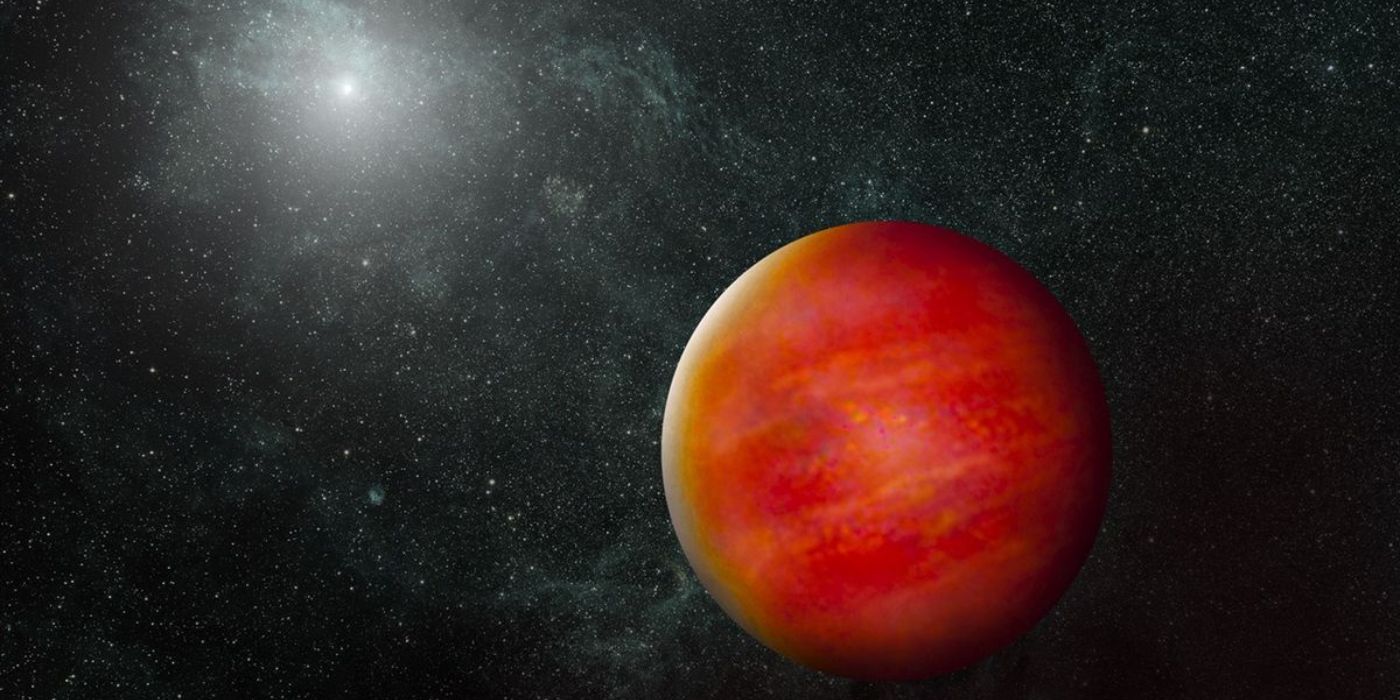
Jun 12, 2026
Not Planets, Not Stars: NASA Volunteers Doubled the Number of Known Brown Dwarfs
#Blog #Lauren Sgro
Jun 11, 2026
Life is But a Stream: Planetary Systems Along Stellar Streams
#Blog #Moiya McTier
Jun 8, 2026
The Sounds of Intelligence: A Conversation with 2026 Drake Award Recipient Lori Marino
#Blog #Drake Awards #Lori Marino #SETI
Jun 5, 2026
Lava Worlds & Nightside Volcanoes on K2-141 b
#Blog
Jun 26, 2026
#Blog
#3I/ATLAS
#Franck Marchis
#Juice
Jun 17, 2026
#Community College Internship
#Education
#Lauren Sgro
#Unistellar
#Uma Gorti
#Douglas Caldwell
#Pamela Harman
#Simon Steel
Community College Internship Program Celebrates Fourth Year of Student Research Achievement
Jun 12, 2026
#Blog
#Lauren Sgro
Not Planets, Not Stars: NASA Volunteers Doubled the Number of Known Brown Dwarfs
Jun 11, 2026
#Blog
#Moiya McTier
Life is But a Stream: Planetary Systems Along Stellar Streams
Jun 8, 2026
#Blog
#Drake Awards
#Lori Marino
#SETI
The Sounds of Intelligence: A Conversation with 2026 Drake Award Recipient Lori Marino
Jun 5, 2026
#Blog
Lava Worlds & Nightside Volcanoes on K2-141 b
Research
Related Projects

SkyMapper • SETI • Citizen Science • Astronomy
SkyMapper: Expanding Access to Real-time Astronomy Through a Global Astronomical Network
SkyMapper and the SETI Institute are connecting educators, students and the public to live astronomical observations through a distributed astronomical network. #SkyMapper #SETI #Citizen Science #Astronomy
VPL
Virtual Planetary Laboratory
How can we best assess whether an exoplanet supports life? #VPL
Discovery and Futures Lab
Discovery and Futures Lab
What happens if life beyond Earth is discovered? The Discovery and Futures Lab at the SETI Institute fosters novel and anticipatory research at the intersection of science, society, our planet, and the search for life beyond Earth. #Discovery and Futures Lab
May 17, 2026
SkyMapper: Expanding Access to Real-time Astronomy Through a Global Astronomical Network
SkyMapper and the SETI Institute are connecting educators, students and the public to live astronomical observations through a distributed astronomical network.
#SkyMapper
#SETI
#Citizen Science
#Astronomy
May 5, 2026
Virtual Planetary Laboratory
How can we best assess whether an exoplanet supports life?
#VPL
Apr 16, 2026
Discovery and Futures Lab
What happens if life beyond Earth is discovered? The Discovery and Futures Lab at the SETI Institute fosters novel and anticipatory research at the intersection of science, society, our planet, and the search for life beyond Earth.
#Discovery and Futures Lab
Support Us
Support the
SETI Institute
Scientists are getting closer in their search for life beyond earth. But with limited federal funding for the search for extraterrestrial intelligence, supporters are the reason cutting-edge scientists can keep their eyes on the sky.
