)

Thursday, Oct 14, 2021
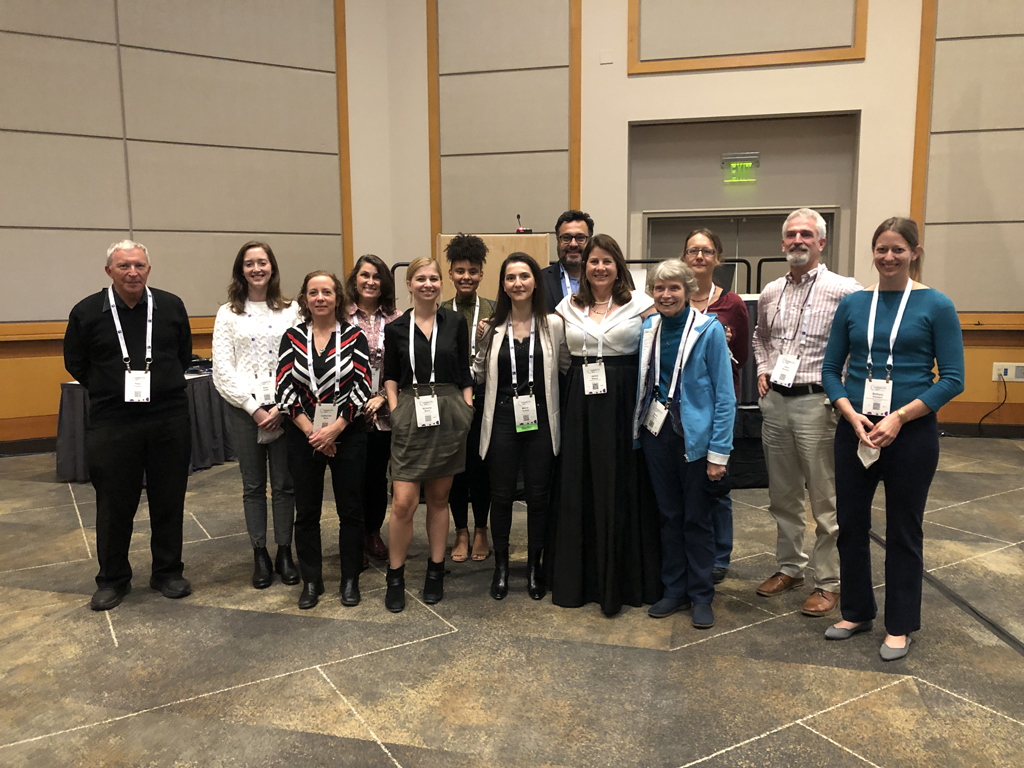
The Geological Society of America (GSA) has awarded Dr. Janice Bishop, a senior research scientist at the SETI Institute and chair of the astrobiology group, with the 2021 G.K. Gilbert Award, which is presented annually for outstanding contributions to planetary geology.
Bishop's work focuses on exploring Mars, both through spectroscopy and through collecting and studying Mars analog rocks and soil here on Earth in places including volcanic islands, cold deserts, hydrothermal regions and acidic aqueous sites. She is particularly interested in understanding alteration processes in the context of geology, and her expertise in understanding how Mars' mineralogy has evolved is widely recognized.
“I am thrilled to be the 5th woman selected for the Grove Karl Gilbert award, joining the ranks of planetary geology stars Baerbel Lucchitta, Maria Zuber, Carlé Pieters, and Darby Dyar,” said Bishop. “I hope to see us expand and celebrate field investigations on Earth as analogs for planetary processes, as well as bolster exploration achieved by robots and humans on Mars, the Moon, asteroids, and other planetary bodies in order to more fully understand the formation and evolution of our Solar System." See Bishop's complete statement below.
In addition to her scientific achievements, Bishop has been a generous mentor to colleagues, scientists embarking on their careers and students. In particular, she has mentored numerous students through the SETI Institute’s Research Experience for Undergraduates (REU) program.
Janice is also the recipient of the 2021 Carl Sagan Center Director’s Award and was named one of the American Geophysical Union’s (AGU) 2020 Fellows. Congratulations, Janice, and thank you for all you do!
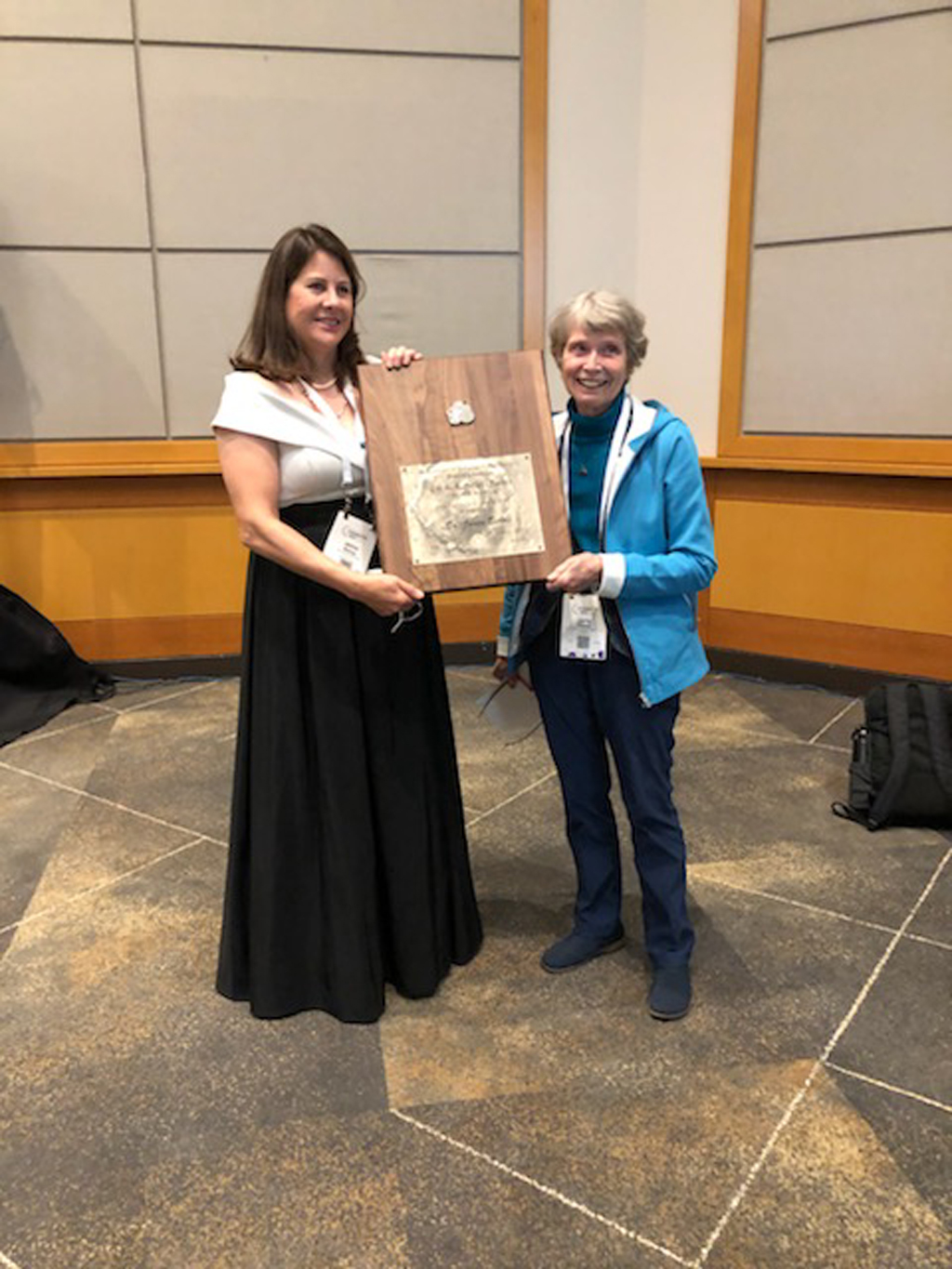
Citation for Dr. Janice Bishop awarded the 2021 GSA G. K. Gilbert Award
By Dr. Carle M. Pieters
It is an enormous delight and honor to provide a citation for Dr. Janice Bishop, the 2021 recipient of the Geological Society of America G. K. Gilbert Award from the Planetary Geology Division. This award is given annually to an individual who has provided outstanding contributions to planetary geology in its broadest sense.
Janice obtained her BS and MS degrees from Stanford University in Chemistry and Applied Earth Science (Remote Sensing) and her PhD from Brown University, again forging a cross disciplinary approach centered on Chemistry, with applications in planetary science, mineralogy, and spectroscopy. She developed a broad range of experience as a postdoctoral Research Associate first at DLR in Berlin and later as an NRC Fellow at NASA-Ames. In 1999 Janice joined the SETI Institute Carl Sagan Center, Astrobiology Group, maintaining a contractor position at NASA-Ames, Space Science & Astrobiology Division. Her contributions have bloomed and grown through the last two decades from that professional home, with a few extended excursions as Visiting Scientist or Guest Professor with colleagues in Europe. Her research trajectory reflects a theme that has been a cornerstone of the character and quality of her sustained work, namely the application of sound chemical principles to diverse issues that are central to geological processes on planetary bodies.
Janice integrates laboratory data and field work to systematically address alteration processes in geologic context. She excels in exploring areas of active or ancient alteration as well as the use of remote compositional analyses derived from modern spectroscopic instruments to understand their environment and evolution. Over the years Janice has become widely recognized as a skilled researcher who has played a central role in developing a solid foundation for understanding how Mars mineralogy has evolved into what is seen today.
In addition, Janice's research bridges aqueous alteration topics that tie the evolution of the surface of Mars with a growing interest in exobiology issues. Her work characterizes the aqueous activity and environment of alteration products and their intriguing links to a possible habitable era during the early evolution of planets. This work is broad in scope and examines both the locations and the geologic implications of these important materials using modern remote sensing (spectroscopic) approaches. Janice is a highly knowledgeable and visible participant in the scientific exploration of Mars, but she also seeks out and generously supports collaborators and young scientists. She is unselfish in her work and genuinely wishes to see others succeed in the scientific field she loves.
Recently Janice has expertly led (as driving force and principal editor) a major effort to produce an important book entitled Remote Compositional Analysis: Techniques for Understanding Spectroscopy, Mineralogy, and Geochemistry of Planetary Surfaces. This tome has been a few years in preparation and was published by Cambridge University Press in 2019. It will stand as a much-needed reference and broad textbook covering remote compositional analyses of the planets with up-to-date data and perspectives.
All who know her recognize that Janice is a wonderful person to work with and has a warm welcoming personality. In addition to being an excellent experimentalist, she is an admired and well-liked team player who without hesitation leads tasks required to make a project successful. She is a well-organized leader and a natural facilitator who continually connects people that have similar interests or goals with each other.
Overall, Dr. Janice Bishop is a highly accomplished, dedicated, and generous scientist: a truly outstanding recipient of the GSA 2021 G. K. Gilbert award!

Response from Janice Bishop:
I am thrilled to be the 5th woman selected for the Grove Karl Gilbert award, joining the ranks of planetary geology stars Baerbel Lucchitta, Maria Zuber, Carlé Pieters, and Darby Dyar. First of all, I would like to thank my colleagues who generously nominated me for this award and especially Carlé for the gracious and thoughtful citation. I am also beholden to my family and friends who have supported me in many ways that enabled me to pursue my dream of studying the planets.
It is a tremendous honor to be recognized with the Gilbert award and I am exceedingly thankful to the Planetary Geology Division of GSA. During my career I have been fortunate to study fascinating topics in geology including alteration of volcanic tephra, the structure and spectral properties of minerals, and how their presence on Mars can help us retrace the planet’s geologic history. I have benefitted from interactions with colleagues and students in our community and appreciate the scientific collaborations that strengthen us all. Specifically, I am grateful to colleagues for questioning my hypotheses, posing probing questions, and engaging in vibrant discussions.
The work I am most proud of is transforming the general notion of “hydrated” minerals and rocks into specific definitions of (i) structural OH and H2O that are components of mineral structures, (ii) H2O chemically bound to particle surfaces, and (iii) adsorbed H2O that varies readily with environmental conditions. Further, low-temperature spectroscopy studies of H2O in briny permafrost settings are demonstrating that the transition from H2O ice to liquid H2O is complex with multiple intermediate phases. I believe that understanding the nature of H2O and OH in minerals and planetary materials is one of the keys to unlocking near-surface activity and the geochemical history of planetary surfaces. I predict that we will be learning much more about H2O and OH on the Moon, Mars, and asteroids in the coming years.
G. K. Gilbert and previous Gilbert Awardees have been fabulous role models for me and the planetary geology community. Most on this list shine for their active collaborations and vital personal insights. A few goals I have observed from successful leaders, including Gilbert Awardees, are excellent hallmarks for us in planetary geology.
- Choose work you enjoy.
- Use your time well.
- Support the people and ideals you value.
- Leave things better than you found them.
In this spirit, I’d like to challenge our community to support each other even more through mentoring, reviewing papers and proposals, and engaging at conferences, as we strive for greater understanding of geologic processes on planetary bodies.
Finally, I believe that “field work” on Earth and other bodies reveals untold secrets of our geologic history, as experienced by Gilbert at terrestrial sites. I hope to see us expand and celebrate field investigations on Earth as analogs for planetary processes, as well as bolster exploration achieved by robots and humans on Mars, the Moon, asteroids, and other planetary bodies in order to more fully understand the formation and evolution of our Solar System.







News
Related News
Jul 21, 2026
Celebrating 25 Years of Exoplanet Astrobiology: Welcoming the Virtual Planetary Laboratory to its New Home at the SETI Institute
#VPL #Astrobiology #SETI Institute #Victoria Meadows #Andrew Lincowski #Eric Wolf #Nicholas Wogan #Kimberly Bott #Hannah Dawson
Jul 20, 2026
50 Years After Viking 1: The Mission That Changed the Search for Life on Mars
Half a century after the first successful Mars landing, Viking's greatest legacy may be the questions it taught us to ask. #Mars #NASA Missions and Observatories #Anniversary
Jun 1, 2026
SETI Institute Awards $1 Million in STRIDE Grants to Advance Astrobiology, Exoplanet Science, and Public Engagement
#Press Releases #STRIDE #Research #Carl Sagan Center #Spectroscopy #Solar System #SETI #Climate and Bioscience #Astronomy #Astrobiology #Exoplanets #Data Science #Education #Outreach #Hat Creek Radio Observatory #Unistellar #SkyMapper
May 13, 2026
SETI Institute to Honor Dr. Matthew Tiscareno with 2026 Carl Sagan Center Director’s Award
The Drake Awards event will also recognize SETI Forward and SETI Institute REU student award recipients. #Press Releases #Drake Awards #Frank Drake #SETI #Awards #Planetary Astronomy #Astrobiology #SETI Forward #Education #Carl Sagan Center #Matthew Tiscareno #Nathalie Cabrol #REU
May 7, 2026
SETI Institute In the News: April Roundup 2026
#SETI Institute in the News #SETI Institute #Community #SETI #Discovery and Futures Lab #Lucian Walkowicz #Chelsea Haramia #NASA Missions and Observatories #Pascal Lee #Mars #Janice Bishop #Mark Showalter #JWST #Uranus #Bill Diamond #UAPs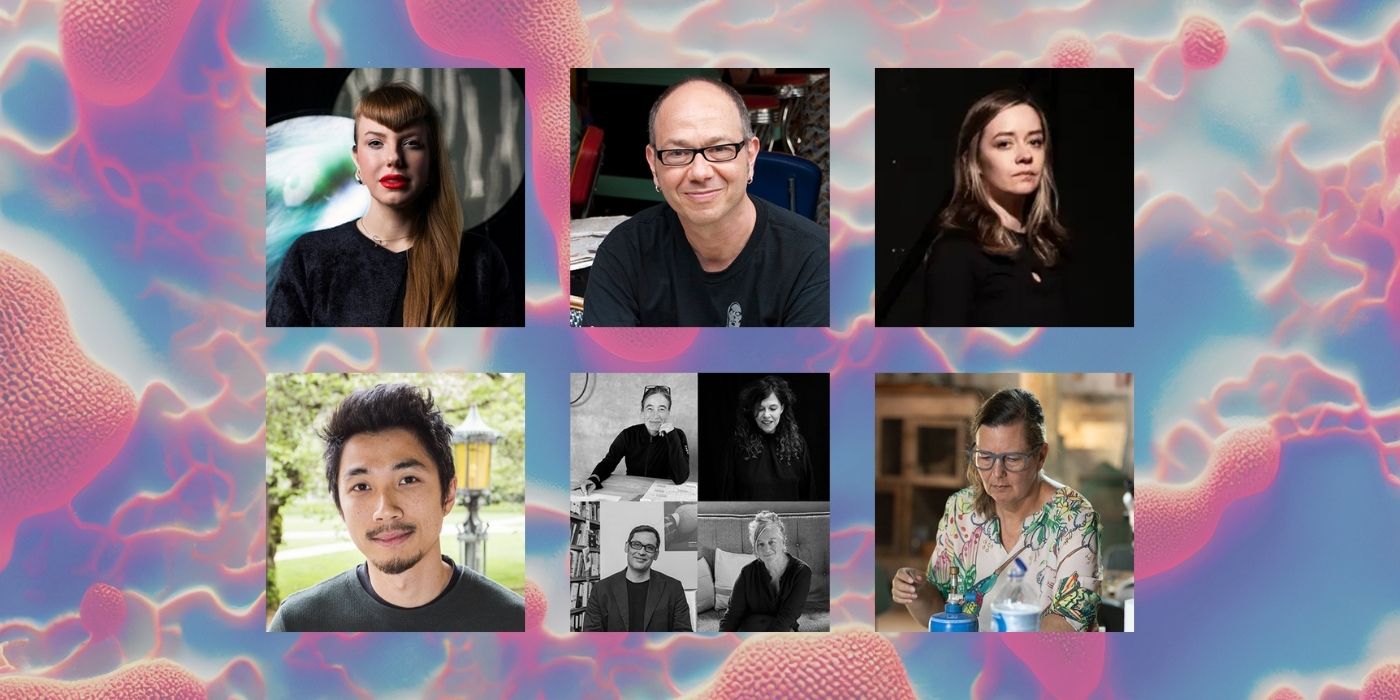
May 4, 2026
SETI Institute Announces Nominees for the Speculative Life BioArt Residency
Six international artists shortlisted for a new residency at the intersection of art, astrobiology, and biotechnology #AIR #SETI Institute #Speculative Life #Astrobiology #Danielle Siembieda #Nathalie Cabrol
Jul 21, 2026
#VPL
#Astrobiology
#SETI Institute
#Victoria Meadows
#Andrew Lincowski
#Eric Wolf
#Nicholas Wogan
#Kimberly Bott
#Hannah Dawson
Jul 20, 2026
50 Years After Viking 1: The Mission That Changed the Search for Life on Mars
Half a century after the first successful Mars landing, Viking's greatest legacy may be the questions it taught us to ask.
#Mars
#NASA Missions and Observatories
#Anniversary
Jun 1, 2026
#Press Releases
#STRIDE
#Research
#Carl Sagan Center
#Spectroscopy
#Solar System
#SETI
#Climate and Bioscience
#Astronomy
#Astrobiology
#Exoplanets
#Data Science
#Education
#Outreach
#Hat Creek Radio Observatory
#Unistellar
#SkyMapper
SETI Institute Awards $1 Million in STRIDE Grants to Advance Astrobiology, Exoplanet Science, and Public Engagement
May 13, 2026
SETI Institute to Honor Dr. Matthew Tiscareno with 2026 Carl Sagan Center Director’s Award
The Drake Awards event will also recognize SETI Forward and SETI Institute REU student award recipients.
#Press Releases
#Drake Awards
#Frank Drake
#SETI
#Awards
#Planetary Astronomy
#Astrobiology
#SETI Forward
#Education
#Carl Sagan Center
#Matthew Tiscareno
#Nathalie Cabrol
#REU
May 7, 2026
#SETI Institute in the News
#SETI Institute
#Community
#SETI
#Discovery and Futures Lab
#Lucian Walkowicz
#Chelsea Haramia
#NASA Missions and Observatories
#Pascal Lee
#Mars
#Janice Bishop
#Mark Showalter
#JWST
#Uranus
#Bill Diamond
#UAPs
SETI Institute In the News: April Roundup 2026
May 4, 2026
SETI Institute Announces Nominees for the Speculative Life BioArt Residency
Six international artists shortlisted for a new residency at the intersection of art, astrobiology, and biotechnology
#AIR
#SETI Institute
#Speculative Life
#Astrobiology
#Danielle Siembieda
#Nathalie Cabrol
Research
Related Projects

SkyMapper • SETI • Citizen Science • Astronomy
SkyMapper: Expanding Access to Real-time Astronomy Through a Global Astronomical Network
SkyMapper and the SETI Institute are connecting educators, students and the public to live astronomical observations through a distributed astronomical network. #SkyMapper #SETI #Citizen Science #Astronomy
VPL
Virtual Planetary Laboratory
How can we best assess whether an exoplanet supports life? #VPL
Discovery and Futures Lab
Discovery and Futures Lab
What happens if life beyond Earth is discovered? The Discovery and Futures Lab at the SETI Institute fosters novel and anticipatory research at the intersection of science, society, our planet, and the search for life beyond Earth. #Discovery and Futures Lab
May 17, 2026
SkyMapper: Expanding Access to Real-time Astronomy Through a Global Astronomical Network
SkyMapper and the SETI Institute are connecting educators, students and the public to live astronomical observations through a distributed astronomical network.
#SkyMapper
#SETI
#Citizen Science
#Astronomy
May 5, 2026
Virtual Planetary Laboratory
How can we best assess whether an exoplanet supports life?
#VPL
Apr 16, 2026
Discovery and Futures Lab
What happens if life beyond Earth is discovered? The Discovery and Futures Lab at the SETI Institute fosters novel and anticipatory research at the intersection of science, society, our planet, and the search for life beyond Earth.
#Discovery and Futures Lab
Support Us
Support the
SETI Institute
Scientists are getting closer in their search for life beyond earth. But with limited federal funding for the search for extraterrestrial intelligence, supporters are the reason cutting-edge scientists can keep their eyes on the sky.
