)

Tuesday, Aug 19, 2025

At a Glance
Comet 3I/ATLAS (C/2025 N1) – An Interstellar Visitor
BD+05 4868 b – A Disintegrating Exoplanet
Looking Ahead
|
In a recent SETI Live, SETI Institute astronomers, Dr. Franck Marchis and Dr. Lauren Sgro, discussed two rare and compelling discoveries: a newly identified interstellar comet, Comet 3I/ATLAS (C/2025 N1), and BD+05 4868 b, one of only four known disintegrating exoplanets. Both objects are being studied with the help of Unistellar’s global citizen science network, which consists of thousands of distributed backyard telescopes capable of capturing high-precision astronomical data.
Expanding the Reach of Citizen Science
Dr. Franck Marchis, SETI Institute astronomer, Director of Citizen Science, and Chief Scientific Officer at Unistellar, along with Dr. Lauren Sgro, SETI Institute exoplanet astronomer, discussed how Unistellar’s decentralized telescope network enables large-scale observational campaigns, capturing even faint and transient phenomena across the sky.
The discussion underscored how citizen scientists, by contributing thousands of data points from around the world, are playing a direct role in advancing planetary science, exoplanetary studies, and interstellar object research.
Comet 3I/ATLAS: An Interstellar Visitor

Observation of 3I/ATLAS by David and Larissa Swalander (US)
Comet 3I/ATLAS, officially designated C/2025 N1, was discovered on July 1, 2025, using the Asteroid Terrestrial-impact Last Alert System (ATLAS) in Chile. Its hyperbolic orbit (an open trajectory that does not loop back into the Solar System) confirmed its interstellar origin. This makes it only the third known interstellar object, following 1I/‘Oumuamua (2017) and Comet 2I/Borisov (2019).
Because Comet 3I/ATLAS was discovered early in its approach, astronomers have a unique opportunity to study its composition and activity in detail. Citizen astronomers using Unistellar telescopes have already collected more than 50 independent observations. These data reveal:
- A gradual increase in brightness, consistent with cometary activity as solar heating sublimates volatile ices
- Refinement of the comet’s orbital parameters by tracking its precise motion against background stars
- Evidence of dust and gas emissions, confirmed by complementary spectroscopic observations
Early Unistellar observations pushed the detection limits of the network, identifying the comet at magnitude 17.8, making it the faintest object ever captured by this citizen science community. The comet is expected to brighten to around magnitude 14 later this year, though its proximity to the Sun will make direct observation challenging during its closest approach.
BD+05 4868 b: A Rare Disintegrating Exoplanet

Close-up of the transit in the phase-folded light curve. Credit: Figure 1, Hon et al. 2025
In May 2025, astronomers identified a new disintegrating exoplanet: BD+05 4868 b. This Mercury-sized rocky world orbits its parent star at just 0.02 astronomical units (AU) – 20 times closer than Earth is to the Sun. At such extreme proximity, stellar radiation is stripping away planetary material, creating a trailing dust tail similar in appearance to a comet.
Unlike typical planetary transits, which produce a symmetrical dip in stellar brightness as the planet passes in front of its star, the light curve of BD+05 4868 b shows an extended dimming after the planet’s passage. This asymmetry results from the trailing dust tail crossing the star’s disk.
To study this rare system, SETI Institute astronomers coordinated a campaign with Unistellar observers worldwide. With 26 observers contributing data across 22 hours, the network achieved an unprecedented 26 hours of continuous coverage of a single exoplanet transit, an accomplishment impossible for a single ground-based observatory.
This extensive dataset is now being analyzed in tandem with Keck Observatory spectroscopy, which will reveal the chemical composition of the disintegrated material. Such measurements could provide the first direct insights into the interior makeup of an exoplanet.
Looking Ahead: Asteroid Occultations and Beyond
The discussion also previewed upcoming opportunities for citizen scientists. On August 26, 2025, the main-belt asteroid Pulcova, a 100-kilometer-wide body with a small moon, will occult an 11th magnitude star along a path stretching across the United States. Observations of this event will refine the asteroid’s size, shape, and confirm the orbital parameters of its moon. The Unistellar community will also have two final chances to observe the disintegrating planet, BD+05 4868 Ab, from August 22 to 24.
Why These Discoveries Matter
Interstellar comets like 3I/ATLAS offer a rare opportunity to directly sample material from other planetary systems, improving our understanding of planet formation in diverse environments. Disintegrating exoplanets reveal the extreme evolutionary pathways of small rocky worlds, bridging planetary geology with stellar astrophysics.
Citizen science continues to amplify the capacity of professional astronomers, enabling discoveries that would otherwise be impossible with limited telescope time.
Learn More
Explore ongoing citizen science projects at the SETI Institute.
Watch the full SETI Live episode here.







News
Related News

Jul 24, 2026
A New Way to Search for Alien Civilizations
#Blog #Lauren Sgro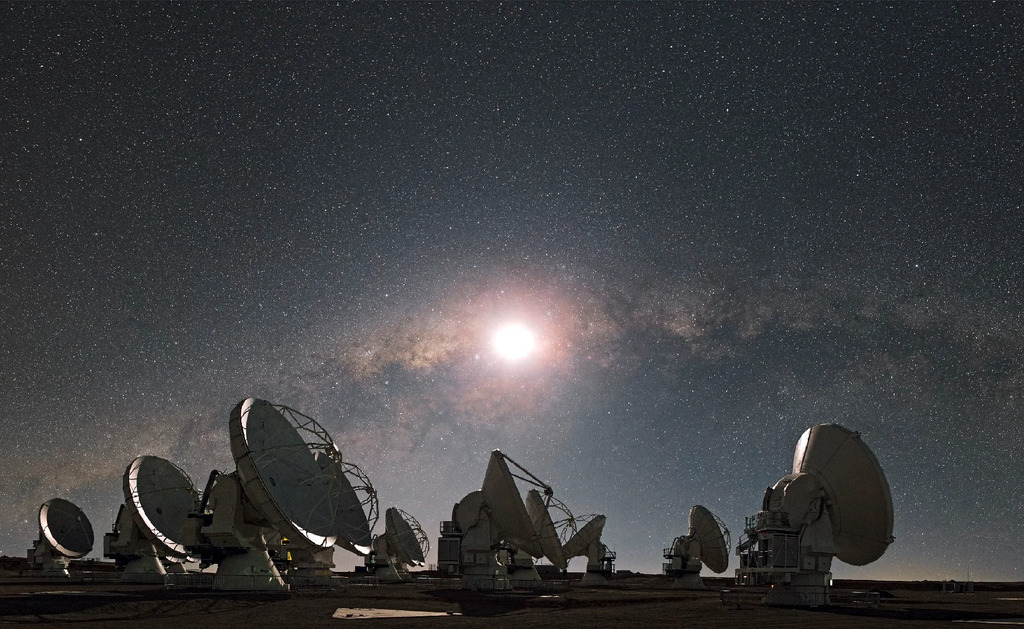
Jul 20, 2026
SETI Institute In the News: June Roundup 2026
Throughout June 2026, SETI Institute scientists, affiliates, and collaborators contributed to discussions spanning interstellar visitors, planetary science, technosignature searches, animal cognition, and the scientific process guiding the search for life beyond Earth. #SETI Institute in the News #SETI Institute #Community #Eduardo Bendek #Optical SETI #SETI #3I/ATLAS #ATA #Comets, Meteors, and Asteroids #Solar System #Franck Marchis #Ariel Graykowski #Jill Tarter #Vishal Gajjar #Radio Astronomy #Bill Diamond #Lori Marino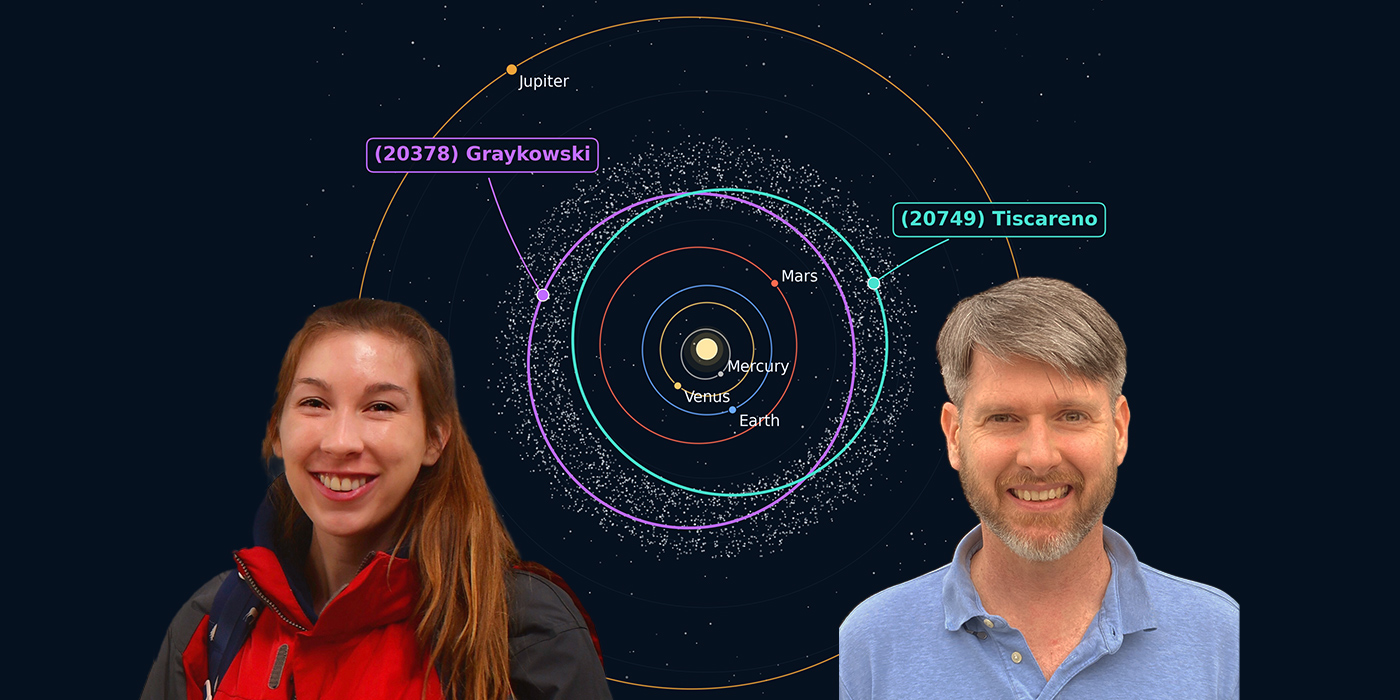
Jul 17, 2026
Two SETI Institute Scientists Honored with Asteroids Bearing Their Names
#Comets, Meteors, and Asteroids #Ariel Graykowski #Matthew Tiscareno #Planetary Astronomy #Solar System #Saturn
Jul 17, 2026
How Clouds Hide Alien Worlds—and How Astronomers See Through Them
#Blog #Moiya McTier
Jul 10, 2026
A Remarkably Ancient Visitor: 3I/ATLAS
#3I/ATLAS #Comets, Meteors, and Asteroids #JWST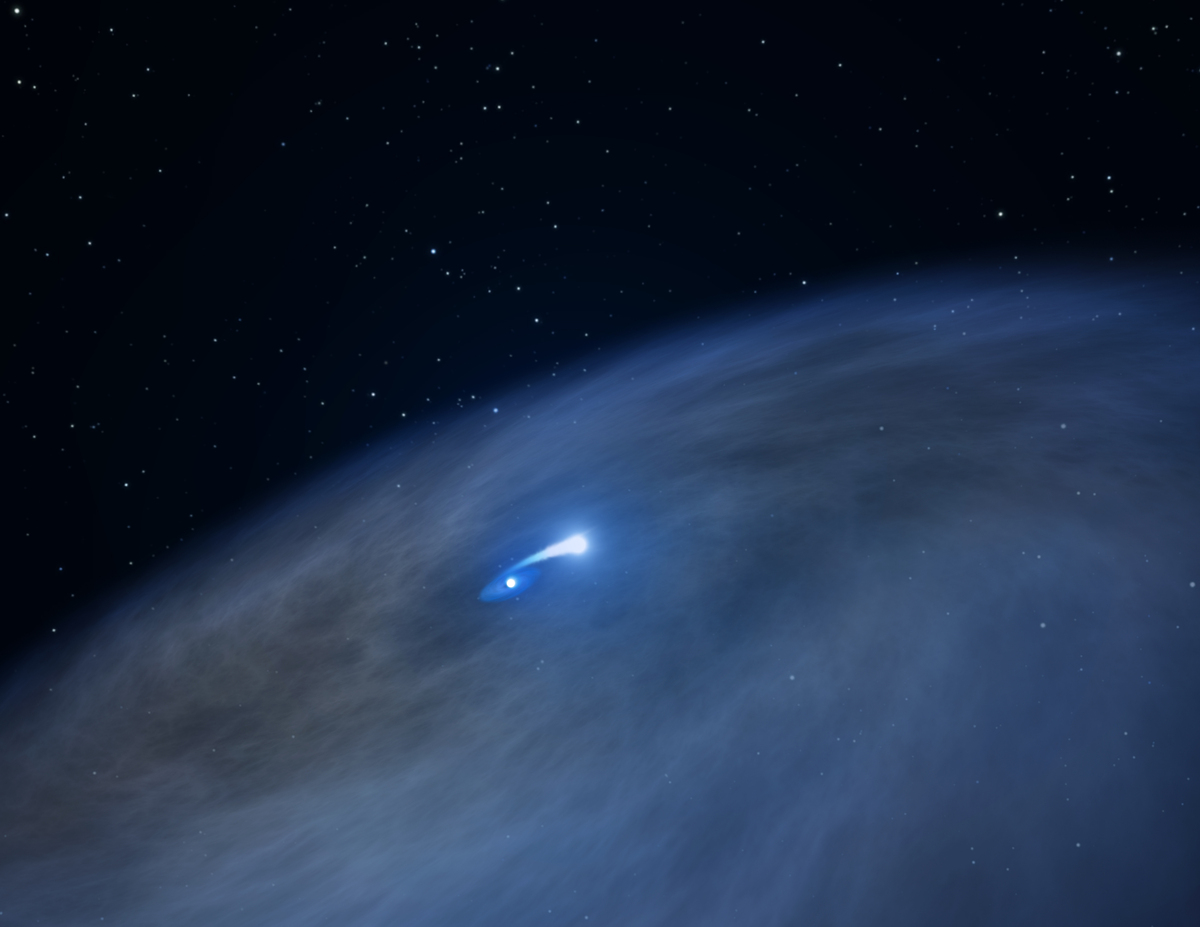
Jul 10, 2026
SETI Institute Achievements: Q1 2026 Activity Report
#Activity Reports #Carl Sagan Center #Outreach #Education #AIR #Community #Research
Jul 24, 2026
#Blog
#Lauren Sgro
Jul 20, 2026
SETI Institute In the News: June Roundup 2026
Throughout June 2026, SETI Institute scientists, affiliates, and collaborators contributed to discussions spanning interstellar visitors, planetary science, technosignature searches, animal cognition, and the scientific process guiding the search for life beyond Earth.
#SETI Institute in the News
#SETI Institute
#Community
#Eduardo Bendek
#Optical SETI
#SETI
#3I/ATLAS
#ATA
#Comets, Meteors, and Asteroids
#Solar System
#Franck Marchis
#Ariel Graykowski
#Jill Tarter
#Vishal Gajjar
#Radio Astronomy
#Bill Diamond
#Lori Marino
Jul 17, 2026
#Comets, Meteors, and Asteroids
#Ariel Graykowski
#Matthew Tiscareno
#Planetary Astronomy
#Solar System
#Saturn
Two SETI Institute Scientists Honored with Asteroids Bearing Their Names
Jul 17, 2026
#Blog
#Moiya McTier
How Clouds Hide Alien Worlds—and How Astronomers See Through Them
Jul 10, 2026
#3I/ATLAS
#Comets, Meteors, and Asteroids
#JWST
A Remarkably Ancient Visitor: 3I/ATLAS
Jul 10, 2026
#Activity Reports
#Carl Sagan Center
#Outreach
#Education
#AIR
#Community
#Research
SETI Institute Achievements: Q1 2026 Activity Report
Research
Related Projects

SkyMapper • SETI • Citizen Science • Astronomy
SkyMapper: Expanding Access to Real-time Astronomy Through a Global Astronomical Network
SkyMapper and the SETI Institute are connecting educators, students and the public to live astronomical observations through a distributed astronomical network. #SkyMapper #SETI #Citizen Science #Astronomy
VPL
Virtual Planetary Laboratory
How can we best assess whether an exoplanet supports life? #VPL
Discovery and Futures Lab
Discovery and Futures Lab
What happens if life beyond Earth is discovered? The Discovery and Futures Lab at the SETI Institute fosters novel and anticipatory research at the intersection of science, society, our planet, and the search for life beyond Earth. #Discovery and Futures Lab
May 17, 2026
SkyMapper: Expanding Access to Real-time Astronomy Through a Global Astronomical Network
SkyMapper and the SETI Institute are connecting educators, students and the public to live astronomical observations through a distributed astronomical network.
#SkyMapper
#SETI
#Citizen Science
#Astronomy
May 5, 2026
Virtual Planetary Laboratory
How can we best assess whether an exoplanet supports life?
#VPL
Apr 16, 2026
Discovery and Futures Lab
What happens if life beyond Earth is discovered? The Discovery and Futures Lab at the SETI Institute fosters novel and anticipatory research at the intersection of science, society, our planet, and the search for life beyond Earth.
#Discovery and Futures Lab
Support Us
Support the
SETI Institute
Scientists are getting closer in their search for life beyond earth. But with limited federal funding for the search for extraterrestrial intelligence, supporters are the reason cutting-edge scientists can keep their eyes on the sky.
