Thursday, Sep 29, 2022

In May 2022, the International Journal of Astrobiology published a paper suggesting a candidate source of the WOW! Signal: a possible Sun-like star in the Gaia Archive, 2MASS 19281982-2640123, located 1,788 light-years from Earth. The paper’s author, Alberto Caballero, suggested 2MASS 19281982-2640123 would be an ideal target for observations searching for a possible technosignature. 

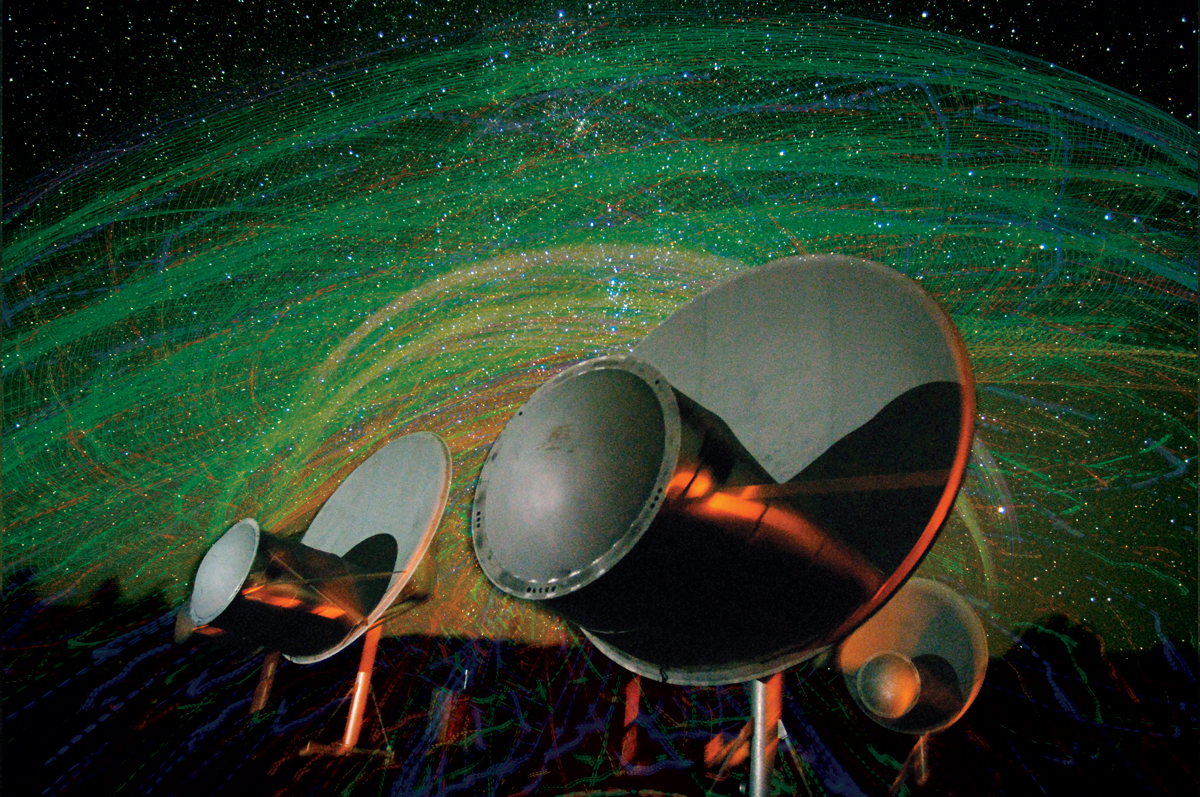
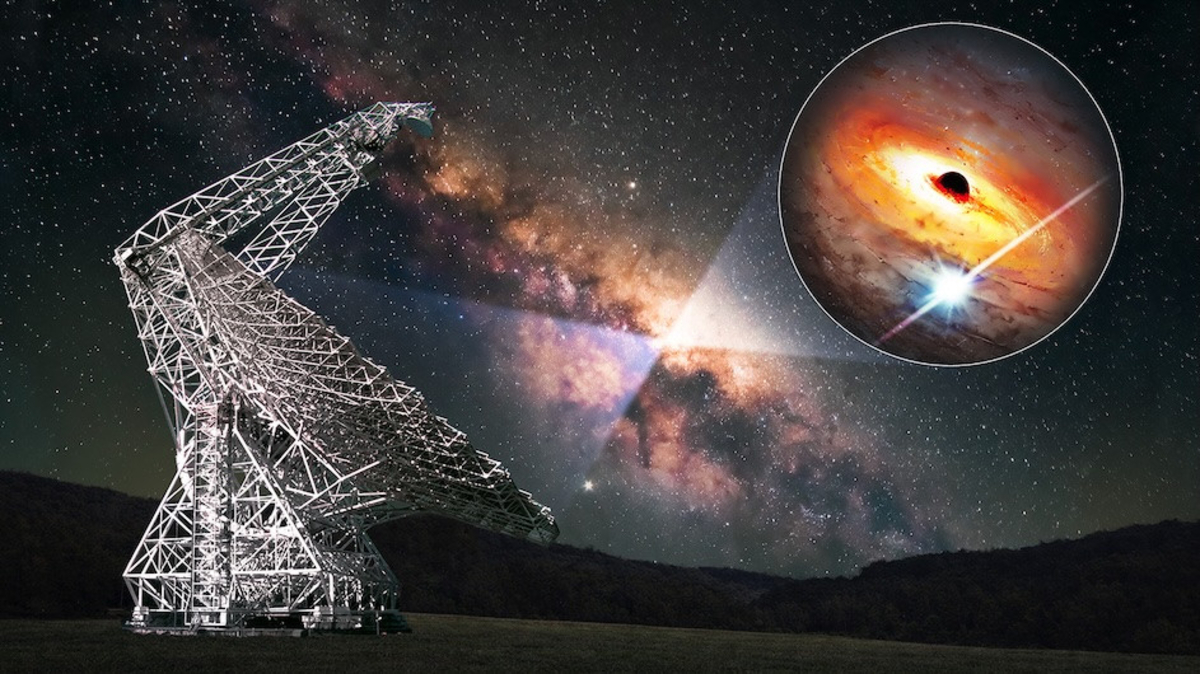
"The paper led to Breakthrough Listen's first collaboration between the Green Bank Telescope (site of the first-ever SETI observation by Frank Drake in 1961) and the SETI Institute's Allen Telescope Array (the first radio observatory built especially for SETI observations)," said Karen Perez, graduate student at Columbia University, visiting graduate student at Breakthrough Listen and lead author on the AAS Research Note. "This is the first time a targeted search for the WOW! Signal has been conducted, and having access to both telescopes to conduct such a search is of great importance for future interesting candidates, whether that be in relation to the WOW! Signal, or candidates from other ongoing surveys."

"A swift response to a target of opportunity is one of the main specifications of the Allen Telescope Array (ATA), and it is remarkable to see the ATA teaming up with one of the most sensitive telescopes on the planet," said Wael Farah, SETI Institute Research Scientist and co-author of the AAS Research Note. "This is an excellent model of how follow up of astronomical transient events, including potential SETI candidates, can be conducted."

The WOW! Signal was first observed on August 15, 1977, by the Ohio State University's Big Ear radio telescope near the 21-cm hydrogen line at 1420 MHz and has not been redetected.

The teams conducted their observations at the same time, on May 21, 2022. Green Bank conducted two 30-minute observations, and the ATA conducted six 5-minute observations, using its newly developed beam-former backend for signal processing. Both telescopes observed a total of 9 minutes and 40 seconds simultaneously.

While the observations did not detect a technosignature candidate, there are many more possible stars from which the WOW! Signal could have originated, presenting many more opportunities for Breakthrough Listen and the SETI Institute to collaborate on their shared quest to find technologically advanced civilizations beyond Earth.

The data is open source and can be found here: https://seti.berkeley.edu/wow/

This work is published as an AAS Research note here. Karen Perez, Columbia University, presented at the 51st IAA Symposium on the Search for Extraterrestrial Intelligence at the International Astronautical Congress in Paris, France.

News

Related News

Featured Image
Jun 3, 2026
SETI Institute Looks for Signs of Technology in Interstellar Visitor 3I/ATLAS
Observations with the Allen Telescope Array set new limits on possible signals from extraterrestrial transmitters. #Press Releases #ATA #3I/ATLAS #Hat Creek Radio Observatory #Radio Astronomy #SETI
Featured Image
Apr 30, 2026
Narrowing the Search: The 45 Best Targets for Alien Life
#Blog #Astronomy #JWST #NASA Missions and Observatories #Trappist-1 #LaserSETI #ATA #Franck Marchis
Featured Image
Mar 6, 2026
SETI Institute In the News: February Roundup 2026
#SETI Institute in the News #SETI Institute #Community #Bill Diamond #SETI #Karen Perez #Matija Ćuk #Lewis Pinault #Saturn #NASA Missions and Observatories #UAPs #Solar System #JWST #Matthew Tiscareno #Franck Marchis #Ariel Graykowski #Astronomy #Education #AAA #Pamela Harman #Dana Backman #Coral Clark
Featured Image
Feb 27, 2026
Lost Pulsars Found? Breakthrough Listen’s Deep Survey of the Galactic Core
#Blog #Technosignatures #SETI #Karen Perez
Featured Image
Feb 3, 2026
SETI Institute In the News: January Roundup 2026
January brought a wide range of thoughtful science conversations featuring researchers from the SETI Institute, spanning everything from hands-on planetary defense with citizen scientists to careful examinations of interstellar visitors and the signals that reach us across the galaxy. #SETI Institute in the News #SETI Institute #Community #Franck Marchis #Sofia Sheikh #Matija Ćuk #ATA #3I/ATLAS #Unistellar #Astronomy #SETI #Mars
Featured Image
Jan 15, 2026
SETI Institute Opens Call for Nominations for the 2026 Tarter Award
#Press Releases #Jill Tarter #ATA #Awards #Tarter Award
Research

Related Projects

Featured Image
SkyMapper • SETI • Citizen Science • Astronomy
SkyMapper: Expanding Access to Real-time Astronomy Through a Global Astronomical Network
SkyMapper and the SETI Institute are connecting educators, students and the public to live astronomical observations through a distributed astronomical network. #SkyMapper #SETI #Citizen Science #Astronomy
Featured Image
VPL
Virtual Planetary Laboratory
How can we best assess whether an exoplanet supports life? #VPL
Featured Image
Discovery and Futures Lab
What happens if life beyond Earth is discovered? The Discovery and Futures Lab at the SETI Institute fosters novel and anticipatory research at the intersection of science, society, our planet, and the search for life beyond Earth.  #Discovery and Futures Lab
Support Us

Support the
SETI Institute

Scientists are getting closer in their search for life beyond earth. But with limited federal funding for the search for extraterrestrial intelligence, supporters are the reason cutting-edge scientists can keep their eyes on the sky.