









Tuesday, Dec 12, 2023

Image Credit: Jodi Frediani. NOAA/National Marine Fisheries Research Permit 19703.

December 12, 2023, Mountain View, CA -- A team of scientists from the SETI Institute, University of California Davis and the Alaska Whale Foundation, had a close encounter with a non-human (aquatic) intelligence. The Whale-SETI team has been studying humpback whale communication systems in an effort to develop intelligence filters for the search for extraterrestrial intelligence. In response to a recorded humpback ‘contact’ call played into the sea via an underwater speaker, a humpback whale named Twain approached and circled the team’s boat, while responding in a conversational style to the whale ‘greeting signal.’ During the 20-minute exchange, Twain responded to each playback call and matched the interval variations between each signal.

A description and analysis of the encounter appears in a recent issue of the journal Peer J. entitled: “Interactive Bioacoustic Playback as a Tool for Detecting and Exploring Nonhuman Intelligence: “Conversing” with an Alaskan Humpback Whale.” “We believe this is the first such communicative exchange between humans and humpback whales in the humpback “language,” said lead author Dr. Brenda McCowan of U.C. Davis. “Humpback whales are extremely intelligent, have complex social systems, make tools - nets out of bubbles to catch fish -, and communicate extensively with both songs and social calls,” said coauthor Dr. Fred Sharpe of the Alaska Whale Foundation.  

Left: Dr. Fred Sharpe. Right: Dr. Brenda McCowan and Dr. Fred Sharpe at work onboard the Blue Pearl, image credit: Jodi Frediani.

“Because of current limitations on technology, an important assumption of the search for extraterrestrial intelligence is that extraterrestrials will be interested in making contact and so target human receivers. This important assumption is certainly supported by the behavior of humpback whales,” said Dr. Laurance Doyle of the SETI Institute, a coauthor on the paper.

Similar to studying Antarctica as a proxy for Mars, the Whale-SETI team is studying intelligent, terrestrial, non-human communication systems to develop filters to apply to any extraterrestrial signals received. The mathematics of information theory to quantify communicative complexity - (for example rule structure embedded in a received message) will be utilized.

Other team members and coauthors of the paper are Dr. Josie Hubbard, Lisa Walker, and Jodi Frediani, with specialties in animal intelligences, humpback whale song analysis, and photography and behavior of humpback whales, respectively. A second paper by the team will soon be available on the non-audio communicative behavior of humpback whales - bubble rings made in the presence of (and possibly for) humans. The authors would like to acknowledge the Templeton Foundation Diverse Intelligences Program for financial support of this work.

Research conducted under NOAA/National Marine Fisheries Research Permit 19703. 

About the SETI Institute
Founded in 1984, the SETI Institute is a non-profit, multi-disciplinary research and education organization whose mission is to lead humanity's quest to understand the origins and prevalence of life and intelligence in the universe and share that knowledge with the world. Our research encompasses the physical and biological sciences and leverages data analytics, machine learning, and advanced signal detection technologies. The SETI Institute is a distinguished research partner for industry, academia, and government agencies, including NASA and the National Science Foundation.

Contact
Rebecca McDonald
Director of Communications
SETI Institute
[email protected]

DOWNLOAD FULL PRESS RELEASE

News

Related News

Featured Image
Jun 9, 2026
Disclosure Needs Data
#SkyMapper #Franck Marchis #SETI #citizen science
Featured Image
Jun 5, 2026
Beyond Disclosure Day: The Real-World Protocols
#Press Releases #SETI #Astronomy #Bill Diamond #SETI Institute
Featured Image
Jun 4, 2026
SETI Institute In the News: May Roundup 2026
#SETI Institute in the News #SETI Institute #Community #Solar System #Matija Ćuk #Neptune #SETI #Bill Diamond #UAPs #Drake Awards #Lori Marino #Matthew Tiscareno #Outreach #Exoplanets #Carl Sagan Center
Featured Image
Jun 3, 2026
SETI Institute Looks for Signs of Technology in Interstellar Visitor 3I/ATLAS
Observations with the Allen Telescope Array set new limits on possible signals from extraterrestrial transmitters. #Press Releases #ATA #3I/ATLAS #Hat Creek Radio Observatory #Radio Astronomy #SETI
Featured Image
Jun 1, 2026
SETI Institute Awards $1 Million in STRIDE Grants to Advance Astrobiology, Exoplanet Science, and Public Engagement
#Press Releases #STRIDE #Research #Carl Sagan Center #Spectroscopy #Solar System #SETI #Climate and Bioscience #Astronomy #Astrobiology #Exoplanets #Data Science #Education #Outreach #Hat Creek Radio Observatory #Unistellar #SkyMapper
Research

Related Projects

Featured Image
SkyMapper • SETI • Citizen Science • Astronomy
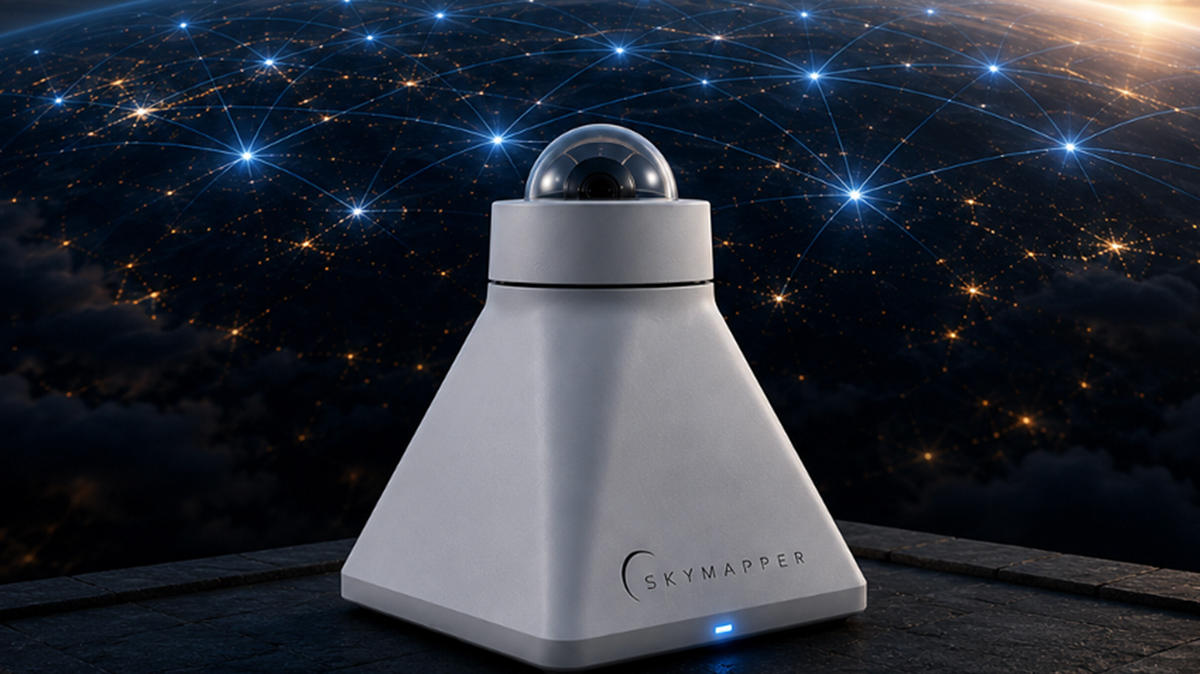
SkyMapper: Expanding Access to Real-time Astronomy Through a Global Astronomical Network
SkyMapper and the SETI Institute are connecting educators, students and the public to live astronomical observations through a distributed astronomical network. #SkyMapper #SETI #Citizen Science #Astronomy
Featured Image
VPL
Virtual Planetary Laboratory
How can we best assess whether an exoplanet supports life? #VPL
Featured Image
Discovery and Futures Lab
What happens if life beyond Earth is discovered? The Discovery and Futures Lab at the SETI Institute fosters novel and anticipatory research at the intersection of science, society, our planet, and the search for life beyond Earth.  #Discovery and Futures Lab
Support Us

Support the
SETI Institute

Scientists are getting closer in their search for life beyond earth. But with limited federal funding for the search for extraterrestrial intelligence, supporters are the reason cutting-edge scientists can keep their eyes on the sky.