








Author: Seth Shostak
Wednesday, Oct 05, 2016

It’s now the biggest single-dish radio telescope on Earth.  Settled down in the bumpy karst of China’s Guizhou province, about 1200 miles southwest of Beijing, this newest instrument for studying the heavens is very similar in design to the famed Arecibo dish, renown both for its science accomplishments and its performance in two popular films, “Contact” and “Goldeneye.” 

But FAST, the Five hundred meter Aperture Spherical Telescope, is Arecibo on steroids.  The latter has a dish diameter of 300 meters, so FAST is, in principle, almost three times more sensitive.  Put another way, it can reach 70 percent farther into space with the same sensitivity, which could increase the number of “targets” within its purview by roughly 4.6 times.  

These are merely brute-force consequences of FAST’s size, however.  This new telescope, which is younger than its Puerto Rican cousin by more than a half-century, is also able to see more of the sky – up to 40 degrees from its “straight overhead”, or zenith, pointing.  While Arecibo can track objects for as much as 40 minutes, FAST can do this for as long as 6 hours.  That would gain it another factor of three advantage in sensitivity.

In order to keep the telescope free of man-made interference, the government plans to relocate more than 9 thousand people living nearby. 

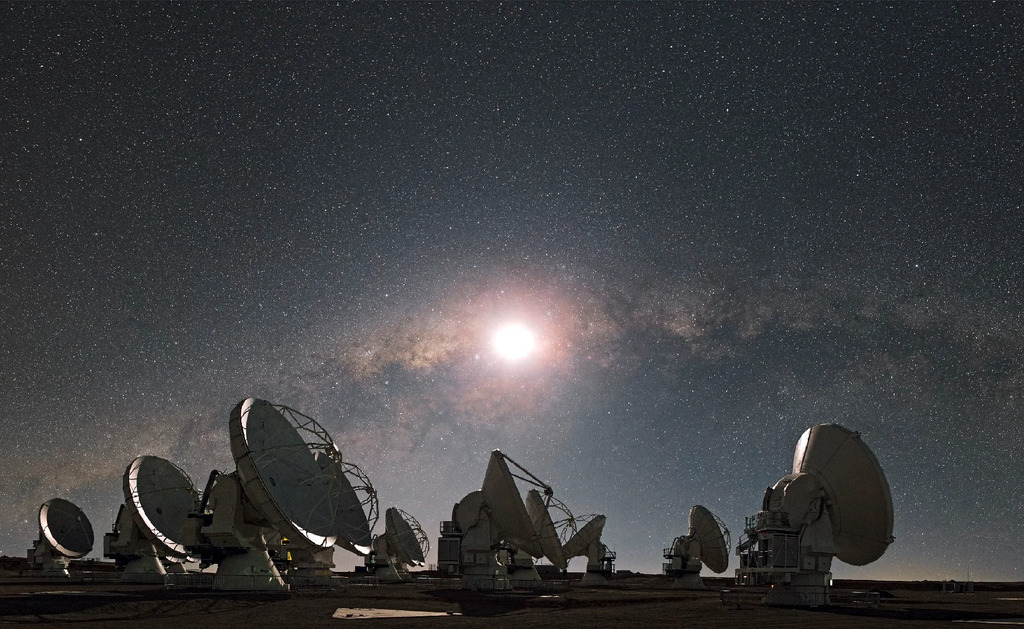
For the first several years, FAST will be in shakedown mode.  After that, research on galaxies, pulsars, and other astronomical objects will begin, and foreign researchers will also have access.  The Chinese have said that their new telescope will also be used for SETI, making it the most sensitive such device in the world in the frequency range of 70 MHz to 3 GHz. (Note that the Allen Telescope Array, used by the SETI Institute, has extended frequency coverage to 14 GHz.)

News

Related News

Featured Image
Jul 20, 2026
SETI Institute In the News: June Roundup 2026
Throughout June 2026, SETI Institute scientists, affiliates, and collaborators contributed to discussions spanning interstellar visitors, planetary science, technosignature searches, animal cognition, and the scientific process guiding the search for life beyond Earth. #SETI Institute in the News #SETI Institute #Community #Eduardo Bendek #Optical SETI #SETI #3I/ATLAS #ATA #Comets, Meteors, and Asteroids #Solar System #Franck Marchis #Ariel Graykowski #Jill Tarter #Vishal Gajjar #Radio Astronomy #Bill Diamond #Lori Marino
Featured Image
Jun 29, 2026
Humanity's Plan for First Contact: Who Speaks for Earth?
#Blog #Lauren Sgro #Lucian Walkowicz #Chelsea Haramia #SETI #SETI Institute
Featured Image
Jun 9, 2026
Disclosure Needs Data
#SkyMapper #Franck Marchis #SETI #citizen science
Featured Image
Jun 5, 2026
Beyond Disclosure Day: The Real-World Protocols
#Press Releases #SETI #Astronomy #Bill Diamond #SETI Institute
Featured Image
Jun 4, 2026
SETI Institute In the News: May Roundup 2026
#SETI Institute in the News #SETI Institute #Community #Solar System #Matija Ćuk #Neptune #SETI #Bill Diamond #UAPs #Drake Awards #Lori Marino #Matthew Tiscareno #Outreach #Exoplanets #Carl Sagan Center
Research

Related Projects

Featured Image
SkyMapper • SETI • Citizen Science • Astronomy
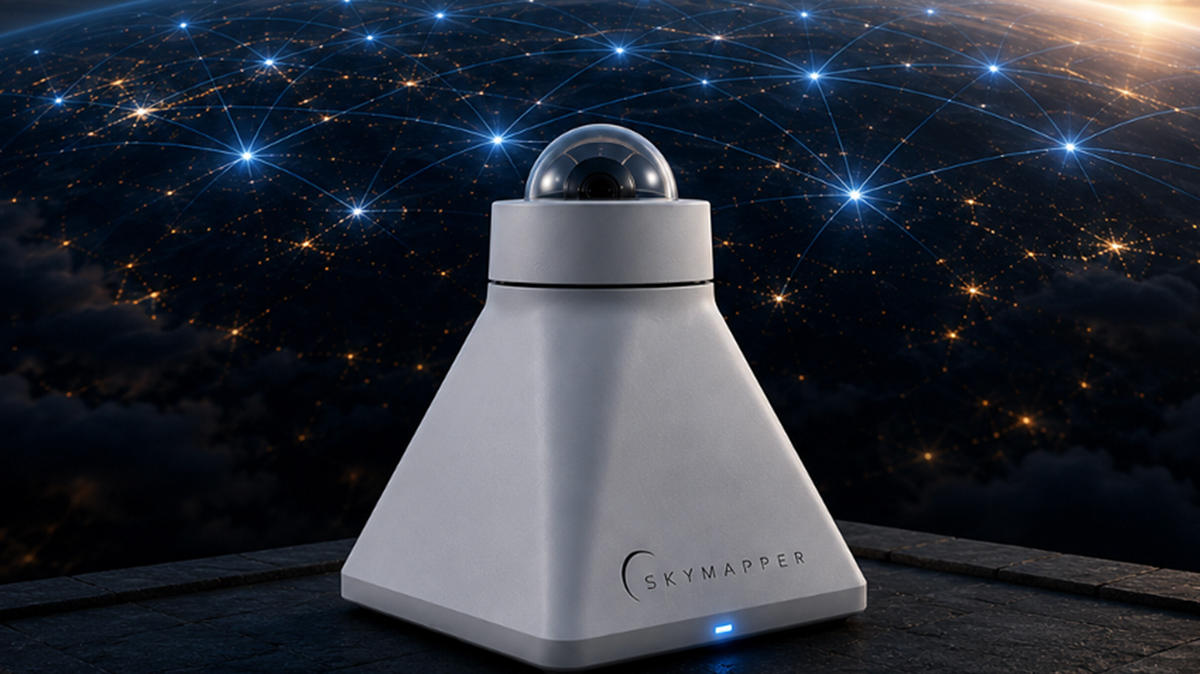
SkyMapper: Expanding Access to Real-time Astronomy Through a Global Astronomical Network
SkyMapper and the SETI Institute are connecting educators, students and the public to live astronomical observations through a distributed astronomical network. #SkyMapper #SETI #Citizen Science #Astronomy
Featured Image
VPL
Virtual Planetary Laboratory
How can we best assess whether an exoplanet supports life? #VPL
Featured Image
Discovery and Futures Lab
What happens if life beyond Earth is discovered? The Discovery and Futures Lab at the SETI Institute fosters novel and anticipatory research at the intersection of science, society, our planet, and the search for life beyond Earth.  #Discovery and Futures Lab
Support Us

Support the
SETI Institute

Scientists are getting closer in their search for life beyond earth. But with limited federal funding for the search for extraterrestrial intelligence, supporters are the reason cutting-edge scientists can keep their eyes on the sky.