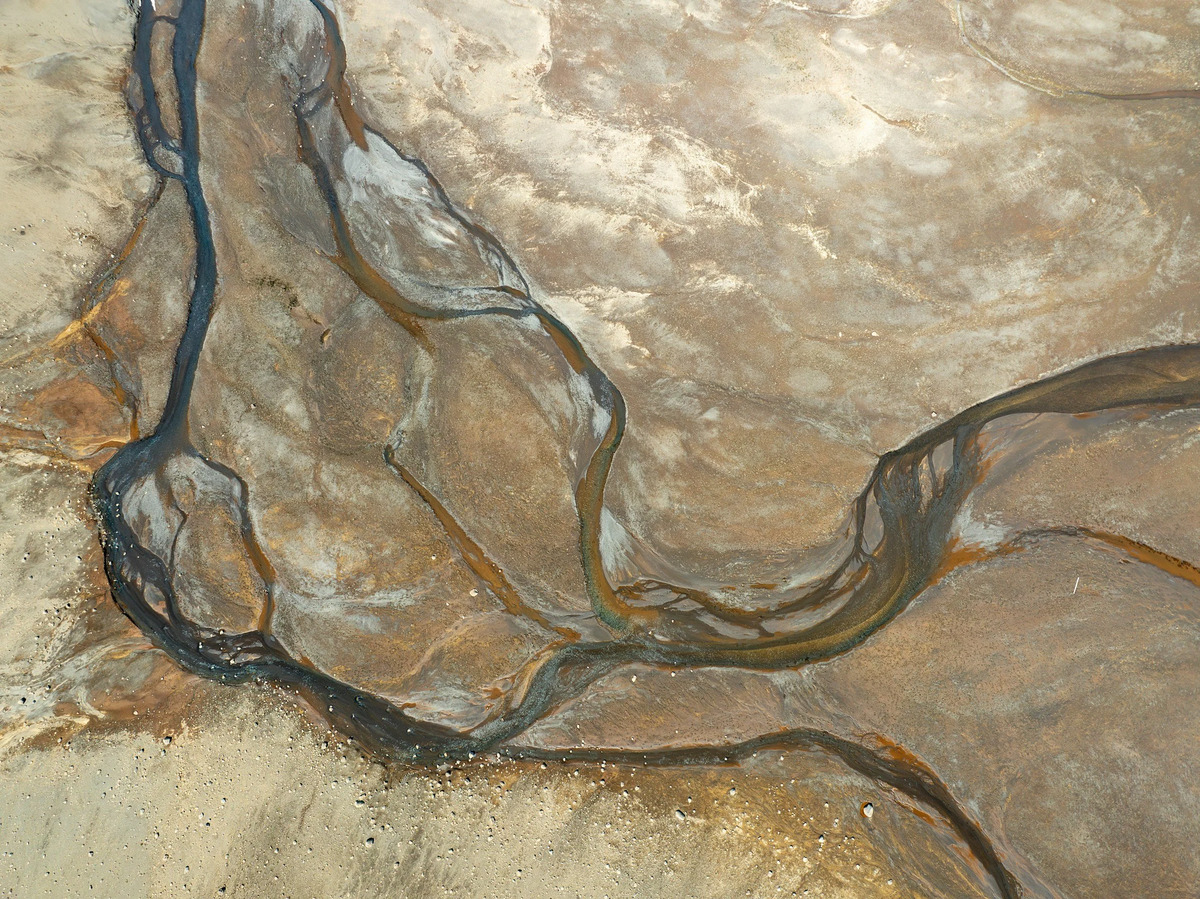
)


Mars has captivated scientists and the public alike for centuries. One of the biggest reasons is the planet’s reddish hue, earning the fourth rock from the sun one of its most popular nicknames — the “Red Planet.” But what exactly gives the planet its signature color? A new study offers fresh insights that tie into Mars’ watery past.
SETI Institute scientist Janice Bishop has investigated iron oxide-bearing minerals for decades to better understand Mars’ climate and surface chemistry. She teamed up recently with Postdoctoral researcher Adomas Valantinas at Brown University on a new study that provides answers about Mars’ color and its ancient geochemistry. Their research suggests that ferrihydrite – a water-rich iron oxide mineral is the key.
Results from a new study published in the journal Nature Communications suggest that ferrihydrite is the likely cause of Mars’ reddish color. Previous researchers have proposed that a dry, rust-like mineral called hematite is the reason for the planet’s color. Valantinas and colleagues analyzed data from Martian orbiters, rovers, and laboratory experiments to demonstrate that ferrihydrite is a better match for the dust covering the surface of Mars.
“From our analyses, we believe ferrihydrite is everywhere in the dust and also probably in the rock formations, as well,” said Valantinas.
Bishop has studied ferrihydrite in the lab since 1993 and characterized ferrihydrite as an analog for Mars from Iceland in 2002. “I have long felt that ferrihydrite is an important component of the Martian surface, “said Bishop, “but now we have stronger evidence supporting ferrihydrite on Mars.”
Ferrihydrite is an iron oxide-bearing mineral that forms in water-rich environments. On Earth, volcanic rocks and ash commonly weather to produce it, so scientists logically expect to find it on Mars as well if water were present The challenge has been that Mars is currently a dry and barren desert.
“However, we know that Mars once had abundant water that carved huge canyons, much larger than the Earth’s Grand Canyon, and that formed clays that require liquid water,” said Bishop.
A recent study suggested that ancient Martian clays formed in periods of warm water on early Marsand that poorly crystalline minerals similar to ferrihydrite or opal formed after the clays in colder environments that did not support clay formation. (link: https://www.nature.com/articles/s41550-017-0377-9)
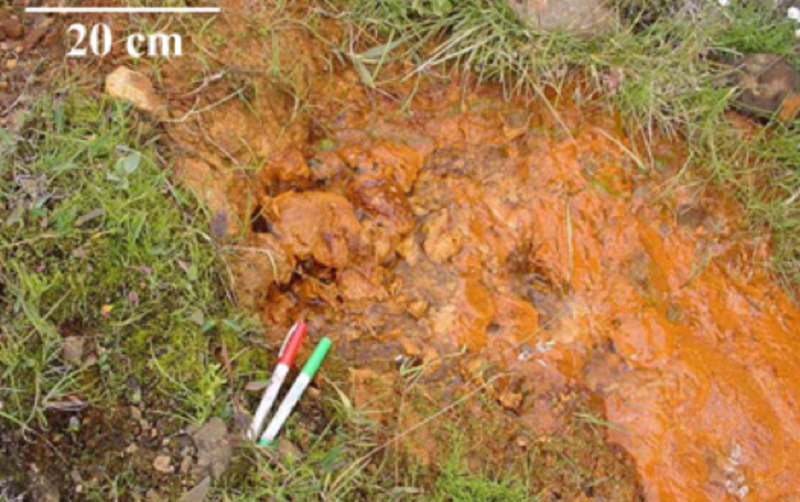
The current finding offers an alluring clue to Mars’ wetter and potentially more habitable past because, unlike hematite, which typically forms under warmer, drier conditions, ferrihydrite forms in the presence of cool water. This finding suggests that Mars may have had an environment capable of sustaining liquid water — an essential ingredient for life — before it transitioned from a wet to a dry environment billions of years ago.
As exciting as these new findings are, researchers know they cannot confirm them until they bring samples from Mars back to Earth, keeping the mystery of the Red Planet’s past tantalizingly out of reach.
View the paper at: https://www.nature.com/articles/s41467-025-56970-z
Links to past Bishop papers on ferrihydrite:
Ferrihydrite-clay assemblages synthesized in the lab as Mars analogs, 1993:
https://www.sciencedirect.com/science/article/pii/001670379390184X
Ferrihydrite in Iceland, 2002:
https://pubs.geoscienceworld.org/gsl/books/edited-volume/1580/chapter-abstract/107352563/Spectroscopic-and-geochemical-analyses-of?redirectedFrom=fulltext