)

Author: Nathalie Cabrol
Tuesday, Nov 13, 2018

Our camp at night. Right in the center of the star trail, the two Magellanic Clouds give visions of alien worlds. Credit photo: Victor Robles, Campoalto and the SETI Institute NAI Team.
Nathalie Cabrol, Director of the Carl Sagan Center for the Study of Life in the Universe, is leading the SETI Institute NAI team on its 2018 field expedition to the Andes:
“This year, between October 17-November 20, 2018, my team and I are returning to the Chilean High Andes,” said Nathalie. “There we will continue the development of new planetary exploration strategies, instruments, and systems, that in the near future will dramatically change the way we search for life beyond Earth. Our project is supported by the NASA Astrobiology Institute and helps prepare missions such as Mars 2020 and ExoMars that will soon seek traces of ancient biosignatures on the Red Planet.”
While the team is in Chile, Nathalie will be providing updates when she is able to be in an area with an Internet connection. The photos are amazing!
Follow along with us:
FIELD UPDATE 1
Pajonales: Biosignature Detection in Mars Analog Environment
Our team arrived safely in Chile and spent several days (Nov. 1-3) at our first site, Salar de Pajonales, deploying instruments and performing experiments. Some of the instruments we brought with us are equivalent to those that will be onboard NASA’s Mars 2020 and ESA’s ExoMars.
Our goal is to support these missions by understanding how we transition from the characterization of planetary habitability – the type of exploration that was performed in the past 15 years, to searching for ancient or recent biosignatures on Mars, that is the goal of the upcoming missions.
Habitability is primarily defined by astronomy and environment (physicochemical conditions), whereas ancient habitats are defined by biology, in this case, microbial life. Their scales (habitability vs. habitats) and the resolution needed to explore them are vastly different, which means that exploration strategies and methods must adapt. One of the main questions is then how much the data we have at global to regional scales inform us about the patterns that we should be searching for when exploring for microbial habitats, and how we can integrate this information from orbit to the ground?
This is what we are documenting in Chile in the coming 3 weeks with a number of cameras, including a visible camera, Raman and XRD-XRF spectrometers, drones, drills, experiments that include organics, DNA, all sorts of microenvironmental sensing and sampling, and much more. Salar de Pajonales is for most a dry lakebed with a vast field of gypsum mounds and polygons that offer very localized and small scale, repeatable habitats to extremophiles. Located at the boundary of the Atacama desert, it provides a great analog to ancient Martian lakes (see photos).
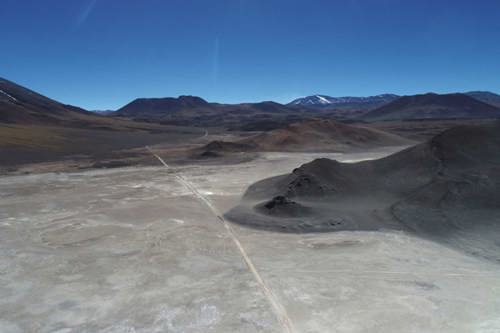
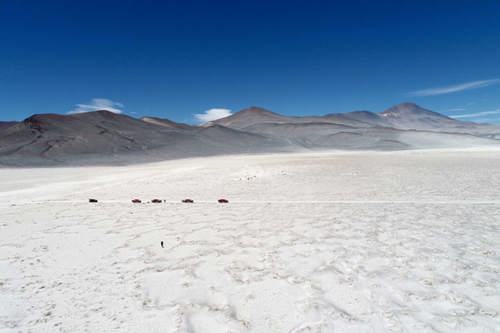
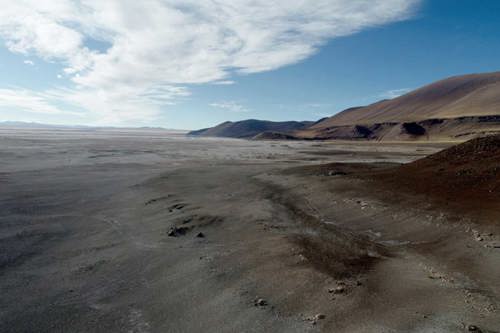
The Expedition by the Numbers
- 19 scientists
- 13 institutions and companies
- 4 countries (Chile, USA, Spain, Mexico)
- 2 medical doctors
- 2 cooks
- A 5 member team for logistical support
- 2 National Geographic photographers
- 7 pickup trucks; 1 truck for the equipment
- 4.5 tons of equipment
- 5 exploration sites
And the odometer is still running. We are barely coming back from site one and the odometer for our convoy is already close to 1,000 km, most of them in conditions that would not really qualify as dirt trails. We call it the altiplanic “massage”.
Participating Institutions and Companies
- The SETI Institute
- Campoalto
- Carnegie Mellon University, The Robotics Institute
- Centro de Astrobiología de Madrid, Spain
- Honeybee Robotics
- National Geographic
- Pacific Northwest National Laboratory
- Panorama Research Institute
- Universidad Catolica del Norte, Antofagasta, Chile
- University of Guam
- University of Montana
- University of Southern California
- University of Tennessee, Knoxville
FIELD UPDATE 2
November 7, 2018
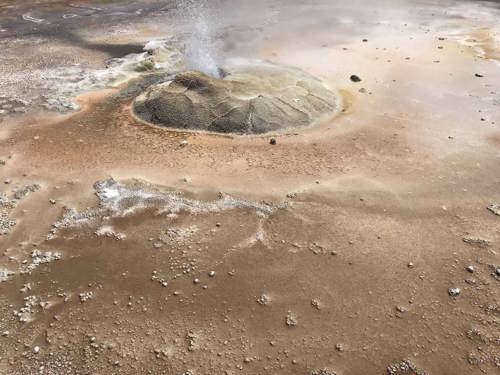
Landscapes of El Tatio...The geyser field is located at 4,300 m elevation (a 14,110 ft) and is the third one in the world. Amazing scenery. The team is working so hard. We have long days but the data keep coming. We also have a little visitor from time to time on the side of the road... Sending hugs and love from the altiplano.
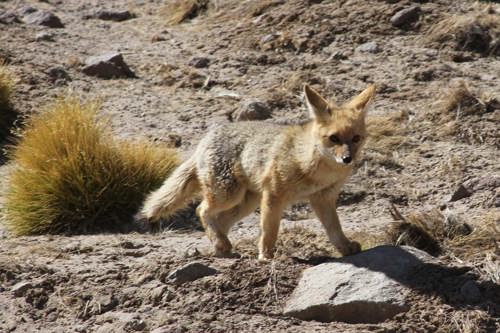
November 8, 2018
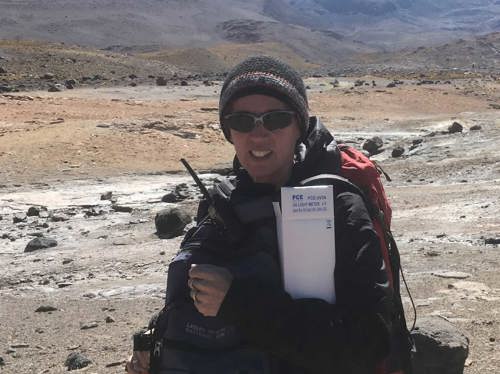
I guess I cannot carry much more than that...Backpacks front and back, a box, and the radio...Michael took this photo yesterday morning. We have all been working very hard at Pajonales and El Tatio. Both sites have been extremely rewarding. The team is happy, and so am I. This morning at El Tatio, the UV index was close to 17 at 10AM... (11 is considered extreme). Tomorrow, the team is moving camp higher at Laguna Lejia. Me and Cristian will join them in a day. We will go back to El Tatio tomorrow to discuss with the local administration of the geyser field. They have been extremely supportive and we are grateful for their help. Tomorrow's visit will be a way to say thank you. For me, one more night in San Pedro will be welcome and hopefully will help get rid of this cold that's now going around the team. Not looking towards keeping that cold with the prospect of sleeping and working between 4,300-6,000 m (14,110-19,400 ft) in the coming week.
November 9, 2018
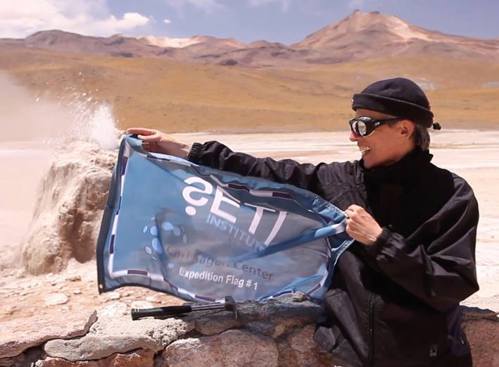
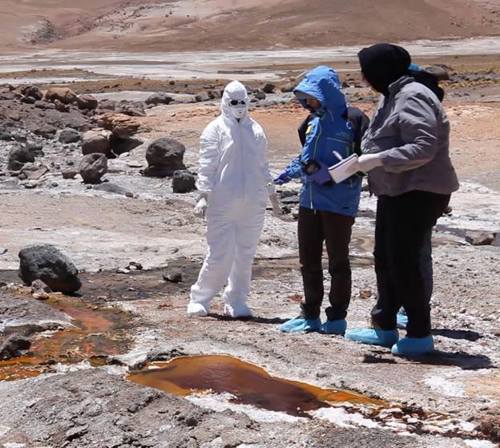
The last three days were spent doing fieldwork at the geyser field of El Tatio. We have accomplished a considerable amount of work, and if you believe it ends when we leave the site, think again. The team is working very hard, often late into the night (or early morning). I think I could have had a team meeting at 2AM in the salon of the hotel last night. Many of us were still up. Today, most of the team is leaving for Laguna Lejia. Me and Cristian, as well as Kim are staying behind one more day for a meeting with the management of the El Tatio site. We will be heading to the Lejia camp (4,300 m) tomorrow.
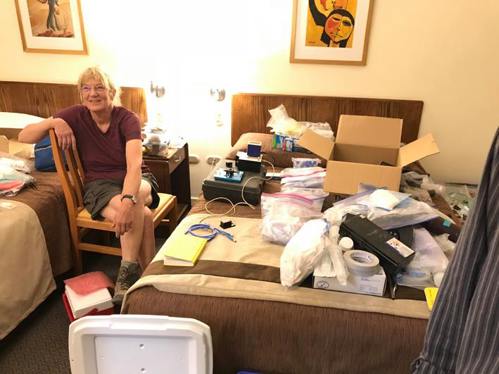
November 12, 2018
Forced Rest --- Taking a breather in San Pedro before going up again. It was unexpected...but needed, I am fine. Just 3 hard weeks of work in extreme environment dragging a cold and it is catching up with me. I want to give myself a chance to climb Simba, so, one forced night of fluffy pillow, sheets, and shower!
We are having such an amazing field campaign! This says a lot about this team because I don't know any of us who has not been hit by something, going from mild cold to more severe viruses. Poor Claudia (our doctor)...she has been on deck all the time! But, we are up and running. Yesterday was no good for me, zero energy. On the other hand, I might have pushed it just a *little* the day before digging trenches, walking miles and going up and down the lake terraces in Lejia. I can't help it. There is so much for us to see and data to collect, and not much time.
Sherry and Nancy are like two kids in a candy store. Jim and Colin found lots of rotifers in laguna Aguas Calientes too. Lots of drilling, aerial capture with drones, in situ chemistry, and for me, potentially the exposure of the Pleistocene/ Holocene transition in the ancient lake terraces. This was a bit of an emotional moment, when the book of stone (the layers) all of a sudden revealed that, on this corner of the Earth, conditions completely changed. Past varves (lake deposits associated with glacial melt) disappeared to be replaced by salt and ash deposits...which is the environment of the Holocene, arid, the one we know today. There is such an incredible poetry in geology, a sense of nostalgia of time past, but also a sense of amazement for such a dynamic planet.
It was a fantastic day but the following one was less glamorous, at least for me. That's part of the journey. Working at 4,300 m takes a toll, especially with a cold. Just need to pace ourselves, which I am doing now (me being reasonable, that would be new! I'll go back up tonight. In the meantime, I am going through some pictures that we took at El Tatio and Pajonales.
Enjoy!
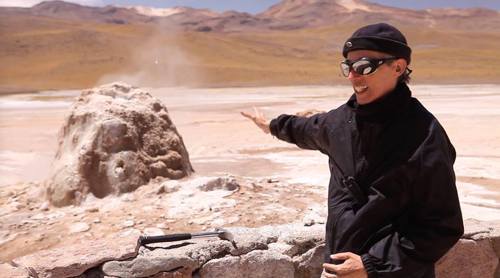
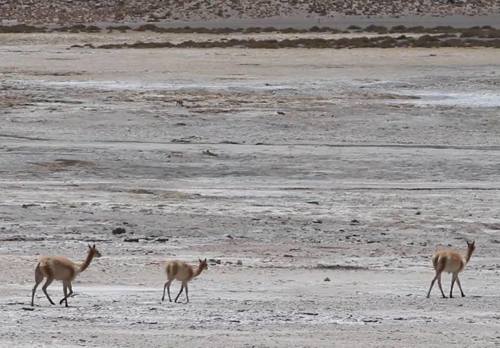
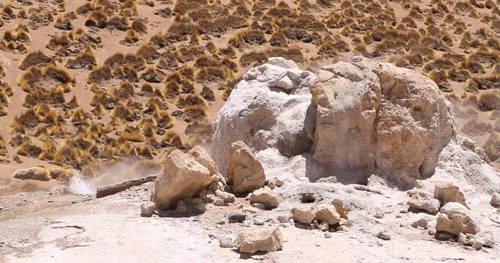
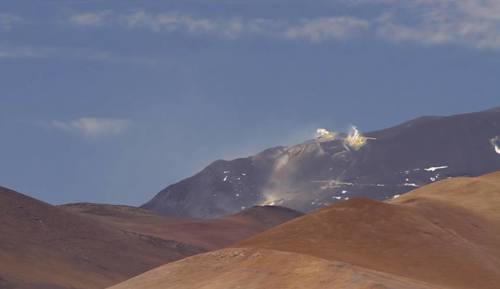
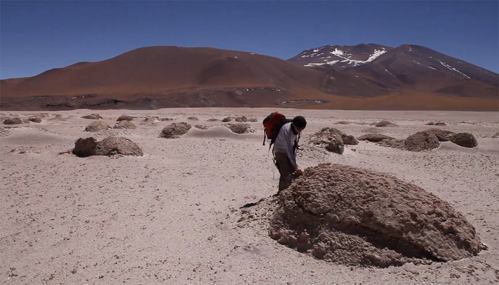
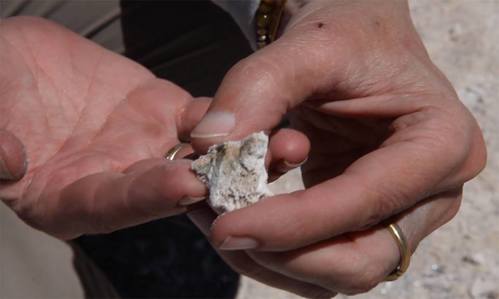
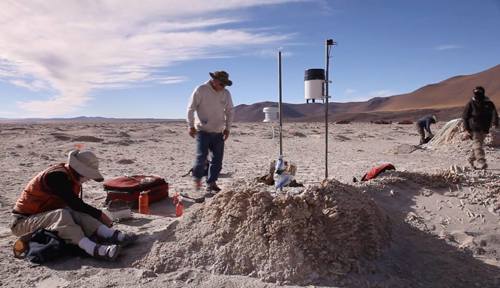
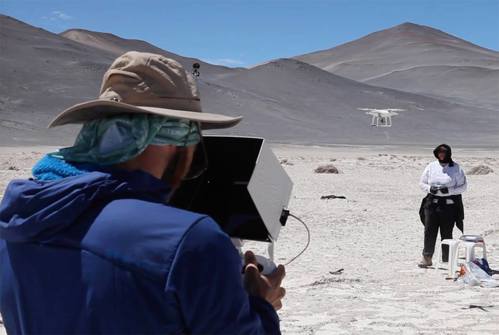
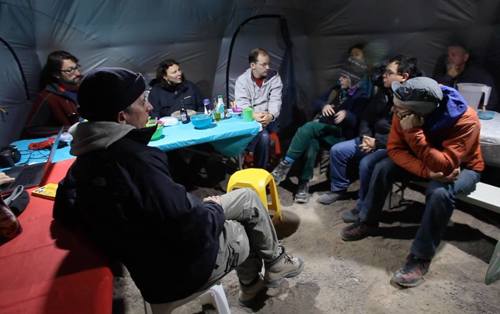
November 12 2018 Part 2
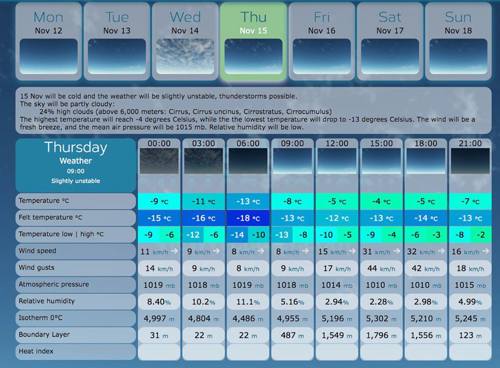
Two updates from the field in one day, how lucky! So, here is what's going on. There is a windstorm passing through, and it is a large system. The only good news is that it is not associated with any lightning or precipitation. We just heard from Claudia that the kitchen tent almost flew away...I checked the weather forecast in the area and basically, wind gusts = wind speed, some over 55 km/hr. So, I am heading back up. The only days when it subsides a *bit* are on Wednesday and Thursday, which are those we are supposed to climb. The porters made a rotation today. They said mid-camp was windy but okay; the summit extremely windy.
Maybe another piece of good news is that the lake is thawed...which it should not, so I will bring my pH meter and take a measurement before sampling... The way it is shaping up, it looks like a "touch and go" operation: We are going in, deploying the met. station while Colin samples water and microorganisms, take some measurements with Raman, and samples, and we will be out of there. It is going to be a toughie this year...I am attaching the forecast for the day we are starting the climb. The next day will be about the same. The forecast is for Lascar since Simba does not have a station but the two volcanoes share a slope. Have a little thought for us. I think we will need it!
November 16, 2018
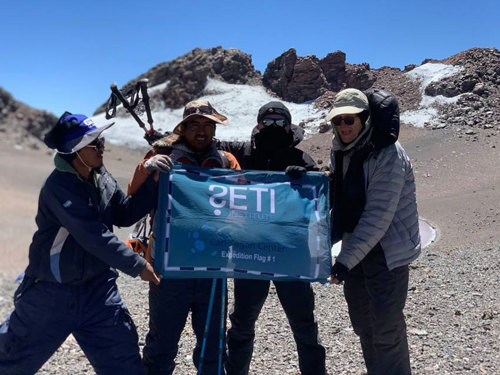
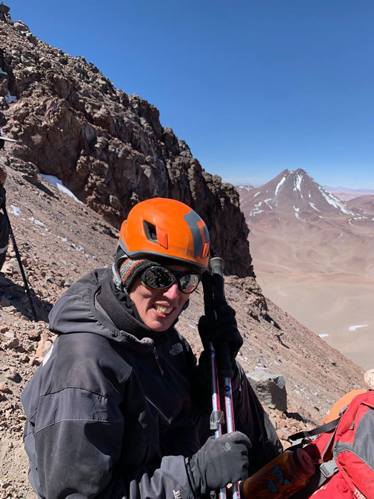
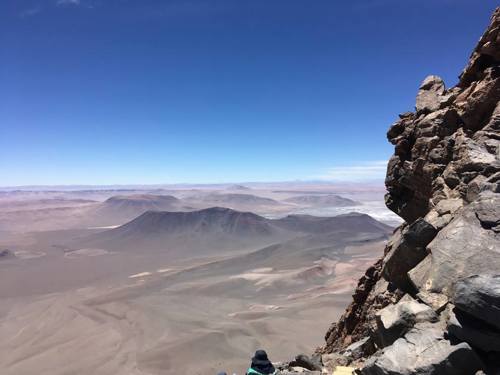
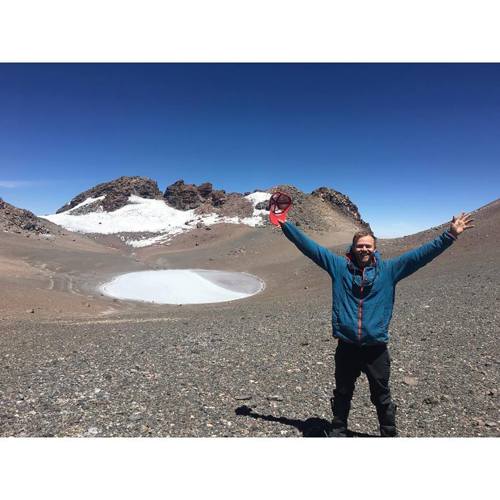
SUMMIT! I just arrived back in San Pedro de Atacama from where I am sending a brief report right now to let you know that we are all happy and healthy. The science team Colin Flinders, Pablo Sobron, Michael Phillips, Jim Larrick, and myself successfully submitted the Simba volcano between 11:40 am and 2:15pm yesterday. Circumstances dictated that I had to split the team in smaller squads. That strategy paid off. We collected all the data we came for. For now, I will just say that this ascent was the most brutal I ever had to accomplish (details to come). It was a never ending battle of mind vs. body. We made it on pure will power. I closed the descent with Jim. We descended the 1200 m face in 2 hours and 15 minutes. Right now, I am just looking to a shower, and think about an extraordinarily successful 2018 expedition. More soon. I am adding the first photos I have (from Jim Larrick and Michael Phillip) of him and me at the summit. More to come later today from the other squads. The SETI flag just logged its first summit...(19,490 ft m/5,940 m).
FIELD UPDATE 3
November 17, 2018
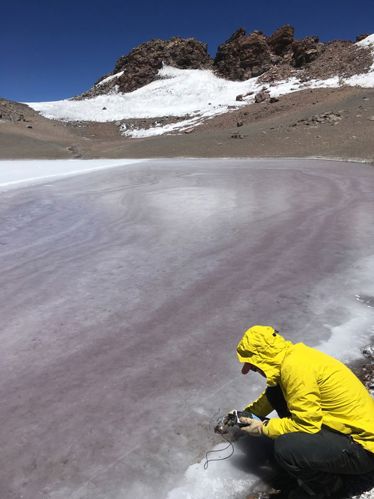
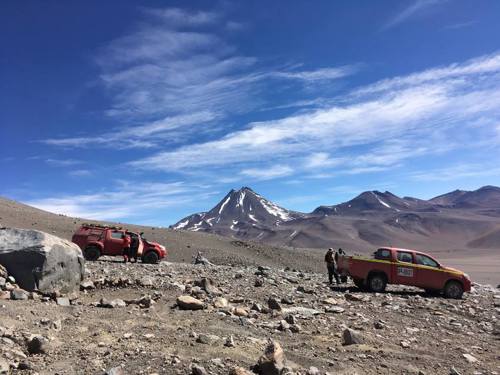
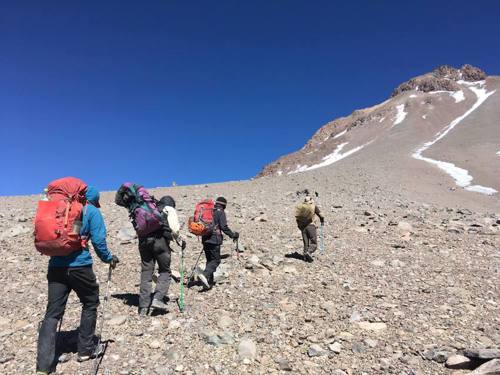
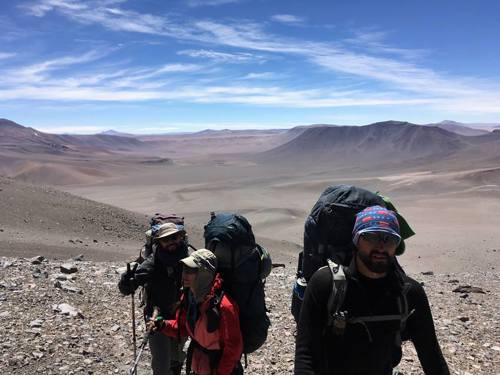
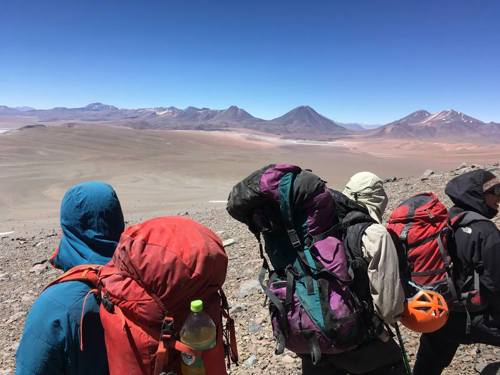
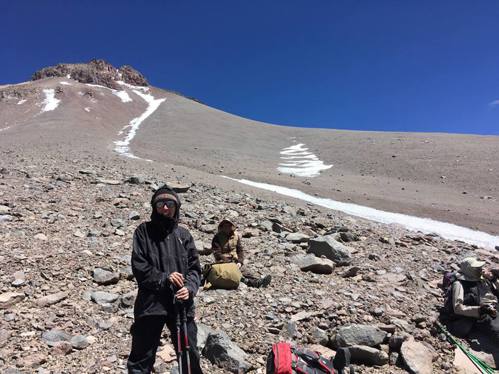
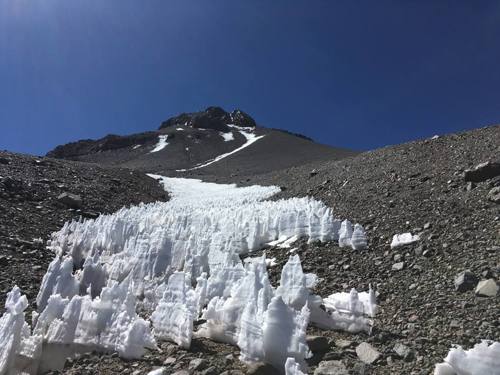
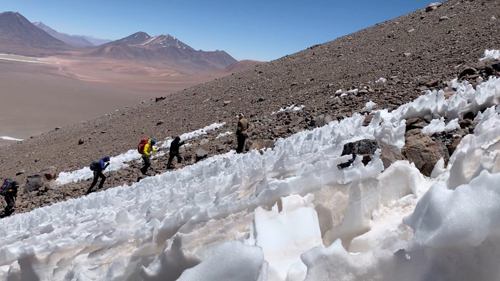
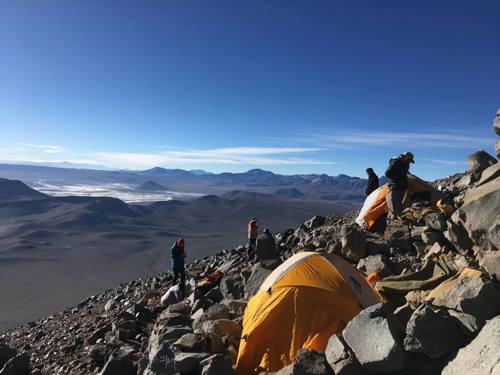
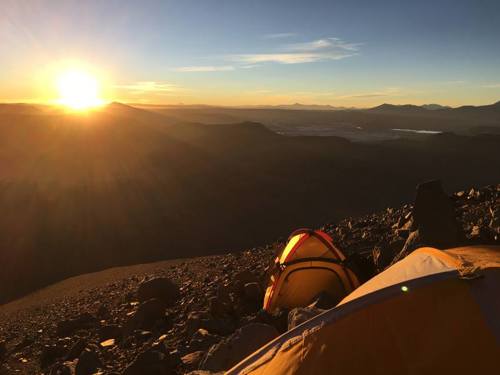
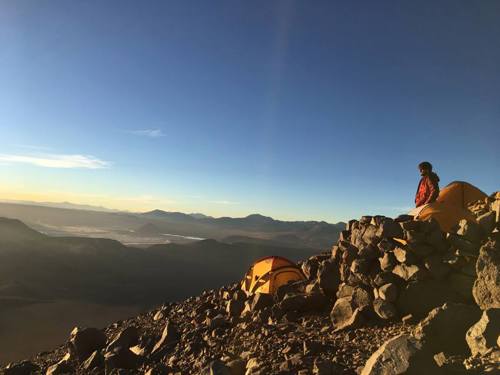
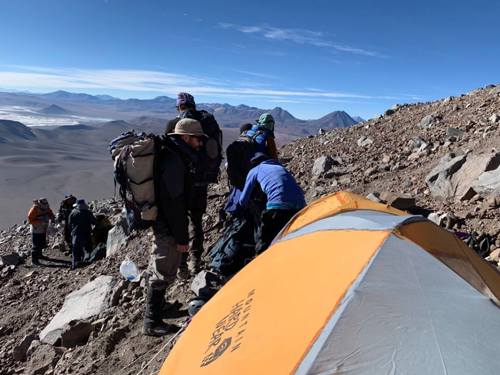
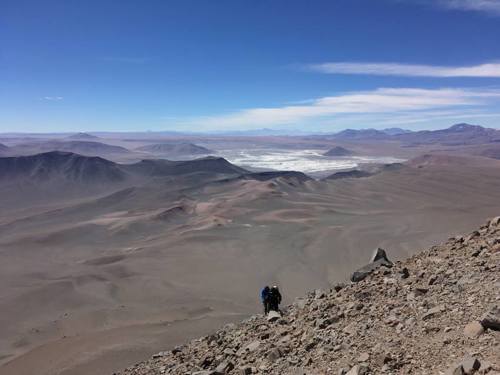
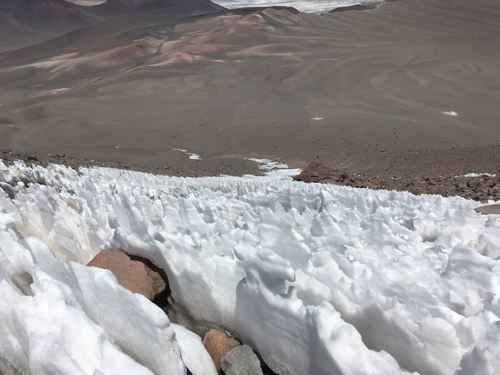
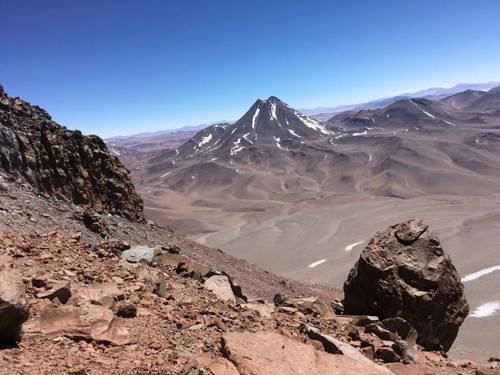
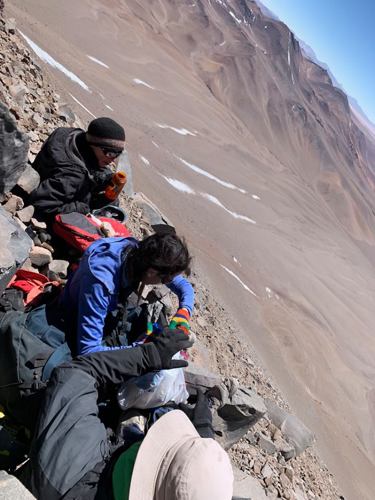
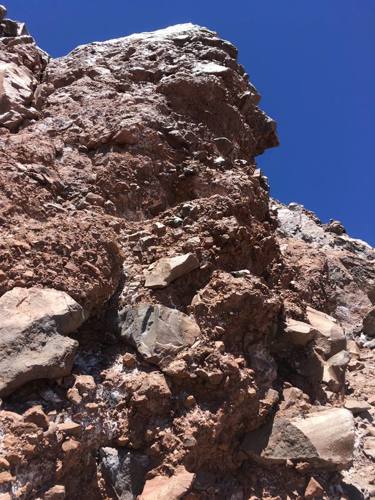
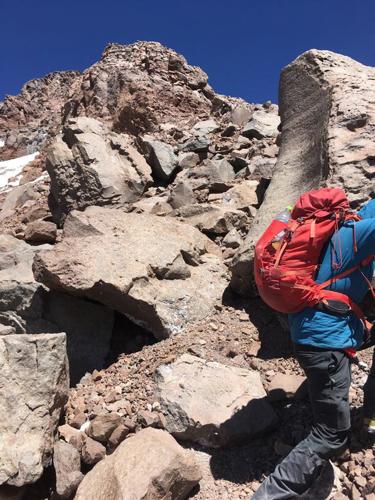
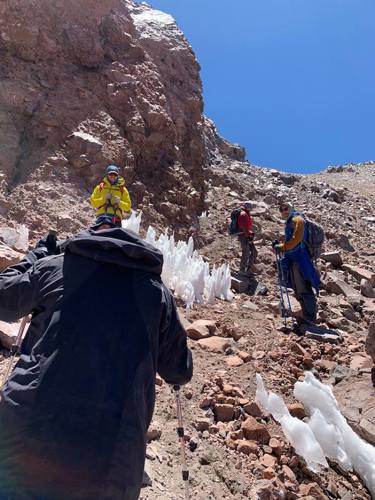
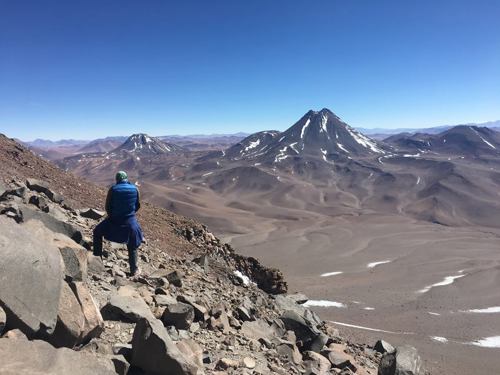
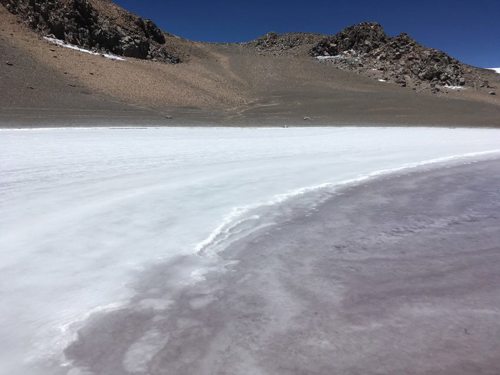
2018 SETI Institute NAI Team | The Ascent of Simba. The series of photos that will follow shows our ascent from the base, to mid-camp, to the summit. Absolutely fabulous ascent, so tough. This first set contain mostly views of the first squad. I am waiting for Jim to send me his pictures, which will show the second squad.
Thanks to Michael Phillips (UTK) for being the guardian of our memories on this ascent.
Credit for all photos not otherwise noted: Jim Larrick and Michael Phillips (UTK), and the SETI Institute NAI Team.
November 18
We are back in town! We arrived in Antofagasta from San Pedro about 45 minutes ago. As promised, Jim is now sending the pictures he took of our group while we were in the overhang. I am going to load them with the rest of the album, so please, check the album for updates in the next few minutes. Meanwhile, I am extracting this photo. I love it very much. That's our two groups, finally meeting about 50 meters away from the summit, which you can see in the background. That's this U-shaped crest. Colin (in yellow), Pablo (in red), and Michael (in blue) are starting the descent. We are ready to summit. Willie is keeping a watchful eye on everybody. Our strategy worked perfectly. Despite weather, delays, and brutal climbing conditions, the primary science was successfully achieved. Way to go team! Photo Credit: Jim Larrick and the SETI Institute NAI Team.
VIDEOS
Touching the Sky | Finally there... Jim captured our arrival at the summit and the (quite literally) breathtaking panorama of the crater and its lake. That was one incredible day...After that, we still had ~ 4000 ft (1200 m) to descend before it got too dark and cold. Credit video: Jim Larrick and the SETI Institute NAI Team.
A Seat with a View | Okay, the next two videos have a special place in my heart because of what it took us to get there! This was our last stop at the foot of the overhang before summitting. I am chatting with the porters and Jim is shooting this incredible video. Look at where we are!!! Any higher and I would have to grow feathers! It also gives you a better idea of how steep this last stretch was. Credit video: Jim Larrick and the SETI Institute NAI Team.
Here is a first short video captured by Jim Larrick as we are getting ready to cross the field of penitents and finish the last stretch (about 30 minutes) to mid-camp on November 14, 2018. Credit video: Jim Larrick and the SETI Institute NAI Team.
The Crossing | This was spectacular. Some go the penitents were about as tall as me, and a nice little runoff of ice melt could be seen and heard just at their base. You can hear the wind as well. Nothing came easy on this volcano this year but the reward is even greater. Credit video: Jim Larrick and the SETI Institute NAI Team.
Building Mid-Camp | Credit video: Jim Larrick and the SETI Institute NAI Team.







News
Related News
Jun 4, 2026
SETI Institute In the News: May Roundup 2026
#SETI Institute in the News #SETI Institute #Community #Solar System #Matija Ćuk #Neptune #SETI #Bill Diamond #UAPs #Drake Awards #Lori Marino #Matthew Tiscareno #Outreach #Exoplanets #Carl Sagan Center
Jun 1, 2026
SETI Institute Awards $1 Million in STRIDE Grants to Advance Astrobiology, Exoplanet Science, and Public Engagement
#Press Releases #STRIDE #Research #Carl Sagan Center #Spectroscopy #Solar System #SETI #Climate and Bioscience #Astronomy #Astrobiology #Exoplanets #Data Science #Education #Outreach #Hat Creek Radio Observatory #Unistellar #SkyMapper
May 13, 2026
SETI Institute to Honor Dr. Matthew Tiscareno with 2026 Carl Sagan Center Director’s Award
The Drake Awards event will also recognize SETI Forward and SETI Institute REU student award recipients. #Press Releases #Drake Awards #Frank Drake #SETI #Awards #Planetary Astronomy #Astrobiology #SETI Forward #Education #Carl Sagan Center #Matthew Tiscareno #Nathalie Cabrol #REU
May 7, 2026
SETI Institute In the News: April Roundup 2026
#SETI Institute in the News #SETI Institute #Community #SETI #Discovery and Futures Lab #Lucian Walkowicz #Chelsea Haramia #NASA Missions and Observatories #Pascal Lee #Mars #Janice Bishop #Mark Showalter #JWST #Uranus #Bill Diamond #UAPs
May 5, 2026
Atlanta Science Festival Exploration Expo and the Arecibo Message
#Community #SETI Institute #Outreach #Education #Lauren Sgro
May 4, 2026
SETI Institute Announces Nominees for the Speculative Life BioArt Residency
Six international artists shortlisted for a new residency at the intersection of art, astrobiology, and biotechnology #AIR #SETI Institute #Speculative Life #Astrobiology #Danielle Siembieda #Nathalie Cabrol
Jun 4, 2026
#SETI Institute in the News
#SETI Institute
#Community
#Solar System
#Matija Ćuk
#Neptune
#SETI
#Bill Diamond
#UAPs
#Drake Awards
#Lori Marino
#Matthew Tiscareno
#Outreach
#Exoplanets
#Carl Sagan Center
Jun 1, 2026
#Press Releases
#STRIDE
#Research
#Carl Sagan Center
#Spectroscopy
#Solar System
#SETI
#Climate and Bioscience
#Astronomy
#Astrobiology
#Exoplanets
#Data Science
#Education
#Outreach
#Hat Creek Radio Observatory
#Unistellar
#SkyMapper
SETI Institute Awards $1 Million in STRIDE Grants to Advance Astrobiology, Exoplanet Science, and Public Engagement
May 13, 2026
SETI Institute to Honor Dr. Matthew Tiscareno with 2026 Carl Sagan Center Director’s Award
The Drake Awards event will also recognize SETI Forward and SETI Institute REU student award recipients.
#Press Releases
#Drake Awards
#Frank Drake
#SETI
#Awards
#Planetary Astronomy
#Astrobiology
#SETI Forward
#Education
#Carl Sagan Center
#Matthew Tiscareno
#Nathalie Cabrol
#REU
May 7, 2026
#SETI Institute in the News
#SETI Institute
#Community
#SETI
#Discovery and Futures Lab
#Lucian Walkowicz
#Chelsea Haramia
#NASA Missions and Observatories
#Pascal Lee
#Mars
#Janice Bishop
#Mark Showalter
#JWST
#Uranus
#Bill Diamond
#UAPs
SETI Institute In the News: April Roundup 2026
May 5, 2026
#Community
#SETI Institute
#Outreach
#Education
#Lauren Sgro
Atlanta Science Festival Exploration Expo and the Arecibo Message
May 4, 2026
SETI Institute Announces Nominees for the Speculative Life BioArt Residency
Six international artists shortlisted for a new residency at the intersection of art, astrobiology, and biotechnology
#AIR
#SETI Institute
#Speculative Life
#Astrobiology
#Danielle Siembieda
#Nathalie Cabrol
Research
Related Projects

SkyMapper • SETI • Citizen Science • Astronomy
SkyMapper: Expanding Access to Real-time Astronomy Through a Global Astronomical Network
SkyMapper and the SETI Institute are connecting educators, students and the public to live astronomical observations through a distributed astronomical network. #SkyMapper #SETI #Citizen Science #Astronomy
VPL
Virtual Planetary Laboratory
How can we best assess whether an exoplanet supports life? #VPL
Discovery and Futures Lab
Discovery and Futures Lab
What happens if life beyond Earth is discovered? The Discovery and Futures Lab at the SETI Institute fosters novel and anticipatory research at the intersection of science, society, our planet, and the search for life beyond Earth. #Discovery and Futures Lab
May 17, 2026
SkyMapper: Expanding Access to Real-time Astronomy Through a Global Astronomical Network
SkyMapper and the SETI Institute are connecting educators, students and the public to live astronomical observations through a distributed astronomical network.
#SkyMapper
#SETI
#Citizen Science
#Astronomy
May 5, 2026
Virtual Planetary Laboratory
How can we best assess whether an exoplanet supports life?
#VPL
Apr 16, 2026
Discovery and Futures Lab
What happens if life beyond Earth is discovered? The Discovery and Futures Lab at the SETI Institute fosters novel and anticipatory research at the intersection of science, society, our planet, and the search for life beyond Earth.
#Discovery and Futures Lab
Support Us
Support the
SETI Institute
Scientists are getting closer in their search for life beyond earth. But with limited federal funding for the search for extraterrestrial intelligence, supporters are the reason cutting-edge scientists can keep their eyes on the sky.
