Monday, Nov 21, 2022

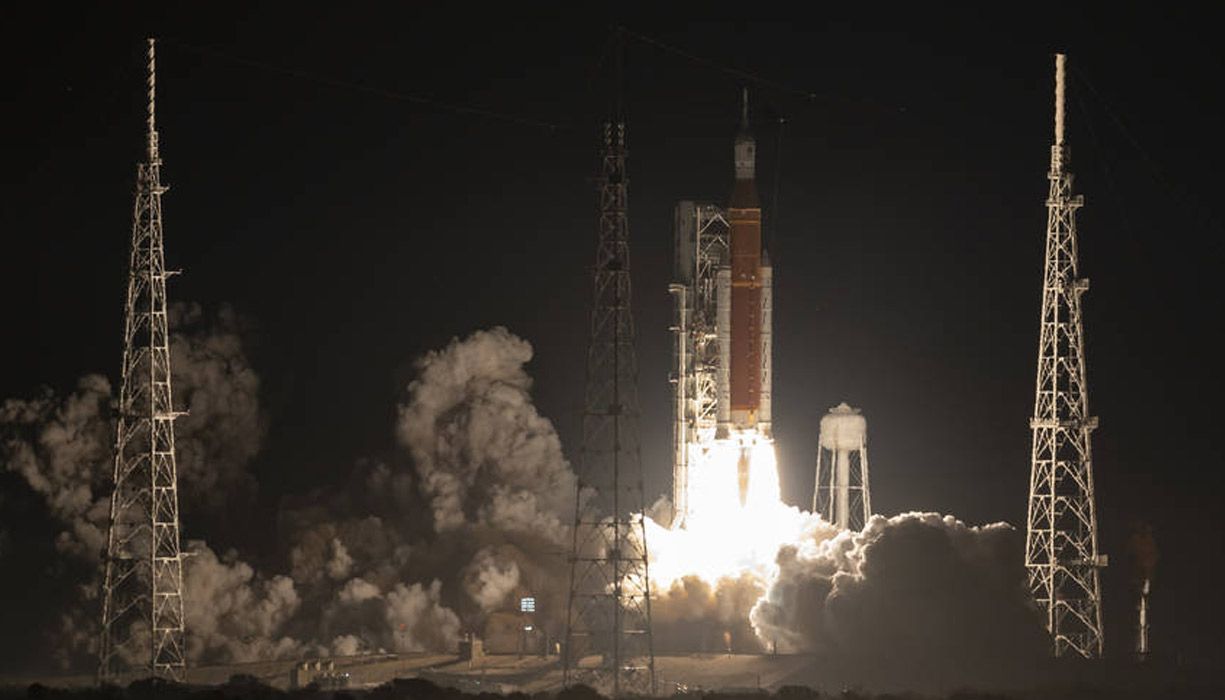
NASA’s Space Launch System rocket carrying the Orion spacecraft launches on the Artemis I flight test. Credits: NASA/Bill Ingalls.

On Wednesday, November 16, at 1:47 am EST, NASA successfully launched its Space Launch System (SLS) from NASA's Kennedy Space Center in Florida as part of its Artemis 1 mission. At the SETI Institute, all hands were on deck. Both the Allen Telescope Array (ATA) and the Unistellar citizen scientist network captured the Orion spacecraft.

ATA

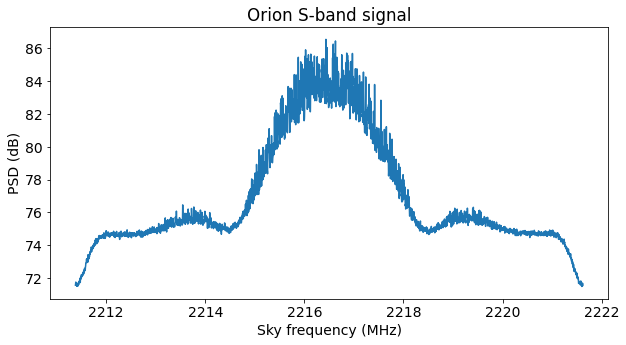
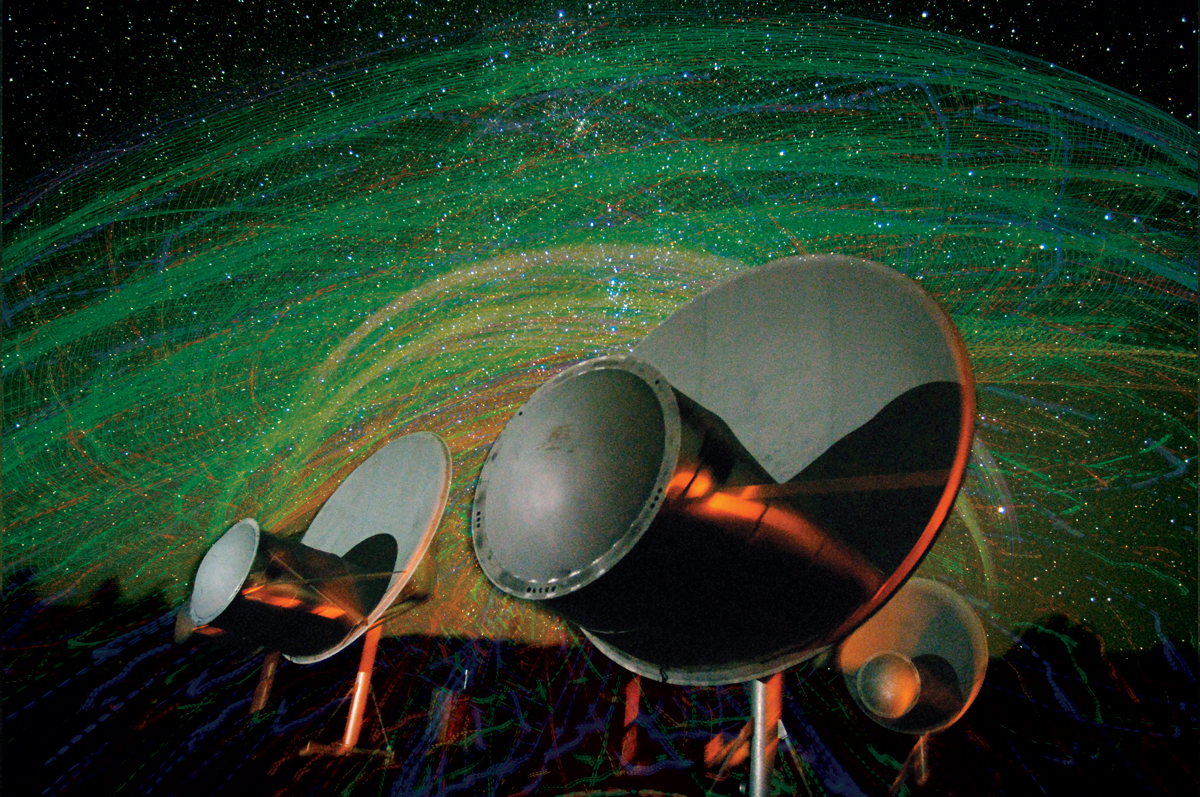
Two of the antennas at the ATA were used to receive signals from Artemis 1 shortly after launch. The team used GNU Radio and Software Defined Radio (SDR) equipment to record data from the Orion spacecraft, and some of the ten CubeSats carried as secondary payloads.

“The main interest in receiving these signals is to study how spacecraft communications work,” said Dr. Daniel Estévez, GNSS engineer conducting the observations. "The is openly available documentation describing the standards used, but nothing beats having hands-on access to the signals transmitted by real spacecraft." As with other observations, the data recorded with the ATA will be published as open data and serves as valuable teaching material.

The CubeSats launched from the upper stage of the SLS after the trans-lunar injection burn. A singular aspect of the Artemis 1 mission is that it marks the first time that many small satellites were well beyond the low Earth orbit (LEO) where most CubeSats operate. These CubeSats have reduced capabilities but must communicate back to Earth over long distances. The signals from satellites give many examples of how to solve this engineering problem.

These CubeSats will fly to various destinations, including the Moon, asteroids, and interplanetary space. They will study different facets of the Moon and interplanetary travel, ranging from navigation techniques to radiation and biology. One of them will conduct a soft landing on the lunar surface.

For more information about Estévez’s work: https://destevez.net/.

Unistellar

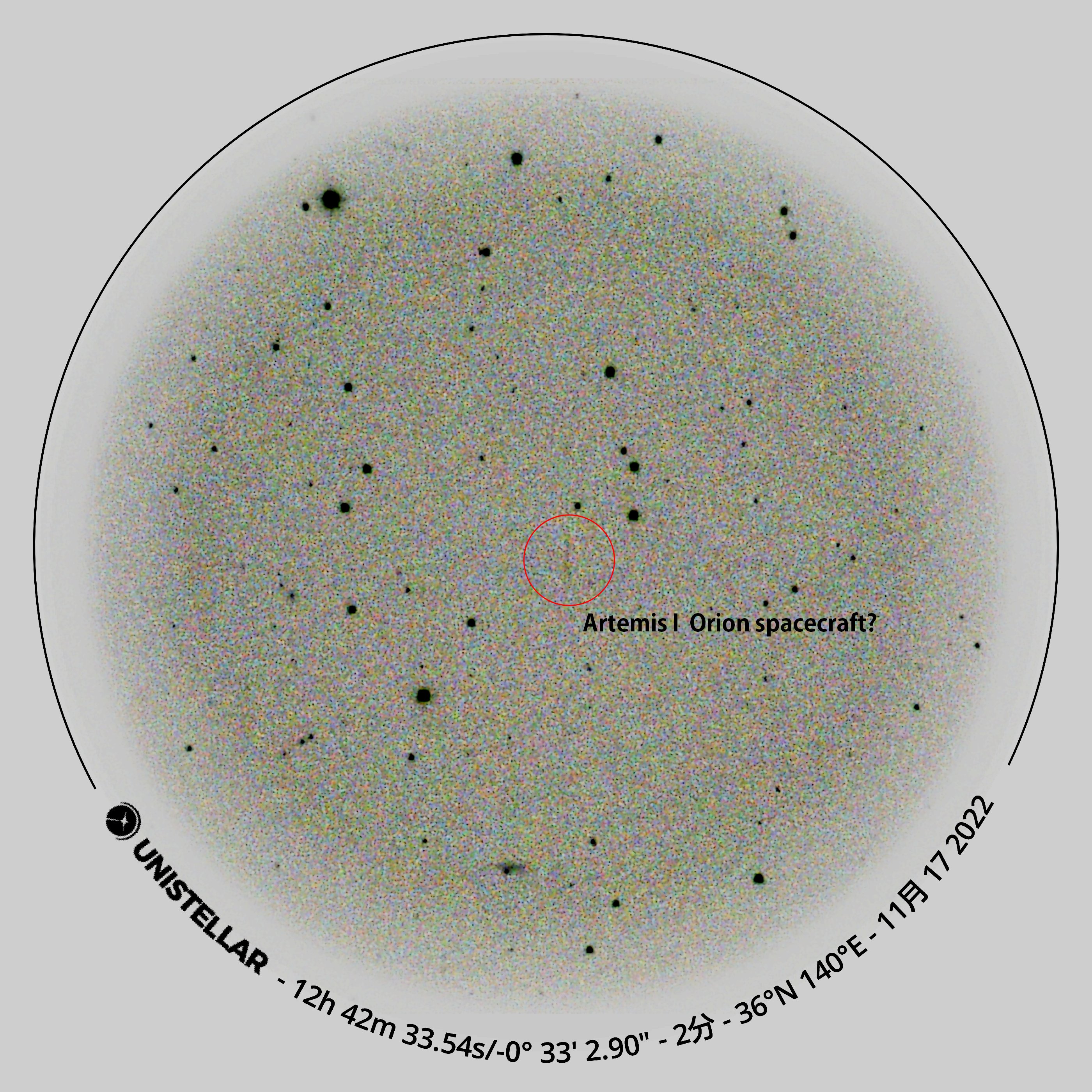
On the Unistellar side, citizen scientist Keiichi Fukui captured the spacecraft from 1906 to 1909 UTC using the ephemeris of 1905 UTC from JPL Horizons System requested during the observation.

“Once again, citizen scientists using their Unistellar eVscope, witnessed the space human exploration program,” said Dr. Franck Marchis, Senior Planetary Astronomer at the SETI Institute and Chief Scientific Officer at Unistellar. “More and more missions will go to the Moon in the coming years, so we expect our network to continuously monitor this activity, reporting on their orbit and brightness to help the engineers and scientists running those programs.”
During Orion's 25-day mission, it will travel about 40,000 miles past the Moon and return to Earth. Artemis 1 represents the beginning of the program to return humans to the Moon after 50 years. The mission provides an opportunity to gather deep data on space travel and daily conditions on the Moon's surface.

News

Related News

Featured Image
Jun 3, 2026
SETI Institute Looks for Signs of Technology in Interstellar Visitor 3I/ATLAS
Observations with the Allen Telescope Array set new limits on possible signals from extraterrestrial transmitters. #Press Releases #ATA #3I/ATLAS #Hat Creek Radio Observatory #Radio Astronomy #SETI
Featured Image
Jun 1, 2026
SETI Institute Awards $1 Million in STRIDE Grants to Advance Astrobiology, Exoplanet Science, and Public Engagement
#Press Releases #STRIDE #Research #Carl Sagan Center #Spectroscopy #Solar System #SETI #Climate and Bioscience #Astronomy #Astrobiology #Exoplanets #Data Science #Education #Outreach #Hat Creek Radio Observatory #Unistellar #SkyMapper
Featured Image
May 7, 2026
SETI Institute In the News: April Roundup 2026
#SETI Institute in the News #SETI Institute #Community #SETI #Discovery and Futures Lab #Lucian Walkowicz #Chelsea Haramia #NASA Missions and Observatories #Pascal Lee #Mars #Janice Bishop #Mark Showalter #JWST #Uranus #Bill Diamond #UAPs
Featured Image
Apr 30, 2026
Narrowing the Search: The 45 Best Targets for Alien Life
#Blog #Astronomy #JWST #NASA Missions and Observatories #Trappist-1 #LaserSETI #ATA #Franck Marchis
Featured Image
Apr 27, 2026
Rethinking Organics on Mars
By Nathalie A. Cabrol, Director of the Carl Sagan Center for Research, SETI Institute #Mars #Astrobiology #Solar System #Curiosity Rover #NASA Missions and Observatories #Nathalie Cabrol
Featured Image
Apr 6, 2026
Women With Impact: Reclaiming the Moon's Missing Half
#Bettina Forget #AIR #Artemis II #Moon #NASA Missions and Observatories
Research

Related Projects

Featured Image
SkyMapper • SETI • Citizen Science • Astronomy
SkyMapper: Expanding Access to Real-time Astronomy Through a Global Astronomical Network
SkyMapper and the SETI Institute are connecting educators, students and the public to live astronomical observations through a distributed astronomical network. #SkyMapper #SETI #Citizen Science #Astronomy
Featured Image
VPL
Virtual Planetary Laboratory
How can we best assess whether an exoplanet supports life? #VPL
Featured Image
Discovery and Futures Lab
What happens if life beyond Earth is discovered? The Discovery and Futures Lab at the SETI Institute fosters novel and anticipatory research at the intersection of science, society, our planet, and the search for life beyond Earth.  #Discovery and Futures Lab
Support Us

Support the
SETI Institute

Scientists are getting closer in their search for life beyond earth. But with limited federal funding for the search for extraterrestrial intelligence, supporters are the reason cutting-edge scientists can keep their eyes on the sky.