Ross 128
UPDATE July 24, 2017
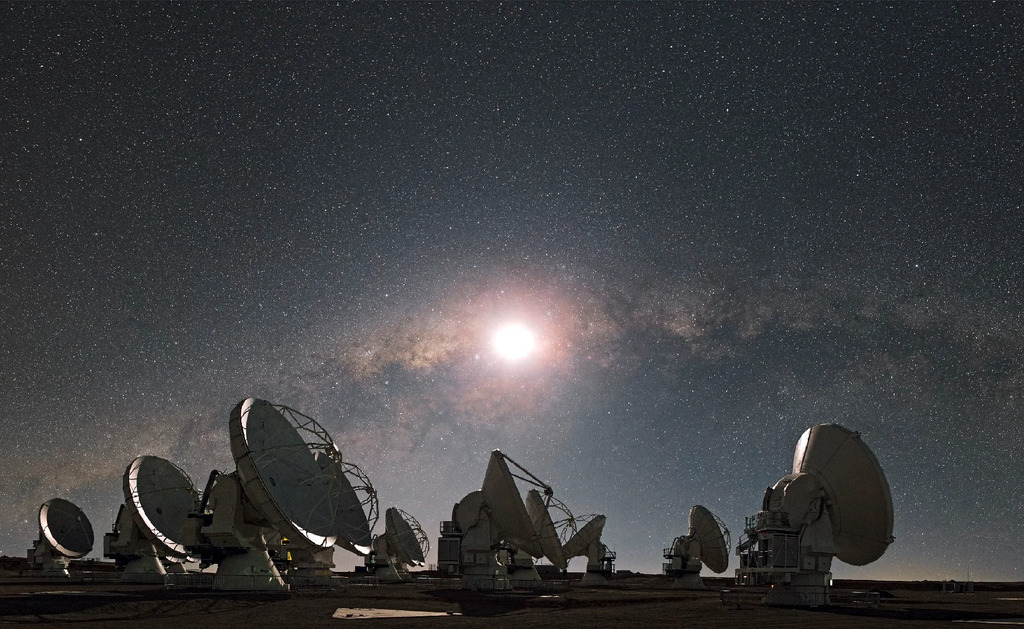
Encouraged by the strange signals recorded at the Arecibo radio telescope, the Allen Telescope Array was used to try and confirm same, as noted. The ATA observed Ross128 for about 16 hours over three days, and while there was human-generated interference, there was no evidence for a signal originating from the star system. The Green Bank Telescope, part of the Breakthrough Listen project, and the Arecibo antenna itself also went into “confirmation mode” to check out these signals.
It now seems clear that the Arecibo detections were due to transmissions from Earth satellites in geosynchronous orbit. Ross 128 has a declination (a coordinate which can be likened to latitude) of close to 0 degrees, which places it in the thick of a phalanx of these satellites. It was telemetry from these satellites, and not extraterrestrials, that accounts for the signals.
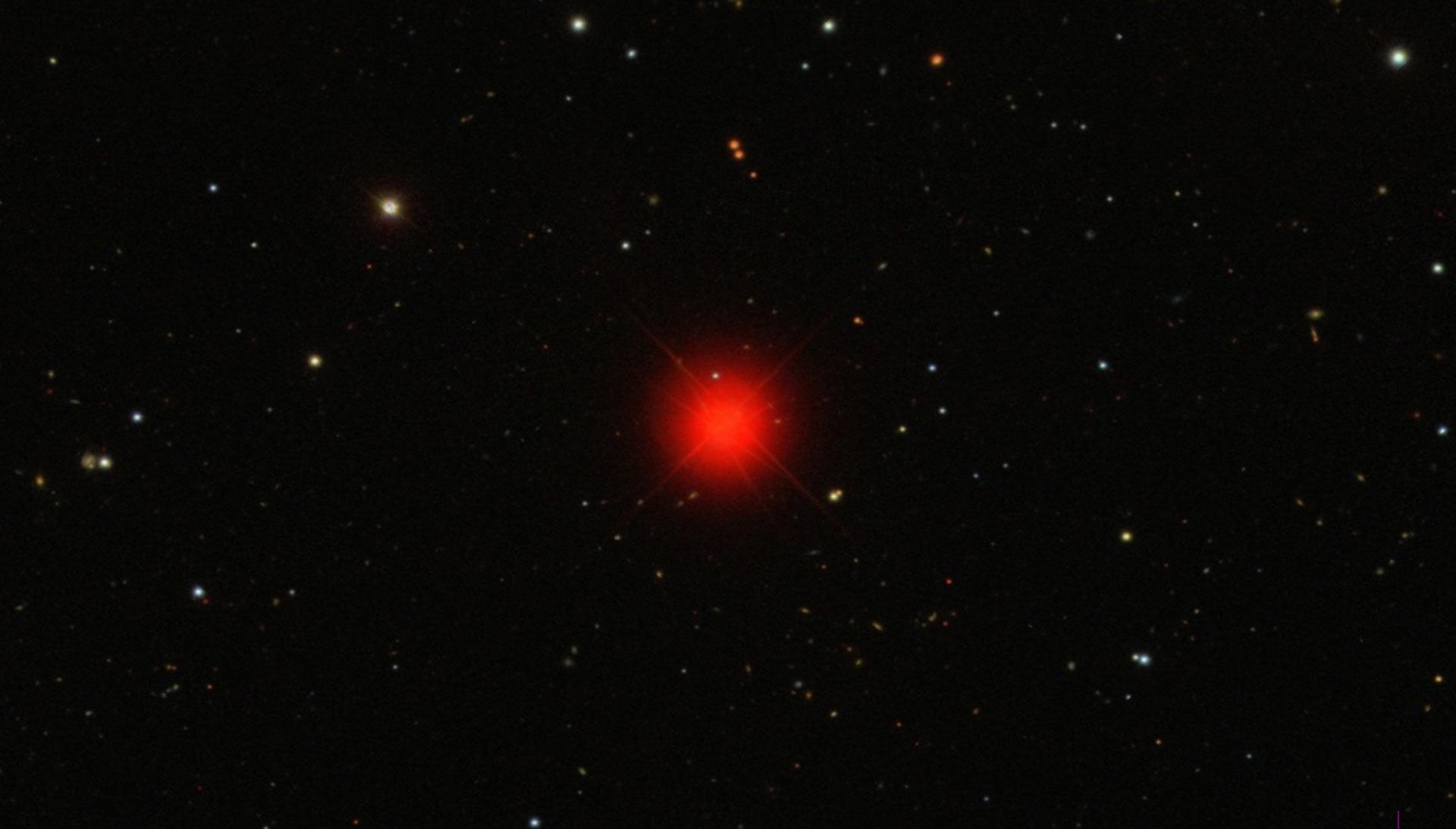
It’s unlikely that Ross 128 has been big in your life. In fact, it’s unlikely you’ve ever seen it, despite the fact that it’s nestled in the prominent summer constellation, Virgo. That’s because Ross 128 is a dim bulb of a star, a so-called red dwarf. Even on the darkest of moonless nights, it’s 100 times too faint to be seen with the naked eye.
In May, radio astronomers at the Arecibo radio telescope in Puerto Rico pointed their Brobdingnagian antenna in the direction of Ross 128. The researchers’ interest was to learn if they could measure any natural radio emissions from this very close (11 light-years) dwarf. Such stars are known to act up, and the turbulent flares that erupt from their surfaces produce radio static. The hope was that small changes in such emission might offer clues to planets whose magnetic fields might perturb these stellar storms. (Note that Ross 128 does not have any known planets, but that doesn’t guarantee there aren’t any.
What the Puerto Rican astronomers found when the data were analyzed was a wide-band radio signal. This signal not only repeated with time, but also slid down the radio dial, somewhat like a trombone going from a higher note to a lower one.
That was odd, indeed. And the discoverers, led by Abel Mendez at the University of Puerto Rico, immediately enlisted the help of other astronomical observatories to keep watch on Ross 128. They suspected one of three possible causes for the radio noise: (1) Flares from the star, as above; (2) other background astronomical source, or (3) terrestrial interference, most likely from some artificial satellite. A deliberate transmission from intelligent beings on a planet near the star is another possibility of course, but was at the bottom of their list.
The Arecibo observers were careful to point out that the intelligent beings explanation – while instinctively more appealing than a barrel of kittens – was the least likely. Still, the facts are that no one yet knows for sure what’s going on in this system.
Beginning last weekend, Jon Richards swung the SETI Institute’s Allen Telescope Array in the direction of Ross 128, and so far has collected more than 10 hours of data. Even using the massive Arecibo antenna, the detected signal was weak, and that makes its detection with other instruments difficult. But it’s obviously important to check the signal out and, insofar as possible, see if it’s really coming from the Ross 128 star system.
Institute scientist Gerry Harp is looking at the ATA data now, and this page will be updated with whatever findings are made. Of course it’s possible that Ross 128 will shed its anonymity and become the first star system to show good evidence of extraterrestrial intelligence. But it’s likely – at least on the basis of past experience – that we will find another, less romantic explanation for the mystery that now enshrouds this object. That, of course, is a frequent occurrence for anyone doing exploration, and hardly a cause for discouragement, but rather an incentive to continue the search.
)