








Monday, Jun 09, 2025

SETI Institute In the News

From cutting-edge helicopters on Mars to artificial intelligence scanning the stars, the SETI Institute continues to lead bold, innovative efforts in the search for life beyond Earth. Recent media features highlight the SETI Institute's expanding role in planetary science, astrobiology, and the search for signals from intelligent extraterrestrial civilizations.

Whether it’s exploring icy moons, enhancing Martian geology mapping with machine learning, or developing futuristic missions like the Nighthawk Mars helicopter, SETI Institute scientists are pushing the boundaries of discovery. Here's a roundup of recent highlights that show how the SETI Institute is shaping the future of space exploration and the search for life in the universe.

“There's The Potential For Life To Exist”: Where Is Life Most Likely To Be In The Solar System?

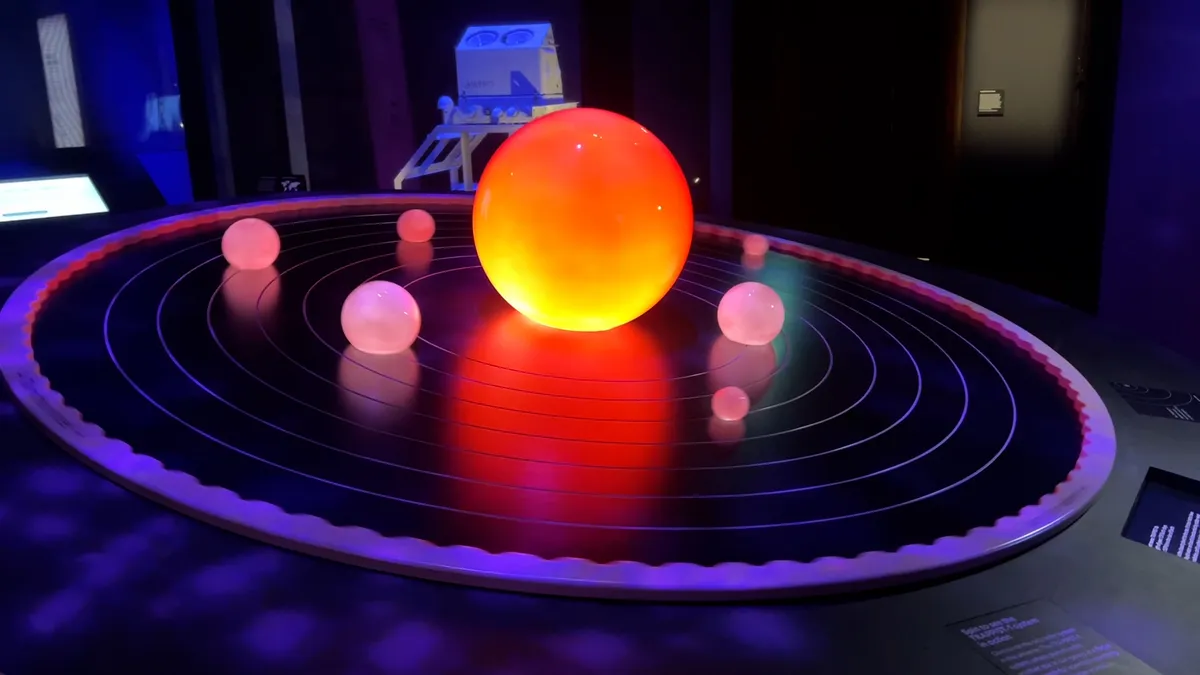
If you had to place a bet on where life might exist beyond Earth, where would you look? That’s the provocative question explored in Space: Could Life Exist Beyond Earth? — a new exhibition at London’s Natural History Museum.

From the icy ocean worlds of Jupiter and Saturn to the dusty terrain of Mars and even the mysterious clouds of Venus, scientists and curators weigh in on the most promising places to search. The SETI Institute is prominently featured through its work on technosignature detection with LaserSETI, adding a forward-thinking layer to humanity's search for intelligent life.

This immersive exhibition challenges visitors to think beyond the usual suspects and ask themselves a timeless question: Where would you place your bet?

Read the full article by IFLScience: “There’s The Potential For Life To Exist”: Where Is Life Most Likely To Be In The Solar System

How SETI Uses AI to Search for Intelligent Alien Life

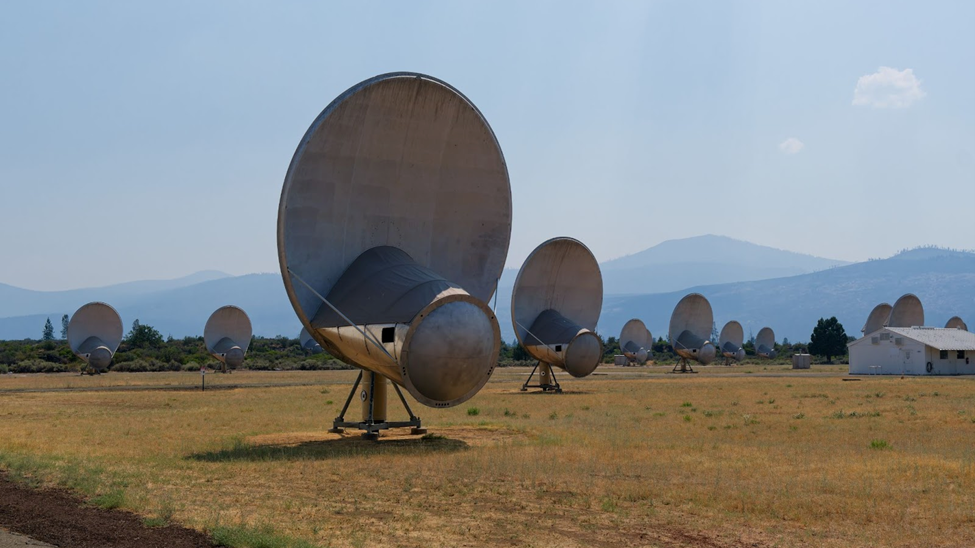
At GTC 2025, SETI Institute engineer Luigi Cruz presented a breakthrough in the search for intelligent life: a new AI-powered method for detecting interstellar radio waves. Using NVIDIA Holoscan and a custom neural network, Cruz’s team processed massive amounts of radio data in real time from 42 antennas at the Allen Telescope Array.

The test, focused on a pulsar in the Crab Nebula (6,500 light-years away), proved successful; the AI accurately detected and reconstructed its giant radio pulses, validating the system.

“The universe is very large and mostly empty,” Cruz said. “We need superhuman means—which is what AI basically is—to search the data in creative ways.”

Unlike older methods that required manual review of stored data, The SETI Institute’s new system—powered by NVIDIA’s IGX Orin and RTX A6000 GPUs—analyzes signals live, filtering out noise and highlighting potential signs of intelligent communication. This success marks a key proof of concept for AI’s role in future space exploration.

Read the full article by Nvidia here: How SETI Uses AI to Search for Intelligent Alien Life

Into the Impossible with Brian Keating: Astrobiologist Says We’ve Been Searching for Aliens the Wrong Way with Nathalie Cabrol

The "Into the Impossible with Brian Keating" podcast featured a compelling discussion with the SETI Institute's Dr. Nathalie Cabrol. In "Astrobiologist Says We’ve Been Searching for Aliens the Wrong Way," Dr. Cabrol offered her insightful perspective on alternative approaches to astrobiology and the search for extraterrestrial intelligence, sparking meaningful conversations about our methodologies.

Listen to the full podcast here

Advancing Martian Geology Mapping with Machine Learning Tools

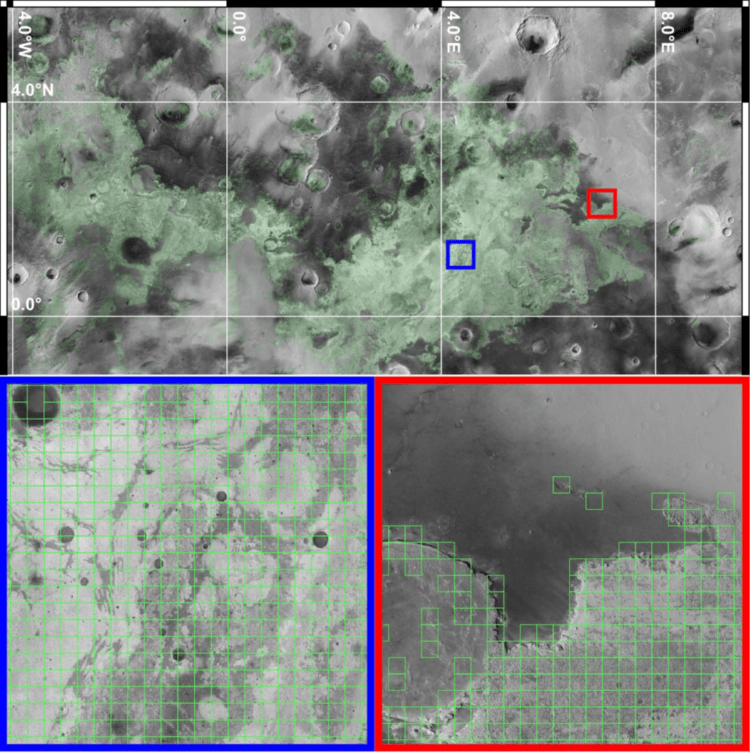
At the 56ᵗʰ Lunar and Planetary Science Conference, Dr. Andrew Annex from the SETI Institute presented a study on using artificial intelligence to improve planetary mapping and image analysis, focusing on Mars data from the Mars Reconnaissance Orbiter’s Context Camera (CTX). By applying machine learning tools like OpenAI’s CLIP, content-based image retrieval (CBIR), and cloud computing, Dr. Annex created a visual search engine capable of scanning the Martian surface at 5-meter-per-pixel resolution.

The goal was to speed up and enhance scientific discovery by automating the slow, manual process of identifying surface features. As Dr. Annex explained,

“The primary motivation behind my work was the desire to accelerate scientific discovery and inquiry and enhance the scientific return from existing Mars datasets.”

His work demonstrates how machine learning can complement traditional methods, making it easier to analyze large volumes of planetary data—not just on Mars but across the entire solar system.

Read the full article by Universe Today here: Advancing Martian Geology Mapping with Machine Learning Tools

NASA’s Nighthawk: This Mars Helicopter Is Set to Find Proof of Life on Mars

NASA is planning an ambitious new Mars mission called Nighthawk, a next-generation helicopter designed to explore the Eastern Noctis Labyrinthus, a region rich in geological features, volcanic history, and potential signs of past water activity or life. Led by Pascal Lee of the SETI Institute, the mission aims to assess potential human landing sites, study an ancient volcano, and investigate glacial ice deposits.

Unlike the earlier Ingenuity helicopter, Nighthawk will operate independently and will carry three advanced scientific instruments: OCCAM (for imaging), NIRAC (for mineral analysis), and PMWS (for detecting subsurface water).

“Nighthawk is a concept for a NASA Mars Chopper mission to explore Eastern Noctis Labyrinthus’ ancient giant volcano, recent lava flow, canyons, glacier remains, H₂O evolution, mineral deposits, potential for life, and suitability for human landing and exploration,” said the team led by Dr. Pascal Lee.

Read the full article by MSN here: NASA’s Nighthawk: This Mars Helicopter Is Set to Find Proof of Life on Mars

News

Related News

Featured Image
Jun 4, 2026
SETI Institute In the News: May Roundup 2026
#SETI Institute in the News #SETI Institute #Community #Solar System #Matija Ćuk #Neptune #SETI #Bill Diamond #UAPs #Drake Awards #Lori Marino #Matthew Tiscareno #Outreach #Exoplanets #Carl Sagan Center
Featured Image
May 7, 2026
SETI Institute In the News: April Roundup 2026
#SETI Institute in the News #SETI Institute #Community #SETI #Discovery and Futures Lab #Lucian Walkowicz #Chelsea Haramia #NASA Missions and Observatories #Pascal Lee #Mars #Janice Bishop #Mark Showalter #JWST #Uranus #Bill Diamond #UAPs
Featured Image
May 5, 2026
Atlanta Science Festival Exploration Expo and the Arecibo Message
#Community #SETI Institute #Outreach #Education #Lauren Sgro
Featured Image
Apr 15, 2026
2025 SETI Institute Carl Sagan Center Activity Report
#Activity Reports #Carl Sagan Center #Outreach #Education #AIR #Community
Featured Image
Apr 3, 2026
SETI Institute In the News: March Roundup 2026
In March 2026, SETI Institute researchers contributed to a wide range of conversations about our solar system and the search for life beyond Earth. From explaining unusual features on Mars and studying meteor airbursts in Earth’s atmosphere to advancing new ways of detecting technosignatures, this work reflects how scientists are continually refining our understanding of both nearby and distant worlds. #SETI Institute in the News #SETI Institute #Community #Mars #Pascal Lee #Peter Jenniskens #Comets, Meteors, and Asteroids #Astronomy #Vishal Gajjar #SETI #AI and Machine Learning #Astrobiology #Nathalie Cabrol #Carl Sagan Center #Seth Shostak #Movie Reviews #Bill Diamond
Featured Image
Mar 26, 2026
Where Fiction Meets Physics: Inside the SETI Institute’s Project Hail Mary Screening Event
#Movie Reviews #Rebecca Robinson #Heliophysics #Community #SETI Institute #Public Events
Research

Related Projects

Featured Image
SkyMapper • SETI • Citizen Science • Astronomy
SkyMapper: Expanding Access to Real-time Astronomy Through a Global Astronomical Network
SkyMapper and the SETI Institute are connecting educators, students and the public to live astronomical observations through a distributed astronomical network. #SkyMapper #SETI #Citizen Science #Astronomy
Featured Image
VPL
Virtual Planetary Laboratory
How can we best assess whether an exoplanet supports life? #VPL
Featured Image
Discovery and Futures Lab
What happens if life beyond Earth is discovered? The Discovery and Futures Lab at the SETI Institute fosters novel and anticipatory research at the intersection of science, society, our planet, and the search for life beyond Earth.  #Discovery and Futures Lab
Support Us

Support the
SETI Institute

Scientists are getting closer in their search for life beyond earth. But with limited federal funding for the search for extraterrestrial intelligence, supporters are the reason cutting-edge scientists can keep their eyes on the sky.