)

Wednesday, Nov 06, 2024

SETI Institute In the News
The SETI Institute continues to push the boundaries of space exploration and our understanding of the universe. From deciphering alien messages to searching for extraterrestrial intelligence and developing cutting-edge technologies for planetary exploration, the SETI Institute's work is at the forefront of scientific discovery.
This month, we delve into the latest breakthroughs, including the successful decoding of an alien signal, the search for extraterrestrial life in distant planetary systems, and the development of autonomous mineral classification systems for future space missions.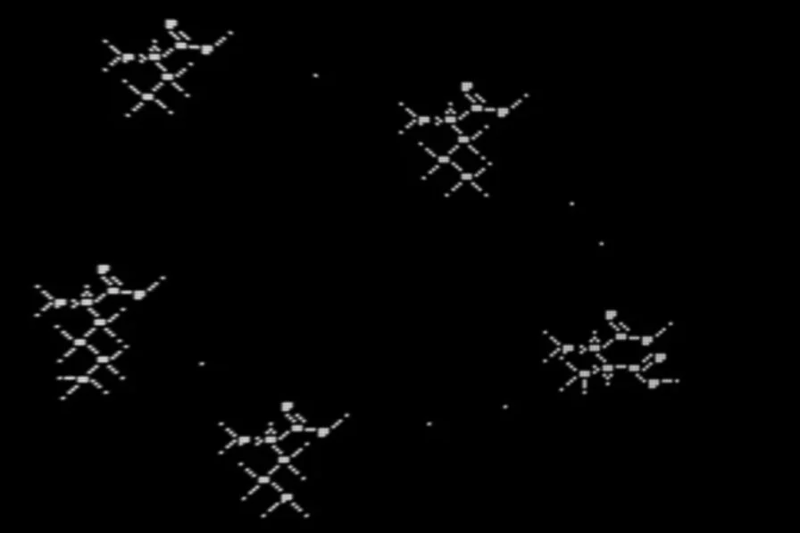
Father-Daughter Duo Cracks Coded ‘Alien’ Signal From Mars
In collaboration with the European Space Agency, The SETI Institute spearheaded a unique experiment to simulate alien communication. They beamed an encoded message from the ExoMars Trace Gas Orbiter to Earth, challenging the public to decipher it.
This cosmic puzzle, crafted by artist Daniela de Paulis, sparked global interest and ignited a collective effort to understand the potential communications from an alien civilization. The message, a simple image with five amino acids displayed in a universal organic molecular diagram notation, accompanied by a few single pixel points appearing between the clusters and molecular diagrams - was finally cracked by a father-daughter duo, Ken and Keli Chaffin. However, the true meaning of the message remains open to interpretation.
Read the full article by Gizmodo here: Father-Daughter Duo Cracks Coded ‘Alien’ Signal From Mars
SETI Tests New Alien-Hunting Strategy, But TRAPPIST-1 Planets Remain Silent
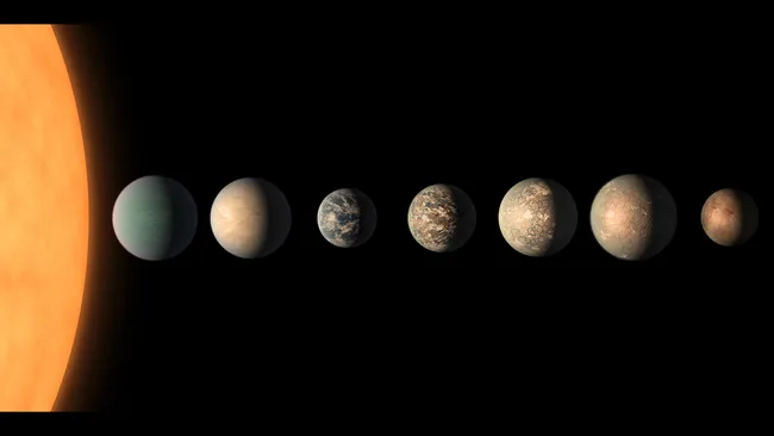
The SETI Institute has pioneered a new strategy to search for alien signals in the TRAPPIST-1 planetary system. By utilizing planet-planet occultations (PPOs), researchers can target potential radio transmissions between planets. While the recent search using the Allen Telescope Array didn't yield results, it proves the feasibility of this approach.
As the Square Kilometer Array comes online, scientists hope to detect weaker signals, similar to our own Deep Space Network transmissions. This innovative method offers a promising avenue for future SETI research, expanding our understanding of the potential for extraterrestrial life.
Read full article by Space here: SETI tests new alien-hunting strategy, but TRAPPIST-1 planets remain silent
SETI Institute Researchers Engage in World’s First Real-Time AI Search for Fast Radio Bursts
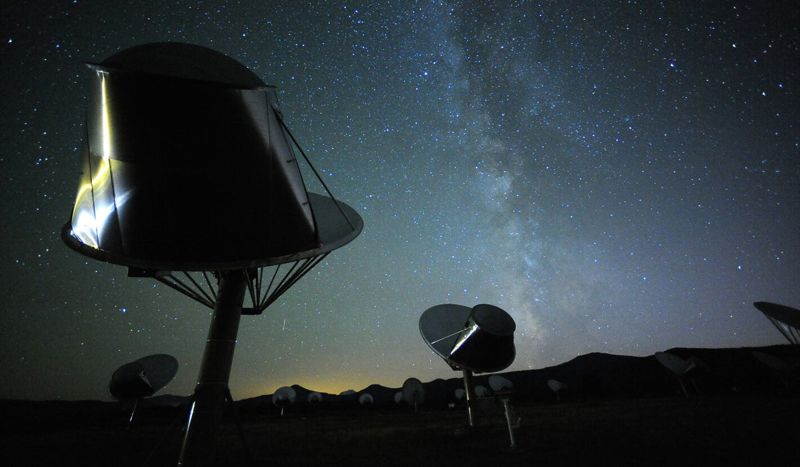
In collaboration with NVIDIA, The SETI Institute has made significant strides in the field of radio astronomy by leveraging AI to detect faint radio signals from space in real-time. This collaboration has led to the development of a groundbreaking system that can process vast amounts of data from telescopes and analyze it using AI. This innovative approach can revolutionize the way astronomers search for extraterrestrial intelligence and study transient astronomical events.
Read the full article by Nvidia here:SETI Institute Researchers Engage in World’s First Real-Time AI Search for Fast Radio Bursts

Autonomous Mineral Classification Enhances Planetary Exploration
Recent advancements in planetary surface missions are focusing on autonomous mineral identification. Researchers at NASA Ames and the SETI Institute have developed a dual-band Raman spectroscopy technique combined with machine learning to accurately classify minerals on-site. This technology allows rovers to make informed decisions about sample collection and exploration, improving mission efficiency and reducing analysis delays. By enabling autonomous mineral identification, scientists aim to unlock the secrets of planetary geology and accelerate our understanding of the universe.
Read the full article by Spectroscopy Online here: Autonomous Mineral Classification Enhances Planetary Exploration







News
Related News

Jun 29, 2026
Humanity's Plan for First Contact: Who Speaks for Earth?
#Blog #Lauren Sgro #Lucian Walkowicz #Chelsea Haramia #SETI #SETI Institute
Jun 5, 2026
Beyond Disclosure Day: The Real-World Protocols
#Press Releases #SETI #Astronomy #Bill Diamond #SETI Institute
Jun 4, 2026
SETI Institute In the News: May Roundup 2026
#SETI Institute in the News #SETI Institute #Community #Solar System #Matija Ćuk #Neptune #SETI #Bill Diamond #UAPs #Drake Awards #Lori Marino #Matthew Tiscareno #Outreach #Exoplanets #Carl Sagan Center
May 28, 2026
Celebrating Frank Drake
#Frank Drake #SETI #Project Ozma #Drake Equation #SETI Institute
May 7, 2026
SETI Institute In the News: April Roundup 2026
#SETI Institute in the News #SETI Institute #Community #SETI #Discovery and Futures Lab #Lucian Walkowicz #Chelsea Haramia #NASA Missions and Observatories #Pascal Lee #Mars #Janice Bishop #Mark Showalter #JWST #Uranus #Bill Diamond #UAPs
May 5, 2026
Atlanta Science Festival Exploration Expo and the Arecibo Message
#Community #SETI Institute #Outreach #Education #Lauren Sgro
Jun 29, 2026
#Blog
#Lauren Sgro
#Lucian Walkowicz
#Chelsea Haramia
#SETI
#SETI Institute
Jun 5, 2026
#Press Releases
#SETI
#Astronomy
#Bill Diamond
#SETI Institute
Beyond Disclosure Day: The Real-World Protocols
Jun 4, 2026
#SETI Institute in the News
#SETI Institute
#Community
#Solar System
#Matija Ćuk
#Neptune
#SETI
#Bill Diamond
#UAPs
#Drake Awards
#Lori Marino
#Matthew Tiscareno
#Outreach
#Exoplanets
#Carl Sagan Center
SETI Institute In the News: May Roundup 2026
May 28, 2026
#Frank Drake
#SETI
#Project Ozma
#Drake Equation
#SETI Institute
Celebrating Frank Drake
May 7, 2026
#SETI Institute in the News
#SETI Institute
#Community
#SETI
#Discovery and Futures Lab
#Lucian Walkowicz
#Chelsea Haramia
#NASA Missions and Observatories
#Pascal Lee
#Mars
#Janice Bishop
#Mark Showalter
#JWST
#Uranus
#Bill Diamond
#UAPs
SETI Institute In the News: April Roundup 2026
May 5, 2026
#Community
#SETI Institute
#Outreach
#Education
#Lauren Sgro
Atlanta Science Festival Exploration Expo and the Arecibo Message
Research
Related Projects

SkyMapper • SETI • Citizen Science • Astronomy
SkyMapper: Expanding Access to Real-time Astronomy Through a Global Astronomical Network
SkyMapper and the SETI Institute are connecting educators, students and the public to live astronomical observations through a distributed astronomical network. #SkyMapper #SETI #Citizen Science #Astronomy
VPL
Virtual Planetary Laboratory
How can we best assess whether an exoplanet supports life? #VPL
Discovery and Futures Lab
Discovery and Futures Lab
What happens if life beyond Earth is discovered? The Discovery and Futures Lab at the SETI Institute fosters novel and anticipatory research at the intersection of science, society, our planet, and the search for life beyond Earth. #Discovery and Futures Lab
May 17, 2026
SkyMapper: Expanding Access to Real-time Astronomy Through a Global Astronomical Network
SkyMapper and the SETI Institute are connecting educators, students and the public to live astronomical observations through a distributed astronomical network.
#SkyMapper
#SETI
#Citizen Science
#Astronomy
May 5, 2026
Virtual Planetary Laboratory
How can we best assess whether an exoplanet supports life?
#VPL
Apr 16, 2026
Discovery and Futures Lab
What happens if life beyond Earth is discovered? The Discovery and Futures Lab at the SETI Institute fosters novel and anticipatory research at the intersection of science, society, our planet, and the search for life beyond Earth.
#Discovery and Futures Lab
Support Us
Support the
SETI Institute
Scientists are getting closer in their search for life beyond earth. But with limited federal funding for the search for extraterrestrial intelligence, supporters are the reason cutting-edge scientists can keep their eyes on the sky.
