




Wednesday, Nov 05, 2025

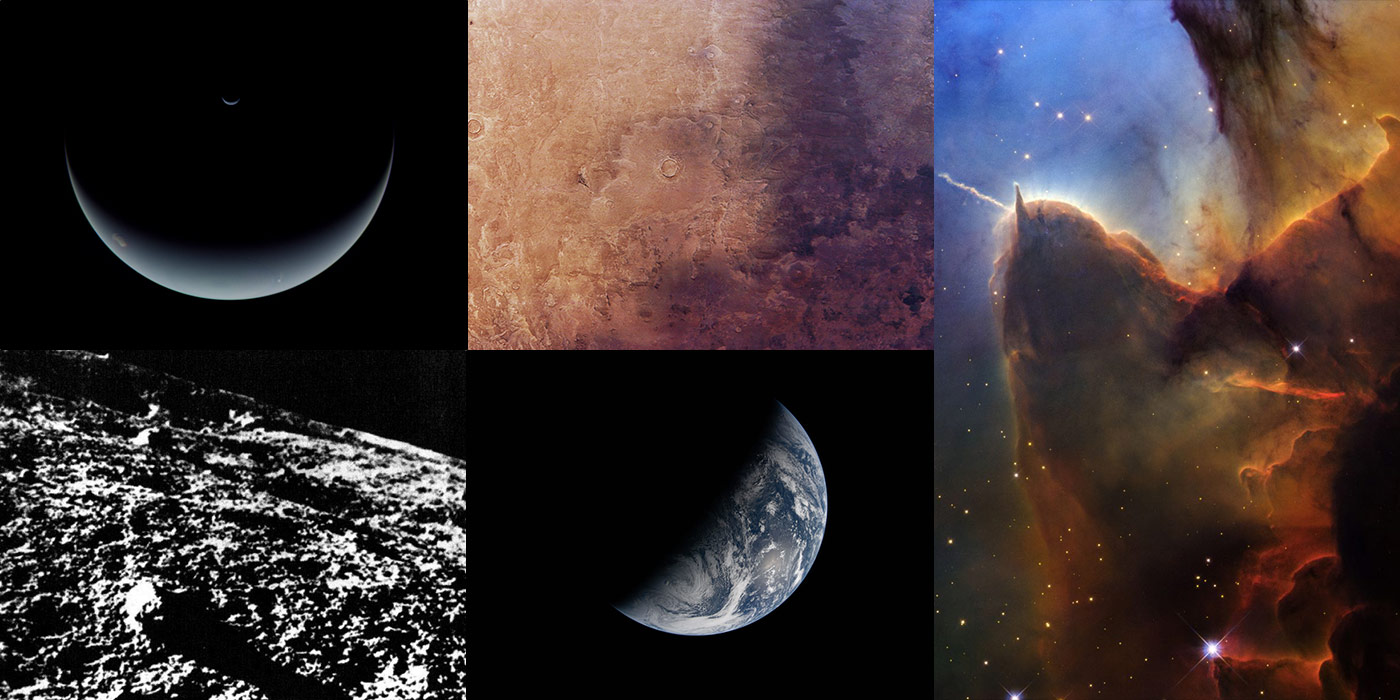
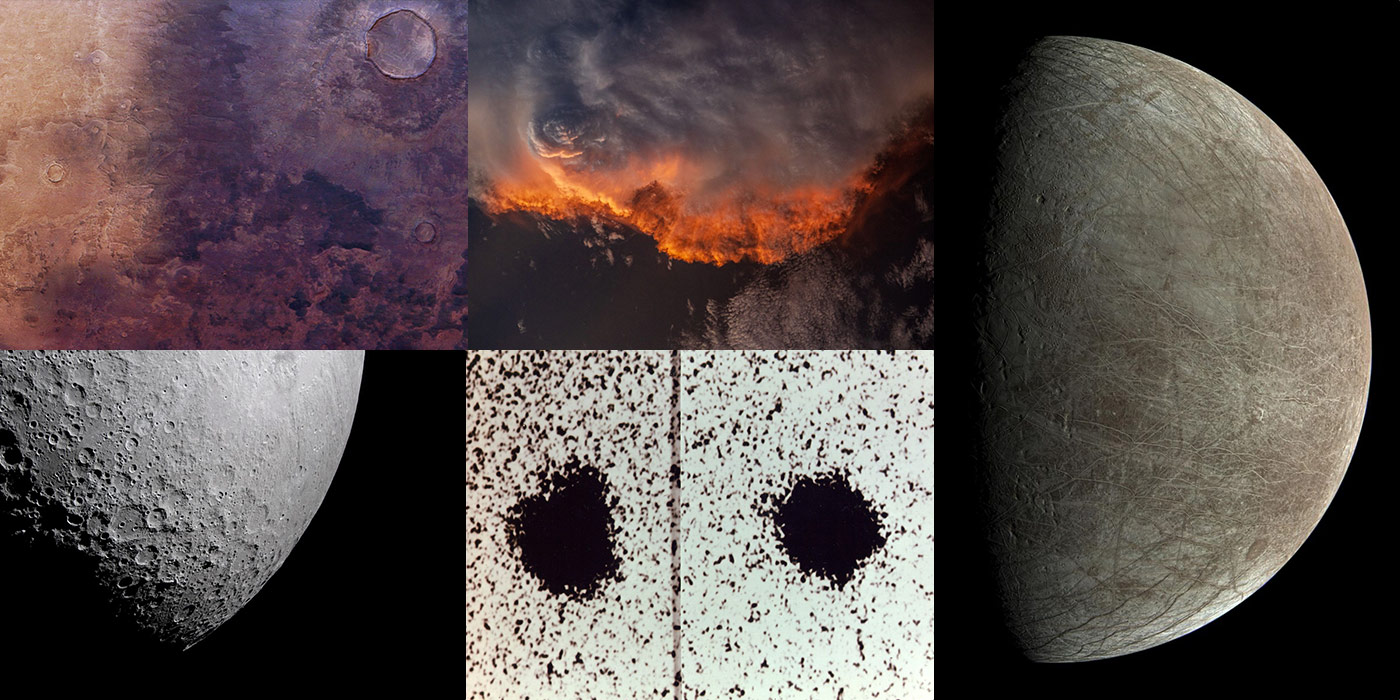
Space missions, both crewed and robotic, have yielded amazing imagery and discoveries, ranging from seasonal features on Mars to stunning photos of our beautiful home planet, the cratered far side of the Moon, and even distant galaxies.

Credit: ESA/DLR/FU Berlin

Monday, 27 October 2025

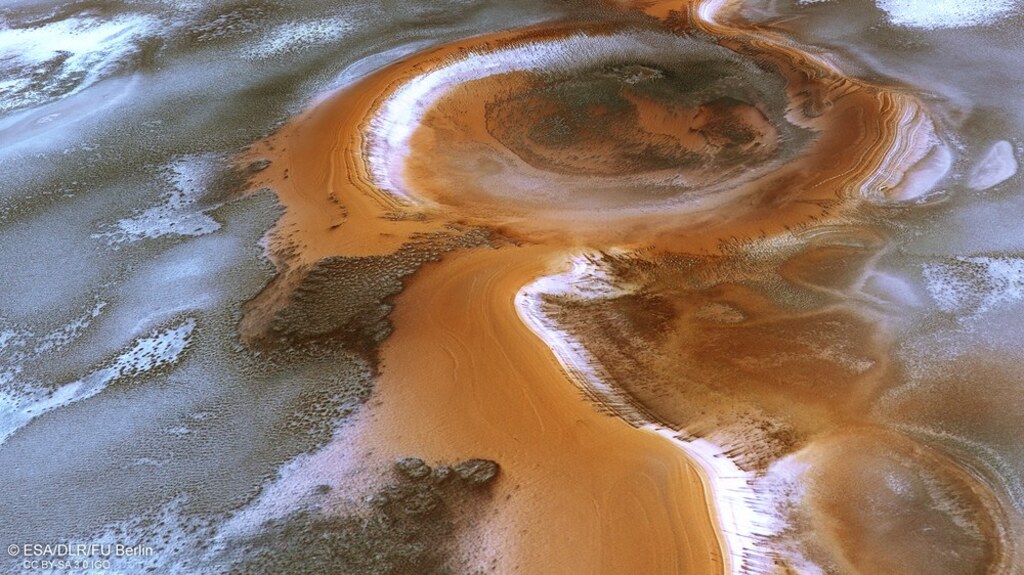
Martian Winter Wonderland

This sweeping view along a rusty red ridge and into a crater showcases the exquisite beauty of icy, layered terrain in the south polar region on Mars.

The High Resolution Stereo Imaging camera onboard ESA’s Mars Express captured this frosty scene in the Ultimi Scopuli region near the south pole of Mars on 19 May 2022. At this time, it was southern hemisphere spring, and ice was starting to retreat. Dark dunes began to peak through the frost, and the elevated terrain appears ice-free.

Credit: NASA, JPL-Caltech, Space Science Institute, CICLOPS, Mindaugas Macijauskas

Tuesday, 28 October 2025

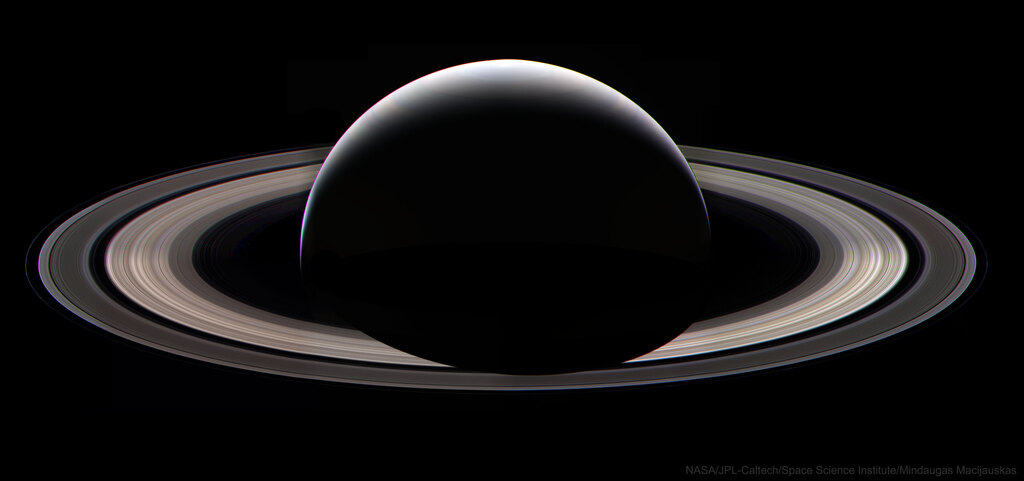
Lord of the Rings

Saturn is captured here by NASA's Cassini spacecraft. Cassini orbited the gas giant for thirteen years before ending its mission by plunging into the planet's atmosphere on September 15, 2017. This image is a mosaic compiled from frames recorded by Cassini two days before its final dive.

Credit: NASA. Caption: M. Justin Wilkinson, Texas State University

Wednesday, 29 October 2025

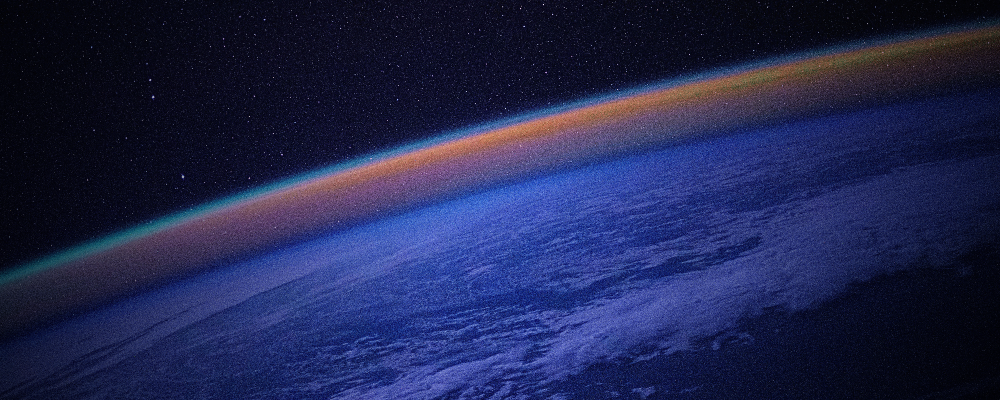
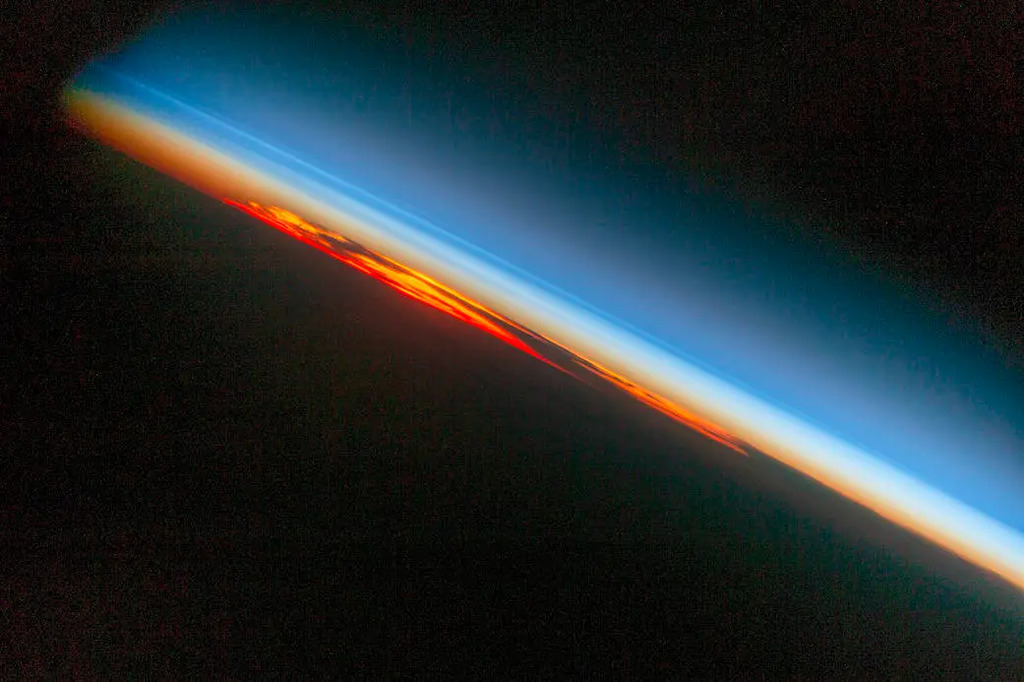
Fiery South Atlantic Sunset

An astronaut aboard the International Space Station photographed a sunset that looks like a vast sheet of flame. With Earth’s surface already in darkness, the setting sun, the cloud masses, and the sideways viewing angle make a powerful image of the kind that astronauts use to commemorate their flights.

Thin layers of lighter and darker blues reveal the many layers of the atmosphere. The lowest layer—the orange-brown line with clouds, dust, and smoke—is known to scientists as the troposphere, the layer of weather as we experience it. It is the smoke and dust particles in the atmosphere that give sunsets their strong red color.

Credit: NASA, J. English (U. Manitoba), S. Hunsberger, S. Zonak, J. Charlton, S. Gallagher (PSU), and L. Frattare (STScI)

Thursday, 30 October 2025

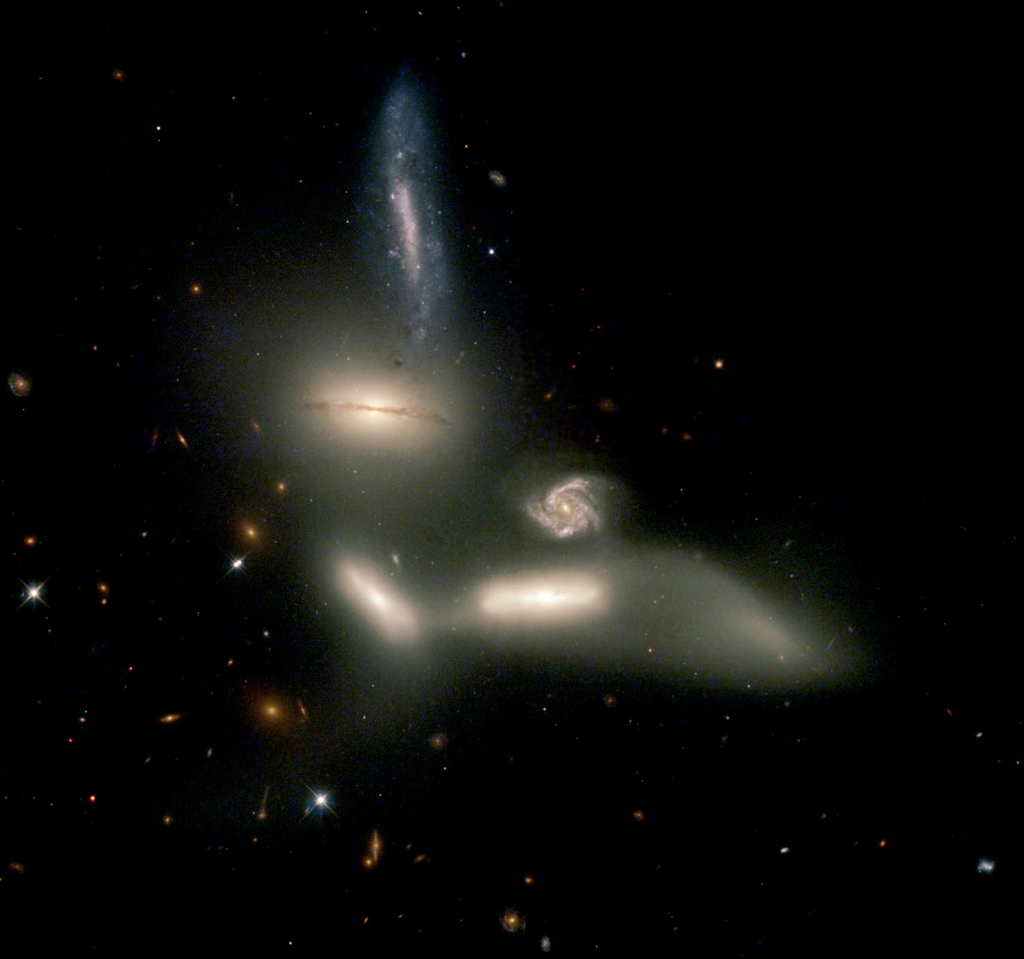
Seyfert's Sextet

Called Seyfert's Sextet, this galactic vista was captured by the Hubble Space Telescope in its 13th year. The galaxies are so tightly packed together that gravitational forces are beginning to rip stars from them and distort their shapes. Those same gravitational forces eventually could bring the galaxies together to form one large galaxy.

Seyfert's Sextet is not a very accurate nickname, though. Rather than six, only four galaxies are actually on the dance card. The small face-on spiral with the prominent arms (at center) is a background galaxy almost five times farther away than the other four. The sixth member of the sextet isn't a galaxy at all but a long "tidal tail" of stars (lower right) torn from one of the galaxies.

The group resides 190 million light-years away in the constellation Serpens. When the light we receive today left these galaxies, the dinosaurs ruled the Earth in the Middle Jurassic.

Credit: Apollo 11 crew / NASA.

Friday, 31 October 2025

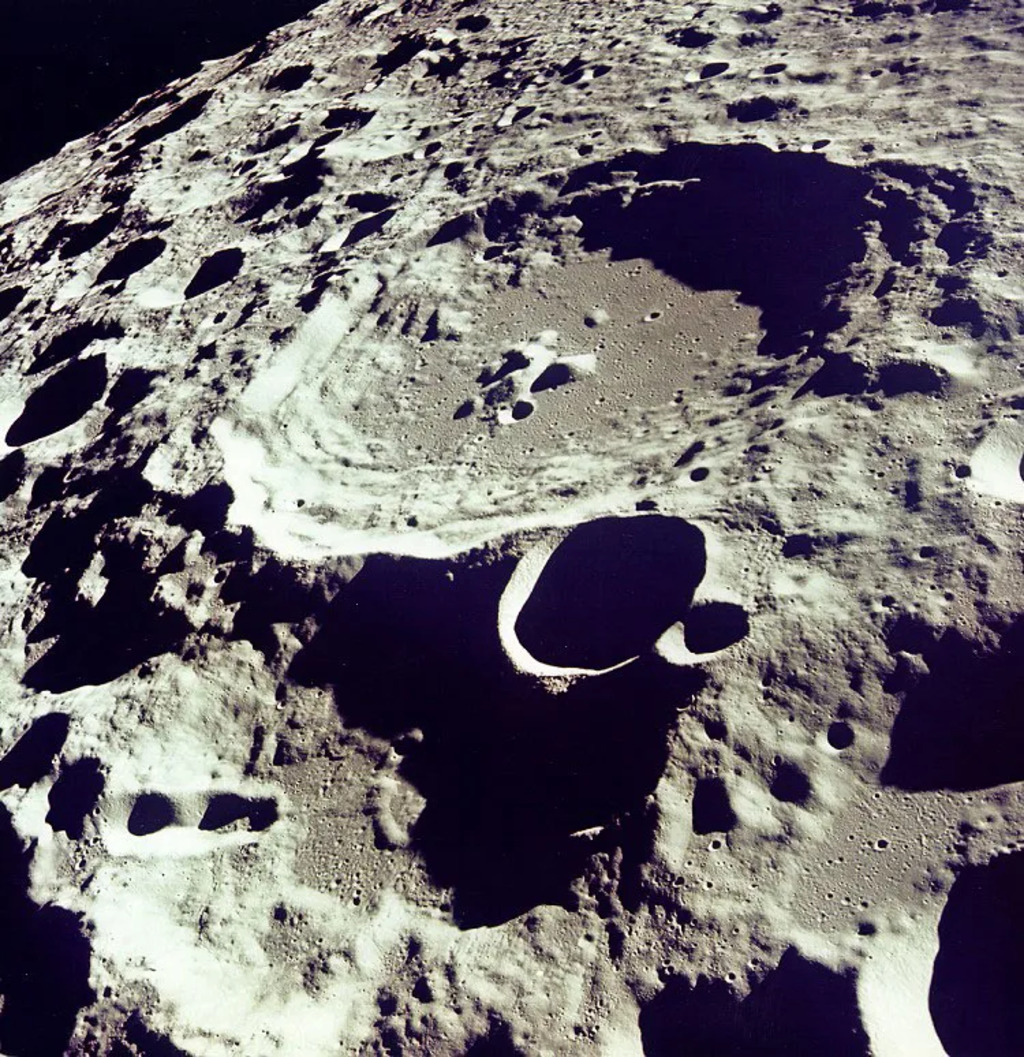
Lunar Farside

This image of the crater Daedalus, with a diameter of about 80 kilometers, on the Moon's far side was taken by the Apollo 11 crew while in orbit around the Moon in 1969. The Moon’s far side is rugged and densely cratered, while the near side—the face that always looks toward Earth—is comparatively smooth. Because the Moon is tidally locked, humanity didn’t actually see the far side until the mid-20th century. Its bright highlands are much older than the dark, volcanic plains—or maria—that dominate the near side. Scientists think this contrast arose because the Moon’s crust is thinner on the near side, allowing ancient lava to flow more freely there.

News

Related News

Featured Image
Jun 3, 2026
Planetary Picture of the Day - Week of May 25, 2026
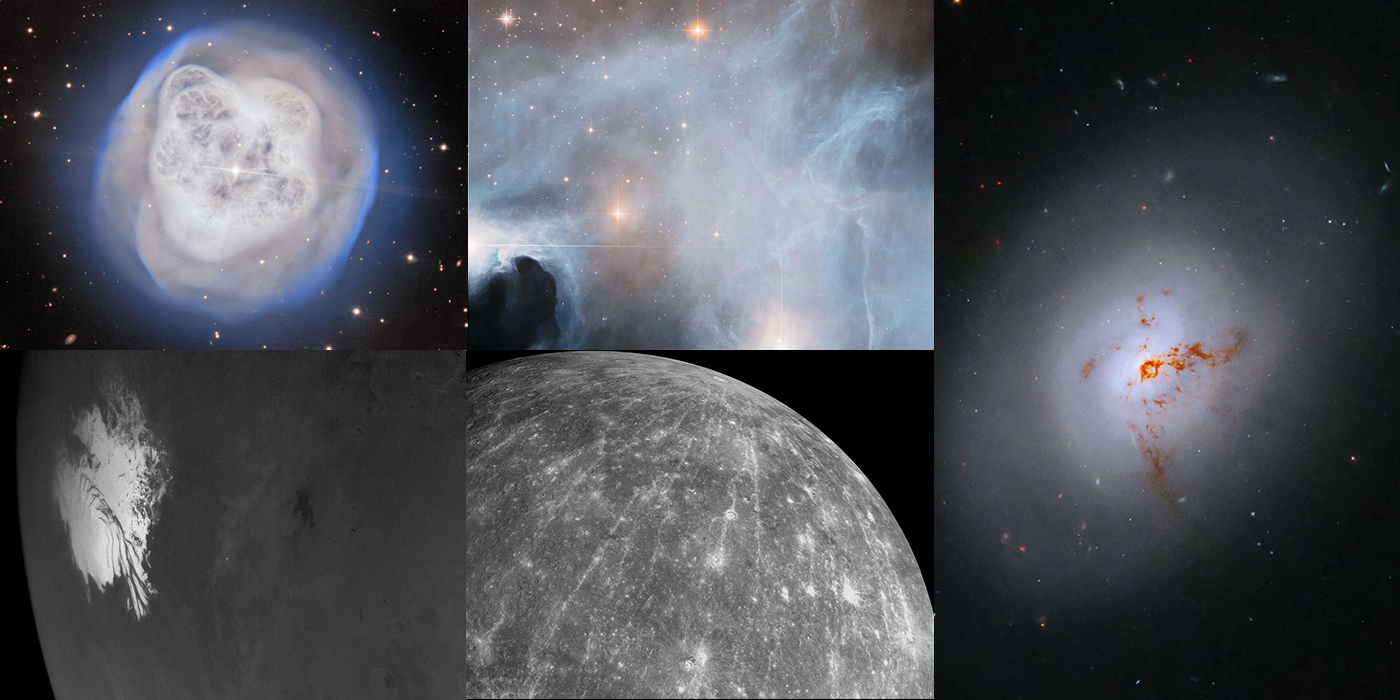
This week's images journeyed from the shimmering Crystal Ball Nebula to the icy south pole of Mars, highlighting beauty and change across our solar system and beyond. The collection also captured stars being born in a ghostly nebula, the dramatic rays of Mercury’s Hokusai Crater, and a distant galaxy caught in transition—offering a striking look at cosmic evolution across space and time. #PPOD
Featured Image
May 27, 2026
Planetary Picture of the Day - Week of May 18, 2026
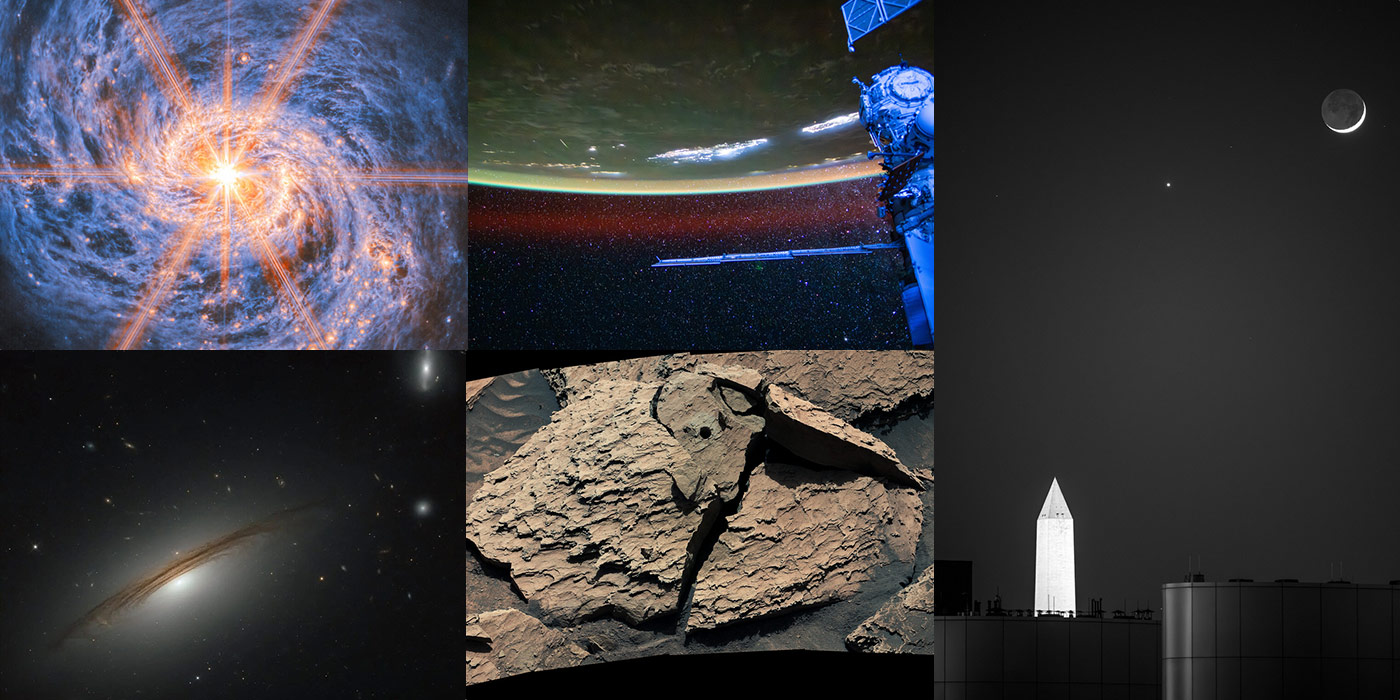
Moments both fleeting and immense—from a Moon–Venus conjunction over Washington, D.C. to a meteor streaking through Earth’s atmosphere as seen from the International Space Station. These images also spanned the cosmic scale, featuring a massive hybrid galaxy, a stubborn rock sampled by the Curiosity rover on Mars, and a stunning mid-infrared view of Messier 77 from JWST. #PPOD
Featured Image
May 21, 2026
Planetary Picture of the Day - Week of May 11, 2026
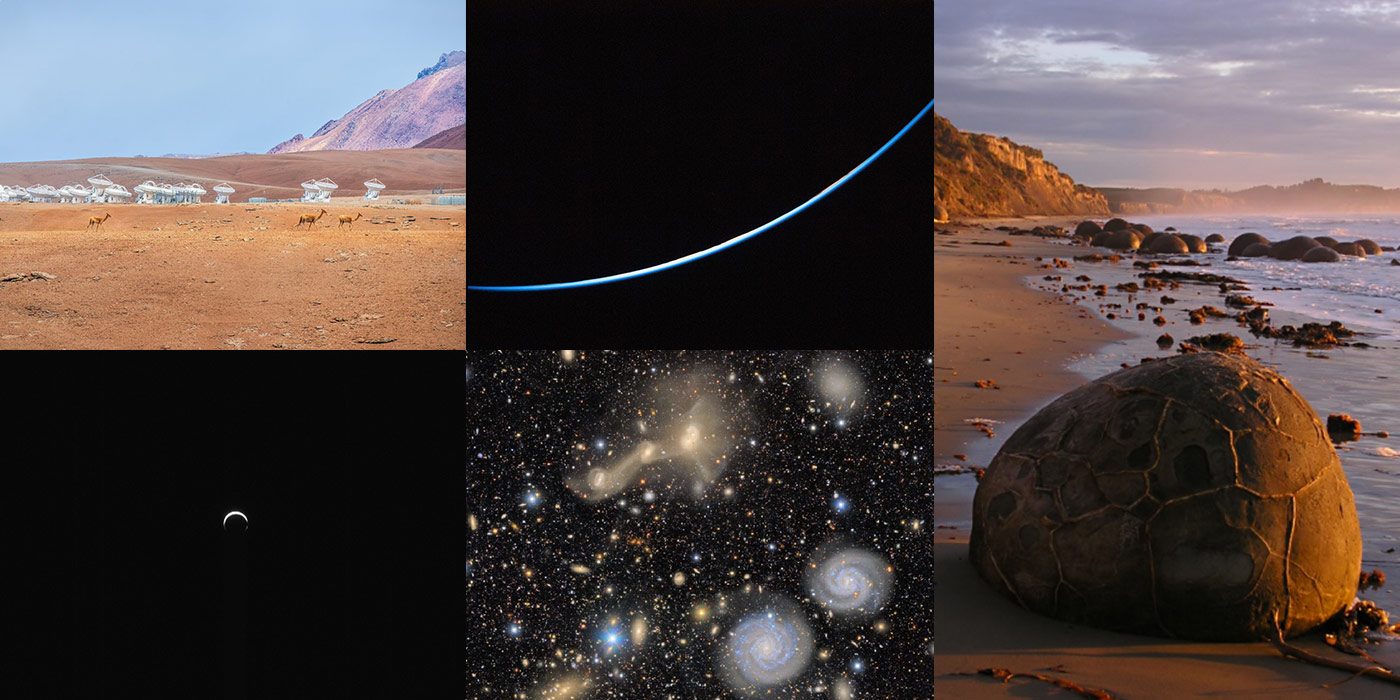
Where the round things are: From spherical boulders and circular radio telescope dishes to the curve of our blue marble, distant Mars, and far-away spiral galaxies, the universe comes back to circles. #PPOD
Featured Image
May 13, 2026
Planetary Picture of the Day - Week of May 04, 2026
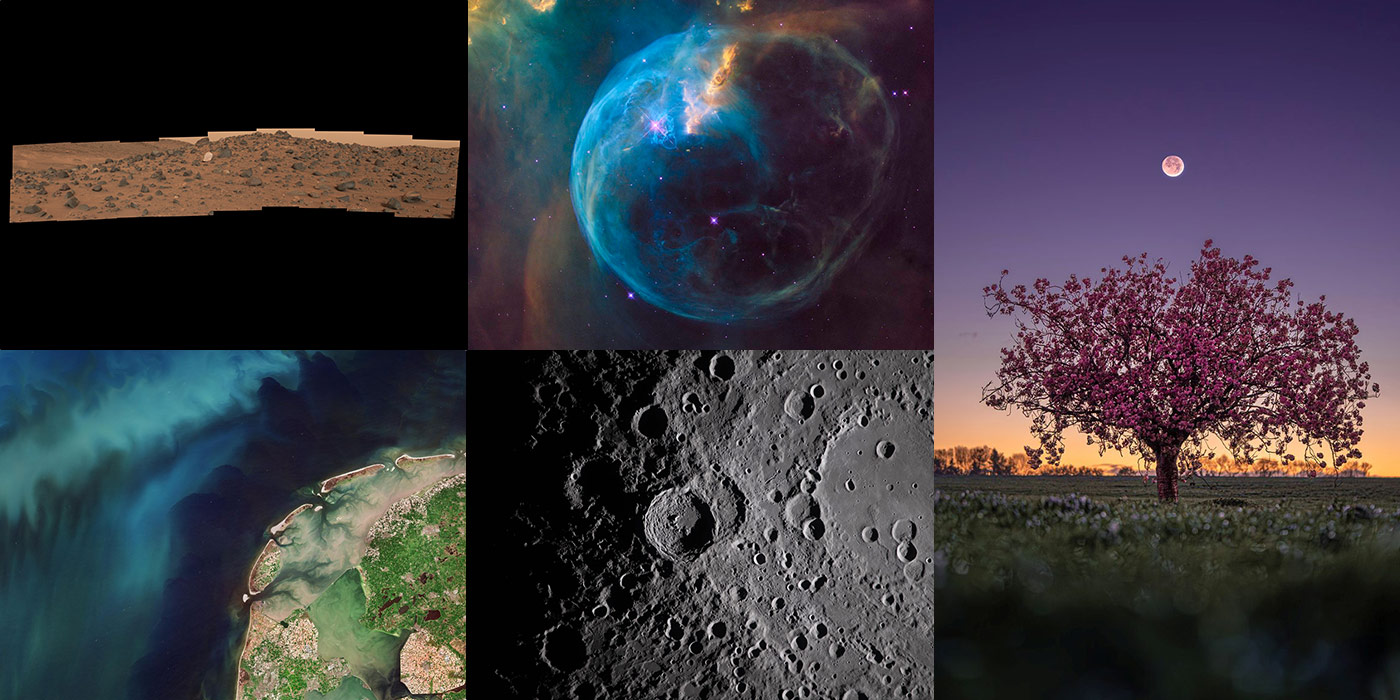
From blooming tulip fields in the Netherlands to the glowing shell of the Bubble Nebula, last week’s PPOD images celebrated color and contrast across Earth, the Moon, and deep space. The collection also highlighted exploration and change—from unusual rocks studied by Perseverance rover on Mars to dramatic lunar shadows captured by Artemis II and the soft glow of May’s Flower Moon. #PPOD
Featured Image
May 6, 2026
Planetary Picture of the Day - Week of April 27, 2026
Dark and light play together in this week's photos, as we examine ash spreading across Mars over decades, night and day on the Moon, and the interplay of colors in a distant nebula. #PPOD
Featured Image
Apr 29, 2026
Planetary Picture of the Day - Week of April 20, 2026
This week's planetary images took us from the fractured ice of Europa and the shadowed edge of the Moon to a fiery-looking sunset cloud glowing above Earth, captured from the International Space Station. They also revisited landmark discoveries and changing worlds, from the first images revealing Charon to dark volcanic ash slowly spreading across Mars's surface. #PPOD
Research

Related Projects

Featured Image
SkyMapper • SETI • Citizen Science • Astronomy
SkyMapper: Expanding Access to Real-time Astronomy Through a Global Astronomical Network
SkyMapper and the SETI Institute are connecting educators, students and the public to live astronomical observations through a distributed astronomical network. #SkyMapper #SETI #Citizen Science #Astronomy
Featured Image
VPL
Virtual Planetary Laboratory
How can we best assess whether an exoplanet supports life? #VPL
Featured Image
Discovery and Futures Lab
What happens if life beyond Earth is discovered? The Discovery and Futures Lab at the SETI Institute fosters novel and anticipatory research at the intersection of science, society, our planet, and the search for life beyond Earth.  #Discovery and Futures Lab
Support Us

Support the
SETI Institute

Scientists are getting closer in their search for life beyond earth. But with limited federal funding for the search for extraterrestrial intelligence, supporters are the reason cutting-edge scientists can keep their eyes on the sky.