




Monday, 27 April 2026
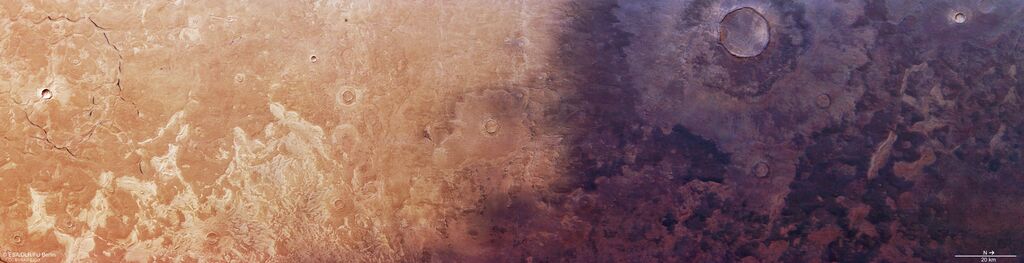
Dark Ash on Mars
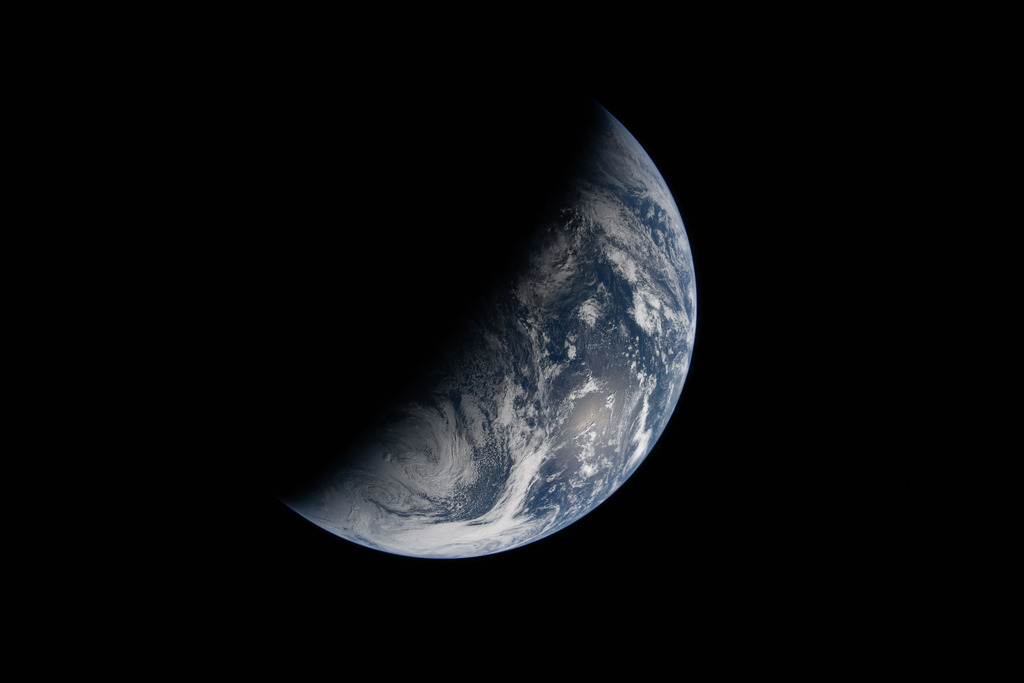
Noticeable change on Mars can take millions of years – but ESA’s Mars Express has captured a blanket of dark ash creeping across the planet in just decades.
The image shows a scene of two halves, with Mars’s typical bright tan-colored sands butting up against dark volcanic ash deposits. When this part of Mars was viewed by NASA’s Viking orbiters in 1976, the ash was noticeably less widespread than it is today.
Tuesday, 28 April 2026
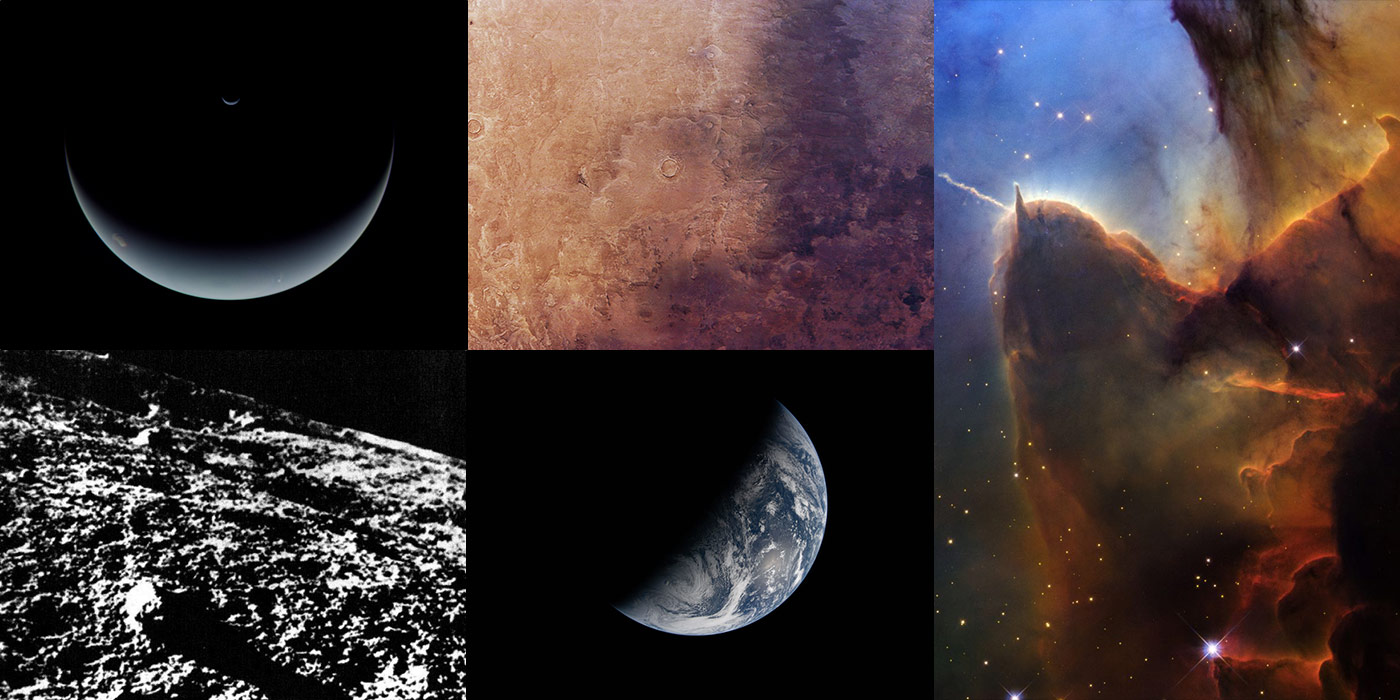
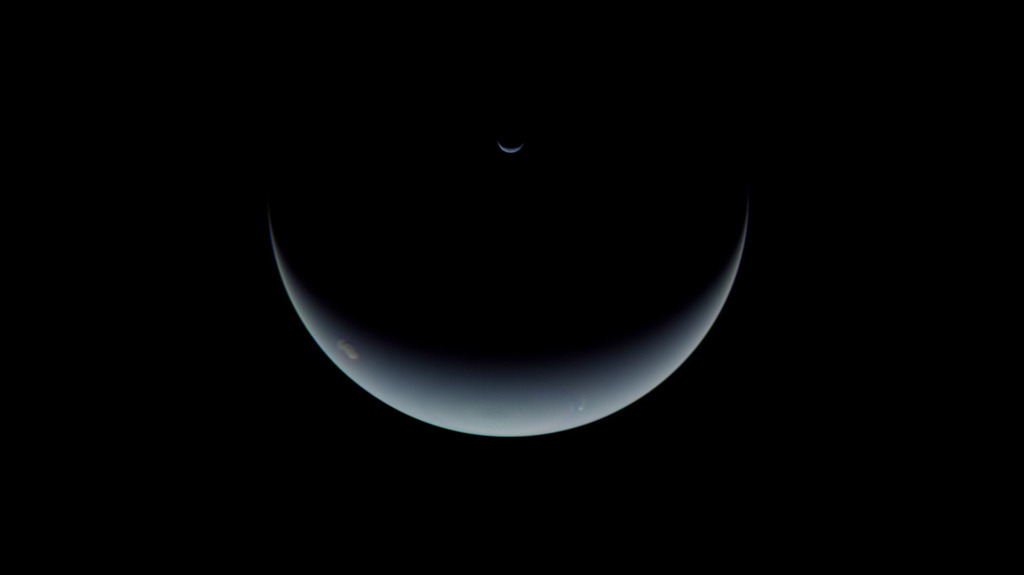
Neptune and Triton
This image of Neptune and Triton was captured by Voyager 2 as it departed the Neptune system on 31 August 1989. Voyager 2's flyby over Neptune's northern hemisphere bent the spacecraft's trajectory downwards out of our solar system's orbital plane.
Thursday, 30 April 2026
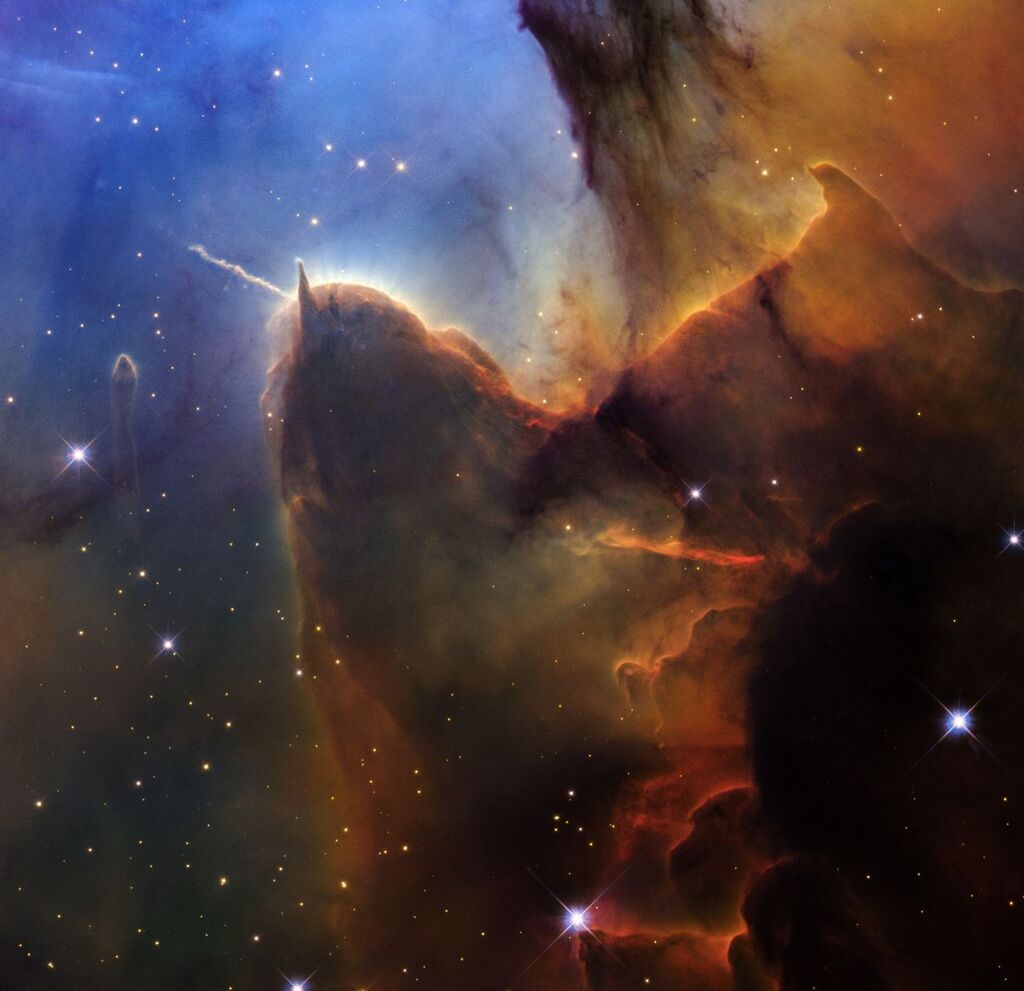
Trifid Nebula
The colors in this image from the NASA/ESA Hubble Space Telescope tell a story about density in the Trifid Nebula, a star-forming region about 5000 light-years from Earth. The top left, where it is bright blue, has the least dust. Here, powerful ultraviolet light stripped electrons from nearby gas, creating a glow, with winds creating a bubble by clearing out surrounding dust.
An example of active cloud destruction is toward the top of the head-shaped area with two 'horns.' Bright yellow gas streams upward where gas and dust are being destroyed.
Thicker dust appears dark brown, like mud. In the far-right corner, which is nearly pitch-black, the dust is densest.
Fully formed stars (bright orange orbs) are scattered across the scene. Their light and stellar winds have also cleared the immediate surroundings.
Over millions of years, the gas and dust that make up this nebula (also known as Messier 20 or M20) will disappear, and only stars will remain.
Friday, 1 May 2026
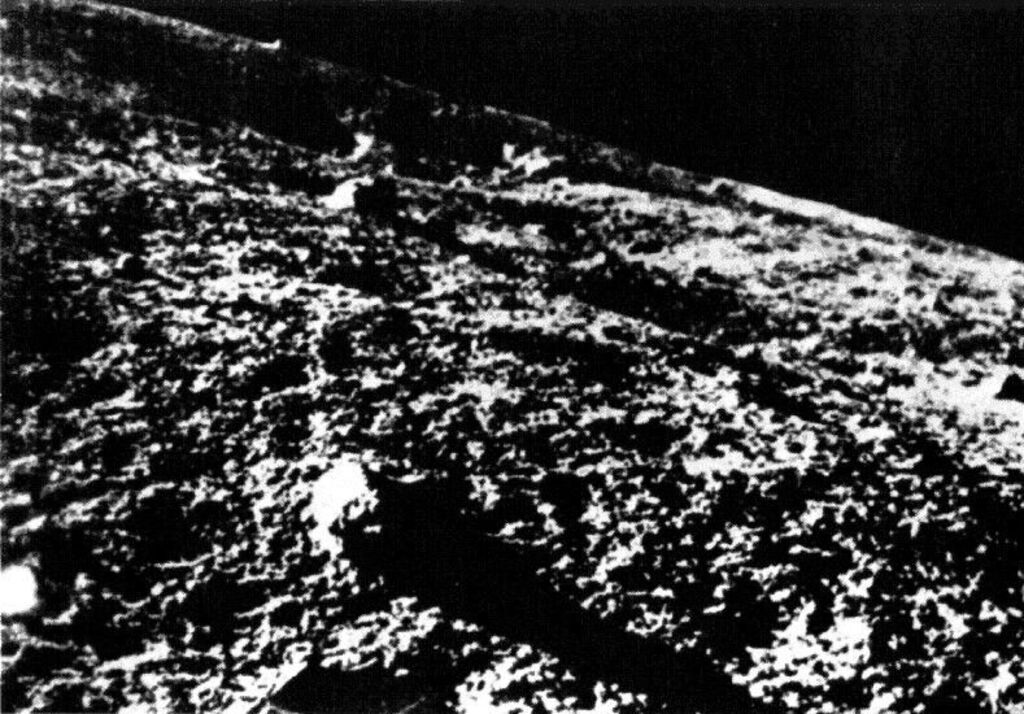
First Photo from the Surface of the Moon
Close-up image of the Oceanus Procellarum region of the Moon from the Soviet Luna 9 lander in February 1966.
Luna 9 made the first survivable landing on the moon and snapped the first photos from its surface.
News
Related News
Planetary Picture of the Day - Week of June 8, 2026
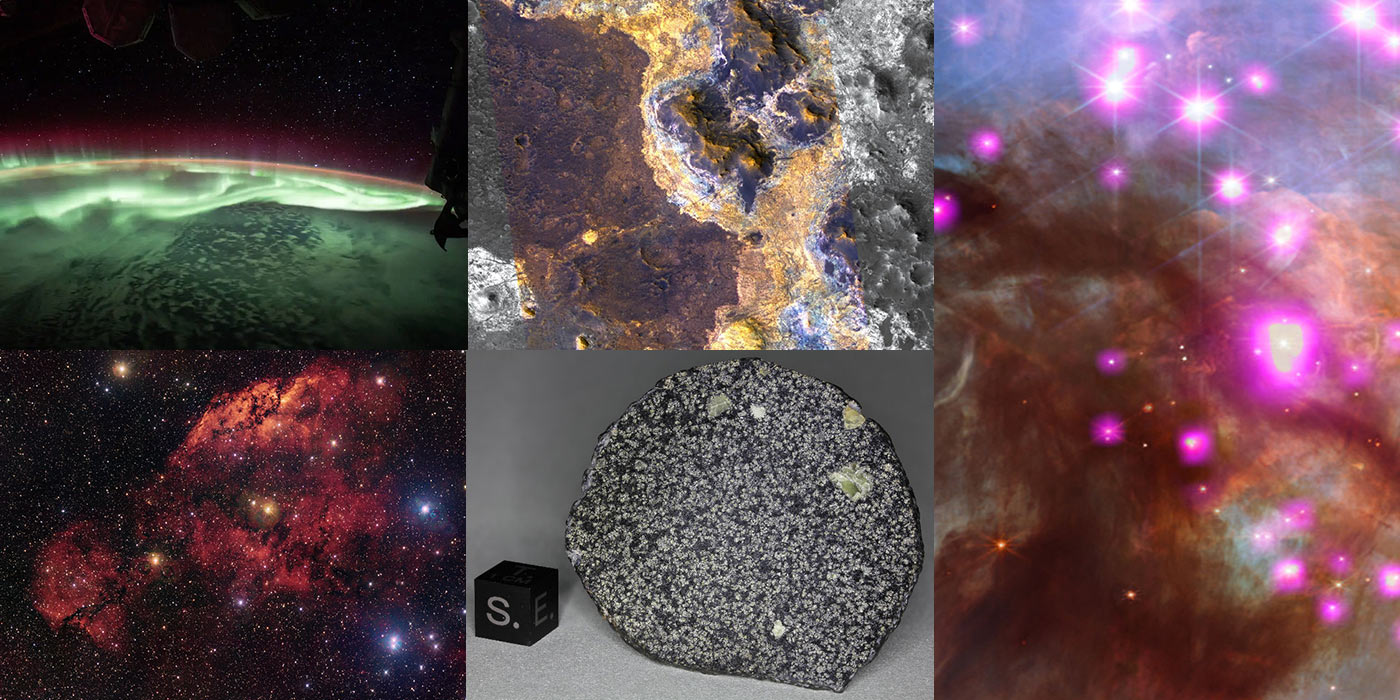
Ancient Martian landscapes, glowing auroras, and stellar nurseries come together in this week’s PPOD collection, highlighting worlds and phenomena shaped by billions of years of cosmic history. From a rare meteorite born in the earliest days of the solar system to colorful nebulae where new stars are forming today, these images offer a remarkable look at both our origins and the ongoing evolution of the universe. #PPOD
Planetary Picture of the Day - Week of June 1, 2026
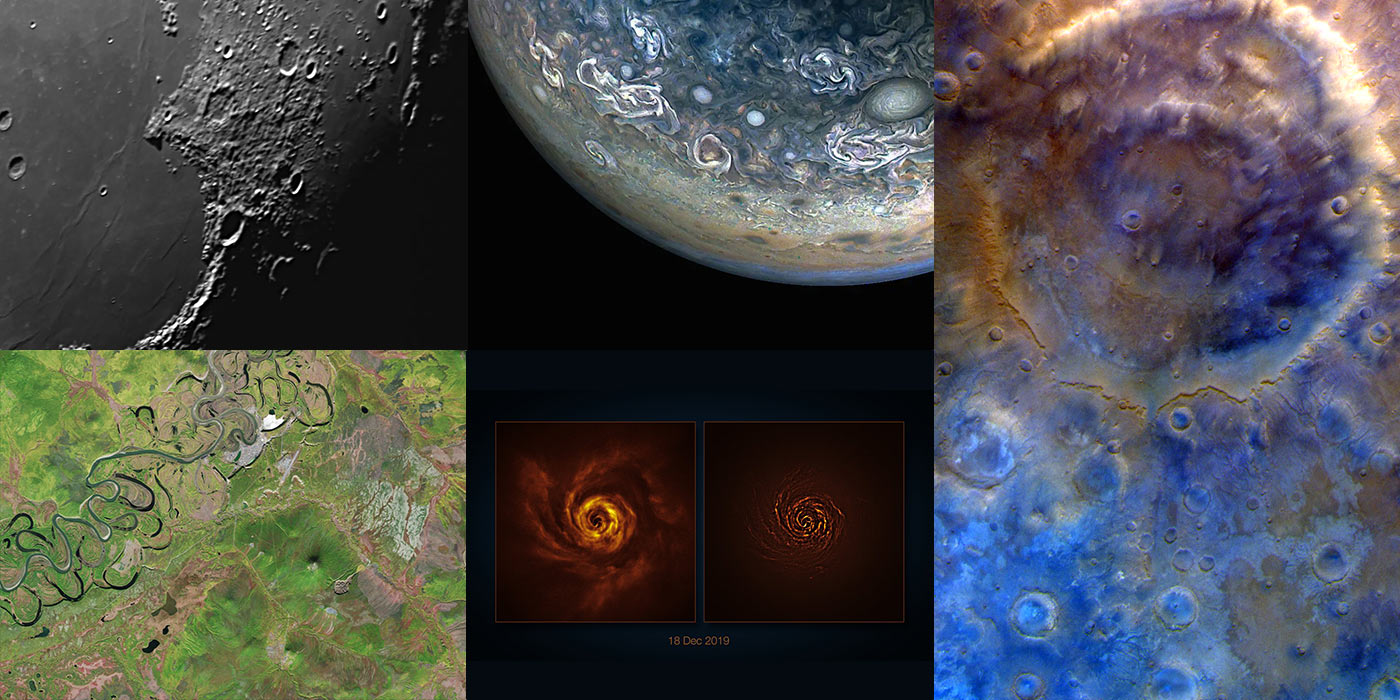
Our solar system contains dynamic worlds near and far, and our cameras capture amazing images of them every day, from a close-up flyby of Mars and the Moon’s beautiful Bay of Rainbows to the swirling storms of Jupiter. We also explore landscapes shaped by change, including Siberia’s expanding Batagaika mega-slump and a young star’s planet-forming disk, offering a glimpse of both Earth’s evolving surface and the processes that build new worlds. #PPOD
Planetary Picture of the Day - Week of May 25, 2026
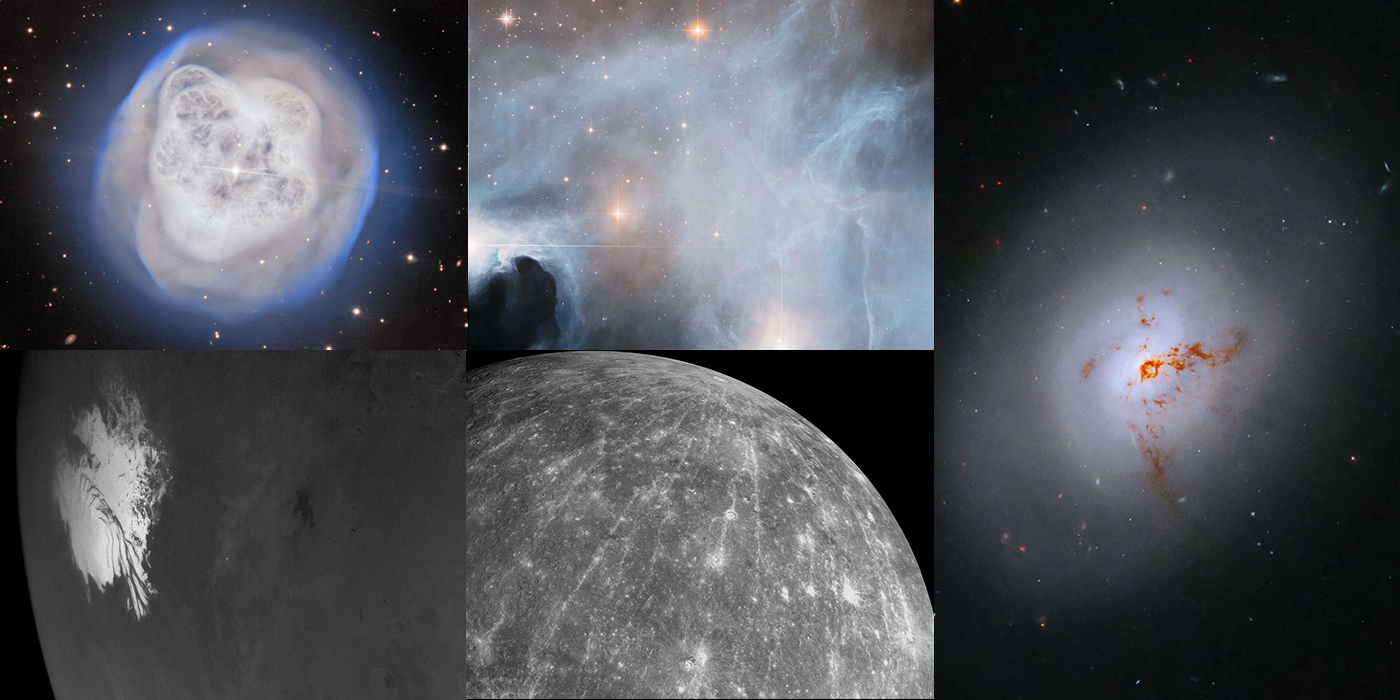
This week's images journeyed from the shimmering Crystal Ball Nebula to the icy south pole of Mars, highlighting beauty and change across our solar system and beyond. The collection also captured stars being born in a ghostly nebula, the dramatic rays of Mercury’s Hokusai Crater, and a distant galaxy caught in transition—offering a striking look at cosmic evolution across space and time. #PPOD
Planetary Picture of the Day - Week of May 18, 2026
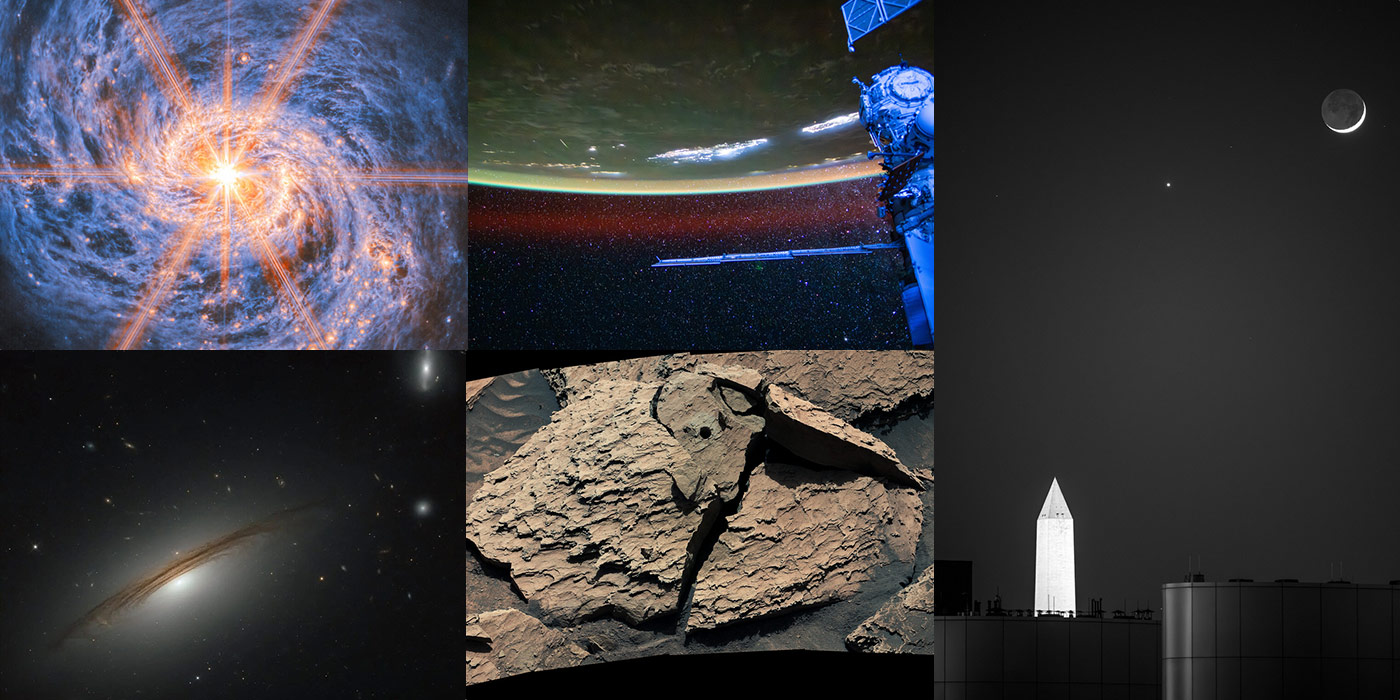
Moments both fleeting and immense—from a Moon–Venus conjunction over Washington, D.C. to a meteor streaking through Earth’s atmosphere as seen from the International Space Station. These images also spanned the cosmic scale, featuring a massive hybrid galaxy, a stubborn rock sampled by the Curiosity rover on Mars, and a stunning mid-infrared view of Messier 77 from JWST. #PPOD
Planetary Picture of the Day - Week of May 11, 2026
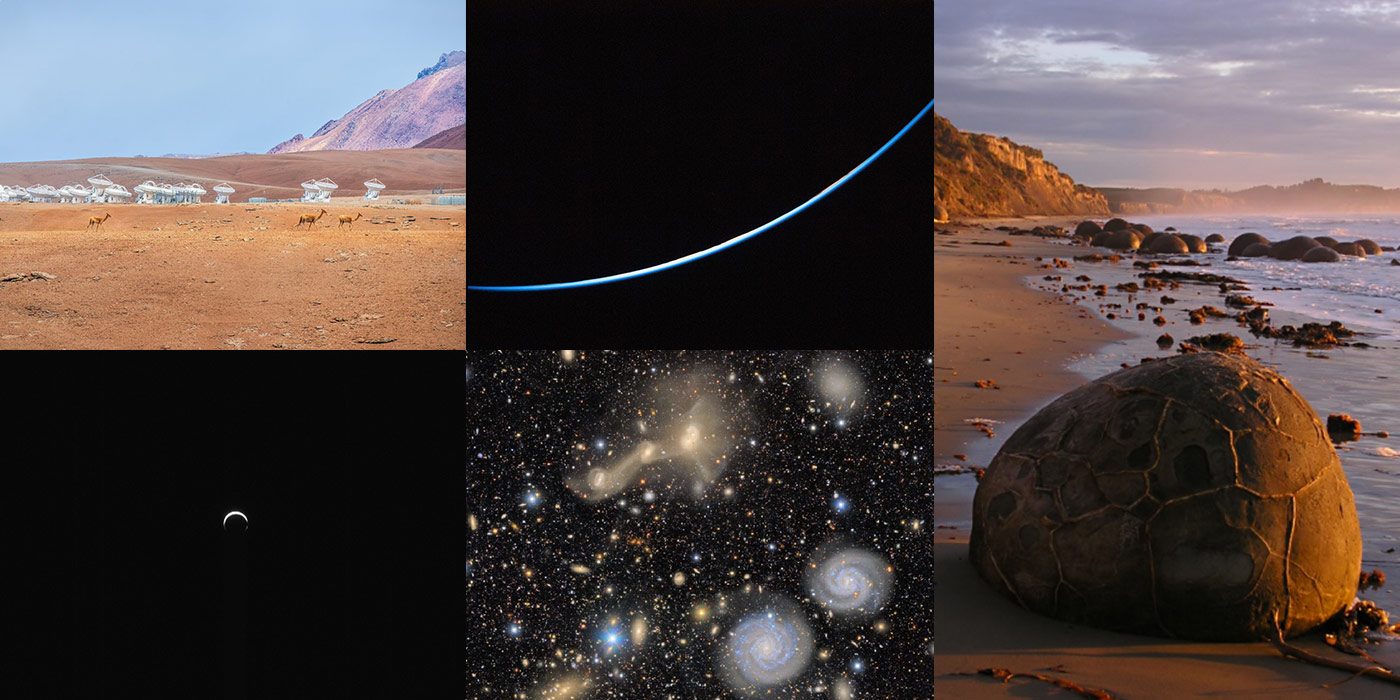
Where the round things are: From spherical boulders and circular radio telescope dishes to the curve of our blue marble, distant Mars, and far-away spiral galaxies, the universe comes back to circles. #PPOD
Planetary Picture of the Day - Week of May 04, 2026
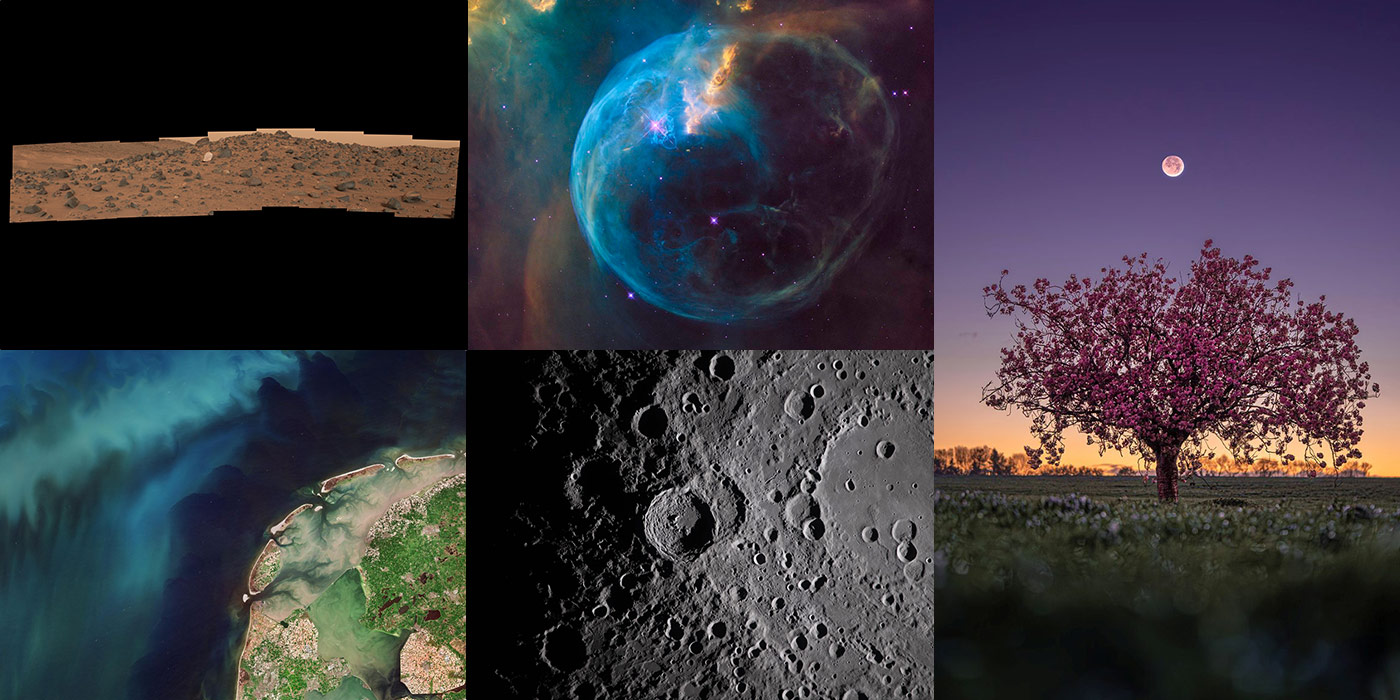
From blooming tulip fields in the Netherlands to the glowing shell of the Bubble Nebula, last week’s PPOD images celebrated color and contrast across Earth, the Moon, and deep space. The collection also highlighted exploration and change—from unusual rocks studied by Perseverance rover on Mars to dramatic lunar shadows captured by Artemis II and the soft glow of May’s Flower Moon. #PPODResearch
Related Projects
SkyMapper: Expanding Access to Real-time Astronomy Through a Global Astronomical Network
SkyMapper and the SETI Institute are connecting educators, students and the public to live astronomical observations through a distributed astronomical network. #SkyMapper #SETI #Citizen Science #Astronomy
Virtual Planetary Laboratory
How can we best assess whether an exoplanet supports life? #VPL
Discovery and Futures Lab
What happens if life beyond Earth is discovered? The Discovery and Futures Lab at the SETI Institute fosters novel and anticipatory research at the intersection of science, society, our planet, and the search for life beyond Earth. #Discovery and Futures LabSupport the
SETI Institute
Scientists are getting closer in their search for life beyond earth. But with limited federal funding for the search for extraterrestrial intelligence, supporters are the reason cutting-edge scientists can keep their eyes on the sky.