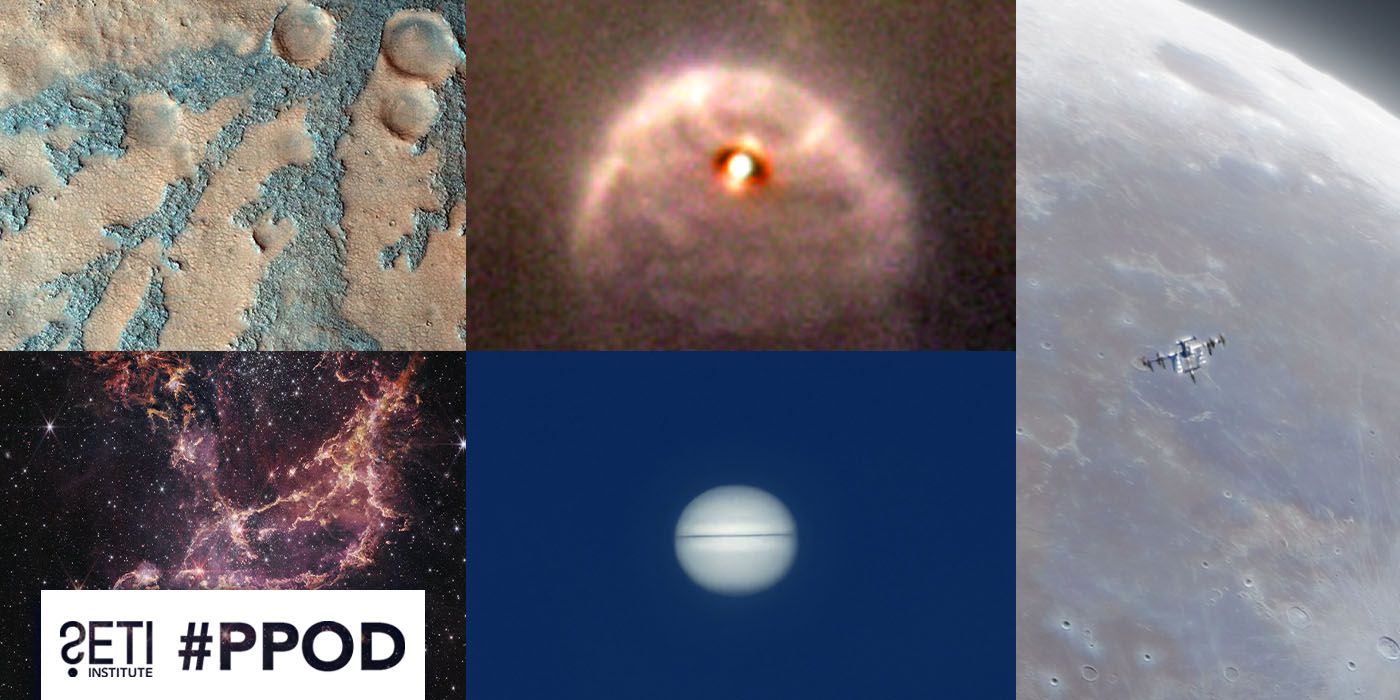
We present a mixed bag of amazing images, from JWST and Hubble to the HiRISE camera onboard the Mars Reconnaissance Orbiter. Plus, a pair of astrophotographers provides us with two impressive pictures!
Monday, 5 May 2025
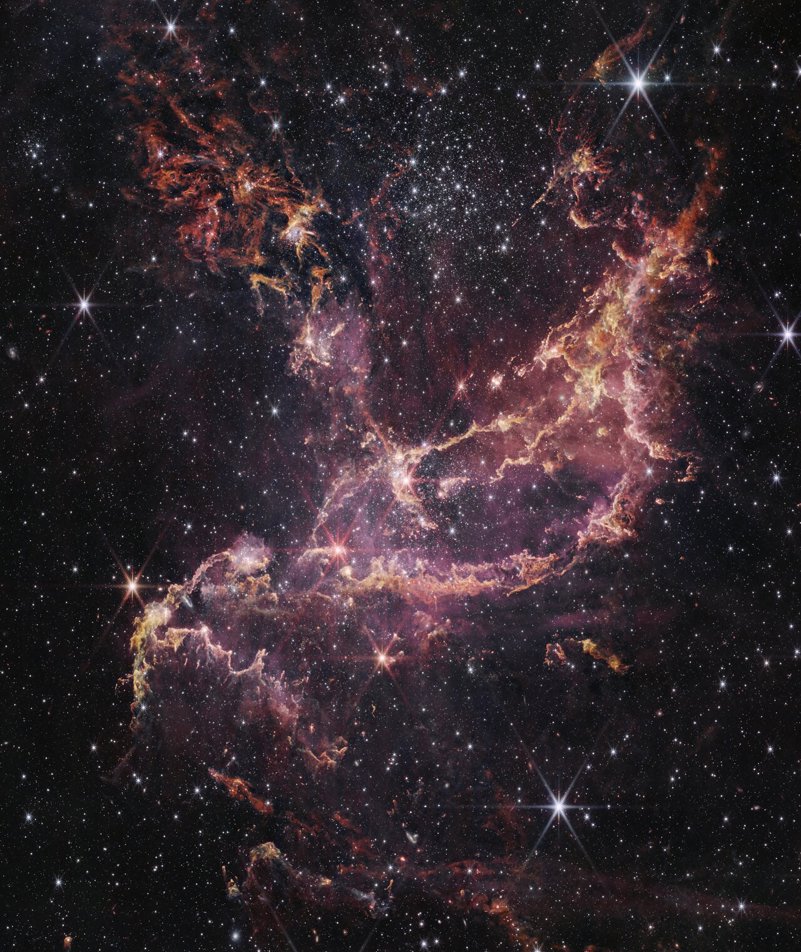
Credit: NASA, ESA, CSA, O. Jones (UK ATC), G. De Marchi (ESTEC), and M. Meixner (USRA). Image processing: A. Pagan (STScI), N. Habel (USRA), L. Lenkic (USRA) and L. Chu
NGC 346 NASA’s JWST spacecraft has peered deep into yet another nebula to reveal star- and planet-forming processes previously invisible to us. The space telescope’s near-infrared camera captured this beautiful and intriguing image of star cluster NGC 346, showing clouds packed with dust and hydrogen—the building blocks of future worlds.
Tuesday, 6 May 2025
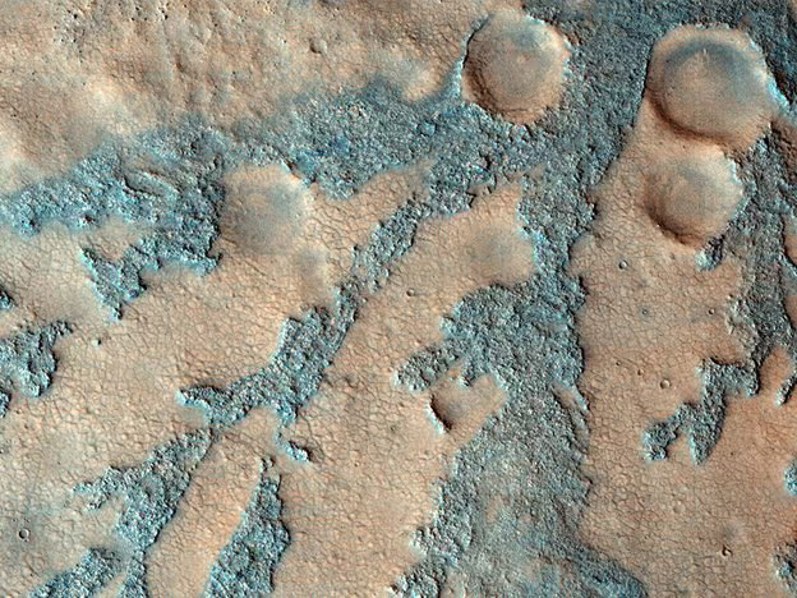
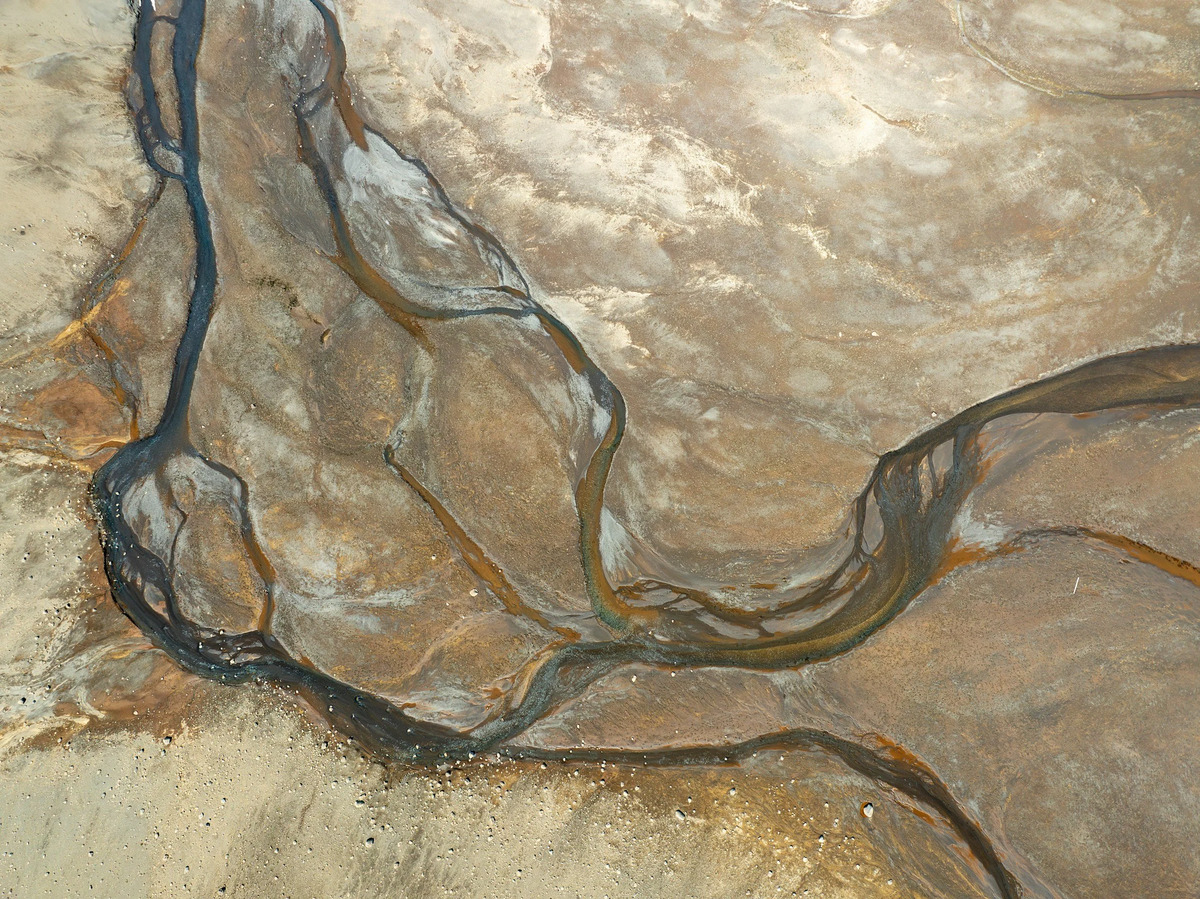
Credit: NASA/JPL-Caltech/UArizona
Branched Features on the Floor of Antoniadi Crater Exquisite view of fossil dendritic channels on Mars. This remarkable HiRISE image, taken in March 2009, shows dark channels filled with a rocky material that is harder than the surrounding softer sediment. As the softer material eroded, the dark rocky material composing the channel bed was left behind as an inverted relief. The shape of the channels suggests they were formed by groundwater sapping rather than surface runoff. These features are observed in the Antoniadi crater on Mars, 21.5N/299.2W. The image is about 1 km across.
Wednesday, 7 May 2025
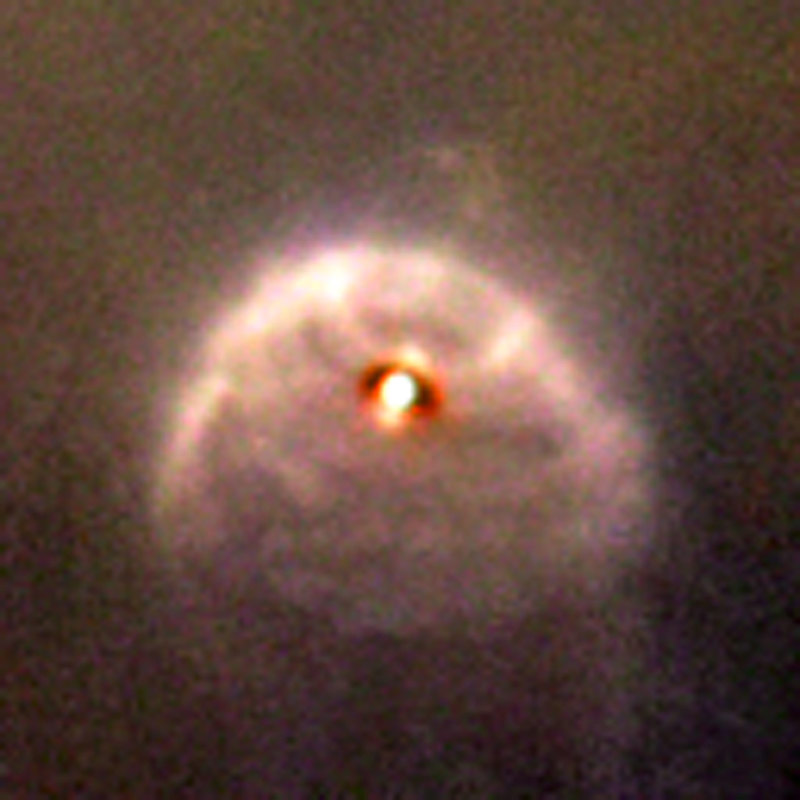
Credit: NASA/ESA and L. Ricci (ESO)
Proplyd 181-825 One of 42 proplyds—ionized protoplanetary disks—discovered in the Orion Nebula in 2009 using the Hubble Space Telescope. Proplyd 181-825 is one of the bright proplyds that lies relatively close to the nebula’s brightest star, Theta 1 Orionis C. Resembling a tiny jellyfish, this proplyd is surrounded by a shock wave caused by stellar wind from the massive Theta 1 Orionis C interacting with gas in the nebula.
Thursday, 8 May 2025
Credit: NASA/ESA and L. Ricci (ESO)
Proplyd 181-825 One of 42 proplyds—ionized protoplanetary disks—discovered in the Orion Nebula in 2009 using the Hubble Space Telescope. Proplyd 181-825 is one of the bright proplyds that lies relatively close to the nebula’s brightest star, Theta 1 Orionis C. Resembling a tiny jellyfish, this proplyd is surrounded by a shock wave caused by stellar wind from the massive Theta 1 Orionis C interacting with gas in the nebula.
Thursday, 8 May 2025
Credit: Sebastian Voltmer Photography
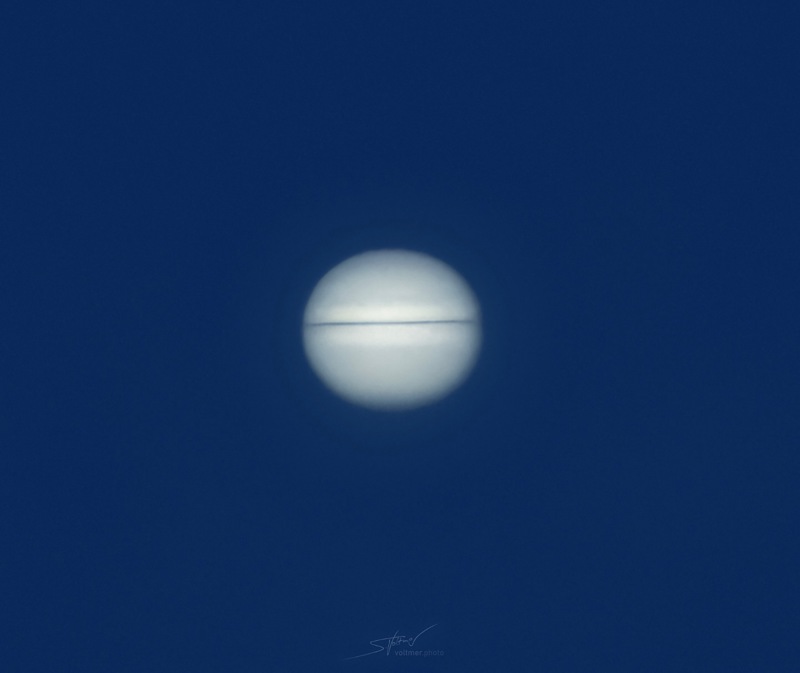
Saturn's Missing Rings Back in January, we mentioned in a SETI Live that one of the interesting celestial events happening this year would be the seeming disappearance of Saturn's rings from our perspective on Earth. Astrophotographer Sebastian Voltmer recently captured this view of the gas giant, sans rings, using his C11 EdgeHD telescope. Saturn was very close to the Sun in the sky, so please do not look for the planet without proper solar protection.
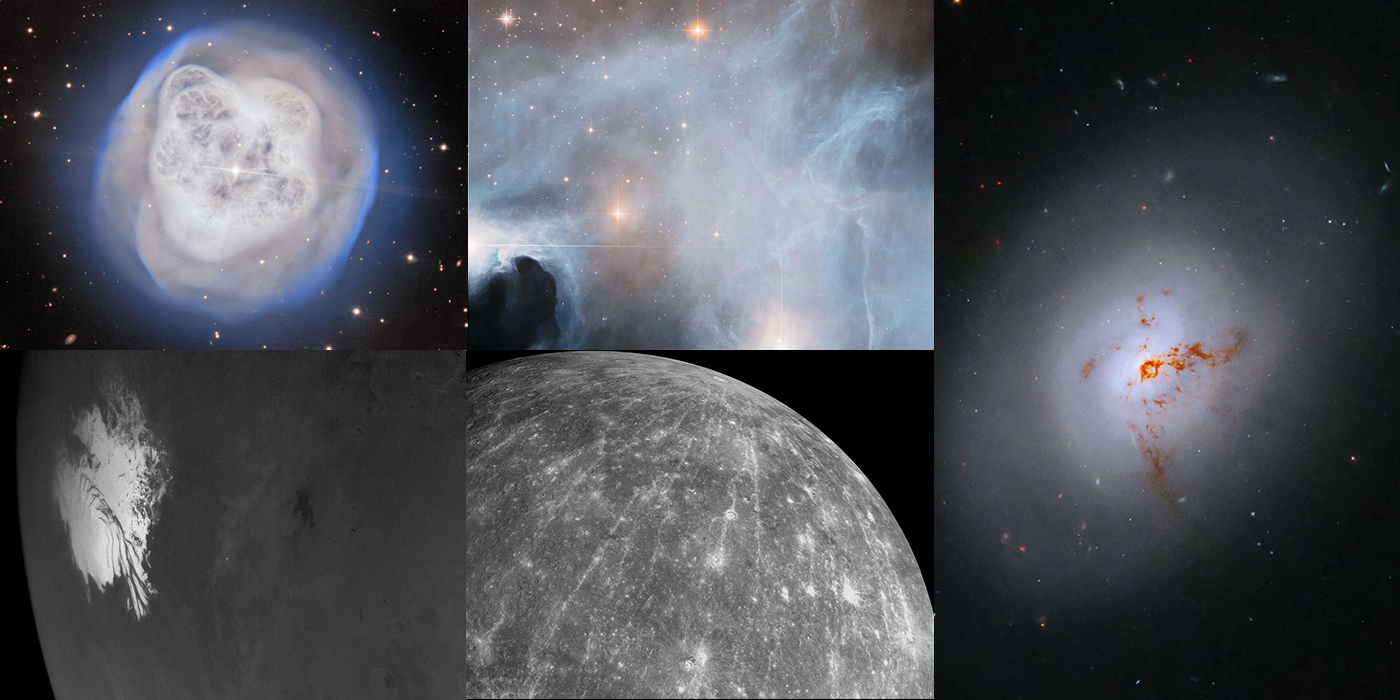
This week's images journeyed from the shimmering Crystal Ball Nebula to the icy south pole of Mars, highlighting beauty and change across our solar system and beyond. The collection also captured stars being born in a ghostly nebula, the dramatic rays of Mercury’s Hokusai Crater, and a distant galaxy caught in transition—offering a striking look at cosmic evolution across space and time.
#PPOD
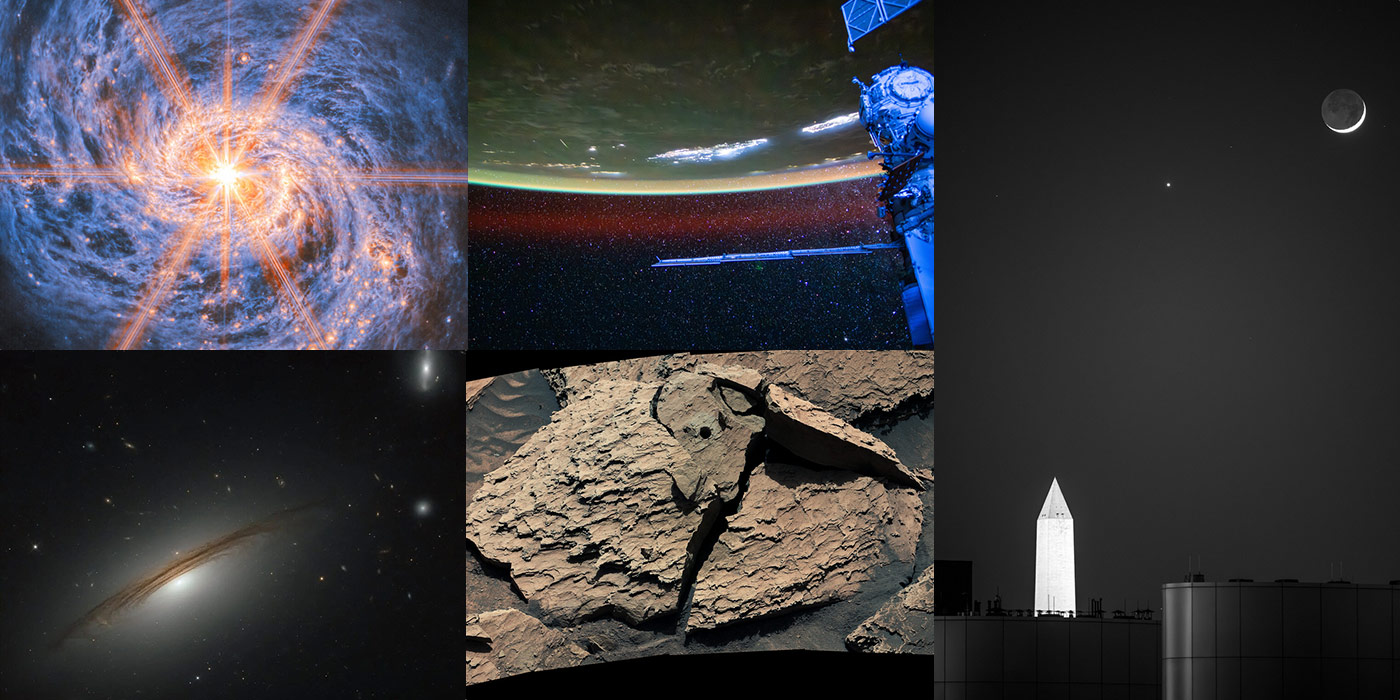
Moments both fleeting and immense—from a Moon–Venus conjunction over Washington, D.C. to a meteor streaking through Earth’s atmosphere as seen from the International Space Station. These images also spanned the cosmic scale, featuring a massive hybrid galaxy, a stubborn rock sampled by the Curiosity rover on Mars, and a stunning mid-infrared view of Messier 77 from JWST.
#PPOD
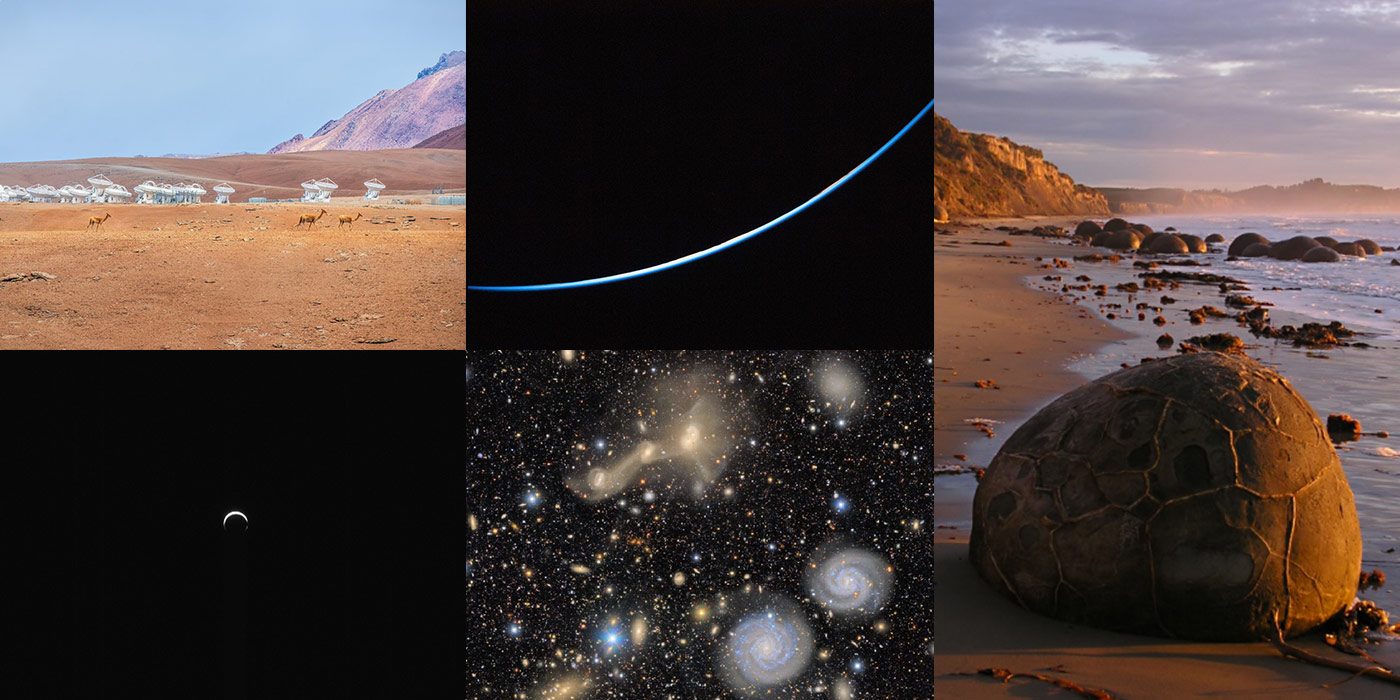
Where the round things are: From spherical boulders and circular radio telescope dishes to the curve of our blue marble, distant Mars, and far-away spiral galaxies, the universe comes back to circles.
#PPOD
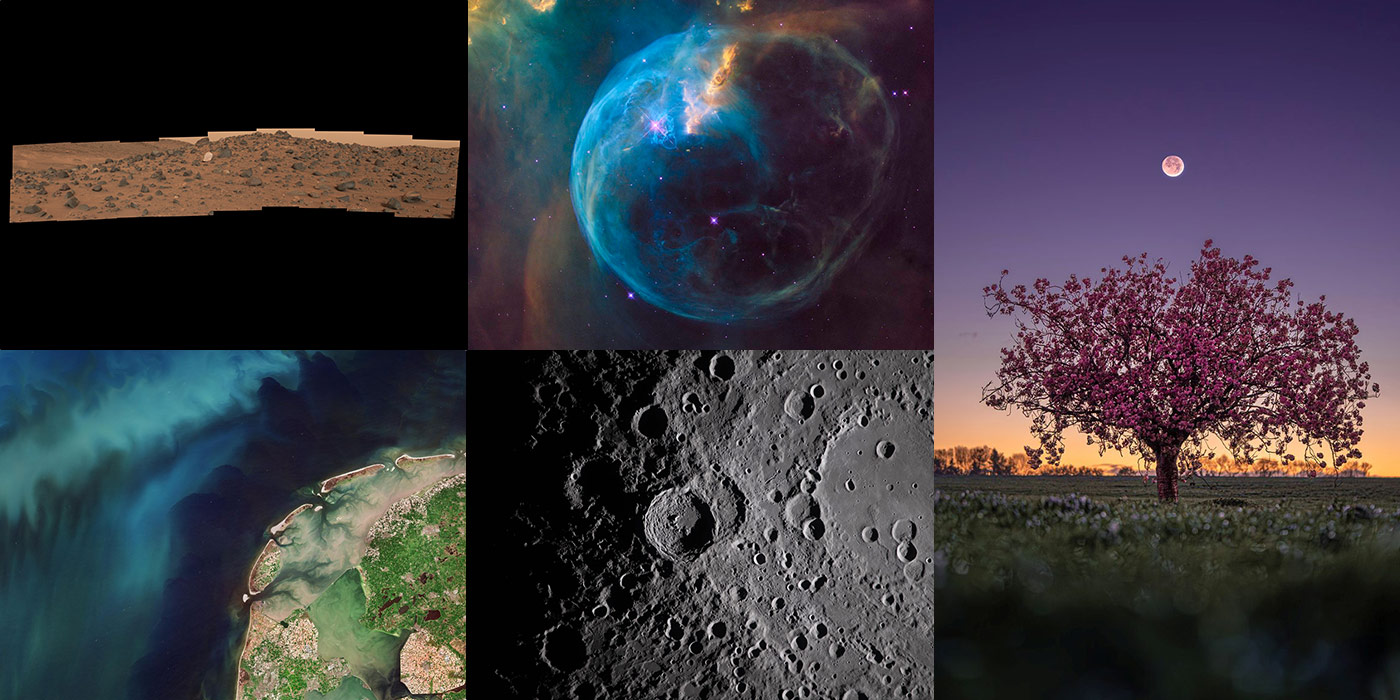
From blooming tulip fields in the Netherlands to the glowing shell of the Bubble Nebula, last week’s PPOD images celebrated color and contrast across Earth, the Moon, and deep space. The collection also highlighted exploration and change—from unusual rocks studied by Perseverance rover on Mars to dramatic lunar shadows captured by Artemis II and the soft glow of May’s Flower Moon.
#PPOD
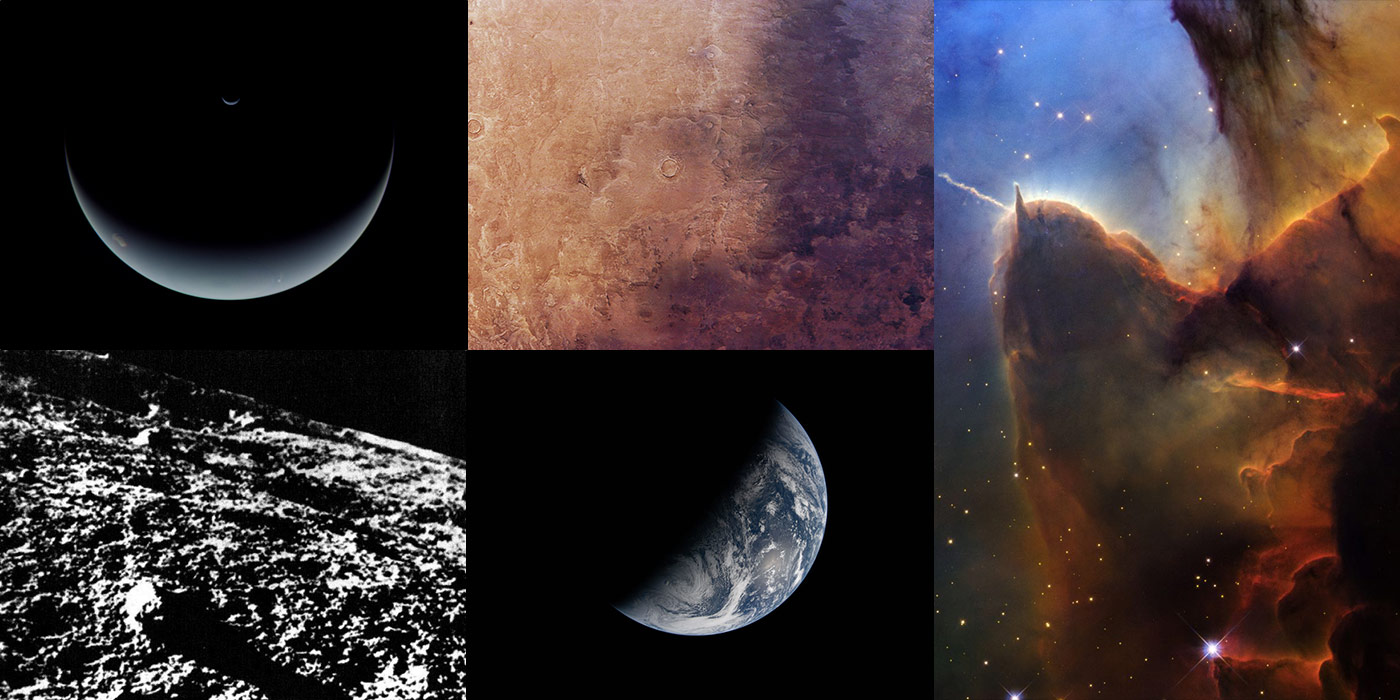
Dark and light play together in this week's photos, as we examine ash spreading across Mars over decades, night and day on the Moon, and the interplay of colors in a distant nebula.
#PPOD
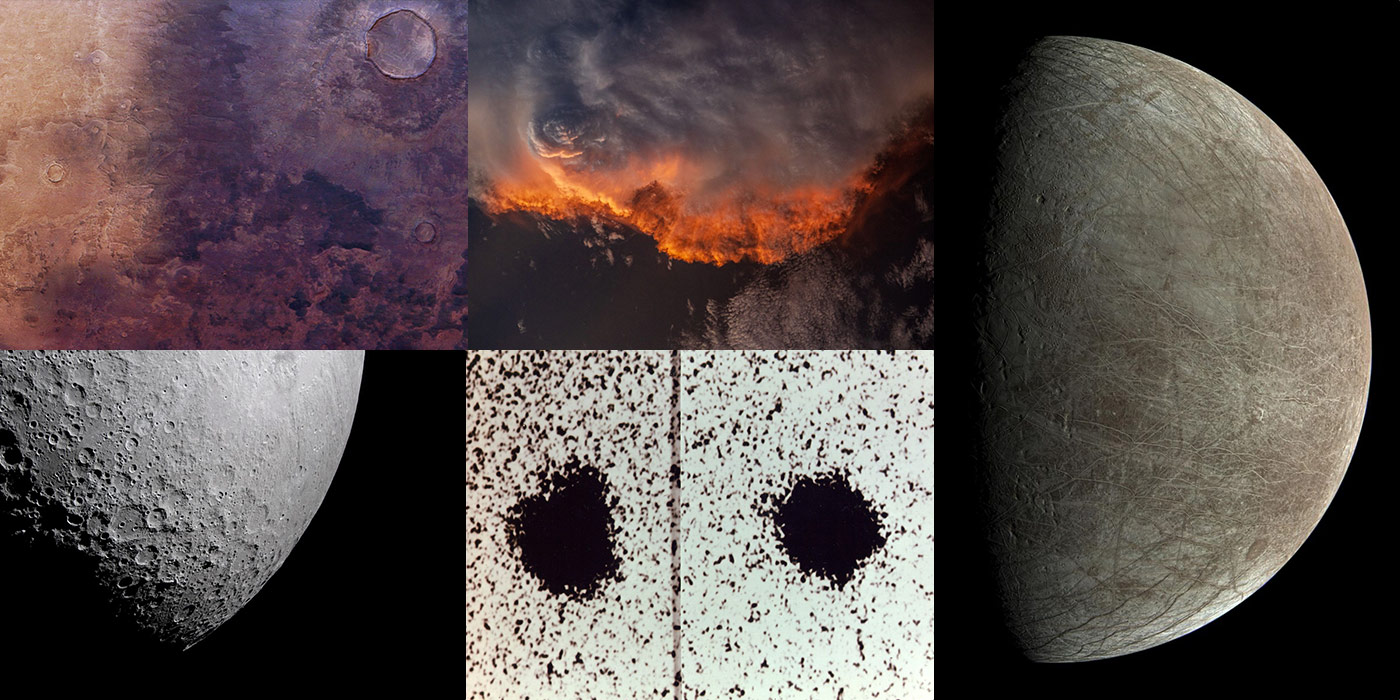
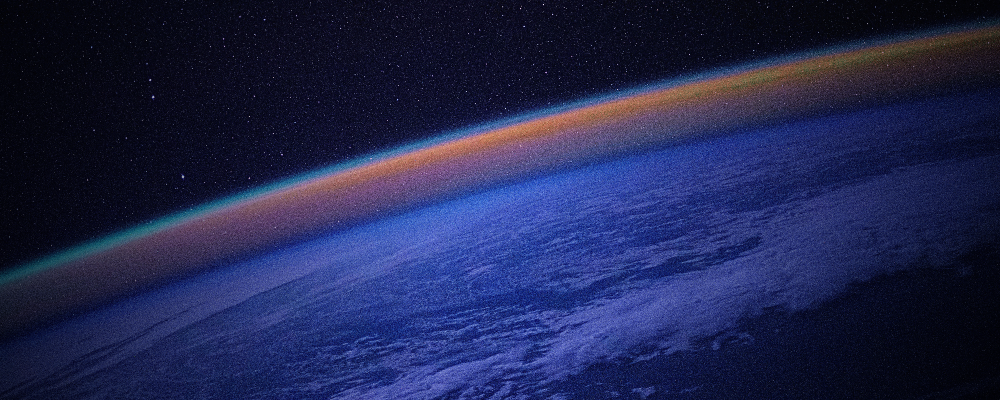
This week's planetary images took us from the fractured ice of Europa and the shadowed edge of the Moon to a fiery-looking sunset cloud glowing above Earth, captured from the International Space Station. They also revisited landmark discoveries and changing worlds, from the first images revealing Charon to dark volcanic ash slowly spreading across Mars's surface.
#PPOD
This week's images journeyed from the shimmering Crystal Ball Nebula to the icy south pole of Mars, highlighting beauty and change across our solar system and beyond. The collection also captured stars being born in a ghostly nebula, the dramatic rays of Mercury’s Hokusai Crater, and a distant galaxy caught in transition—offering a striking look at cosmic evolution across space and time.
Moments both fleeting and immense—from a Moon–Venus conjunction over Washington, D.C. to a meteor streaking through Earth’s atmosphere as seen from the International Space Station. These images also spanned the cosmic scale, featuring a massive hybrid galaxy, a stubborn rock sampled by the Curiosity rover on Mars, and a stunning mid-infrared view of Messier 77 from JWST.
Where the round things are: From spherical boulders and circular radio telescope dishes to the curve of our blue marble, distant Mars, and far-away spiral galaxies, the universe comes back to circles.
From blooming tulip fields in the Netherlands to the glowing shell of the Bubble Nebula, last week’s PPOD images celebrated color and contrast across Earth, the Moon, and deep space. The collection also highlighted exploration and change—from unusual rocks studied by Perseverance rover on Mars to dramatic lunar shadows captured by Artemis II and the soft glow of May’s Flower Moon.
Dark and light play together in this week's photos, as we examine ash spreading across Mars over decades, night and day on the Moon, and the interplay of colors in a distant nebula.
This week's planetary images took us from the fractured ice of Europa and the shadowed edge of the Moon to a fiery-looking sunset cloud glowing above Earth, captured from the International Space Station. They also revisited landmark discoveries and changing worlds, from the first images revealing Charon to dark volcanic ash slowly spreading across Mars's surface.
SkyMapper and the SETI Institute are connecting educators, students and the public to live astronomical observations through a distributed astronomical network.
#SkyMapper
#SETI
#Citizen Science
#Astronomy
What happens if life beyond Earth is discovered? The Discovery and Futures Lab at the SETI Institute fosters novel and anticipatory research at the intersection of science, society, our planet, and the search for life beyond Earth.
#Discovery and Futures Lab
SkyMapper and the SETI Institute are connecting educators, students and the public to live astronomical observations through a distributed astronomical network.
What happens if life beyond Earth is discovered? The Discovery and Futures Lab at the SETI Institute fosters novel and anticipatory research at the intersection of science, society, our planet, and the search for life beyond Earth.
Scientists are getting closer in their search for life beyond earth. But with limited federal funding for the search for extraterrestrial intelligence, supporters are the reason cutting-edge scientists can keep their eyes on the sky.
)