Monday, 30 March 2026
JWST Captures Saturn in Infrared
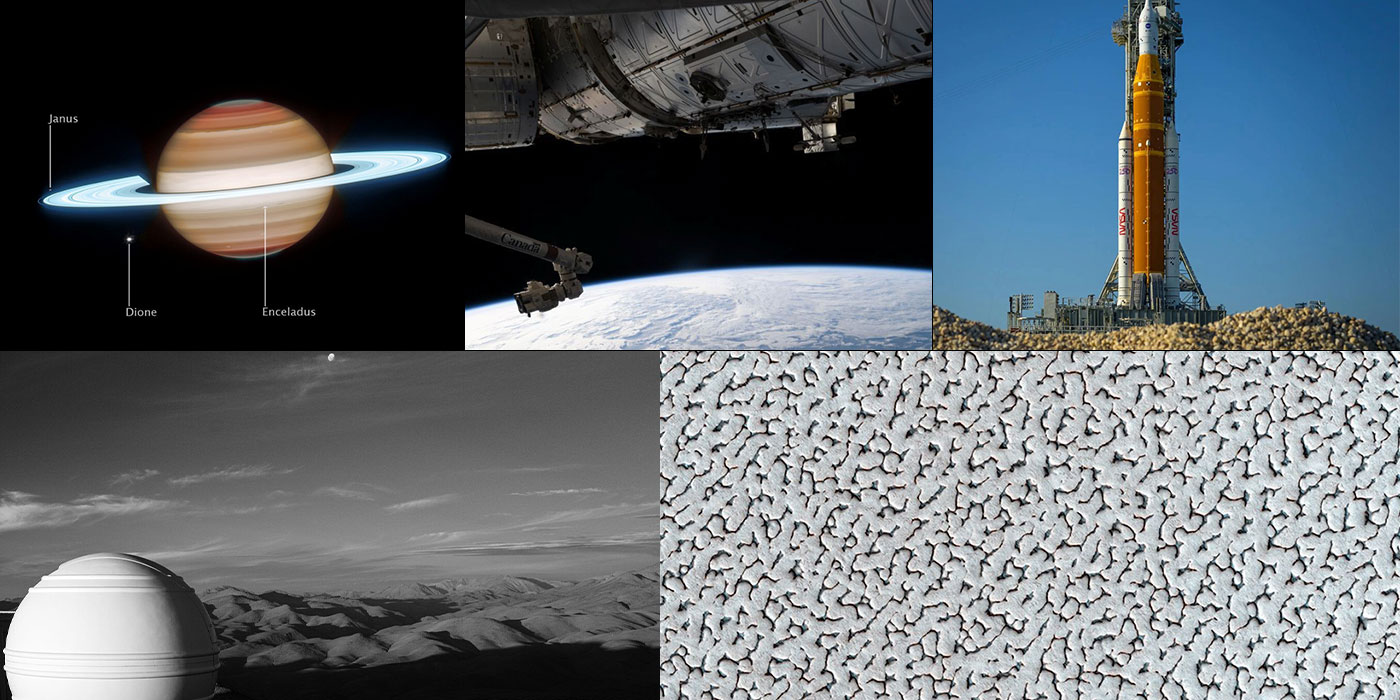
Saturn’s icy rings glow in this infrared view from NASA’s JWST, released on March 25, 2026. The rings are extremely bright because they are made of highly reflective water ice. In addition, Saturn’s poles appear distinctly grey-green, indicating light emitting at wavelengths around 4.3 microns. This feature could come from a layer of high-altitude aerosols in Saturn’s atmosphere that scatters light differently at those latitudes. Another possible explanation is auroral activity, as charged molecules interacting with the planet’s magnetic field can produce glowing emissions near the poles.
Tuesday, 31 March 2026
Technology and Nature
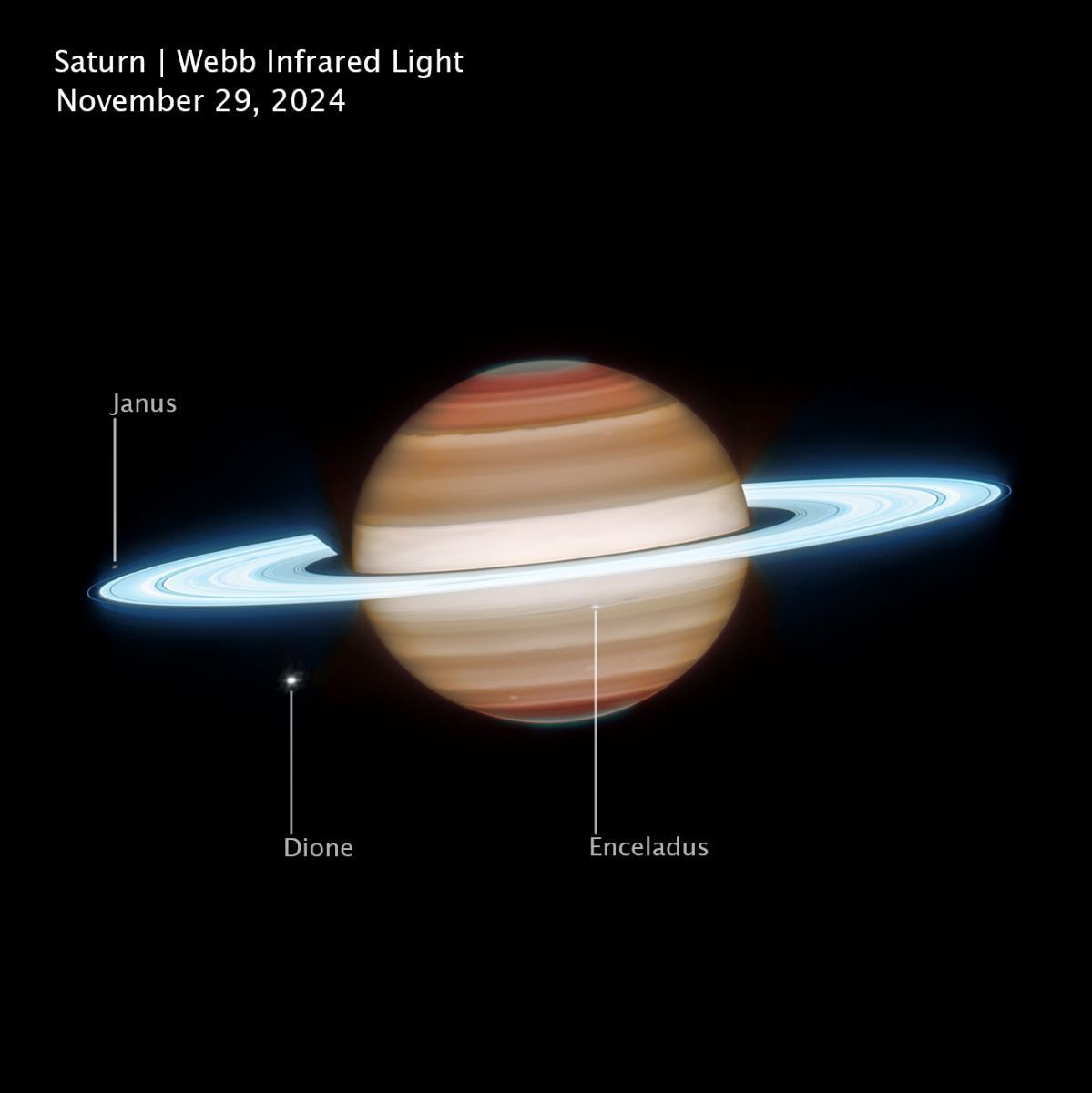
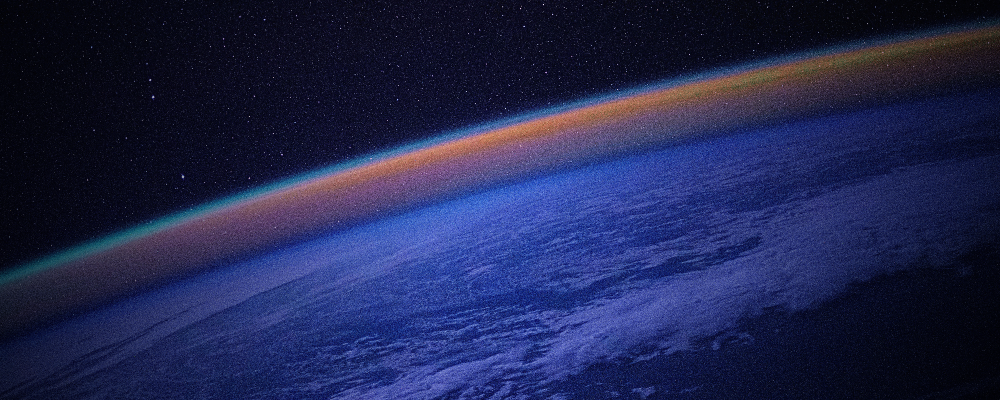
This photo was published on social media by ESA astronaut Sophie Adenot with the following caption:
Day 041, orbit 0639 – Technology and nature, two of my passions, in one shot. Our beautiful planet Earth, the Canadarm2, and the sunglint on the ISS solar panels. What a view! This picture was taken from the Cupola, looking forward and starboard (to the right).
1 April 2026
Launch Window Opens
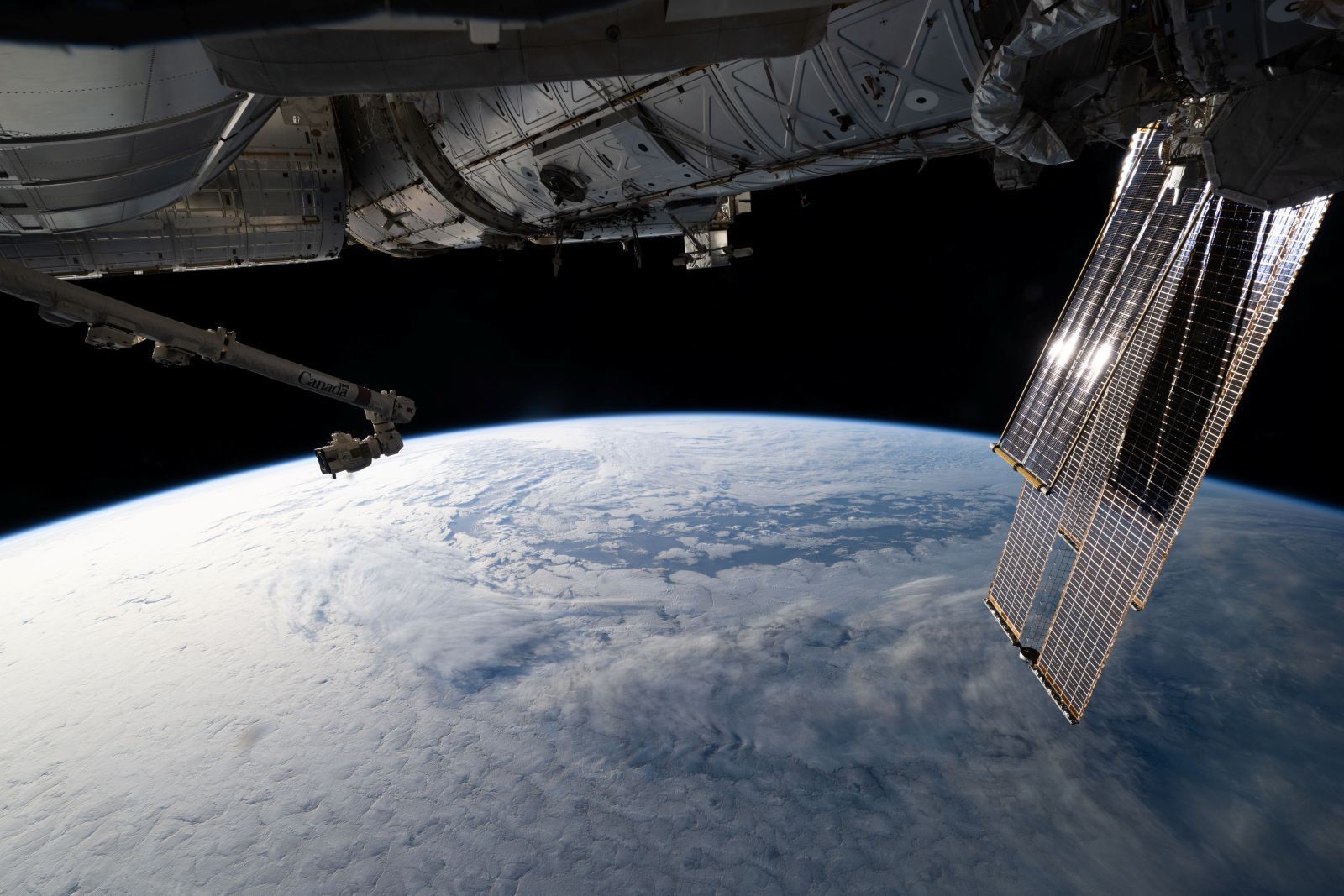
NASA’s Artemis II Space Launch System (SLS) rocket and Orion spacecraft are seen atop a mobile launcher at Launch Complex 39B, Friday, March 27, 2026, at NASA’s Kennedy Space Center in Florida. NASA’s Artemis II test flight will take Commander Reid Wiseman, Pilot Victor Glover, and Mission Specialist Christina Koch from NASA, and Mission Specialist Jeremy Hansen from the CSA (Canadian Space Agency), around the Moon and back to Earth with launch opportunities beginning in April 2026.
2 April 2026
An ExTrA Sphere
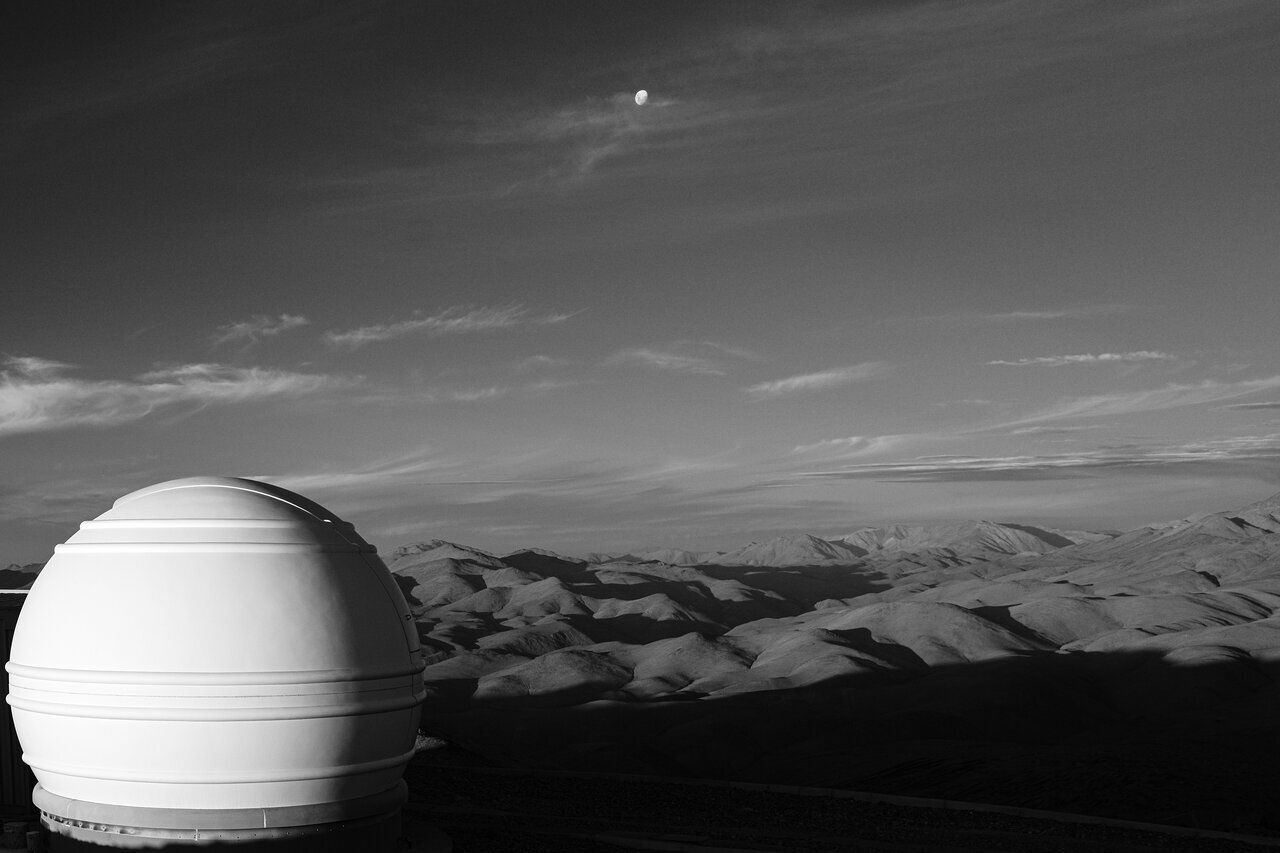
While these two sunlit spheres share similarities in their shape and in being illuminated by the same star, they are vastly different. The one farthest away from the camera, hiding behind the clouds, is our own Moon, the Earth's only natural satellite. The other object is the dome of a telescope at ESO's La Silla Observatory, located on the outskirts of the Atacama Desert, in northern Chile.
The telescope is one of the three in the French project Exoplanets in Transits and their Atmospheres (ExTrA). ExTrA is focused on detecting Earth-sized worlds in the Milky Way. It relies on the transit method, in which planets block a fraction of the light from the star they orbit as they pass between the star and Earth, much like a partial eclipse. ExTrA centers on worlds orbiting red dwarfs – stars much smaller, colder, and dimmer than the Sun. Because red dwarfs are small, planets crossing in front of them block more light, making them easier to find than planets orbiting regular stars.
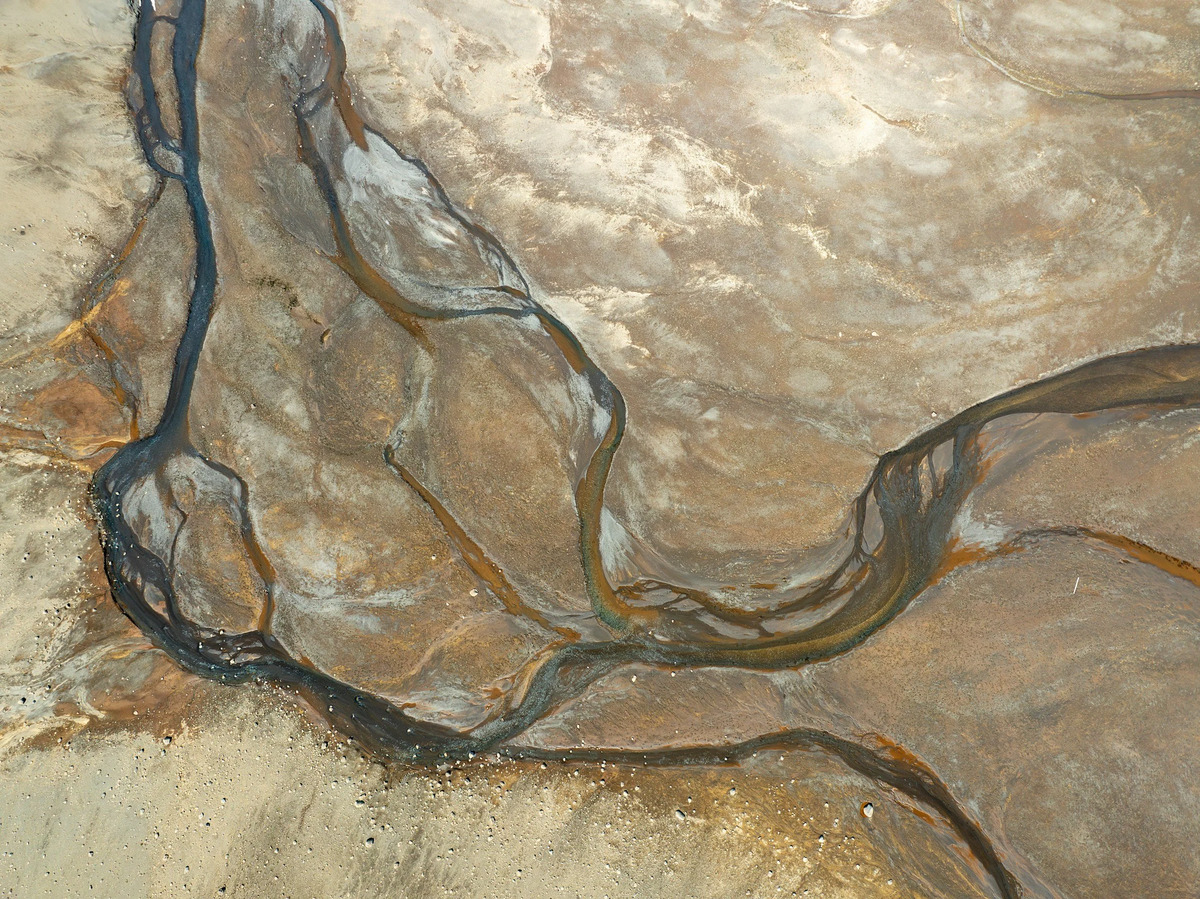
Who knows, perhaps some of these planets may look as otherworldly as the landscape of this picture. “These places compel me every time to think about our position in the Universe, putting my life ‘in context’ so to say,” says the photographer, ESO astronomer Luca Sbordone. “It always brings me peace.”
3 April 2026
Mars' Polar Ice Cap
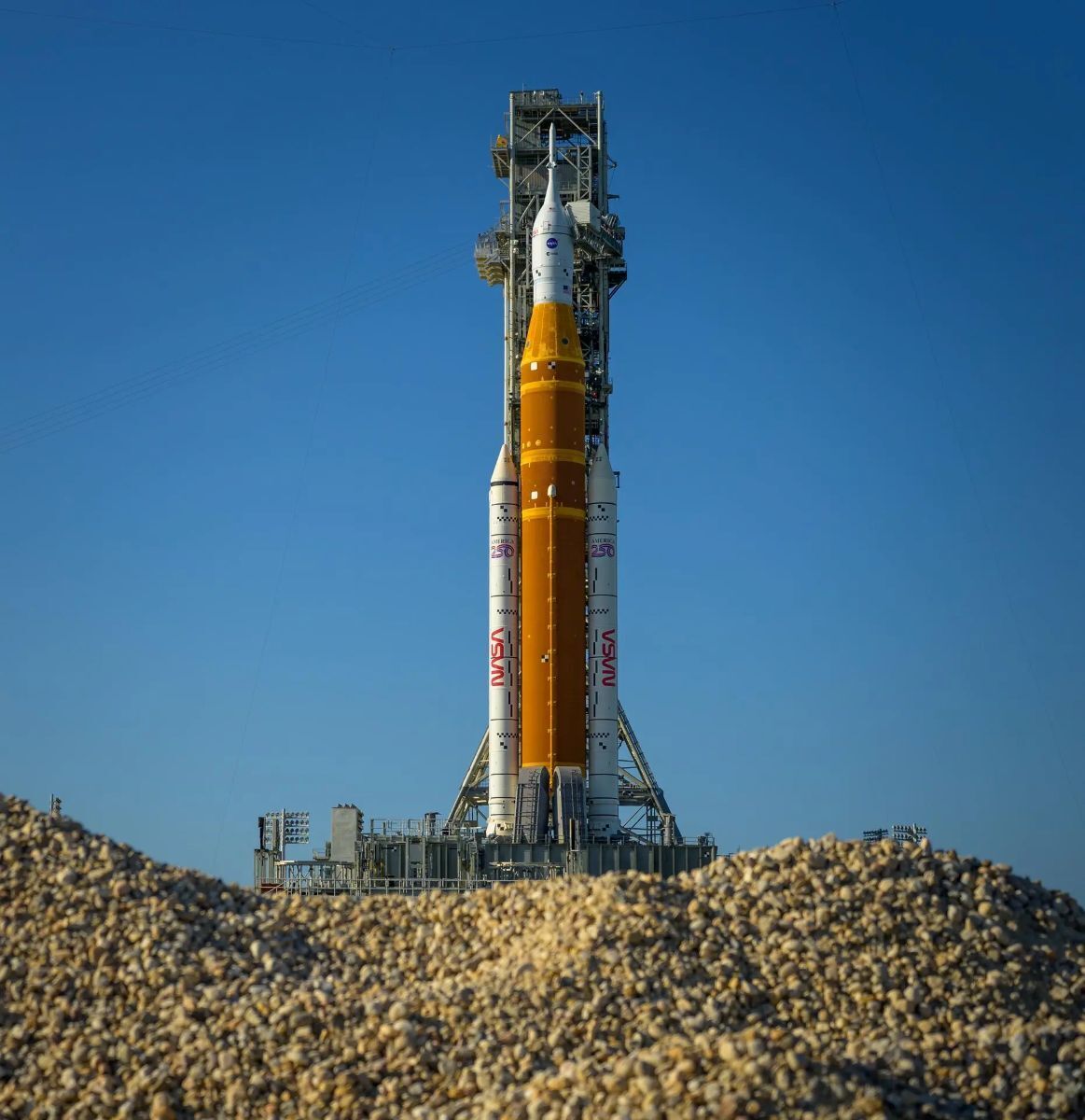
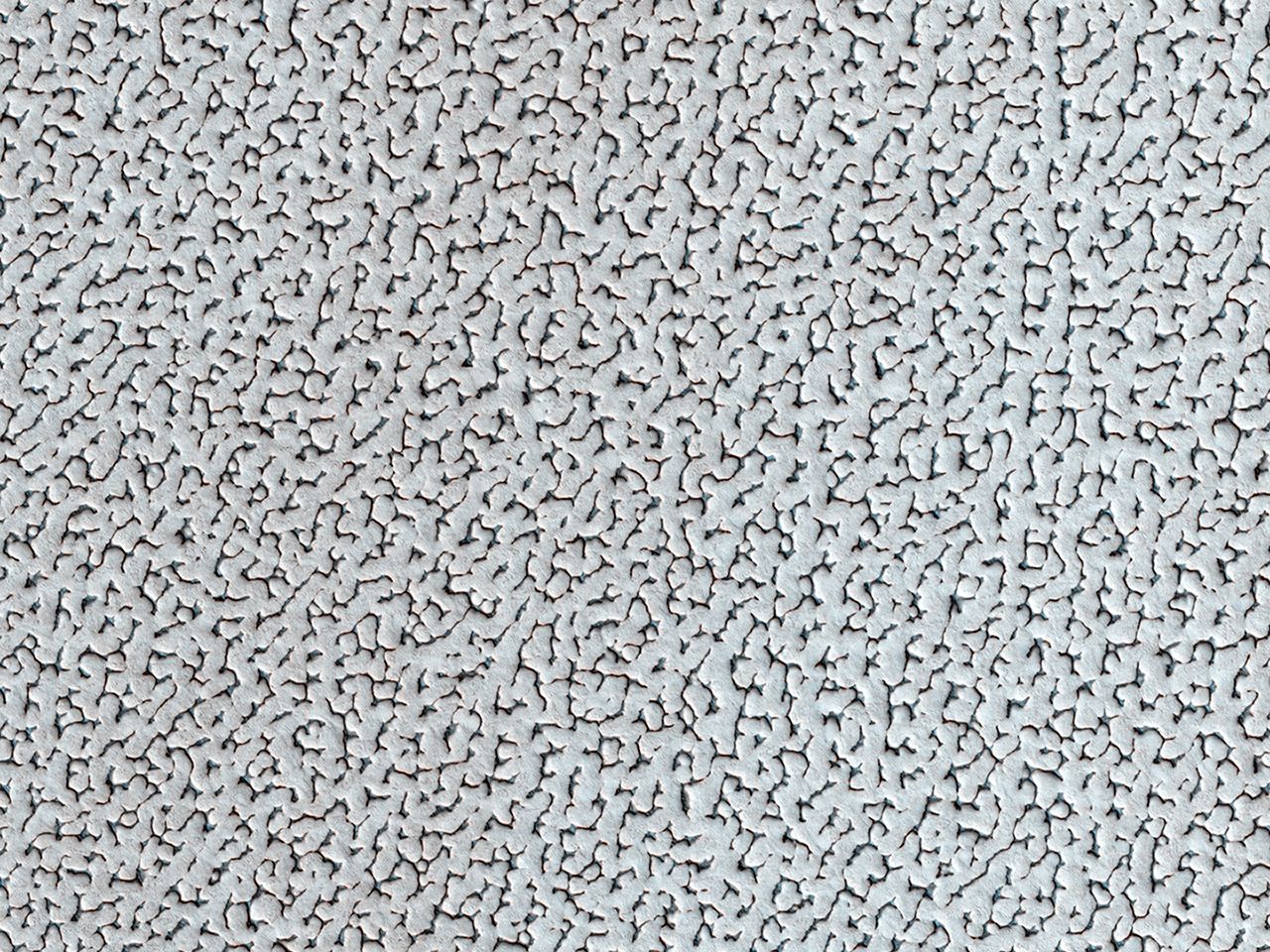
A bright ice cap of frozen water covers the North Pole of Mars. In the winter, thin coverings of carbon dioxide and water frost cover this area, and these frosts finally disappear at the end of the Martian spring season.
In this image, the winter frosts are about to disappear, and we can begin to see the surface features of the ice. The ice cap would be a bad place to get lost: it's one of the smoothest, flattest places on Mars, so there are no landmarks visible. The surface features are gently rolling hummocks (small mounds) and hollows, about 1 meter in height and 20 meters across. This monotonous landscape continues for hundreds of kilometers in every direction with this same repeating pattern.
Scientists do not know what makes this pattern so uniform over such large distances; we acquire HiRISE images like this one to look for small differences in these icy features from one place to another. Understanding this surface can help us understand the current climate and meteorological conditions at the North Pole of the Red Planet.
News
Related News
Planetary Picture of the Day - Week of June 8, 2026
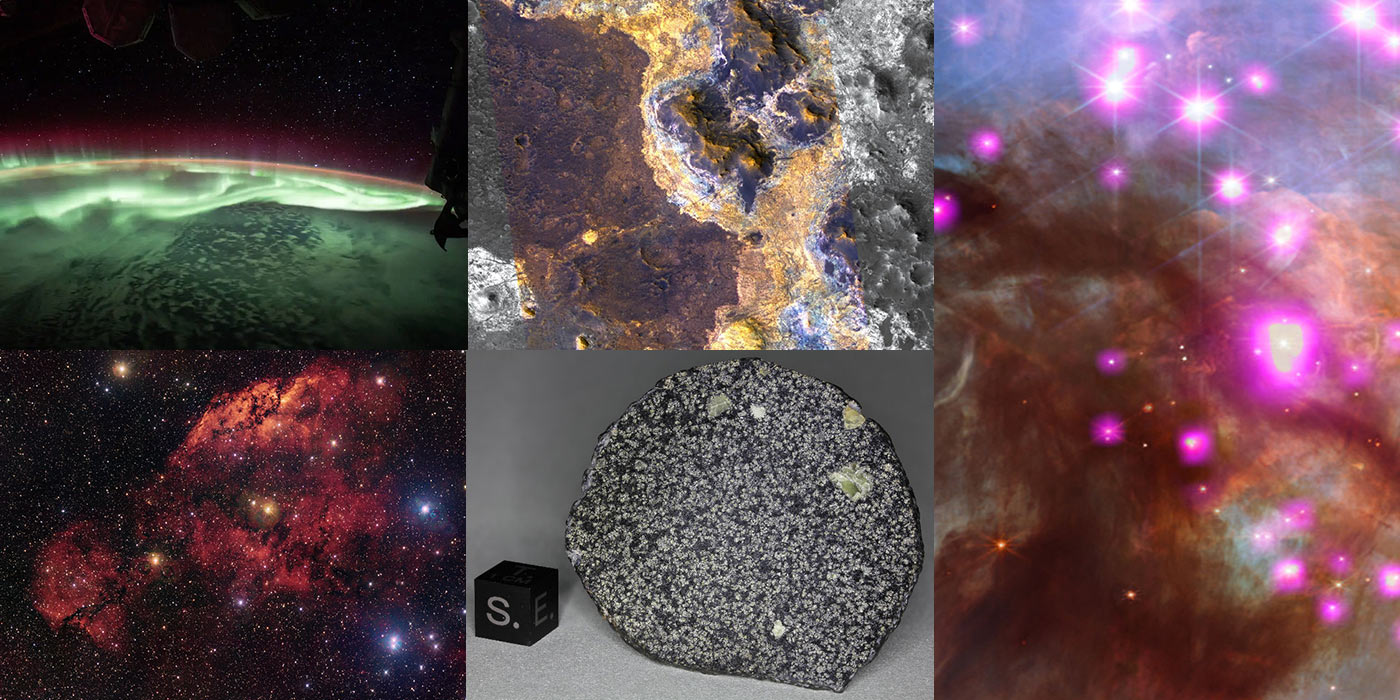
Ancient Martian landscapes, glowing auroras, and stellar nurseries come together in this week’s PPOD collection, highlighting worlds and phenomena shaped by billions of years of cosmic history. From a rare meteorite born in the earliest days of the solar system to colorful nebulae where new stars are forming today, these images offer a remarkable look at both our origins and the ongoing evolution of the universe. #PPOD
Planetary Picture of the Day - Week of June 1, 2026
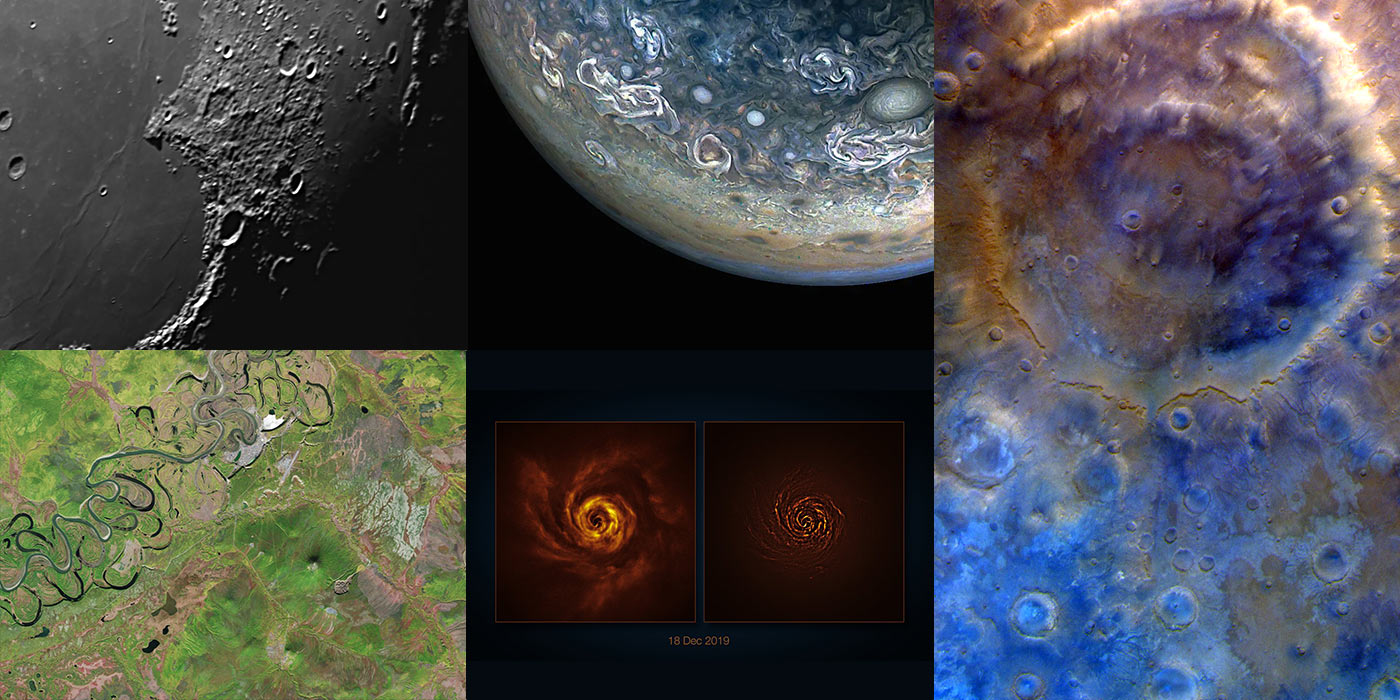
Our solar system contains dynamic worlds near and far, and our cameras capture amazing images of them every day, from a close-up flyby of Mars and the Moon’s beautiful Bay of Rainbows to the swirling storms of Jupiter. We also explore landscapes shaped by change, including Siberia’s expanding Batagaika mega-slump and a young star’s planet-forming disk, offering a glimpse of both Earth’s evolving surface and the processes that build new worlds. #PPOD
Planetary Picture of the Day - Week of May 25, 2026
This week's images journeyed from the shimmering Crystal Ball Nebula to the icy south pole of Mars, highlighting beauty and change across our solar system and beyond. The collection also captured stars being born in a ghostly nebula, the dramatic rays of Mercury’s Hokusai Crater, and a distant galaxy caught in transition—offering a striking look at cosmic evolution across space and time. #PPOD
Planetary Picture of the Day - Week of May 18, 2026
Moments both fleeting and immense—from a Moon–Venus conjunction over Washington, D.C. to a meteor streaking through Earth’s atmosphere as seen from the International Space Station. These images also spanned the cosmic scale, featuring a massive hybrid galaxy, a stubborn rock sampled by the Curiosity rover on Mars, and a stunning mid-infrared view of Messier 77 from JWST. #PPOD
Planetary Picture of the Day - Week of May 11, 2026
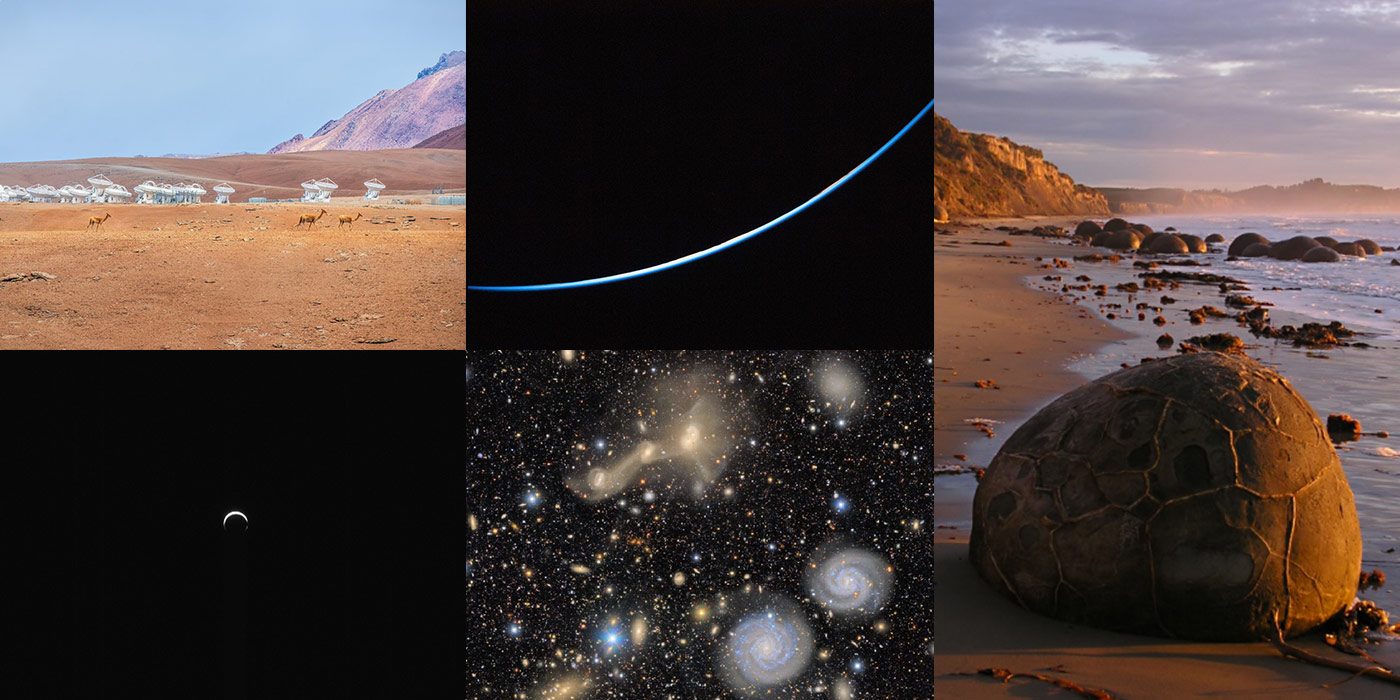
Where the round things are: From spherical boulders and circular radio telescope dishes to the curve of our blue marble, distant Mars, and far-away spiral galaxies, the universe comes back to circles. #PPOD
Planetary Picture of the Day - Week of May 04, 2026
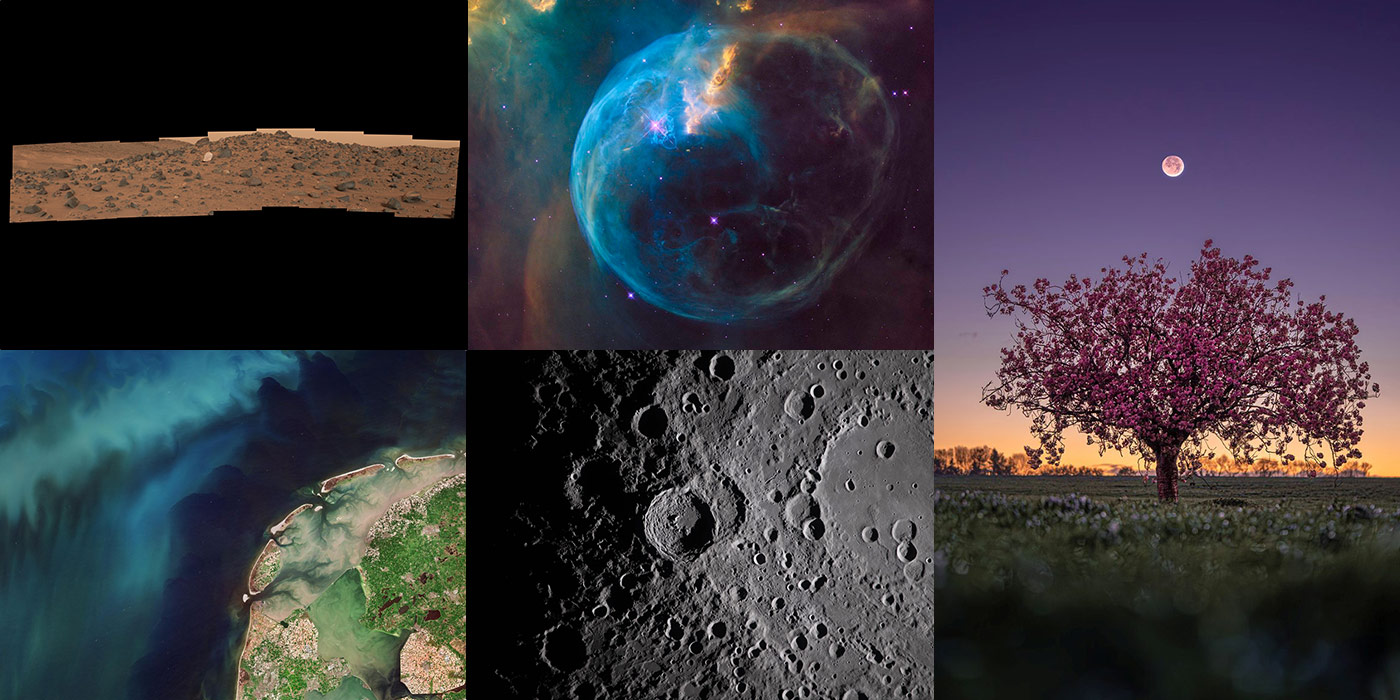
From blooming tulip fields in the Netherlands to the glowing shell of the Bubble Nebula, last week’s PPOD images celebrated color and contrast across Earth, the Moon, and deep space. The collection also highlighted exploration and change—from unusual rocks studied by Perseverance rover on Mars to dramatic lunar shadows captured by Artemis II and the soft glow of May’s Flower Moon. #PPODResearch
Related Projects
SkyMapper: Expanding Access to Real-time Astronomy Through a Global Astronomical Network
SkyMapper and the SETI Institute are connecting educators, students and the public to live astronomical observations through a distributed astronomical network. #SkyMapper #SETI #Citizen Science #Astronomy
Virtual Planetary Laboratory
How can we best assess whether an exoplanet supports life? #VPL
Discovery and Futures Lab
What happens if life beyond Earth is discovered? The Discovery and Futures Lab at the SETI Institute fosters novel and anticipatory research at the intersection of science, society, our planet, and the search for life beyond Earth. #Discovery and Futures LabSupport the
SETI Institute
Scientists are getting closer in their search for life beyond earth. But with limited federal funding for the search for extraterrestrial intelligence, supporters are the reason cutting-edge scientists can keep their eyes on the sky.