




Monday, 16 March 2026
Saturn (NIRCam)
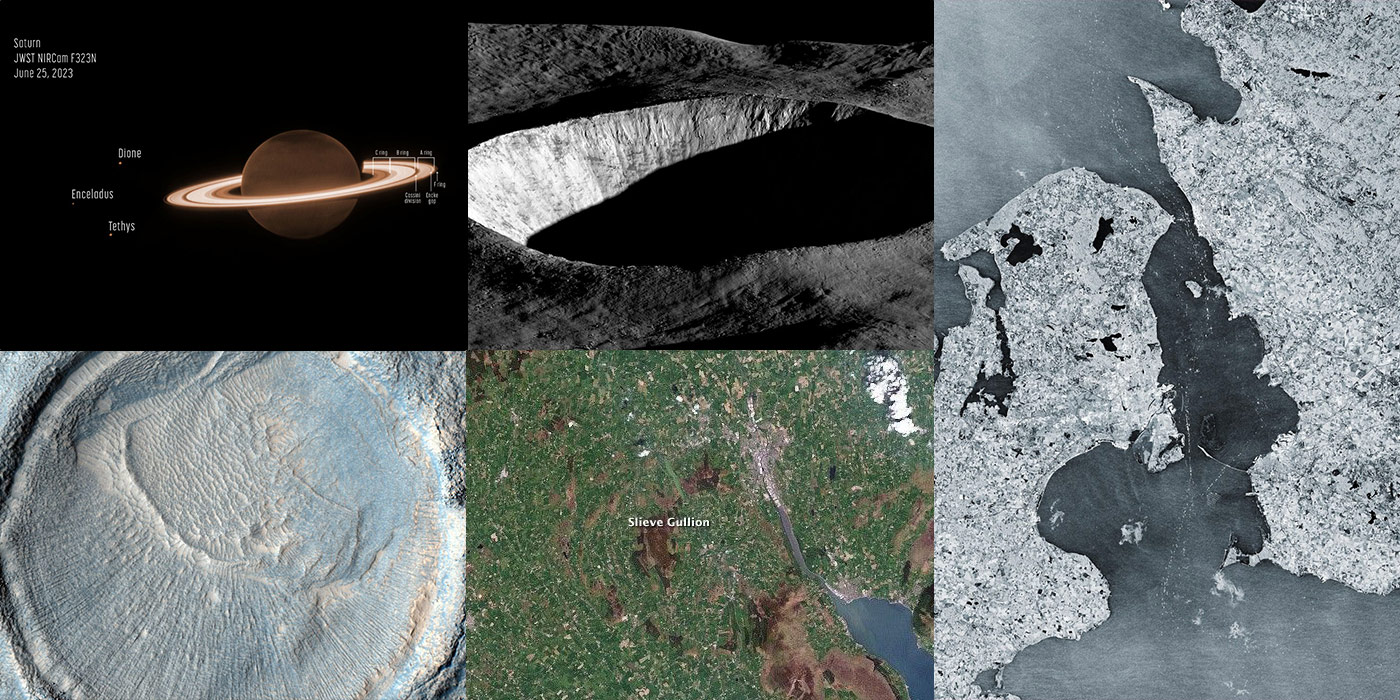
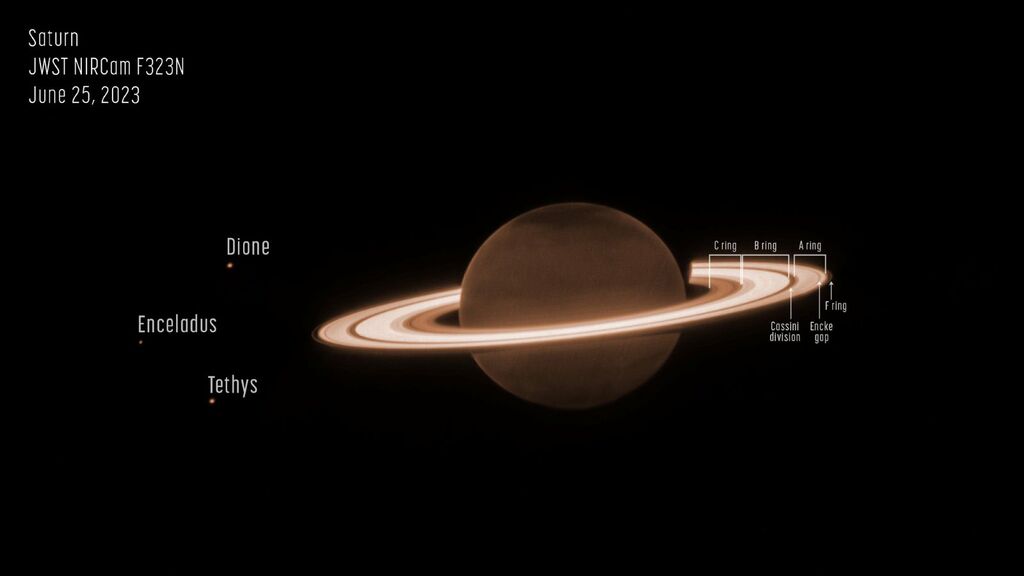
On June 25, 2023, NASA’s JWST turned to the famed ringed world Saturn for its first near-infrared observations of the planet.
Saturn itself appears extremely dark at this infrared wavelength observed by the telescope, as methane gas absorbs almost all of the sunlight falling on the atmosphere. However, the icy rings remain relatively bright, resulting in Saturn's unusual appearance in the JWST image.
Tuesday, 17 March 2026
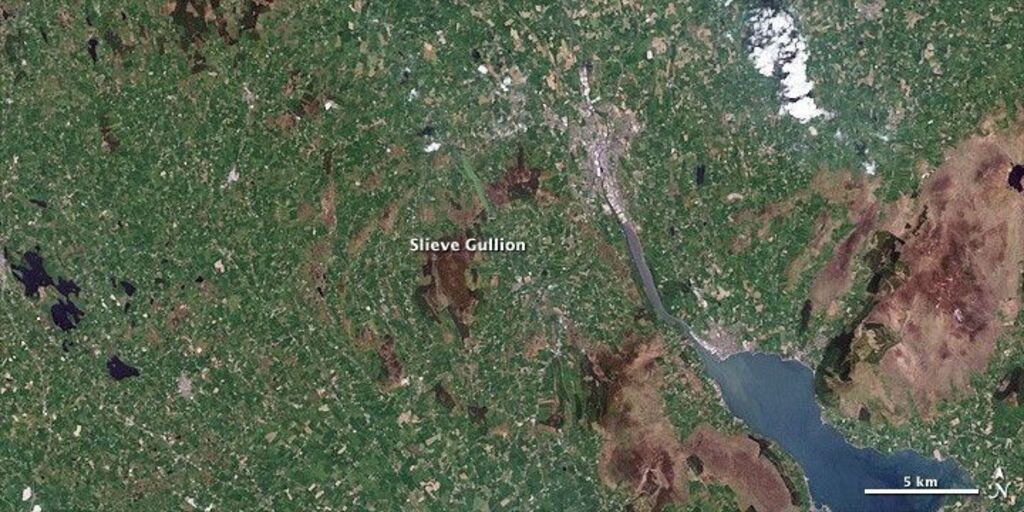
Ring of Gullion, Northern Ireland
Covered in heath, the solitary rocky hill known as Slieve Gullion rises above the farmland of Northern Ireland in this true-color Landsat image from May 24, 2001. According to Irish mythology, hunter and warrior Finn McCool bathed in the lake on Slieve Gullion and emerged decades older. However, we don’t need a dip in the lake to move through time. A glance at the landscape reveals millions of years of history.
Looking out from the summit of Slieve Gullion, the mythical Finn McCool (or anyone else who climbed to the top, for that matter) would see a ring of rocky hills surrounding the Slieve. From a satellite view hundreds of kilometers above Earth, the formation's circular shape is even more evident. Known as the Ring of Gullion, the ancient hills are nearly 60 million years old. They formed either when an ancient volcano collapsed—leaving a circular fault into which molten rock seeped—or when layers of magma built up in layers in the volcano. This type of formation is called a ring dyke.
Wednesday, 18 March 2026
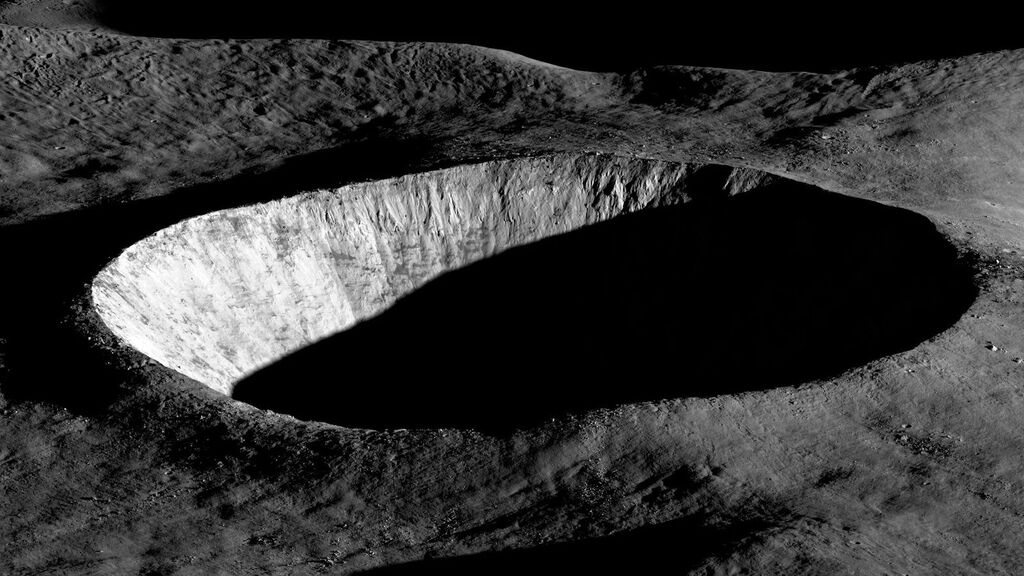
Good Morning, Moon
Early-morning sunlight illuminates the western wall of this unnamed crater, casting deep shadows on the ground and within the crater. The image was taken on August 30, 2023, by LROC (Lunar Reconnaissance Orbiter Camera). LROC is a system of three cameras and one of the seven instruments aboard NASA’s LRO (Lunar Reconnaissance Orbiter) mission, which launched in June 2009 and continues in orbit around the Moon.
Thursday, 19 March 2026
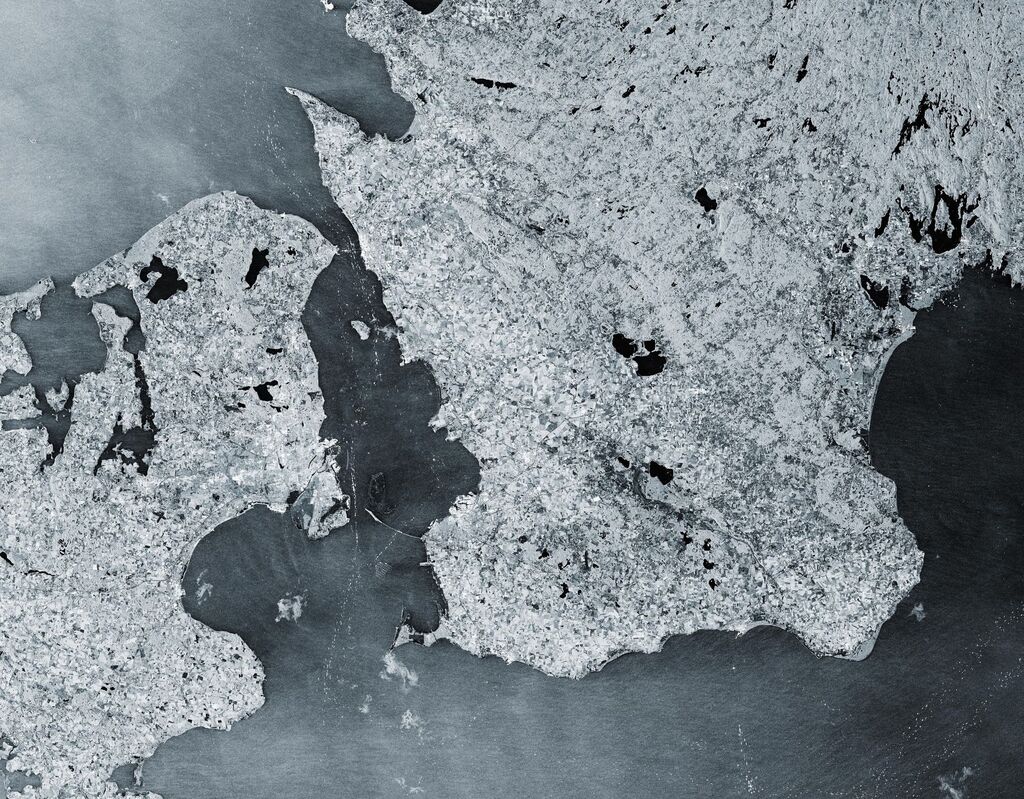
Øresund Strait
This image from the Copernicus Sentinel-1 mission shows us the maritime traffic passing through the Øresund Strait in 2025.
The 118-km-long Øresund Strait (also known as the Sound) separates Denmark to the west from Sweden to the east and links the Baltic Sea to the North Sea, which makes it one of the busiest waterways in the world.
Sentinel-1 satellites carry radar instruments to provide an all-weather, day-and-night supply of imagery of Earth’s surface, making it ideal to monitor ship traffic. Here, more than 50 radar images over the same area, acquired every six days throughout 2025, have been compressed into a single image.
In this image, ships appear as bright, sparkly dots in the dark waters of the strait. The routes of marine traffic are clear to see in the channel, with the main shipping lanes highlighted by the concentration of ships.
Friday, 20 March 2026
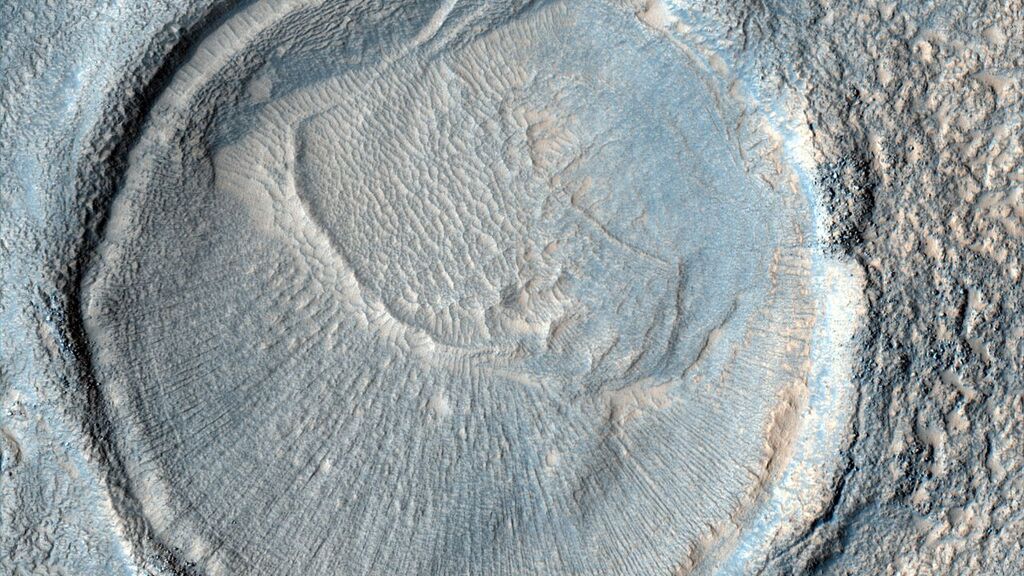
Probing Below the Surface with Impact Craters
When they form, impact craters dig up material from below the surface and throw it outwards into what geologists call an ejecta blanket. The fastest ejected material travels the furthest, so material from different depths can end up at different distances from the crater.
This HiRISE image shows a pedestal crater in Arcadia Planitia, Mars, with material of varying brightness and color at different distances from the crater. This could tell us more about the material that’s buried below the surface here, but the situation is complex.
These pedestal craters have been significantly eroded so that not all parts of the eject blanket are equally preserved. A detailed geologic map of features like this can often tease apart these confounding factors and tell us more about what’s beneath Mars's surface.
News
Related News
Planetary Picture of the Day - Week of June 8, 2026
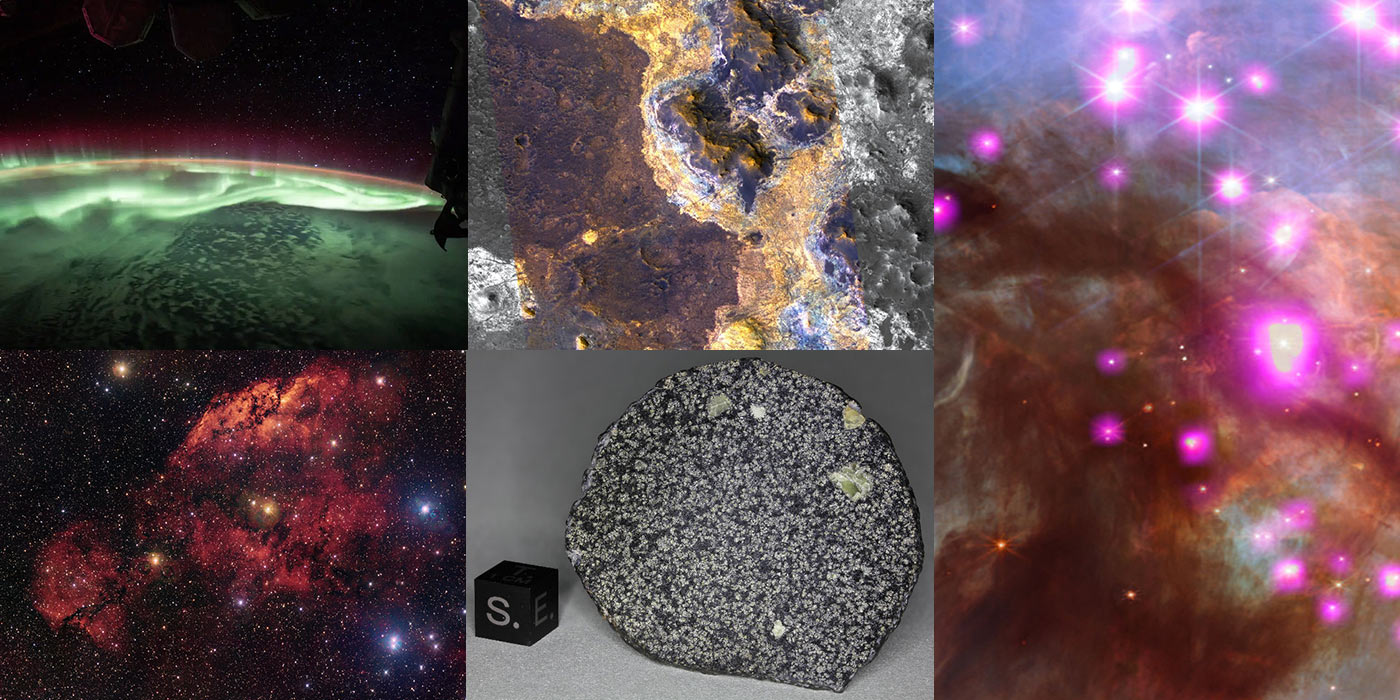
Ancient Martian landscapes, glowing auroras, and stellar nurseries come together in this week’s PPOD collection, highlighting worlds and phenomena shaped by billions of years of cosmic history. From a rare meteorite born in the earliest days of the solar system to colorful nebulae where new stars are forming today, these images offer a remarkable look at both our origins and the ongoing evolution of the universe. #PPOD
Planetary Picture of the Day - Week of June 1, 2026
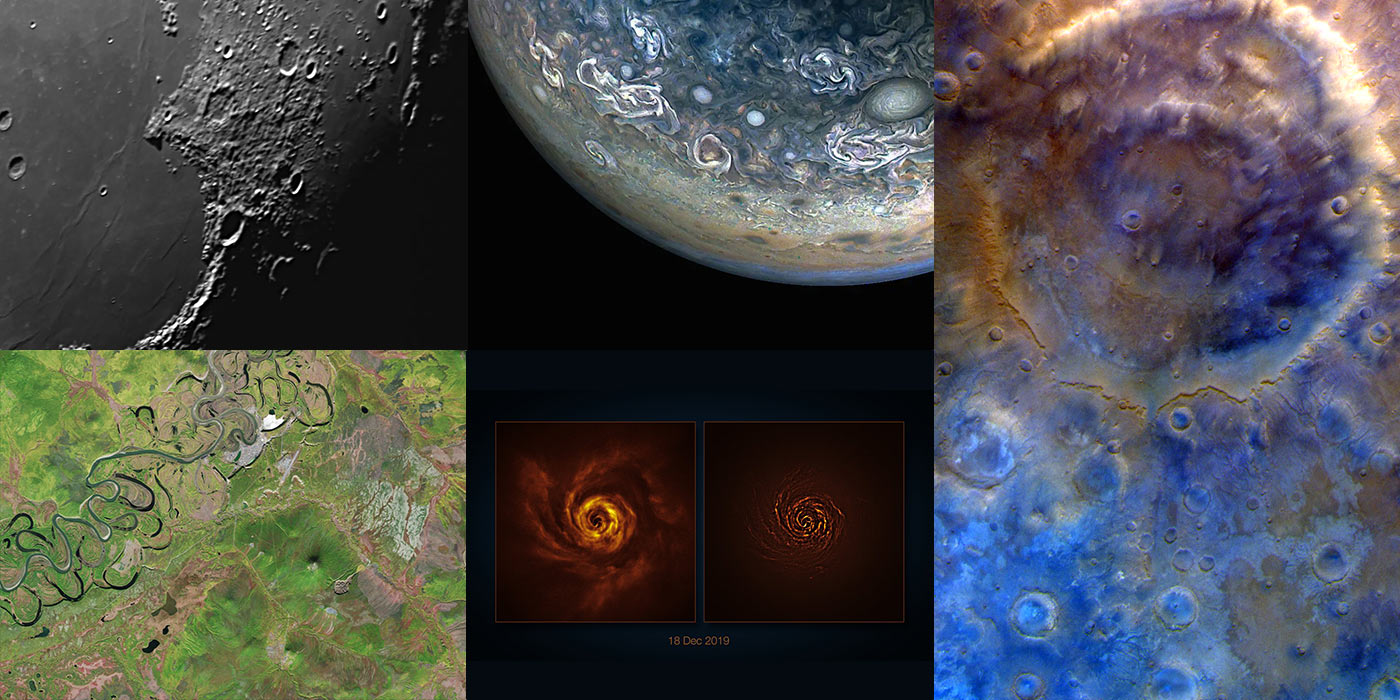
Our solar system contains dynamic worlds near and far, and our cameras capture amazing images of them every day, from a close-up flyby of Mars and the Moon’s beautiful Bay of Rainbows to the swirling storms of Jupiter. We also explore landscapes shaped by change, including Siberia’s expanding Batagaika mega-slump and a young star’s planet-forming disk, offering a glimpse of both Earth’s evolving surface and the processes that build new worlds. #PPOD
Planetary Picture of the Day - Week of May 25, 2026
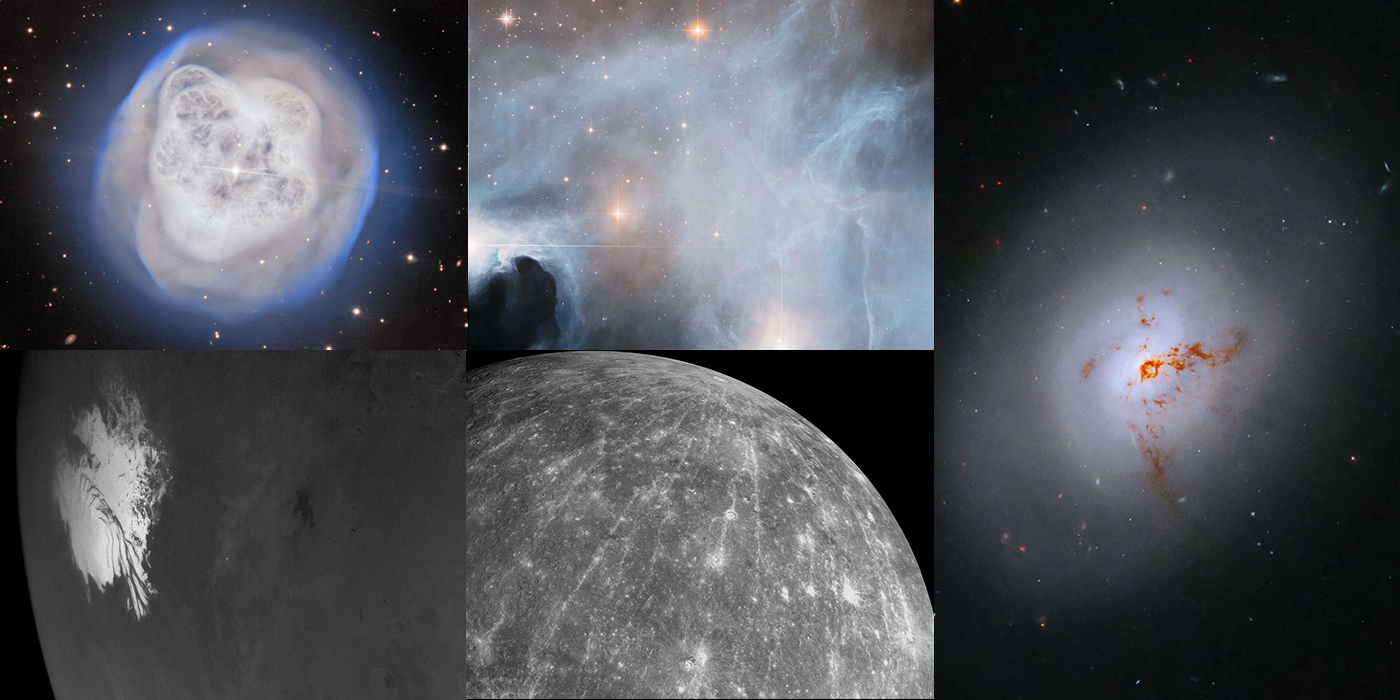
This week's images journeyed from the shimmering Crystal Ball Nebula to the icy south pole of Mars, highlighting beauty and change across our solar system and beyond. The collection also captured stars being born in a ghostly nebula, the dramatic rays of Mercury’s Hokusai Crater, and a distant galaxy caught in transition—offering a striking look at cosmic evolution across space and time. #PPOD
Planetary Picture of the Day - Week of May 18, 2026
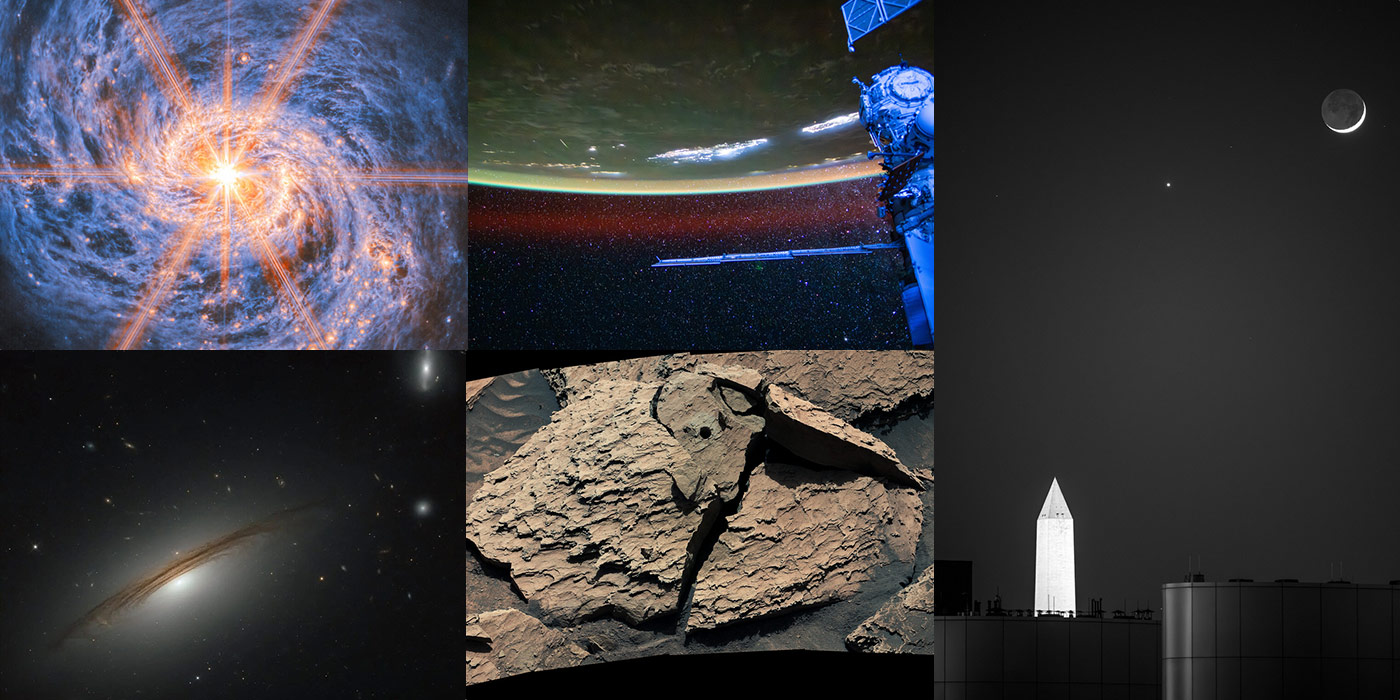
Moments both fleeting and immense—from a Moon–Venus conjunction over Washington, D.C. to a meteor streaking through Earth’s atmosphere as seen from the International Space Station. These images also spanned the cosmic scale, featuring a massive hybrid galaxy, a stubborn rock sampled by the Curiosity rover on Mars, and a stunning mid-infrared view of Messier 77 from JWST. #PPOD
Planetary Picture of the Day - Week of May 11, 2026
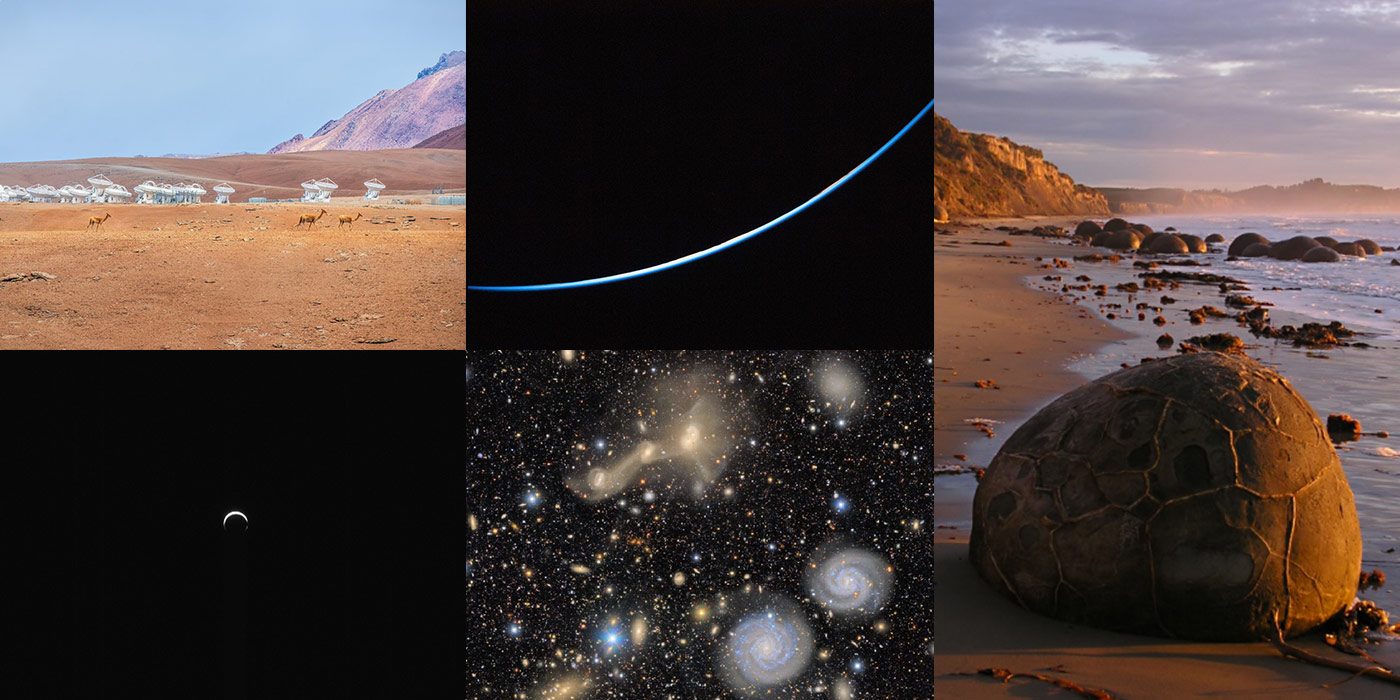
Where the round things are: From spherical boulders and circular radio telescope dishes to the curve of our blue marble, distant Mars, and far-away spiral galaxies, the universe comes back to circles. #PPOD
Planetary Picture of the Day - Week of May 04, 2026
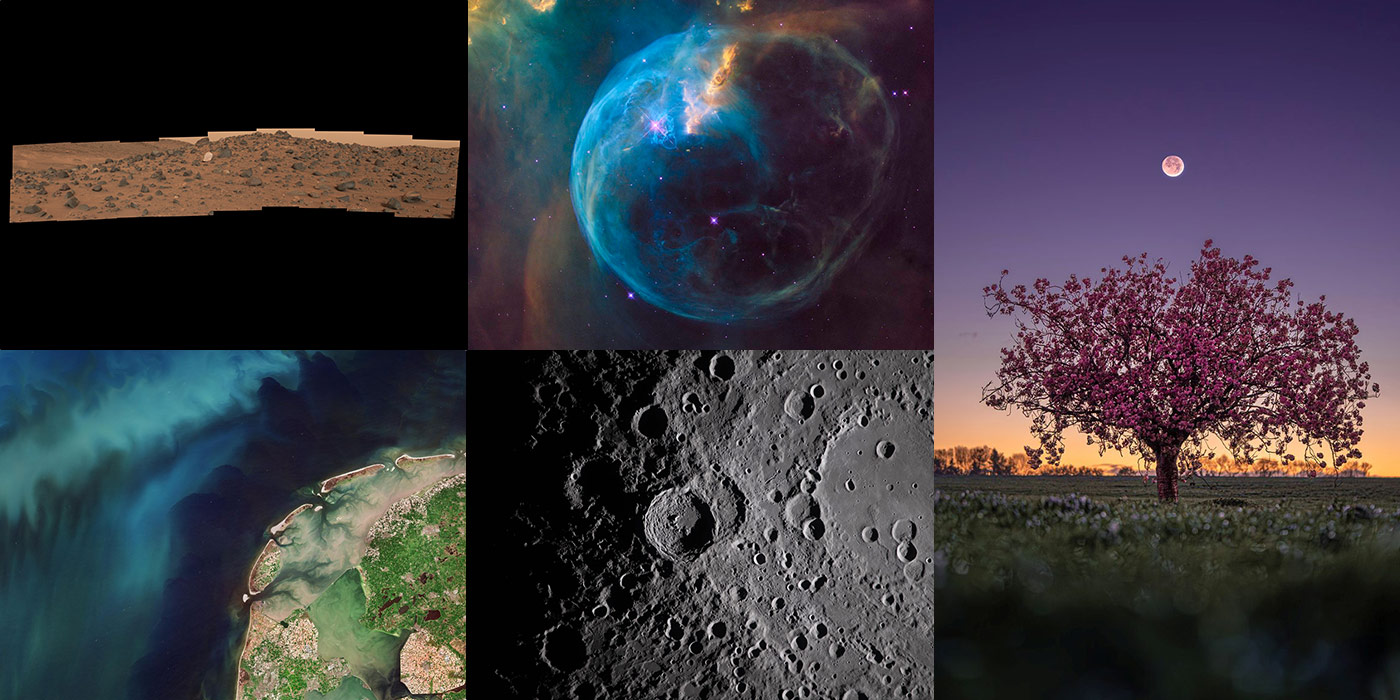
From blooming tulip fields in the Netherlands to the glowing shell of the Bubble Nebula, last week’s PPOD images celebrated color and contrast across Earth, the Moon, and deep space. The collection also highlighted exploration and change—from unusual rocks studied by Perseverance rover on Mars to dramatic lunar shadows captured by Artemis II and the soft glow of May’s Flower Moon. #PPODResearch
Related Projects
SkyMapper: Expanding Access to Real-time Astronomy Through a Global Astronomical Network
SkyMapper and the SETI Institute are connecting educators, students and the public to live astronomical observations through a distributed astronomical network. #SkyMapper #SETI #Citizen Science #Astronomy
Virtual Planetary Laboratory
How can we best assess whether an exoplanet supports life? #VPL
Discovery and Futures Lab
What happens if life beyond Earth is discovered? The Discovery and Futures Lab at the SETI Institute fosters novel and anticipatory research at the intersection of science, society, our planet, and the search for life beyond Earth. #Discovery and Futures LabSupport the
SETI Institute
Scientists are getting closer in their search for life beyond earth. But with limited federal funding for the search for extraterrestrial intelligence, supporters are the reason cutting-edge scientists can keep their eyes on the sky.